You’re standing in front of the mirror. It’s a big day. Maybe a wedding or an important job interview. Your suit is pressed. Your shoes are shined. But you are stuck on the final, crucial detail: the belt.
“Do I wear a belt with this suit?”
“Can I wear suspenders and a belt at the same time?”
“What about a tuxedo?”
This single accessory can feel like a confusing final exam. You don’t want to get it wrong.
Here are the core rules of belt etiquette. You should wear a belt with a suit (if the pants have loops). You should never wear a belt with a tuxedo. Most importantly, you must never wear a belt and suspenders together. They both do the same job. Choosing the right one is a key sign of a well-dressed person.
These rules might seem old-fashioned, but they aren’t arbitrary. They are rooted in decades of tailoring tradition and functional design. They exist for a reason.
Understanding these rules isn’t just about “fashion.” It’s about showing respect for the occasion and looking put-together. It gives you confidence.
This guide will be your final answer to every belt question. We’ll cover why these rules exist and how you can follow them to look your best in any formal setting.
What Are the Golden Rules of Belt Etiquette?
The golden rules of belt etiquette are simple. Your belt should match your shoes in color and finish (e.g., polished black shoes with a polished black belt). Your buckle’s metal should match your other metal accessories (like your watch or cufflinks). Finally, choose a width and tail length that matches the formality of your outfit. These simple rules ensure a cohesive, professional, and timeless look.
Rule 1: Matching Your Leathers (The Non-Negotiable)
This is the most important rule of formal and business wear. Your leather belt and your leather shoes must match. This creates a clean, intentional line from your waist to your feet and shows you are paying attention.
This rule has two parts:
- Match the Color: This is the easy one. Black shoes require a black belt. Brown shoes require a brown belt. This is not a flexible rule in a formal setting.
- Match the Finish: This is the detail that separates the amateurs from the pros. If your shoes are high-shine, polished leather, your belt should also be polished. If your shoes are a matte or pebble-grain leather, your belt should have a similar texture.
A polished black belt with matte black shoes (or vice-versa) can be just as jarring as mixing black and brown. Aim for a consistent texture.
Rule 2: Matching Your Metals (The Mark of a Detailed Man)
This rule shows an even higher level of attention to detail. The metal of your belt buckle should match the other metals you are wearing. This creates a unified and unified look. If your watch is silver, your belt buckle should be silver. If you are wearing gold cufflinks, your buckle should be gold.
This doesn’t mean you need to be a perfect match. A brushed silver buckle can work with a polished silver watch. The key is to keep the “color family” the same—silver tones with silver tones, and gold tones with gold tones. This small detail makes a huge difference.
Rule 3: Choosing the Right Width for the Occasion (Dress vs. Casual)
Not all belts are created equal. The width of your belt is a direct signal of its formality.
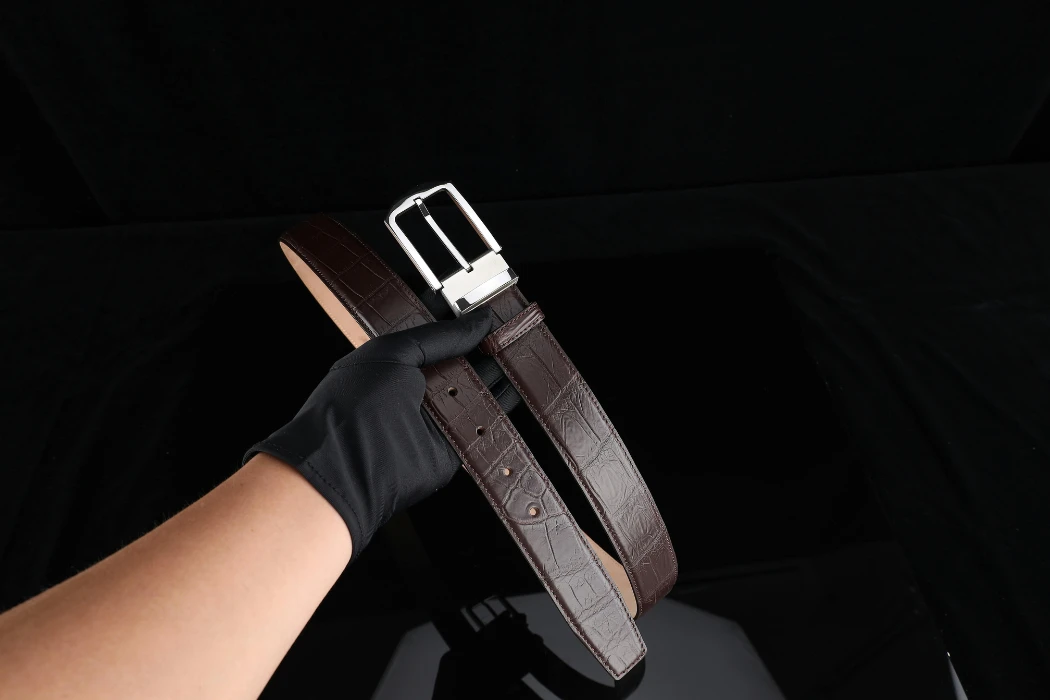
- Dress Belts (for suits): These should be slim, typically between 1.25 and 1.5 inches (3-3.5 cm) wide. They are designed to be subtle and elegant, fitting neatly through the belt loops of dress trousers.
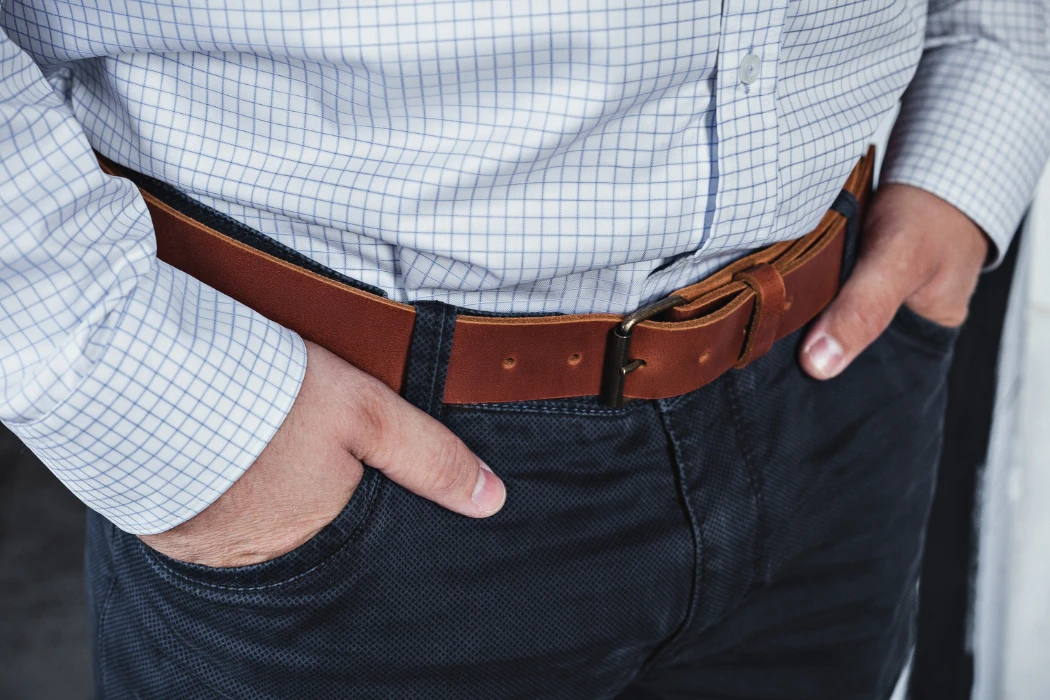
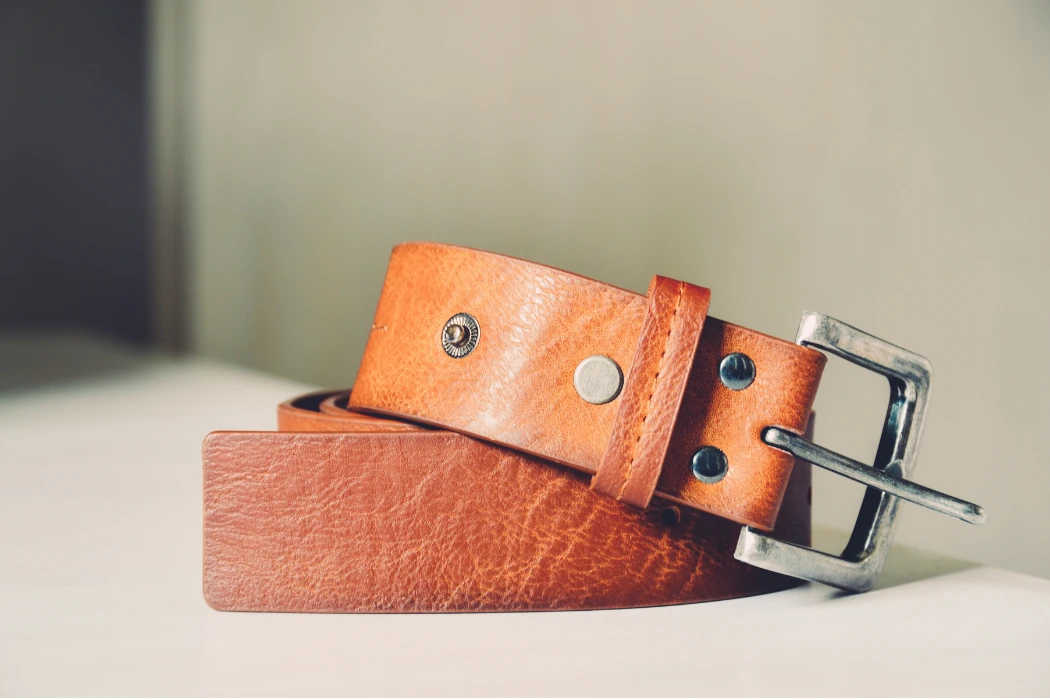
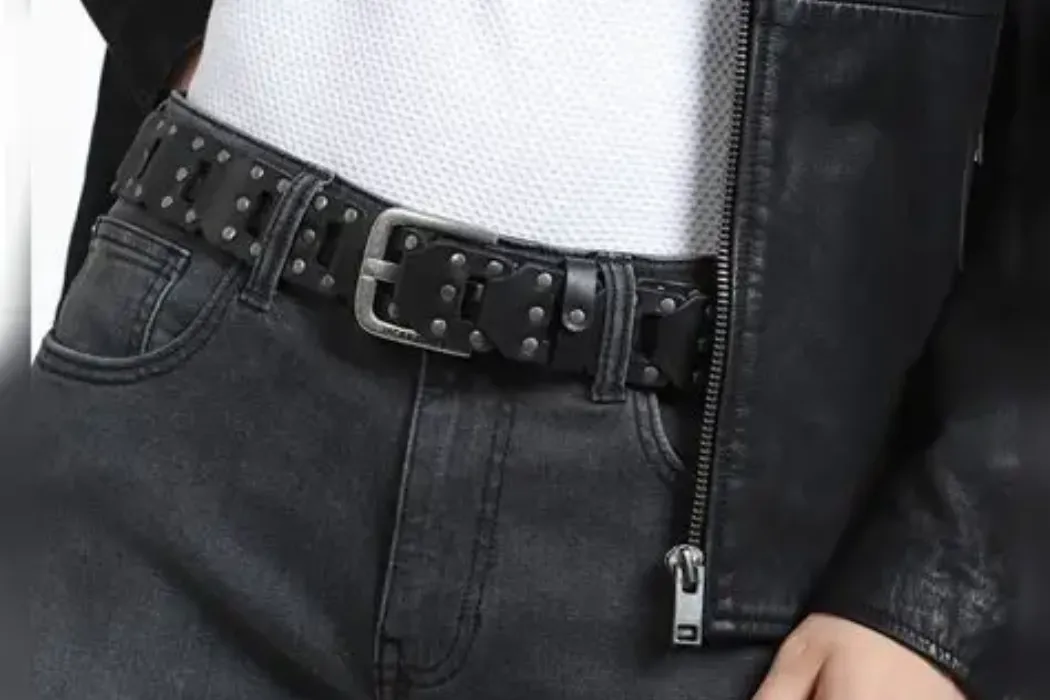
- Casual Belts (for jeans/chinos): These are wider, usually 1.5 inches or more. They have a more rugged look and are built to match the sturdier nature of casual pants.
Wearing a wide, casual belt with a finely tailored suit will instantly make the entire outfit look clumsy and unbalanced.
Rule 4: The “Tail” of the Belt: How Much Should Be Left Over?
The “tail” is the end of the belt that passes through the buckle. A common mistake is having a tail that is either too short (it barely clears the buckle) or too long (it wraps halfway around your hip).
The ideal length is simple: the tail should pass through the first belt loop on your trousers and end somewhere between that first loop and your hip. This is usually about 3-4 inches of length past the buckle. This is why getting the right belt size (which we cover later) is so important.
Belt Matching Cheat Sheet
| Occasion | Shoe Color | Belt Color & Finish | Metal Finish |
|---|---|---|---|
| Business / Formal | Black, Polished | Black, Polished | Match your watch (Silver/Gold) |
| Business Casual | Brown, Matte | Brown, Matte | Match your watch (Silver/Gold) |
| Business / Formal | Dark Brown / Oxblood | Dark Brown / Oxblood | Match your watch (Silver/Gold) |
| Casual Weekend | (Any) | (Can be creative) | (No rules) |
Do You Wear a Belt with Suspenders or Braces?
No. You should never wear a belt and suspenders at the same time. Both items exist for the exact same function: to hold up your pants. Wearing both is considered a major fashion mistake (faux pas) because it’s redundant. It signals that you don’t understand the rules of dressing. You must always choose one or the other.
The Definitive Answer: A Firm “No”
This is one of the clearest and most absolute rules in menswear. You cannot wear a belt and suspenders together. It is not a matter of opinion or a “new” style. It is a fundamental error.
Think of it like this: it’s a job for one. You either trust a leather belt to cinch your trousers at the waist, or you trust suspenders to hold them up from your shoulders. Using both at the same time is like wearing two hats or two watches. It looks clumsy, cluttered, and shows a deep lack of confidence in your attire. The goal of dressing well is to look effortless, and wearing both is the opposite of that.
Why It’s Considered a Fashion Faux Pas (The “Redundancy” Problem)
The core of this rule is about functional redundancy. Belts and suspenders were invented to solve the same problem. Wearing them together is redundant and creates several visual issues:
- It adds bulk: You have a leather strap and buckle at your waist, plus the suspender tabs. This adds unnecessary bulk and visual clutter.
- It’s illogical: It makes it look like you don’t trust either item to do its job.
- It breaks the “lines” of an outfit: A good suit creates a clean line. A belt cuts this line horizontally. Suspenders create strong vertical lines. Mixing them creates a messy, grid-like effect at your midsection.
As the old sartorial saying goes: “Never trust a man who wears both a belt and suspenders. He can’t even trust his own pants.”
While this is a joke, the principle is real. A well-dressed person chooses one tool and trusts it to work. If your trousers have belt loops, wear a high-quality leather belt. If they are made for suspenders, wear suspenders.
Choosing One or the Other: What’s the Purpose of Each?
Your choice depends on your trousers and the look you want to achieve.
- Leather Belts: This is the modern standard for almost all suits and trousers. A high-quality belt, like one made from full-grain leather, defines your waist and adds a point of polish. It’s versatile and works for everything from a business suit to casual wear. It is the default, correct choice for 99% of pants that have belt loops.
- Suspenders (Braces): These hold trousers up by hanging them from the shoulders. This often allows for a cleaner, more comfortable drape, as the pants don’t bunch up at the waist. They are considered slightly more traditional, formal, or even a bit of a “power” move in business settings.
What’s the Difference Between Suspenders and Braces?
You will hear both terms, and they are often used interchangeably, but there is a traditional difference. Understanding it adds another layer to your style knowledge.
- Braces: This is the more formal, classic term. Braces traditionally attach to buttons sewn on the inside of the trouser waistband. They are the standard for tuxedos and high-end bespoke suits.
- Suspenders: This is the more common American term. It often refers to the more casual styles that use metal clasps to clip onto the outside of the waistband.
Today, the terms are mixed, but the core rule is the same. Whether they are button-on braces or clip-on suspenders, they are a belt alternative, not a belt accessory.
Do You Wear a Belt with a Suit?
Yes, in almost all modern business and social settings, you should wear a belt with a suit. If your suit trousers have belt loops, they exist for a belt. A high-quality leather belt adds a polished finishing touch and creates a clean visual line at your waist. The only common exception is for trousers made with side-adjusters instead of belt loops.
The 99% Rule: Yes, If It Has Belt Loops
This is the simplest rule in menswear. Look at your suit trousers. Do you see belt loops? If the answer is yes, you must wear a belt. Leaving them empty looks unfinished and sloppy. It gives the impression that you forgot a key part of your outfit.
The belt loops are a clear instruction from the tailor: “a belt goes here.” A well-chosen leather belt does more than just hold up your pants. It completes the outfit. It creates a clean, horizontal line that separates your shirt from your trousers, adding a sense of structure and polish. Going beltless with loops is a missed opportunity to look sharp.
How to Choose the Perfect Dress Belt for Your Suit
Choosing the right belt for a suit is simple once you know the rules. It all comes down to matching and modesty.
- Match Your Shoes: This is the most important rule. A black suit with polished black shoes demands a polished black leather belt. A navy suit with dark brown shoes requires a dark brown leather belt. This is non-negotiable.
- Keep it Slim: A suit belt should be a slim “dress belt,” not a wide, casual one. Aim for a width between 1.25 and 1.5 inches.
- Keep the Buckle Simple: The buckle should be small, simple, and understated. A classic silver or gold-toned frame-style buckle is the standard. Avoid large, flashy, or logo-heavy buckles in a formal or business setting.
The Exception: What Are Side-Adjusters and How Do They Work?
The only major exception to the “belt with a suit” rule is when the trousers are designed not to have a belt. High-end and bespoke suits often feature side-adjusters instead of belt loops. These are small buckles or button-tabs on the hips of the trousers.
Side-adjusters allow you to change the fit of the waistband by a few inches, creating a very clean, seamless look without a belt. If your trousers have side-adjusters, you should never wear a belt with them. This is a deliberate design choice that a belt would ruin.
A Note on Beltless Suits (A Modern Tailoring Trend)
You may see some modern, high-fashion suits being worn without belts, even if they have belt loops. This is a specific stylistic choice, often seen on runways or in fashion magazines. It aims for an ultra-minimalist aesthetic. However, for traditional business, weddings, or any formal event, this is a risky move.
For 99% of occasions, the timeless rules apply: if you see belt loops, you should be wearing a belt that matches your shoes. It is the safest, most professional, and most classic way to wear a suit.
Do You Wear a Belt with a Tuxedo?
Absolutely not. Under the rules of formalwear, a belt is considered too casual and bulky for the clean lines of a tuxedo. A belt should never be worn with a tuxedo. Traditional tuxedo trousers do not even have belt loops. Instead, they are held up by formal suspenders (braces) or fitted with side-adjusters for a seamless look.
The Classic Rule: Never, Ever
This is one of the most important rules in formal dressing. A tuxedo, or “black tie,” is the peak of evening wear. Its entire design is focused on creating a single, sleek, elegant silhouette. A belt, no matter how high-quality, disrupts this.
A leather belt is a functional, everyday item. It visually cuts the body in half and adds bulk at the waist. This is the exact opposite of what a tuxedo aims to achieve. The goal of a tuxedo is to create an unbroken, elegant line from the (covered) waistband up to the chest, making the wearer look taller and more streamlined.
Why a Tuxedo Doesn’t Have Belt Loops (A Sign of Formality)
If you look at a pair of proper tuxedo trousers, you’ll notice something missing: belt loops. This is not an oversight; it’s a deliberate design choice. The absence of belt loops is the tailor’s way of telling you that a belt is not an option.
The sleek, uninterrupted waistband is a hallmark of formal trousers. It is designed to be covered, either by a cummerbund or a formal waistcoat (vest). Adding a belt would be both functionally impossible and aesthetically wrong.
If you have purchased a tuxedo and the trousers *do* have belt loops, it is likely a less traditional or lower-quality suit. In this case, it is still recommended to have a tailor remove the loops and add suspender buttons to maintain a correct formal look.
What to Use Instead: Formal Suspenders (Braces)
The correct way to hold up tuxedo trousers is with braces (the more formal term for suspenders). These are not the clip-on suspenders you might wear for a casual look. Formal braces are made of silk or grosgrain and attach to buttons on the *inside* of the trouser waistband.
They are worn under your jacket and (traditionally) under your waistcoat or cummerbund, so they are not meant to be seen. Their job is to keep your trousers perfectly in place all night, ensuring a clean drape and a sharp line, even when you’re moving or dancing.
What About a Cummerbund? (Its Purpose Explained)
A cummerbund is that pleated sash of silk worn around the waist with a tuxedo. Its purpose is not to hold up your pants, though it does cover the waistband. Its traditional function is to create a smooth transition between the shirt and the trousers, covering the messy “tuck” area.
It is worn with the pleats facing up (originally to hold theater tickets). A cummerbund is a key part of the formal uniform, but it has no structural function. It is a visual accessory. The actual work of holding up the trousers is left to the hidden side-adjusters or braces.
How Do You Choose the Right Belt for a Business Setting?
For a business setting, your belt should be conservative and professional. This means choosing a slim width (1.25 to 1.5 inches), a polished leather finish that matches your dress shoes (black or dark brown), and a simple, understated buckle (like a silver frame-style buckle). The belt is a supporting accessory, not the main event.
Formal vs. Business Casual: A Tale of Two Belts
The biggest mistake in a business setting is confusing a formal belt with a casual one. The rules change depending on your office dress code.
- Formal Business (with a suit): Your belt must be a dress belt. This means it is slim, sleek, and has a polished, high-shine finish. The color must perfectly match your polished dress shoes. The buckle should be small and elegant.
- Business Casual (with chinos or slacks): You have more flexibility. The belt can be slightly wider (around 1.5 inches) and the finish can be more relaxed, such as a matte, pebbled, or even braided leather. The color should still be in the same family as your shoes (e.g., brown shoes, brown belt), but an exact match is less critical.
The Importance of a High-Quality, Understated Buckle
In a professional environment, your belt buckle should be quiet. It should not be a large, flashy logo or a solid “plate” buckle. The goal is subtlety and refinement. A classic frame-style buckle in a simple silver or gold tone is the timeless, correct choice. It signals that you have an eye for detail and respect traditional business etiquette. A loud buckle can be distracting and appear unprofessional.
Color Theory: Black, Brown, or Tan?
The color of your belt is dictated entirely by the color of your shoes. This is the easiest rule to follow and the most obvious one when you get it wrong.
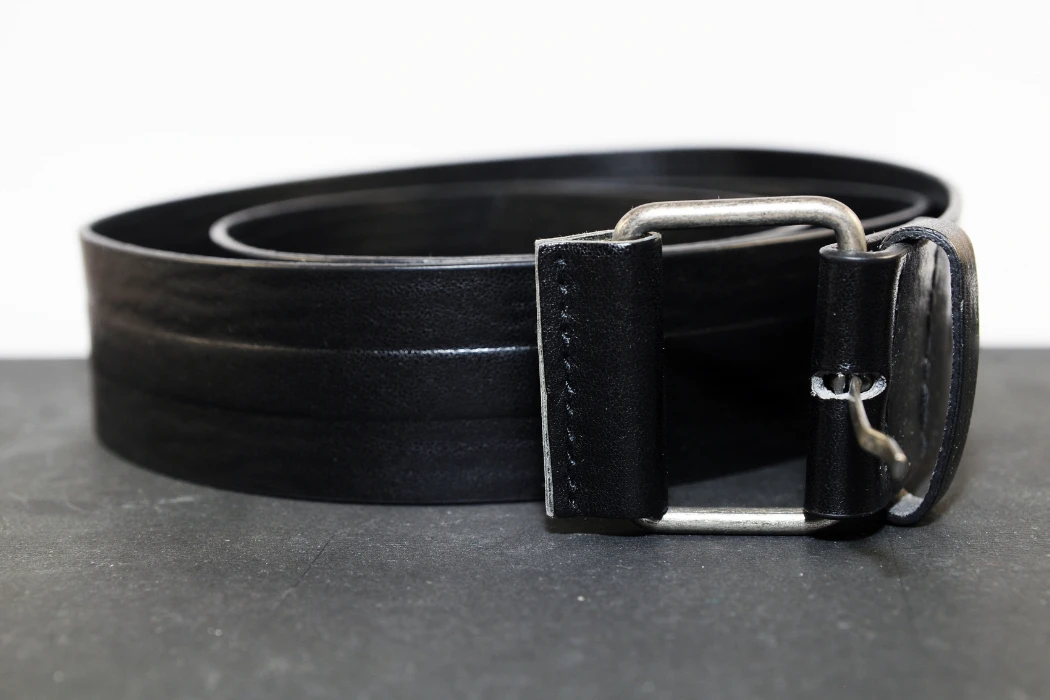
- Black Belts: Wear only with black shoes. This is the standard for the most formal business suits (e.g., charcoal or black suits).
- Brown Belts: Wear with brown shoes. This is the most common choice for navy, blue, and gray suits, which are the backbone of a modern business wardrobe.
- Tan or Oxblood Belts: These are more fashion-forward. A tan belt must be paired with tan shoes, and an oxblood (or burgundy) belt with oxblood shoes. These are great for business casual looks but should be worn with confidence.
What Your Belt Says About Your Attention to Detail
Ultimately, your belt choice sends a message. A frayed, worn-out belt with a scuffed buckle can undermine an expensive suit. It shows a lack of attention to detail. A high-quality, full-grain leather belt that is well-maintained, properly matched, and appropriately sized does the opposite. It demonstrates that you are polished, prepared, and understand the importance of a complete, considered look. It’s a small detail that speaks volumes about your professionalism.
Frequently Asked Questions (FAQ)
Q1: Can you wear suspenders and a belt?
No. You should never wear both at the same time. Both suspenders and a belt serve the same purpose: to hold up your trousers. Wearing them together is a classic style error that looks redundant and over-accessorized. You must always choose one or the other.
Q2: Should you wear a belt with suspenders?
No, this is the same rule as above. Trousers are designed to be worn with either a belt (if they have belt loops) or suspenders (if they have suspender buttons or are being worn with clips). Using both is functionally illogical and considered a major fashion faux pas.
Q3: What’s the difference between suspenders and braces?
The terms are often used interchangeably, but “braces” is the more traditional and formal term. Braces typically attach to buttons sewn on the *inside* of the trouser waistband and are the correct choice for tuxedos and formal suits. “Suspenders” is the more common American term and often refers to the less formal, clip-on styles.
Q4: Can I wear a brown belt with black shoes?
In a business or formal setting, no. This is the most fundamental rule of matching leathers. Black shoes must always be paired with a black belt. A brown belt with black shoes creates a jarring visual clash and signals a lack of attention to detail. This rule is non-negotiable for professional attire.
Q5: Does a belt have to be the exact same color as the shoes?
For formal wear (like a black suit), yes, your polished black belt should be an exact match for your polished black shoes. For business casual (like a navy suit with brown shoes), you have more flexibility. The belt and shoes should be in the same color *family* (e.g., dark brown with medium brown), but they don’t have to be a perfect swatch match.
Q6: What belt do I wear with blue or gray suits?
The suit color does not determine the belt color; your shoe color does. Blue and gray suits are very versatile. If you wear black shoes with your navy or charcoal suit, you must wear a black belt. If you wear brown shoes (a popular choice with navy and light gray suits), you must wear a brown belt.
Q7: How do I match my belt to my wallet or leather bag?
You don’t have to. The “match your leathers” rule strictly applies to your belt and shoes, as they are on the same visual plane. Your wallet is hidden most of the time. While matching your belt to your leather briefcase or handbag is a sign of advanced style and looks very put-together, it is not a required rule of etiquette.
Conclusion: Elevate Your Brand with Timeless Accessories
As we’ve seen, belt etiquette isn’t just a set of outdated rules. It’s the language of attention to detail. Knowing when to wear a belt, when to choose suspenders, and how to match your leathers shows respect for the occasion and for your own presentation. The right belt doesn’t just hold up your trousers; it completes your look. A wrong choice, however, can instantly expose a lack of care.
For brands, this presents a crucial insight. You are not just selling a fashion accessory; you are providing a tool that gives your customers confidence in their most important moments. The source of that confidence comes from true, tangible quality. It’s found in the suppleness of the leather, the solid feel of a well-crafted buckle, and the precision of the stitching. These details define a trustworthy brand and a product that feels less like a purchase and more like an investment.
For brands dedicated to building this trust, choosing an expert manufacturing partner is essential. At Hoplok Leather, we have over 22 years of experience crafting timeless leather goods for global brands. We understand the details that define quality. Contact us today for a free design and manufacturing consultation, and let’s build the classic accessories that define your brand.