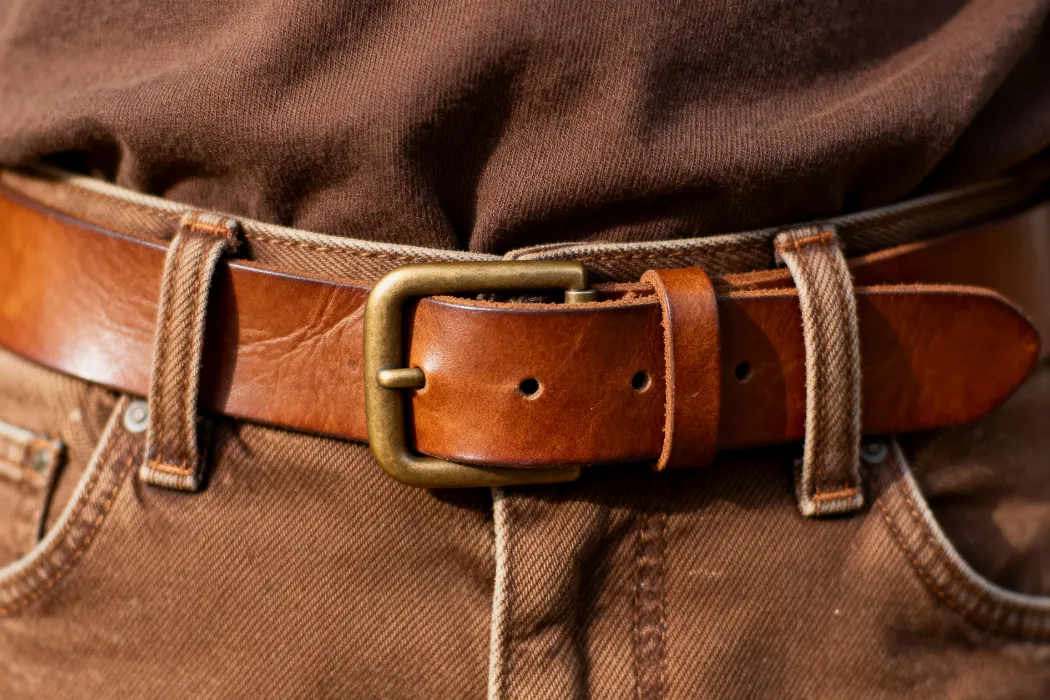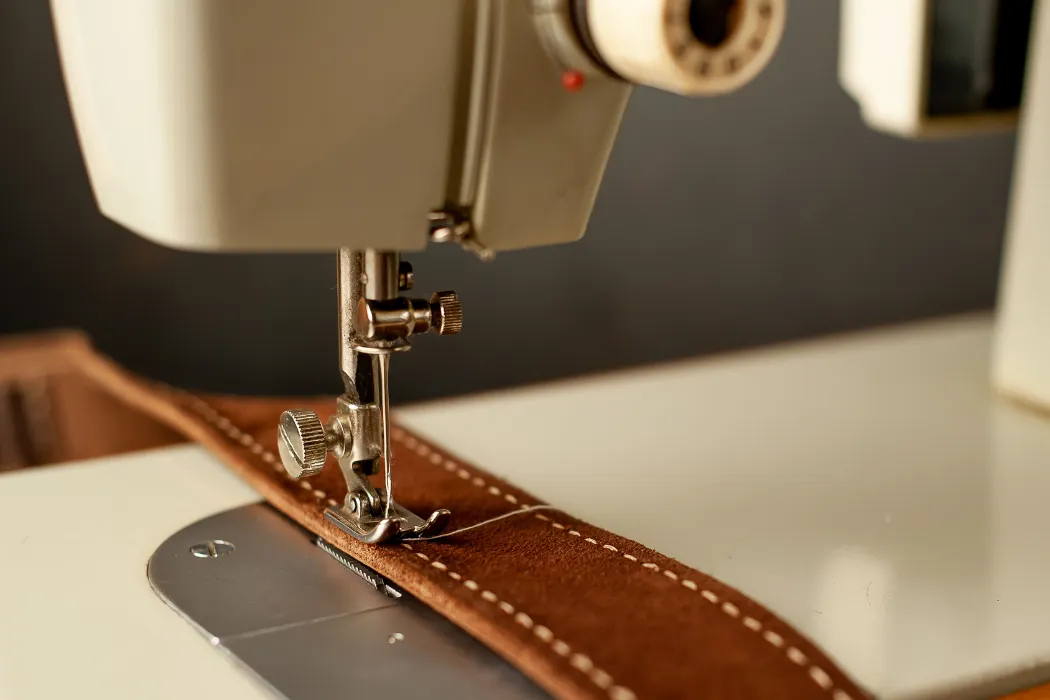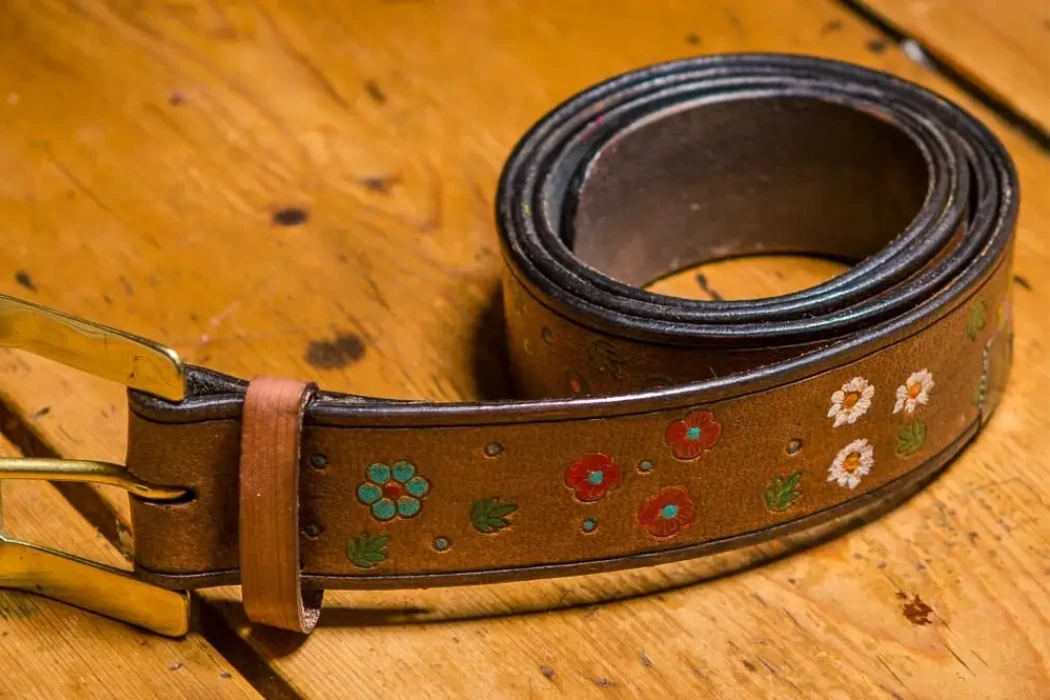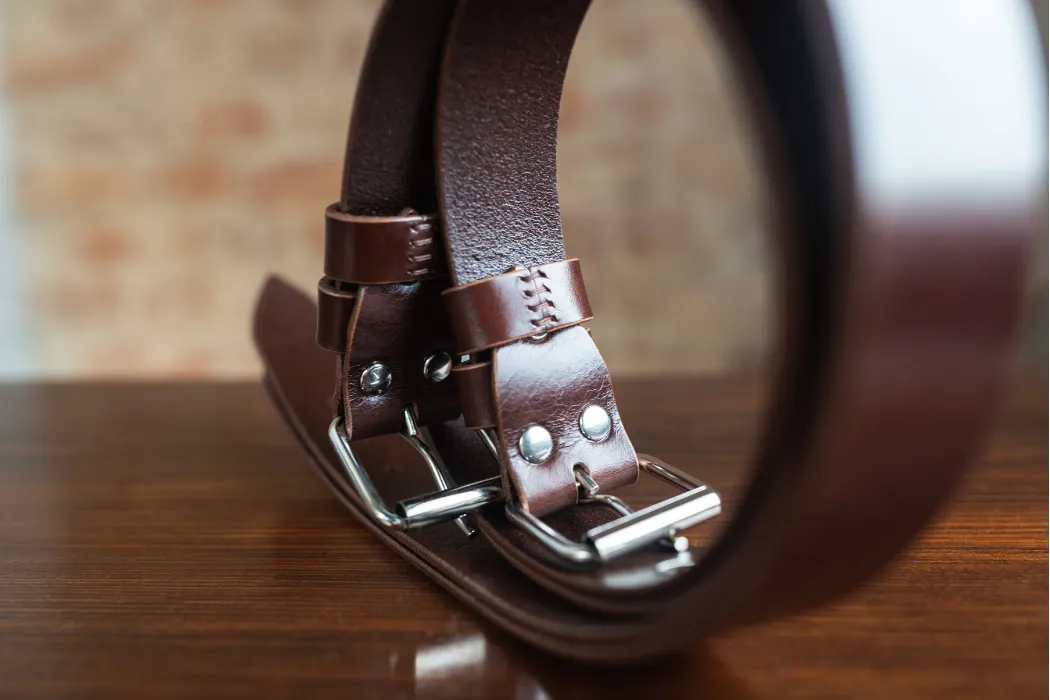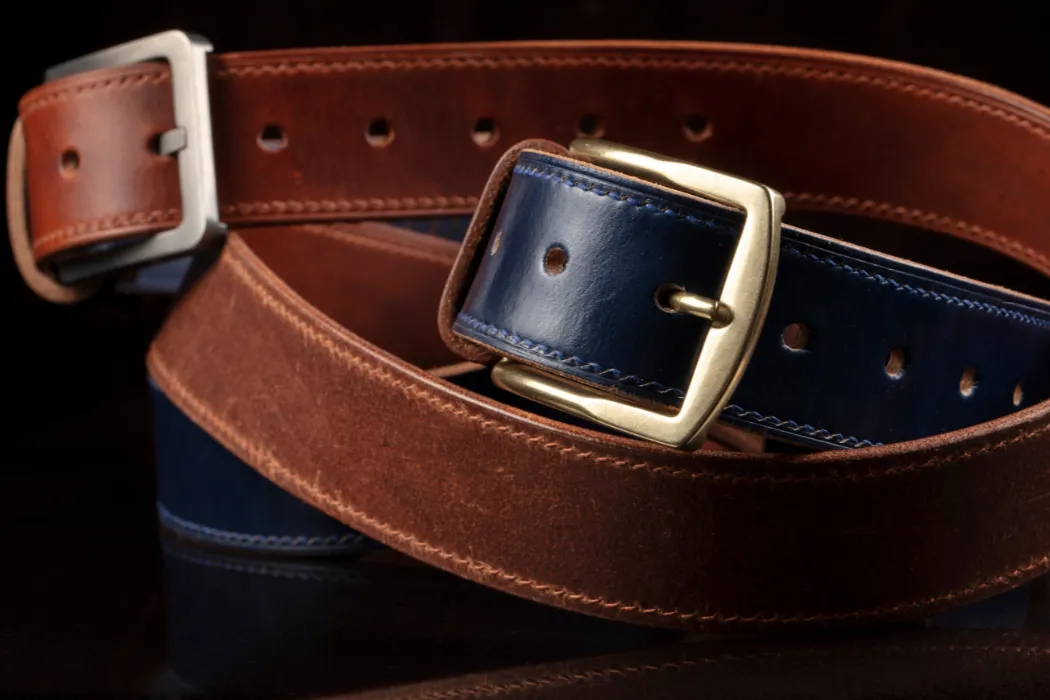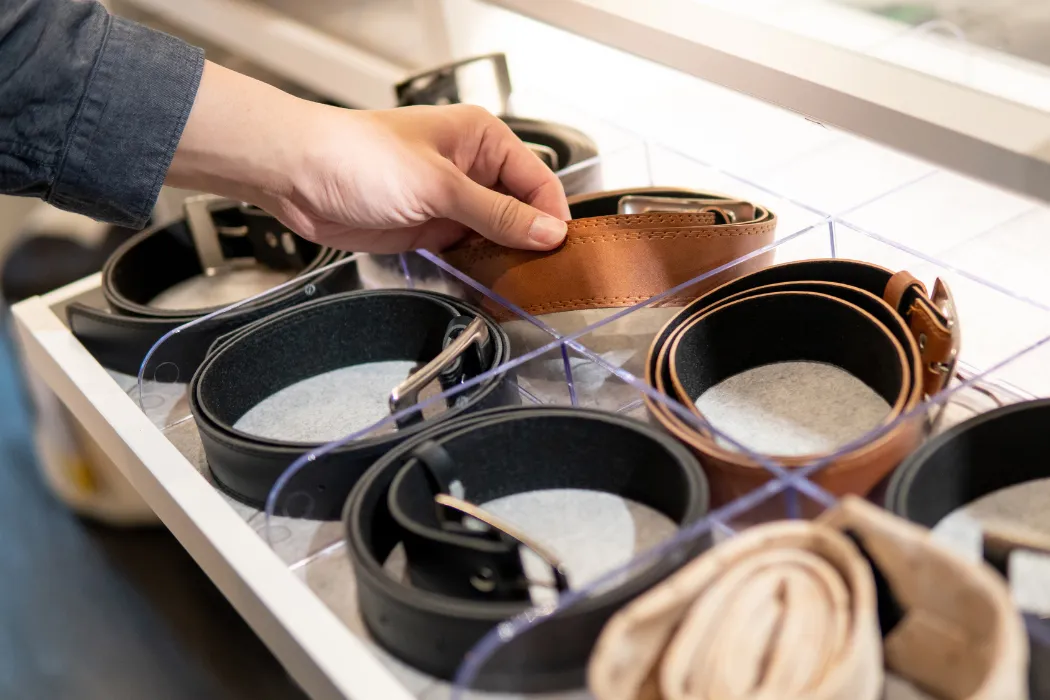
Building a leather belt brand from scratch is no longer limited to those who own factories or massive equipment investments. Today’s B2B buyers can partner with certified private label manufacturers to launch high-quality collections with small minimum order quantities (MOQs)—even testing as few as one sample unit before scaling. With full-grain leather thickness typically ranging from 1.0–1.4 mm and defect ratios under 1%, a smart supplier partnership turns technical precision into commercial advantage.
This article serves as your step‑by‑step roadmap to launching a private label leather belt brand—from understanding flexible MOQ structures and certified production systems to pinpointing exact belt specs, cost components, and profit formulas. Whether you’re a startup validating your first prototype or an established brand transitioning to scalable, vertically integrated operations, you’ll find actionable data, benchmarks, and manufacturing insights designed to take your belt business from concept to market‑ready reality.
Is Private Label Manufacturing Right for You?
Private label manufacturing suits both new and established belt brands looking for flexibility, scalability, and expert production without owning a factory. It enables small MOQ testing, rapid prototyping, and consistent quality through certified facilities.
Understanding What Private Label Manufacturing Means for Belt Brands
Private label manufacturing enables you to design and brand belts produced by an expert factory, such as Hoplok Leather, without the need for internal production infrastructure. This model grants access to specialized craftsmanship, equipment, and materials typically unavailable to startups or brands without established manufacturing lines.
It’s ideal for startups testing the market since many factories offer no-minimum order quantity (MOQ) or low-volume flexibility. This allows entrepreneurs to validate designs and demand before committing to bulk production, reducing commercial risk while maintaining professional-grade quality.
Established brands gain efficiency by outsourcing production to vertically integrated, SMETA or ISO 9001 certified facilities for consistent quality and ethical compliance. These partnerships enable scalability, brand differentiation through material and finishing options, and improved production turnaround by leveraging specialized, high-precision belt factories.
Technical and Operational Factors to Consider Before You Commit
Evaluate whether flexible MOQ tiers (from 1-unit samples to 100+ production lots) align with your market-entry strategy. Factories offering progressive MOQ structures are best suited for brands seeking to manage inventory risk while maintaining brand agility in the early stages of product rollout.
Assess material quality carefully—full-grain leather thickness for belts typically falls between 1.0–1.4mm. This range balances flexibility and durability, ensuring wear comfort while maintaining a robust structure capable of withstanding continuous use. Factory expertise in material selection and testing ensures leather conforms to brand performance targets.
Certified factories operating under BSCI, SMETA, and LWG frameworks guarantee traceable, ethically sourced hides. Additionally, quality control systems with defect ratios below 1% ensure each belt meets brand specifications through multi-stage inspection for cut precision, stitching integrity, and buckle alignment.
Before finalizing a private label partner, review available support such as Tech Pack development. This process translates conceptual designs into production-ready specification sheets detailing pattern measurements, leather cut layouts, hardware types, and finishing codes. Tech Packs safeguard your brand assets and serve as a technical foundation for consistent mass production.
Research Insights and Industry Data
Key Data Points: No minimum order quantity (MOQ) options now enable emerging belt brands to pilot collections without large upfront investment. Standard leather thickness for wallets falls between 0.8–1.2mm, while soft bags use 1.0–1.4mm materials, offering reference benchmarks for belt stiffness calibration. Premium hardware—solid brass or stainless steel—ensures long-term corrosion resistance at attachment points, while precise screw and rivet engineering add durability to buckle mounts. SMETA-audited factories maintain ethical operations and supply transparency, complemented by Tech Pack support that converts design sketches into compliant, repeatable technical specifications.
Private label belt production accommodates both emerging and veteran brands through flexible MOQ structures and vertically integrated operations. Facilities like THE K FAMILY TEAM’s Dongguan factory exemplify this by combining collaborative design, ethically sourced leather, and advanced prototyping processes such as CNC cutting, skiving, and saddle stitching. These ensure structural precision and premium finishing in small and large runs alike.
For established brands, scalable customization includes hand-braiding, embossing, and personalized branding via heat-press or engraving. Such processes guarantee differentiation while maintaining high accuracy in hardware alignment and edge finishing (beveling, sanding, burnishing). Rigorous multi-stage QA preserves brand reputation as production expands across multiple SKUs.
Vertical integration—from sustainable material sourcing to post-production logistics—enhances delivery efficiency and reduces scaling risk. By combining traceable hides, advanced quality metrics, and ethical standards, private label manufacturing ensures consistency, technical precision, and brand protection across diverse product lines.
How to Define Your Belt Brand’s Positioning?
Defining your belt brand’s positioning means aligning market perception with tangible design and manufacturing details—such as materials, logo placement, and sizing—that communicate whether your product feels premium, designer, or workwear-focused.
Understanding Brand Positioning for Belts
Positioning determines how a belt brand is perceived—luxury, designer, or mass-market—based on visible design cues, tactile quality, and material composition. These attributes form the tangible foundation of perceived value in the market. A brand that emphasizes subtle finishes, low-contrast stitching, and refined hardware signals luxury precision, while broader straps, contrast stitching, or unconventional finishes communicate a fashion-forward or utilitarian identity.
Formal positioning often integrates minimalist branding and high material integrity, such as full‑grain leather and fine-edge finishing. Casual and fashion categories, on the other hand, can afford bolder treatments—thicker profiles, distinctive surface embossing, or visible hardware that reinforces character and attitude. Each combination of features represents a deliberate balance between aesthetic messaging and user function, creating a clear narrative within the product line.
Translating Positioning into Technical Specifications
Effective belt brand positioning extends beyond conceptual language to measurable production parameters. Dromex, for example, specifies a 75 mm × 23 mm logo embossing zone and a 120 mm reflective stamp area on the belt loop—quantifying exactly where brand identifiers reside. Locking these metrics in technical drawings ensures repeatability across multiple production runs and suppliers, preserving the brand’s intended market tier identity.
Material selection and construction parameters support these brand-coded proportions. Choosing between full‑grain and top‑grain leather defines the tactile and visual premium level, while sizing precision—typically 28–35 mm for dress belts—anchors the product’s use case. Each technical detail, from debossing depth and buckle finish to stamp placement, becomes part of a controlled visual language enforced during QC evaluations. When visually codified into technical packs and inspection sheets, these small differences embody the brand’s tiered hierarchy and ensure that new SKUs maintain design and market coherence.
Key Data Points: Dromex defined constraints for industrial belt branding zones, including a 75 mm × 23 mm logo field on the strap and a 120 mm reflective stamp zone on the loop. These dimensions, alongside the inclusion of logo position in formal belt quality plans, illustrate the shift toward metric‑based brand presentation control. Typical dress belt widths between 28–35 mm also align the technical construction with the visual message of formality and precision associated with luxury and professional users.
Applied Insight: To define your belt brand’s positioning, integrate design language directly into manufacturing tolerances—standardizing material grade, width range, logo coordinates, and surface treatments. This turns an abstract brand promise into enforceable product geometry, ensuring the physical product continually communicates the same brand value proposition without stylistic drift across collections or suppliers.
Which 5 Belt Styles Should You Launch First?
No definitive industry standards define the “top 5” belt styles for market entry. Launch selections should prioritize materials, durability, and ease of scaling—options aligning with full-grain or vegetable-tanned leathers provide the strongest foundation for consistent performance during low-MOQ private label production.
| Style Type | Material Specification | Production Considerations |
|---|---|---|
| Classic Full-Grain Dress Belt | Full-grain leather from double butt cut hide, 8.5–9.5 oz thickness | High tensile strength, precision edge skiving, consistent hole alignment |
| Vegetable-Tanned Casual Belt | Vegetable tanned cowhide; rigid, low elasticity | Ideal for unlined builds; excellent fiber retention and shape control |
| Chrome-Tanned Everyday Belt | Chrome tanned upper leather or split upper | Suited to mass production using strap cutting, pasting, riveting |
| Lightweight Goat or Sheep Belt | Sheep/goat leather, thinner gauge | Flexible design for smaller frames and lighter, decorative buckles |
| Work Utility Belt | Full-grain cowhide, reinforced stitchlines | Riveted buckle mounts, high pull resistance, wide cut profile |
Technical Overview of Belt Manufacturing Parameters
Belt production centers on reliable material behavior under tension and daily wear stress. Full-grain leathers derived from double butt cuts offer the densest fiber matrix, minimizing stretch and improving longevity. These are generally preferred for both premium dress and utility-style designs where torque and buckle anchor strength are essential.
Material Insights and Mechanical Performance
Vegetable-tanned cowhide remains the top choice for unlined models due to its structural rigidity and low elasticity. Fiber compaction during tanning produces a tougher dermal layer with superior shape retention. Chrome-tanned variants, while more pliable, allow high-volume output and consistent coloration for everyday market SKUs.
Manufacturing Specifications
Key assembly operations include edge skiving for contour control, uniform hole punching for accurate sizing, and adhesive lining pastes preceding stitching. Buckle attachment relies on rivets or press studs, ensuring shear load stability. Maintaining a homogeneous hide source minimizes visual and mechanical defects across scaled batches.
Engineering and Quality Control
Although no ISO, ASTM, or PSI-defined standards for “belt styles” exist, measurable consistency is achieved through leather grade verification and process tolerances. Production efficiency is enhanced by maintaining constant thickness (8.5–9.5 oz), ensuring smooth feed during strap cutting, and calibrating tooling to reduce variance in hole alignment.
Conclusion
Starting with five archetype belts—dress, casual, chrome-tanned, lightweight, and work utility—covers the major use cases and consumer categories. Material integrity and controlled mechanical processes, not trend-based aesthetics, dictate technical feasibility for first-launch product lines.
Custom Leather Belts Crafted for Iconic Brands
How Can You Customize Private Label Belts?
Private label belts can be customized through choice of premium leathers, hardware materials, stitching methods, and finishing techniques such as embossing, laser cutting, or hand-braiding. Manufacturers support this with prototype testing, sustainable sourcing, and flexible MOQs to tailor craftsmanship to each brand’s vision.
| Customization Element | Options & Techniques | Quality Standards / Process Notes |
|---|---|---|
| Leather Type | Full-grain, calfskin, embossed, or vegan leathers sourced from certified tanneries | Material inspection and traceable LWG certification ensure durability and sustainability |
| Hardware & Finishing | Solid brass, stainless steel, nickel buckles with optional plating or engraving | Alignment and corrosion testing under ISO and BSCI systems |
| Branding & Aesthetics | Embossing, embroidery, metal plates, and proprietary texture finishes | Proprietary molds and templates preserve brand exclusivity |
Material, Design, and Branding Custom Options
Brands can define their identity through thoughtful material selection and design detailing. High-end private label belts use full-grain or calfskin hides for authentic texture and longevity, while eco-conscious brands may prefer sustainable vegan leathers from LWG-certified tanneries in Italy, Brazil, or Argentina. These materials undergo precise cutting and conditioning to maintain consistency across production runs.
Customization extends to brand positioning through marking and decorative finishes. Makers can apply embossed or printed logos, embroidered detailing, or attach branded metal plates. Color and texture combinations—from oil-tanned and crazy horse to vintage-washed or polished—can align with heritage aesthetics or modern styles. Each design element enhances tactile quality and visual presence, ensuring the final product embodies the brand’s distinct persona.
Hardware selection is equally significant in defining style and functionality. Using solid brass, stainless steel, or nickel buckles enhances strength and resistance to wear. Optional plating or engraving enables exclusive finishes, while coordinated keepers and loops contribute to a coherent visual language throughout the collection.
Manufacturing Techniques and Technical Customization
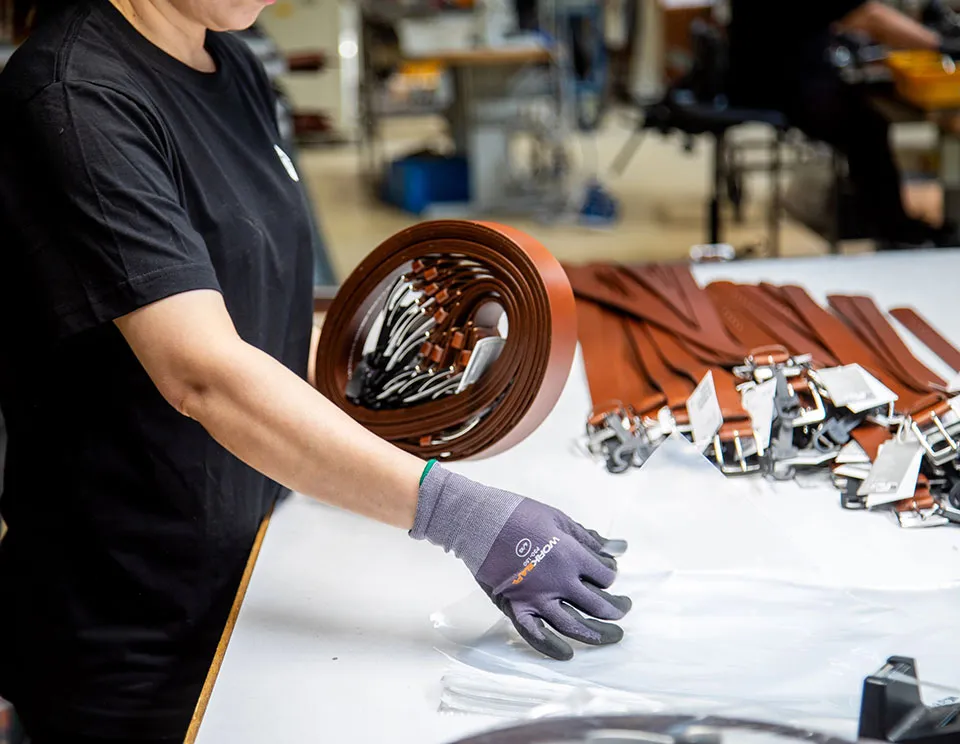
Private label belt manufacturing combines artisanal craftsmanship and controlled automation through 15 to 45 production steps, depending on product complexity. The process integrates laser cutting, decorative creasing, edge beveling, burnishing, skiving, and even hand braiding. These operations transform raw hides into precision-fit straps with refined edges and structural durability suitable for luxury retail standards.
Stitching defines the mechanical stability of each belt. Manufacturers offer traditional hand-saddle sewing for a heritage aesthetic or machine stitching for perfectly uniform seams. Each belt undergoes prototype development featuring precise hole punching and buckle alignment verification before advancing to bulk production. This stage ensures design and hardware integrity match exact pattern specifications.
Production facilities typically operate under ISO 9001, BSCI, SMETA, and LWG frameworks. These systems maintain traceability, guarantee ethical sourcing, and ensure defect rates remain below 1%. The result is a scalable, technically consistent manufacturing flow that can accommodate both limited high-fashion runs and broad distribution for established labels.
How Much Does It Cost to Make a Leather Belt?
The cost to manufacture a leather belt ranges from under US$1 for basic chrome-tanned belts in low-cost locations to US$20–30 for premium full-grain styles with high-end hardware and finishing. Most private-label belts fall between US$8–18 depending on materials, production scale, and customization level.
Key Cost Components in Leather Belt Manufacturing
Leather material is the largest cost driver, typically US$5–15 per belt for full‑grain leather or ₹30–60 per belt for chrome leather in Indian MSME contexts. The grade and yield efficiency of the hide heavily determine total material cost, with strap width, thickness, and nesting strategy shaping how many belts can be cut from a square meter of leather.
Labor accounts for US$2–4 per belt in export-oriented production; automation such as CNC strap cutting and programmable stitching can reduce this by up to 30%. Manual assembly adds minutes of cycle time per belt, so takt time optimization and workstation layout directly affect factory throughput cost per unit.
Buckles, thread, and other hardware constitute roughly 20% of the total cost. Using basic zinc alloys keeps expenses low, whereas moving to stainless steel or solid brass increases both per-unit cost and perceived product value. Finishing methods like electroplating thickness per ISO 4520 or corrosion testing per ASTM B117 impact the price and longevity of the hardware.
Utilities and logistics together contribute less than 20% of the overall cost. Average energy usage is around 0.5–1 kWh per belt, influenced by drying systems, cutting machines, and finishing lines. Efficiency improvements in energy or batch logistics yield marginal but measurable savings in total unit economics.
Cost Tiers and Technical Data by Manufacturing Scale
Low-cost Indian MSME plants report ₹59–60 (≈US$0.70) per belt including wages, utilities (≈₹1.1 per unit), and packing (₹2 per belt). This configuration involves chrome-tanned cow or buffalo strap leather, simple zinc or mild-steel buckles, and single-needle stitching, delivering functional belts optimized for local and low-end export markets.
Mid-tier Turkish private-label belts exhibit costs of US$10–18 each, combining leather priced at US$5–15, labor at US$2–4, and logistics of approximately 10% of the total. With 1,000+ piece orders, price per belt drops nearly 20%. Standardized quality control and efficient material utilization characterize this production scale.
High-end belts using full-grain cowhide and CNC‑machined 304 stainless or CW614N brass buckles reach US$18–30 per unit. These belts typically apply plating specifications under ISO 4520 with ≥10 μm nickel plus 0.2–0.5 μm chrome coatings, verified against corrosion tests such as ASTM B117. Added finishing parameters like multi‑coat edge painting drive additional process cost and yield consistency challenges.
Across scales, manufacturing economics demonstrate strong sensitivity to raw‑material grade, hardware design, and automation level. Small Indian MSMEs achieve very low costs through low overhead and domestic raw materials, whereas export‑oriented workshops in Turkey or South Asia balance mechanization and inspection requirements to sustain mid‑tier pricing. Luxury OEM operations invest heavily in precision hardware, aesthetic finishing, and compliance with international durability standards, underpinning their higher cost levels.
How to Calculate Profit Margins for Belts?
Profit margins for belts are calculated by totaling material and labor costs, applying markup formulas for wholesale and retail, and expressing gross profit as a percentage of revenue. Standard margins range from 30% for wholesale to 40% for retail sales.
Understanding Profit Margin Fundamentals for Leather Belts
Profit margin = (Gross Profit / Revenue) × 100, a key metric showing how much of each sale is retained as profit. This indicator is crucial for assessing financial efficiency and pricing adequacy in belt manufacturing processes.
Common targets in leather goods are 40% retail margins and 30% wholesale margins, ensuring pricing covers all costs and supports brand sustainability. These benchmarks serve as a foundation for maintaining healthy earnings across different sales channels.
Step-by-Step Profit Margin Calculation with Real Data
Example: Belt requires 108 sq in (0.75 sq ft) of leather × $14.97/sq ft = $11.23 material cost; add labor at $20/hr for 30 minutes = $10 labor. Combining these gives a total cost of $21.23 per belt.
Wholesale = (Material + Labor) × 2 → ($11.23 + $10) × 2 = $42.46. Retail = Wholesale × 2 = $84.92, yielding roughly a 40% gross margin. Each pricing tier ensures that manufacturing and overhead expenses are proportionally compensated through consistent markups.
For cost adjustments: Retail Price = Total Cost / (1 – 0.40), adapting for different margin goals or volume efficiencies (30% wholesale for bulk). This formula allows flexible margin management depending on production volume and desired profitability ratios.
Research Summary
Key data confirm that leather belt profit margins rely on precise component costing. A belt’s leather requirement (108 sq in = 0.75 sq ft) at $14.97 per square foot equals $11.23 in materials. Adding labor at $20 per hour for half an hour results in a $10 addition, forming the cost basis of $21.23.
Standardized formulas such as (Material + Labor) × 2 for wholesale and Wholesale × 2 for retail support systematic markup control. Retail formulas like Retail = Cost / (1 – 0.40) maintain target profit ratios, safeguarding profitability across SKUs.
This structured approach ensures consistency in scaling, accommodating batch production adjustments (e.g., 30% margins for bulk manufacturing) without undercutting premium leather craftsmanship value. Accurate formulaic pricing also assists in financial forecasting and comparing ROI between self-production and outsourced labor models.
Why is Custom Packaging Critical?
Custom packaging is critical because it unifies brand identity across production runs, protects belts during logistics, and ensures consistent quality and presentation. It also anchors your supply chain by turning dielines, molds, and box specs into stable brand assets.
Brand Control and Customer Perception
Customized belt boxes with full-surface print, logo, or monogram build consistent brand presentation across all SKUs and geographies. This level of uniformity amplifies brand recognition, allowing private-label leather belt manufacturers to maintain their visual story across production shifts and multiple global vendors.
A premium unboxing moment enhances customer perception, elevating the belt from a commodity to a lifestyle accessory. When customers receive packaging that feels intentional—through textures, structure, and graphic precision—they’re more likely to associate the product with quality craftsmanship and lasting value.
Locking specific dielines and print assets guarantees visual continuity across factories and seasons, reducing brand dilution risk. Because dielines, molds, and printing plates can be treated as owned brand assets, they assure that future reorders or multi-plant runs will maintain exact brand colors, finishes, and geometric alignment.
Technical and Supply Chain Specifications
Typical custom belt box MOQs start around 1,000 units per design, with options for embossed logos and multi-color finishes. This threshold provides a practical balance for both startup labels exploring initial collections and established brands managing multi-SKU international distribution programs.
Reputable packaging manufacturers like Leser GmbH operate under DIN EN ISO 9001 quality management, ensuring traceability and consistency. This audit-backed process control translates into predictable material sourcing, repeatable print outcomes, and harmonized structural performance crucial for export documentation and visual QC matching.
Specs often use sturdy 300–400 g/m² paperboard with custom inserts for protection and SKU-specific geometry for different belt types. Such structural rigidity prevents belt deformation during shipping and provides a consistent shelf appearance in various retail or fulfillment configurations.
Integrated manufacturers such as Cut and Stitch and K Family bundle packaging with QC and export logistics, ensuring seamless fulfillment. Their integrated approach locks each packaging component—graphics, inserts, outer cartons—into the overall production workflow, minimizing handoffs and controlling compliance at the point of origin.
In practice, private-label manufacturers treat packaging as an engineering asset. By managing tooling like molds and print plates across multiple factories, a brand can safeguard proprietary packaging architecture against unauthorized use while improving repeat order lead times. Vendors like Stampa Prints and Leser GmbH confirm that belt boxes can be fully personalized with monogram, emboss, or surface print options—transforming packaging into both a logistics device and a strategic visual differentiator.
The operational outcome is a system in which quality, consistency, and brand presentation become measurable, repeatable production elements—turning packaging into a controlled variable in the scaling of leather belt programs rather than a downstream aesthetic afterthought.
How Long Does Production Take?
Production time for private label leather belts depends mainly on leather tanning lead time and manufacturing setup. Chrome-tanned programs can start in about 2–3 weeks, while vegetable-tanned belts need up to 2 months for material readiness. New production units typically reach commercial scale after around 10 months of setup.
Material Lead Time: Chrome vs. Vegetable Tanning
Chrome-tanned leather requires about 2 weeks from raw hide to finished leather, making it suitable for fast-moving programs. In contrast, vegetable-tanned leather can take up to 2 months to complete the same process stage, which significantly extends the overall supply-chain schedule for high-end belt collections. These fundamental differences in process duration mean that material selection has a direct impact on how quickly new belt lines can be brought to market.
Because tanning is a controlled chemical and mechanical process involving multiple soak, liming, tanning, and drying stages, it acts as the gating factor before cutting or assembly begins. Brands planning seasonal launches or private label introductions should therefore integrate these upstream timelines into their order scheduling. Doing so avoids production bottlenecks and ensures better alignment between leather readiness and finished goods manufacturing.
Factory Setup and Line Output Timeline
Government reference data from MSME technical profiles indicates a 10‑month implementation period for establishing a new belt manufacturing unit, encompassing machinery installation, utilities, labor training, and regulatory clearances. This schedule represents the typical window from project initiation to first commercial output. Designed capacity averages 18,000 leather belts per year under a single 8‑hour shift, 25 working days per month, initially utilized at around 60% capacity during commissioning.
Machinery utilization generally grows by approximately 10% per year over the first five years as QA systems stabilize and new SKUs are introduced. This progressive ramp-up ensures balanced quality across strap sizes, emboss plates, and buckle assemblies while allowing for tooling calibration. Throughout this phase, the leather strap gauge must adhere to IUP 4 / ISO 2589 thickness measurement standards to maintain consistent buckle performance and tear resistance across production lots.
Once the plant is fully commissioned and the tanned leather inventory is ready, most downstream manufacturing stages—cutting, skiving, lining, stitching, edge finishing, and inspection—operate on a shift‑based cycle. These are short-duration, repeatable operations, meaning that once raw material constraints are cleared, final belt assembly can typically advance from cut to packaged product within days rather than weeks. The determining variables remain the leather preparation lead time and the initial 10‑month setup horizon needed to reach consistent commercial-scale output.
What Mistakes Should New Brands Avoid?
New private label brands most often fail by overlooking detailed technical specifications and choosing inadequate partners. Avoiding tolerance errors, weak leather grades, poor QC, and inflexible MOQs helps ensure product quality, prevent returns, and protect brand reputation.
Common Oversights in Belt Design and Material Selection
A frequent early-stage error in belt development is mismatching the strap width with buckle clearance. For example, pairing a strap cut at 38 mm with a buckle of the same internal width leads to binding once leather swells during finishing. Maintaining 0.5–1.0 mm clearance between strap and buckle prevents this assembly issue and ensures smooth function under real usage conditions.
Leather thickness is another core specification that cannot be compromised. Men’s belts demand a strap thickness of 3.0–4.0 mm. Leather thinner than 3.0 mm tends to stretch prematurely, delaminate, or tear after limited cycles. Adhering to this range using full‑grain or top‑grain leather guarantees the tensile strength needed for daily wear.
Specifying exact leather grades is essential. Terms such as “genuine leather” are too broad and often disguise lower‑durability composites. Instead, documentation should clearly identify grade (full‑grain or top‑grain), cut source, and finishing type. This level of accuracy secures long‑term consistency across batches.
Hardware quality also affects product longevity. Low‑grade zinc alloys are prone to corrosion and surface peeling. Confirm alloy composition—preferably zinc alloy with ≥8–10% zinc or stainless steel—and demand surface finish test results before production approval. These technical checks minimize buckle failure and maintain visual quality.
Manufacturing and Supplier Management Mistakes
Many new brands commit to factories that impose high minimum order quantities without first running small pilot batches. This exposes them to excessive inventory and quality uncertainty. Pilot or sample runs are critical for validating adherence to specifications, gauging assembly precision, and refining QC criteria before scaling up.
Insufficient specification documentation is another root cause of rework and returns. A complete belt technical sheet should include strap width tolerance (±0.5 mm), hole spacing (25 mm), seam strength standards, buckle‑fit parameters, and edge finish uniformity. Without these controlled dimensions and checkpoints, production outcomes drift, causing fit variance across sizes and SKUs.
Supplier evaluation must go beyond cost. Verifying certifications such as BSCI, ISO 9001, SMETA, or LWG ensures the manufacturer meets baseline quality and sustainability standards. Brands that skip due diligence risk subpar workmanship and compliance issues that affect resale channels.
Finally, lack of in‑process inspection often shows up as inconsistent stitching, uneven edges, or fading buckle plating. These are preventable through early QC sampling, edge‑finish assessments, and plating durability tests. Proactive quality checks protect brand integrity and reduce warranty claims.
Final Thoughts
Building a private label belt brand is as much about strategic planning as it is about craftsmanship. From defining your positioning and choosing reliable manufacturing partners to managing costs, materials, and quality control, every decision compounds into long‑term brand equity. The roadmap from 0 to 1 involves balancing flexibility with precision—testing limited MOQ runs, verifying certifications, and translating your design intent into repeatable technical standards that communicate both authenticity and quality to your market.
As you progress from prototypes to scaling production, integrate every operational step—manufacturing, packaging, pricing, and compliance—into a cohesive system. This alignment transforms your supply chain from a cost center into a brand asset, ensuring that each belt leaving the factory reinforces your value promise. By merging measured technical execution with clear branding, your private label belt venture not only meets market expectations but builds a sustainable foundation for future growth.
Frequently Asked Questions
How much does it cost to start a private label belt brand?
Starting a private label leather belt brand typically requires $500–$1,000 for initial design and prototyping, plus per‑unit manufacturing costs between $35 and $100 based on style. Minimum orders range from a single test piece to around 50 units for wholesale flexibility.
Can I put my logo on wholesale leather belts?
Yes, most wholesale leather belt factories offer multiple logo application methods, such as hot stamping, debossing, laser engraving, UV printing, or custom metal buckles. Minimums usually start in the low hundreds per design, with standard logo panels around 30–40 mm tall by 80–120 mm long.
What is the typical markup for leather belts?
Leather belts are usually priced with about a 40% profit margin on total costs. To find your retail price, divide your total cost by 0.60. For example, a belt that costs $39.48 to produce would typically retail for roughly $65.80.
How do I find private label belt suppliers in China?
You can locate Chinese private label belt suppliers on sites like Made‑in‑China.com and ChinaTexNet.com or contact established manufacturers such as J.D. Belt Factory and Appareify. Standard belt specifications run 3–4 cm in width and 80–120 cm in length.
What is the difference between private label and white label?
Private label manufacturing means creating an exclusive product to a brand’s custom specifications, while white label products are standardized items sold to multiple brands who only modify logos or packaging. White label options have lower MOQs and faster lead times but no exclusivity.
Can manufacturers offer custom packaging for small orders?
Yes, several belt manufacturers provide custom packaging services with minimum orders starting around 25 pieces, while premium packaging options may begin at approximately 1,000 units depending on the material and printing complexity.