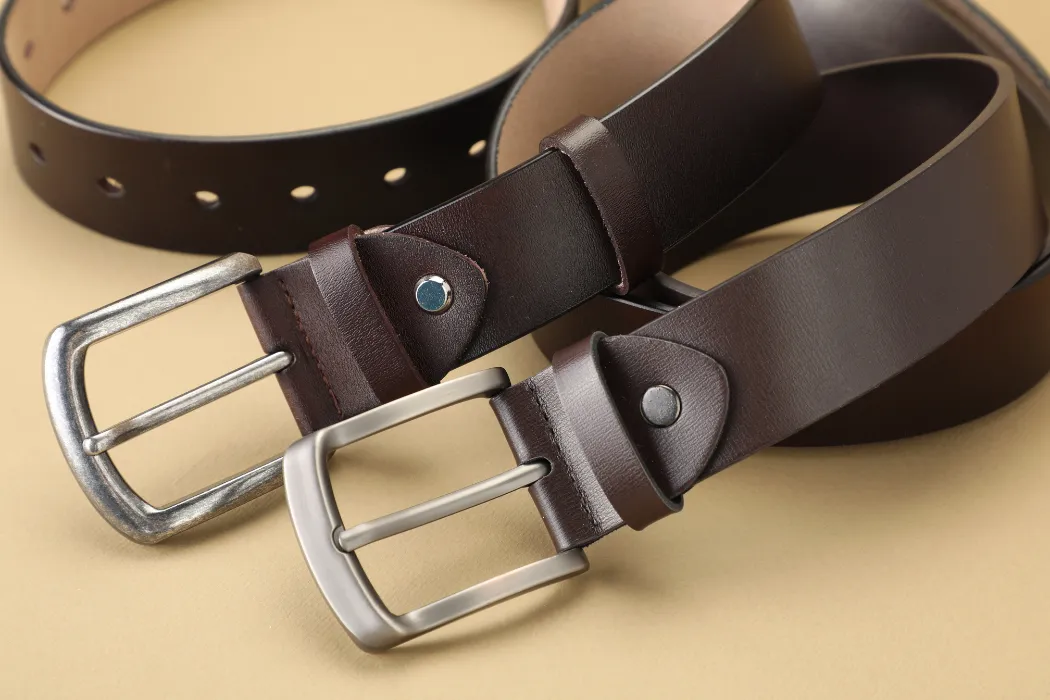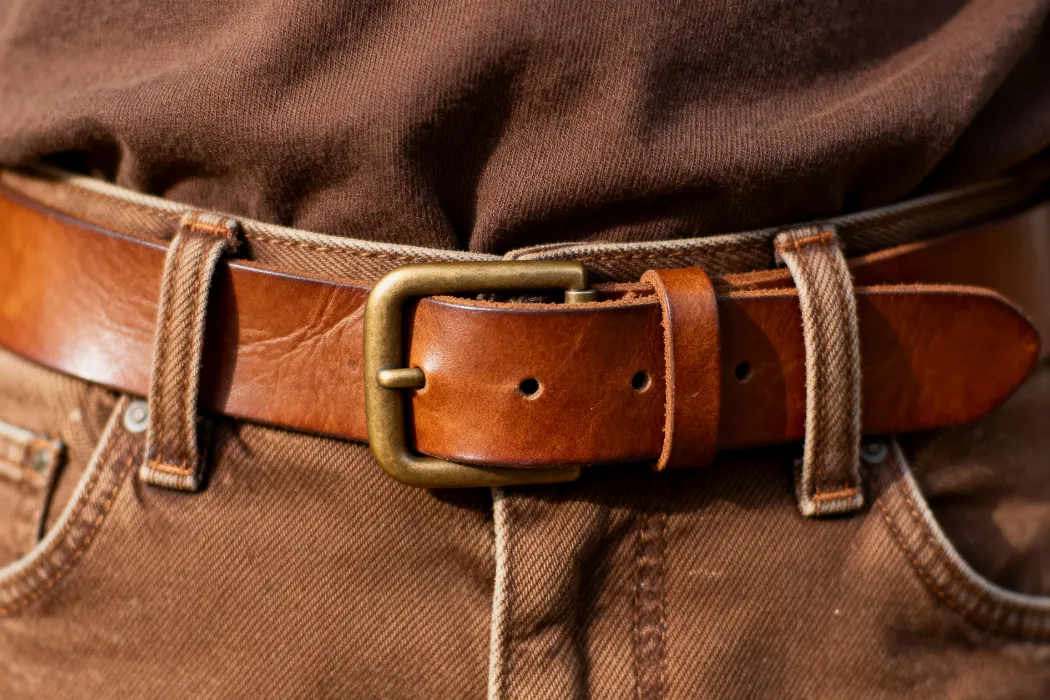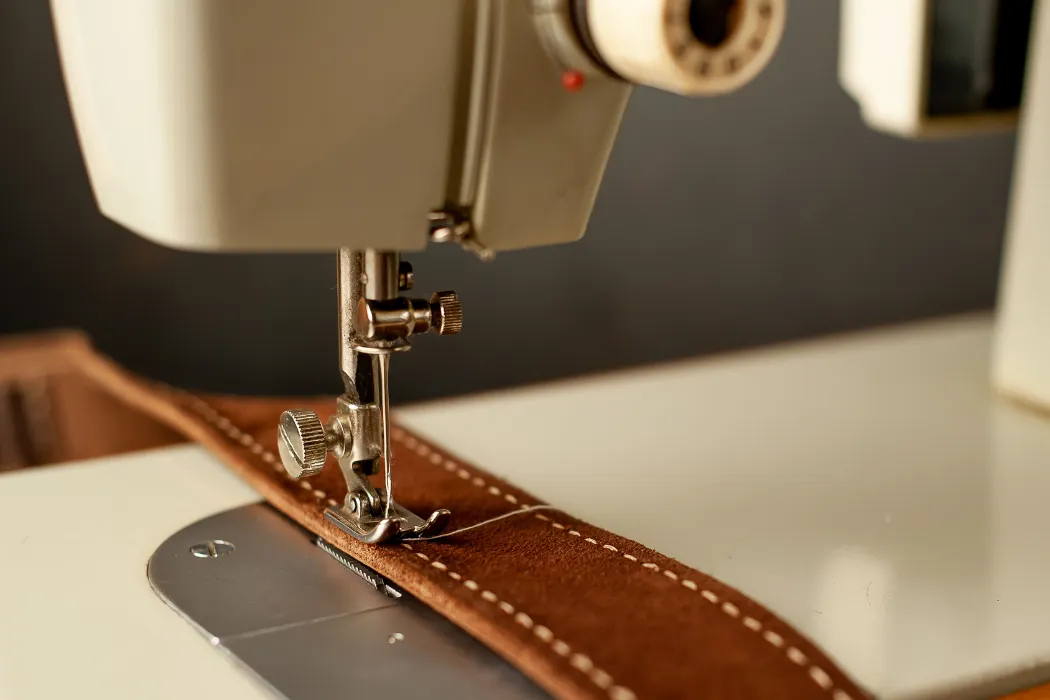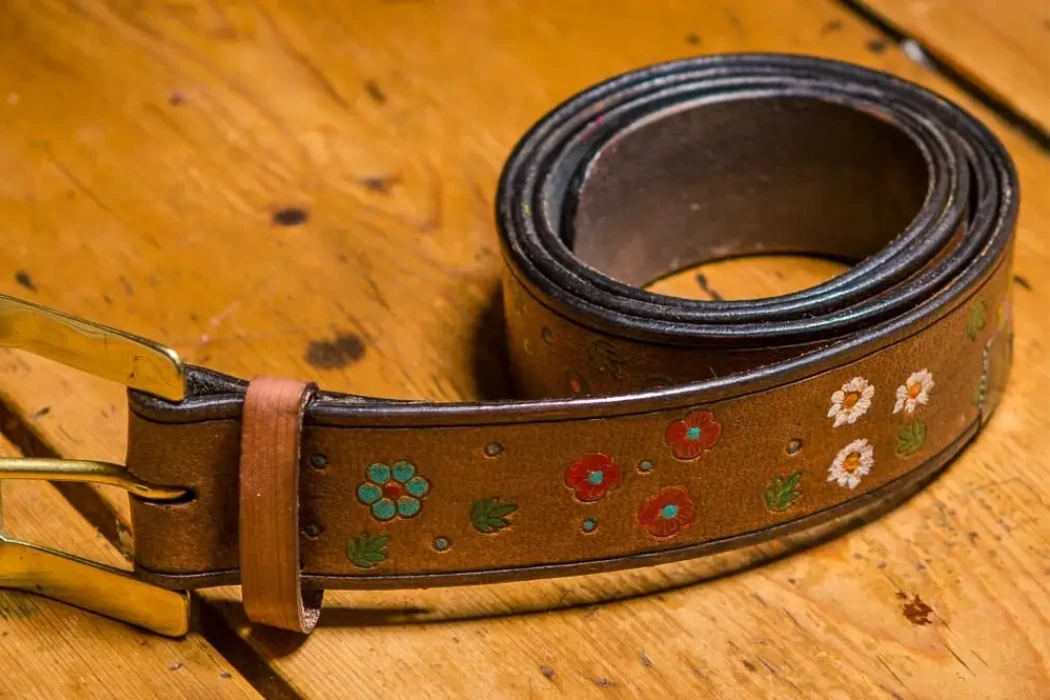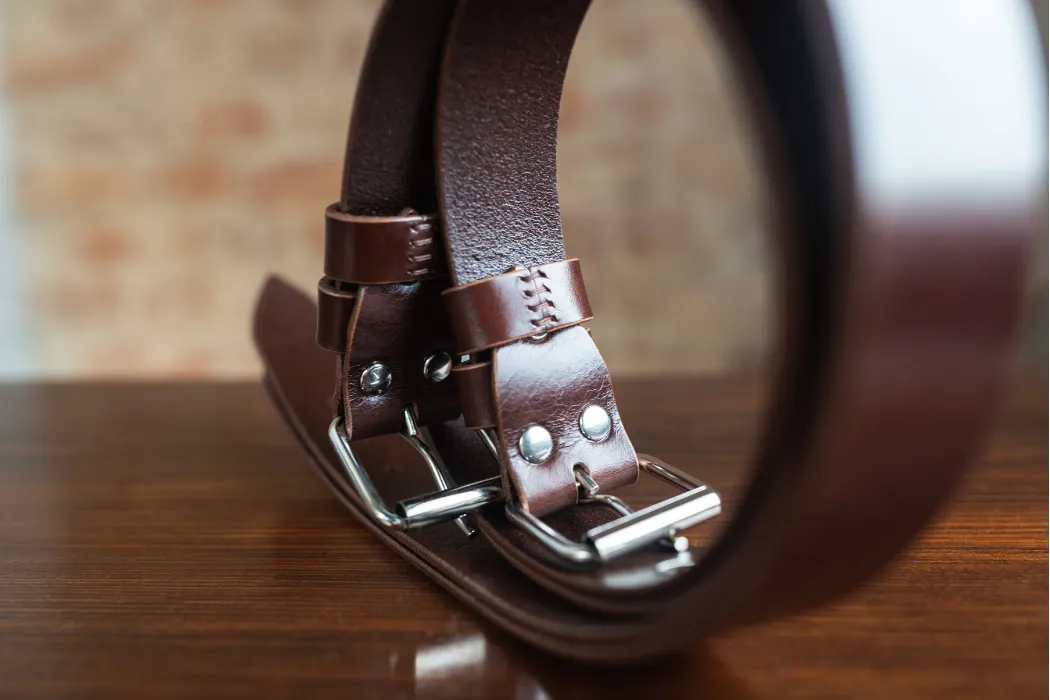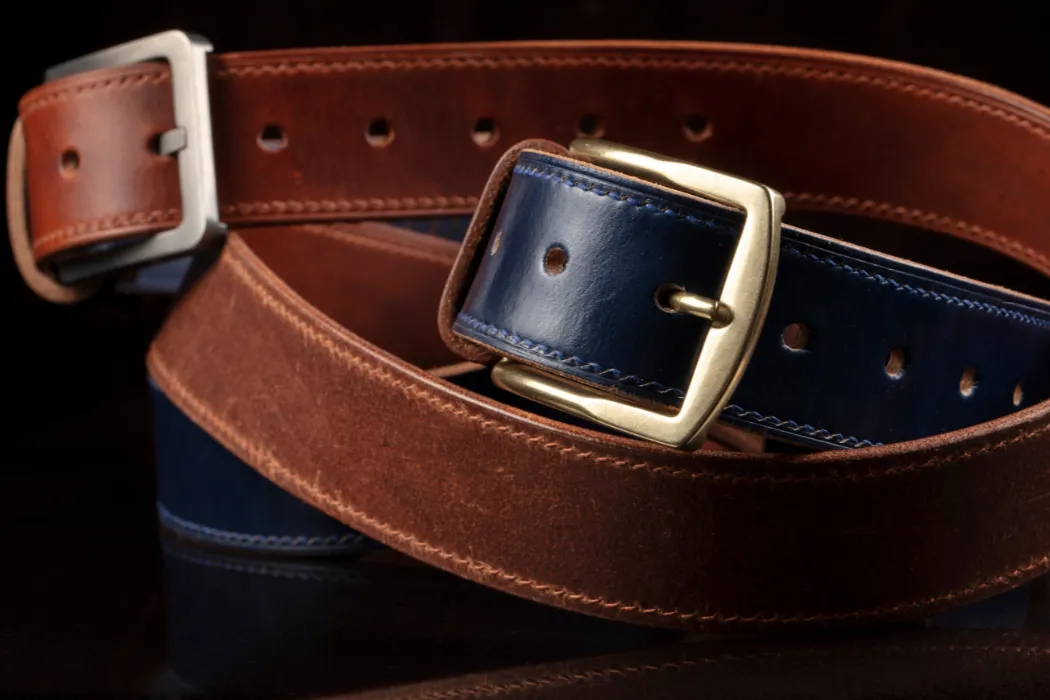
In a market where large-scale retailers demand both consistency and compliance, the PU leather belt stands out as the go-to material for high-volume production. With the global polyurethane leather market projected to reach USD 32.79 billion by 2025 and factories now capable of producing over 800k belts monthly, decision-makers are prioritizing materials that balance uniform quality, affordability, and international safety standards.
This article unpacks everything B2B buyers need to know about high-volume PU leather belts—from their engineering advantages and chemical compliance (REACH, CPSIA, OEKO‑TEX®) to their cost efficiencies, environmental realities, and market positioning. Whether you’re sourcing for global retail chains or OEM production, you’ll gain insights into how high-quality PU delivers scalable, compliant, and commercially viable results across millions of units.

Why is high-quality PU leather a staple for mass-market retail?
High-quality PU leather has become indispensable for mass-market retail because it delivers consistent aesthetics, reliable strength, and vast design flexibility—achieved through an industrial coating process that reduces costs, maximizes output, and ensures uniform texture across millions of units.
| Market Data | Performance Metrics | Lifespan and Compliance |
|---|---|---|
| Global polyurethane leather market valued at USD 32.79 billion by 2025, with projected 4.9% CAGR through 2035. | Superior tensile strength, rigidity, and surface friction achieved via polyurethane resin and cellulose fibre blend. | Typical lifespan: 1–7 years versus decades for genuine leather. Meets UV Grade 6+ and retail safety standards where applicable. |
The economic and production logic behind PU’s mass-market dominance
The economics of PU leather’s rise in mass retail hinges on its high automation potential and its ability to create uniformity at industrial scale. For factories supplying international brands, this consistency is not optional—it is the foundation of supply chain reliability and brand aesthetics.
- Global PU leather market valued at USD 32.79 billion by 2025 with 4.9% CAGR through 2035 driven by cost-sensitive sectors like footwear, bags, and belts.
- Automated coating on polyester or cotton bases ensures consistent color, grain, and texture—ideal for factories producing 800k+ belts monthly.
- Affordability and scalability outweigh shorter lifespan (1–7 years) versus genuine leather’s decades-long durability.
- Color, pattern, and finish customization via embossing rollers minimizes reject rates and enables rapid SKU diversification for retailers.
By removing reliance on natural hides, PU leather simplifies global sourcing logistics, creates reliable margins, and enables near-infinite design replication—qualities that make it the production backbone of brands competing on volume and aesthetic coherence.
Mechanical properties and quality benchmarks defining ‘high-quality’ PU leather
Defining “high-quality” in PU leather manufacturing comes down to controlled chemistry and processing precision. The interactions of polymer composition, base fabrics, and finishing layers establish measurable benchmarks that separate premium-grade PU from commodity synthetics.
- High-end PU uses polyurethane resin with dimethylformamide and cellulose fibre for superior tensile strength, rigidity, and surface friction.
- Enhanced features include UV resistance at Grade 6+, water resistance due to non-porous coatings, and soft, lightweight hand-feel.
- Manufacturing under high pressure and temperature ensures proper lamination and adhesion, reducing peeling and delamination risks.
- Topcoats with UV stabilizers and antimicrobials extend usability, aligning with retail safety standards such as REACH and CPSIA where applicable.
The interplay of these factors results in materials that rival genuine leather in aesthetic fidelity but with the durability ceiling determined by coating integrity rather than organic aging. In high-volume retail, “high-quality” thus becomes synonymous with process control, compliance confidence, and predictable performance per square meter of output.
How does PU belt manufacturing differ from genuine leather production?
PU belt production uses multi-layer chemical coating, foaming, and controlled lamination on textile bases, while genuine leather relies on biological tanning, mechanical cutting, skiving, sewing, and manual finishing steps.
Core Material and Process Differences
Polyurethane (PU) belt manufacturing and genuine leather production begin from entirely different origins—synthetic chemistry versus biological material. PU belts originate from fabric substrates such as polyester or cotton that receive multiple coatings of polyurethane and PVC-based resins. Genuine leather, in contrast, begins as animal hides that are treated through chrome tanning and mechanical processing.
- PU belts start with a polyester, cotton, or base cloth substrate coated with polyurethane resin and PVC slurry layers, while genuine leather belts begin as animal hides processed through chrome tanning.
- Genuine leather belts involve cutting, skiving, folding, lining, stitching, and buckle fixing; PU belts rely on chemical coating, foaming, and lamination without tanning steps.
This fundamental distinction defines the aesthetic and mechanical properties of each belt type: PU belts deliver consistent textures through industrial processing, while genuine leather carries the natural variations and tactile warmth of organic material.
Technical Parameters and Performance Outcomes
PU belt production is defined by measurable technical parameters such as resin viscosity, drying temperature, and foaming precision—factors that ensure reproducibility unmatched by natural leather. These industrial variables dictate the belt’s elasticity, breathability, and strength profile.
- PU coatings use polyurethane slurries of 500–2000 cps and PVC pulps of 2000–5000 cps, laminated and dried at 100–140°C under top/bottom blowing systems to prevent warping.
- Wet-process PU shows peel strength of 200–220 kgf/2.5cm, tearing strength 168–187 kgf, water permeability about 980–1080 mg/mm²·h, and gas permeability up to 2060 mL/mm²·h, delivering repeatable quality unlike variable leather hides.
In essence, PU belts achieve strength and flexibility through controlled chemistry rather than biological composition. This allows streamlined mass production with lower variation, while genuine leather belts retain craft-based individuality shaped by tanning, stitching, and finishing artistry.
From an engineering standpoint, PU’s scalability and physical uniformity make it ideal for consistent output in factory environments, whereas genuine leather continues to occupy niche, artisanal markets that value tactile character and natural resilience.
What are the modern durability benchmarks for “Vegan” leather?
Modern vegan leathers like Piñatex, AppleSkin, and cork now meet or exceed cowhide on abrasion, tear, and water resistance. Premium PU and microfiber versions offer 2–20 years of lifespan, passing Martindale abrasion and REACH safety tests.
Core Properties Defining Vegan Leather Durability
Durability in vegan leather is defined by its ability to withstand mechanical wear, environmental exposure, and repeated use without degrading in function or appearance. These properties are measured across metrics such as abrasion resistance, tear strength, tensile strength, water repellency, and crack resistance.
- Abrasion resistance ensures the surface layers remain intact under friction, critical for high-contact applications like footwear and upholstery.
- Tensile and tear strength measure how much force the material can take before deforming or ripping.
- Water repellency and resistance protect against moisture intrusion and swelling, particularly in plant-based composites.
- Crack resistance reflects long-term flexibility under repeated folding or bending.
Plant-derived leathers like Piñatex and AppleSkin demonstrate traction strength and flexibility comparable to top-grain cowhide. Both maintain anti-scratch surface integrity and visual smoothness over time, a critical benchmark achieved through layered fibrous construction and resin reinforcement.
Testing Standards and Material Performance Data
Laboratory testing now places modern vegan leathers within, or even above, animal leather performance thresholds for durability. The main international benchmarks include the Martindale abrasion test, tensile and tear strength tests (ISO and ASTM standards), and safety certifications such as OEKO-TEX and REACH.
- Piñatex and AppleSkin achieve ⭐⭐⭐⭐ abrasion resistance, with surface cohesion comparable to high-quality cowhide.
- Cork leather provides water and tear-proof performance, lasting up to 20 years under regular use.
- High-grade PU microfiber matches cowhide in lifespan—typically 2–3 years under daily wear—while low-cost, thin PU variants tend to crack within 12 months.
- All compliant materials carry OEKO-TEX, REACH, or PETA-Approved Vegan certifications, confirming the absence of phthalates and adherence to chemical safety standards.
Premium plant and synthetic hybrids also showcase high UV stability, mold resistance, and tactile suppleness, attributes previously exclusive to animal leather. By integrating 30–50% bio-content with synthetic binders, brands achieve a balance of environmental responsibility and mechanical resilience—defining the new durability benchmark for vegan materials.
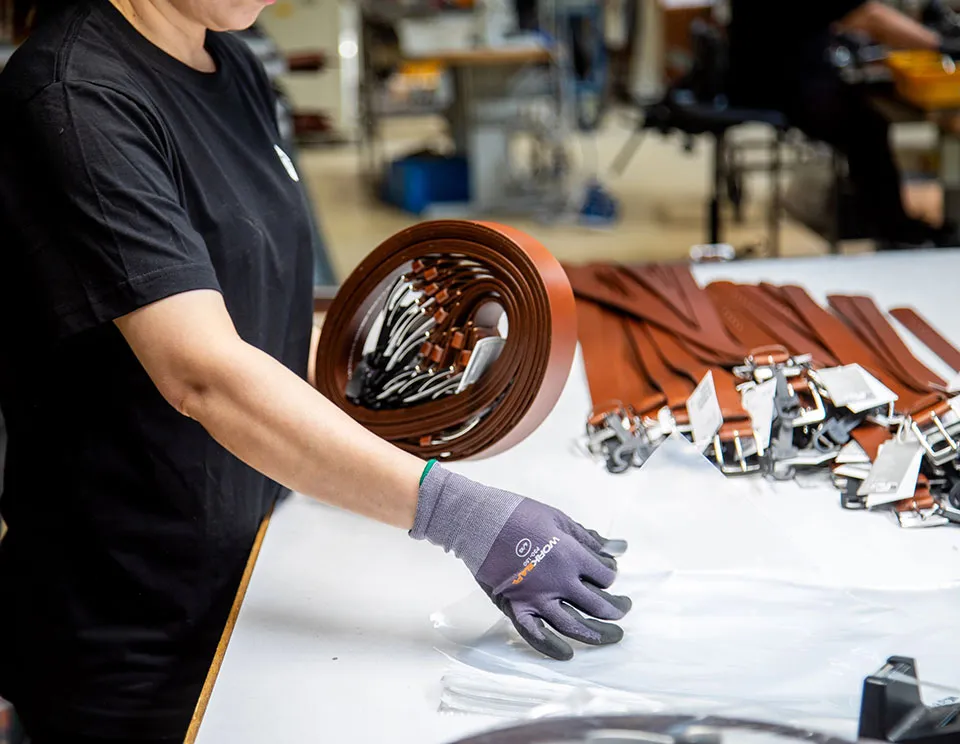
Custom Leather Belts Tailored for Your Brand
How to achieve a realistic leather “hand” and texture on PU surfaces?
A realistic leather ‘hand’ and texture on PU surfaces are achieved by applying controlled polyurethane coatings over flexible fabric backings, followed by precise embossing or stamping processes. Adjusting resin softness, thickness, and surface microstructure replicates leather-like feel and visual depth.
Understanding the ‘Leather Hand’ in PU Applications
The term “hand” in materials science captures the subtle combination of drape, deformation, and softness that defines how a material feels when manipulated. In genuine leather, this quality arises from the fibrous network of collagen and the natural elasticity of hide. In polyurethane (PU) leather, replicating that authentic hand demands a deliberate combination of polymer flexibility and backing fabric elasticity.
- PU leather achieves this by layering polyurethane resin onto polyesters or cotton fabrics that provide controlled stretch and softness comparable to natural hide structures.
- Wet-process PU combined with a dry-process surface facing can create subtle nap effects, adding both tactile depth and breathability.
- Surface micro-irregularities—introduced through textured rollers or embossing—enhance grip and realism by mimicking the organic irregularities of natural leather grain.
These combined effects yield a PU surface that not only looks natural but also behaves under pressure and bending in ways nearly indistinguishable from real leather.
Process Control and Mechanical Performance Tuning
Achieving consistency in tactile feel and surface performance depends on strict control of coating and embossing parameters. Each step affects the final “hand” and the durability of the PU composite.
- Coating operations—such as direct coating, wet casting, or thermoplastic extrusion—enable precision in resin thickness, directly influencing deformation and softness.
- Mechanical embossing and stamping create controlled micrograin structures replicating cowhide or goatskin patterns, offering a uniform depth and visual contour.
- Optimized PU formulations demonstrate peel strengths between 200–220 kgf/2.5 cm and tearing strengths around 168–187 kgf—evidence of balanced elasticity and bonding adhesion.
- High water permeability (≈980–1080 mg/mm²·h) and thermal stability up to 80 °C ensure hydrolysis resistance and retention of texture over long-term use.
- Final finishing stages—edge skiving, lining adhesion, and surface sanding—further enhance the tactile realism, preparing the PU for demanding applications such as premium belt manufacturing.
In short, the convergence of chemical formulation, mechanical processing, and microstructural finishing determines how convincingly PU can emulate the natural warmth and softness of genuine leather.
Research Insights
Empirical studies reinforce the importance of fine-tuning resin application and embossing mechanics. Wet-process PU bases with dry-process facings achieve the highest-rated nap effects and retain excellent breathability. Mechanical testing confirms strong adhesion and resistance to tearing, exceeding many traditional synthetic leathers. Furthermore, careful resin formulation enhances hydrolysis and ozone resistance, maintaining both appearance and feel across years of wear. These collective attributes make PU a dependable substitute for genuine leather, both aesthetically and functionally.
What chemical safety standards (Lead-Free/Phthalate-Free) are required?
PU leather belts must comply with REACH (EU) and CPSIA (U.S.) regulations, ensuring lead and phthalate levels are below strict ppm limits. Compliance with ZDHC MRSL 3.1, AFIRM RSL, and OEKO-TEX® standards is required to confirm absence of hazardous chemicals and ensure consumer safety.
| Standard/Regulation | Restricted Substances | Typical Limit Values |
|---|---|---|
| REACH (EU) / CPSIA (U.S.) | Lead, Mercury, Cadmium, Phthalates | Lead < 90 ppm; Phthalates < 1000 ppm (sum) |
| ZDHC MRSL 3.1 / AFIRM RSL | DMF, TDI, PVC, Chromium VI | DMF < 5 ppm; Chromium VI ≤ 3 mg/kg |
| OEKO-TEX® Leather Standard | General chemical exposure and VOC content | Certified “Safe to Skin” compliance |
Core Compliance Frameworks for Chemical Safety
Regulations surrounding lead-free and phthalate-free compliance for PU leather products are anchored in international consumer safety standards. These frameworks ensure that materials used in belts do not release or contain hazardous levels of substances that could pose health risks.
- REACH (EU) and CPSIA (U.S.) define legal limits for lead, mercury, cadmium, and phthalates in consumer goods.
- ZDHC MRSL 3.1 and AFIRM RSL frameworks align with brands like H&M, enforcing restrictions on over 400 substances including PVC, DMF, and TDI residues.
- OEKO-TEX® Leather Standard certification ensures tested materials meet safety and environmental thresholds for consumer exposure.
Testing Metrics and Limit Values for PU Leather
Testing protocols validate compliance with global thresholds for chemical safety. Standardized methods under ISO and EN standards are used to evaluate phthalate content, chromium presence, DMF residues, and pH stability in PU-coated surfaces.
- Phthalate limits: 200 ppm (sum) and 200 ppm (individual) for all materials; leather category allows up to 1000 ppm sum / 500 ppm individual.
- Chromium (VI) restricted to ≤3 mg/kg (EN ISO 17075); Chromium-free design below 100 ppm following EN 15987/EN ISO 17072-2.
- DMF limited to 5 ppm (AFIRM RSL, EN ISO 17072-2); pH requirement for PU surface: 3.2–5.5 (EN ISO 4045:2008).
- Third-party verification with Intertek or SGS used to certify compliance to LWG, BSCI, and ISO 9001 quality systems.
For PU leather belts intended for global distribution, adherence to REACH and CPSIA remains mandatory to control exposure to lead and phthalates. Reinforced through industry benchmarks like ZDHC MRSL 3.1 and AFIRM RSL, these standards eliminate harmful compounds—tested against ISO and EN metrics. Compliance certification through OEKO-TEX®, LWG, and accredited labs ensures transparent traceability, enabling consumer trust and sustained market access.
How can high-volume PU orders (800k monthly) reduce total COGS?
High-volume PU orders reduce total COGS by leveraging economies of scale. Fixed costs such as tooling, setup, and workforce become amortized over larger quantities, while automation and integrated material sourcing streamline production and lower per-unit cost.
Scaling PU leather production to 800k monthly units transforms the cost structure of manufacturing by spreading fixed setup efforts, increasing operational continuity, and capturing supplier efficiencies. Each of these dimensions directly influences the total COGS, making large-volume strategies highly attractive for B2B buyers seeking consistent margins and predictable delivery timelines.
Economies of Scale and Amortized Setup Costs
The essence of economies of scale is straightforward—produce more, pay less per unit. In PU manufacturing, every efficiency compounds because the processes rely on fixed tooling, energy-intensive equipment, and stable workforce routines. As production volume reaches 800k+ units per month, these costs flatten across greater output, driving the per-unit cost sharply downward while maintaining consistent quality.
- Bulk runs after sample approval (5–6 weeks) enable consistent use of tooling and molds without repeated setup costs.
- Automation allows labor cost and machine time per unit to remain stable even as production grows to 800k+ monthly units.
- Material procurement at scale (polyester base fabric, polyurethane slurry) benefits from supplier discounts and reduced per-unit logistics costs.
After the initial sample production period of 7–14 days, mass production transitions into an optimized cycle lasting 5–6 weeks with automated assembly lines. This structure minimizes idle resources and accommodates continuous use of molds, fabric rolling, and curing ovens, ensuring no additional overheads are incurred from repeated setups.
Integrated Manufacturing and Process Efficiency Gains
At very high volumes, manufacturing efficiency evolves beyond cost saving—it becomes a system of synchronized operations. By vertically integrating leather processing—from polyurethane preparation to embossing and quality control—manufacturers gain absolute control over waste reduction, process timing, and compliance costs. These factors collectively tighten COGS without compromising product integrity.
- Dry-process curing (36–48 hours) and wet-process DMF solvent gelling are optimized through continuous operation cycles reducing downtime.
- Post-sample automation enables uniform quality control during embossing, coating, and solvent washing stages.
- Compliance and certifications such as OEKO-TEX, REACH, CPSIA, and ISO 9001 reduce waste and rework costs, maintaining quality under high capacity.
- Hoplok’s vertical integration through its in-house tannery and facilities in China and Cambodia minimizes third-party markups and freight expenses.
In practice, when a facility runs continuously with integrated curing and solvent removal lines, the marginal energy consumption decreases. Equipment such as DMF gelling tanks and embossing stations are designed for continuous operation, which prevents heat-up and cooldown losses. The result is a reliably lower cost per meter of PU leather, aggregated across hundreds of thousands of units.
Research Summary
Empirical data from PU belt suppliers confirms that high-volume runs (800k monthly) deliver tangible efficiency gains through rigorously timed workflows and automated production lines. With sample lead times ranging from 7–14 days and full mass production cycles of 5–6 weeks, manufacturers sustain predictable throughput in one to two months total delivery time, aligning with lean resource allocation.
Both dry and wet PU processes—coating, curing, and surface finishing—benefit from large-batch operations. Continuous cycles of 36–48-hour curing or DMF gelling ensure stable environments and consistent material texture. High throughput also enables flexible customization (e.g., embossed logos, layered coatings) without prolonging the total production timeline.
Although specific unit reduction percentages are proprietary, supplier literature highlights measurable gains through efficient curing systems, solvent recovery, and certified environmental practices. Compliance with OEKO-TEX and REACH standards ensures long-term cost stability by minimizing rework, waste, and product returns—making large-scale PU production not just cheaper, but more reliable.
What are the environmental realities of modern synthetic leather?
Modern synthetic leather, primarily PU, emits less CO₂ and uses fewer resources than animal leather, but it remains fossil-fuel based, non-biodegradable, and releases harmful substances during disposal, creating long-term environmental challenges.
Comparing PU Leather’s Environmental Footprint to Animal Leather
When comparing modern polyurethane (PU) leather to genuine animal leather, measurable lifecycle data shows a notably lower impact for PU across most categories. This advantage primarily stems from the removal of livestock rearing and tanning, both resource-heavy and emission-intensive processes inherent to animal leather.
- PU leather’s full supply chain produces roughly 15.8 kg CO₂e per m², compared with cowhide’s 110 kg CO₂e when cattle emissions are included.
- Avoiding cattle rearing eliminates methane impacts—methane is 25 times more potent than CO₂.
- Water-based PU systems emit fewer hazardous chemicals and VOCs than PVC processes.
- PU shows 33–50% less environmental impact than real leather per m².
In essence, PU leather benefits from reduced greenhouse gas emissions and limited chemical toxicity under manufacturing conditions, particularly when adopting water-based systems. However, these advantages apply mainly to production and early lifecycle stages.
Lifecycle Challenges: Fossil Sources, Persistence, and Disposal
Despite offering lower emissions during production, PU leather’s environmental burden becomes more apparent at later stages. The material’s synthetic origin, energy-intensive creation, and difficulties in disposal create persistent long-term issues.
- PU derives from non-renewable petroleum-based polymers and remains energy-intensive to produce.
- End-of-life disposal is problematic: non-biodegradable PU persists hundreds of years in landfills.
- Incineration releases isocyanates, nitrogen oxides, carbon monoxide, and hydrogen cyanide.
- Regulatory standards like REACH and CPSIA limit chemical content but do not address full lifecycle metrics.
These disposal challenges point to a hidden cost in sustainability terms. While regulations govern toxicity limits during manufacturing, they barely engage with broader lifecycle impacts—meaning PU leather remains locked within a fossil-derived, non-circular economy model. Until innovations like bio-based PU or effective recycling systems scale up, synthetic alternatives continue to exchange immediate emissions savings for persistent environmental debt.
How to market PU belts as a sustainable alternative to genuine leather?
Marketing PU belts as sustainable requires reframing their appeal around affordability, animal-free ethics, and evolving low-impact coatings—supported by clear disclosures about petrochemical origins and recyclability, to avoid greenwashing and build trust with environmentally conscious consumers.
Reframing Sustainability in PU Belt Marketing
Traditional marketing narratives often attempted to label polyurethane (PU) leather as an eco-friendly substitute for real leather. However, to maintain credibility, modern communication must evolve toward realism—acknowledging the material’s synthetic roots while emphasizing other consumer values. Rather than claiming “green” advantages, PU belts can be positioned through accessible, inclusive, and ethical lenses.
- Avoid greenwashing by clarifying that PU is petroleum-derived and non-biodegradable but offers a cruelty-free and lower-cost option for consumers avoiding animal products.
- Position messaging around ethics, fashion accessibility, and lightweight durability rather than false sustainability claims.
- Educate consumers on proper product care to extend lifespan, thus minimizing replacement frequency.
This reframing communicates authenticity—inviting consumers to see PU belts not as “green leather” but as a deliberate, animal-free style choice that aligns fashion with affordability and evolving material technology.
Data-Driven Messaging: Transparency and Compliance Claims
Sustainability-conscious audiences are increasingly data-literate. Backing product messaging with verifiable facts—not vague eco-statements—builds genuine credibility and protects brands from scrutiny. Instead of claiming inherent sustainability, the focus shifts toward safety, compliance, and responsible production processes.
- Reference compliance with REACH, CPSIA, and OEKO-TEX standards to assure absence of restricted substances like lead or phthalates.
- Highlight manufacturing under certified facilities such as BSCI or ISO 9001 to validate responsible production rather than intrinsic material sustainability.
- Include measurable data such as belt longevity (months to years) and recyclability potential to maintain authenticity across sustainability-focused campaigns.
Adopting quantitative transparency builds trust: rather than overpromising environmental benefits, PU belt brands can demonstrate accountability through documented supply chains, safety certifications, and clear product lifespan indicators.
Research Context and Insights
Research indicates that PU leather is petroleum-based and can persist for centuries in landfills, contradicting narratives that label it as biodegradable or eco-neutral. The material’s production processes often release volatile organic compounds (VOCs), dioxins, and heavy metals, contributing to air and water pollution. These realities underline the need for brands to market PU belts responsibly, centering honesty rather than exaggerated ecological claims.
- PU leather is non-biodegradable and derived from petrochemicals, with decomposition taking hundreds of years.
- Production often involves VOC emissions and potential heavy-metal contamination, posing compliance and reputational risks.
- Average durability ranges from several months to a few years; cracks and peeling are common if not properly maintained.
- Real leather alternatives, when responsibly sourced and vegetable-tanned, may outperform PU in longevity and biodegradability.
These findings reinforce that successful PU belt marketing should emphasize product transparency, value accessibility, and animal-free benefits—ultimately positioning the material as an ethical consumer choice within its true environmental context rather than a fully sustainable one.
What are the standard lead times for mass-produced PU collections?
Mass-produced PU collections generally require between 15 and 40 working days for production, depending on the type of product, order complexity, and factory workload, with simpler items like folders produced faster than complex bags or belts.
Factors that determine PU collection production timelines
Several interconnected factors influence how long it takes to produce PU leather collections at scale. These go beyond mere machine speed and touch on the strategic design of the manufacturing process.
- Lead times vary based on product complexity, order size, and finishing processes such as embossing, coating, or lining assembly.
- Factories in China and Cambodia, like Hoplok’s, can leverage dual-location setups and vertical integration to reduce procurement and finishing delays.
- Material MOQs, machine setup times, and custom tooling can extend timelines beyond 40 days.
In essence, every additional layer of customization—whether in the emboss pattern, color coating, or hardware specification—translates directly into additional days or weeks in production scheduling.
Typical lead time ranges in PU leather mass production
Although production speed depends on numerous variables, industry data reveal widely accepted timeframes for various PU items. The following typical ranges provide a practical view of manufacturing expectations across common categories.
- PU A4 presentation folders typically require 15–20 working days.
- PU backpacks generally take 30–40 business days depending on design.
- OEM bag manufacturing averages 2–3 weeks for basic local runs, but up to several months for large or complex international orders.
- Special vegan or non-standard PU formulations can extend lead times to 70–100 days due to material MOQs and supplier scheduling.
Data from regional suppliers confirm that the lower end of these ranges applies when production lines are optimized for a single PU recipe and standardized components. Once product design or colorway diversity enters the mix, the coordination of input materials and specialized treatments introduces exponential time costs.
Research indicates that manufacturing efficiency in facilities across China and Cambodia benefits from integrated PU coating and finishing. Still, OEM operations handling bespoke tasks—like small-batch PU belts or eco-grade polyurethanes—can extend well beyond the 40-day benchmark when minimum order quantities and procurement logistics interact with tight production calendars.
Final Thoughts
High-volume PU leather belt production showcases how synthetic materials have reshaped the fashion and accessories industry—balancing affordability, design consistency, and compliance with modern safety and performance standards. Through controlled chemistry, industrial precision, and evolving mechanical properties, PU leather continues to bridge the gap between functional durability and the visual appeal of genuine leather, delivering reliable mass-market solutions that meet both budget and branding demands.
As global manufacturing moves toward transparency and ethical accountability, PU belts represent a pragmatic midpoint between sustainability aspirations and economic efficiency. Their future competitiveness will depend on continuous innovation in water-based coatings, bio-based polymers, and circular design strategies. For brands and buyers alike, success lies not in labeling PU as a perfect substitute for leather, but in articulating its true value proposition—cost-effective, compliant, customizable, and evolving toward more responsible production paradigms.
Frequently Asked Questions
Is PU leather durable for belts?
PU leather is moderately durable, with a lifespan of about 3–5 years under proper care. It can peel or crack sooner than genuine leather, making it suitable mainly for short-term or fashion use.
How long does a PU belt last?
A PU leather belt typically lasts 3–5 years if well maintained, though low-grade variants may wear out within 6–24 months due to peeling or degradation.
What’s the difference between PU and bonded leather?
PU leather is fully synthetic, crafted from polyurethane over a fabric base, while bonded leather blends 10–30% shredded real leather fibers with synthetics. Bonded leather can be slightly more durable but costs more and still tends to peel over time.
Does PU leather peel easily?
Peeling occurs when the polyurethane coating delaminates from the fabric base, often due to wear or poor quality. High-grade PU that passes ISO 813 peel strength tests can remain intact for 2–5 years of normal use.
Is PU leather vegan friendly?
Yes. PU leather uses no animal-derived materials, being made entirely from polyurethane-coated fabric, making it a 100% vegan alternative to real leather.
How can you identify high-quality PU leather?
High-quality PU meets standards like IKEA’s callosity defect tolerance (<1.5cm), pH balance per EN ISO 4045, and flexing durability under EN ISO 5402. It maintains color, gloss, and texture consistency for 2–5 years of use.