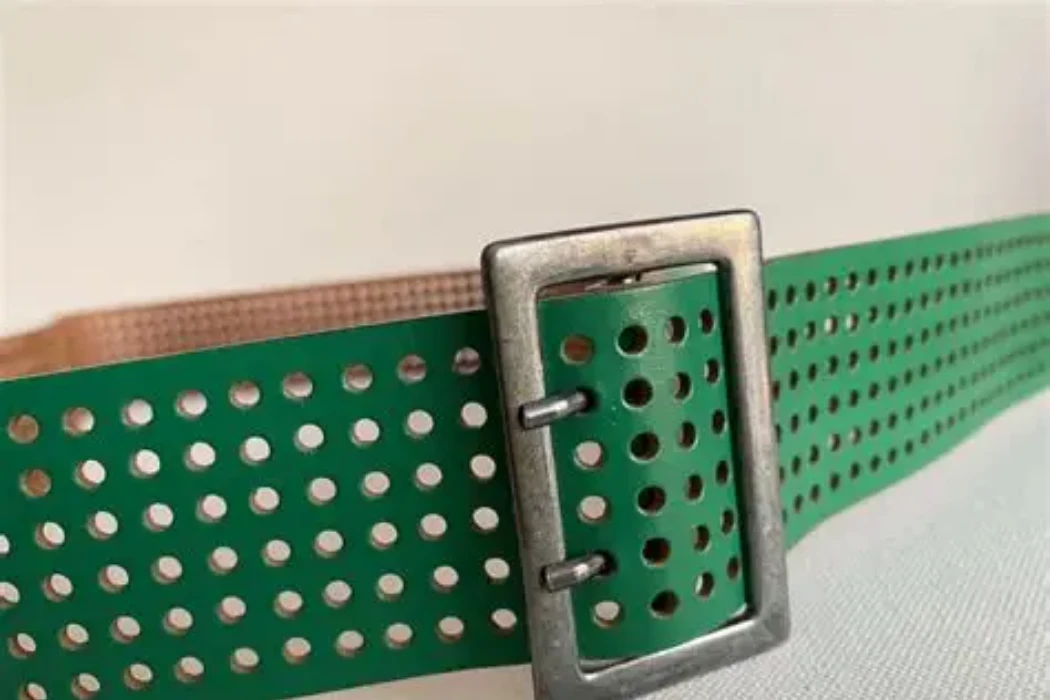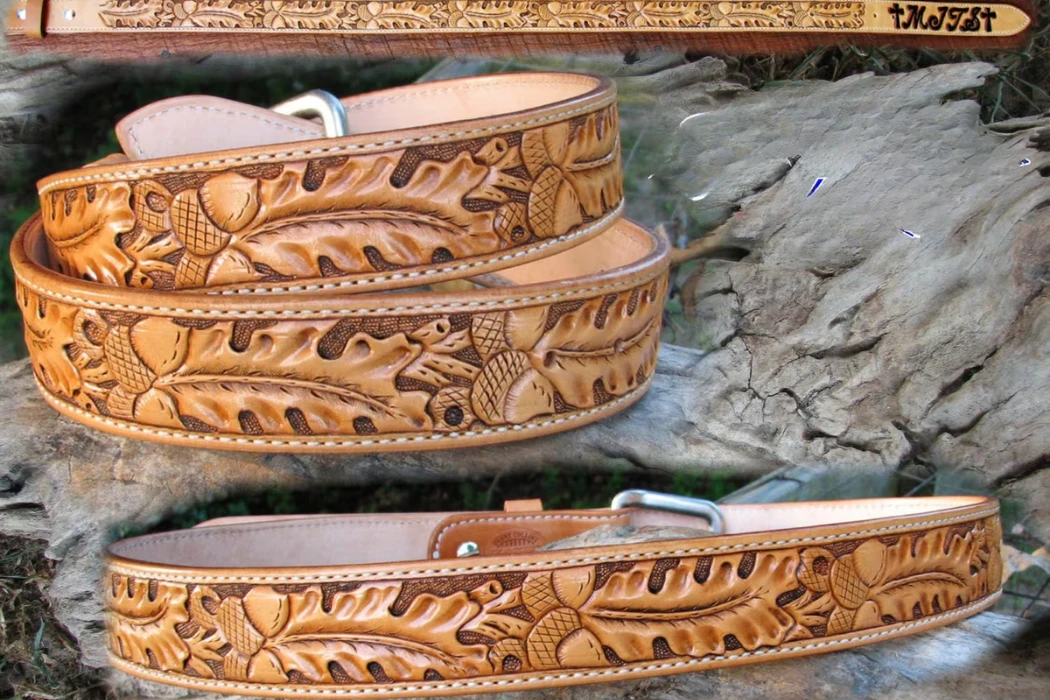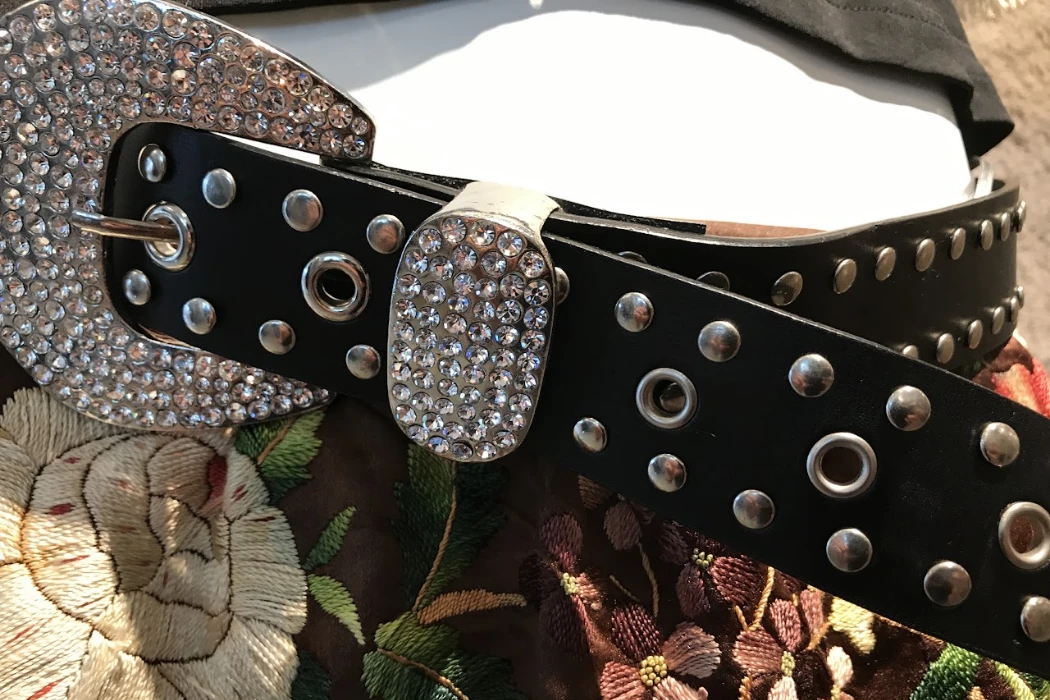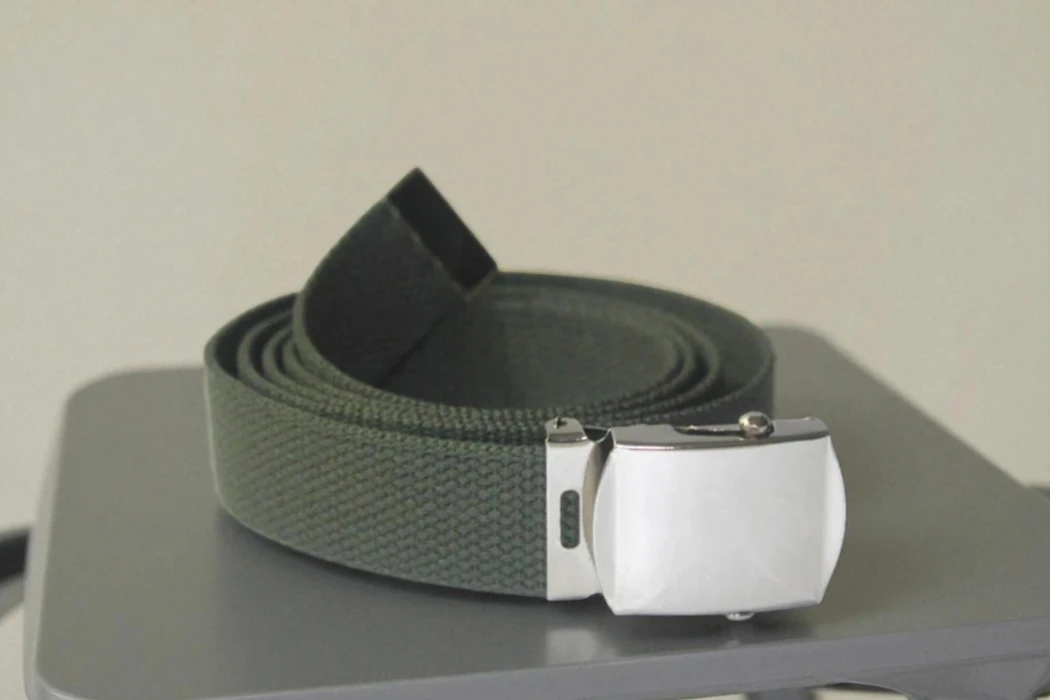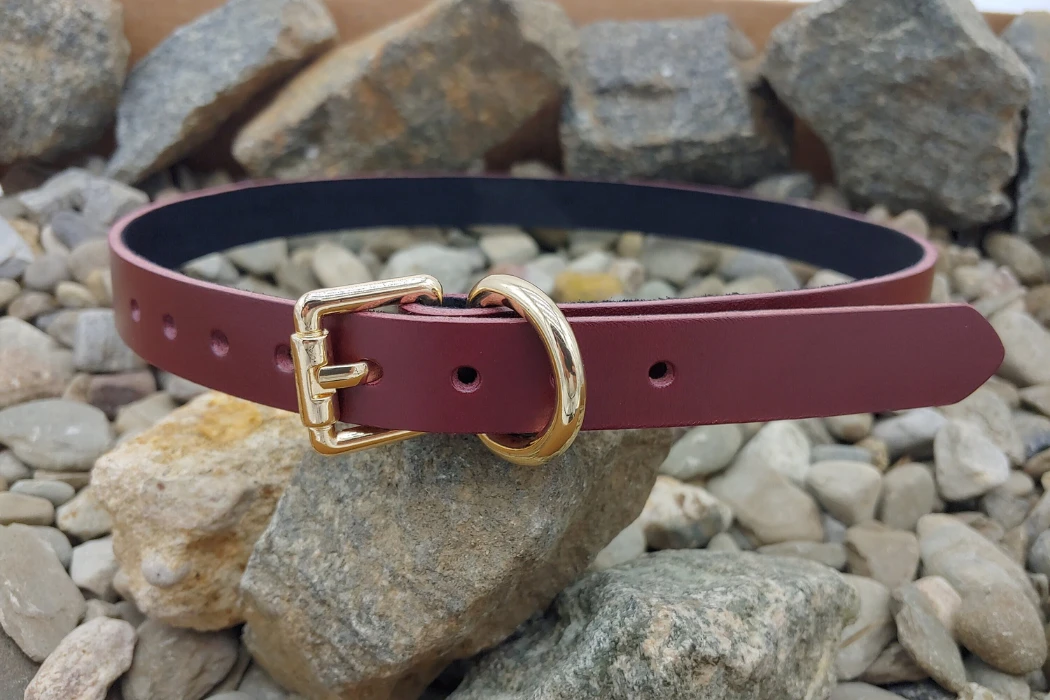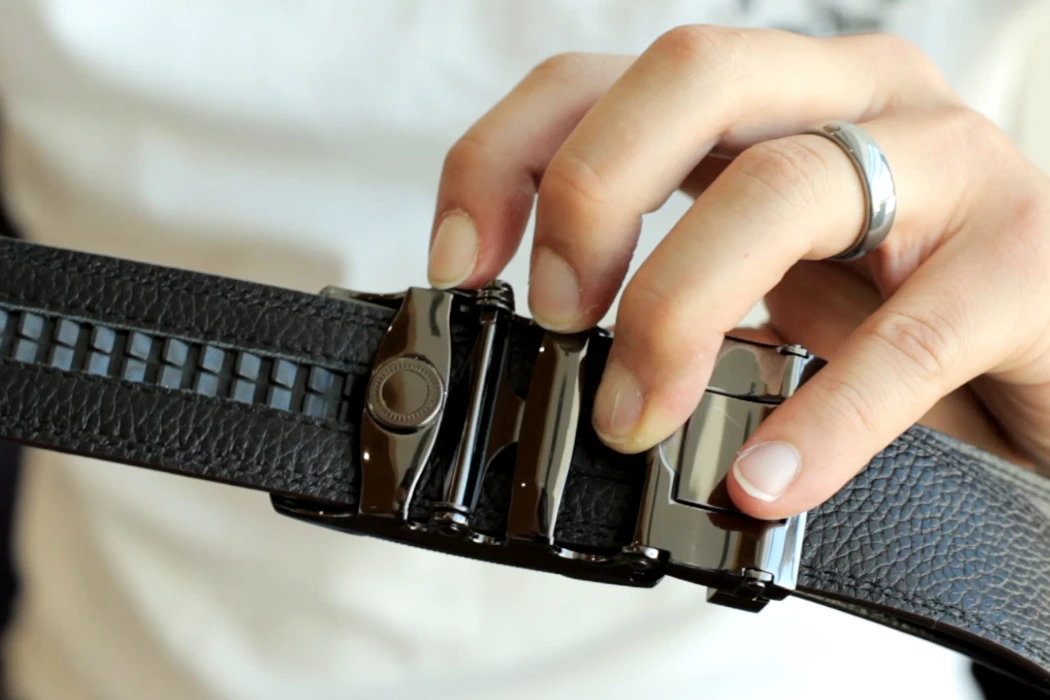
Oval and square belt buckles differ first in their outline: one uses a continuous curve, while the other uses straight sides and corners. That outline influences the collection’s visual character, but it does not determine the closure mechanism, metal quality or comfort. Both shapes can be understated frames or decorative plates.
For brands, compare the two shapes at the same strap width, using drawings and assembled samples. This avoids confusing a large engraved oval plate with a small plain square frame and attributing every difference to shape.
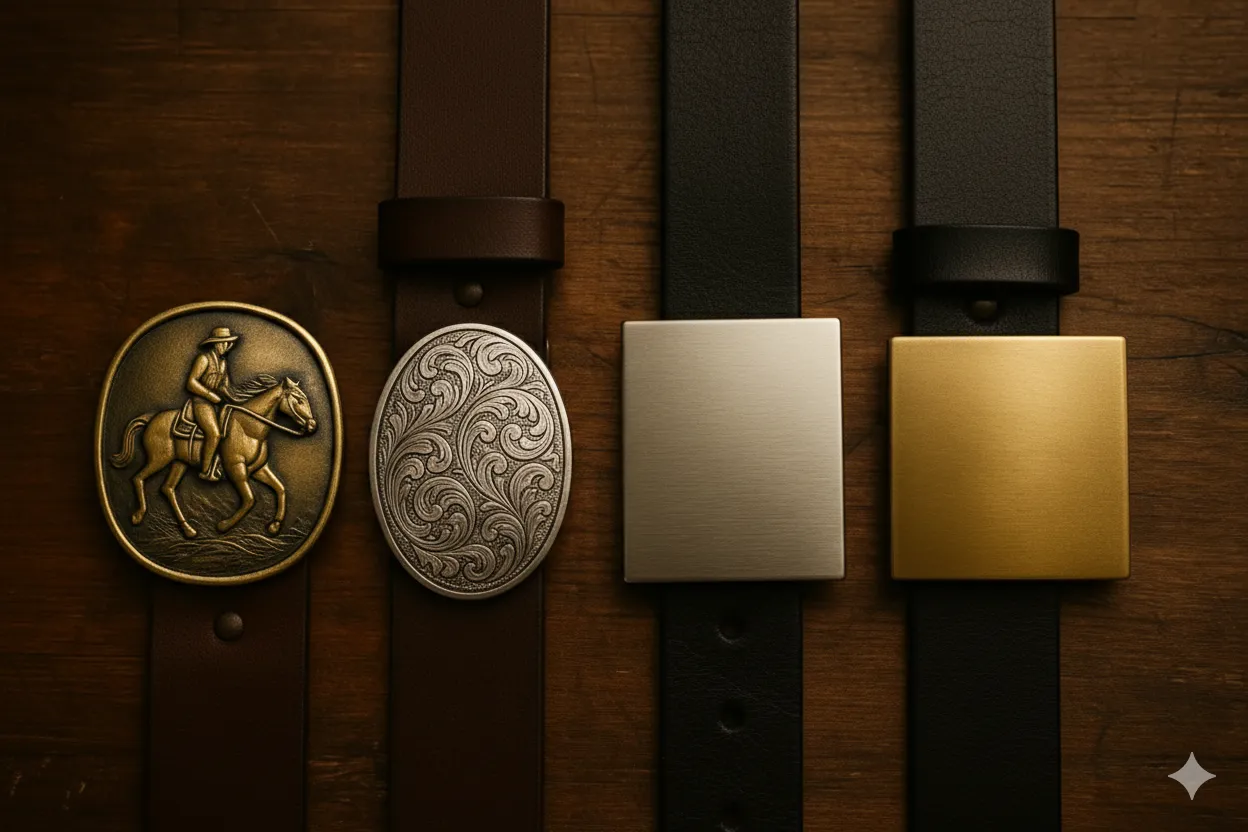
Shape examples illustrate different visual treatments. They do not establish material composition, manufacturing origin or functional compatibility.
Compare like with like: outline, structure and mechanism
An oval frame with a prong is mechanically closer to a square prong frame than to an oval plate with a rear hook. Likewise, a square decorative plate is not the same product as a square open frame. Start your comparison with three separate fields: outside outline, frame or plate construction, and fastening method.
“Square” is also used loosely in fashion descriptions for rectangular buckles. A technical drawing should state the outside width and height, corner radii and usable strap opening. Do not ask the supplier to infer proportions from the product name.
| Question | Oval option | Square or rectangular option |
|---|---|---|
| What visual line does it introduce? | A curved outline that can soften the belt front | A geometric outline that can echo seams and straight strap edges |
| Can it suit a restrained collection? | Yes, with an appropriate scale and surface treatment | Yes, with an appropriate scale and surface treatment |
| Can it carry decoration? | On the frame or a broad plate face | On the frame or a broad plate face |
| What controls fit? | Inside clearance, depth, curvature, attachment and strap | The same interface dimensions and assembled checks |
Use the collection brief to choose visual proportions
For a restrained dress-belt line, compare a small oval frame with a similarly restrained rectangular frame. For a statement collection, compare plate designs with similar face area and decoration. Approve them beside the garments, shoes and other hardware that the collection is intended to accompany.
Finish can change the result as much as outline. A dark matte square can look less prominent than a polished oval of the same size; an engraved rectangular plate can read more decorative than a plain oval frame. Review gloss, texture, relief and color rather than labeling all ovals casual and all squares formal.
For online selling, look at the buckle in a full outfit photograph and a close-up. The close-up reveals finish quality; the wider image shows whether the scale and contrast fit the collection. Approve both before finalizing packaging and product photography.
Comfort comes from the three-dimensional shape
A rounded outline can remove exposed corners, but an oval buckle can still press into the wearer if it is large, flat, thick or mounted awkwardly. A square frame with rounded edges and suitable curvature can be comfortable. Evaluate the back and side profile as carefully as the front.
- Check the buckle’s depth and how far the assembly projects from the waistband.
- Inspect corners, prong tips, decorative details and the reverse face for sharp or rough contact points.
- Try the finished belt while seated and standing, using the intended trouser rise.
- Check whether the buckle tilts, rotates or pulls the strap off-center.
- Compare weight on the actual strap rather than treating heft as proof of quality.
Record observations against the same fit protocol for both candidates. “Oval is more ergonomic” is not an adequate acceptance criterion.
Keep buckle size separate from strap size
The outside width of a decorative buckle may be much greater than the strap it accepts. The usable inside bar or bail dimension is the relevant starting point for strap fit. Thickness, fold allowance, edge finish and the free-end route also need clearance.
If the collection offers both shapes on one strap, test each combination. A longer buckle can change the fitted circumference relative to the same hole location. A different frame may require a different tongue slot or keeper position. Swapping shapes can therefore require a revised size reference even when both parts are described as the same nominal width.
For frame hardware, component suppliers distinguish constructions such as center-bar buckles. Request the drawing for the selected model, not just a front-view image.
Material and finish are independent purchasing decisions
Brass, steel and zinc alloy can be used in different buckle designs. Neither oval nor square outlines require a particular metal, and a heavy buckle is not necessarily solid brass. Specify the base material, manufacturing process where important, plating or coating, surface texture and color reference.
Review casting detail, pits, seams, burrs and finish coverage. For decorated plates, check raised features and recessed areas as well as the prominent face. For open frames, check the inside edges that contact the strap. Agree the relevant corrosion, abrasion and other finish tests for the application and market.
A plated buckle should not inherit care instructions intended for an uncoated solid metal. Approve the care method with the finish supplier, and avoid blanket claims such as “rust-proof,” “hypoallergenic” or “will never chip” without supporting evidence.
Compare tooling and unit costs on the same basis
An existing hardware model may simplify development, while a custom outline, relief logo or unusual section can require new tooling. Ask what the quote includes: drawings, prototypes, mold changes, finish trials and replacement tooling responsibilities. The shape name does not predict the cost by itself.
When comparing two quotes, keep metal, finish, quantity, packing and testing requirements constant. Otherwise, a lower price for one shape may really reflect a different material or surface process. Retain the approved drawing and sample with the final order specification.
Choose the sample that works across the intended range
Select the outline after checking the whole belt: garment fit, front profile, closure action, edge contact and appearance. Keep a concise decision record showing why the selected sample meets the collection brief. If both shapes are retained, document their compatible straps and size references separately.
For a Hoplok custom belt enquiry, provide both buckle concepts with the strap construction and target quantities. Confirmed belt minimum orders are 300 leather pieces or 1,000 PU pieces. Sampling takes 2–3 weeks and bulk production 60–90 days; custom hardware requirements and color splits should be confirmed in the quotation.
For decorative collections, compare Western and everyday buckle specifications.