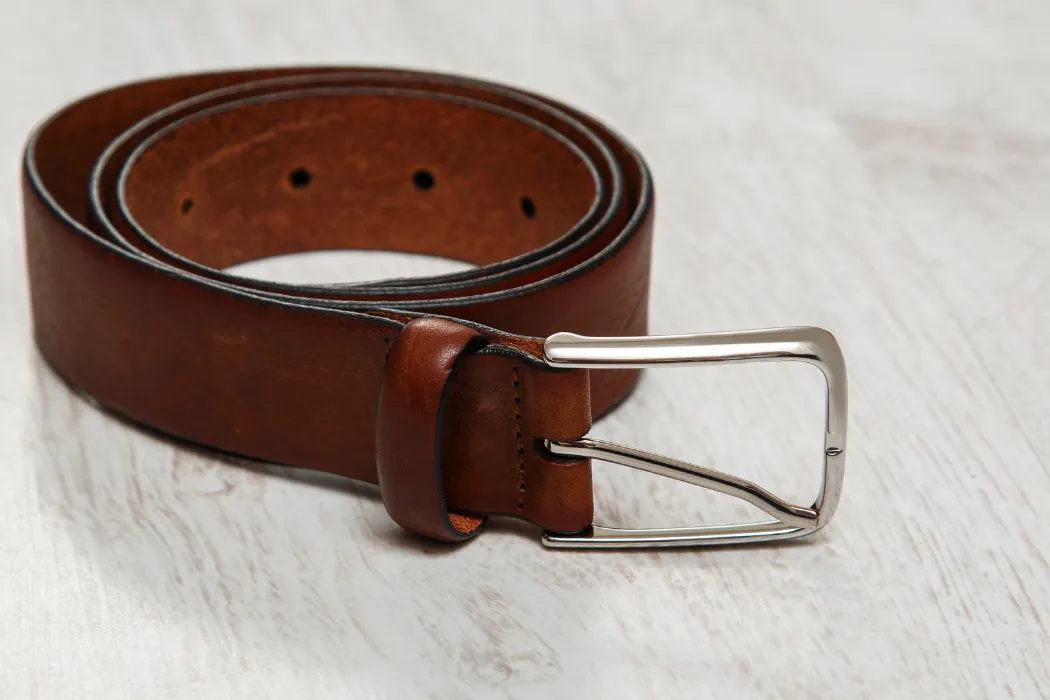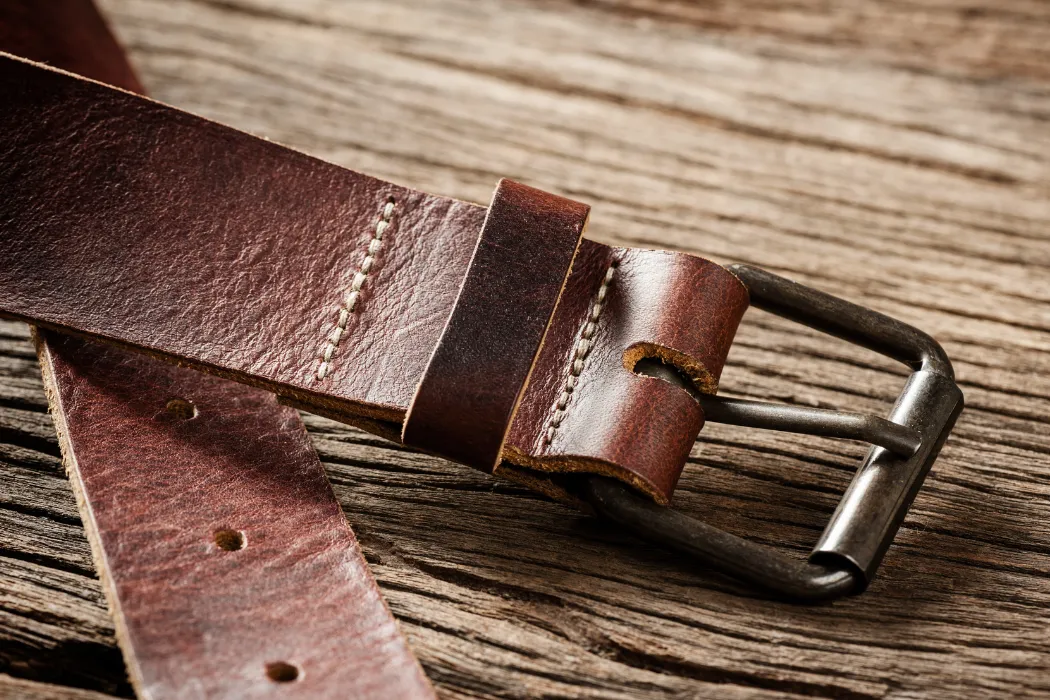
A sleek leather belt might look perfect on a retail shelf, but if it contains hidden heavy metals or was produced using unethical labor, it instantly becomes a massive liability. For global fashion brands, a single compliance failure does not just mean a fine; it triggers product recalls, consumer lawsuits, and irreversible reputation damage. In 2026, “quality” is no longer just about aesthetics; it is fundamentally about safety and transparency.
Regulatory bodies in the European Union and the United States have aggressively tightened their grip on fashion supply chains. Strict standards like REACH and CPSIA now act as non-negotiable gatekeepers, blocking any shipment that tests positive for hazardous substances like lead or Chromium VI. Simply put, without the correct laboratory reports and audit trails, your inventory cannot legally cross international borders.
Navigating this complex regulatory landscape requires knowing exactly which audits provide real protection. This guide breaks down the six most critical compliance certifications for leather belts, strictly covering chemical safety standards, environmental stewardship audits, and ethical labor verifications to ensure your products remain safe, legal, and profitable in the global market.
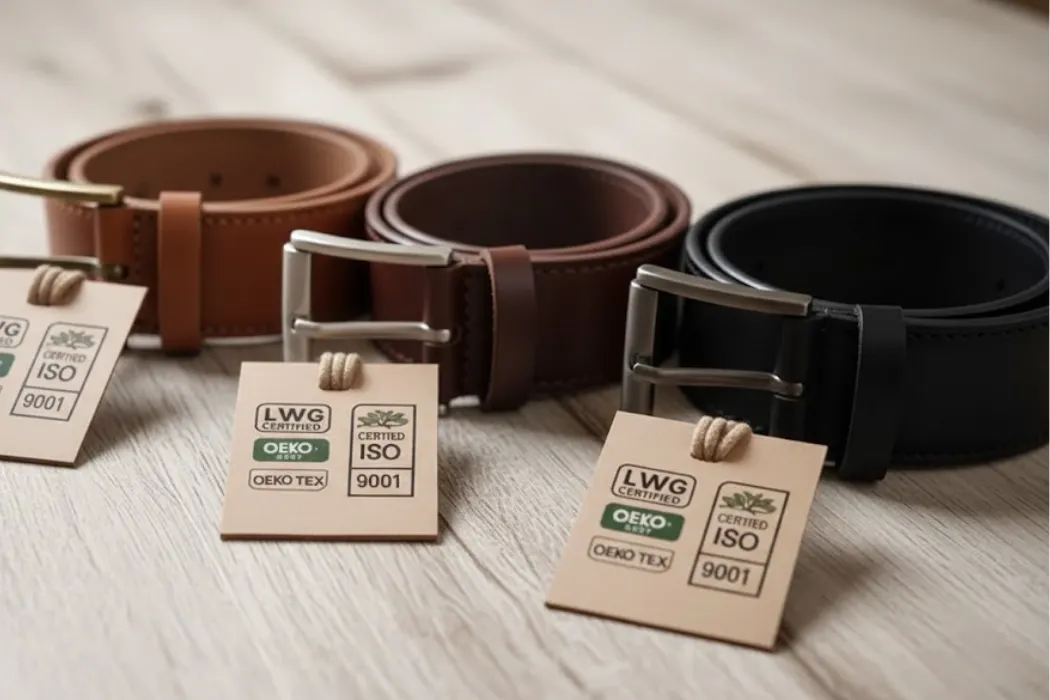
What Are the Critical Chemical Safety Standards? (REACH & CPSIA)
Chemical safety is the absolute baseline for entering Western markets. If a leather belt fails a chemical test, customs authorities will seize the shipment immediately. The two most important frameworks you must understand are the European Union’s REACH regulation and the United States’ CPSIA and Proposition 65 standards.
Understanding EU REACH Regulations
REACH (Registration, Evaluation, Authorisation, and Restriction of Chemicals) is the strictest chemical law in the world. It applies to all consumer goods sold within the European Union. For leather belts, the most critical part is Annex XVII, which lists restricted substances that cause cancer or environmental damage.
- Scope: It covers every component of the belt, including the leather strap, the metal buckle, and the edge paint.
- SVHC List: Manufacturers must track “Substances of Very High Concern.” If a substance like a specific phthalate exceeds 0.1% by weight, you must legally inform the consumer.
- Strict Liability: Brands are responsible for compliance, not just the factory. This is why European retailers require full laboratory test reports before shipping.
If your belt contains banned substances above the limit, it cannot be sold in any of the 27 EU countries.
In the United States, federal and state laws work together to regulate chemicals. The CPSIA (Consumer Product Safety Improvement Act) strictly regulates lead in children’s products. However, most US retailers apply these standards to adult belts as well to ensure safety. Additionally, California Proposition 65 requires warning labels on products containing chemicals known to cause cancer.
- Lead Restrictions: Lead is often found in cheap metal buckles or low-quality leather pigments. The US limit for lead in substrates (the base material) is strictly 100 ppm (parts per million).
- Phthalates: These are chemicals used to soften plastics and synthetic leathers. CPSIA bans eight specific types of phthalates at levels above 0.1%.
- The “Prop 65” Effect: Because California is such a huge market, most global brands engineer their entire product line to meet Prop 65 limits to avoid using scary warning labels on their packaging.
Meeting these US standards often means using high-quality hardware and avoiding cheap, recycled metal alloys that contain lead.
Why Lead and Chromium VI Are the Biggest Risks
Two invisible chemicals cause the majority of audit failures in the leather industry. Chromium VI (Hexavalent Chromium) is a toxic byproduct that can form on leather if the tanning process is not controlled perfectly. Lead is usually an additive in low-cost manufacturing.
- The Chromium VI Danger: Most leather is tanned with Chromium III, which is safe. However, poor temperature control or bad storage can convert it into Chromium VI, which causes severe skin burns. The limit is incredibly low at 3 mg/kg.
- Lead in Hardware: To save money, some factories use cheap zinc alloys for buckles. These often contain high amounts of lead. Quality engineers always test the buckle finish and the base metal separately.
- Azo Dyes: These are vibrant dyes used to color leather. Some Azo dyes can break down into carcinogenic amines. Both the EU and China strictly ban these specific dyestuffs.
Controlling these chemicals requires a clean supply chain and regular testing at certified labs like SGS or Intertek.
| Restricted Substance | EU REACH Limit (Standard) | US CPSIA / Prop 65 Limit (Standard) |
|---|---|---|
| Lead (Pb) in Hardware | < 500 ppm (0.05%) | < 90 ppm (Surface Coating) < 100 ppm (Substrate) |
| Chromium VI (Leather) | < 3 mg/kg (0.0003%) | < 3 mg/kg (Industry Best Practice) |
| Cadmium (Cd) | < 100 mg/kg (0.01%) | < 300 ppm (Prop 65 Settlement) |
| Azo Dyes | < 30 mg/kg | < 20-30 mg/kg (Industry Standard) |
| Phthalates | < 1000 mg/kg (0.1%) | < 1000 mg/kg (0.1%) |
Why Is the Leather Working Group (LWG) Audit So Important?
While REACH checks the final product, the Leather Working Group (LWG) audit checks the factory where the leather was made. Tanning hides is an incredibly resource-intensive process. Without strict controls, tanneries can release toxic sludge into local rivers. Today, major brands like Adidas, Zara, and Apple openly state they only source from LWG-certified tanneries. For a belt buyer, an LWG certificate is your proof of environmental responsibility.
How LWG Audits Water Usage and Chemical Management
The LWG audit is a rigorous assessment of a tannery’s environmental footprint. It is not a one-time pass/fail check; it is a deep dive into 17 separate sections of the facility’s operations. The two most critical areas are water and chemicals.
- Effluent Treatment: Tanneries use massive amounts of water. The audit verifies that 100% of wastewater is treated before being released. If a tannery bypasses its treatment plant even once, it fails immediately.
- Restricted Substance Management: The auditor checks how chemicals are stored and handled. Are barrels labeled? Is there secondary containment to prevent spills?
- Energy Efficiency: The audit measures exactly how much energy is used per square meter of leather produced, pushing tanneries to modernize their machinery.
When you buy a belt made from LWG-certified leather, you are effectively verifying that the environment wasn’t destroyed to make it.
The Difference Between Gold, Silver, and Bronze Ratings
LWG ratings are based on a percentage score. However, it uses a “critical fail” system. This means a tannery cannot get a Gold medal just by having a great office but a dirty factory floor. They must score high in every single critical section.
- Gold Rated (85%+): The gold standard. These tanneries have state-of-the-art machinery, full traceability, and often use renewable energy. Most luxury and high-end retail brands demand Gold.
- Silver Rated (75-84%): These are excellent facilities that meet all strict environmental laws but might score slightly lower on energy efficiency or traceability data.
- Bronze Rated (65-74%): The entry-level certification. The tannery is compliant and safe, but has room for improvement in resource management.
Be careful: A rating of “Audited” (Black) usually means they passed the minimum 50% threshold but did not score high enough for a medal. It is compliant, but not “best in class.”
Why Tanneries Must Track Their Hide Origins
Traceability is the new frontier in leather. Brands now demand to know exactly where the cow lived. This is primarily to ensure that the leather did not come from farms involved in illegal deforestation, such as in the Amazon rainforest.
- Physical Marking: Advanced tanneries use laser stamps on hides to track them from the slaughterhouse to the finished belt.
- Deforestation-Free Claims: By 2030, the LWG aims for 100% deforestation-free leather. If your brand makes sustainability claims, you need a tannery that scores high in the “Traceability” section of the audit.
Sourcing from a manufacturer with a vertically integrated supply chain simplifies this, as they control the leather source directly.
| Medal Level | Score Range | Key Distinction |
|---|---|---|
| Gold Medal | 85% – 100% | Excellence in all 17 sections; often includes high traceability. |
| Silver Medal | 75% – 84% | Strong environmental compliance; minor gaps in data or efficiency. |
| Bronze Medal | 65% – 74% | Meets all environmental laws; basic resource management controls. |
| Audited | 50% – 64% | Passes minimum standards but fails to achieve medal status. |
How Do BSCI and SMETA Ensure Ethical Labor?
Consumers today vote with their wallets, and they refuse to support brands built on sweatshop labor. Social compliance audits are the only way to verify that the people making your belts are treated with dignity. The two dominant standards in the global manufacturing industry are Amfori BSCI and Sedex SMETA.
What Amfori BSCI Actually Checks
Amfori BSCI (Business Social Compliance Initiative) is widely used by European retailers. It is not a certification you “pass” once; it is a continuous improvement system. The audit evaluates a factory against 13 specific performance areas, ranging from fair remuneration to occupational health and safety.
- Grading System (A to E): The audit results in a letter grade. An “A” or “B” grade is generally required by major retailers. A “C” grade usually requires a corrective action plan (CAP) within 60 days. A “D” or “E” (Zero Tolerance) can lead to immediate blacklisting.
- Zero Tolerance Issues: If auditors find child labor, forced labor, or immediate safety threats (like locked fire exits), the audit is terminated immediately, and an alert is sent to all members.
- Worker Interviews: Auditors privately interview workers without management present to confirm if they are paid correctly and treated with respect.
For a belt factory, achieving a BSCI “A” rating proves they operate at the highest ethical standard.
Understanding SMETA (Sedex) 2-Pillar vs. 4-Pillar
SMETA (Sedex Members Ethical Trade Audit) is the most common audit format in the world, especially for UK and US brands. Unlike BSCI’s letter grades, SMETA produces a detailed report of “non-compliances.” Buyers must understand the two main types of SMETA audits:
- 2-Pillar Audit: This is the standard version. It covers strictly Labor Standards (wages, hours, age) and Health & Safety (fire safety, PPE, machine guards).
- 4-Pillar Audit: This is the comprehensive version. It adds two extra pillars: Environment (extended assessment) and Business Ethics (anti-corruption).
Most premium brands now demand a 4-Pillar audit to ensure a holistic view of the factory’s integrity, covering not just worker rights but also environmental impact.
Red Flags That Cause Audit Failures
In the leather belt industry, audits often fail due to specific, avoidable issues. Smart buyers look for these “red flags” in the audit report summary.
- Inconsistent Records: The “Double Book” problem. If payroll records show workers left at 5:00 PM, but production logs show belts being packed at 9:00 PM, the factory is hiding excessive overtime.
- Chemical Safety Negligence: Workers handling edge paint or glue without masks or gloves is a major health and safety violation.
- Blocked Exits: In crowded leather factories, storing boxes of buckles in front of emergency exits is a critical failure that risks lives.
Sourcing from factories that consistently maintain BSCI “A” or “B” grades ensures your supply chain is stable and ethical.
| Feature | Amfori BSCI | Sedex SMETA |
|---|---|---|
| Primary Output | Letter Grade (A, B, C, D, E) | Detailed Audit Report (No “Pass/Fail” grade) |
| Scope Levels | Standard Full Audit | 2-Pillar (Labor/Safety) or 4-Pillar (+Env/Ethics) |
| Best For | European Retailers & Brands | Global / UK / US Brands & Suppliers |
| Critical Failure | “Zero Tolerance” Alert | “Critical Non-Compliance” Finding |
| Transparency | Results shared on Amfori Platform | Reports shared on Sedex Advance Platform |
What Does OEKO-TEX Standard 100 Actually Test?
Most buyers associate OEKO-TEX with cotton t-shirts, but it is equally critical for leather goods. The OEKO-TEX Standard 100 (and the specific LEATHER STANDARD) is a voluntary product label that signals to consumers: “This product is harmless to human health.” Unlike a factory audit, this tests the physical belt itself in a laboratory.
The Difference Between Class I and Class II
OEKO-TEX divides all products into four classes based on how intensely they contact the skin. The limits for harmful chemicals become stricter as the class number goes down. For leather belts, understanding this distinction is vital for compliance planning.
- Class I (Babies & Toddlers): The strictest level. If you are manufacturing belts for children under 3 years old, the lead and formaldehyde limits are near zero. Even a trace amount will cause a failure.
- Class II (Direct Skin Contact): This covers most fashion accessories. Since belts are often worn against thin shirts or directly touching the skin at the waistline, most reputable brands aim for Class II certification.
- The “Skin” Factor: Tests simulate sweat and saliva to see if chemicals leach out of the leather when worn on a hot day.
A belt certified as Class II is guaranteed to be safe for prolonged contact with human skin.
Testing for Banned Azo Dyes and Nickel Release
The laboratory testing for OEKO-TEX is exhaustive, covering hundreds of regulated and non-regulated substances. For belts, the two most common failure points are the dye on the strap and the plating on the buckle.
- Azo Dyes: These are used to achieve vibrant colors in leather. However, some azo dyes break down into carcinogenic amines. OEKO-TEX labs chemically break down the leather samples to ensure these specific banned dyes were not used.
- Nickel Release: Many people have allergic reactions to nickel. The “Nickel Release” test simulates wear and corrosion on the metal buckle to ensure it doesn’t irritate the wearer’s skin.
- pH Value: The leather’s acidity is tested. If the pH is too high or too low, it can ruin the skin’s natural protective barrier.
Passing these tests requires using high-grade dyes and nickel-free hardware plating.
Why This Label Builds Instant Consumer Trust
The “Confidence in Textiles” label is one of the most recognized consumer safety marks in the world. It bypasses complex technical explanations and offers a simple promise.
- Global Recognition: Consumers in Europe and Asia specifically look for the OEKO-TEX hangtag as a mark of premium quality.
- Third-Party Independence: The certification is issued by independent institutes (like Hohenstein), not the brand itself, which adds a layer of credibility that marketing claims cannot match.
For brands entering the European market, this label is often the differentiator that justifies a higher price point.
Which Physical Performance Standards Must Belts Meet? (ISO)
A belt can be chemical-free and ethically made, but if it snaps after a month or stains a customer’s white shirt, it is a commercial failure. While these are not “certifications” you display on a hangtag, compliance with ISO (International Organization for Standardization) physical testing protocols is the non-negotiable definition of quality. Retailers use these pass/fail benchmarks to approve pre-production samples.
Tensile Strength Testing (ISO 3376)
This is the most fundamental test for a belt: How much force does it take to rip it apart? In the lab, a machine pulls a strip of leather until it breaks. For a standard men’s belt, the industry standard usually requires the leather to withstand at least 200 Newtons of force without tearing.
- The Weak Point: Engineers pay special attention to the “tear strength” around the adjustment holes. If the leather is too dry or fibrous, the buckle tongue will rip through the hole under tension.
- Double-Sided Testing: For reversible belts or bonded leather, the test also checks the adhesion strength to ensure the layers do not peel apart (delaminate) after a few weeks of use.
High tensile strength ensures the belt functions correctly, even under the stress of daily wear.
Color Fastness to Rubbing (ISO 11640)
This test, often called “crocking,” is crucial for protecting the consumer’s clothing. A machine rubs a white felt pad back and forth against the leather surface to see if the dye transfers. This is done in two modes: Dry Rubbing and Wet Rubbing (simulating sweat).
- The “Grey Scale”: Results are graded on a scale of 1 to 5. A grade of 1 means heavy color transfer (failure), while 5 means no transfer.
- The Standard: Most global brands require a minimum Grade 4 for dry rubbing and Grade 3/3.5 for wet rubbing (50 to 100 cycles).
- Why It Matters: If a brown leather belt ruins a customer’s expensive white trousers, the brand faces immediate returns and negative reviews.
Achieving high color fastness requires precise sealing of the leather surface during the finishing stage.
Flex Testing for Belt Straps (ISO 5402)
Belts are dynamic; they bend and twist every time the wearer sits down or stands up. The Bally Flexometer test simulates years of wear in a few hours by bending a leather sample rapidly—often up to 20,000 cycles.
- Checking for Cracks: After the test, the leather finish is inspected under a microscope. If the coating cracks or creates a “spiderweb” pattern, the belt fails.
- Finish Adhesion: This is critical for corrected grain leather (smooth leather), where a thick layer of pigment is applied. If the paint is too hard, it will crack; if it is too soft, it will peel.
Passing the flex test guarantees that the belt will look new even after months of daily movement.
How Can Buyers Verify if a Certificate Is Fake?
In the high-pressure world of fashion sourcing, fake certificates are unfortunately common. A factory might send you a PDF that looks legitimate, but it could be expired, Photoshopped, or “borrowed” from another company. Blindly trusting a document without due diligence puts your brand at legal risk. Verification is the final, most critical step in the compliance process.
Using Public Verification Databases
You should never accept a PDF certificate at face value. The issuing organizations provide free public tools to verify authenticity. If a supplier’s certificate cannot be found in these databases, it is likely invalid.
- LWG Verification: Go to the Leather Working Group website and use the “Find a Supplier” tool. Enter the tannery’s unique URN (Unique Reference Number) found on their certificate. If the name or location doesn’t match exactly, the certificate is fake.
- OEKO-TEX Label Check: Every OEKO-TEX certificate has a unique ID number. You can type this number into the “Label Check” on the OEKO-TEX official site to see the certificate’s validity status and exactly which product categories it covers.
- Amfori BSCI: Ask the factory for their DBID (Database ID). If your company is an Amfori member, you can look them up directly in the Amfori Sustainability Platform to see their real-time audit grade.
Always perform this check before issuing a Purchase Order.
Checking Scope Certificates vs. Transaction Certificates
This is a technical distinction that trips up many junior buyers. Having a certificate on the wall is not the same as certifying a specific shipment. This is especially true for claims about recycled materials (like GRS) or organic inputs.
- Scope Certificate (SC): This proves the factory is capable of producing compliant goods. It is like a driver’s license—it shows they are allowed to drive, but it doesn’t prove they drove a specific car.
- Transaction Certificate (TC): This is the “receipt” for a specific shipment. It proves that the exact 5,000 belts you bought are compliant. It links the raw material input to your final product.
The Golden Rule: An SC qualifies the supplier; a TC qualifies the goods. For strict claims like “Recycled Leather,” you must demand a Transaction Certificate for every shipment.
Common Scams in the Leather Industry
Experienced quality engineers look for specific red flags that suggest foul play.
- The “Borrowed” Cert: A belt factory sends you an LWG certificate, but the name on the certificate is a tannery in Italy, while the factory is in China. They are trying to pass off their supplier’s credentials as their own. You need proof they actually bought leather from that tannery.
- The “Photoshop” Edit: Fraudsters often take an expired certificate and digitally change the “Valid Until” date. Always zoom in on the PDF dates to look for mismatched fonts or pixelation.
- The “Application” Trap: A supplier might say they are “in the process” of getting certified or show you an “application receipt.” In compliance terms, “applying” means nothing. They are either certified, or they are not.
Trust, but verify. A simple 5-minute database check can save you from a million-dollar recall.
FAQ
What is the difference between REACH and Prop 65?
REACH is a European Union regulation that bans products containing restricted substances above specific limits. If you fail REACH, you cannot sell the product. California’s Proposition 65 is a “Right to Know” law. It does not strictly ban chemicals, but it requires a scary warning label on the packaging if specific chemicals are present. Most brands voluntarily meet Prop 65 limits to avoid using the warning label.
Is genuine leather always toxic?
No, genuine leather is safe when produced correctly. However, cheap leather from unregulated tanneries can contain Chromium VI, lead, or formaldehyde. This is why sourcing from LWG-certified tanneries is critical; they control the chemical inputs to ensure the final leather is non-toxic and safe for skin contact.
Does a BSCI audit cover environmental issues?
Primarily, no. Amfori BSCI focuses on social compliance (wages, working hours, safety). While it has a small section on environmental protection, it is not a deep dive. For environmental assurance, you need a separate audit like LWG (for the tannery) or a 4-Pillar SMETA audit (for the factory).
How much does a leather belt test cost?
The cost varies depending on the lab (SGS, Intertek, BV) and the number of tests. A basic “lead and cadmium” test might cost $40–$60 USD per color. A full physical and chemical testing package (REACH + Strength Tests) for one belt style can range from $200 to $400 USD. Smart buyers negotiate annual testing rates with labs.
Can I sell leather belts in California without Prop 65 compliance?
Technically, yes, but you must apply a “WARNING: Cancer and Reproductive Harm” label to the product. However, most major retailers (like Amazon, Walmart, or Nordstrom) will refuse to stock products that carry this warning. Therefore, compliance is effectively mandatory for commercial success.
What is Chromium VI in leather?
Chromium VI is a dangerous, carcinogenic form of chromium. Most leather is tanned using safe Chromium III. However, if the tannery uses poor heating processes or if the leather is stored in humid conditions, the safe chromium can oxidize into toxic Chromium VI. It causes severe allergic reactions and is strictly banned globally.
Conclusion
In 2026, manufacturing a leather belt is about much more than just design and price. It requires a sophisticated web of compliance checks, ranging from the chemical safety of the buckle (REACH/CPSIA) to the environmental impact of the tannery (LWG) and the fair treatment of the workers (BSCI/SMETA). Ignoring these standards is not a cost-saving strategy; it is a risk that can shut down your supply chain overnight.
For global brands, the easiest way to navigate this landscape is to partner with a manufacturer that has already solved these problems. Hoplok Leather Goods offers a vertically integrated solution, manufacturing in both China and Cambodia. By controlling the process from the leather finishing to the final stitch, and maintaining full BSCI/SMETA compliance, Hoplok ensures your belts are not just beautiful, but fully compliant for any market in the world.