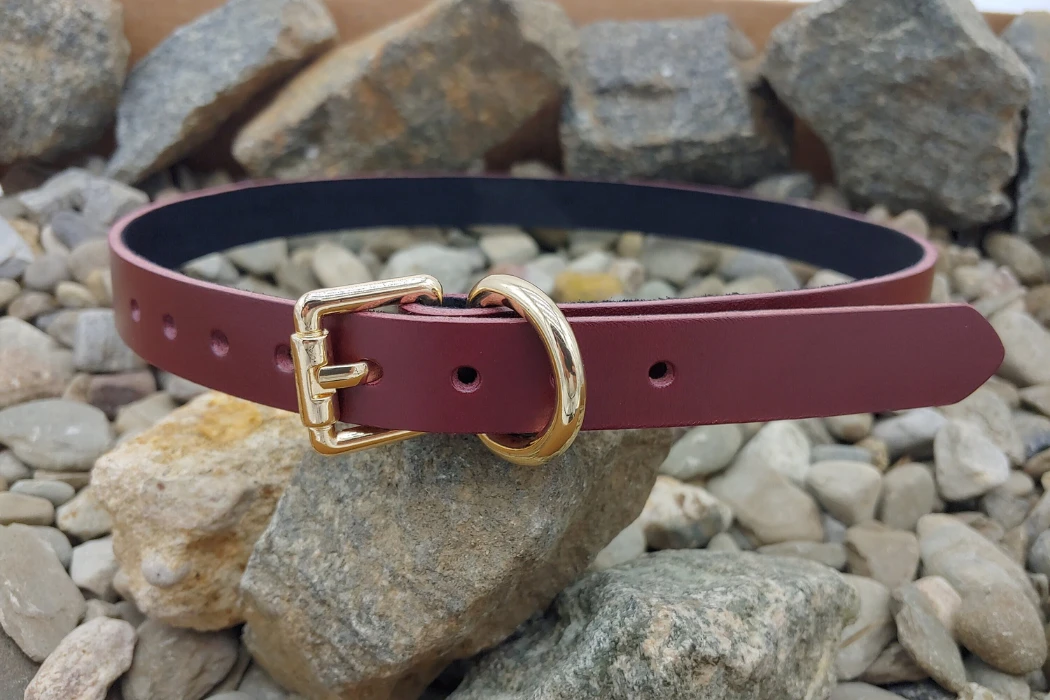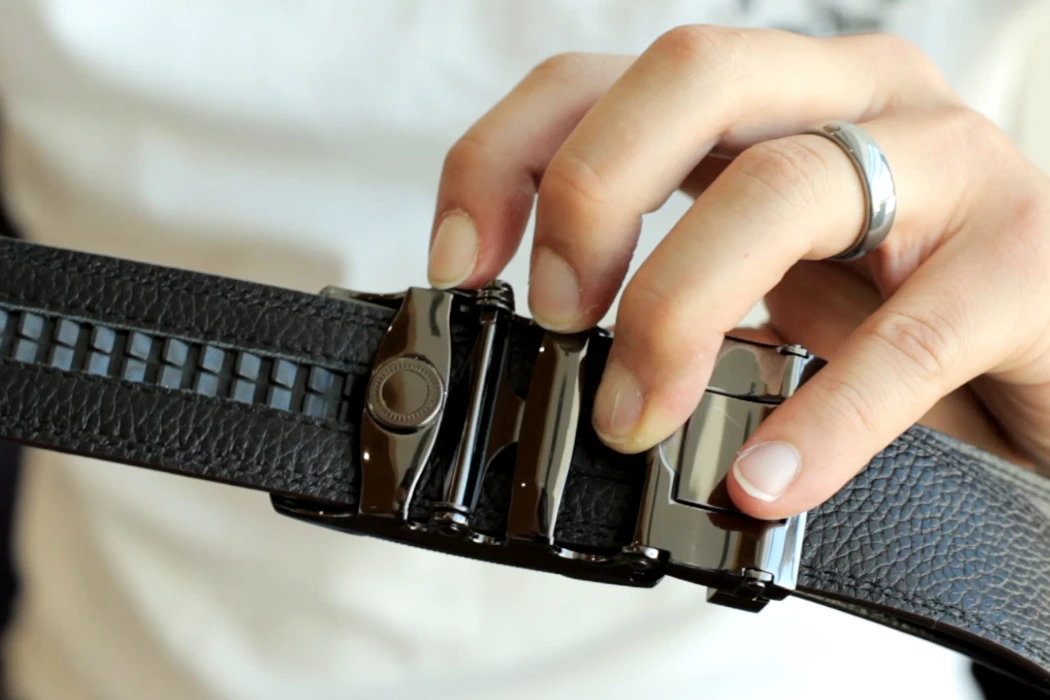
Leather belt testing turns a purchase specification into measurable evidence. The useful question is which material or component was tested, by which method and against which acceptance criteria. A “genuine leather” stamp cannot answer those questions.
The five methods below address different properties. They are not a complete finished-belt standard and do not create universal pass limits or a guaranteed service life. Ask the testing provider to confirm the applicable edition and specimen requirements before testing.
Summary of five relevant leather tests
| Property | ISO method | What it addresses | Important scope point |
|---|---|---|---|
| Tensile strength and elongation | ISO 3376 | Leather response under tensile loading | ISO 2419 concerns conditioning, not tensile testing |
| Flex resistance | ISO 5402-1 | Dry or wet flexing of flexible leather and finishes | Published scope is leather below 3.0 mm thickness |
| Rubbing fastness | ISO 11640 | Leather surface behavior under wool-felt rubbing | Do not equate it with every abrasion test |
| Static water absorption | ISO 2417 | Water absorption under static conditions | Separate from coated-fabric hydrostatic resistance |
| Finish adhesion | ISO 11644 | Adhesion to leather or between finish layers | Not applicable to every finish type |
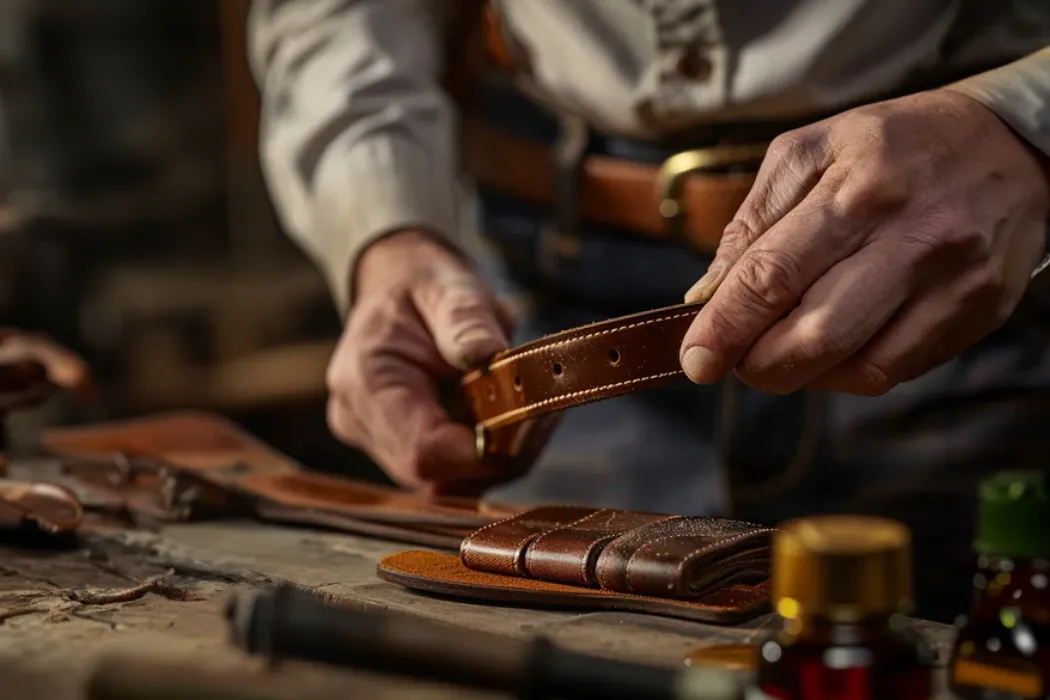
Tensile Strength (ISO 3376): Measuring Strength and Elongation
ISO 3376:2020 covers leather tensile strength and percentage elongation. It does not measure tear strength at a belt hole or the strength of a complete buckle attachment.
Read the test as a material result
A tensile test applies a controlled load to a prepared specimen. The reported strength relates force to the specimen cross-section; elongation describes extension under the conditions specified by the method. Ask the laboratory to report the actual dimensions, direction, results and method edition.
ISO 2419:2024 addresses conditioning of dry leather for physical and mechanical testing. Moisture and temperature affect the material, so conditioning belongs in the record, but a conditioning reference is not a tensile-strength result.
Set acceptance criteria for the intended construction
Define the required result with the buyer and testing provider. A full-grain, split or bonded description does not supply a verified strength value. Nor can a single thickness be used as a universal indicator of adequate belt strength.
| Check in the report | Why the buyer needs it |
|---|---|
| Material and lot identification | Links the result to the proposed strap material |
| Specimen and conditioning details | Establishes the basis of comparison |
| Method edition, units and results | Prevents confusion between force, strength and elongation |
| Agreed acceptance limit | Shows the order-specific release decision |
Test the relevant finished-belt features separately. Stitching, holes, layered construction and hardware can create failure points that a material tensile specimen does not represent.
Flex Resistance (ISO 5402-1): Assessing Repeated Bending
ISO 5402-1:2022 describes a flexometer method for dry or wet flex resistance of leather and applied finishes. Its published scope covers flexible leather below 3.0 mm thickness.
Check specimen suitability first
A thick or multilayer belt cannot automatically be treated as an in-scope specimen. Ask the laboratory which material preparation or alternative assessment is appropriate and what the result represents. If a layer is tested separately, identify it clearly rather than calling the result a complete-belt pass.
- Record dry or wet conditions and the selected test method.
- Agree inspection intervals, total cycles and what counts as unacceptable damage.
- Distinguish surface cracking, finish separation and damage to the leather itself.
- Retain specimen images or descriptions sufficient to understand the result.
A laboratory flex cycle is not equivalent to a wearer fastening the belt once. Frequency, geometry, moisture and other exposures differ, so no universal cycle-to-year conversion is valid.
| Report item | Interpretation |
|---|---|
| Cycles reached under specified conditions | Evidence of resistance in that test |
| Observed damage and inspection point | Helps compare approved and proposed materials |
| Finished-belt assessment | Checks actual folds, holes and attachment geometry |
| Service-life statement | Requires separate substantiation; not supplied by a cycle count alone |
Rubbing Fastness (ISO 11640): Checking Surface Behavior
ISO 11640:2018 assesses the behavior of a leather surface rubbed with wool felt. The method is commonly associated with the VESLIC rub test.
Specify conditions and what is evaluated
Agree the number of rubbing cycles and the relevant specimen/felt condition with the laboratory. The report should distinguish staining of the felt, color change and physical surface effects instead of combining them into a vague “abrasion pass.”
ISO’s published method includes dry and wet configurations and a configuration using felt wetted with artificial perspiration solution. These are selected test conditions, not an automatic legal requirement for every belt. ISO 11641 concerns color fastness to perspiration; it is not simply an alternative number for wet rubbing.
- Identify the leather color, finish and test face.
- Record the conditions, cycles and applicable assessment scales.
- Set separate appearance or staining criteria where relevant.
- Assess edge finishes or other contact areas separately when the selected specimen does not include them.
A favorable rubbing result does not guarantee that dye can never transfer to clothing under all wear conditions. Use the evidence to compare finishes and control production against the agreed sample.
Static Water Absorption (ISO 2417): Assessing Moisture Uptake
ISO 2417:2025 addresses static water absorption of leather. It is distinct from water-vapor transmission and from hydrostatic water-penetration testing of coated fabrics.
Choose the moisture question
A buyer may want to know how the leather absorbs water, how the finished strap changes after an agreed exposure, or whether water passes through the complete product. These require different assessments. Specify the intended question before selecting the test.
ISO 1420:2016 concerns resistance of rubber- or plastics-coated fabrics to water penetration under hydrostatic pressure. It should not be named as the standard leather static-absorption test.
- Identify the leather and finish, preparation and conditioning.
- Ask for the method’s exposure intervals, reporting units and measured results.
- Agree any separate recovery, appearance or dimensional checks needed for the belt.
- Keep claims about surface water resistance separate from complete-product waterproofness.
No universal absorption percentage is assigned here to a quality belt. Select acceptance criteria for the intended material and use, and account for the fact that moisture testing may alter a specimen.
Finish Adhesion (ISO 11644): Testing Surface Bond Strength
ISO 11644:2022 measures adhesion of a finish to leather or between adjacent finish layers. Its applicability depends on the surface and coating construction.
Verify that the finish is in scope
The method applies to suitable smooth finished flexible leathers with a thick finish coat that can be bonded to an adherent plate without the adhesive penetrating the finish. The published scope excludes unpigmented or non-continuously coated articles such as aniline, pull-up, nubuck and suede.
“Not applicable” does not mean zero risk. A material outside this method’s scope may need a different surface or use assessment. Ask the laboratory to document suitability before interpreting a result.
| Buyer question | Record needed |
|---|---|
| Which layer separated? | Failure location and visual description |
| Was the sample suitable for the method? | Surface/coating description and any preliminary suitability assessment |
| How was it tested? | Method edition, preparation, condition, units and results |
| Does it meet this order’s requirement? | The agreed criterion and release decision |
Avoid universal dry/wet adhesion thresholds by marketing grade. Compare like specimens and use the recorded failure mode when investigating delamination complaints.
How Laboratory Results Inform Belt Quality Decisions
Laboratory methods provide controlled comparisons and can reveal material or finish weaknesses. They do not reproduce every wearer’s conditions, and one test rarely explains an entire product failure.
Link results to production and returns
- Identify which material lot and construction the test represents.
- Review failures at the actual belt location: hole, fold, edge, seam or attachment.
- Compare the complaint sample with retained production samples and records.
- Use findings to adjust the material, design or control plan, then verify the affected property again.
Keep acceptable appearance change separate from functional failure in the specification. Patina may be part of an approved design, but unexpected color transfer or loss of fastening function needs its own evaluation.
Do not calculate consumer years from flex cycles, walking distances or a generic multiplier. A warranty or lifespan claim requires evidence beyond these individual material methods.
Frequently Asked Questions
What is the standard thickness for a high-quality leather belt?
There is no universal thickness that guarantees quality. Specify the complete construction and finished dimensions, then assess function and relevant material performance.
How many flex cycles should a good leather belt withstand?
Agree a method, suitable specimen, conditions and acceptance criteria for the order. ISO 5402-1 is not a universal lifetime scale, and its thickness scope needs checking.
What is the difference between ISO and ASTM leather testing?
They are standards issued by different organizations. Select the actual method by scope and buyer requirements; do not assume standards with similar labels are technically equivalent.
Does water absorption testing damage the leather?
It can alter the test specimen. ISO 2417 measures static absorption; any product recovery or appearance requirements should be specified separately.
How is leather tensile strength measured?
A prepared specimen is loaded in tension and the strength result relates force to its cross-section. ISO 3376 is the relevant leather method discussed here; ISO 2419 concerns conditioning.
Why does the finish peel off some leather belts?
Finish or layer adhesion can fail for several reasons. Identify the separated layer and conditions; ISO 11644 can assess suitable leather finishes but is not applicable to all surfaces.
What is the VESLIC rub test for leather?
It is commonly used to describe wool-felt rubbing of leather under ISO 11640. Specify cycles, conditions and evaluation criteria so the result is meaningful.
Conclusion
Use the correct method for each property and make the sample, conditions and acceptance criteria explicit. Combine material results with inspection of the complete belt rather than promising durability from a single test number.
ProPelli is Hoplok’s leather finishing facility, receiving crust from partner tanneries. For a custom belt order, agree the material and finished-product checks relevant to the design. The facility’s role does not establish a standing guarantee that every strap passes every global test.