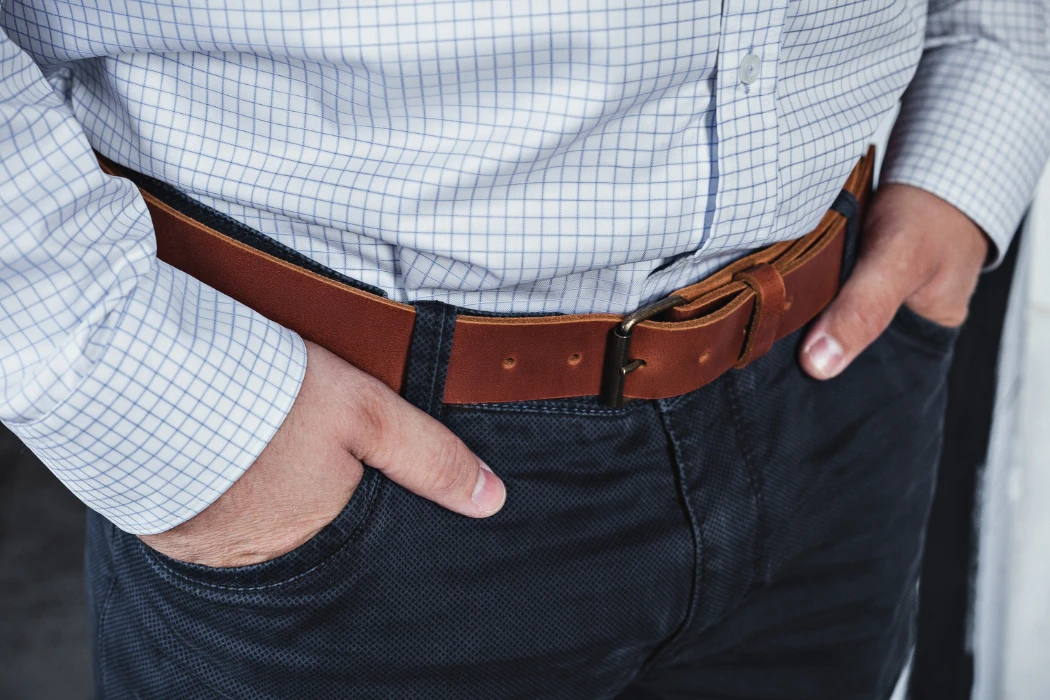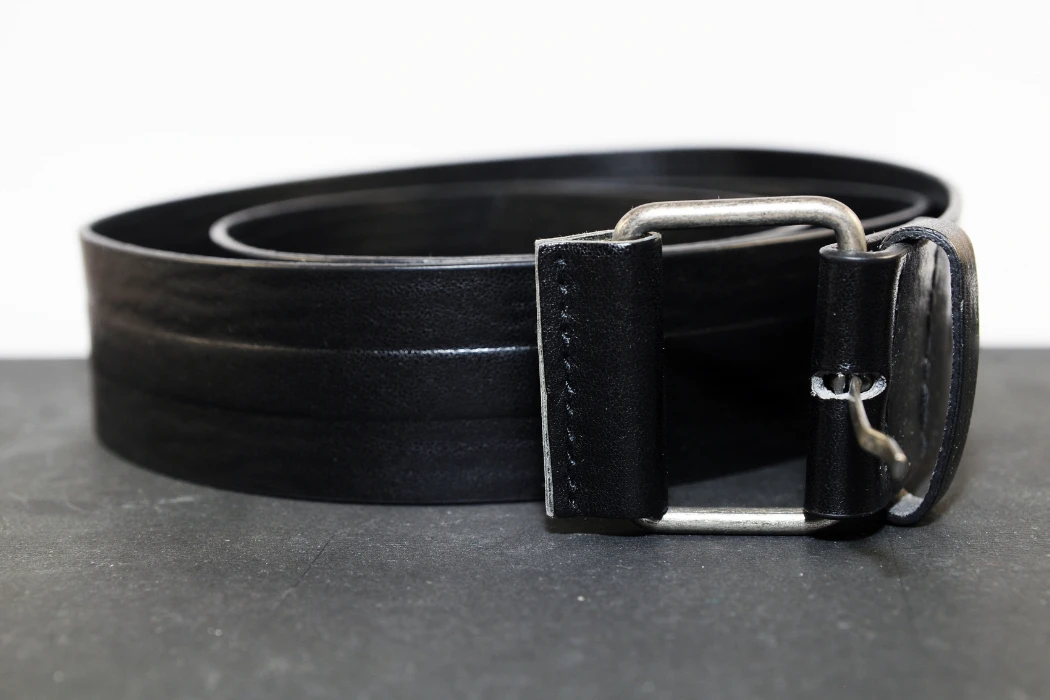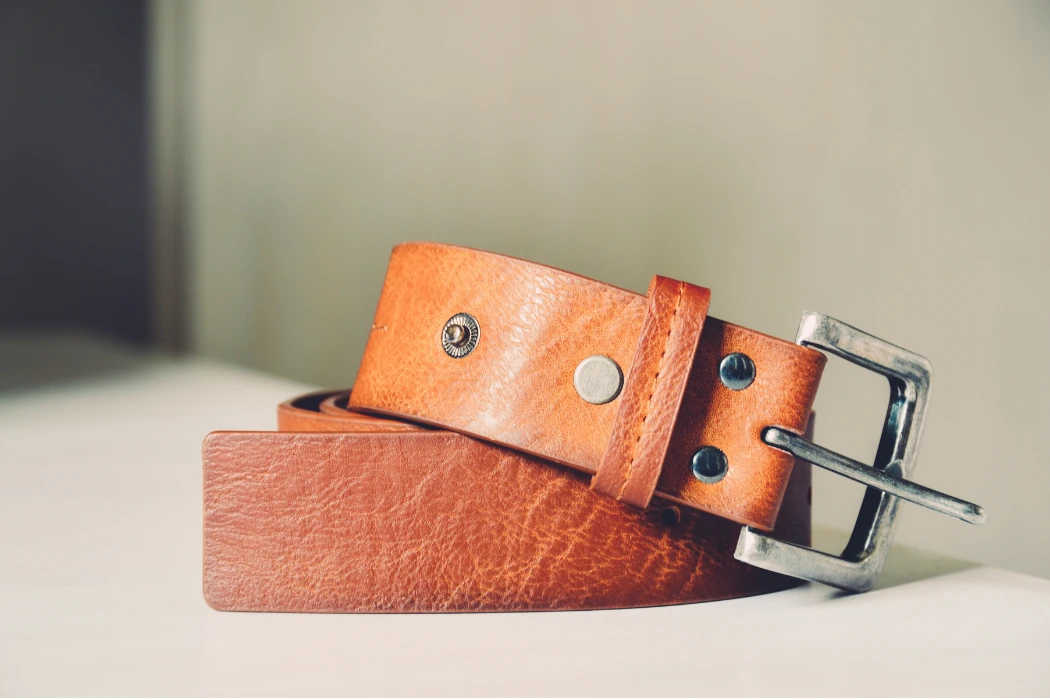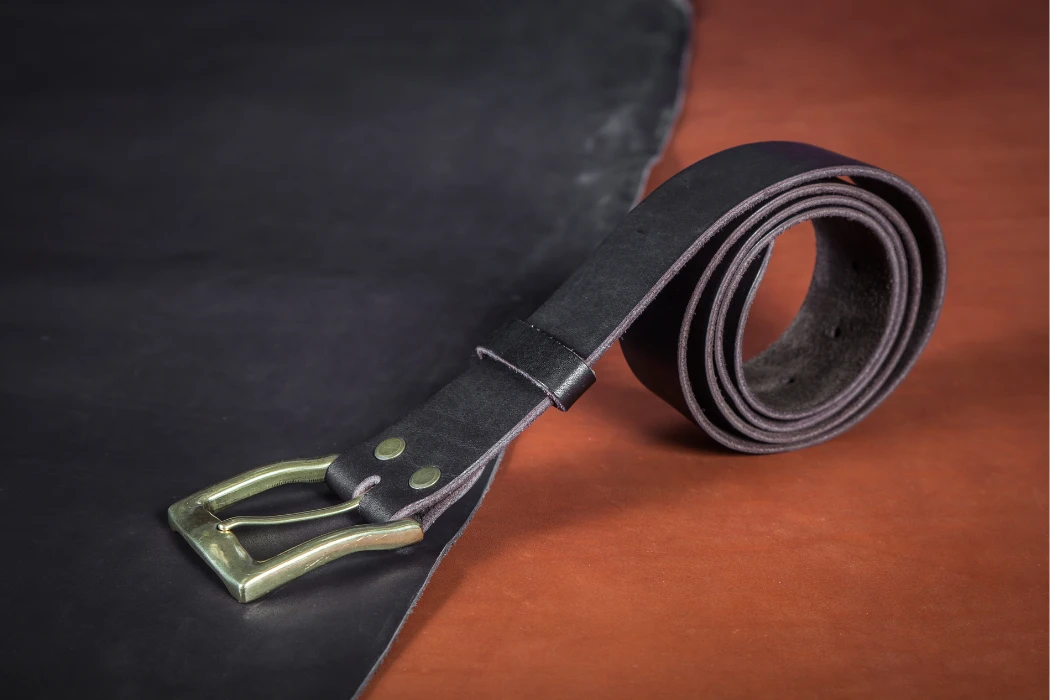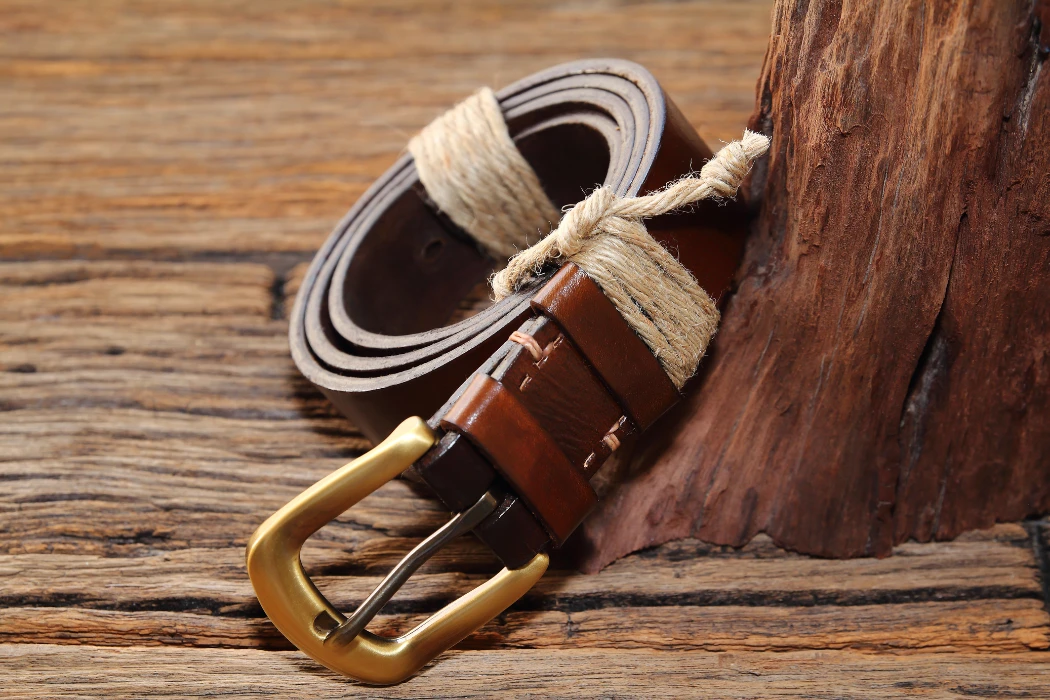
Crazy Horse Leather (also known as Saddle Leather) is actually high-quality full-grain cowhide that has been treated with a heavy coating of specialized natural waxes. It is not made from horsehide. The name derives from its historical popularity in manufacturing rigid, durable horse saddles. Its defining characteristic is the “Pull-Up” effect: when bent, the oils shift within the fibers, creating a lighter color streak that gives it an instantly distressed, vintage aesthetic.
It seems like a contradiction. You pick up a brand new leather bag, run your fingernail lightly across the surface, and immediately leave a visible white streak. How can a material that “scratches” so easily be touted by experts as the toughest, most durable leather on the market? Why would anyone pay a premium for leather that looks beat-up right out of the box?
The secret isn’t in the skin; it’s in the chemistry. In this guide, we are going to unveil the science behind this “self-healing” leather. We will take you through the hot-stuffing process, explain why it is virtually waterproof despite looking porous, and show you how a simple rub of your thumb can magically erase those scratches to build a patina that plastic leathers can never replicate.
How Is Crazy Horse Leather Manufactured?
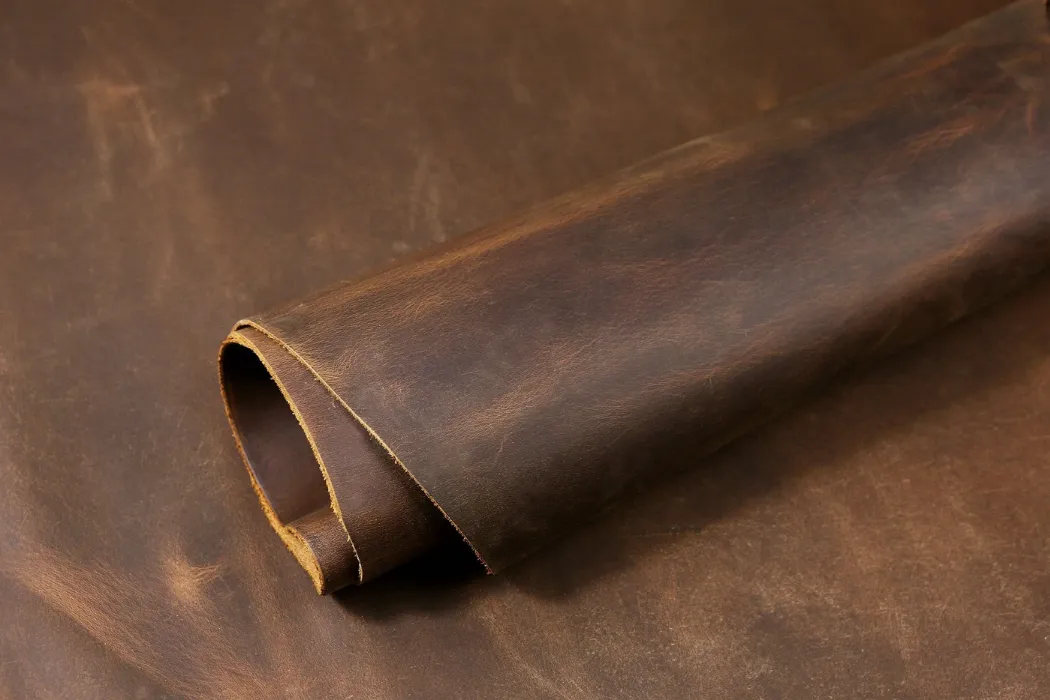
The core of the manufacturing process lies in a technique called “Hot Stuffing.” Tanneries select the toughest Full-Grain Cowhide, gently buff the surface, and then apply a heated special purpose wax and oil mixture. Under high heat and pressure, this liquid wax penetrates deep into the leather fibers rather than just sitting on the surface. It is this saturated wax content that endows the leather with its unique hydrophobic nature and signature color-changing capabilities.
The Base Material: Full-Grain Cowhide
You cannot make true Crazy Horse leather from cheap scraps. The process requires the dense fiber network of the top layer.
- Absorption Capacity: We must use Full-Grain leather because its tight grain structure is strong enough to hold a heavy load of oil without becoming floppy or greasy. Lower-grade “split” leather would simply become saturated and weak.
- Surface Buffing: Before waxing, we lightly buff the grain. This doesn’t remove the strength, but it opens up the pores slightly to allow the hot wax to soak in completely during the stuffing phase.
The Wax Infusion Process (Hot Stuffing)
This is where the leather transforms from a raw hide into a durable material. It is a game of temperature control.
- Thermal Application: The proprietary wax blend is heated to approximately 120°F (50°C). This lowers the viscosity, allowing the oils to bond with the protein fibers at a molecular level.
- Refractive Index Change: As the wax cools and hardens inside the fibers, it darkens the leather significantly. It changes how light reflects off the surface, giving the leather its deep, matte, and non-reflective finish.
The “Pull-Up” Effect Explained
That “magical” color change isn’t magic; it’s physics at work.
- Oil Migration: When you bend, stretch, or scratch the leather, the physical pressure forces the darkened wax to move away from that specific stress point.
- The Reveal: As the oil shifts, it exposes the natural, lighter-colored fibers underneath. This creates a temporary two-tone streak—the defining “vintage” look—which disappears as soon as the oils migrate back (usually with a little friction heat).
Manufacturing Specs: Crazy Horse vs. Standard Leather
| Feature | Crazy Horse Leather | Standard Finished Leather | Benefit |
|---|---|---|---|
| Wax Content | Very High (Saturated) | Low (Surface Only) | Self-healing scratches |
| Surface Coating | None (Open Pore) | Polyurethane / Acrylic | Rich, natural hand-feel |
| Fiber Density | Full-Grain (Maximum) | Often Top-Grain / Corrected | Extreme tear resistance |
| Breathability | High | Low (Plastic sealed) | Prevents moisture rot |
Durability and Aging: The Patina Process
Crazy Horse leather is renowned for its unique “Self-Healing” capability. What appear to be surface scratches are often just the displacement of the wax coating. By simply rubbing the mark with your finger to generate friction heat, or using a hair dryer, the wax melts and redistributes to cover the scratch. Over time, the leather absorbs environmental oils, sunlight, and friction, causing the color to darken and develop a rich, antique Patina, with a structural lifespan often exceeding 15 years.
The “Self-Healing” Scratch Mechanism
This feature is often misunderstood as a defect, but it is actually a maintenance advantage engineered into the leather.
- Thermal Repair: The friction from your thumb generates enough heat (around 100°F) to soften the surface wax. As the wax softens, it flows back into the “scratch,” effectively erasing it.
- Low Maintenance: Unlike painted leathers that require color-matched touch-up kits when scuffed, Crazy Horse leather requires nothing more than your own hands to restore its finish.
Patina Timeline: Day 1 vs. Year 5
The evolution of the leather is its most prized attribute. It does not stay the same; it matures.
- Day 1 (The Matte Phase): Fresh out of the box, the leather has a dull, fuzzy, almost suede-like finish. It marks easily and looks rugged.
- Year 5 (The Gloss Phase): After years of handling, the nap flattens down and becomes polished by the oils from your hands. The color deepens significantly (e.g., light brown turns to dark mahogany), creating a unique, glossy character that tells the story of its use.
Water Resistance: The Hydrophobic Shield
While not waterproof like rubber, the “Hot Stuffing” process creates a formidable barrier.
- Wax Barrier: The heavy saturation of oil and wax naturally repels liquid. Water tends to bead up on the surface rather than soaking in immediately, giving you time to wipe it off.
- Limitations: It can withstand rain, but submersion will eventually wash out the oils. If the leather gets soaked, it needs to be air-dried and re-waxed to restore its hydrophobic properties.
Aging Characteristics Matrix
| Time Period | Texture Change | Color Shift | Maintenance Need |
|---|---|---|---|
| Brand New | Matte, Fuzzy, Velvety | Original Lighter Tone | None (Ready to use) |
| 6 Months (Break-in) | Softening, High Scratching | Begins to Darken | Rub out scratches |
| 3 Years (Patina) | Smooth, Polished areas | Rich, Deep Tones | Light conditioning |
| 10 Years (Vintage) | Glass-like Shine, Molded shape | Very Dark / Antique | Re-waxing needed |
What Are the Downsides of Crazy Horse Leather?
While beloved for its character, this leather is not perfect. Its most significant drawback is “Color Transfer” (or Crocking). Because the surface is saturated with oils and dyes, brand new Crazy Horse leather can stain light-colored clothing (like white shirts) until the wax fully sets. Additionally, its inconsistent color and high susceptibility to scratches may be considered defects by business professionals seeking a pristine, uniform aesthetic.
The Color Transfer Risk (Crocking)
This is a chemical reality of heavy oil-tanned leathers that every buyer must be aware of.
- The White Shirt Warning: For the first 2-3 weeks of use, avoid wearing a new Crazy Horse bag against light-colored fabrics. The excess surface wax needs time to dry out and stabilize.
- Heat Migration: In high heat or humidity, the oils can soften and migrate, potentially carrying pigment onto your clothes. This is why we often recommend a canvas lining for the back panels of backpacks.
Inconsistency in Appearance
If you demand uniformity, this is the wrong material. It is organically unpredictable.
- Batch Variation: Because different parts of the hide absorb the hot wax at different rates, a bag made from the shoulder may look slightly different in shade than one made from the belly.
- Not for Perfectionists: Brands aiming for exact Pantone color matching will struggle. Crazy Horse is about “range” of color, not specific hex codes.
Weight and Stiffness
Durability comes with physical mass. This is not a lightweight fashion leather.
- The Heavy Load: Because we use thick full-grain hides stuffed with heavy waxes, Crazy Horse leather is significantly heavier than chrome-tanned fashion leathers. An empty backpack can weigh 3-4 lbs before you put anything in it.
- Break-in Period: It starts out relatively stiff. Unlike soft milled leathers that drape immediately, Crazy Horse requires weeks of use to soften and mold to your body.
How to Maintain and Clean Crazy Horse Leather?
The golden rule for maintaining Crazy Horse leather is “Less is More.” You must strictly avoid chemical cleaners or submerging it in water, as these agents strip away the essential protective wax coating. Daily maintenance requires nothing more than a simple wipe with a dry microfiber cloth to remove dust. If the leather feels dry over time, applying a small amount of Mink Oil or specialized Leather Wax will restore its supple feel, though note that this will temporarily darken the color.
The “No-Water” Cleaning Rule
Unlike finished leathers that are sealed with plastic, Crazy Horse is open-pored. Water doesn’t clean it; it changes it.
- Wet Stains: If you spill water, do not rub it. Let it air dry naturally. Rubbing wet leather pushes the moisture deeper into the fibers and can create a permanent dark spot.
- Dry Dirt: For mud or dirt, wait until it is completely dry, then use a soft bristle brush to whisk it away. Never wash it in a sink.
Re-waxing: When and How?
Because the leather is stuffed with wax at the tannery, it does not need frequent conditioning.
- Frequency: We recommend a light conditioning only 1 to 2 times per year. Over-conditioning can make the leather feel sticky and clog the pores.
- The Method: Apply a high-quality leather balsam or mink oil using a soft cloth in circular motions. The leather will look very dark initially but will lighten as the oils absorb over 24 hours.
Dealing with Deep Scratches
Sometimes a scratch goes deeper than the wax layer. Here is how to fix it.
- The Balsam Fix: Take a tiny amount of leather balsam on your finger and work it directly into the deep scratch. The oils will darken the raw fiber, blending it back in with the surrounding surface.
- Uniformity: If the scratch is still visible, it adds to the character. Remember, this leather is designed to look worn, not perfect.
Maintenance Do’s and Don’ts
| Action | Crazy Horse Leather | Standard Leather | Why? |
|---|---|---|---|
| Chemical Soap | NEVER | Okay (if mild) | Soap strips the essential wax finish. |
| Water Soaking | Avoid | Wipe clean | Causes staining and oil displacement. |
| Wax Application | Essential (Mink Oil) | Not needed | Refuels the “self-healing” ability. |
| Heat Exposure | Hair dryer (to fix scratches) | Avoid | Heat melts wax to repair marks. |
Frequently Asked Questions
Is Crazy Horse leather made from actual horses?
Absolutely not. Crazy Horse leather is made from 100% Full-Grain Cowhide. It earned its misleading name because this specific oil-tanning process was historically popular for making durable horse saddles, not because it uses horse hides.
Why does my Crazy Horse leather scratch so easily?
This is a feature, not a defect. The high wax content sits deep in the fibers; when you scratch the surface, you are simply displacing the wax (the “Pull-Up” effect). This responsiveness allows the leather to develop a unique, rugged character that static leathers cannot mimic.
Does Crazy Horse leather stain clothes?
Yes, it can when brand new. Because the leather is saturated with oils and dyes, there is a risk of “crocking” (color transfer) during the first 2-3 weeks of use. We strongly recommend avoiding contact with white or light-colored fabrics until the wax finish has fully stabilized.
Is Crazy Horse leather waterproof?
It is highly water-resistant, but not waterproof. The heavy wax coating naturally repels rain and spills, causing water to bead up. However, it is not sealed with plastic like rain boots; submersion in water will eventually soak through and strip the oils.
How do I remove scratches from Crazy Horse leather?
Removing scratches is incredibly simple: generate friction heat. Rub the scratch briskly with your thumb for 10-15 seconds. The heat melts the surrounding wax, causing it to flow back into the scratch and darken the leather again. For deeper marks, a hair dryer on a low setting works instantly.
Is Crazy Horse leather vegan?
No. Crazy Horse leather is a natural animal product derived from bovine (cow) hides. If you are looking for a vegan alternative, you would need to look for specific “waxed canvas” or synthetic faux-leather options, though they lack the self-healing durability.
Conclusion: Is Crazy Horse Leather Right for You?
If you demand a pristine, uniform accessory that looks exactly the same on day 1,000 as it did on day 1, this material is not for you. But if you are chasing a vintage, rugged aesthetic—a product that absorbs the scratches of your daily life and transforms them into a deep, glossy character—then Crazy Horse leather is the ultimate choice. It is one of the few materials on earth that truly gets better, stronger, and more beautiful the more you abuse it.
Ready to start your patina journey? At Hoplok, we specialize in sourcing premium Italian Crazy Horse hides for custom manufacturing. Whether you are designing a line of indestructible backpacks or heritage watch straps, we provide the authentic, oil-stuffed leather that defines quality. Contact Hoplok today, and let’s build products that tell a story.