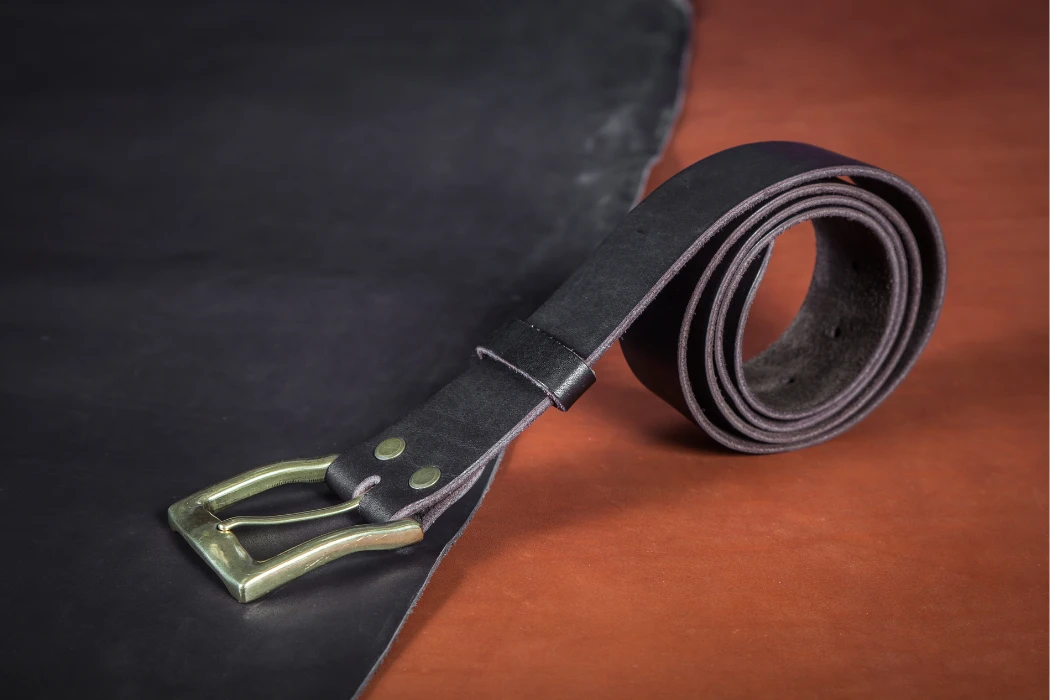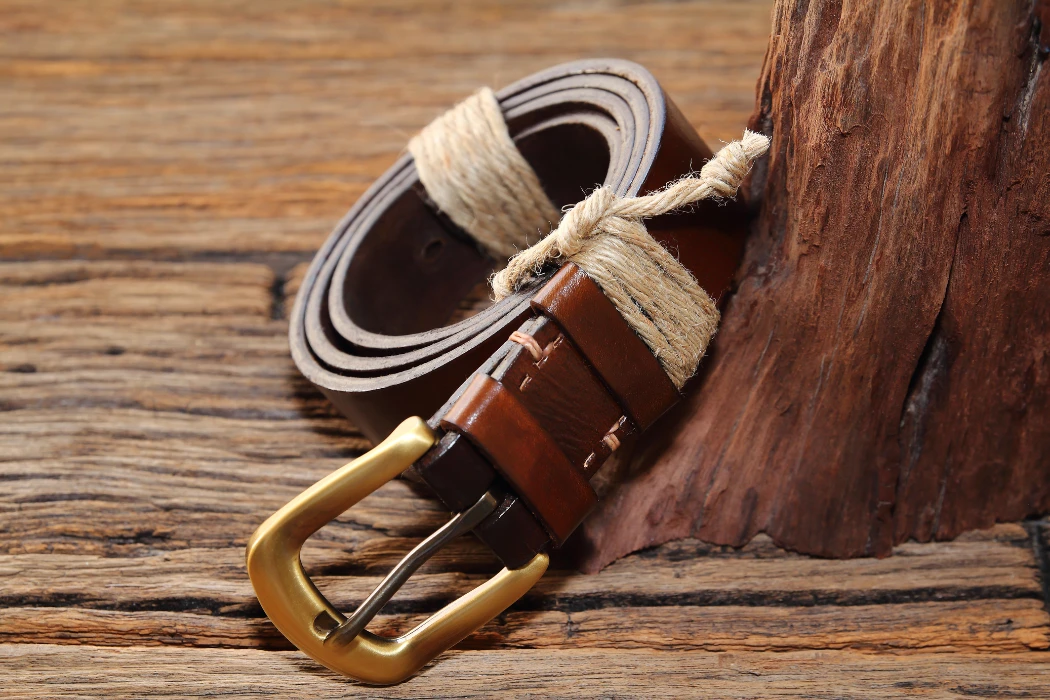
Natural Grain Leather (often used interchangeably with Full-Grain) is the highest grade of leather available, defined by its unaltered surface where the dense, protective epidermis layer remains 100% intact. Unlike Corrected Grain which is sanded down to remove imperfections, Natural Grain retains original hair follicles and scar patterns, offering a massive tensile strength of over 3000 PSI and the unique ability to develop a self-protective patina over decades of daily use.
It seems counterintuitive. You walk into a luxury boutique and see a bag with a visible mosquito bite mark or a healed scar on the flap. Yet, the price tag is roughly 300% higher than the perfectly smooth, uniform bag next to it. Why would you pay a premium for “imperfections” when you could have a flawless, plastic-coated surface for less?
The answer lies in microscopic biology. That top 0.1mm of the hide—the papillary layer—contains the tightest, strongest vertical fiber weave in nature. Once you sand it off, you lose the structural integrity of the material. In this guide, we will look under the microscope to explain why keeping this layer intact is the difference between a product that cracks in 2 years and one that lasts for generations.
What Defines Natural Grain Leather in Manufacturing Terms?
The core manufacturing definition of Natural Grain leather lies in the concept of “Zero Buffing.” In the tannery grading process, if a raw hide requires sanding that removes more than 0.1mm of the surface to hide defects, it is immediately downgraded to “Corrected Grain.” To qualify as Natural Grain, the material must retain the complete Papillary Layer, which is the uppermost section of the dermis boasting a fiber density of approximately 1.4 g/cm³. This specific layer is non-negotiable because it dictates the leather’s ultimate tear resistance and moisture barrier.
The Anatomy of the Hide: Grain vs. Corium
To understand strength, you have to look at the fiber orientation. A cowhide is not uniform from top to bottom.
- The Papillary Layer (Grain): This top layer represents only 15% to 20% of the total hide thickness, yet it provides roughly 90% of the leather’s tensile strength. The collagen fibers here are woven vertically and tightly, creating a natural shield.
- The Reticular Layer (Corium): The bottom 80% of the hide consists of looser, horizontally woven fibers. While flexible, it lacks the abrasion resistance of the grain. If you sand off the grain to fix a scar, you are left with this weaker, spongier underbelly.
The “Top 5%” Selection Rule
Natural Grain is expensive largely because it is incredibly rare. Nature is violent, and cows live outdoors where they encounter barbed wire, insects, and other cattle.
- The Rejection Rate: In a typical batch of 100 raw hides, only 3 to 5 hides (3-5%) are pristine enough to be sold as Natural Grain (Grade A). These are the only ones that require no surface correction.
- The Downgrade: The remaining 95% have too much scarring or insect bite damage. These are sent to be sanded and stamped as Corrected Grain, reducing their raw material value by 40% to 60% instantly.
Visual Characteristics: Pores and Scars
You can identify this leather without a lab coat if you know what to look for under a magnifying glass.
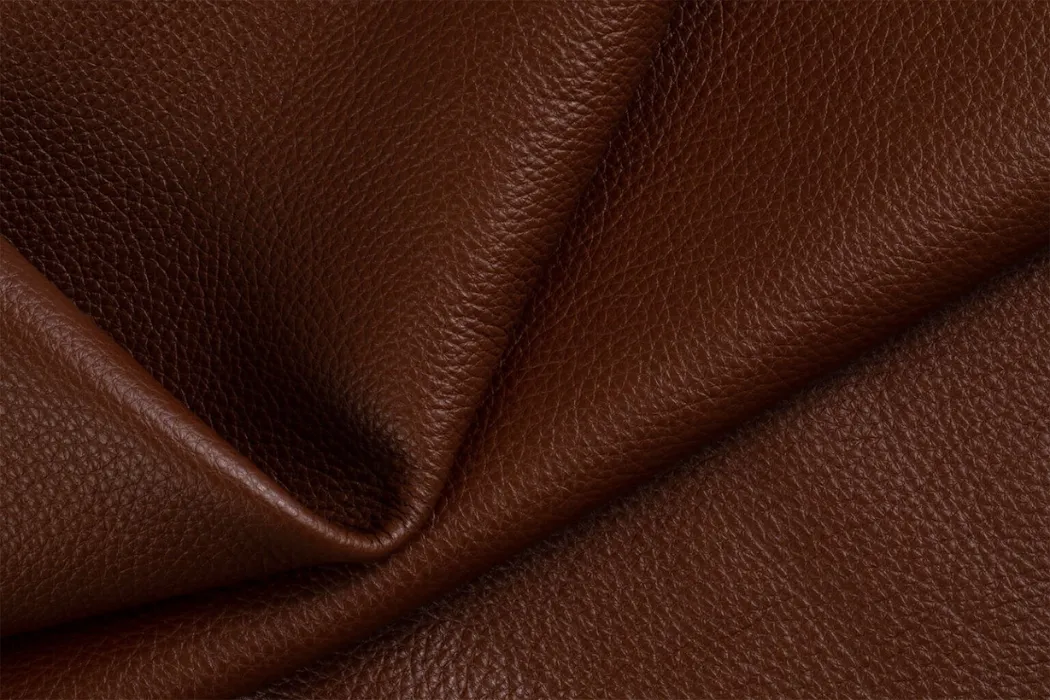
- Pore Density: A square inch of Natural Grain cowhide contains approximately 2,000 to 4,000 pores. These pores are arranged randomly and unsymmetrically, unlike the repeating geometric patterns found on embossed corrected leather.
- Depth Variance: Real hair follicles have depth. If you look closely, you can see “into” the pore, whereas fake grain is just a shallow surface impression pressed into a polymer coating.
How Does Natural Grain Differ from Corrected Grain?
The fundamental difference lies in authenticity versus artificial modification. To mask scars and insect bites, Corrected Grain leather is mechanically sanded down and then sprayed with a heavy 0.15mm layer of polyurethane and pigment before being stamped with a fake texture. In sharp contrast, Natural Grain leather lacks this plastic seal, resulting in a Moisture Vapor Transmission Rate (MVTR) that is 5 to 10 times higher, offering a warm, organic touch rather than a cold, plastic feel.
The Sanding Process: Removing Nature’s Armor
Corrected grain is essentially “damaged” goods that have been cosmetically repaired. This repair comes at a structural cost.
- Structural Loss: The buffing machine removes the top of the grain to create a smooth canvas. Industry tests show that this sanding process reduces the leather’s overall tensile strength by approximately 20% to 30% compared to its original state.
- Plastic Replacement: Since the natural protection is sanded off, the tannery must replace it with a synthetic topcoat. You are essentially trading collagen strength for plastic uniformity.
Breathability and Comfort Metrics
If you wear leather boots for 12 hours a day, the difference in comfort is quantifiable.
- Moisture Absorption: Natural Grain leather is hydrophilic; it can absorb up to 30% of its own weight in water vapor without feeling wet, wicking sweat away from your body.
- The Plastic Barrier: Corrected Grain, sealed with pigments, absorbs less than 5%. This traps heat and moisture inside the shoe, creating the “hot foot” effect common in cheaper footwear.
Natural vs. Corrected Grain Specs
| Feature | Natural Grain (Full-Grain) | Corrected Grain |
|---|---|---|
| Surface Finish | 0% Buffing (Intact) | Sanded + 0.15mm PU Coat |
| Tensile Strength | >3000 PSI | ~2000 – 2400 PSI |
| Breathability (MVTR) | High (5-10 mg/cm²/h) | Low (<1 mg/cm²/h) |
| BOM Cost (Est.) | $4.50 – $6.00 / sq ft | $2.00 – $3.00 / sq ft |
| Typical Use | Heirloom Goods, Saddlery | Fashion Handbags, Car Seats |
Why Is Natural Grain Leather So Expensive to Produce?
The primary cost driver is the “Cutting Yield.” Because Natural Grain leather retains the cow’s life history—including insect bites and scars—artisans must physically cut around these imperfections. This results in a massive waste factor of 25% to 35%, whereas corrected grain leather has a waste factor of only 5% to 10%. Furthermore, the raw material itself commands a premium of $2.00 to $4.00 per square foot over lower-grade hides.
The Yield Problem: Cutting Around the Scars
You pay for what we throw away. When working with pristine natural grain, the cutting room floor is covered in expensive scraps.
- The Math of Waste: If we purchase a standard 50 sq. ft. hide, we effectively only get 35 sq. ft. of usable cutting area. The remaining 15 sq. ft. contains branding marks or deep scratches that cannot be used in a premium product.
- Correction Contrast: With corrected grain, the surface is sanded smooth and coated, allowing manufacturers to utilize nearly 95% of the hide surface area, regardless of underlying scars.
Raw Material Sourcing Costs
The selection process at the tannery gate determines the baseline price before a single knife cuts the skin.
- Grade A Pricing: To get a surface that needs no correction, we must buy Grade A hides, which currently trade around $8.00 per sq. ft.
- Grade C Savings: Brands making corrected leather buy Grade C or D hides for roughly $3.00 per sq. ft. This initial $5.00 gap multiplies by 3x-4x by the time it reaches retail pricing.
Tanning Time Investment
Natural grain leather is often processed using slower, traditional methods to preserve the fiber structure.
- Vegetable Tanning: High-quality natural grain often undergoes vegetable tanning, a natural process using tree barks that takes 30 to 60 days to complete.
- Chrome Tanning Speed: Mass-market corrected leathers almost exclusively use chromium salts, which can fully tan a batch of hides in just 24 to 48 hours, drastically reducing overhead costs.
What Are the Physical Benefits of Keeping the Grain Intact?
Keeping the grain intact isn’t just about aesthetics; it acts as a formidable structural shield. The undamaged collagen fibers form a tight vertical fiber weave that gifts the leather extreme Abrasion Resistance, typically withstanding over 50,000 cycles on the Taber abrasion test without breaking. Furthermore, this natural architecture naturally repels external water while simultaneously venting internal moisture, achieving a level of dynamic thermal regulation that plastic-coated leathers cannot replicate.
Tensile Strength and Tear Resistance
Because the fibers haven’t been severed by sanding, the mechanical strength is exponentially higher.
- The Vertical Advantage: The grain layer’s fibers run perpendicular to the surface. This creates a “chain mail” effect where the leather resists puncture and tearing. Industry standards show a Tear Load consistently exceeding 500 N for heavy-weight natural grain.
- No Weak Points: Corrected leather often fails where the coating cracks. Natural grain has no coating to crack; the strength is integral to the skin itself.
Moisture Management and Hygiene
Your leather gear needs to breathe, especially if it’s footwear or a jacket.
- Fungal Prevention: By allowing moisture vapor to escape, natural grain leather keeps the relative humidity inside a shoe between 40% and 60%. This is the “dry zone” that inhibits the growth of bacteria and fungi responsible for bad odors and athlete’s foot.
- Active Wicking: The open pores actively pull sweat away from the skin, whereas a PU-coated shoe traps sweat against your foot like a plastic bag.
Thermal Regulation Properties
Natural grain leather acts as a natural insulator, much like double-paned windows.
- Low Thermal Conductivity: It has a naturally low thermal conductivity, meaning it doesn’t transfer heat quickly. This keeps the interior cool when it’s hot outside (up to 10°F difference) and retains body warmth when it’s cold.
- Comfort Adaptation: Unlike synthetic materials that get brittle in the cold or sticky in the heat, the collagen structure adapts to ambient temperatures while maintaining flexibility.
Does Natural Grain Leather Develop a Patina?
Yes, and this is its most defining characteristic. Because the surface is not sealed with synthetic polymers, Natural Grain leather reacts dynamically with oxygen, UV light, and natural skin oils. This oxidation process usually becomes visible within the first 3 to 6 months of daily use. Over time, the leather’s color deepens, and its surface transforms from an initial matte finish of 5-10 Gloss Units (GU) to a rich, polished shine of 40-50 GU, while the physical structure becomes softer rather than brittle.
The Chemistry of Patina
Patina is not merely dirt accumulation; it is a complex chemical reaction similar to wood aging or fruit ripening.
- Tannin Oxidation: The vegetable tannins remaining in the hide serve as a reactant. When exposed to UV radiation, they oxidize and darken, much like a sliced apple turns brown. This creates a hardened “shell” layer that actually protects the fibers underneath.
- pH Interaction: The absorption of environmental moisture and slightly acidic body oils shifts the leather’s pH balance over time. This breaks down the stiffness of the lignin-like structures, molding the fiber network to the user’s shape.
“Healing” Minor Scratches
Natural Grain leather is often called “living” material because it possesses the ability to recover from surface damage.
- Friction Heat: When you scratch the surface, you are essentially displacing the oils. By rubbing the scratch briskly with your thumb, you generate friction heat (approximately 40°C or 104°F).
- Oil Redistribution: This specific temperature is enough to soften the internal waxes and oils, allowing them to flow back into the indentation and darken the scratch, effectively erasing it from view.
Aging Timeline
| Time Period | Visual Texture | Gloss Level (Est.) | Tactile Feel |
|---|---|---|---|
| Brand New | Matte, Uniform, Open Pores | 5 – 10 GU | Stiff, Dry |
| 6 Months (Break-in) | Slight Darkening, Softening Edges | 15 – 20 GU | Pliable, Forming to body |
| 3 Years (Patina) | Rich Color, High Contrast | 30 – 40 GU | Very Soft, Molded shape |
| 10 Years (Vintage) | Deep Antique Shine, Smooth | 40 – 50 GU | Buttery, Fully Relaxed |
How Do You Distinguish Natural Grain from Fake Prints?
The gold standard for identification is the Magnification Test. Under a simple 10x loupe, Natural Grain reveals a random, irregular pore structure with varying depths, mimicking the chaotic biology of human skin. In contrast, Embossed (Fake Grain) leather displays a mechanical repeating pattern that typically cycles every 10 to 12 inches, where pores are merely shallow, uniform pits stamped into the surface coating without actual depth or biological variation.
The Pore Density Test
Nature hates straight lines. If the texture looks too perfect, it is likely a machine print.
- Chaotic Distribution: Real pores cluster randomly. You might see a dense patch followed by a sparse area, representing natural hair growth patterns.
- The “Tile” Effect: Embossed grain often looks like a tiled floor. If you can find two identical square inches on the same bag, it is a print. Manufacturing plates create a repetition loop every 25cm to 30cm.
The Water Drop Absorption Test
This tests the presence of a plastic topcoat, which is the hallmark of corrected grain.
- Natural Grain (Hydrophilic): Place a small drop of water on an unseen area. It should darken the leather and absorb in under 10 seconds (unless DWR treated). This confirms open pores.
- Printed Grain (Hydrophobic): On embossed leather, the drop will bead up and sit on the surface for over 5 minutes because it is sitting on a layer of polyurethane, not skin.
Edge and Cross-Section Inspection
The side view reveals the geological layers of the hide.
- The Gradient: In Natural Grain, you see a seamless transition from the dense, dark grain layer to the lighter, looser corium fibers. There is no hard line.
- The Sandwich: In fake or heavily corrected leather, you can often see a distinct white or grey line between the coating and the leather, or a uniform “foam-like” middle layer if it is bonded leather.
How Should You Maintain Natural Grain Leather Products?
The core philosophy of maintenance is “preserving breathability.” You must strictly avoid cheap conditioners containing Silicone or petroleum distillates, as these agents clog the natural pores and suffocate the hide. Instead, opt for natural creams with a pH balance of 4.5 – 5.5 to match the leather’s natural acidity. We recommend a light conditioning cycle every 3 to 6 months; anything more frequent risks “over-conditioning,” which loosens the collagen fibers and actually reduces tensile strength.
Selecting the Right Conditioner
You are feeding skin, so ingredients matter. Read the back label before applying anything.
- The Good Stuff: Look for Neatsfoot Oil (which mimics the animal’s natural fat liquors) or Beeswax (which provides a breathable moisture barrier). These penetrate the papillary layer without blocking air flow.
- The pH Factor: Leather is naturally acidic. Using a high-alkaline cleaner (like standard bar soap with pH 9-10) will break down the structural bonds. Stick to pH-neutral or slightly acidic formulas.
Cleaning Protocols to Avoid Damage
Water isn’t the enemy, but heat is. When cleaning mud or stains, follow these strict limits.
- Temperature Cap: Keep cleaning water below 30°C (86°F). Hot water causes immediate collagen shrinkage, permanently warping the grain.
- Patience is Key: After cleaning, allow the item to air dry for 24 to 48 hours away from sunlight. Rapid drying makes the fibers brittle.
Maintenance Dos and Don’ts
| Aspect | Do This | Don’t Do This | Target Metric |
|---|---|---|---|
| Conditioner Type | Natural Oils / Waxes | Silicone / Petroleum | pH 4.5 – 5.5 |
| Frequency | When dry to touch | Weekly “routine” | Every 3-6 Months |
| Drying Method | Natural Air Dry | Hair Dryer / Radiator | 24 – 48 Hours |
| Storage Environment | Cotton Dust Bag | Plastic Bag | 40% – 60% Humidity |
Conclusion: The Investment Case for Natural Grain
Natural Grain leather represents the ultimate “long-termism” in material science. While the initial raw material investment is 2 to 3 times higher than corrected grain alternatives, its structural integrity ensures a lifespan exceeding 20 years. When you calculate the “cost per wear,” it is mathematically cheaper than synthetic or corrected leathers that degrade and require replacement every few years.
Ready to build a legacy? At Hoplok, our ProPelli supply chain is engineered to curate only the top 5% of Grade A Natural Grain hides globally. We don’t just sell leather; we provide transparent Taber Abrasion Test reports and traceability data to help you manufacture true heirloom products. Contact Hoplok today to secure the raw materials that will define your brand’s reputation for decades.