Natural grain usually describes leather that retains its original grain surface. If the buyer requires full grain, specify that the surface has not been mechanically corrected. Hair and epidermis are removed during leather preparation; “natural grain” does not mean an intact epidermis or a guaranteed strength grade.
A visible scar may be acceptable on a design that values natural leather character, while another design requires a more uniform surface. Define that appearance choice before comparing supplier prices.
This guide explains what the grain description does and does not tell a buyer, how finish and cutting selection affect the proposal, and which sample checks are needed for a belt or bag.
What Defines Natural Grain Leather in Manufacturing Terms?
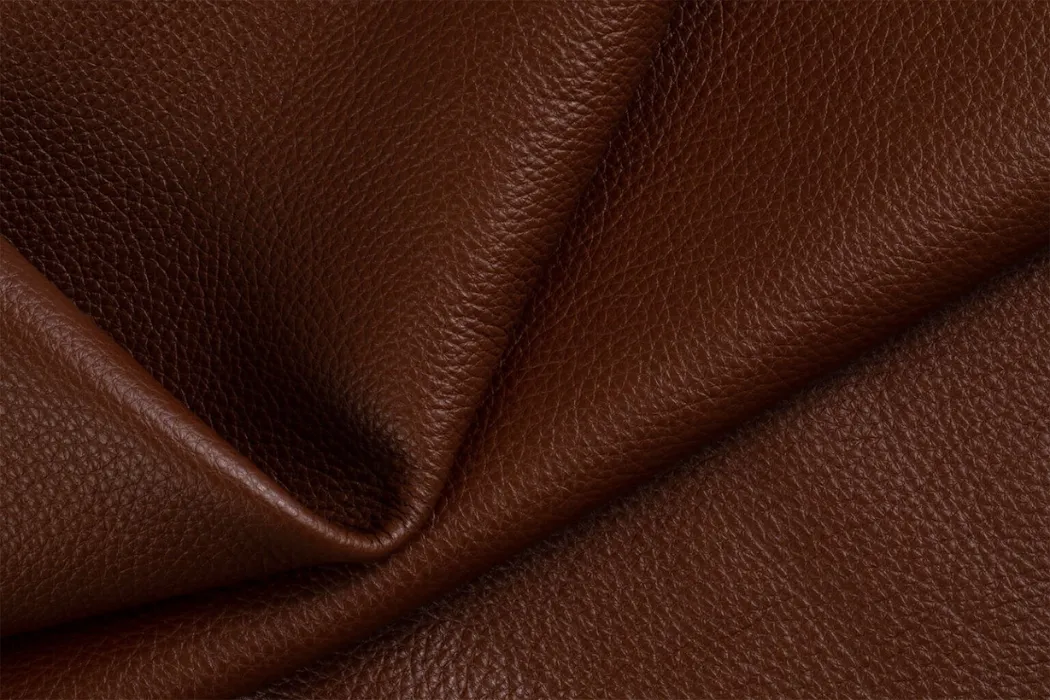
The Leather Research Laboratory’s full-grain definition centers on retaining the natural grain surface after hair and epidermis removal. It does not establish a minimum strength, fixed layer density or universal buffing-depth tolerance. Put the surface requirement and finish in the material specification.
The Anatomy of the Hide: Grain vs. Corium
The Leather Naturally manufacturing guide describes the grain and supporting corium as collagen structures whose properties vary across the hide and change during processing.
- Grain: The natural surface and its fine collagen structure contribute to leather character. Retaining it does not establish a fixed percentage of the material’s tensile strength.
- Corium: The supporting layer also contains interwoven collagen. Its properties vary across the hide and are modified during processing; it is not simply a weak horizontal underlayer.
Selection Depends on the Appearance Standard
Price depends partly on which marks the design permits and how much acceptable cutting area the selected material provides.
- Acceptance: Agree which natural scars and marks are allowed on visible panels. A full-grain description does not require a completely blemish-free hide.
- Cost: Ask the supplier to price the requested selection and usable area. There is no universal rejection percentage or discount between supplier grades.
Visual Characteristics: Pores and Scars
Inspect representative samples for natural variation, then verify the declared surface treatment where that distinction matters to the claim.
- Surface clues: Natural pores and marks may vary across a panel. An opaque finish or embossing can obscure them, so visual inspection alone is not conclusive.
- Verification: Request the finishing declaration and, when needed, laboratory surface identification rather than relying on a pore count.
How Does Natural Grain Differ from Corrected Grain?
Full grain retains the natural grain surface; corrected grain has had that surface modified. Corrected-grain leather is still leather. Neither term supplies the coating thickness, breathability or strength of the finished article.
What Surface Correction Changes
Correction is a manufacturing choice that can support a more uniform appearance. Compare it against the buyer’s design and test requirements rather than calling it fake or inherently damaged material.
- Correction: Sanding or buffing modifies the natural grain surface. Specify the degree of correction and compare actual material tests rather than assuming a universal strength reduction.
- Finishing: Both full-grain and corrected-grain leather can carry finishes. Ask which coating or treatment is applied instead of equating full grain with uncoated leather.
Breathability and Comfort Metrics
For belts and bags, evaluate the specified surface, lining and construction. Footwear comfort figures should not be transferred to these products.
- Material response: Water-vapor behavior depends on the specific leather, thickness and finish. Use appropriate tests when it is part of the product brief.
- Finished construction: A lining, reinforcement or laminate can affect the result. A surface label does not establish the comfort of a complete belt or bag.
Natural vs. Corrected Grain Specs
| Feature | Natural Grain (Full-Grain) | Corrected Grain |
|---|---|---|
| Surface Finish | Natural grain retained; clarify finishing | Surface corrected; clarify finishing |
| Tensile Strength | Verify on specified material | Verify under comparable conditions |
| Breathability (MVTR) | Depends on material and finish | Depends on material and finish |
| Material Cost | Supplier quote for approved specification | Supplier quote for approved specification |
| Typical Use | Belts and bags with natural surface character | Belts and bags seeking a more uniform finish |
Why Is Natural Grain Leather So Expensive to Produce?
A natural-surface design may require selective cutting around disallowed marks. Compare the actual material price and accepted yield; the grain name does not supply a standard waste percentage or price premium.
The Yield Problem: Cutting Around the Scars
Clarify whether the supplier’s consumption includes defect exclusions, layout loss and trimming allowances. Avoid adding a second waste allowance to a yield figure that already includes them.
- Illustrative yield calculation: If a hide measures 50 sq. ft. and 35 sq. ft. is usable for a particular cutting plan, the usable yield is 70%. This is an example, not a Hoplok production guarantee. Defects, part shape, grain direction and matching requirements determine the actual usable area.
- Correction comparison: A corrected finish may change appearance allowances, but it does not make holes or weak areas usable. Compare accepted blanks from actual layouts.
Raw Material Sourcing Costs
Ask for quotations on the same leather article, thickness, finish and appearance selection.
- Raw material quotation: Ask for the actual leather article, finished specification and usable-area standard. Confirm its current price with the quotation rather than assuming a universal Grade A purchasing rate.
- Finished cost: Compare quoted price per area with usable cutting yield and processing cost. A grade letter does not establish a standard retail markup.
Tanning and Lead Time Are Separate Choices
Grain retention and tanning method are separate specifications. Confirm both with the supplier, together with material availability and the order schedule.
- Vegetable tanning: This route uses plant-derived tannins and can be specified with different finishes. Confirm the actual material and availability.
- Chrome tanning: This is another route for full-grain or corrected-grain leather. The grain classification does not define a fixed tanning or delivery time.
Which Physical Properties Should Buyers Verify?
Retaining natural grain is useful when the design calls for that surface. Abrasion resistance, strength and moisture response still require evidence for the selected material and finish; no universal cycle count or waterproof claim follows from the label.
Tensile Strength and Tear Resistance
Use the appropriate laboratory methods and acceptance criteria for the intended product:
- Strength: Compare the candidate materials under the agreed tensile and tear methods. Test values apply to the samples and conditions in the report, not all natural-grain leather.
- Finish and construction: Inspect coating behavior, folds, holes and seams. Retained grain does not eliminate potential failure points.
Moisture Exposure
Moisture exposure can affect both appearance and storage condition. Define the requirements for the actual belt or bag.
- Storage: Store clean, dry goods with suitable ventilation and follow the finished-product care instructions. Natural grain is not a mold-prevention claim.
- Contact: If sweat or damp clothing is relevant to use, agree color-transfer and exposure checks for the actual product.
Temperature and Intended Use
Thermal performance cannot be inferred from a grain label alone.
- Exposure: Define the storage and use conditions the product must tolerate; a leather label cannot establish a temperature difference or insulation rating.
- Evaluation: Ask the test provider to assess the proposed material and construction where temperature performance matters.
Does Natural Grain Leather Develop a Patina?
Some natural-grain finishes develop visible patina through handling and exposure. The effect and timing depend on tanning, color, finish and use; full grain can also be coated, and there is no fixed gloss or aging timeline.
What Appearance Changes Mean
Describe the desired appearance with approved samples. Distinguish expected shade change from staining, coating failure or other damage.
- Color: Handling, light and exposure can alter some finishes. A darker surface is not evidence of a protective shell or improved mechanical strength.
- Feel: Flexing and use can change hand-feel. Record acceptable changes through wear evaluation of the actual product.
Handling Minor Surface Marks
Leather is not living tissue. Light marks may be less visible on some finishes, but damage is not automatically reversible.
- Check the finish: On some oil or wax finishes, gentle handling may reduce the visibility of a light mark. Confirm the care method with the supplier first.
- Limit: A cut or broken coating does not heal like living skin. Stop if rubbing changes the color or finish, and seek product-specific advice.
Appearance Review Plan
| Review Stage | Visual Texture | Record | Tactile Feel |
|---|---|---|---|
| Approved sample | Baseline color and texture | Photographs under agreed lighting | Approved hand-feel |
| Wear evaluation | Record changes from the baseline | Actual use and exposure conditions | Check flexibility and comfort |
| Claim review | Separate desired patina from damage | Evidence supporting product wording | Record any unacceptable change |
| Care review | Assess after approved cleaning | Care method and observed result | Check residual stiffness or tack |
How Do You Distinguish Natural Grain from Embossed Surfaces?
Magnification can help examine texture, while material records and laboratory analysis can resolve uncertain identity. An embossed pattern may be on real leather; it is not automatically a synthetic substitute.
Visual Surface Checks
Compare the surface with the supplier’s finishing declaration:
- Natural variation: An uneven pore pattern can support a preliminary assessment, but coatings and finishing may obscure it.
- Repeated texture: Repetition can suggest embossing. Embossing may be applied to real leather, so it does not by itself mean the substrate is synthetic.
Why a Water Drop Is Not Conclusive
Water response mainly shows how that surface interacts with water under the test conditions; it cannot conclusively classify the grain.
- Absorption: A finish can slow or prevent surface wetting on full-grain leather. A water drop does not prove whether the grain was retained.
- Risk of marking: Avoid applying water to a saleable item for identification. Use a sacrificial sample and a suitable laboratory method if needed.
Edge and Cross-Section Inspection
A cross-section is useful for checking the declared construction:
- Layers: Inspect whether the cross-section matches the declared face, backing and lining materials.
- Identification: Ask a laboratory to examine the substrate and surface when the material declaration is in doubt. A particular line color is not a universal identifier.
How Should You Maintain Natural Grain Leather Products?
Follow care instructions for the specific finish and product. A universal conditioner recipe, pH range or calendar cannot cover every natural-grain leather, lining and coating.
Selecting the Right Conditioner
Check compatibility before applying any cleaner or conditioner.
- Compatibility: Select a product recommended for the actual leather and finish. Natural oils or waxes are not suitable for every finish and can darken or change the surface.
- Trial: Test the recommended product on an inconspicuous area or retained sample before treating the whole item.
Cleaning Protocols to Avoid Damage
Use a care method approved for the finished product:
- Cleaning: Follow the supplier’s instructions for the finished product. Avoid soaking, aggressive scrubbing or an untested household cleaner.
- Drying: If damp, allow the item to dry naturally away from direct heat. Do not set a universal drying time; thickness, lining and conditions affect it.
Maintenance Dos and Don’ts
| Aspect | Do This | Don’t Do This | Basis for the Decision |
|---|---|---|---|
| Conditioner Type | Finish-compatible product | Untested oils or cleaners | Supplier’s care instructions |
| Frequency | As needed for the actual finish | Assuming every item needs the same routine | Condition and approved instructions |
| Drying Method | Natural Air Dry | Hair Dryer / Radiator | Dry completely before storage |
| Storage Environment | Clean, dry, ventilated storage | Sealing a damp item | Product-specific storage guidance |
Conclusion: Specify the Surface and Verify the Product
Choose natural grain when its appearance fits the product. Compare the approved material, cutting yield and finished sample, and support any durability or environmental claim with evidence for that construction.
For a custom leather belt proposal, send Hoplok the required grain surface, finish reference, size range and quantity. ProPelli finishes externally sourced crust leather in Cambodia; discuss the appropriate material and sample tests for your design rather than assuming a fixed hide-selection percentile or service life.