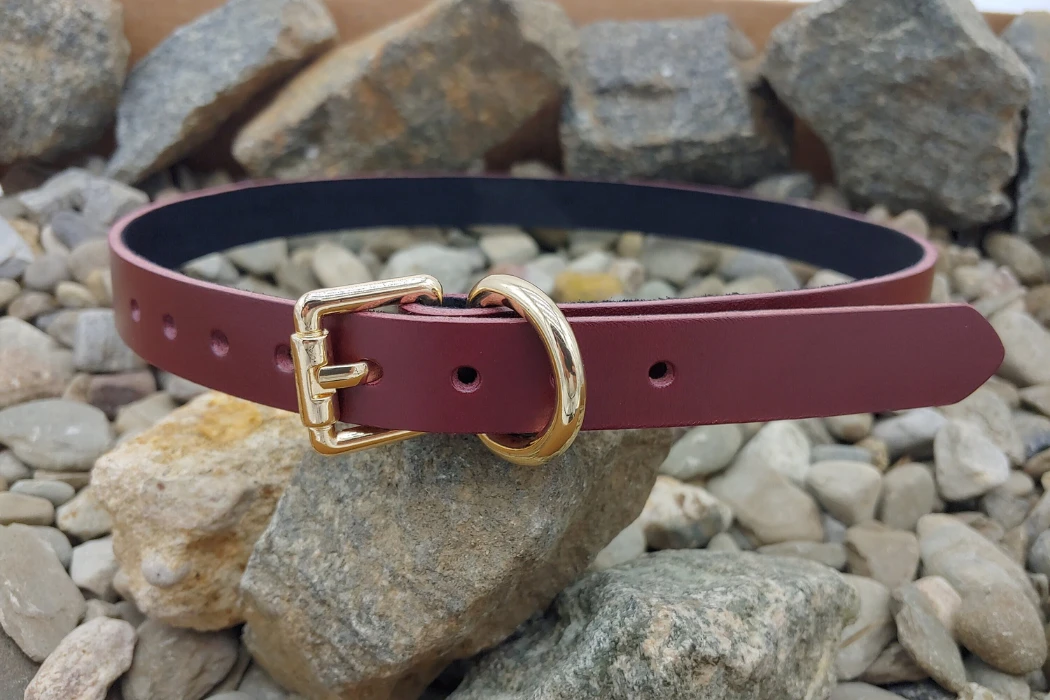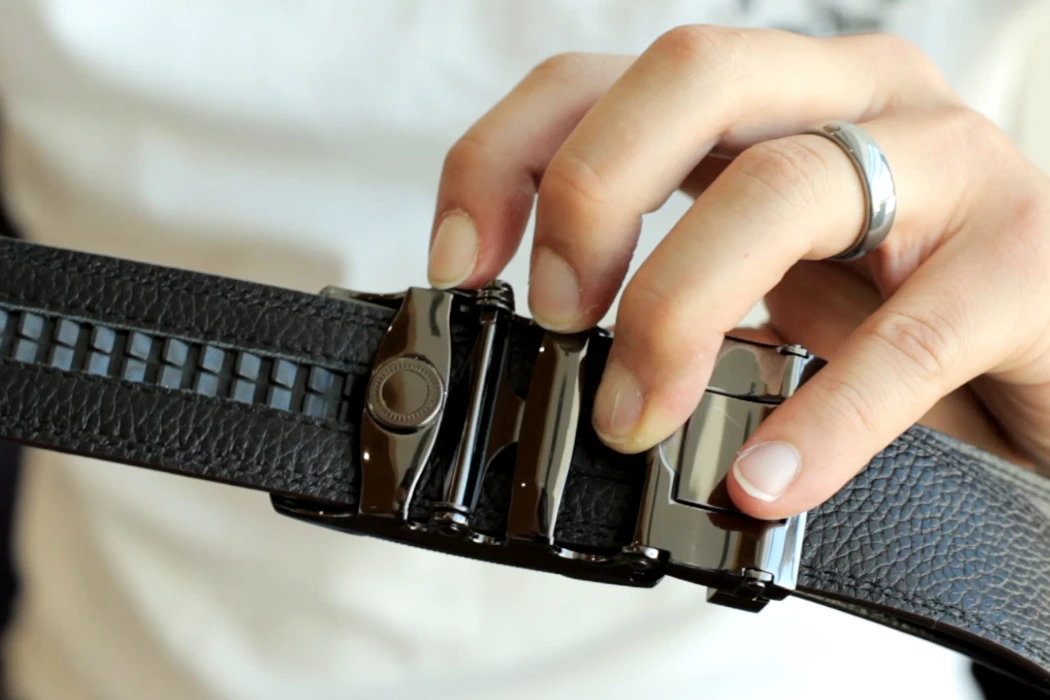
Saffiano is recognizable by its fine cross-hatched surface. It is strongly associated with Prada leather goods, but the pattern alone does not tell a buyer what lies underneath. A supplier may offer calfskin, another leather base or a synthetic sheet with a similar texture. For a handbag, wallet or belt program, the first question is therefore the material composition, followed by finish, flexibility and construction.
The appeal is a defined texture that can suit structured accessories and coordinated colour ranges. Its practical performance depends on the base material and finish as well as the design. An embossed surface is not automatically scratch-proof, waterproof or long-lasting.
Saffiano leather has a manufactured cross-hatch texture and a protective finish. Prada describes its own Saffiano as having a crosshatch pattern and wax finish, and identifies calfskin on specific product pages. Do not assume that every supplier uses the same hide or coating recipe. Ask for the base material, finished thickness and approved appearance sample before comparing quotations.
The sections below cover its connection with Prada, how the finish is produced, how to distinguish leather from synthetic alternatives, and what to check in a sourcing brief. Historical associations can explain a design’s appeal; they cannot replace evidence about a present-day supplier’s material.
What is Saffiano Leather?
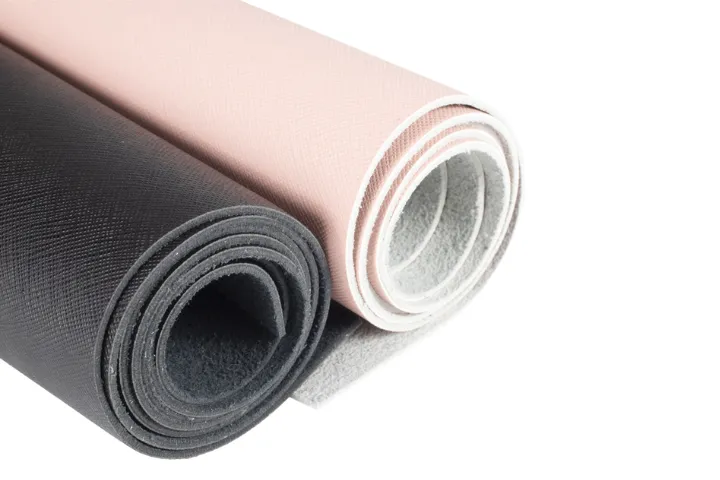
Saffiano describes a recognizable embossed surface rather than a universal performance grade. Leather-based versions combine an animal-hide substrate with a cross-hatch finish. Synthetic versions can imitate the pattern, so a specification should name both the appearance and the composition. The texture, coating and finished construction together influence feel, cleanability and resistance to wear.
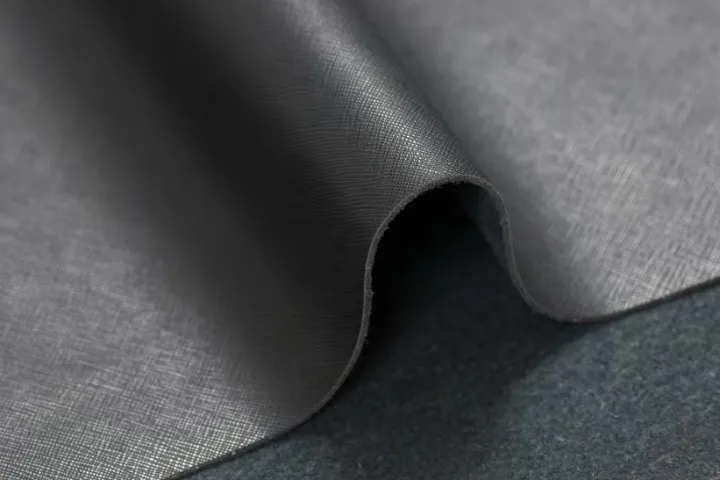
Texture illustrations do not establish whether a material is animal leather or a coated textile. Confirm composition from the supplier.
Defining the Iconic Cross-Hatch Texture
The intersecting lines are manufactured rather than the animal’s natural grain. Pattern scale, depth and direction can vary between suppliers. View a large swatch under consistent light and agree how the pattern should run across adjoining panels; a small sample may conceal variation that becomes obvious on a finished tote.
The texture may make small surface marks less conspicuous, but it does not prevent damage. Compare the finish after relevant rubbing and flexing checks, particularly at folds and corners. A prominent grain should not be used to hide coating defects in an approval sample.
First Impressions: The Look, Feel, and Structure
Evaluate the surface under consistent light, then handle the material and a folded sample. These observations help separate its visual texture from the hand-feel and structure of the finished product:
- Look: Cross-hatch depth, gloss and colour affect the appearance. Match these against an approved swatch rather than assuming a universally matte or uniformly coloured finish.
- Feel: A Saffiano material may have a firm hand, but thickness, coating and base construction influence stiffness. Compare both the flat swatch and a folded or stitched sample.
- Structure: A bag’s ability to stand also depends on its pattern, lining and reinforcement. A textured surface alone will not make a soft construction self-supporting.
Why It’s a Favorite for High-Fashion Brands
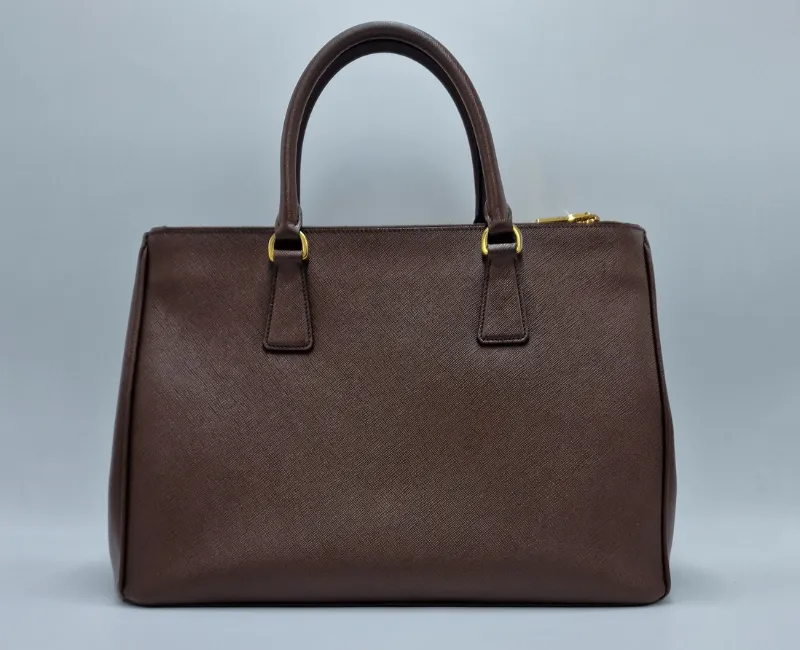
Prada is an important reference for this finish. Its Saffiano tote description identifies a crosshatch pattern and wax finish. For another brand’s product, check that specific product’s material description instead of assuming the same formulation or construction.
For a sourcing team, a controlled embossed pattern can help coordinate a product range. It still needs limits for colour, gloss, grain depth and acceptable natural marks. Approve production references and assess lot-to-lot consistency rather than promising identical hides.
A structured, textured product may suit a collection’s visual direction, but returns and repair rates depend on the finished goods and use. Test the stressed areas and agree inspection criteria before making claims about durability. The commercial advantage comes from a material that meets the brief consistently, not from the Saffiano name alone.
The History of Saffiano Leather
Saffiano has a longstanding association with Prada. The Prada Group history dates its first Milan store to 1913. That founding date should not automatically be presented as a verified patent date for a specific leather-making recipe. For buyers, the history explains the design reference; current composition and finish still need to be specified independently.
Prada and the Milan Leather-Goods Tradition
Prada’s official history places its first store in Milan’s Galleria Vittorio Emanuele II in 1913. The brand’s association with travel goods and leather accessories provides context for the material’s reputation. It does not verify an exact early press temperature, dwell time or finishing formula.
That heritage remains part of the material’s appeal in accessories. In a sourcing brief, translate the reference into observable attributes: texture, colour, hand-feel and finished construction. A supplier can then respond with a material sample rather than a general claim of heritage quality.
Separating Brand History from a Manufacturing Recipe
A supplier’s Saffiano-style finish is not evidence that it uses a historical Prada process. A practical description should identify two aspects of the current material:
- Pattern: A specified cross-hatch texture, formed by the supplier’s appropriate embossing or surface-making process.
- Finish: The actual coating and colour system applied to the chosen base. Obtain the supplier’s specification rather than assigning a universal wax formula.
Prada’s heritage may be relevant to a design discussion, but using a familiar texture does not establish a commercial relationship with Prada. Keep brand references separate from claims about a manufacturer’s clients, licensing or authorized production.
From Heritage Reference to a Current Sourcing Brief
The Prada Group identifies 1977 as the beginning of the business relationship between Miuccia Prada and Patrizio Bertelli. Its official chronology traces the subsequent international development of the brand. Saffiano remains a recognizable part of Prada’s current product vocabulary, as its published leather-goods descriptions show.
For a current collection, explain what the reference contributes: a fine directional grain, a particular gloss and a structured appearance. Translating these qualities into a material sample is more useful than asking a supplier to reproduce a brand story.
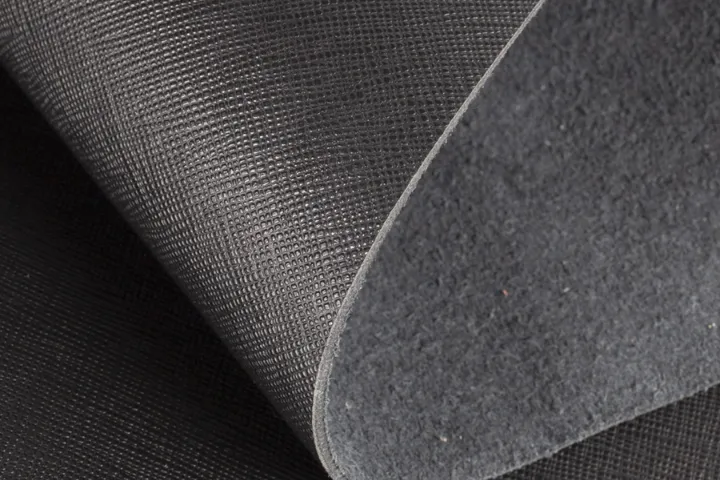
A reference image cannot show thickness, flexibility or coating adhesion. Obtain a physical swatch and an assembled development sample, then approve the material under the intended lighting and use conditions. Preserve the agreed reference when discussing repeat orders or a new colourway.
How is Saffiano Leather Made?
Manufacturing starts with the specified base material and desired finished appearance. The supplier prepares the surface, forms the cross-hatch texture using appropriate equipment, and applies or completes the finish system. The sequence and settings depend on the material. No single temperature or ten-to-fifteen-second cycle can be prescribed for every leather or synthetic Saffiano article.
Step 1: Selecting the Base Leather (Calfskin and Beyond)
Calfskin is used in specific Prada Saffiano products, but “Saffiano” alone is not a species specification. Ask a material supplier to identify the hide or synthetic base, thickness, temper and finish. Inspect a representative swatch for defects and how it bends at the required thickness.
Embossing can be applied to different leather substrates, including corrected surfaces, and to synthetic alternatives. The finished pattern may conceal visual differences between them. Request an accurate material declaration and, where necessary, a cross-section or suitable identification test. Do not infer a premium grade simply from uniform appearance.
Step 2: The Heat-Pressing Machine and Creating the Distinctive Pattern
A patterned plate or roller can impart the texture to a compatible prepared surface. The supplier must establish the combination of heat, pressure, dwell and support for that leather and finish. A value copied from another article or material is not a validated production instruction.
Approve pattern depth and coverage on the actual material. Check broad panels and shaped areas for uneven grain or flattening after assembly. The finished shape depends on the entire product construction; embossing alone should not be described as a strength improvement.
Step 3: The Protective Finish
Prada describes a wax finish on its Saffiano material. Other suppliers may use different coating systems to obtain a similar appearance. Ask what the proposed finish is designed to achieve and request evidence relevant to the product:
- Liquid contact: Assess resistance to the expected splashes and cleaning process. A finished surface does not make seams, edges and openings waterproof.
- Wear: Review surface abrasion, rubbing and flex behaviour on the material and finished construction.
- Gloss: Define the desired sheen and how it will be compared with the retained sample.
- Colour: Confirm colourfastness requirements for rubbing and relevant light exposure rather than assuming the coating prevents fading.
These checks distinguish an attractive initial swatch from a material suitable for production. A finish name does not replace a written performance specification.
Colour and Consistency: Setting Approval Limits
Colour may be introduced through dyeing, pigmentation or the finish system, depending on the material. Ask the supplier how the approved shade will be controlled rather than assuming it is always mixed into a final wax layer.
For a bright colour, review the surface under the agreed light source and compare adjoining panels. Texture and gloss can change the visual impression of the same nominal colour. Retain the reference swatch with the order records.
Natural variations and manufacturing tolerances still exist. Define acceptable grain, gloss and shade variation and inspect incoming lots. Uniform embossing can support consistency, but cannot guarantee identical colour over every hide or eliminate cutting waste.
Is Saffiano Real Leather?
Saffiano can be real leather, but the pattern alone does not prove it. Leather-based versions use animal hide; Saffiano-look synthetics use other constructions, often a coated textile. Request the exact composition and use clear labeling. Do not rely on smell, price or a textured face as a conclusive identification method.
The Foundation: Is Full-Grain or Top-Grain Leather Used?
Specify the leather substrate separately from the finish. Terms such as full-grain, top-grain, corrected-grain and split are not interchangeable, and suppliers may use “top-grain” inconsistently. Ask whether the original grain was retained or removed and what treatment was applied.
- Full-grain: Refers to retained original grain surface without its removal by buffing or similar treatment. The Leather Research Laboratory definition describes surface retention; it does not make every full-grain article the strongest or best for every product.
- Top-grain: Do not automatically interpret this as a second-best, sanded grade. The Leather Research Laboratory uses it synonymously with full-grain. For procurement, ask explicitly whether the material is corrected, how it is finished, and which layer of the hide is supplied.
For example, a Prada product page may identify calfskin, but that does not justify assigning the same grade to another supplier’s material. Base selection affects the final article and should appear in the bill of materials, supported by a reference swatch.
Understanding Corrected Grain and Embossed Texture
Corrected-grain leather has had its grain surface modified, often through buffing and refinishing. Embossing is a surface-pattern operation; its presence alone does not prove that the grain was removed. Ask about both the base and its preparation rather than equating every embossed material with corrected grain.
A cross-section and supplier description can answer questions a face photograph cannot: what substrate is present, how thick the finish is and whether the same material is used throughout the order. Retain these details with the colour and texture reference.
Using a corrected surface may permit a different hide selection, but any claim of reduced waste needs evidence from that production route. The buyer’s immediate task is to confirm that the selected article meets appearance, assembly and use requirements.
The Rise of Vegan Saffiano: PU and Synthetic Alternatives
A Saffiano-look PU material may use a polyurethane-coated textile rather than animal hide. Specify the coating, backing and any reinforcement. If it is marketed as animal-free, confirm all relevant components rather than relying only on the face material’s name.
Synthetic and leather versions can differ in flex, coating adhesion, moisture response and cost. Neither a low price nor a heavier feel proves better value. Compare materials designed for the same intended use, with the same inspection and performance requirements.
How to Verify Composition and Product Quality
Separate material identification from quality assessment. Both a leather and a synthetic product can be accurately described and well constructed. Use the following checks when reviewing a supplier’s offer.
| Feature | What the observation can show | Evidence still needed |
|---|---|---|
| Smell | Odour can suggest a finish or treatment | Composition cannot be proven by smell |
| Flexibility & Feel | Useful for comparing a reference sample | Declared material, thickness and performance checks |
| Edges | Shows the finish and assembly approach | A cut sample if the layers are concealed |
| Price & Brand | Indicates the commercial offer and positioning | Price and branding do not prove composition |
| Lining & Hardware | Reveals construction details and function | Material specification and operation/finish checks |
Advantages of Saffiano Leather
Saffiano-style finishes offer a defined texture and can support coordinated colours and structured designs. A suitable coating may improve cleanability and resistance to some surface marks. The degree of protection varies, so qualify scratch, rubbing, moisture and flex behaviour for the chosen article. Avoid promising a permanently new appearance.
Durability: Evaluate the Finished Article
Handbags and wallets encounter rubbing at corners, folds, handles and pocket edges. A textured, finished surface may be appropriate for these uses, but its performance depends on the substrate and construction. Inspect the areas that bend or contact other materials, not only the flat panel.
Do not attribute strength or a five-year shape guarantee to heat pressing. Shape retention depends on the pattern, reinforcement, material temper, stitching and how the bag is loaded. A development sample should be evaluated with its intended contents so the buyer can identify distortion before production.
Scratch, Stain and Water Resistance
Treat these as separate requirements. A material that wipes clean after one spill may still scratch, transfer colour or absorb water at exposed edges.
- Scratches: Texture can make minor marks less visible. Compare the actual surface after relevant rubbing or scratch assessment; the grain cannot prevent deep cuts.
- Stains: A finish may slow absorption of some spills, but oils, inks and dye transfer can still mark it. Confirm cleaning guidance and relevant stain resistance with the supplier.
- Water: Do not equate a water-resistant finish with a waterproof bag. Blot incidental moisture promptly and inspect seams, raw edges and lining as well as the face material.
Maintenance and Customer Care
A cleanable surface can simplify aftercare, but the buyer needs instructions for the actual finish. Validate the care method on the production material before placing it on a consumer label.
For routine dust, start with the maker’s recommended soft cloth. Use a damp cloth or cleaning product only if approved for that finish. Do not assume the same method will remove ink, oil and dye transfer without damage.
A clear care card also sets realistic expectations. Explain handling, storage and when to seek service. Easy care is useful; “no maintenance” and “always looks new” are claims a finish name cannot support.
Color Vibrancy and Resistance to Fading
A pigmented finish can provide a strong, even colour effect, but recipes vary. Review the colour and sheen on a large sample and in finished seams or folds. What looks uniform on a small swatch may differ after assembly.
Do not assume wax is a universal UV shield or that a dark colour cannot fade. Specify relevant colourfastness requirements and advise protection from prolonged direct light and heat. Prada’s own care instructions for Saffiano goods include avoiding direct light and heat, which is inconsistent with treating the finish as fade-proof.
Disadvantages of Saffiano Leather
Potential trade-offs include a firmer feel, a more manufactured surface appearance, and difficulty matching a damaged embossed finish during repair. The effect depends on the actual article. A textured coated surface may age differently from an absorbent unfinished one, but it still wears and can change colour or gloss.
Patina and Changes with Use
Patina is the change in appearance associated with use, handling and exposure. On a more absorbent leather it may be prominent; an opaque finished surface can conceal or alter that change. This is an aesthetic choice to discuss with the brand, not a guarantee that Saffiano does not age.
Inspect representative wear and avoid promising that a product will look unchanged after five years. If the brief calls for an evolving natural appearance, compare less-covered alternatives. If it calls for stable colour and texture, qualify that performance instead of assuming it.
Feel and Flexibility: Is It Too Stiff?
A firm swatch may suit a structured tote and feel wrong for a relaxed bag. However, the cross-hatch pattern itself does not set the material’s stiffness. Thickness, temper, backing and reinforcement can produce different results with similar-looking finishes.
Approve drape and bend behaviour using the intended construction. A manufacturer may need a different material article or reinforcement layout to obtain the required shape. Texture and softness should be separate items in the brief.
The Challenge of Repairs and Restoration
A deep scratch can cut through a coloured finish and expose a different-looking substrate. Repair success depends on depth, location and the available colour and texture match. Natural-looking leather is not automatically easy to repair either.
Avoid abrasive buffing or unapproved solvents. Recreating a cross-hatched surface after filling a gouge can be difficult, and a repair may remain visible. Ask a qualified repair provider for an assessment rather than promising an invisible restoration.
Breathability Compared to Untreated Leathers
Coatings can affect water-vapour transmission, but the finish name alone does not establish a value. If moisture transport is relevant to the product, identify an appropriate test and requirement with the material supplier.
For a bag or wallet, construction, lining and moisture trapped during storage may matter more than a generic breathability claim. Specify the requirement relevant to the actual use rather than comparing every Saffiano article with every untreated leather.
Saffiano Leather vs. Other Leathers
Compare Saffiano with alternatives on texture, hand-feel, composition and tested performance. The names below describe different material families or commercial articles, not a universal durability ranking. Use physical references from the proposed suppliers for a meaningful comparison.
Saffiano vs. Epsom
Hermès identifies Epsom calfskin in specific product descriptions. It is a useful visual reference for a different textured leather, but a supplier’s “Epsom-style” offer is not proof of an identical article or brand relationship. Compare grain scale, gloss, weight and bend on real swatches rather than awarding either name a blanket water- or scratch-resistance rating.
Saffiano vs. Palmellato-Style Finishes
Suppliers may use Palmellato for a rounded, pebbled-looking finish. Commercial usage is not a complete material specification. Request the base, thickness and temper, then compare its grain and drape with the proposed Saffiano article. A softer appearance does not itself establish a softer structure or longer life.
Saffiano vs. Pebbled Leather: Texture, Feel, and Durability
Pebbled effects can arise from milling or embossing, so appearance alone does not identify the process. A pebbled material may be soft or firm depending on its construction. Compare the actual articles for hand-feel, surface protection and assembly behaviour; “pebbled” does not necessarily mean uncoated or more stain-prone.
Saffiano vs. Smooth Calfskin: A Classic Showdown
Smooth calfskin offers a less textured appearance, but it can have different finish systems and levels of firmness. Some smooth finishes reveal marks readily; others are designed for practical use. Select the finish that meets the product brief instead of equating smooth leather with fragility and Saffiano with permanent protection.
| Leather Type | Texture | Feel & Flexibility | Performance to verify | Best For |
|---|---|---|---|---|
| Saffiano | Uniform, geometric cross-hatch | Article-dependent; often selected for a firm appearance | Surface wear, colour transfer and flex | Work totes, structured bags, wallets, travel goods |
| Epsom | Assess the specific embossed grain reference | Confirm the actual article’s hand-feel | Do not infer a rating from the trade name | A reference for textured calfskin goods |
| Palmellato | Soft, rounded, pebble-like grain | Confirm softness and body on the sample | Compare against the same intended use | Bags that need structure but a softer feel |
| Pebbled | Irregular, bumpy, natural-looking pebbles | Varies with milling, embossing and construction | Check rubbing, staining and flex on the chosen finish | Casual bags, hobo bags, backpacks |
| Smooth Calfskin | Smooth appearance; finish and grain retention vary | Can be soft or firm depending on the article | Assess the finish; no universal low rating | Goods needing a smooth appearance |
How to Clean and Care for Saffiano Leather
Follow the maker’s care instructions for the specific product. Prada’s Saffiano wallet guidance includes gentle handling, avoiding overloading, direct light and heat, and contact with oils, cosmetics and perfumes. Do not turn a general cleaning tip into an instruction for every coated leather.
The Daily Wipe-Down: Simple Routine Care
Begin with the maker’s instructions and identify whether the issue is loose dust, liquid or a stain. For a product you manufacture, validate the proposed routine on a spare swatch from the same material before publishing the care card.
- Take a soft, lint-free cloth (a microfiber cloth is perfect).
- Use water only if the maker permits it; keep the cloth lightly damp rather than wet.
- Wipe gently without scrubbing. Stop if colour transfers or the surface appearance changes.
- Remove residual moisture gently and allow natural drying away from direct heat.
Clean as needed according to the product guidance. A fixed weekly schedule does not account for different use and exposure.
Tackling Common Stains (Ink, Grease, Spills)
Blot a spill promptly and check the care instructions. Do not assume the finish will prevent absorption or that stronger solvents will safely remove a stain.
- Liquid spills: Gently blot excess liquid with a clean, dry cloth. Avoid spreading it into seams and edges; consult the maker if a mark remains.
- Grease or oil: Do not apply household powders, water or degreasers without the maker’s approval. These can leave residue or alter the finish. Seek specific cleaning advice.
- Ink or dye transfer: Avoid rubbing alcohol and other improvised solvents. They can remove colour or affect the coating. Contact the maker or a qualified leather-care specialist.
Conditioning: Is It Necessary for Saffiano?
Conditioning is not automatically necessary or appropriate. The correct approach depends on the finish and product instructions, rather than whether the surface is called Saffiano.
An unsuitable cream or oil may leave residue, change gloss or mark the finish. Use only products approved for the article. If the maker provides no conditioning instruction, ask before applying one.
Long-Term Storage and Preventing Shape Loss
If you’re storing your Saffiano bag for an extended period, a little prep work goes a long way in preserving its beautiful structure.
- Clean It First: Give it a final wipe-down before you put it away.
- Support the shape: If recommended by the maker, use clean, non-staining support without overfilling or stressing the bag.
- Dust bag: Use the maker’s storage bag or another clean, non-staining cover. Keep the product dry and separate from items that could transfer colour.
- Find a Good Spot: Follow the maker’s storage guidance and keep the product dry, away from direct sunlight and excessive heat. Avoid sealing a damp item in packaging that traps moisture; inspect and dry it appropriately before storage.
When to Seek Professional Help
While Saffiano is a workhorse, some problems are best left to the experts. You should take your item to a professional leather repair shop if you encounter:
- A deep scratch or cut through the surface finish.
- A stubborn ink or dye stain that won’t come out with gentle dabbing.
- Peeling or damage to the edge paint along the seams.
- Broken hardware, stitching, or structural damage.
Ask for a repair assessment and the expected appearance afterward. No provider should promise an invisible result without inspecting the damage and material.
Buying Guide for Saffiano Leather Products
For a Saffiano goods order, assess the whole product: composition, pattern, colour, stitching, edge construction, lining and hardware. Retain an approved material swatch and finished sample. The surface appearance is one part of the specification; it cannot establish product quality or environmental performance on its own.
Identifying Quality Craftsmanship in a Saffiano Product
Review observable details, then connect them to the written specification. Appearance can flag defects, but should not replace material records or appropriate performance checks.
- Stitching: Check alignment, tension, loose ends and damage around needle holes against the approved construction. A neat seam alone does not prove a factory-wide quality system.
- Hardware: Check operation, finish, dimensions and attachment. Weight is not a reliable quality test; different alloys and constructions can be appropriate.
- Edges: Painted, folded and raw edges can all be intentional. Check the chosen finish for adhesion, consistency and damage during bending rather than classifying all folded edges as cheap.
- Lining: Specify fibre or leather composition, feel, colour transfer and seam performance. Nylon or polyester is not automatically inferior, and a decorative weave does not prove durability.
The Most Popular Uses: Handbags, Wallets, Belts, and Tech Accessories
The texture can be proposed for several accessory types, but qualify the material for each construction rather than transferring a handbag result to a belt or wallet.
- Structured Handbags: Totes, satchels, and top-handle bags that need to stand on their own and look professional.
- Wallets and small goods: Check folds, card-pocket edges and rubbing against clothing.
- Fashion belts: Review bending, adjustment holes, buckle attachment and colour transfer.
- Tech accessories: Check the full sleeve or case construction; a textured face does not establish device-impact protection.
Is Saffiano Leather a Sustainable Choice?
This is a complex question with no simple answer. Saffiano presents a fascinating debate in sustainability.
Potential benefit: A durable, repairable product may remain in use longer. That benefit must come from the actual design and performance, not the finish name. If a supplier claims reduced material waste, request evidence for its cutting and finishing process.
Evidence needed: Ask about the leather or textile source, processing and finish chemistry, relevant facility documentation and product testing. Do not rank leather against PU using an assumed lifespan or a universal coating recipe. Any recycled, animal-free or other environmental claim should be substantiated for the materials actually ordered.
Developing New Saffiano-Style Articles
A new grain scale, gloss or colour can create a different effect, but it also needs a new approval reference. Compare the changed article for flex, colour transfer and assembly behaviour. Keep the material identity and performance evidence current when a supplier changes the base or finish, even if the commercial name remains the same.
Specify a Saffiano-Style Product with Hoplok
For a Saffiano-style custom bag, wallet or belt project, send Hoplok the desired texture, colour and hand-feel together with the product drawing. Ask for the proposed material composition and a development sample so the appearance and construction can be assessed together.
Hoplok operates four facilities across China and Cambodia, including ProPelli for leather finishing. Match the proposed material and product construction to the order, and request the relevant facility documents and sample checks. Discuss a material and product brief with Hoplok.
Contact Us to Discuss Your Saffiano-Style Product