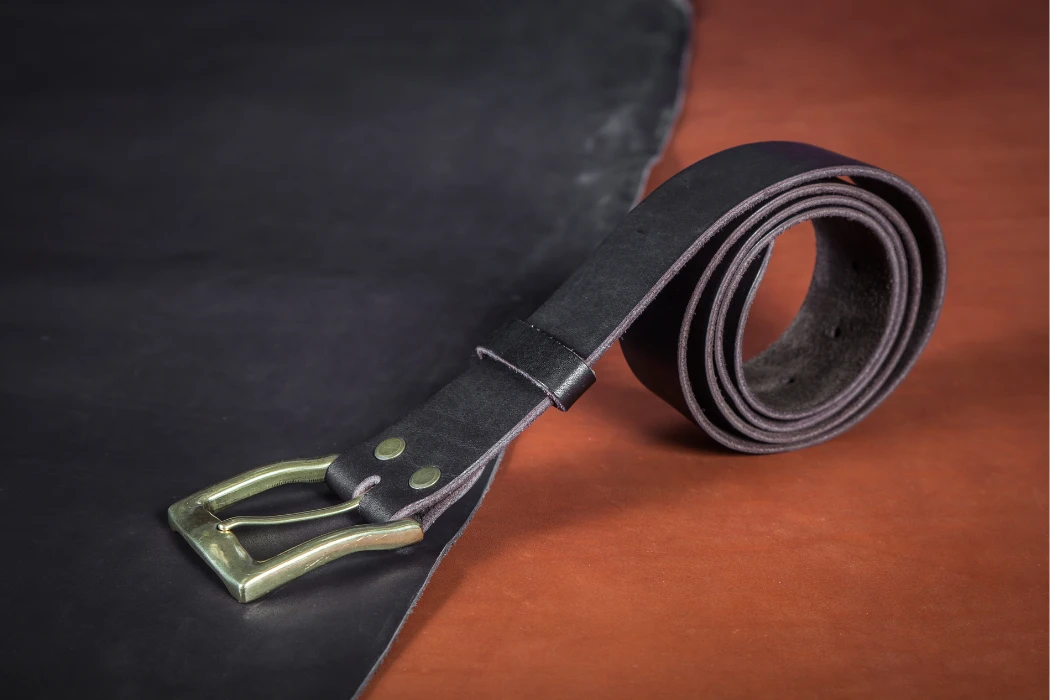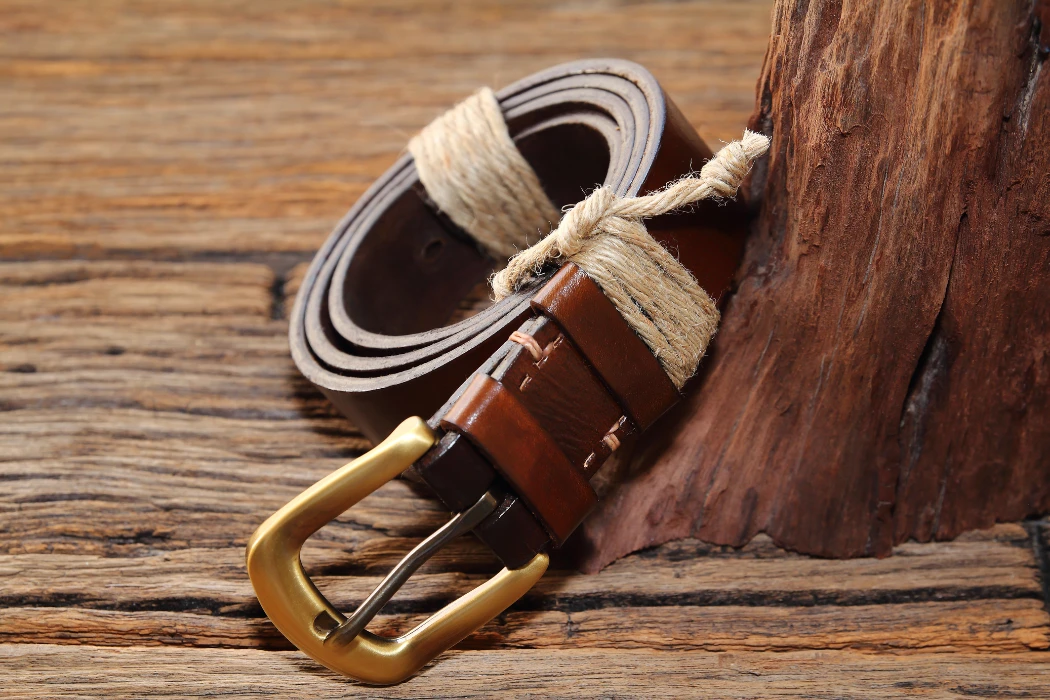
Leather is essentially a preserved animal skin, and like human skin, it has layers. The top layer is tough and tight, protecting the animal from weather and scratches. The layers underneath are softer and looser. When a tannery processes a hide, they often slice these layers apart to create different materials for different products.
Understanding these layers is critical because the “grade” of leather dictates the lifespan and price of a belt. A belt made from the top layer can last 10+ years, while a belt made from the bottom layer might crack after six months of daily use. Manufacturers must balance this durability against the raw material cost, which varies significantly between grades.
This guide breaks down the technical differences between Full Grain, Top Grain, and Split leather. It explains exactly what happens inside the factory to create each type and helps brands decide which grade aligns with their quality standards and target price point.
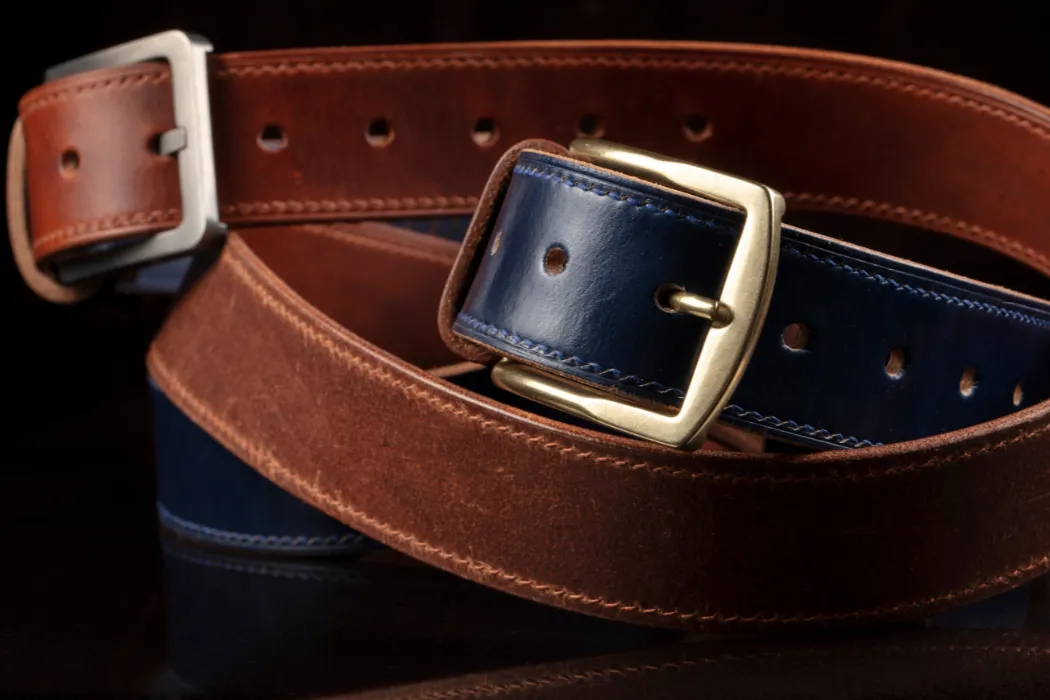
What Exactly Is Full Grain Leather?
Full Grain leather is the outermost layer of the hide that has not been sanded or buffed. It retains the natural grain pattern and is the strongest, most durable grade available. It resists moisture well and develops a rich patina over time.
The Anatomy of the Grain Layer
The “grain” refers to the outermost surface of the hide where the hair grew. The fibers in this layer are extremely dense and tightly packed vertically. In Full Grain leather, this entire vertical fiber structure is left intact. Because the fibers are so tight, they provide immense tensile strength. This is crucial for belts, which must withstand constant pulling and tension around the waist without stretching out of shape.
Durability and Patina Characteristics
Full Grain leather does not wear out; it wears in. Instead of peeling or cracking, the surface absorbs oils from your hands and the environment. Over time, this oxidation process creates a “patina,” a soft sheen and darker color that leather enthusiasts prize.
- Breathability: The natural pores are open, allowing the leather to release moisture.
- Strength: It maintains its structural integrity for decades.
- Self-Healing: Small scratches can often be buffed out with a simple thumb rub.
This grade is virtually indestructible in standard daily wear conditions.
Why It Is the Most Expensive Option
Full Grain is costly because it requires a pristine raw hide. Since the surface is not sanded, any scar, bug bite, or brand mark on the cow remains visible. Manufacturers must discard hides with too many imperfections. Sourcing high-quality hides that are clean enough for Full Grain belts significantly limits the supply and drives up the price.
How Does Top Grain Leather Differ from Full Grain?
Top Grain leather is also the top layer of the hide, but the very surface has been sanded away to remove imperfections. It is thinner and more pliable than Full Grain. It often has a finish coat applied to create a uniform color and resist stains.
The Sanding and Correcting Process
Tanneries take hides with too many scars or scratches and “correct” them. They sand down the top few millimeters of the grain. This removes the natural imperfections but also removes the strongest fibers at the very top. The resulting surface is smooth and uniform. While still strong, it is not as rugged as Full Grain because the interlocking fiber structure has been disrupted.
Coating and Uniformity Benefits
After sanding, the leather is usually imprinted with an artificial grain pattern and sealed with a finish.
- Consistency: Every belt looks exactly the same, which is ideal for mass-market fashion brands.
- Stain Resistance: The finish coat repels water and oil better than natural Full Grain.
- Softness: It is generally more flexible right out of the box.
Brands choose Top Grain when they want a luxury feel without the rugged, imperfect look of Full Grain.
Comparison of Primary Belt Grades
| Feature | Full Grain Leather | Top Grain Leather |
|---|---|---|
| Surface Texture | Natural, unique, visible pores | Uniform, sanded, often embossed |
| Durability | Maximum strength (10+ years) | High strength (5-10 years) |
| Aging | Develops rich patina | Maintains original color |
| Cost Index | $$$$ (Highest) | $$$ (Moderate to High) |
Is Genuine Leather Actually Low Quality?
Yes, usually. “Genuine Leather” is a marketing term, not a technical grade. It typically refers to the layers of hide left over after the top grain is removed. It is technically real leather, but it lacks the density and durability of high-quality grades.
Deciphering the “Genuine Leather” Marketing Term
The industry uses this term to deceive consumers. It sounds premium, but it essentially means “at least it is not plastic.” In belt manufacturing, Genuine Leather usually refers to Split Leather that has been heavily processed. It is the lowest quality product that can still legally be described as leather. It is widely used in fast fashion and budget-friendly department store belts.
Common Processing Techniques
Since the base material lacks a natural skin surface, manufacturers must create one artificially.
- Painting: Layers of pigment are sprayed onto the surface.
- Embossing: Heavy rollers press a leather-like texture into the paint.
- Fillers: Sometimes the leather is ground up and glued back together (Bonded Leather), though this is technically distinct from standard Genuine Leather.
The result is a belt that looks good on the shelf but degrades quickly. The surface coating often peels away from the fibrous base after a few months of bending and flexing.
What Is Split Leather and When Should Manufacturers Use It?
Split Leather is the fibrous bottom layer of the hide, separated from the top grain. It has a fuzzy texture on both sides (suede). For belts, it is often coated with PU (polyurethane) to simulate a smooth leather surface.
Understanding the Fibrous Under-Layer
Once the Top Grain is sliced off, the remaining hide is the “Split.” This layer is composed of loose, horizontal fibers. It has very little tensile strength compared to the vertical fibers of the grain. If you pull hard on a thin piece of split leather, it can tear like heavy fabric. It is absorbent and porous.
Processing: Suede vs. PU Coated Split
Split leather has two main applications in belt manufacturing:
- Suede Belts: The natural fuzzy texture is kept. These are stylish but stain easily and have lower tensile strength.
- PU Belts (Action Leather): A thick layer of polyurethane is glued to the split. This creates a fake “grain” surface. This is the most common material for low-cost “leather” belts found in supermarkets.
PU Splits are extremely common in mid-range retail because they look like Top Grain but cost a fraction of the price.
Manufacturing Cost & Waste Analysis by Grade
| Leather Grade | Usable Yield per Hide | Relative Cost Index |
|---|---|---|
| Full Grain | 60% – 70% (Imperfections discarded) | 100 (Baseline) |
| Top Grain | 80% – 90% (Sanding fixes errors) | 75 – 85 |
| Split / Suede | 95% – 100% (High utilization) | 30 – 45 |
How Can You Test Belt Quality Without a Lab?
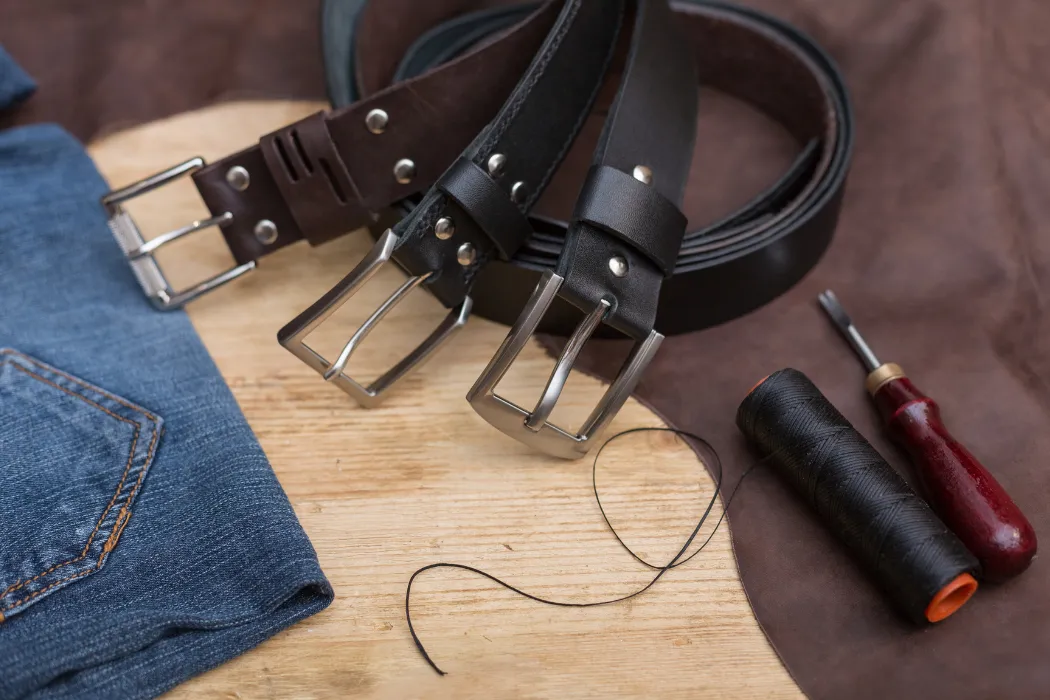
Use your senses. Look at the edge, scratch the surface, and test water absorption. High-quality leather behaves like skin; low-quality leather behaves like plastic or cardboard.
The Water Drop Test
Place a small drop of water on the belt surface.
- Full Grain: The leather will usually darken slightly as it absorbs the water (unless heavily waxed). This indicates open pores.
- Coated/Genuine: The water will bead up and roll off immediately because it is sitting on a plastic coating, not the leather itself.
Note that some high-end leathers are specially treated to be water-resistant, so this is not a definitive fail, but it effectively identifies heavy plastic coatings.
The Cross-Section Inspection
Inspect the raw edge of the belt or look inside the belt holes.
- Real Quality: You should see a uniform material structure throughout the thickness.
- Cheap/Bonded: You might see distinct layers, like a sandwich. A thin top layer (the plastic finish), a middle fibrous layer, and sometimes a fabric backing. If you see white threads or mesh, it is not solid leather.
The Scratch and Wrinkle Test
Bend the belt backward. Full Grain leather will wrinkle naturally like your elbow skin. Bonded or heavily coated leather may hardly wrinkle at all, or the coating might reveal tiny micro-cracks immediately. Lightly scratch the back side with a fingernail. Real leather will leave a mark; plastic coating will often glide or feel synthetic.
Which Leather Grade Is Right for Your Brand’s Belts?
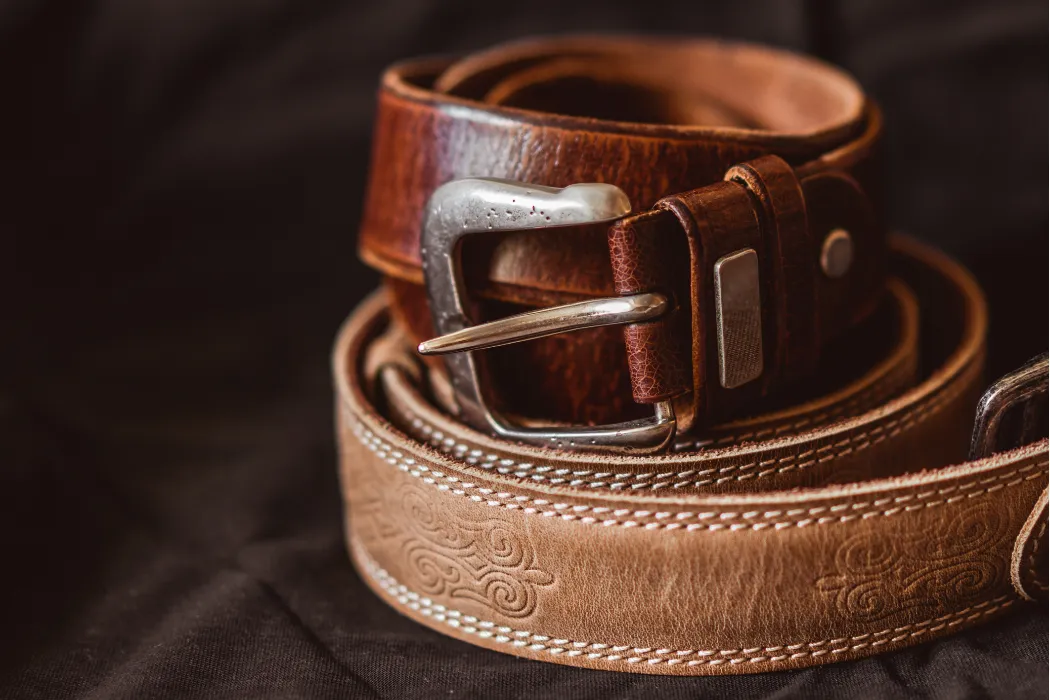
It depends on your market positioning. Luxury brands must use Full Grain. Mid-market fashion brands often use Top Grain for consistency. Budget brands rely on PU Split or Bonded leather to hit low price targets.
Matching Grade to Price Point
Do not over-spec your product. Using Full Grain leather for a $20 retail belt is financial suicide. Conversely, using Split leather for a $100 belt will destroy your brand reputation when the belts peel after three months. The goal is to match the consumer’s expectation of durability with their willingness to pay.
Recommended Grades for Different Belt Styles
| Belt Style | Recommended Grade | Why? |
|---|---|---|
| Heavy Duty / Workwear | Full Grain (Vegetable Tanned) | Must not stretch under heavy load; structural integrity is the priority. |
| Corporate / Dress | Top Grain / Smooth Full Grain | Needs a sleek, uniform finish to match dress shoes without natural blemishes. |
| Fashion / Reversible | Top Grain or Bonded | Reversible belts often need flexible, thinner layers glued together to function correctly. |
| Budget / Promo | PU Coated Split | Cost is the only priority; longevity is secondary. |
Compliance and Chemical Considerations
Regardless of the grade, all leather entering markets like the EU or USA must meet strict chemical standards (REACH, Prop 65). Brands must ensure their leather is free from prohibited substances like Chromium VI, Lead, and Azo Dyes. Sourcing from certified tanneries ensures that even cheaper grades like Split leather are chemically safe for the consumer.
Frequently Asked Questions
Does full grain leather scratch easily?
Yes, it can scratch because it has no heavy plastic coating. However, these scratches are usually superficial and blend into the patina over time. They are considered a feature of the character, not a defect.
Why does my leather belt crack?
Cracking usually happens because the belt is made of Bonded leather or poor-quality Genuine leather. The “leather” didn’t crack; the polyurethane paint painted on top of it dried out and snapped when the belt was bent.
Is top grain leather real leather?
Yes, absolutely. It is 100% real hide. It has just been sanded and finished. It is a premium product, just one step below Full Grain in terms of natural character.
How thick should a leather belt be?
A standard casual leather belt is typically 3.5mm to 4.0mm thick. Dress belts are often thinner, around 3.0mm, to fit through suit trouser loops. Anything under 2.5mm will likely stretch and deform quickly.
What is bonded leather vs. split leather?
Split leather is a single solid piece from the bottom of the hide. Bonded leather is leather dust and scraps glued together with latex, like particleboard wood. Split leather is significantly stronger than bonded leather.
Does expensive leather last longer?
Generally, yes. The cost of leather is directly related to the quality of the hide and the tanning process. Expensive Full Grain belts are tanned slowly (often vegetable tanned) and use strong fibers, lasting for decades.
Conclusion
Choosing the right leather grade is a balance of aesthetics, durability, and cost. Full Grain offers unmatched longevity and character for premium goods. Top Grain provides uniformity and elegance for high-end fashion. Split and Genuine leather offer cost-effective solutions for volume markets.
For brands looking to navigate these technical specifications without the guesswork, Hoplok Leather Goods provides precise sourcing and manufacturing solutions. With vertical integration through facilities like Pro Pelli, we help you select and finish the exact grade that fits your price point and quality standards, ensuring your final product delivers on its promise to your customers.