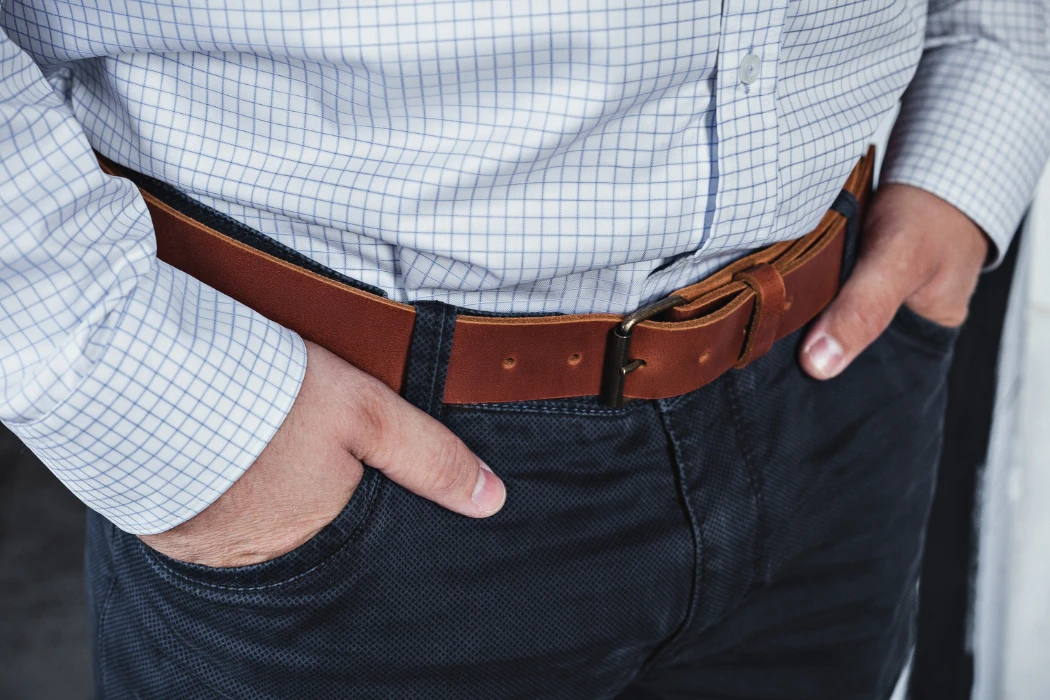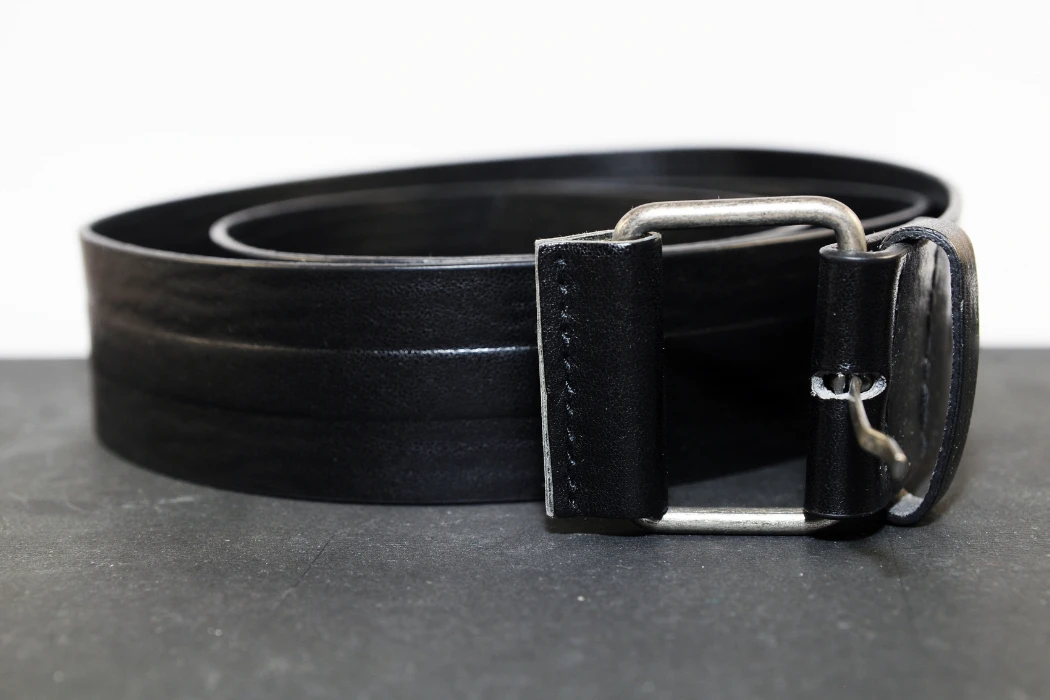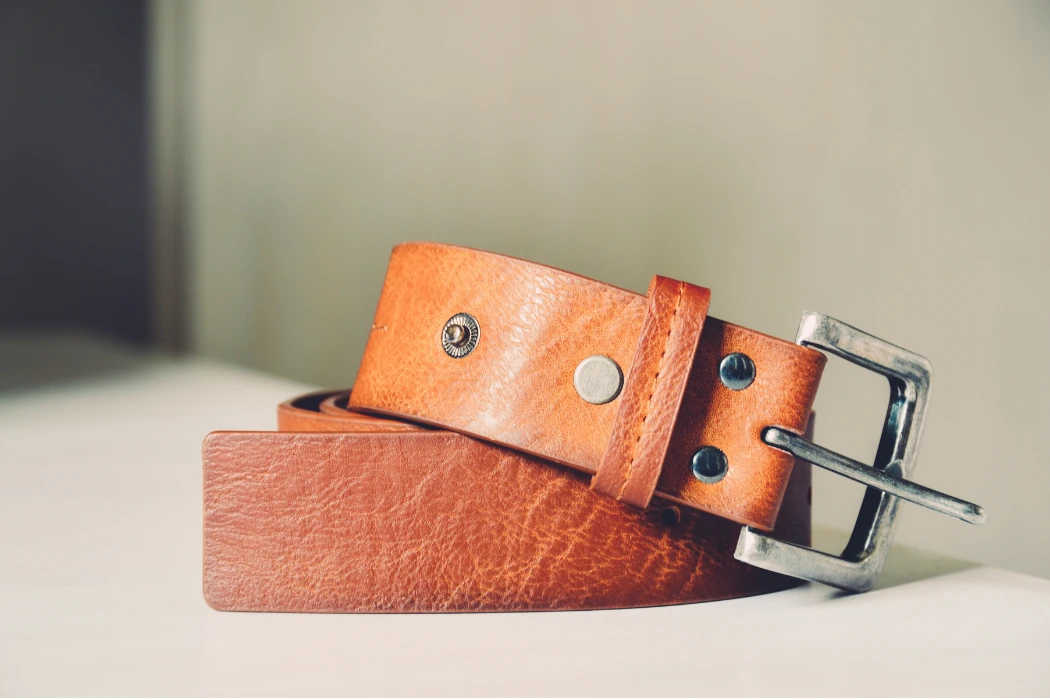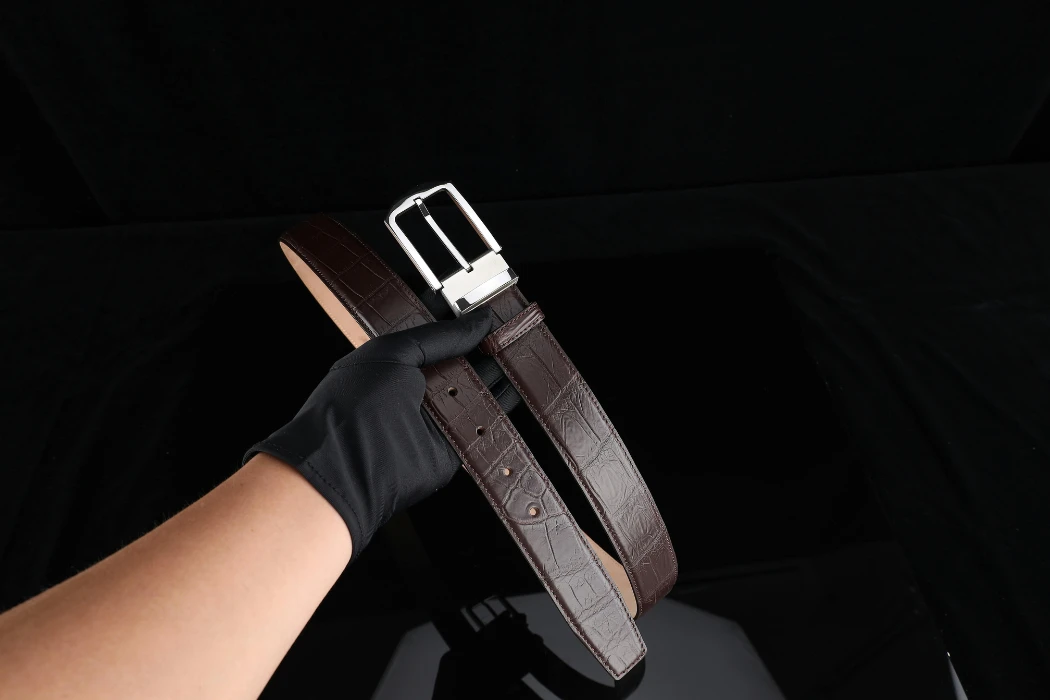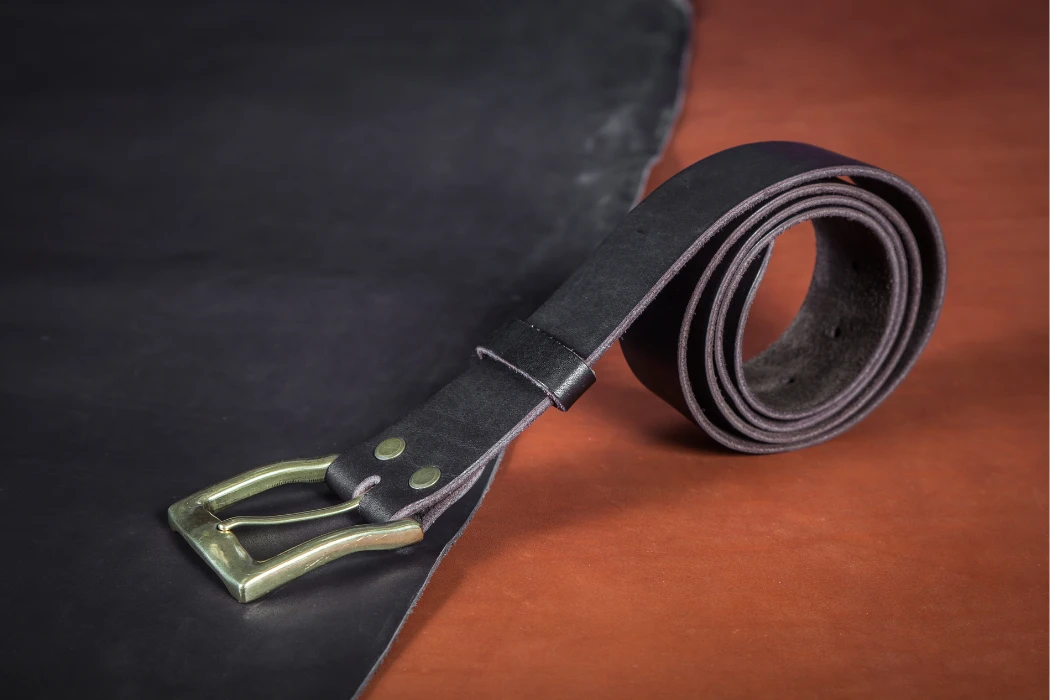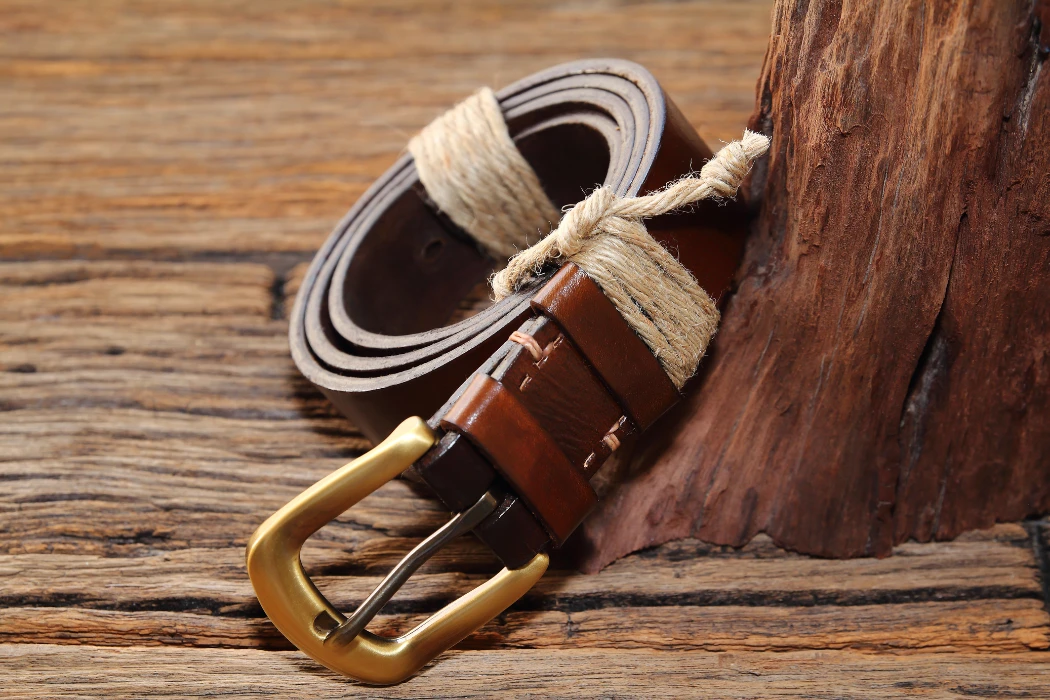
The undisputed best leather for belts is Full-Grain Vegetable-Tanned Cowhide. Sourced from the dense top layer of the hide, this material retains its natural fiber structure, providing exceptional tensile strength and resistance to stretching. With proper care, a full-grain belt can last 15 to 20+ years, developing a rich patina over time. In stark contrast, belts made from “Genuine Leather” (split leather) or Bonded Leather typically crack, peel, or snap at the adjustment holes within 6 to 12 months of daily wear.
A belt is the single most stressed accessory in your wardrobe. It is subjected to pounds of tension every time you sit down, constant friction against belt loops, and the corrosive effects of sweat and body heat. Why is it that most belts fail within a year, while a select few seem to last a lifetime?
This guide dissects the manufacturing science behind durability. We will analyze the critical differences in Leather Grade (Full-Grain vs. Top-Grain), the impact of Tanning Methods (Veg-Tan rigidity vs. Chrome-Tan softness), and why the Cut of the Hide (Shoulder vs. Belly) determines whether your belt will hold its shape or warp into a boomerang.
What Is the Best Leather Grade for Belts?
The leather grade dictates a belt’s structural integrity. Full-Grain Leather is the superior choice, as it utilizes the hide’s dense outer layer, offering maximum tensile strength and resistance to tearing. Top-Grain Leather is a reliable runner-up; though sanded for uniformity, it remains durable. Conversely, “Genuine Leather” and Bonded Leather should be avoided for belts, as their loose fiber structures cannot withstand the tension of daily wear, often failing within 6 to 12 months.
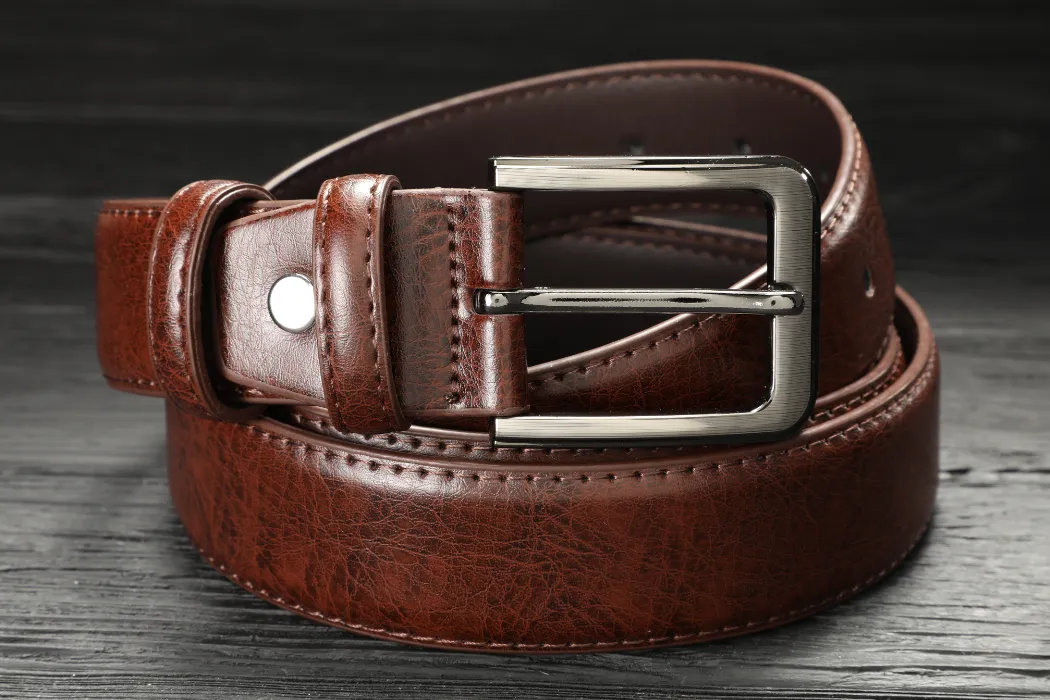
The Gold Standard: Full-Grain Leather
Full-grain leather is the unadulterated top layer of the hide, situated just below the hair. It is considered the gold standard because the natural grain pattern is left completely intact, preserving the vertical collagen fibers that provide strength.
- Fiber Density: Because the fibers are tightly interlocked, full-grain leather has the highest tensile strength of any grade. It resists stretching and tearing around the belt holes, which are high-stress points.
- Longevity: A full-grain belt typically lasts 10 times longer than a genuine leather belt. Instead of wearing out, it “wears in,” developing a protective and aesthetic patina that increases its beauty over decades.
- Breathability: The pores remain open, allowing the leather to breathe and release moisture, preventing rot from sweat accumulation.
The Runner Up: Top-Grain Leather
Top-grain leather is also cut from the top layer of the hide, but it undergoes a “correction” process. The very top 0.5mm – 1.0mm of the surface is sanded or buffed away to remove natural imperfections like scars, branding marks, or bug bites.
- The Trade-off: While this creates a flawless, uniform appearance perfect for formal dress belts, sanding removes the toughest outer fibers. This reduces the leather’s ultimate durability and prevents it from developing a true patina.
- The Finish: Top-grain is often coated with a thin layer of polyurethane or pigment to seal the surface. This makes it stain-resistant but can lead to fine surface cracking after 5-10 years of use.
The Trap: Genuine and Bonded Leather
For belts, these lower grades are functionally defective. They rely on artificial coatings to hold their shape rather than natural fiber strength.
- Genuine Leather (Split): This is the loose, fibrous layer left over after the top-grain is removed. It lacks vertical strength. To make it look like leather, it is sprayed with heavy paint and embossed with a fake grain. When bent, the paint cracks because the weak fibers underneath stretch too much.
- Bonded Leather: This is the “particle board” of leather. It consists of 10-20% leather dust and scraps mixed with 80-90% polyurethane glue and pressed onto a fabric backing. It has zero structural integrity and will snap or delaminate rapidly under the tension of a belt buckle.
Leather Grades Comparison for Belts
This table compares the structural properties and expected performance of each grade.
| Grade | Composition | Tensile Strength | Est. Lifespan |
|---|---|---|---|
| Full-Grain | Top layer, un-sanded, intact fibers. | Very High (Resists stretching) | 15 – 25+ Years |
| Top-Grain | Top layer, sanded surface. | High (Good for dress belts) | 5 – 10 Years |
| Genuine (Split) | Bottom layer, painted surface. | Low (Tears at holes) | 1 – 3 Years |
| Bonded | Leather dust + Glue. | Very Low (Snaps easily) | 3 – 6 Months |
Why Does the Tanning Method Matter? (Veg-Tan vs Chrome-Tan)
Selecting Full-Grain leather is only half the equation; the tanning method dictates the leather’s “Temper” (stiffness and rigidity). For belts, Vegetable-Tanned (Veg-Tan) leather is the superior choice because it utilizes natural tree tannins to create a dense, firm structure that resists stretching and holds its shape under tension. In contrast, Chrome-Tanned leather is chemically engineered to be soft and pliable. While excellent for upholstery or jackets, Chrome-Tan is too stretchy for a single-layer belt, often warping or acting like a fabric band unless heavily reinforced.
Vegetable-Tanned: Built for Structure
Vegetable tanning is an ancient, artisanal process that takes 4 to 6 weeks to complete. Hides are soaked in vats containing natural tannins derived from tree bark (like Oak, Chestnut, or Mimosa). These tannins bind to the collagen proteins and fill the empty spaces within the hide.
The result is a leather that is thick, firm, and has low stretch. When you wear a veg-tan belt, it molds to the curve of your waist over time but does not stretch out lengthwise. It is the only leather capable of “Burnishing” (slicking the edges) and holding deep tooling or embossing impressions.
Manufacturer’s Insight (Hoplok): Not all veg-tan is created equal. At our ProPelli tannery, we utilize a specific high-density blend of Quebracho and Mimosa extracts. This recipe creates a “firm temper” leather that is rigid enough to support a holster or tool pouch without sagging, yet becomes flexible enough for daily comfort after a 2-week break-in period.
Chrome-Tanned: Better for Upholstery than Belts
Chrome tanning uses chromium salts and is a fast industrial process, taking only 1 to 2 days. It produces leather that is soft, lightweight, and heat-resistant. This is perfect for a handbag or a car seat that needs to drape and flex.
However, for a belt, this softness is a liability. A single strap of 8 oz chrome-tanned leather is often too floppy to push through belt loops easily and will stretch significantly under the tension of tightening. To make a chrome-tanned belt usable, manufacturers must use a “Lined and Stitched” construction, gluing the soft chrome leather onto a stiffener or a piece of veg-tan backing. This adds complexity and cost compared to a simple, solid veg-tan strap.
Latigo and Bridle Leather: The Heavyweights
For the ultimate durable belt, look for these two specialized forms of vegetable-tanned leather. They are engineered for extreme conditions.
- Bridle Leather: Originally designed for horse tack (reins and bridles), this is veg-tan leather that has been “Hot Stuffed” with oils, tallows, and waxes. This impregnation makes the leather dense, heavy, and highly weather-resistant. It has a smooth, waxy finish on both the grain and flesh sides.
- Latigo Leather: This is often a “Combination Tan” (first chrome, then veg). It offers the tensile strength of veg-tan with some of the flexibility and moisture resistance of chrome-tan. It is the standard for heavy-duty cinch straps and western gear.
What Part of the Hide Makes the Best Belt?
Even if a belt is stamped “Full-Grain,” its durability depends entirely on where it was cut from the animal. The best leather belts must be cut from the “Double Butt” or “Back” section (along the spine). This area possesses the tightest, most uniform fiber density, ensuring the belt won’t warp or stretch. Conversely, leather cut from the “Belly” or “Flank” is loose, stretchy, and prone to wrinkling, causing a belt to deform into a curved “boomerang” shape within just 3 to 6 months of wear.
The “Double Butt” Cut: Maximum Density
The “Butt” refers to the rear section of the hide, surrounding the spine. This is the prime real estate of the leather world.
- Structure: The collagen fibers here are packed tightly together vertically, offering maximum tensile strength and minimal stretch. A belt cut from the butt will remain straight and flat for decades.
- Cost: Because this is the smallest high-quality area of the animal, it commands the highest price. A “Double Butt” cut yields long, clean straps up to 60 inches long with consistent thickness throughout.
Why “Belly” Leather is a Waste of Money
The belly area of the cow naturally needs to expand and contract as the animal eats and breathes. Consequently, the fiber structure in the belly is loose, stretchy, and spongy.
Unscrupulous manufacturers often cut belts from the belly to save money, as it is often 50% cheaper than the butt. While it is technically “Full-Grain,” a belly belt is flawed engineering. Under the tension of being worn, the top edge will stretch more than the bottom edge, causing the belt to warp permanently into a “U” shape. It will also show unsightly wrinkles and loose grain (“pipeyness”) almost immediately.
Yield Rates and Quality Control (Hoplok Insight)
The difference between a premium brand and a budget brand is often the “Yield Rate”—how much of the hide they are willing to throw away.
Manufacturer’s Insight (Hoplok): We adhere to a strict “Center Cut” policy. To guarantee durability, we only utilize the central 40-50% of the hide (the Bend and Butt) for our belt straps, discarding the loose belly and flank areas for smaller goods or recycling. While this lowers our yield per hide, it ensures that every Hoplok-manufactured belt has uniform density and will not warp, satisfying the strict quality standards of global heritage brands.
Matching the Leather to the Occasion
There is no single leather that works for every outfit; the “best” leather is context-dependent. For casual jeans and heavy-duty workwear, Full-Grain Vegetable-Tanned Cowhide or Bison is superior due to its thickness (typically 3.5mm – 4.0mm) and rugged aesthetic. Conversely, for formal business attire, Calfskin or Shell Cordovan is the correct choice. These leathers offer a finer grain, a high-gloss finish, and are usually skived to a sleeker 3.0mm profile to fit discreetly under a suit jacket.
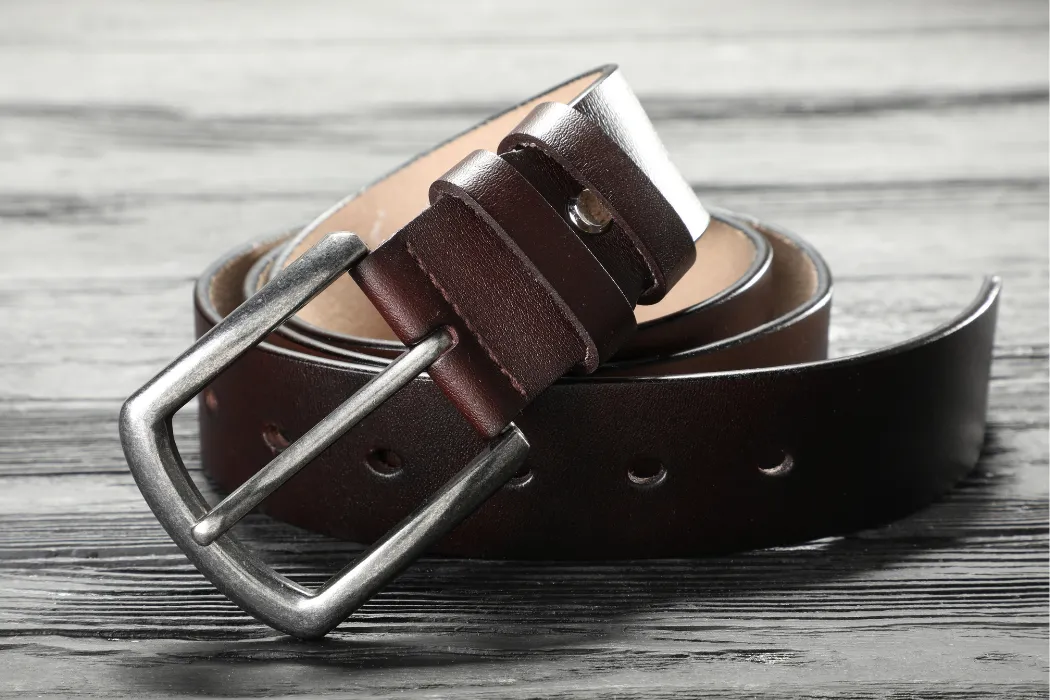
Casual & Workwear: Thick Cowhide & Bison
For belts intended to hold up denim, canvas work pants, or tool pouches, mass and density are virtues.
- Cowhide (Veg-Tan): Ideally cut from the shoulder or butt, this is the standard for casual wear. A thickness of 9-10 oz (3.6mm) ensures the belt won’t roll over under the belt loops.
- American Bison (Buffalo): Bison leather is naturally 40% stronger than cowhide and features a distinct, deep grain pattern. It is often sold in heavy weights of 10-12 oz. Its “shrunken grain” texture hides scratches and scuffs better than any other leather, making it perfect for rugged outdoor use.
Formal Wear: Calfskin & Shell Cordovan
A dress belt must be subtle. Rugged, thick straps look out of place against fine wool trousers.
- Calfskin: Sourced from younger animals, this leather has a tight, smooth grain free of blemishes. It takes a high polish and is soft and pliable immediately. Dress belts are often “lined and stitched” (two layers glued together) to achieve a refined look while keeping the thickness under 3.5mm.
- Shell Cordovan: This is the “diamond” of leathers, taken from the fibrous flat muscle beneath the hide on a horse’s rump. It is non-porous, naturally water-resistant, and does not crease; it ripples. While expensive (often $200+ per belt), it lasts virtually forever and maintains a glass-like shine.
Exotic Options: Crocodile & Ostrich
Exotics are “statement” leathers, bridging the gap between formal luxury and high-end casual.
- Crocodile / Alligator: The belly cut is the most prized for its symmetrical, smooth tiles. It is rigid and durable but requires maintenance to prevent cracking between the scales.
- Ostrich: Recognizable by its quill bumps, ostrich leather is full of natural oils, making it one of the softest and most durable exotic leathers. It resists drying out better than reptile skins.
Best Leather by Belt Style
Use this matrix to ensure you are buying the right material for your specific need.
| Belt Style | Best Leather Material | Ideal Thickness | Key Feature |
|---|---|---|---|
| Work Belt (Heavy Duty) | Veg-Tan Bullhide / Bison | 10 – 12 oz (4.0 – 4.8mm) | Maximum rigidity, no sagging. |
| Casual Jeans Belt | Full-Grain Cowhide | 8 – 9 oz (3.2 – 3.6mm) | Develops patina, fills loops. |
| Formal Suit Belt | Calfskin / Shell Cordovan | 6 – 8 oz (2.4 – 3.2mm) | High shine, sleek profile. |
| Luxury Statement | American Alligator | Lined (approx. 3.5mm) | Unique texture, status symbol. |
Does Leather Thickness (Weight) Affect Quality?
Yes, thickness (measured in ounces or millimeters) is a critical indicator of durability for unlined belts. For a single-strap casual belt to hold its shape without stretching, the leather must be between 8-10 oz (3.2-4.0mm). Any single layer thinner than 8 oz will lack the fiber density to support the tension of daily wear, resulting in a belt that feels flimsy and warps quickly. However, “thin” does not always mean “bad” if the construction is Lined (layered), which is the standard for high-quality dress belts.
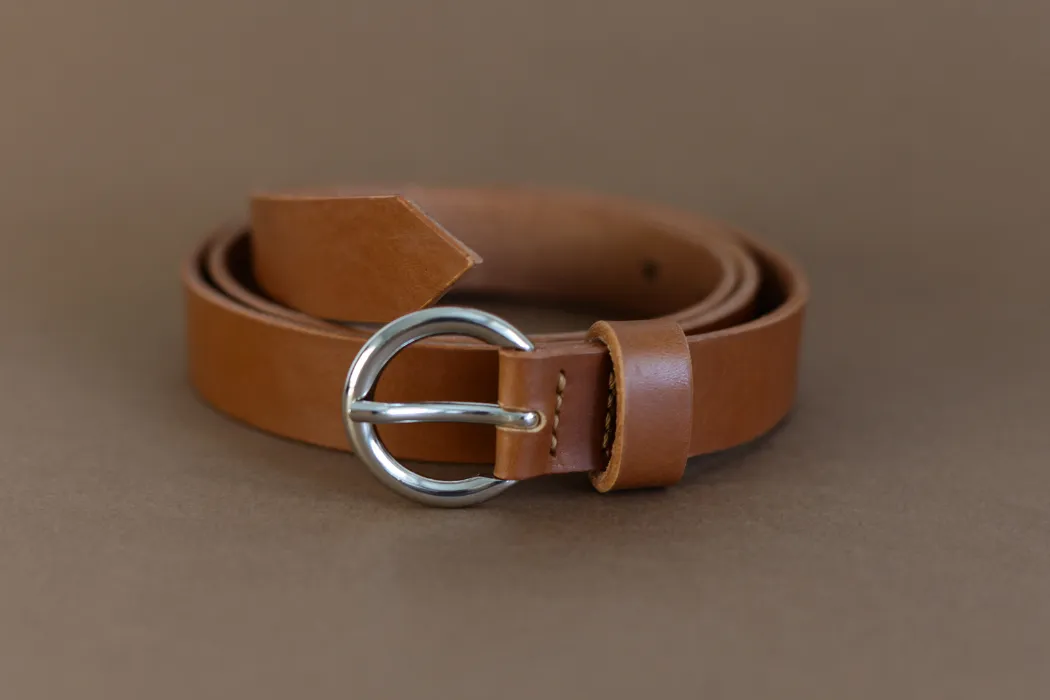
The 9oz Standard for Daily Wear
In the leather industry, “weight” is shorthand for thickness. One ounce equals approximately 0.4mm. For a standard, unlined casual belt (the type you wear with jeans), 9 oz (3.6mm) is the “Goldilocks” zone.
- Below 8 oz (3.2mm): The leather is too pliable. The belt holes will stretch into ovals under tension, and the strap will curl vertically (the “bacon effect”) at the back loop.
- Above 10 oz (4.0mm): The belt becomes a “gun belt.” While incredibly durable, it can be uncomfortable for daily sitting and difficult to thread through standard pant loops.
Lined vs. Unlined Construction
A common misconception is that a thin dress belt is low quality. This is false; it is simply a different construction method.
- Unlined (Casual): A single, solid strap of thick hide (e.g., 9-10 oz). Durability relies on the sheer mass of the leather.
- Lined (Formal): Constructed by gluing and stitching two thinner layers together (e.g., a 3 oz top layer + a 3 oz lining = 6 oz total). This creates a belt that is thinner (approx. 2.4mm) and more flexible for dress pants, but the stitching and glue add structural reinforcement that prevents stretching. High-end dress belts often use a non-stretch “Viledon” insert between these layers for added strength.
Leather Thickness Guide
Use this chart to verify if a belt’s specifications match its intended purpose.
| Ounces (oz) | Millimeters (mm) | Application |
|---|---|---|
| 6 – 7 oz | 2.4 – 2.8 mm | Lined Dress Belts (Flexible, Sleek) |
| 8 – 9 oz | 3.2 – 3.6 mm | Standard Casual / Jeans Belts (The Daily Driver) |
| 9 – 10 oz | 3.6 – 4.0 mm | Heavy-Duty Casual / Work Belts |
| 12 – 14 oz | 4.8 – 5.6 mm | Holster / Gun Belts (Maximum Rigidity) |
How to Identify the Best Leather Belt in a Store?
To identify a high-quality leather belt instantly, perform three sensory tests. First, the Scratch Test: lightly scratch the back; full-grain leather will show a faint mark that rubs away with your thumb’s oils, while plastic-coated leather feels slick and resists marking. Second, the Bend Test: bend the strap backward; authentic leather reveals natural micro-wrinkles, whereas “Genuine Leather” stays unnaturally smooth or shows white stress cracks. Finally, inspect the Edge: a premium belt has a burnished (polished) edge where you can see the grain, not a thick layer of rubberized paint hiding the core.
The Scratch and Rub Test
High-quality leather is organic skin; it reacts to touch. Low-quality leather is effectively plastic.
- The Test: Run your fingernail lightly across the back (flesh side) or an inconspicuous spot on the front.
- The Result (Good): On Full-Grain Veg-Tan, you will see a light line. If you rub it briskly with your thumb, the heat and natural oils should make the mark fade or disappear. This is the “self-healing” property of quality leather.
- The Result (Bad): On “Genuine” or Bonded leather, the surface is sealed with a polyurethane coating. Your nail will either slide off without leaving a mark (plastic feel) or, if you press hard enough, it will gouge the paint permanently. It cannot heal.
The Edge Inspection (Burnished vs Painted)
The edge of the belt is like the cross-section of a tree; it tells the whole story of its construction.
- Burnished Edge (Premium): Vegetable-tanned leather can be polished. A craftsman uses friction and natural gum to seal the edge. You should be able to see the solid, single layer of the hide. It feels smooth, hard, and looks like polished wood.
- Painted Edge (Warning Sign): If the edge is covered in a thick, rubbery colored paint (often black or brown), be suspicious. While high-end dress belts use thin edge paint, on a casual belt, heavy paint is often used to hide a “sandwich” construction—where thin layers of split leather are glued around a cardboard or foam core. This paint will peel off in strips within 6-12 months.
The “Squeak” and Smell
Your ears and nose are excellent detectors of synthetic materials.
- The Squeak: Twist the belt leather in your hands. High-quality, thick leather fibers rub against each other, producing a distinct “creaking” sound known as the “leather squeak.” Bonded leather or synthetic materials are silent because they are held together by soft glues.
- The Smell: Authentic Veg-Tan leather smells rich, earthy, and slightly sweet (like tree bark). “Genuine Leather” or Bonded leather smells like chemicals, vinyl, or fast-drying glue. If it smells like a new car’s dashboard, it’s not the belt you want.
Frequently Asked Questions
1. What is the strongest leather for a belt?
In terms of pure tensile strength per millimeter, Kangaroo leather is the strongest, but it is too thin for a standard belt. For a heavy-duty work belt, the strongest practical option is 10-12 oz (4.0-4.8mm) Vegetable-Tanned Bullhide. Bullhide is denser and thicker than standard cowhide, providing maximum resistance to stretching and sagging under the weight of tools or a holster.
2. Is buffalo leather good for belts?
Yes, Buffalo (American Bison) is excellent. It is naturally 40% stronger than cowhide and features a distinct, deep pebbled grain. It is often sold in heavy weights (8-10 oz) that don’t require padding or lining. It has a more rustic, rugged appearance than cowhide and is highly resistant to abrasion.
3. Do leather belts stretch over time?
All leather stretches slightly, but the amount varies by type. A belt cut from the “Belly” can stretch up to 20-30%, ruining the fit. A Chrome-Tanned belt stretches like fabric. However, a high-quality Vegetable-Tanned belt cut from the “Butt” has very low stretch (typically less than 5% over its lifetime), just enough to mold to your hips without losing its size.
4. Is reversible belt leather good quality?
Generally, no. Reversible belts rely on a “bonded” construction where two thin layers of leather (or leather-like material) are glued back-to-back. This structure is prone to delamination (splitting apart) due to the constant twisting of the buckle mechanism. They are built for convenience, not longevity.
5. How long does a full-grain belt last?
With minimal care (conditioning once a year), a solid strap of Full-Grain Vegetable-Tanned leather will last 15 to 25+ years. It typically outlasts the buckle. In contrast, a “Genuine Leather” belt usually fails within 1 to 3 years due to cracking at the adjustment holes.
6. Why is my leather belt cracking?
Cracking usually happens for two reasons: 1. Material Quality: The belt is made of “Genuine Leather,” and the painted topcoat is cracking because the weak fibers underneath are stretching. 2. Dryness: If it is real leather, it has dried out. Leather needs natural oils to stay flexible; without conditioner, the fibers become brittle and snap.
Conclusion: Investing in Quality Materials
The question “what is the best leather for belts?” has a specific, scientific answer. It is not just “real leather.” The ultimate belt is a specific combination of three factors: Full-Grain Grade (for strength), Vegetable-Tanning (for structure), and a Double Butt Cut (for density). Any deviation from this formula—using Top-Grain, Chrome-Tanning, or Belly cuts—is a compromise on durability.
For consumers, this knowledge is power. It allows you to look past the “Genuine Leather” stamp and identify a product that will actually hold up your pants for the next decade. For brand managers, the implication is financial. A belt made from “Belly” cuts may be cheaper to produce, but the return rate due to warping will destroy your margins and brand reputation.
Hoplok Leather specializes in sourcing this specific “Golden Triangle” of quality. With direct access to premium hides via our ProPelli tannery, we can guarantee that your belts are cut from the prime backbone section, ensuring uniform thickness and zero warp. We provide transparent Bill of Materials (BOM) so you know exactly what grade and cut you are paying for. Contact Hoplok Leather today to request a sample kit of our Full-Grain belt straps.
The Final Checklist for Buyers
Use this summary table to make the right decision instantly.
| Attribute | The Best Choice | The Compromise | The Avoid |
|---|---|---|---|
| Grade | Full-Grain | Top-Grain | Genuine / Bonded |
| Tanning | Vegetable-Tanned | Latigo / Combo-Tan | Chrome-Tan (Unlined) |
| Cut | Double Butt / Back | Double Shoulder | Belly / Flank |
| Thickness | 9-10 oz (3.6mm) | 8 oz (3.2mm) | Under 7 oz (2.8mm) |