In the era of cashless payments and digital wallets, the bulky bifold is quickly becoming a relic. The leather card holder has emerged as the new essential daily carry. However, do not let its diminutive size fool you; manufacturing a high-quality card holder is an unforgiving test of craftsmanship. On such a limited surface area, there is simply nowhere for a crooked stitch, a loose thread, or a sloppy edge paint to hide.
In this guide, we have ranked the 15 best luxury brands for leather card holders in 2025. This is not just a list of the most famous logos. We evaluated these brands based on three critical manufacturing criteria: Leather “Temper” (structural integrity), Stitching Precision, and Resale Value. We scrutinized how these small leather goods (SLGs) hold up against the friction of daily pocket use.
As manufacturing experts with over 20 years of experience in the leather industry, we look beyond the brand name. We understand exactly why Hermès’ rigid Epsom leather and Prada’s heat-treated Saffiano texture dominate this category—they are engineered for durability. Whether you are looking for an investment-grade piece or a functional daily driver, this ranked list covers the absolute best in class.
What Makes a “Luxury” Card Holder Last 10+ Years?
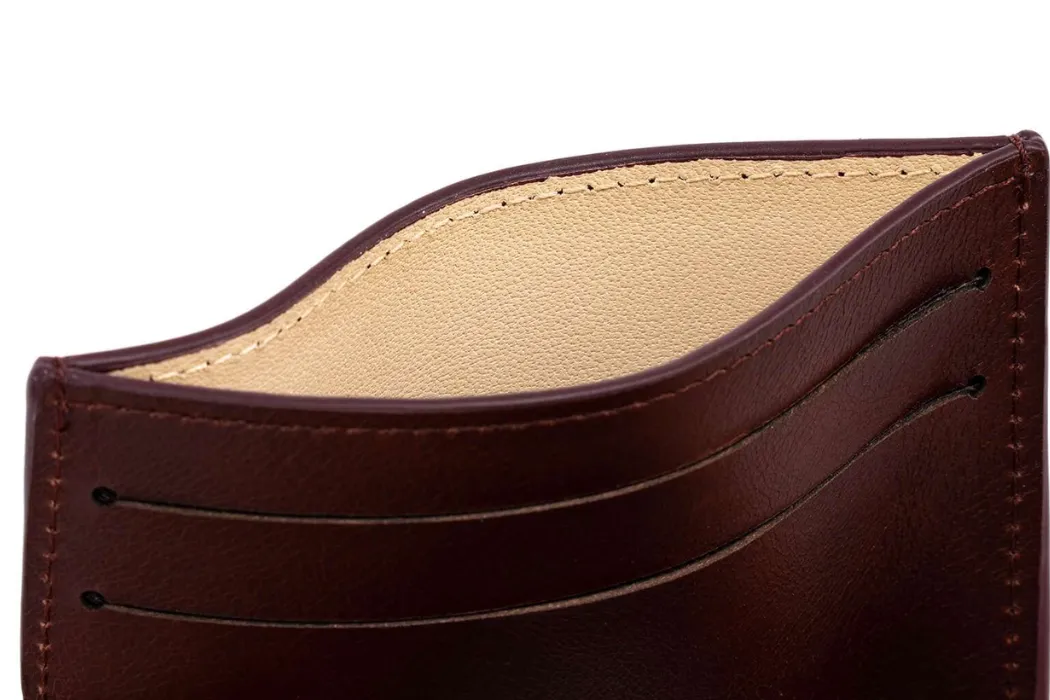
Small leather goods (SLGs) are the ultimate test of a manufacturer’s precision. Unlike a tote bag, which has broad panels to hide imperfections, a card holder relies on millimeter-perfect execution. If you want a piece that survives a decade of being shoved into pockets, look for these three manufacturing markers.
The Leather “Temper” (Rigidity)
In leather crafting, “temper” refers to the stiffness or pliability of the hide. For card holders, a firm temper is non-negotiable. Soft, pliable leathers (like unstructured nappa) might feel nice initially, but they will stretch out over time, causing your cards to slip out.
- Thickness: Top-tier brands split their leather to a precise 0.8mm – 1.2mm. This maintains a slim profile without sacrificing structural integrity.
- Structure: Brands like Prada and Hermès use heat-pressed leathers (Saffiano, Epsom) because the compression process adds rigidity, acting like a skeletal structure for the wallet.
Edge Painting vs. Turning
The edges are the first part to fail on any wallet. Friction from sliding in and out of pockets destroys cheap finishes. There are two acceptable “luxury” ways to finish an edge:
- Hand-Painted (Vernis): Used by Hermès and Valextra. The edge is sanded smooth, heated, and painted with 3-5 individual layers of edge paint. This creates a flexible, sealed bond that won’t crack. Cheap brands use one thick layer of rubber that peels off in strips.
- Turned Edges: The leather edge is “skived” (thinned down) to paper thickness and folded over before stitching. This creates a seamless look with no exposed edge to wear out, though it requires immense skill to keep bulk down.
Stitch Density (SPI)
On a small canvas, the stitch line is a major design element. Luxury SLGs typically feature a higher Stitch Per Inch (SPI) count of 10-12, compared to the 6-8 SPI found on larger bags or mass-market wallets.
- Aesthetics: A higher density creates a refined, “beaded” look that defines the edges elegantly.
- Strength: More stitches per inch means better distribution of tension. If one stitch wears through from pocket friction, the surrounding stitches hold the layers tight, preventing the wallet from delaminating.
Full-Leather Lining (Interior Integrity)
Many brands cut costs by using polyester or nylon for the hidden interior slots. These synthetic linings often fray, tear, or detach from the glue long before the exterior leather wears out. A true investment-grade card holder features full-leather lining (often smooth calfskin or goatskin).
- Durability: Leather lining flexes with the exterior shell, whereas fabric lining creates tension and eventually rips at the seams.
- Tactile Feel: Inserting a card should feel smooth and resistant-free. Leather lining grips the card securely without the abrasive friction of synthetic fabrics.
Pocket Architecture (Stress Management)
How the card slots are cut and assembled determines if they will rip at the corners. Cheap manufacturing uses simple straight-cut layers stacked on top of each other, creating unnecessary bulk and stress points.
- T-Shape Construction: Top-tier brands use internal “T-shaped” leather panels. This reduces bulk at the side seams while maintaining structural strength in the center.
- Corner Reinforcement: Look for a tiny double-stitch or “back-tack” at the top corners of each card slot. This mechanical lock prevents the leather from tearing when you inevitably overstuff the slot with an extra card.
Understanding Key Leather Textures
Choosing the right leather isn’t just about looks; it’s about matching the material to your lifestyle. The texture determines how the card holder handles scratches, water, and daily abuse.
- Epsom & Saffiano (The Workhorses): Used famously by Hermès and Prada, these are embossed leathers. A machine presses a pattern into the grain under high heat. This compresses the fibers, making the surface virtually scratch-proof and water-resistant. Ideal for items stored in pockets with keys.
- Box Calf & Lambskin (The Purists): Used by Celine and Chanel. These are smooth, lustrous skins with no artificial grain. They feel incredible and look formal, but they will show every scratch and fingernail mark. Best for evening use or those who are careful with their accessories.
- Coated Canvas (The Icons): Used by Louis Vuitton and Goyard. Technically cotton or linen coated with PVC or resin. While not leather, it is lighter, waterproof, and more durable than almost any animal skin. Perfect for heavy-duty daily use without maintenance.
The 15 Best Luxury Leather Card Holders (Summary List)
Here is our definitive ranking of the top 15 brands for 2025, ordered by a combination of manufacturing quality, leather durability, and resale value.
| Rank | Brand | Country | Signature Material | Price Range (USD) |
|---|---|---|---|---|
| 1 | Hermès | France | Epsom Calfskin / Mysore Goat | $450 – $1,200+ |
| 2 | Chanel | France | Quilted Caviar Leather | $550 – $850 |
| 3 | Goyard | France | Goyardine Canvas | $450 – $650 |
| 4 | Louis Vuitton | France | Monogram Canvas | $265 – $480 |
| 5 | Bottega Veneta | Italy | Intrecciato Nappa | $350 – $550 |
| 6 | Dior | France | Oblique Jacquard / Cannage | $410 – $600 |
| 7 | Gucci | Italy | GG Marmont Matelassé | $290 – $490 |
| 8 | Prada | Italy | Saffiano Leather | $395 – $575 |
| 9 | Saint Laurent | Italy | Grain de Poudre (Pebbled) | $325 – $475 |
| 10 | Celine | France | Triomphe Canvas / Shiny Calf | $375 – $550 |
| 11 | Loewe | Spain | Classic Calf / Puzzle | $350 – $490 |
| 12 | Fendi | Italy | Cuoio Romano / FF Motif | $350 – $520 |
| 13 | Valextra | Italy | Millepunte Calfskin | $350 – $495 |
| 14 | Berluti | France | Venezia Patina Leather | $560 – $850 |
| 15 | Tom Ford | Italy | Grained Leather / T-Line | $390 – $590 |
1. Hermès
Origin: France | Price: $450 – $1,200+
Hermès represents the absolute pinnacle of leather craftsmanship. The Calvi card holder, with its ingenious origami design folded from a single piece of leather, is a masterclass in minimalism. Often crafted from rigid Epsom calfskin or supple Mysore goatskin, it features flawless edge painting (vernis) and durable saddle-stitching that ensures it lasts a lifetime without losing its shape.
2. Chanel
Origin: France | Price: $550 – $850
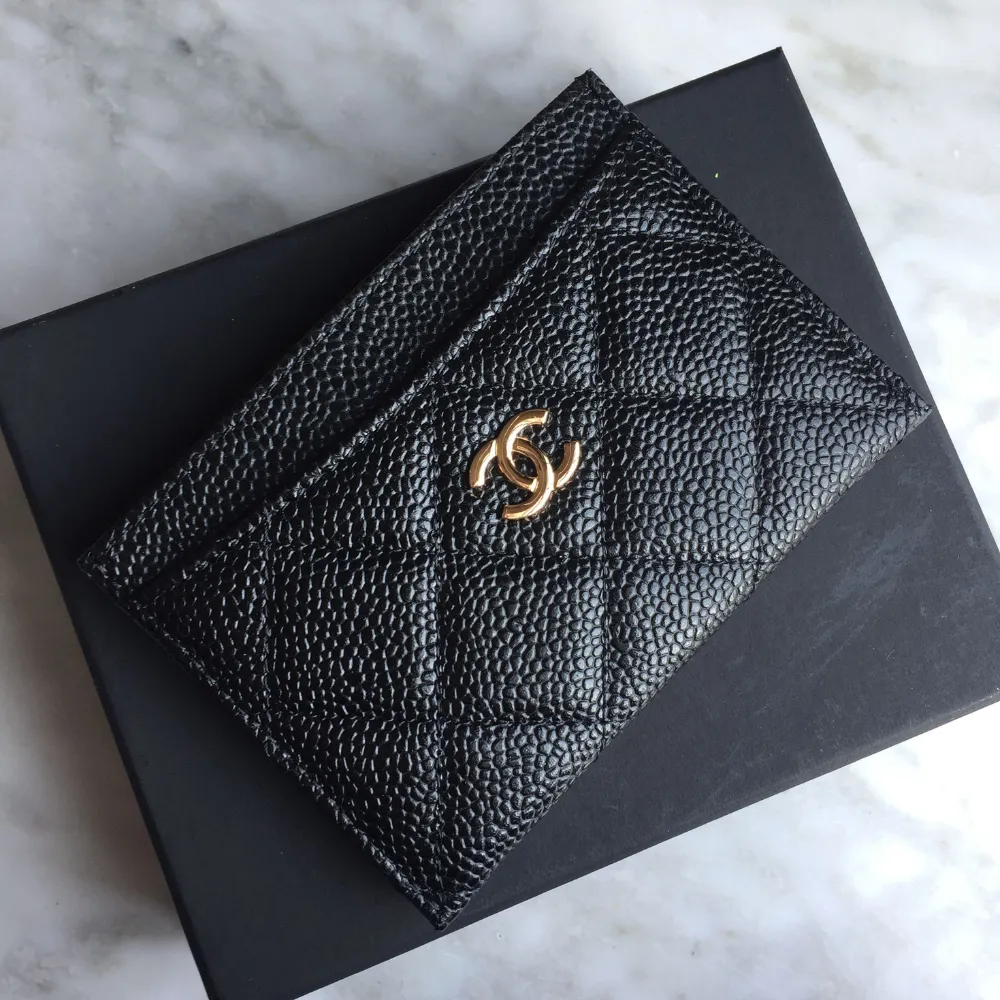
For investment value, Chanel has no equal. The Classic Card Holder features the house’s signature diamond quilting and the interlocking CC logo. We strongly recommend the Caviar leather (pebbled calfskin) over lambskin for daily use; its hardened, grainy surface is virtually scratch-proof, maintaining its structure and resale value better than any other SLG on the market.
3. Goyard
Origin: France | Price: $450 – $650
Goyard thrives on exclusivity and heritage. The Saint Sulpice card holder utilizes the brand’s legendary Goyardine canvas—a durable blend of linen, cotton, and hemp coated for waterproofing. Lightweight yet incredibly tough, it offers a distinct, hand-painted aesthetic that signals “if you know, you know” status without shouting, making it a favorite among purists.
4. Louis Vuitton
Origin: France | Price: $265 – $480
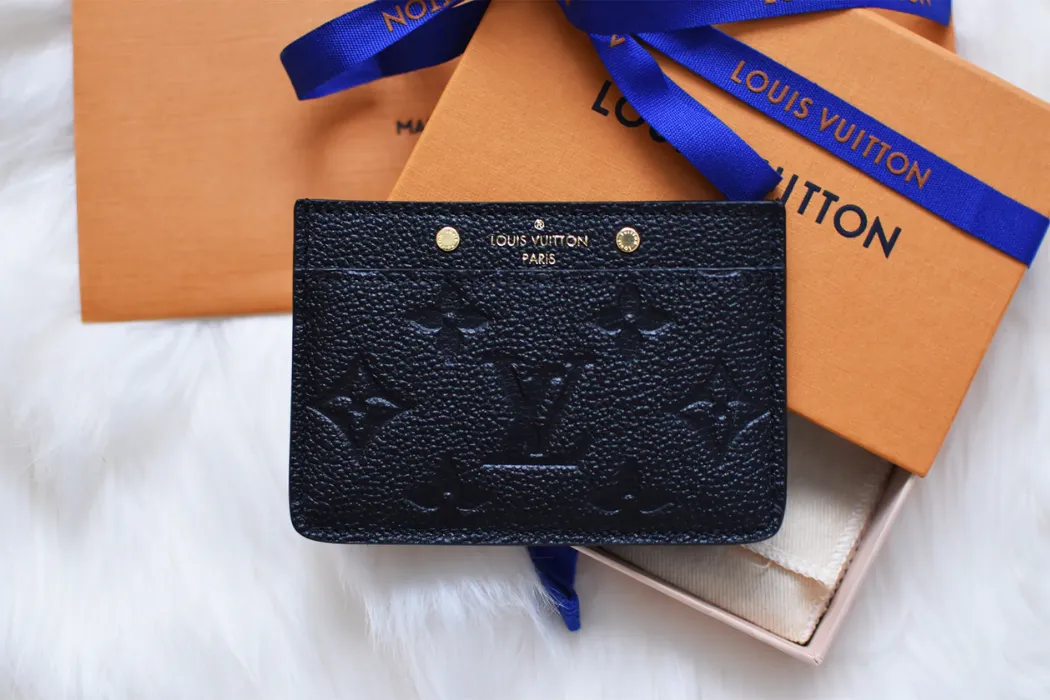
Louis Vuitton is the king of durability thanks to its coated Monogram Canvas. The Neo Porte Cartes is iconic, waterproof, and scuff-resistant. While not leather, the canvas is fused to a cross-grain leather lining, creating a product that withstands daily friction in a denim pocket better than most delicate skins, making it the ultimate daily beater.
5. Bottega Veneta
Origin: Italy | Price: $350 – $550
Bottega Veneta defines “stealth wealth” with its logo-free philosophy. The luxury lies entirely in the Intrecciato weave—strips of fettuce (leather) hand-woven to create a double-layered structure that is stronger than a single piece of hide. Their card cases use soft Nappa leather that feels incredibly luxurious and tactile, offering a sensory experience unmatched by rigid leathers.
6. Dior
Origin: France | Price: $410 – $600
Dior combines couture details with functional design. The Saddle card holder features unique curved card slots inspired by the iconic bag, while the Lady Dior line features the legendary Cannage stitching. Whether crafted in the technical Oblique Jacquard fabric or soft calfskin, Dior’s finishing is meticulous, with tight stitching and elegant, jewelry-grade hardware branding.
7. Gucci
Origin: Italy | Price: $290 – $490
Gucci offers the perfect blend of vintage flair and modern trend. The GG Marmont card case uses plush, matelassé chevron leather paired with antiqued brass hardware, making it a bold statement piece. For superior durability, their **GG Supreme** canvas options offer excellent resistance to wear and tear, making them ideal daily drivers for the fashion-forward.
8. Prada
Origin: Italy | Price: $395 – $575
Prada invented modern luxury durability with Saffiano leather. This heat-pressed, cross-hatch textured calfskin is wax-coated to be water-repellent and virtually scratch-proof. A Prada card holder with the enameled triangle logo is the definitive choice for the minimalist who demands a product that looks brand new for years, regardless of abuse.
9. Saint Laurent (YSL)
Origin: Italy | Price: $325 – $475
Saint Laurent is a powerhouse in the SLG market, largely due to its signature Grain de Poudre embossed leather. Originally a texture used in tuxedo fabrics, this pebbled finish is incredibly resistant to scratches and fingerprints. The Cassandre Matelassé card case, featuring the interlocking YSL metal hardware, offers high-fashion recognition with a durability that rivals much more expensive brands.
10. Celine
Origin: France | Price: $375 – $550
Under Hedi Slimane, Celine has revitalized its heritage with the Triomphe Canvas. This coated canvas is dark, moody, and impervious to water, making it an excellent alternative to LV’s monogram. For purists, their Shiny Calfskin models offer a glass-like finish that exudes Parisian chic, though they require more careful handling to avoid scuffs.
11. Loewe
Origin: Spain | Price: $350 – $490
Loewe is famous for its “Master of Leather” status. The Puzzle card holder mimics the geometric lines of the iconic bag using marquetry techniques—pieces of leather are precisely cut and stitched together like a mosaic. They use Classic Calf, a leather that strikes a rare balance: it feels buttery soft to the touch but holds its structure remarkably well over time.
12. Fendi
Origin: Italy | Price: $350 – $520
Fendi offers a tactile luxury experience with its signature Cuoio Romano (Roman Leather). This natural-grain leather is tumbled to be soft yet resilient, often featuring heavy hand-stitching (Selleria) that adds a bespoke feel. The FF motif hardware or embossed designs provide a modern graphic appeal without sacrificing the brand’s Roman saddlery heritage.
13. Valextra
Origin: Italy | Price: $350 – $495
Often called the “Italian Hermès,” Valextra is for the connoisseur who dislikes logos. Their card holders are defined by architectural cuts and the signature V-cut slots. They use Millepunte calfskin, a multidimensional pebbled texture that hides wear brilliantly. The edges are finished with their black “Costa” lacquering, hand-applied in multiple layers for a graphic, crisp outline.
14. Berluti
Origin: France | Price: $560 – $850
Berluti is the ultimate flex for men. The brand is unique for its Venezia leather, a raw, untreated hide that acts as a canvas for their hand-applied Patina. Each card holder has a unique depth of color and shading. Often laser-etched with the 18th-century “Scritto” manuscript, these pieces are delicate art objects that require care but offer unmatched beauty.
15. Tom Ford
Origin: Italy | Price: $390 – $590
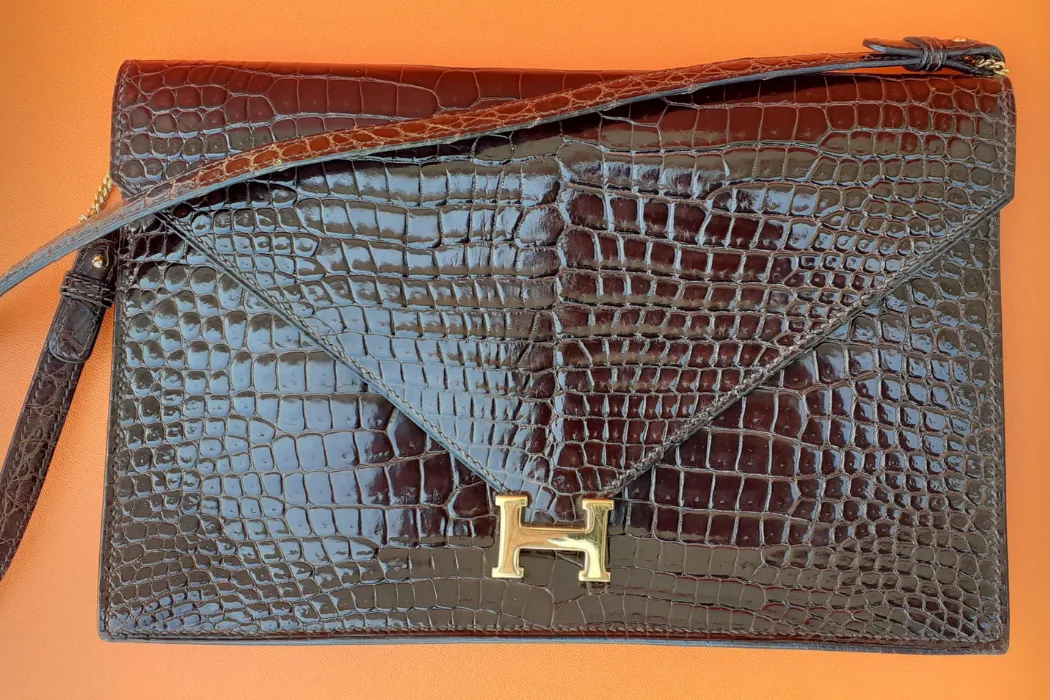
Tom Ford brings sex appeal to functionality. His T-Line card holders feature a signature T-shaped cutout on the card slots, a subtle yet distinct branding element. Crafted from high-gloss alligator or substantial grained leather, the construction is rigid and masculine. The gold-plated branding is often deeply embossed, ensuring it won’t fade with friction.
How to Choose the Perfect Card Holder for Your Needs
Buying a card holder is a balance between aesthetics and engineering. Unlike a bag that sits on a chair, a card holder lives in your pocket, subjected to constant heat, pressure, and friction. Here are 7 dimensions to consider ensuring your purchase matches your lifestyle.
1. Capacity Needs: Flat vs. Gusseted
Be realistic about your carry. A “Flat” card holder (like the YSL Cassandre) typically holds 2-4 cards comfortably. Overstuffing it will warp the leather permanently. If you need to carry business cards or 6+ credit cards, you must choose a “Gusseted” style (like the Hermès Calvi or LV Neo Porte Cartes), which features expandable side pleats to accommodate bulk without stressing the seams.
2. Pocket Profile (Front vs. Jacket)
Where will you carry it? For front-pocket carry (common with denim), “slimness” is the priority. Avoid bulky metal logos or zippers that create unsightly lines. For jacket or bag carry, you can afford a thicker profile or a flap closure. A rigid box calf holder might be uncomfortable to sit on, whereas a soft Intrecciato weave contours better to the body.
3. Scratch Resistance (Texture vs. Smooth)
If you throw your wallet into a pocket with keys or coins, Box Calf or Lambskin will look ruined within a week. You strictly need a textured, hardened leather like Saffiano (Prada), Caviar (Chanel), or Epsom (Hermès). These textures deflect scratches and hide wear. Smooth leathers are strictly for those who carry their wallet in a dedicated, separate compartment.
4. Resale Liquidity (Investment Value)
Are you buying to use or to collect? Card holders from the “Holy Trinity” (Hermès, Chanel, Louis Vuitton) often retain 70-90% of their value, especially in classic colors like Black or Gold (Tan). Seasonal colors or trend-focused brands (like Balenciaga or Valentino) typically depreciate faster. If you plan to upgrade in a few years, stick to the classics.
5. Closure Mechanism (Speed vs. Security)
An Open Slot design offers the fastest access—perfect for commuters tapping travel cards. However, leather stretches over time, and cards can eventually slip out if held upside down. A Snap Button or Zip Closure provides total security but adds bulk and slows down access. If you are active or throw your bag around, opt for a closure.
6. Lining Quality Check
Inspect the interior. Many “luxury” brands use polyester lining to cut costs. This fabric will fray and separate from the glue long before the exterior leather fails. True luxury (like Hermès or Valextra) uses full-leather lining. Leather-on-leather friction grips your cards securely while allowing a smooth glide, whereas synthetic linings can feel abrasive and cheap.
7. Hardware & Phone Safety
Consider what else is in your pocket or bag. A chunky metal logo (like the Gucci GG or Ferragamo Gancini) looks great, but it is a piece of metal that can scratch your smartphone screen or the leather of your handbag. If you carry your phone and wallet together, opt for a brand with blind embossing, leather-covered hardware, or flat printing (like Goyard) to protect your devices.
| Lifestyle / Need | Best Leather Type | Recommended Brand/Model |
|---|---|---|
| Heavy Duty (Keys in pocket) | Saffiano, Caviar, Canvas | Prada Saffiano, LV Monogram, Goyard |
| Formal / Evening | Box Calf, Smooth Lambskin | Celine Triomphe, Berluti, Tom Ford |
| High Capacity (6+ Cards) | Gusseted / Soft Nappa | Hermès Calvi, Bottega Veneta Intrecciato |
| Investment / Resale | Caviar, Epsom | Chanel Classic, Hermès, LV |
SLG Maintenance Guide: Protecting Your Investment
Because card holders are handled more frequently than any other leather good, they degrade faster. Focusing on two key failure points—edges and corners—can double the lifespan of your item.
Preventing Corner Wear
The bottom corners are the first to rub off due to pocket friction. To minimize this, avoid tight denim pockets which act like sandpaper. Periodically apply a tiny amount of leather conditioner to the corners to keep them lubricated and flexible, preventing the color from rubbing off prematurely.
The “Overstuffing” Danger
Leather stretches, but it does not shrink back. If you force three cards into a slot designed for one, you have permanently deformed the leather. Once stretched, the slot becomes loose, and your cards will fall out when you revert to carrying fewer items. Rule of thumb: One slot, one card. If you need more capacity, buy a gusseted card case, not a flat one.
Edge Paint (Glazing) Care
If you notice the rubbery paint on the edges starting to peel or crack, do not pull it. This will rip the leather fibers underneath. Instead, take it to a professional cobbler immediately. Re-glazing edges is a standard and affordable repair that restores the structural seal of the wallet, preventing moisture from entering the layers.
Conclusion: Small Size, Massive Impact
As we have explored, a card holder is not merely a downsizing of a wallet; it is a distillation of a brand’s manufacturing prowess. Whether you choose the investment-grade resilience of a Chanel Caviar piece or the understated architectural beauty of a Valextra holder, you are buying into a philosophy of precision. In the world of small leather goods, there is no room for error—every stitch counts.
Manufacture High-Precision Leather Goods with Hoplok
The challenge in manufacturing card holders lies not in the consumption of leather, but in the control of millimeter-level tolerances. The perfect saddle stitching of Hermès and the indestructible edge glazing of Prada set the industry benchmarks. At Hoplokleather, this level of micro-precision is exactly where we excel.
We specialize in OEM/ODM services for brands that demand the highest tier of quality for their Small Leather Goods (SLGs). Here is how we replicate that luxury standard:
- Precision Cutting: We utilize advanced laser and hydraulic die-cutting technologies to ensure every panel is cut with a tolerance of less than 0.1mm. This guarantees that T-shaped pockets stack perfectly flat without unnecessary bulk.
- Specialized Edge Paint: We use premium imported edge paints (often Italian), applied in 5 separate layers with sanding and heating between each coat. This ensures a smooth, domed edge that resists cracking even under constant pocket friction.
- Premium Leathers: Our supply chain provides access to the exact same tanneries used by luxury houses, offering certified Saffiano, Epsom, and Nappa leathers to elevate your product line.
If you are a brand looking to develop a collection of high-precision card holders, wallets, or accessories, we are your ideal manufacturing partner. We offer flexible MOQs and rapid prototyping to bring your vision to market.
Ready to elevate your SLG collection? Contact our team today to request your custom samples.