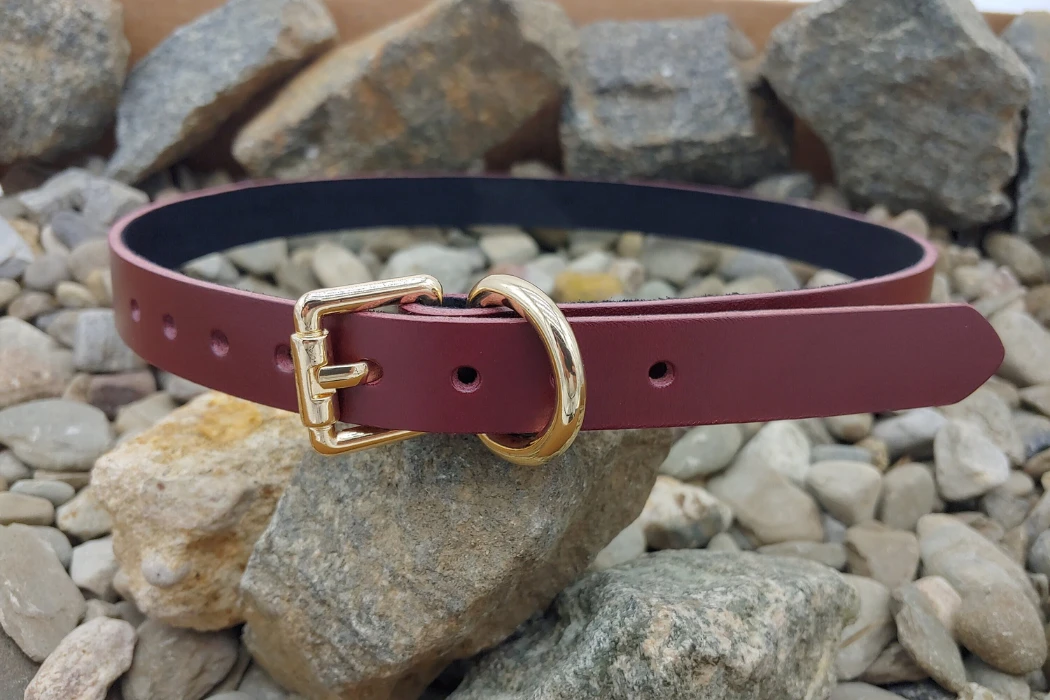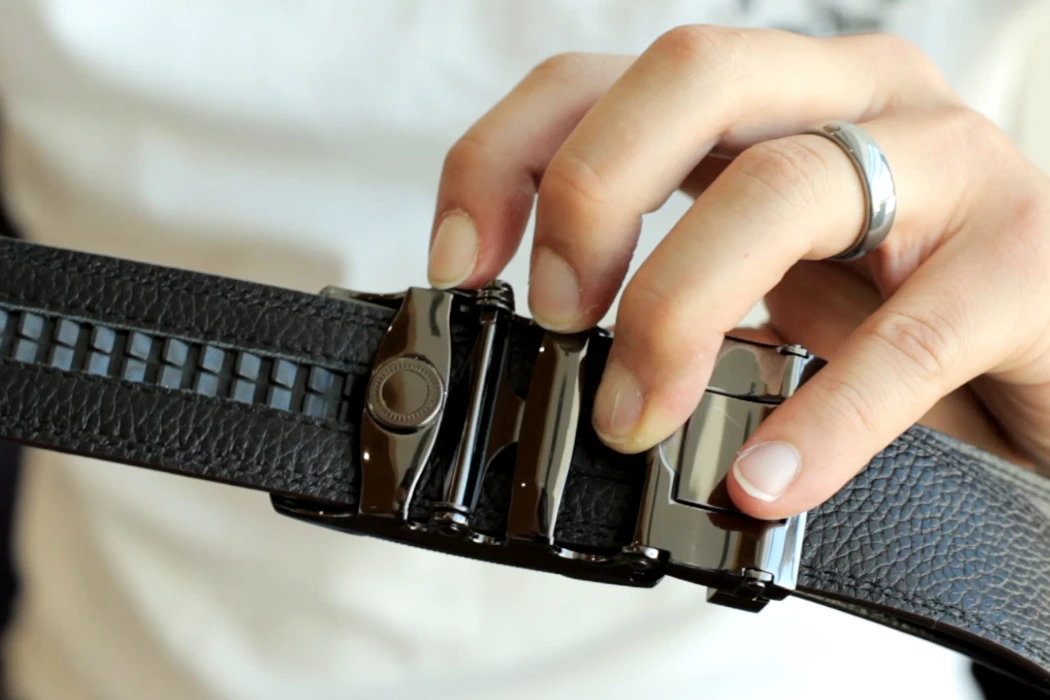
Private-label belt buyers can choose an existing buckle design or commission custom hardware. Stock designs may reduce development work, while custom tooling can support a specific shape or cast detail. Compare the actual quote, schedule, approved material and written tooling rights before choosing a route.
Key Takeaways for Product Developers
- Availability: Stock hardware may also be offered to other brands. Clarify any exclusivity separately from logo customization.
- Tooling cost: Divide the quoted tooling cost by the units expected to use it, then include unit price, finish, testing and any revisions in the comparison.
- Material: Specify the alloy and finish for either route. Stock hardware is not limited to zinc, and a custom shape does not guarantee better performance.
- Branding: Compare approved logo samples for legibility, appearance and wear. A raised or recessed logo does not itself prevent copying.
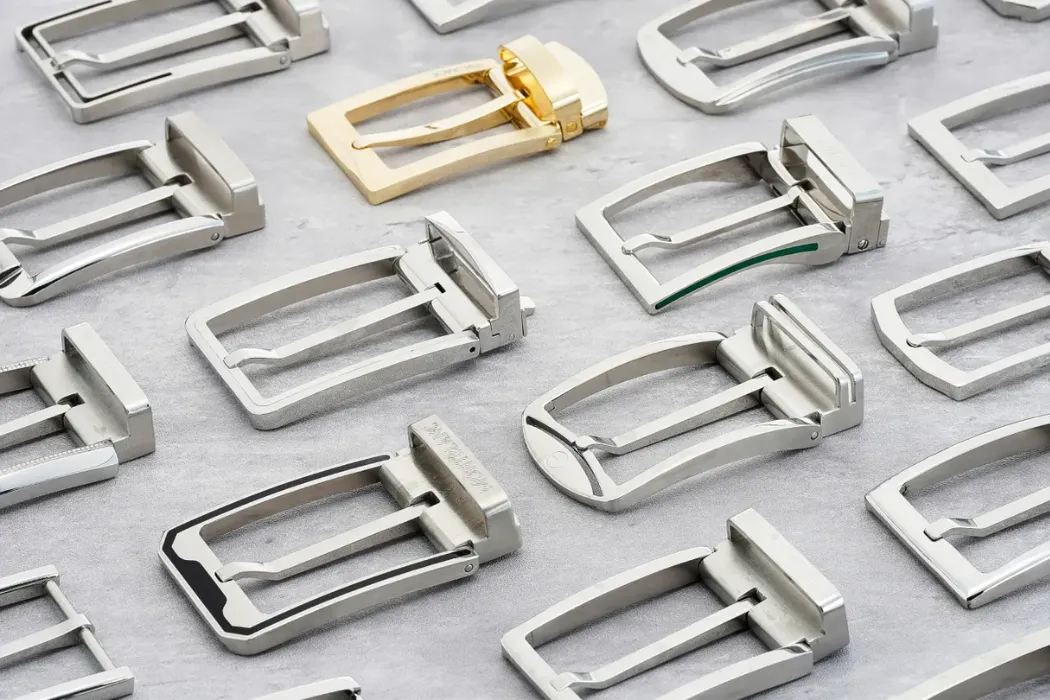
The “Open Mold” Ecosystem: Understanding Stock Hardware Limitations
Existing hardware can suit a pilot or an ongoing collection when its dimensions, appearance and availability meet the brief. Confirm the proposed component rather than assuming a catalog listing is ready to ship.
A stock model may avoid a new shape-tool charge, but marking, finish changes and setup may still cost extra. Confirm whether the model is shared or subject to any exclusive supply arrangement.
- Differentiation: Evaluate the complete belt design, including strap, proportions and finish. A shared buckle shape may be acceptable for the intended collection.
Confirm Available Customization
Available changes depend on whether the supplier holds finished parts or will manufacture another batch. Ask about finishes, marks, inserts and any changes that would require tooling work.
- Marking: Ask which logo methods are compatible with the selected material and finish. Review an actual sample for contrast and texture.
- Wear: Evaluate the applied mark under the agreed conditions. Do not assume every laser mark is shallow, temporary or inferior to a cast logo.
Supply Chain Volatility
Reliance on stock hardware places your supply chain in the hands of a third-party vendor’s inventory decisions.
- Continuity: Ask how long the model is expected to remain available, whether the same finish can be reordered, and what happens if the tool is retired. Custom tooling also needs a maintenance and replacement plan.
Custom Tooling Economics: CAPEX, Amortization, and MOQ Thresholds
Custom development adds upfront work and cost. Compare it with the stock option over realistic order quantities, including sample revisions, unit price and tooling maintenance.
Calculate Tooling Cost per Planned Unit
Divide the quoted tooling cost by the number of units expected to use that tool. This allocates tooling cost; it is not a complete break-even calculation.
- Illustrative arithmetic: An assumed $300 tool allocated across 300 units adds $1.00 per unit; across 1,000 units it adds $0.30. These inputs are examples, not a Hoplok quote or minimum order.
- Compare the alternatives: Add the quoted component price, finishing, testing and revision costs for both stock and custom routes. Use a conservative volume estimate and account for tools that may not be reused.
Drawing, Prototype and Production Approval
Use staged approvals to reduce rework. Agree what each development sample demonstrates and when the design becomes frozen for tooling.
- Prototype: Agree whether a drawing, printed model or metal prototype is needed to check proportions and strap fit. Specify its cost and what it can validate.
- Production sample: Approve the actual alloy, manufacturing process and finish before bulk use. A prototype does not automatically establish the tolerance of the final part.
Ownership and Exclusivity
Record ownership and permitted use before tooling begins. The agreement should identify the parties and the assets involved.
- Written terms: Agree ownership of the tool, drawings and design; permitted use; storage; maintenance; access; and return or transfer. Payment alone does not establish these terms.
| Decision Factor | Stock Hardware (Open Mold) | Custom Tooling (Private Mold) |
|---|---|---|
| Initial Investment (NRE) | Confirm setup and marking charges | Project-specific tool and development quote |
| Lead Time | Confirm availability and finishing schedule | Schedule drawing, tooling, sample and production approval |
| Exclusivity | Usually shared unless separately agreed | Define rights and permitted use in writing |
| Minimum Order (MOQ) | Confirm for the chosen component and finish | Confirm for the chosen process and order |
| Design Freedom | Within the available model and finish options | Subject to process, fit and manufacturing feasibility |
Material Selection: Zinc Alloy (Zamak) vs. Solid Brass vs. Stainless Steel
Specify the base material and finish on the purchase specification. Evaluate weight, feel and performance on the actual buckle rather than tying an alloy to a retail price tier.
Zinc Alloy
For a proposed zinc-alloy buckle, review the alloy declaration and the supplier’s process recommendation.
- Process: Confirm the proposed alloy and casting route with the hardware supplier, including wall sections, pin features and finishing requirements.
- Evaluation: Check the actual buckle for attachment strength, sharp edges, finish adhesion and corrosion performance. A material name does not supply a service-life rating.
Solid Brass
A solid-brass proposal should distinguish the base metal from a brass-colored finish. Confirm the alloy and appearance on a sample.
- Construction: Confirm whether the part is solid brass or another base with a brass-colored finish, and request the manufacturing route in the quotation.
- Appearance: Approve the finish and acceptable change with handling. Tarnish or exposed base metal should be judged against the design standard, not automatically treated as desirable patina.
Stainless Steel
A stainless-steel proposal still needs a defined grade, construction and finish. Stainless steel is not indestructible or universally suitable for sensitive-skin claims.
- Process and grade: Confirm the alloy and proposed production method. Evaluate dimensions, finishing and price for the actual design rather than assuming one manufacturing route.
- Contact claims: Review nickel-release evidence and the applicable contact requirements for the actual component. The Nickel Institute’s guidance identifies low nickel release as relevant to skin-contact selection; a stainless label alone should not become a universal allergy-free claim.
| Material | Manufacturing Method | Weight / Feel Check | Corrosion Resistance | Unit Price |
|---|---|---|---|---|
| Zinc Alloy (Zamak) | Confirm supplier’s casting proposal | Depends on geometry and construction | Verify the selected alloy and finish | Quote for the order |
| Solid Brass | Confirm supplier’s production proposal | Approve on the actual sample | Verify the selected alloy and finish | Quote for the order |
| Stainless Steel | Confirm supplier’s production proposal | Approve on the actual sample | Verify the selected alloy and finish | Quote for the order |
Branding Application: Marking, Engraving and Cast Details
Choose the logo method for the design and manufacturing route. Review the finished mark for legibility, location, feel and wear; no single method defines a luxury brand.
Laser Marking
Laser marking can change the surface in different ways depending on material, finish and settings. Ask for a sample on the proposed buckle rather than assuming the same effect across metals.
- Quote: Confirm the artwork, location, setup charge and unit cost for the selected finish.
- Approval: Check legibility, color contrast and durability on a production-intent sample.
Cast Relief and Separate Engraving
A logo may be built into the casting tool or engraved into a part afterward. Specify which route is proposed because tooling, revisions and surface detail differ.
- Geometry: Agree logo depth, corner detail and minimum feature size with the tooling supplier; approve them on a sample.
- Durability: A cast feature can still wear or be damaged. Assess the appearance and finish requirements rather than promising a permanent mark.
Roller Buckle Knurling
For a fashion roller buckle, evaluate texture together with rotation and strap contact.
- Roller detail: If texture is requested, check feasibility, free rotation and contact with the leather. Approve that it does not mark or damage the strap; texture alone does not prove a custom tool.
Plating and Finishing: Compare the Actual Finish System
A color name alone does not identify a finish system. Agree the process, substrate and acceptance criteria with the supplier, then check a finished sample.
Electroplating Review
Review the electroplated finish as a complete system:
- Specification: Identify the base metal, pretreatment, coating layers, color and required performance evidence.
- Wear: Assess appearance after the agreed handling or abrasion conditions. Do not apply a single hardness or thickness value to every electroplated finish.
PVD Coating (Physical Vapor Deposition)
If PVD is proposed, confirm the coating, compatible base and available colors with the hardware supplier. Compare tested samples and quotations rather than selecting it by retail price alone.
- Performance: Ask for test evidence for the selected PVD coating and substrate. The process name does not make a buckle scratch-proof.
- Color: Approve the chosen black or other finish and its wear criteria. No coating should be sold as permanently non-fading without supporting product evidence.
Brushed vs. Polished vs. Tumbled
Surface preparation and finishing can change appearance and cost. Quote the intended texture and visible surfaces explicitly.
- Tumbled: Review the resulting texture on the intended part and confirm its quoted cost.
- Brushed or polished: Agree the directional or gloss reference, visible-surface criteria and price. Cost depends on geometry, process and finish quality.
Intellectual Property Risks: Who Owns the Mold?
Tool ownership, design rights and supplier confidentiality are separate issues. Specify them in the agreement rather than inferring them from the invoice amount. WIPO distinguishes an IP assignment from a license, which is relevant when agreeing who owns a design and who may use it.
What a Discounted Tooling Quote Includes
A subsidized or discounted tooling arrangement can have different commercial conditions. Read the actual offer and clarify what can be used, shown or supplied to others.
- Commercial review: Ask whether a discount changes ownership, permitted use or minimum purchase commitments. Paying a full quoted fee does not automatically create exclusivity.
Terms to Agree with Hoplok
For a Hoplok project, request and agree the applicable tooling and confidentiality terms before proceeding.
- Ownership record: Confirm the named owner, tool identifier, storage location and supporting records in the agreement.
- Confidentiality: Agree how artwork, samples and mechanisms may be used or shown, including any subcontractors involved.
| Technology | Performance Evidence | Quoted Cost | Color Range | Environmental Evidence |
|---|---|---|---|---|
| Barrel Plating | Selected part and coating test results | Quote for the order | Approve a finish sample | Review actual process and facility evidence |
| Rack Plating | Selected part and coating test results | Quote for the order | Approve a finish sample | Review actual process and facility evidence |
| PVD Coating | Selected substrate and coating test results | Quote for the order | Confirm available color and approve sample | Review actual process and facility evidence |
Frequently Asked Questions
How much does a custom belt buckle mold cost?
Request a tooling quote for the drawing, material, process and expected volume. It should separate development, tooling, samples, revisions and any maintenance or replacement terms; there is no confirmed standard Hoplok mold-price range.
What is the lead time for custom hardware?
Confirm hardware availability and the schedule for drawing approval, tooling, finishing and samples. Hoplok’s confirmed belt sampling period is 2–3 weeks and bulk production is 60–90 days; new hardware development and buyer revisions need a separate schedule review.
Can I modify a stock buckle to make it unique?
Ask which changes are available for the selected stock design. A different finish, marking or insert may be possible; shape changes can require tooling work. Approve the modified sample and quote before ordering.
Choose the Route That Fits the Collection
Stock and custom hardware can both support a viable collection. Choose by design needs, actual cost, repeat-order availability and written rights, then approve the finished belt.
Prepare a Clear Development Brief
Provide a sketch or drawing with dimensions, strap width and thickness, logo artwork, finish reference and expected quantities. Ask the supplier to review manufacturability and return a drawing for approval.
Request a Belt and Hardware Proposal
For a custom leather belt proposal, send Hoplok the strap and hardware brief together. Confirm the component sourcing, development stages, tooling terms and sample requirements for the selected design.