A handbag lining should suit the way the bag will be used, the contents it will carry and the construction of the outer shell. Buyers need to compare the actual fabric or leather, its seams and pockets, its color-transfer behavior and the care instructions for the complete bag. A fiber name alone cannot establish durability, stain resistance or cleaning performance.
This guide compares cotton, polyester, nylon, suede, leather and silk linings, explains how fabric construction affects selection, and shows what to approve during development. It also covers when a partly lined or unlined construction may be appropriate.
What Is Handbag Lining?
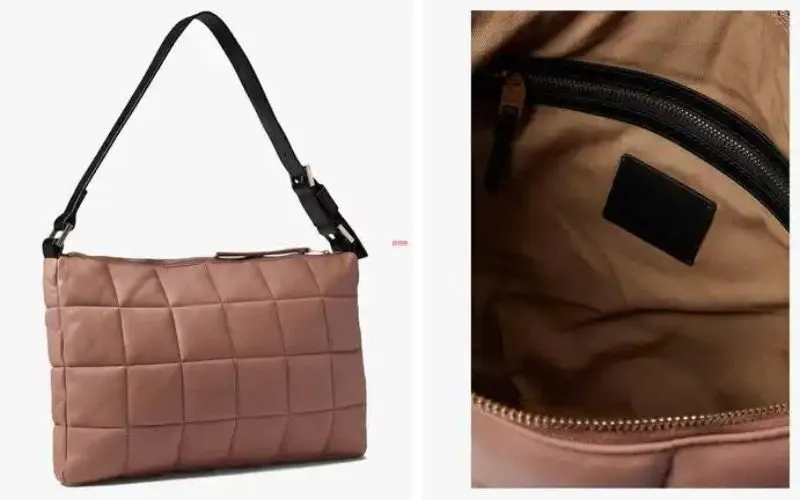
The lining is the material forming all or part of the bag’s visible interior. It can cover seams and reinforcement, support internal pockets, and provide the surface that contacts carried items. Textile, leather and suede linings can each be made in different weights, finishes and constructions.
A lining is different from interlining, backing, padding or a structural stiffener concealed between layers. A soft lining does not necessarily hold the bag’s shape or carry the load. Identify those hidden components separately in the bill of materials and drawings.
Record how the lining is attached at the opening, seams, pockets and base. It may be fixed throughout, attached at selected points or designed for removal. The attachment affects pocket behavior, access for repair and cleaning; approve it in the assembled bag.
What Are the Main Functions of Handbag Lining?
The interior is part of the product specification. Its appearance, storage layout and contact surfaces need the same sample review as the outer leather.
Reduce Direct Wear on the Inner Shell
A lining can separate carried objects from the flesh side of the leather and concealed seams. Check abrasion, snagging and puncture risks from the intended contents. The lining can itself wear through, so do not treat an extra layer as proof of a longer service life.
Finish the Interior Appearance
Choose the color, pattern, surface and seam presentation together. A lighter interior may help users see small items; a dark or patterned interior may suit the collection’s visual brief. Test color transfer for either choice rather than assuming dark material is easier to maintain.
Support the Intended Cleaning Method
The lining may provide a surface that can be cleaned more easily than exposed inner leather, depending on its finish and attachment. This does not make the bag hygienic, antimicrobial, waterproof or machine-washable. Establish a care procedure that is safe for the lining, outer leather, adhesives, dyes and hardware.
Organize the Contents
Specify pocket opening size, depth, number, position and closure. Check them with the objects they are intended to hold. A phone pocket that fits a bare device may not fit the same device in a case. Review access when the bag is loaded and closed.
Common Handbag Lining Materials: Benefits and Limitations
Compare identified material samples at the required weight and construction. A loosely woven fabric and a dense coated fabric can behave very differently even if they use the same fiber. The following points help define sample checks rather than establish a universal material ranking.
Cotton Linings
Cotton is a natural cellulosic fiber used in plain, twill and other woven fabrics. It can suit a soft, matte interior and offers many color or print options. Check fabric weight, thickness, seam behavior and the desired hand. Price depends on the fabric and order; cotton is not always the least expensive choice.
- Possible fit: a fabric interior with the approved natural-fiber feel, pattern or matte surface.
- Check: liquid uptake, visible staining, creasing, dimensional change under the proposed care method, seam strength and color transfer.
- Specify: fiber composition, construction, weight, finish, usable width and color reference.
Polyester Linings
Polyester can be supplied as lightweight woven linings, twills, brushed fabrics or other constructions. A selected grade may suit a smooth interior or a particular cost and care brief. Confirm whether any water-repellent or stain-resistant behavior comes from a finish and how it performs after the agreed conditioning or cleaning.
- Possible fit: a textile lining offered in the required surface, weight and color.
- Check: seam slippage, abrasion, snagging, static behavior where relevant, and compatibility with print or coating.
- Limit: the word polyester does not make an assembled handbag waterproof or establish that it is stronger than every cotton lining.
Nylon Linings
Nylon is a polyamide fiber, not silk. It is used in several fabric constructions, including plain weaves and ripstop-style fabrics. Select the fabric for the finished interior rather than assigning nylon to a fixed luxury tier.
- Possible fit: a light textile interior with the selected strength, texture and finish.
- Check: the actual tear and abrasion performance, seam behavior, color transfer and response to moisture or care.
- Limit: water resistance depends on construction and treatments; stitching and closures can still admit liquid.
Suede Linings
Suede has a napped leather surface. It should not be confused with silk or with a synthetic suede-look textile. Specify the actual material, layer, thickness, finish and nap. For a synthetic alternative, identify its fiber and binder composition instead of simply calling it suede.
- Possible fit: a soft, napped interior consistent with the design brief.
- Check: loose fibers, rubbing transfer, marking, cleaning response and added thickness at folded or stitched areas.
- Limit: nap can show handling and soil; approve an appropriate care method and acceptable appearance variation.
Leather Linings
A leather lining can give a smooth or textured inner surface depending on its treatment. Identify the species, leather layer, thickness, finish and color. Compare the weight and flexibility of the assembled design because the lining and outer shell act together.
- Possible fit: a leather interior with the approved appearance and feel.
- Check: color transfer, finish adhesion where relevant, fold behavior, seam bulk and interaction with adjacent components.
- Limit: leather does not guarantee durability or easy cleaning; the selected article and construction determine suitability.
Fiber Names, Weaves and Finishes: What to Put in the Specification
A fabric specification needs more than a commercial name. Separate the fiber composition from weave, finish, weight and coating. “Cotton twill” identifies a fiber and weave; “satin finish” alone does not establish the fiber content or performance.
Twill, Plain Weave and Satin Construction
Twill describes a weave structure with a diagonal effect. Satin constructions use longer floats to create the desired surface and drape, but snagging and seam slippage can be relevant checks. Cotton Incorporated’s weaving guide explains these structural differences. Ask for the supplier’s complete fabric reference rather than assuming weave and fiber are interchangeable names.
Purse and Tote Linings
Use the bag construction to set the lining requirements. A tote may need a different pocket arrangement and fabric body from a small clutch. Compare fabric consumption, seam allowances, pocket reinforcement and the finished weight. Stretch swimwear fabric is not a default handbag-lining category; use a stretch material only where the design calls for and validates it.
Silk Linings
Silk is a protein fiber and may be offered in different fabric constructions. It can provide the chosen sheen and drape, but a luxurious appearance does not prove abrasion resistance or easy maintenance. Check seam movement, snagging, color transfer and the proposed care method on the selected fabric and finished bag.
Lined, Partly Lined or Unlined: Which Construction Fits?
A lined bag is not automatically better made than an unlined one. The appropriate construction depends on the leather, interior finish, storage features, weight and price brief. Compare the finished products rather than counting layers as a quality grade.
Protection and Durability
A lining can cover the inner shell and support a planned pocket arrangement. It can also introduce seams, attachment points and another material requiring care. Check likely wear locations, such as the base and pocket openings, before deciding how much lining is needed.
Workmanship
For a lined design, inspect the fit at corners, openings and attachments. A lining cut too small may pull at the shell; excess fabric may bunch or obstruct the closure. For an unlined design, define the visible seam and flesh-side finish rather than leaving them unspecified.
Surface Contact
Check the feel and surface of the interior against the intended contents. Inspect for abrasive edges, loose fibers, adhesive residue and color transfer. A soft surface is a design characteristic, not a certification of skin safety.
Shape and Weight
Identify which component provides structure. Padding, backing or reinforcement may be needed independently of the lining. Weigh the complete sample and check access, flexibility and loaded appearance against the brief.
Odor and Care
Assess unusual odor as a quality observation and investigate the materials, storage or process involved. Added fragrance is not evidence of quality and should not be used to conceal a problem. Agree the relevant odor evaluation and care requirements rather than promising that a lined bag will smell better.
How to Choose and Approve Handbag Lining
Target Price
Ask for quotations using identified material references and quantities. Include material consumption, pocket construction, printing, reinforcement, sewing and any testing requirements. Compare usable fabric width and cutting direction as well as price per meter; those details affect the amount required for each bag.
Intended Use
List the expected contents and the conditions of use. A work bag, evening bag and everyday tote can need different pocket access, surface feel and protection. If liquid containment or device protection is part of the brief, define the complete construction and relevant tests; a fiber choice alone cannot deliver those functions.
Colors and Patterns
Approve the lining next to the outer leather and hardware under the agreed lighting. Check pattern direction, repeat placement and logo orientation where relevant. Consider visibility inside the bag as well as appearance, and verify that adjacent light and dark materials do not transfer color under the agreed conditions.
Surface and Feel
Review the actual fabric or leather, then the assembled sample. Check whether the hand changes after backing, lamination or sewing. Test pocket access and closure operation with the intended contents, looking for catching, bunching, excessive bulk or exposed raw edges.
Cleaning and Maintenance
Develop care instructions for the complete product. A textile may tolerate a cleaning method that damages the bag’s leather, adhesive or hardware. Evaluate the intended cleaning product on a suitable sample before approving the instructions. Do not infer machine washability from a removable-looking lining or a water-resistant fabric description.
Inspection and Test Plan
Agree the relevant methods, conditions and acceptance criteria with the supplier or laboratory. ISO 105-X12 addresses textile color fastness to rubbing using dry or wet rubbing cloths. Leather needs methods suitable to leather. Rubbing, abrasion, tearing, seam performance and water resistance answer different questions; passing one does not establish the others.
| Approval item | Record in the tech pack |
|---|---|
| Material | Supplier reference, composition, construction, weight/thickness and finish |
| Color and design | Approved reference, pattern direction and placement |
| Assembly | Seam allowances, pocket dimensions, attachments and reinforcement |
| Performance | Agreed method, conditions, criteria and report reference |
| Care | Approved complete-product instructions and sample evaluation |
Specify Lining for a Hoplok Bag Project
For custom leather bags, send the intended use, lining preference, pocket layout, target quantities and care requirements with the outer-material specification. Hoplok can review material availability and construction during development; confirm the selected lining and any test requirements on the approved sample.
Hoplok’s bag MOQ is 200 genuine-leather or 1,000 PU units. Bag sampling takes 3–4 weeks and bulk production 60–90 days. Confirm style/color allocation, component availability and approval milestones in the quotation and production schedule.
Conclusion
Choose a lining by the actual material and its performance in the finished bag. Cotton, polyester, nylon, silk, suede and leather can serve different design requirements, but none is automatically the best, most durable or easiest to clean. Specify the material, pocket layout, attachment and care method, then approve a complete sample against the agreed criteria.