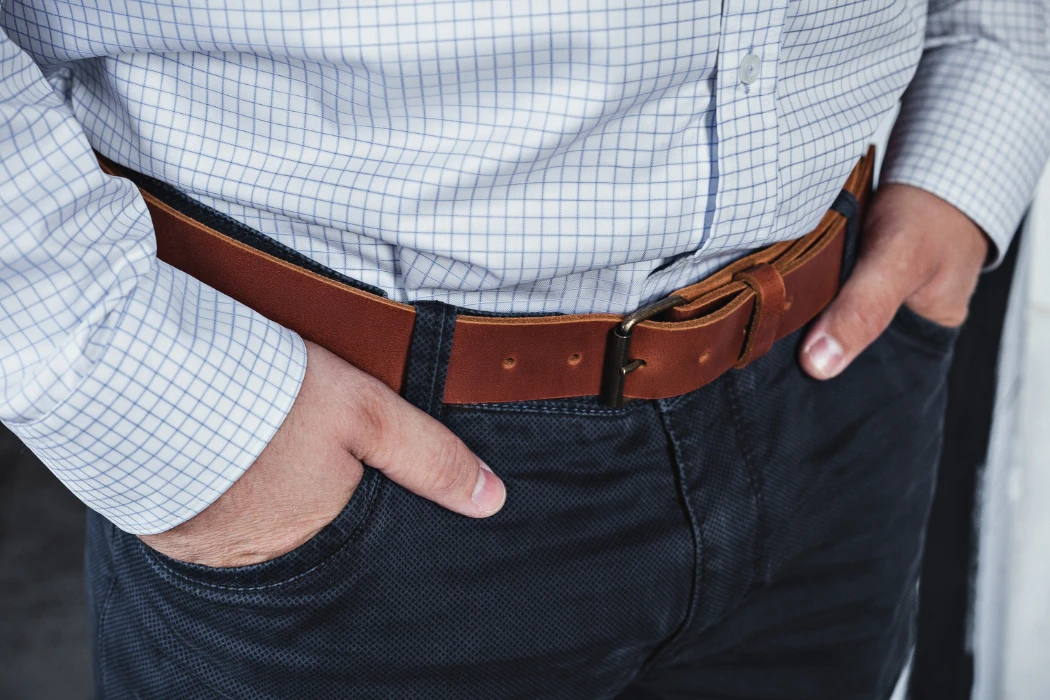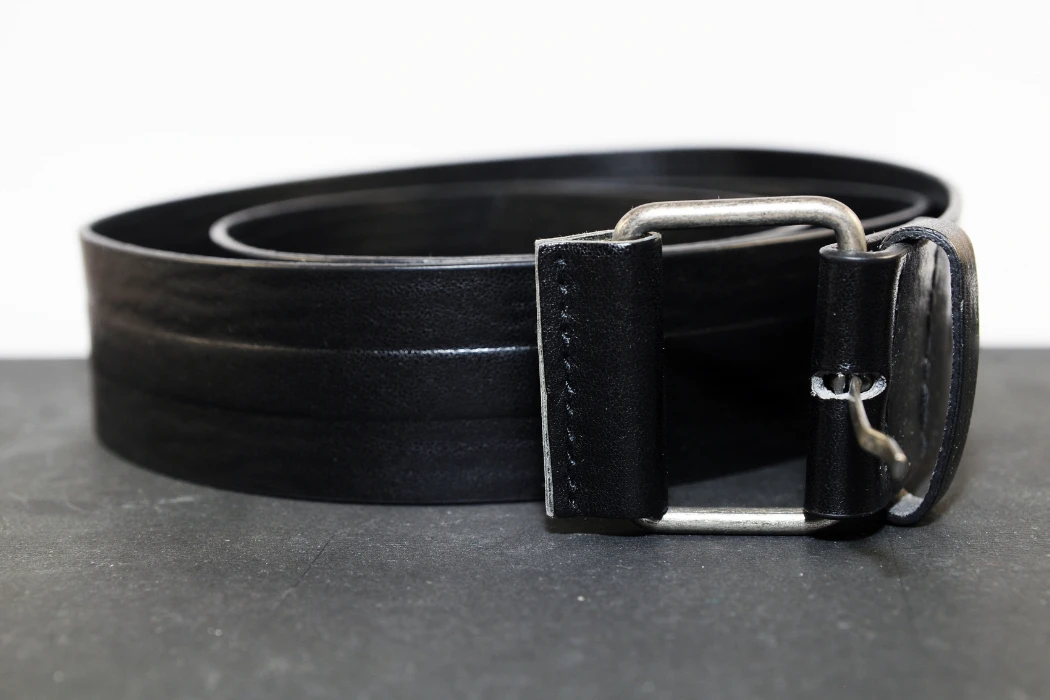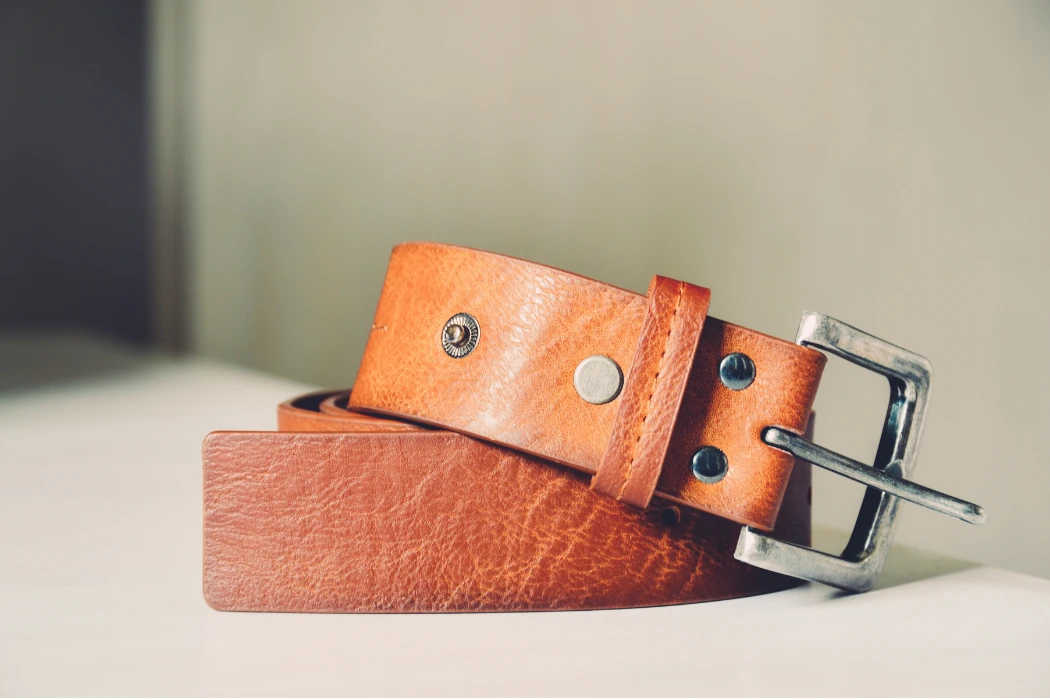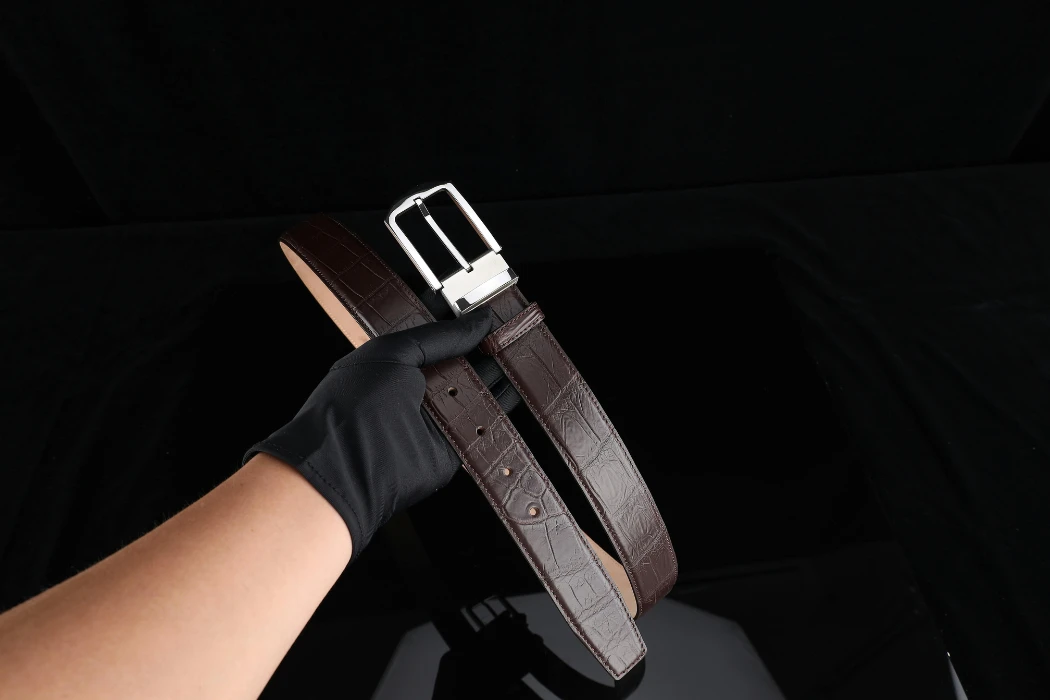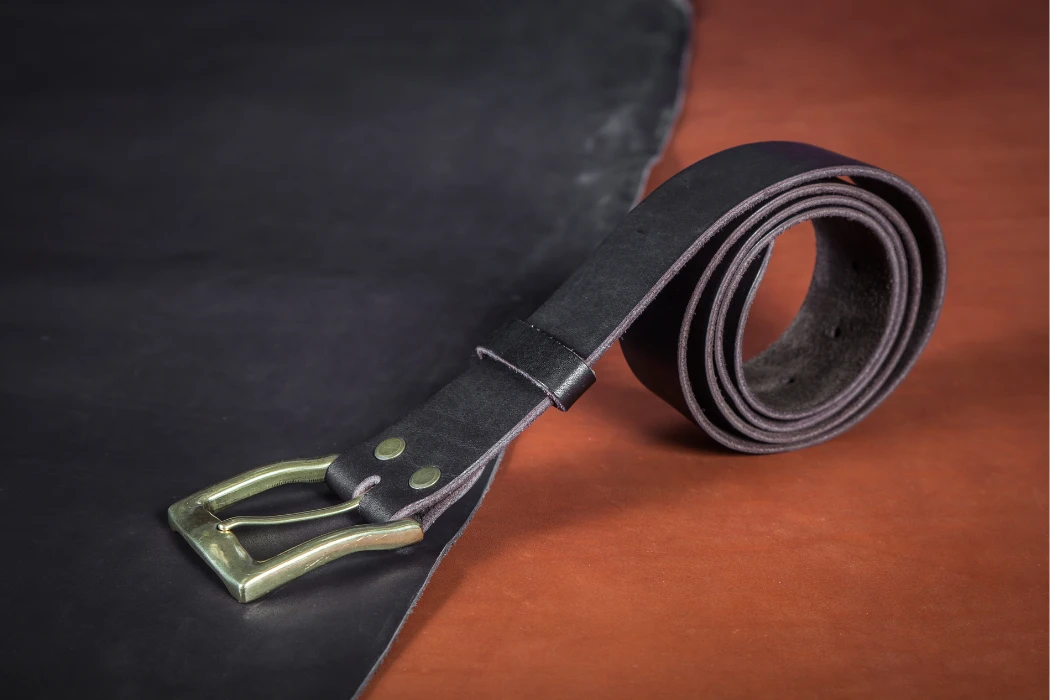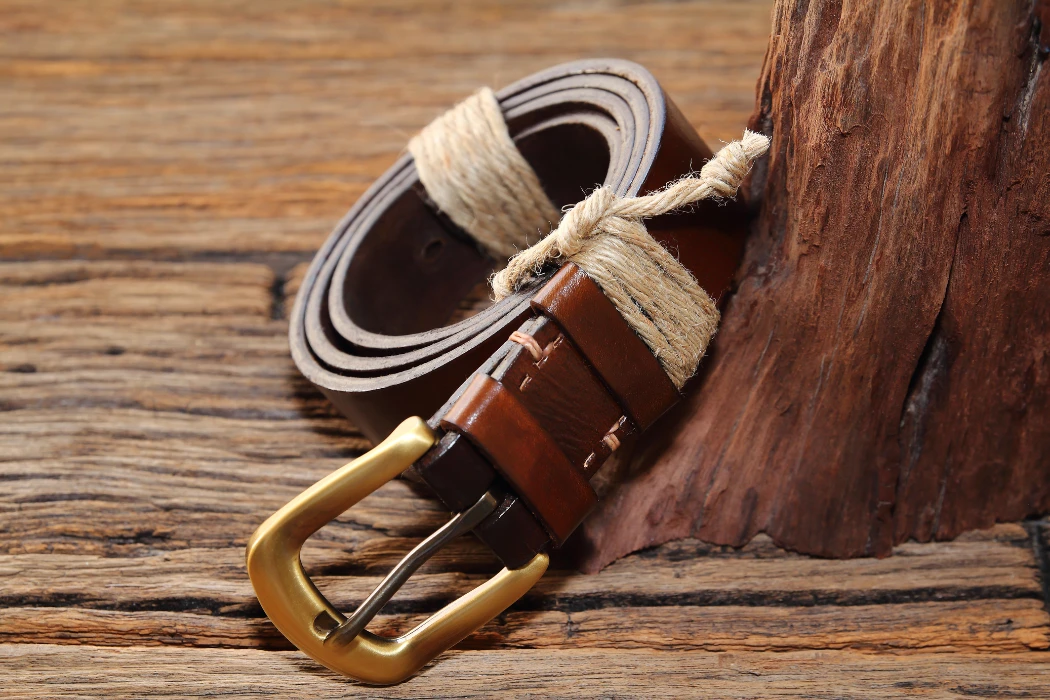
A truly high-quality, “buy-it-for-life” full-grain leather belt should reasonably cost between $80 and $150. Within this specific price bracket, your money goes primarily toward premium materials—specifically Full-Grain Leather and Solid Brass hardware—rather than inflated brand marketing. Conversely, belts priced under $40 almost always utilize Bonded Leather (scraps glued together), while designer belts costing over $200 typically consist of roughly 70% pure profit margin and advertising costs, offering no additional structural durability.
It is the most common confusion in menswear. You scroll through online stores or walk into a department store, and you see two belts that look nearly identical. One is a fast-fashion steal at $15; the other is a heritage piece at $150. Visually, under the store lights, they might even have the same shine. But this visual similarity is a temporary illusion created by synthetic coatings.
The real difference—and the reason for the 10x price gap—lies hidden inside the strap. As manufacturers, we know exactly what goes into that price tag. In this guide, we are practicing radical transparency. We will tear down the Bill of Materials (BOM), from the raw hide cost per square foot to the zinc content in the buckle, to show you exactly where every penny goes. By the end, you will understand why the “expensive” belt is actually the cheapest one you will ever own.
What Are the Standard Price Ranges for Leather Belts in Today’s Market?
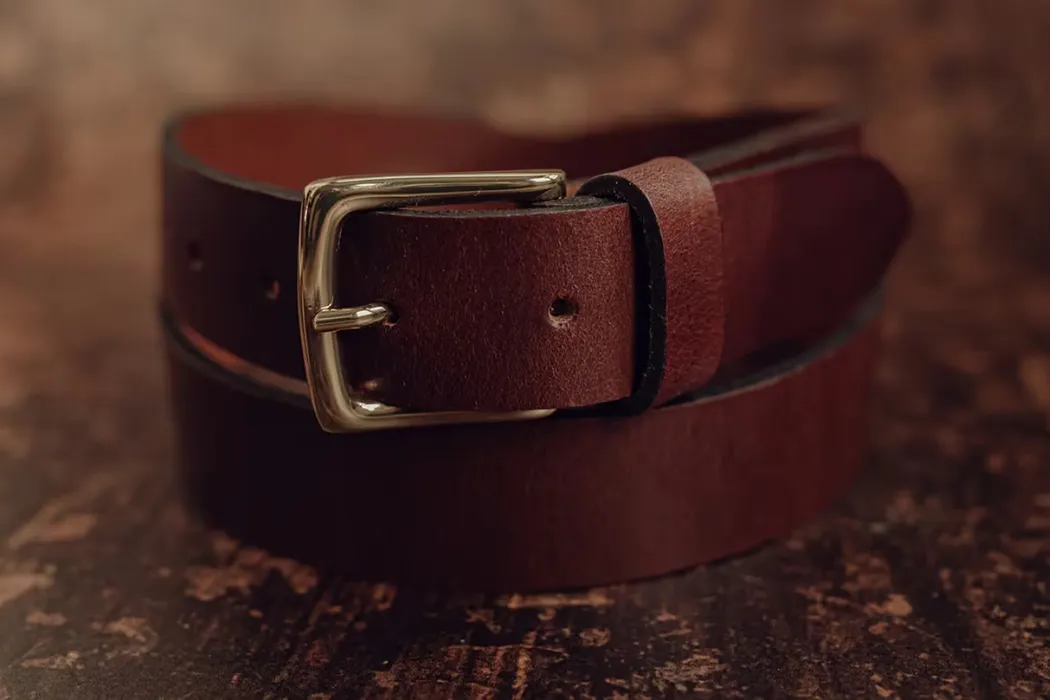
The leather belt market is strictly segmented into three tiers. The $10–$30 range is the “Fast Fashion” zone, relying on Bonded Leather that typically cracks within 6 months. The $80–$150 range represents the “Quality Sweet Spot,” offering Full-Grain Leather capable of lasting over a decade. Finally, the $250+ tier is the “Luxury Markup,” where you pay exponentially more for brand prestige without gaining proportional structural durability.
The Fast Fashion Trap ($10 – $30)
If you buy a belt off a rack at a general clothing retailer, you are likely buying a “sandwich” of trash. To hit this low price point, manufacturers must use materials that cost less than $2.00.
- Bonded Leather: This is essentially “leather dust” mixed with glue and pressed into sheets. It has zero structural strength.
- Cardboard Fillers: Many “puffy” dress belts contain actual cardboard or foam inside to give them artificial thickness.
- Plastic Coating: To hide the messy interior, they spray a heavy polyurethane coating on top. This looks smooth in the store but peels like a sunburn after a few months of bending.
The Quality Sweet Spot ($80 – $150)
This is where value intersects with longevity. When you pay over $80 for a belt from a dedicated leather brand, the BOM (Bill of Materials) changes drastically.
- Premium Hides: Manufacturers switch to North American or Italian steer hides. These are cleaner, stronger, and ethically sourced.
- Vegetable Tanning: Instead of cheap chrome tanning, these belts often use veg-tanning, a process that takes 4-6 weeks (vs. 2 days) but results in a dense, durable strap.
- Solid Brass Hardware: You stop getting pot-metal buckles and start getting solid brass or stainless steel that will never snap.
The Luxury Brand Markup ($250+)
Once you cross the $200 threshold, the correlation between price and quality breaks. You are no longer paying for the leather; you are paying for the ecosystem around it.
- The Markup Multiplier: While an honest Direct-to-Consumer (DTC) brand might mark up their product 2x to 3x, luxury fashion houses typically use an 8x to 12x markup to cover overheads.
- Overhead Costs: That price tag covers Fifth Avenue rent, global marketing campaigns, and glossy packaging—none of which hold your pants up better.
How Does the Leather Grade Impact the Manufacturing Cost?
The grade of the hide is the single largest variable in the Bill of Materials (BOM). Full-Grain Leather retains the tough outer epidermis of the hide, commanding a raw material cost of roughly $6.00–$8.00 per sq. ft. In stark contrast, Split Leather or Bonded Leather is made from bottom-layer scraps and byproducts, costing manufacturers as little as $1.00–$2.00 per sq. ft. This massive raw material price gap—often exceeding 400%—is the primary driver of the final retail price difference.
Full-Grain vs. Top-Grain: The Durability Metric
Understanding the vertical layers of the hide explains why some belts stretch and snap while others hold up your pants for decades.
- Full-Grain (The Gold Standard): This includes the outermost layer of the skin. It has the tightest fiber density and a tensile strength often exceeding 3000 PSI. It is difficult to work with because it shows natural scars, meaning we have to “cut around” imperfections, which increases waste and cost.
- Top-Grain (The Compromise): This is the second highest quality. The top layer is physically sanded down to remove scars. It looks more uniform and “perfect,” but the sanding process removes the toughest fibers, reducing its structural durability by about 20-30% compared to full-grain.
Genuine Leather: The Biggest Lie in the Industry
If you see a stamp on the back of a belt saying “Genuine Leather,” do not read it as “Real Leather.” Read it as “At Least It Is Not Plastic.”
- The Marketing Trick: “Genuine” is a technical term for the third grade of leather. It is usually the bottom “split” layer of the hide (the suede part) that has been painted or PU-coated to look like the top layer.
- The Failure Point: Because it lacks the tight, interlocking fibers of the grain, it absorbs moisture easily and loses its shape rapidly. It is the fast-food burger of the leather world—technically meat, but heavily processed.
Table 1: Leather Grade Cost & Lifespan Matrix
| Leather Grade | Raw Material Cost (Est. per sq. ft) | Expected Lifespan | Typical Retail Price |
|---|---|---|---|
| Full-Grain | $6.00 – $8.00 | 10+ Years | $80 – $150 |
| Top-Grain | $4.00 – $6.00 | 3 – 5 Years | $40 – $80 |
| Genuine / Split | $2.00 – $3.00 | 1 – 3 Years | $20 – $50 |
| Bonded | Under $1.00 | 3 – 6 Months | $10 – $25 |
Is the Buckle Material Driving Up the Final Price?
Yes, hardware significantly impacts both the sticker price and the longevity of the belt. Cheap belts almost exclusively use Zinc Alloy buckles, which cost manufacturers less than $0.80 but are prone to snapping and bubbling. In contrast, premium belts feature Solid Brass or Stainless Steel hardware, costing between $4.00 and $8.00 per unit. While expensive, a solid metal buckle is a one-time investment that will likely outlive the leather strap itself.
Zinc Alloy: The Bubble Wrap of Metals
If a belt costs under $40, the buckle is almost certainly die-cast zinc. This is “pot metal”—a mix of scrap metals melted down and poured into a mold.
- Plating Peels Off: Because zinc is dull grey, it is electroplated to look like silver or gold. This thin layer bubbles and flakes off within months when exposed to sweat or humidity.
- Brittle Structure: Zinc is porous and brittle. If you accidentally drop the belt on a hard tile floor, the buckle prong can literally shatter or snap off completely.
Solid Brass & Stainless Steel: The Buy-It-For-Life Standard
When you hold a $100 belt, the first thing you notice is the weight of the buckle. This density is the hallmark of solid metal.
- Heavy Weight: A solid brass buckle feels substantial in the hand, often weighing 3 to 4 times more than a hollow zinc counterpart.
- Corrosion Resistance: Brass and stainless steel do not rust or bubble. Instead of peeling, raw brass develops a warm, unique patina over decades of use.
- PVD Coating: High-end black buckles often use Physical Vapor Deposition (PVD), a vacuum process that bonds color at the molecular level, ensuring it never chips like paint.
Table 2: Hardware Cost Analysis
| Material | Avg. Unit Cost (BOM) | Common Failure Point | Feel / Weight |
|---|---|---|---|
| Zinc Alloy | $0.50 – $0.80 | Prong snaps / Plating peels | Light, Hollow, Cheap |
| Solid Brass | $4.00 – $6.00 | None (Lasts lifetimes) | Heavy, Warm, Dense |
| Stainless Steel | $5.00 – $8.00 | None (Indestructible) | Heavy, Industrial, Cold |
Why Does Handcrafting Add Significant Cost to a Belt?
Labor cost lies almost entirely in the finishing details. Mass-produced belts utilize “Edge Painting,” an automated spray-on process that takes mere seconds but often peels like plastic tape. In contrast, premium handcrafted belts utilize “Burnishing,” a manual technique where an artisan spends 20-30 minutes repeatedly sanding and waxing the edges to physically fuse the leather fibers. This significant investment of skilled time creates a sealed edge that never cracks, directly driving up the retail price.
The Edge Finishing: Paint vs. Burnish
If you look at the side of your belt, you can tell immediately if it was made by a robot or a human.
- Edge Paint (Cheap): Factories spray a rubberized paint over the raw edge to hide imperfections. It sits on top of the leather. When the leather flexes, this rigid paint cracks and falls off, exposing the core to moisture.
- Burnishing (Expensive): An artisan uses a wooden slicker and friction heat to melt natural beeswax into the fibers. This fuses the leather layers together, creating a smooth, hardened edge that is part of the leather itself, not a coating.
Stitching Quality: Machine vs. Saddle Stitch
While machine stitching is faster, it introduces a structural weakness known as the “Lock Stitch.”
- The Machine Risk: Sewing machines use two threads that loop around each other. If one thread snaps, the entire line of stitching can unravel like a zipper.
- The Saddle Stitch Advantage: Hand-stitching uses two needles passing through the same hole in a figure-eight pattern. If a stitch is cut, the thread remains locked in place by the opposing loop, ensuring the buckle never detaches.
Does a Higher Price Tag Always Equal Better Longevity?
Not necessarily. While price usually correlates with quality up to a point, there is a strict law of diminishing returns. Once you exceed the $150 threshold, you are typically no longer paying for better leather or stronger hardware; you are funding the Brand Logo, massive marketing campaigns, and expensive retail real estate. Ironically, the most durable belts often come from specialized DTC (Direct-to-Consumer) brands rather than world-famous luxury fashion houses.
The Math of “Cost Per Wear” (CPW)
The smartest way to evaluate a belt is not by the sticker price, but by how much it costs you for every day you wear it. Let’s do the math.
- The “Expensive” Belt: You buy a $120 full-grain belt. It lasts 10 years (roughly 3,000 wears).
Calculation: $120 ÷ 3,000 = $0.04 per day. - The “Cheap” Belt: You buy a $20 bonded belt. It cracks after 6 months (roughly 180 wears).
Calculation: $20 ÷ 180 = $0.11 per day.
The cheap belt is actually almost 3 times more expensive to own in the long run, and that doesn’t include the hassle of constantly buying replacements.
The Retail Markup Multiplier
Understanding “markup” reveals where your money goes. This is the multiplier brands apply to the manufacturing cost to determine the retail price.
- Honest Pricing (2x – 3x): Craft-focused DTC brands typically multiply their cost by 2 or 3. If it costs $40 to make, they sell it for $80-$120. You are paying for the product.
- Luxury Pricing (8x – 10x): Traditional designer brands often multiply by 10. If it costs $40 to make, they sell it for $400. You are paying for the runway show and the celebrity endorsement.
Table 3: The “Cost Per Wear” Calculator
| Belt Type | Initial Price | Est. Lifespan | Cost Per Year | Value Rating |
|---|---|---|---|---|
| Fast Fashion | $20 | 0.5 Years | $40.00 | Poor |
| Quality DTC | $100 | 10 Years | $10.00 | Excellent |
| Luxury Brand | $450 | 10 Years | $45.00 | Poor Value |
How Can Brands Optimize Their Bill of Materials Without Sacrificing Quality?
For B2B buyers, the smartest strategy to lower the Bill of Materials (BOM) is to focus on simplifying packaging and optimizing cutting yields, rather than downgrading the leather specification. At Hoplok, we frequently advise brands to specify Vegetable Tanned Shoulders instead of the more expensive “Double Butts.” This strategic substitution can reduce raw material expenditure by roughly 20% while maintaining over 90% of the tensile strength and durability found in the premium cuts.
Cutting the Fat, Not the Grain
There are “invisible” costs in manufacturing that do not add value to the end user. Attack these first.
- Packaging Reduction: A rigid, magnetic-closure gift box adds $3.00 to $5.00 to your BOM. If you are a DTC brand, consider a simple cotton dust bag ($0.50). It feels premium but saves massive margin.
- Bulk Hardware Sourcing: Committing to a custom mold for solid brass buckles requires an upfront investment (approx. $500), but it drops the per-unit cost from $6.00 to $3.50 on orders over 1,000 pieces.
Sourcing Strategy: Italy vs. Mexico vs. Asia
Labor and shipping are key components of the final price tag. Choosing the right region depends on your brand positioning.
- Italy (The Prestige Choice): Highest raw material cost ($8-$10 per sq. ft) and labor. Essential for luxury positioning but squeezes margins.
- Mexico (The Value King): Specifically the León region. They produce incredible vegetable-tanned leather for $4-$6 per sq. ft. Proximity to the US reduces shipping time and tariffs.
- Asia (The Hardware Hub): While leather quality varies, China remains the world leader for precision metal hardware. Sourcing buckles here while cutting leather elsewhere is a common hybrid strategy.
Conclusion: The Final Verdict on Pricing
Buying a leather belt is a lot like buying tires for your car; you shouldn’t be paying for the logo on the sidewall, you should be paying for the rubber that meets the road. If you want a product that serves you faithfully for a decade, aim squarely for the $80–$150 price range. In this bracket, verify that the specs explicitly state “Full-Grain Leather” and “Solid Brass” (or Stainless Steel) hardware. Anything less is a disposable toy; anything more is a luxury tax.
For brands looking to disrupt the market, the opportunity lies in honesty. Consumers are tired of replacing “Genuine Leather” straps every year. They are ready for radical quality.
Ready to build a legacy product? At Hoplok, we provide brands with fully transparent Bill of Materials (BOM) costing and premium Full-Grain Leather OEM services. We don’t just manufacture belts; we engineer “Lifetime Warranty” grade accessories that build unshakeable customer trust. Contact Hoplok today, and let’s design a belt that your customers will pass down to the next generation.