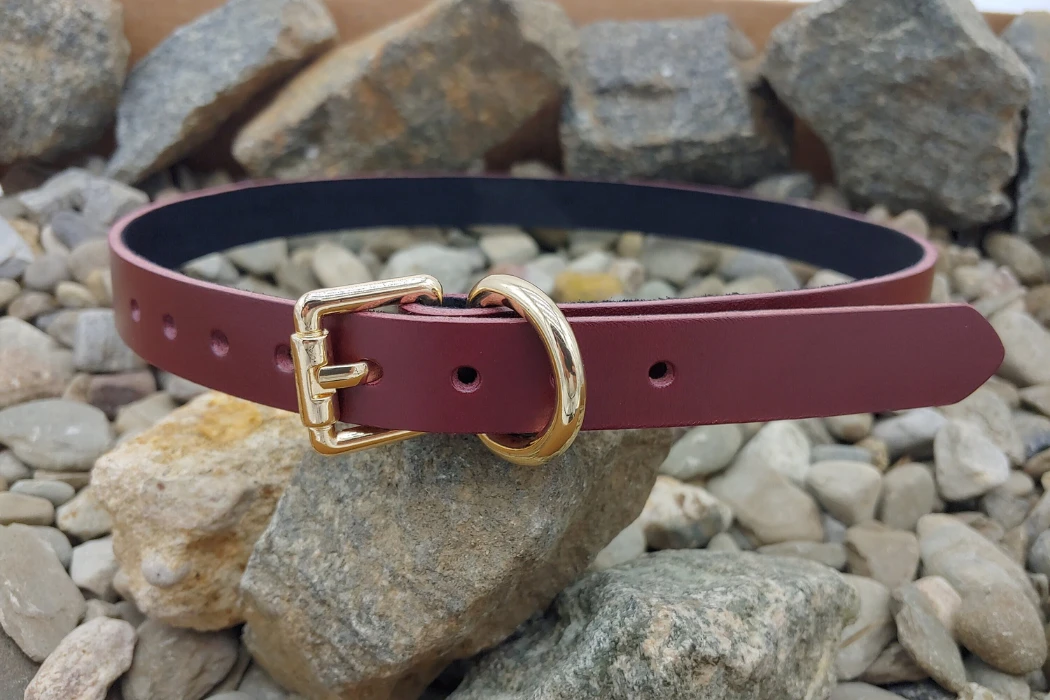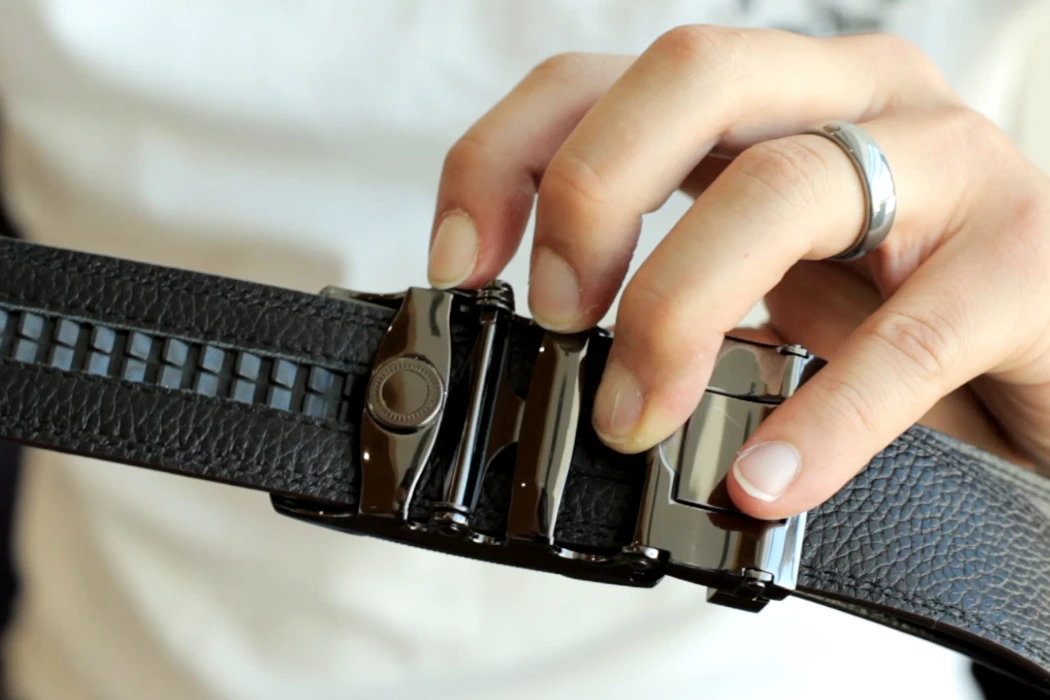
A belt buckle works by holding the free end of a strap at the chosen circumference. A prong enters a hole, a friction mechanism grips a threaded strap, and a ratchet engages a matching track. The way the buckle closes around the wearer is separate from the way it attaches to the fixed end of the belt.
That distinction explains many replacement problems. A buckle may detach from a strap yet use an incompatible closure system. For brands and buyers, identifying both mechanisms is the first step toward a belt that is easy to fasten, size and service.
Identify the two connections
At the fixed end, a fold, clamp or other fitting joins the buckle to the strap. At the free end, the buckle holds the wearer’s chosen adjustment. Snaps and Chicago screws usually describe the fixed-end attachment. Prong and ratchet describe the everyday closure. “Reversible” describes another feature: the buckle or strap can be turned so either belt face is worn outward.
A reversible buckle can still have a prong closure. A plate buckle can be attached by screws or snaps. A clamp can hold the fixed end of a ratchet belt while the track handles daily adjustment. Product listings should identify these features separately rather than grouping them as interchangeable buckle types.
How the main closure mechanisms hold a belt
Prong and roller buckles
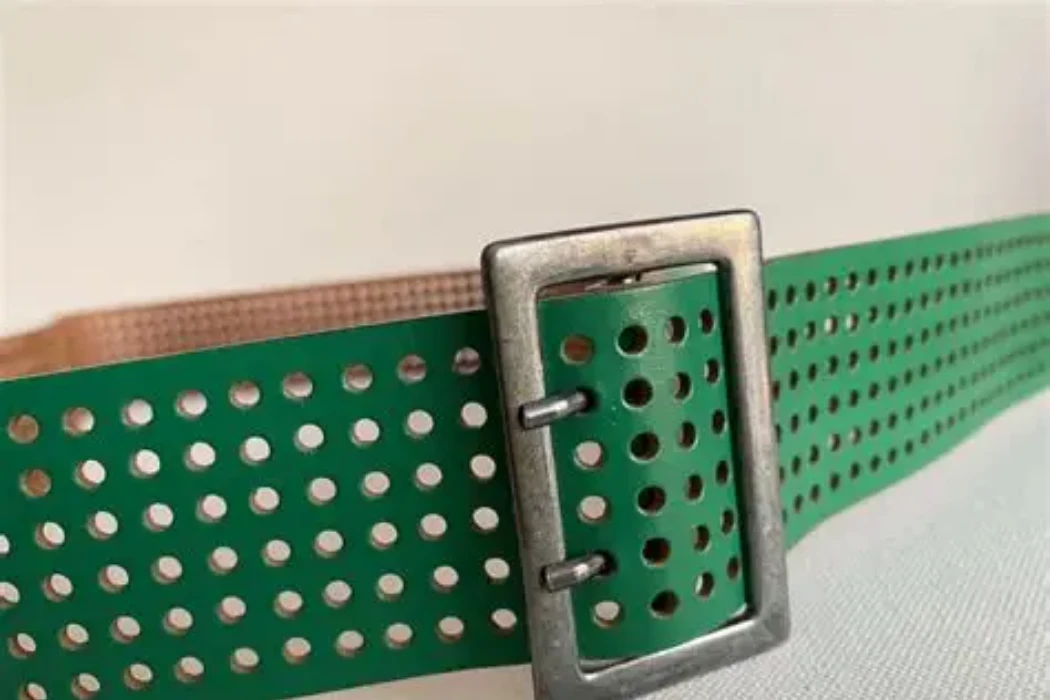
The strap passes through a frame and the prong engages an adjustment hole. The engaged hole, prong and frame form the connection; the keeper organizes the remaining tip. The hole must accommodate the prong without forcing it, and the tongue should seat as intended against the frame.
A roller is a rotating sleeve on part of the frame. It can help the strap move across that contact point when tightening. It does not prevent all creasing or hole wear. Check that it rotates freely, has smooth ends and does not trap the strap edge.
Plate and hook buckles
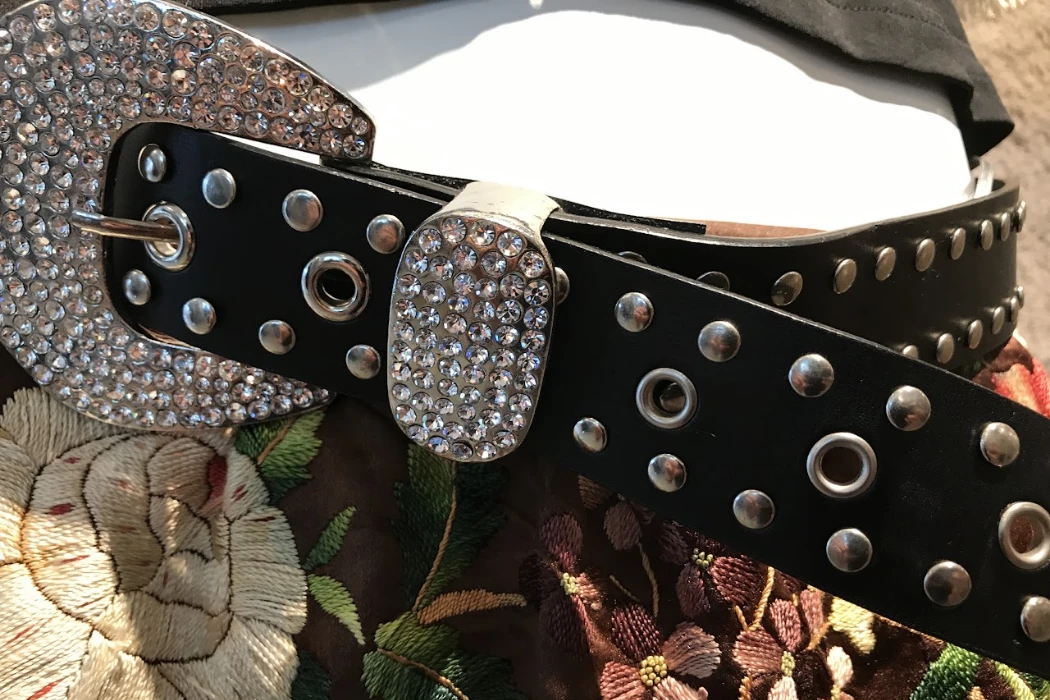
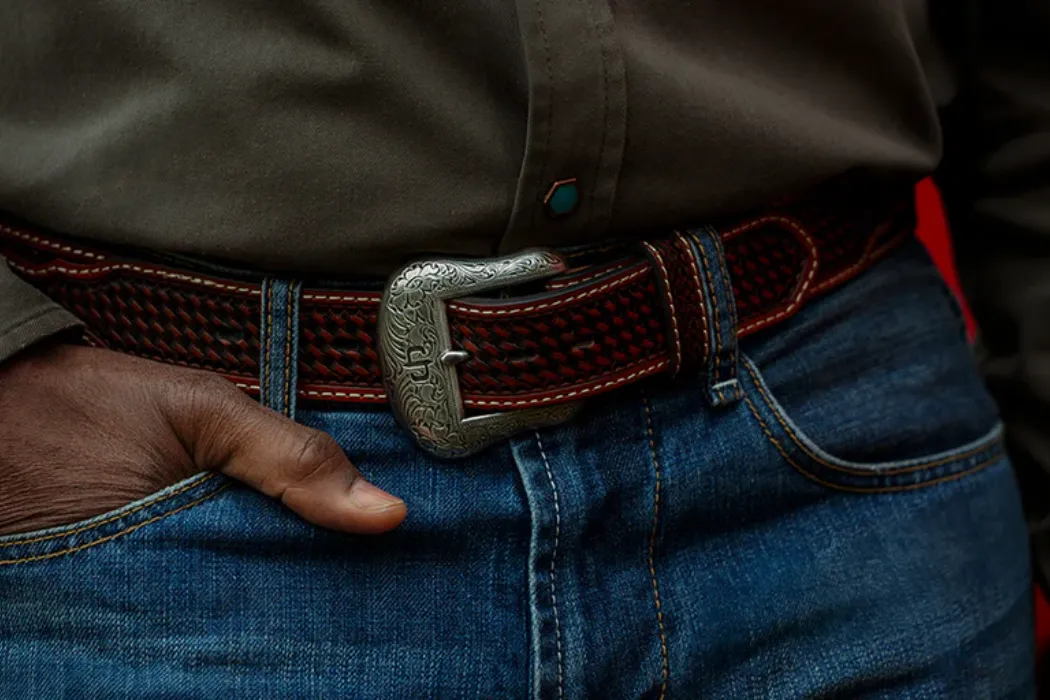
Many decorative plate buckles have a rear bar or loop for the fixed end and a hook that enters a hole in the free end. The plate covers much of the connection. Inspect the reverse side, because the face design tells you little about hook position, usable width or the folded thickness it accepts.
Friction, slide and ring closures
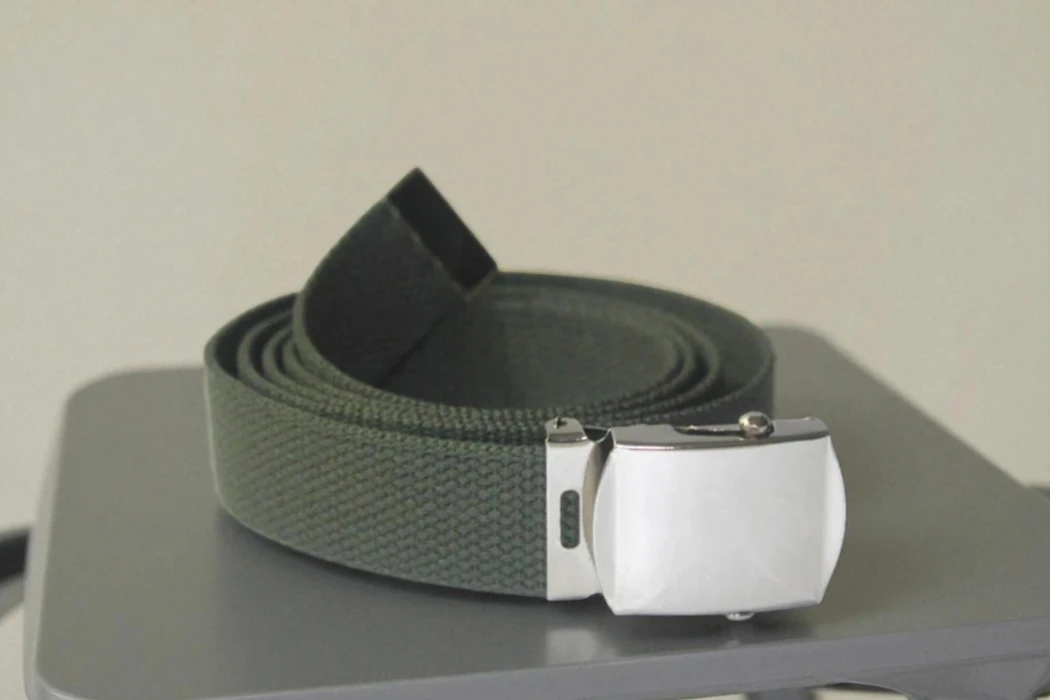
These hold through the strap’s route around bars, rings or a gripping element. Follow the particular component’s threading diagram. A pair of rings and a cam buckle do not use the same route or locking action. Grip depends on strap thickness, texture and flexibility as well as buckle geometry.
In a two-ring fashion closure, the strap commonly passes through both rings and returns between them around one ring. That description should still be checked against the supplied product. Do not publish generic threading art until the finished sample demonstrates the intended routing and resistance to slip.
Ratchet closures
A latch engages teeth on a track, allowing stepped adjustment without conventional holes. The release disengages that latch. Lever positions and release directions vary by model, as do track spacing and usable adjustment length. A familiar click is not sufficient evidence that a mismatched track has engaged securely.
Magnetic-assisted closures
Some closures use magnets to guide the two halves together and a mechanical feature to retain them. FIDLOCK describes this combination of magnetic and mechanical functions. Do not assume that all magnetic buckles hold solely through magnetic attraction, or that all use the same release motion. Obtain the exact component’s operating instructions and application limits.
Check compatibility before attempting a buckle swap
| Check | What to compare | Why width alone is insufficient |
|---|---|---|
| Fixed attachment | Bar, bail, clamp or proprietary connector | The existing fold may have no provision for the new connector |
| Inside clearance | Usable width, channel height and strap tolerances | Edge paint, lining and folding change the space required |
| Adjustment system | Hole and tongue dimensions or matched track details | A replacement can attach but fail to close around the waist |
| Keeper and tip | Keeper placement, tail length and passage through loops | A different buckle length changes the assembled fit |
| Orientation | Front, reverse, release direction and logo position | An apparently symmetrical part may work only one way |
Buckle suppliers such as Buckleguy distinguish center-bar hardware and list component sizes. Use the drawing for the chosen part, followed by a physical trial. Outside buckle dimensions and nominal strap size should appear as separate fields in your specification.
A controlled replacement procedure for removable buckles
- Remove the belt and inspect the existing attachment. Photograph the keeper, fold and prong orientation before opening anything.
- Check that the design permits removal. Open only the specified snaps, screws or release clamp. A sewn or riveted connection requires repair work rather than pulling it apart.
- Place the new part on the strap without forcing it. Check the fold, keeper and tongue slot against the reference assembly.
- Close or tighten the fasteners using the component supplier’s instructions. Screw post length and retention need to suit the actual folded material.
- Fasten the belt on a flat inspection setup, then conduct a wear trial. Check adjustment, release, tip control and unwanted movement.
Stop if the strap bunches, the clamp will not shut, holes tear, the buckle releases unexpectedly or a fastener bottoms out before holding the fold. Enlarging a hole or cutting the strap can hide a mismatch and make the product unusable.
Turn operation checks into a buyer’s inspection sheet
Inspect the assembled belt rather than treating the buckle’s material name as a performance guarantee. Check burrs, edges, finish, tongue alignment, release access and strap damage. Repeat fastening and adjustment using agreed conditions, then look for slip, loose parts, track wear and changes in operation. Define test methods, number of cycles and acceptance criteria before production; there is no universal fashion-buckle pass number.
Customer instructions should include a close-up of the actual mechanism and the correct opening direction. If replacement parts are sold, identify the compatible buckle and strap models. Claims about corrosion, skin contact or specialized performance need evidence for the finished component and intended market.
For a Hoplok belt project, send the buckle reference together with strap construction and size range. The confirmed belt MOQ is 300 leather pieces or 1,000 PU pieces; sampling takes 2–3 weeks and bulk production 60–90 days, subject to the agreed specification and schedule.
For a collection-wide shortlist, compare the belt buckle styles and specification fields.