Yes, you can emboss faux leather, but it requires precise heat control. Unlike real leather which can be “cold pressed” with water, faux leather (PU or PVC) has “plastic memory.” To create a permanent impression, you must heat the material to its softening point—typically between 280°F – 320°F (140°C – 160°C)—to break the polymer chains, apply heavy pressure, and crucially, allow it to cool under pressure. If the temperature is too high, the PU coating will melt; if it is too low, the design will “spring back” and vanish.
Have you ever stamped a logo onto a synthetic leather bag, only to find it completely gone the next morning? This frustration is caused by elastic recovery. Without sufficient heat to alter the plastic’s molecular structure, you haven’t embossed the material; you have merely dented it, and like a rubber band, it eventually snaps back to its original flat shape.
This guide creates a bridge between the craft room and the factory floor. We will explore the science of thermoplasticity and detail three distinct methods for every level of production: the accessible DIY/Cricut method for hobbyists, the precise Heat Press method for professional studios, and the scalable High-Frequency Welding technique used for industrial mass manufacturing.
The Science: Why Faux Leather Behaves Differently than Real Leather?
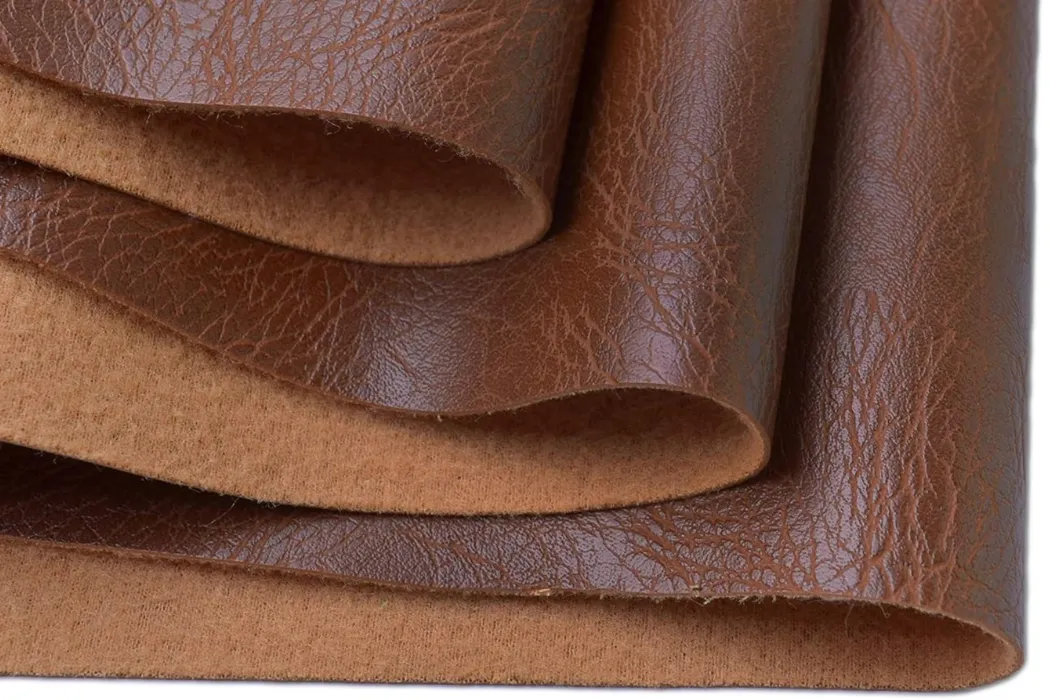
Real leather consists of organic collagen fibers that can be permanently compressed when wet, acting somewhat like a dense sponge that holds its shape after drying. Faux leather is a synthetic thermoplastic (PU or PVC) that behaves like a rubber band with “elastic memory.” To emboss it permanently, you cannot simply apply pressure; you must heat the material to its specific softening point to relax the polymer chains, and then hold that pressure until it cools to lock in the new shape.
The “Memory Effect” (Spring-Back)
The biggest enemy in embossing synthetics is Spring-Back (or elastic recovery). Because faux leather is essentially a plastic coating, its molecular structure wants to return to its original, flat state.
- Cold Embossing Failure: If you press a design into faux leather at room temperature, it might look good immediately. However, data shows that within 24 hours, the impression will fade by 50-80% as the plastic slowly recovers its memory.
- Heat Setting: By introducing heat (usually above 280°F), you temporarily disrupt the “memory” of the plastic. It becomes moldable. But the design is only permanent if the material cools while still under pressure. If you lift the press while it’s hot, the memory returns, and the design blurs.
The Difference Between PU and PVC Reaction
Not all faux leathers react the same way to heat. Knowing the difference prevents ruined projects.
- PU (Polyurethane): This is the most common “vegan leather.” It is softer and has a lower melting point. It requires precise temperature control. If heated over 330°F, the surface skin can bubble or separate from the fabric backing, ruining the texture.
- PVC (Polyvinyl Chloride): This is denser and tougher. It requires higher heat and more pressure to mold but holds fine detail exceptionally well once set. However, it has a rigid “plastic” look compared to the softer drape of PU.
Real Leather vs. Faux Leather Embossing Physics
This table highlights why you cannot treat faux leather like veg-tan leather.
| Material | Structure | Embossing Principle | Cooling Needed? |
|---|---|---|---|
| Veg-Tan Leather | Collagen Fibers | Compression (Water + Pressure) | No (Drying sets it) |
| Faux Leather (PU) | Polymer on Fabric | Thermoplastic Molding (Heat) | YES (Critical) |
| Faux Leather (PVC) | Dense Plastic | High-Heat Molding | YES |
Method 1: The Heat Press Method (Professional Studio Results)
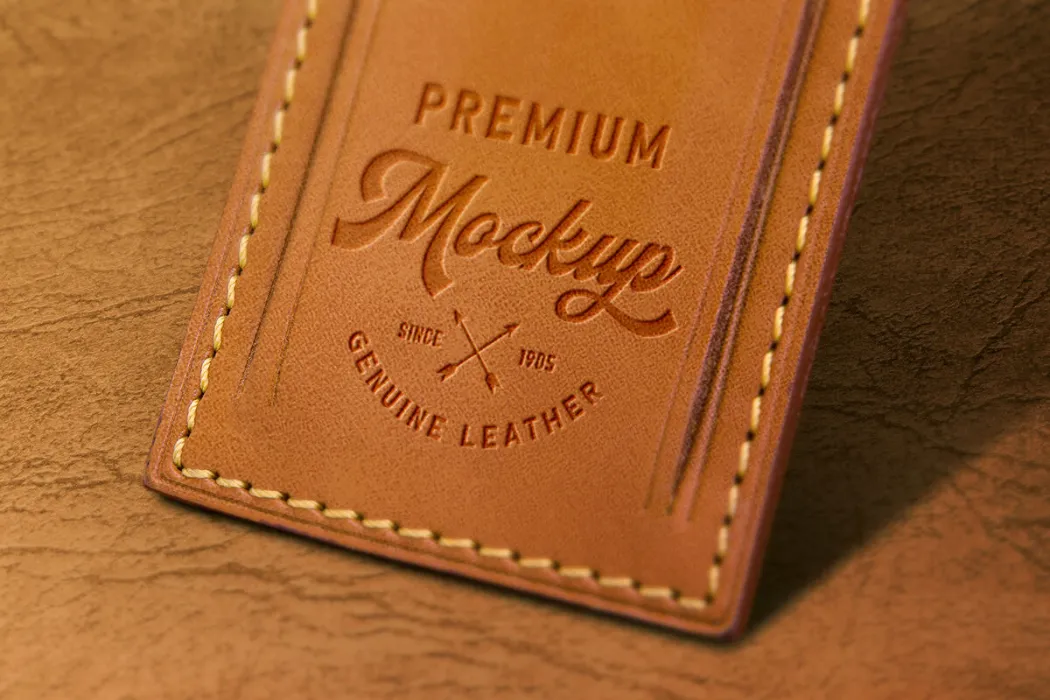
For professional studios seeking crisp, permanent logos without investing in industrial machinery, a Heat Press is the best solution. Success relies on three variables: a conductive Brass Die, a protective Teflon Sheet, and precise settings. The standard starting point for most faux leathers is a temperature of 285°F – 320°F (140°C – 160°C), applied with medium-to-heavy pressure for 10-15 seconds. Crucially, you must allow the material to cool under weight to prevent the design from “springing back.”
Why Brass Dies are Better than Magnesium
When ordering a custom stamp, you will typically choose between magnesium (cheaper) and brass (more expensive). For faux leather, Brass is the only professional choice.
- Heat Retention: Brass is a superior thermal conductor. It holds the heat longer and transfers it more evenly into the plastic coating than magnesium, which cools down too quickly.
- Depth & Edge Definition: Faux leather requires a deep press to overcome its elasticity. Brass dies are CNC-machined with steeper shoulders and deeper relief (often 2-3mm). Magnesium is acid-etched, resulting in shallower, sloped shoulders that can leave an ugly “halo” impression on the surrounding PU surface.
The Crucial Step: Cooling Under Pressure
This is the secret that separates a permanent emboss from one that fades in an hour. Thermoplastics like PU and PVC become soft and moldable when hot, but they only set into their new shape when they return to room temperature.
If you lift the heat press handle immediately while the material is still at 300°F, the plastic is still in a liquid-like state and will elastically recover (flatten out). To fix this, you must either:
A) Turn off the press and let it cool (slow).
B) Remove the piece and immediately place a heavy, cold steel block or weight on top of the embossed area for 30-60 seconds. This “shock cools” the plastic while holding the shape, locking in the molecular structure permanently.
Recommended Heat Settings for Faux Leather
Use this table as a starting point, but always perform a test press first, as coating thicknesses vary by manufacturer.
| Material Type | Rec. Temperature | Time (Dwell) | Pressure |
|---|---|---|---|
| Standard PU (Polyurethane) | 280°F – 300°F (138°C – 149°C) | 10 – 15 Seconds | Medium (4-5 bar) |
| Thick PVC / Vinyl | 300°F – 320°F (149°C – 160°C) | 15 – 20 Seconds | Heavy (6+ bar) |
| Thin Fashion Vinyl | 260°F – 280°F (127°C – 138°C) | 5 – 8 Seconds | Light-Medium |
| Plant-Based Composite | 270°F – 290°F (132°C – 143°C) | 10 Seconds | Medium |
Method 2: The DIY / Cricut Method (For Crafters)
For home crafters and hobbyists, the Cricut Maker equipped with a Fine Debossing Tip is the most accessible method. However, it is important to distinguish the results: this machine performs “Cold Debossing,” meaning it presses a design down into the material without heat. While excellent for intricate line work, the depth is limited (typically < 0.5mm), and because the plastic memory is not broken by heat, the design may fade over time. To improve retention, some users utilize a heat gun to pre-soften the material.
Cold Debossing vs. Heat Embossing
The Cricut method relies entirely on mechanical pressure concentrated on a tiny point.
- The Mechanism: A small rolling ball presses into the faux leather as it moves. It does not remove material (like engraving) or mold it with heat (like embossing).
- Material Suitability: It works best on soft, pliable PU leather which has some “give.” It is often ineffective on stiffer PVC or thick upholstery vinyl, which resists the pressure and springs back almost immediately.
- The Heat Gun Trick: To combat the “spring-back” effect, some crafters use a heat gun to gently warm the faux leather sheet (to roughly 150°F / 65°C) before placing it on the cutting mat. This softens the plastic slightly, allowing the debossing tip to sink deeper. However, this is risky; excessive heat can warp the Cricut’s sticky mat or cause the faux leather to detach during the operation.
The “Iron and Stamp” Hack
A common low-tech alternative involves using a standard household clothes iron to heat a metal stamp or the leather itself. While accessible, it lacks the precision of a heat press.
- The Process: A metal stamp is heated on an iron, or the iron is pressed over a stamp placed on the leather.
- The Risk (Inconsistent Heat): This method is highly inconsistent. A household iron fluctuates in temperature (often exceeding 400°F on cotton settings), creating “hot spots.” Without a precise temperature gauge, it is very easy to accidentally melt the PU topcoat, leaving a shiny, flattened patch known as “glazing.”
- Safety Tip: If attempting this, always use a pressing cloth (cotton) between the iron and the leather, and keep the iron on a low “Synthetic” setting (usually around 250°F).
Method 3: Industrial Mass Production (High-Frequency Welding)
For brands and manufacturers producing thousands of units, the answer is High-Frequency (HF) Welding, also known as Radio Frequency (RF) embossing. Instead of applying external heat like a press, HF welding uses a precise electromagnetic field (typically tuned to 27.12 MHz) to vibrate the molecules inside the PU or PVC material. This generates heat from the inside out, fusing the material layers instantly and creating deep, permanent 3D relief without scorching the surface—a level of definition impossible with standard heat pressing.
Why Heat Press Doesn’t Scale
While a heat press is excellent for a studio run of 50 items, it fails at the industrial level due to speed and consistency limitations.
- The Speed Bottleneck: A heat press relies on thermal conduction (heat moving from the plate through the material). This requires a “dwell time” of 10-15 seconds plus a cooling time. In contrast, HF welding takes 2-4 seconds per cycle.
- The “Scorch” Limit: To get a deep impression with a heat press, you must increase the temperature. However, pushing past 330°F risks glazing or burning the faux leather surface. HF welding generates heat only within the plastic, leaving the surface texture intact.
The Magic of HF Welding
HF welding is the only method that can create “sculpted” faux leather. By using a specialized brass or aluminum electrode (die), the machine essentially melts the internal structure of the faux leather and fuses it to the backing or an internal foam layer.
This process allows for:
- Extreme Depth: It can achieve relief depths of 1mm to 3mm without tearing the surface.
- Sharp Edges: The pressure combined with internal heat creates crisp, vertical walls on letters or logos.
- Zero Spring-Back: Because the material is molecularly fused in its new shape, it has 0% elastic recovery. The design is permanent.
Embossing Methodology Comparison
This table helps brand managers decide which method fits their production scale and quality requirements.
| Method | Depth Potential | Speed / Output | Tooling Cost | Best For |
|---|---|---|---|---|
| DIY (Cricut) | Shallow (< 0.5mm) | 1 unit / hour | Low ($0) | Hobbyists, Prototypes |
| Heat Press | Medium (0.5 – 1.0mm) | 20 – 40 units / hour | Medium ($80 – $150) | Small Brands, Studios |
| HF Welding (Industrial) | Deep (1.0mm+) | 500+ units / hour | High ($400+) | Mass Production, Luxury Brands |
Creating Custom Tooling (Hoplok Insight)
For B2B clients, the mold is everything. Standard magnesium dies used in paper printing will crush under the pressure of HF welding.
Manufacturer’s Insight (Hoplok): At Hoplok, we engineer custom CNC-machined brass electrodes for our High-Frequency machines. We can even incorporate a “tear-seal” edge, which embosses the logo and cuts the shape out of the material simultaneously. This technology allows us to produce complex, multi-level 3D branding patches for bags and jackets that are chemically bonded and guaranteed never to fade or spring back.
Common Mistakes: Why Your Design Disappears or Melts
There are two primary reasons why faux leather embossing fails: excessive heat and insufficient cooling time. If the temperature exceeds the material’s melting point (often above 330°F / 165°C), the surface will bubble, glaze, or separate from the fabric backing. Conversely, if you release the pressure before the material has cooled to below 100°F (38°C), the “elastic memory” of the plastic will cause the design to “spring back,” resulting in a ghost image that fades within hours.
The “Scorched” Surface
Scorching happens when the heat source is too hot or applied for too long. Unlike real leather which hardens and darkens when burned, faux leather melts.
- Glazing: This is the first sign of trouble. The textured grain (e.g., the fake pebble pattern) melts into a smooth, shiny, flat patch. This often happens at temperatures above 300°F without a protective Teflon sheet.
- Bubbling: If the heat is too intense, the adhesive bonding the PU skin to the fabric backing will boil and vaporize, causing the skin to bubble up and detach. Once this separation happens, the piece is ruined.
The “Ghost” Image (Spring-Back)
This is the most frustrating error. You press the design, lift the handle, and it looks perfect. An hour later, it’s gone. This is simple physics: thermoplastics only set when cool.
When you lift the press, the plastic is still hot and elastic. It wants to return to its original flat shape. To fix this, you must maintain clamping pressure until the material temperature drops. If using a heat press, you must immediately transfer the hot piece to a cold surface and place a heavy “cooling block” (like a piece of steel or granite) on top for at least 30-60 seconds to lock the molecules in place.
Troubleshooting Guide
Use this diagnostic table to save your material from common errors.
| Problem | Visual Appearance | Root Cause | The Fix |
|---|---|---|---|
| Design Fades | Crisp at first, then blurs/flattens. | Elastic Memory (Removed pressure while hot). | Cool under a heavy weight for 60 seconds. |
| Surface Bubbles | Blisters or air pockets under skin. | Overheating (Adhesive failure). | Lower temp by 20°F; reduce time. |
| Melted Edges | Design edges are undefined/messy. | Too much pressure or too hot. | Reduce pressure; ensure die is sharp. |
| Backing Separation | Fabric peels away from plastic. | Heat Soak (Heat penetrated too deep). | Reduce dwell time (e.g., 15s -> 10s). |
Embossing vs. Debossing vs. Laser Engraving on Faux Leather
Never laser engrave PVC faux leather. This is the most critical safety rule in the industry. When a laser beam hits PVC (Polyvinyl Chloride), it releases toxic chlorine gas, which turns into hydrochloric acid upon contact with moisture in the air (or your lungs). This gas is lethal to humans and will corrode the metal components and optics of your laser machine within minutes. Only PVC-free PU leather is safe for laser use. While embossing and debossing reshape the material through physical force, laser engraving permanently removes material through vaporization.
Defining the Terms
These three terms are often used interchangeably in marketing, but they represent distinct physical processes with different results:
- Embossing (Raised): This creates a 3D design that rises up from the surface. It typically requires a two-part die (a male and female plate) to push the material upward from behind.
- Debossing (Recessed): This creates a design that is pressed down into the surface. This is the standard result of most heat stamping and HF welding methods described in this guide. It creates a sunken relief.
- Laser Engraving (Removal): This uses a focused beam of light to burn away the top layer of the faux leather. It does not change the shape of the material; it removes the surface coating to reveal the contrasting color of the fabric backing underneath.
The Safety Warning: Lasers and PVC
If you are considering a laser cutter to add logos to your faux leather goods, you must verify the material’s chemical composition with the manufacturer (Hoplok provides Material Safety Data Sheets for all our textiles). If the material contains Vinyl or Chloride, it cannot be lasered.
How to Test: If you are unsure, perform the “Beilstein Test” (Copper Wire Test) in a well-ventilated area. Heat a piece of copper wire and touch it to the plastic, then put the wire back in a flame. If the flame turns green, the material contains chlorine (PVC) and must not be lasered.
Safety & Technique Comparison
Use this matrix to choose the safe and correct method for your material.
| Technique | Physical Process | PVC Safety | Visual Effect |
|---|---|---|---|
| Heat Embossing/Debossing | Thermoplastic Molding (Reshaping) | Safe (with ventilation) | 3D Texture, Tonal Color |
| Cold Debossing (Cricut) | Mechanical Pressure | Safe | Subtle Indentation |
| Laser Engraving | Vaporization (Burning) | DANGEROUS (Chlorine Gas) | High Contrast (Burnt/Removed Layer) |
Frequently Asked Questions
1. Can I use a hair dryer to emboss faux leather?
Generally, no. A standard hair dryer does not get hot enough (usually maxing out around 140°F) to reach the softening point of PU or PVC (280°F+). Furthermore, embossing requires applying heat and heavy pressure simultaneously. Holding a hair dryer in one hand and pressing with the other usually results in uneven heat and a weak impression that fades quickly. A heat gun is a better tool, but still difficult to master compared to a press.
2. Is faux leather embossing permanent?
It depends on the method. If you use a “Cold Debossing” method (like a Cricut), the design is not permanent and will fade by 50-80% over time due to the material’s elastic memory. If you use Heat Embossing or HF Welding and allow the material to cool under pressure, the molecular structure is permanently altered, and the design will last for the life of the product.
3. What is the best temperature for embossing PU leather?
The “sweet spot” for most standard polyurethane (PU) leathers is between 280°F and 320°F (138°C – 160°C). Below 280°F, the plastic won’t soften enough to mold permanently. Above 330°F, you risk melting the surface skin or boiling the adhesive layer, causing bubbles. Always start low and test.
4. Does embossing damage faux leather?
It can if done incorrectly. The primary risks are scorching (melting the grain texture flat) and delamination (causing the skin to separate from the backing due to high heat). However, when performed with the correct temperature and dwell time, embossing physically reinforces the compressed area, often making it denser and stronger.
5. How do manufacturers make alligator texture on fake leather?
Manufacturers do not stamp hides one by one. They use massive Industrial Roller Embossing machines. The faux leather is fed through large, heated steel rollers engraved with the alligator pattern. This continuous process applies tons of pressure and precise heat, molding the texture into the plastic surface before it cures.
6. Can I use a regular iron?
Yes, but it is high-risk. A household iron fluctuates in temperature. To do this safely, turn the steam off, set it to a synthetic setting (low-medium), and always use a pressing cloth or Teflon sheet between the iron and the leather. Never touch the hot metal directly to the plastic surface, or it will melt instantly.
Conclusion: Heat, Pressure, and Patience
Embossing faux leather is a battle against physics—specifically, the “elastic memory” of plastic. Whether you are a hobbyist using a Cricut or a brand manager overseeing a production run of 10,000 bags, the formula for success remains the same: Precise Heat to soften the polymer, Sufficient Pressure to mold the shape, and Cooling Under Load to lock it in.
For DIYers, tools like heat guns and clamps can hack the process. But for brands, consistency is key. A logo that fades on the shelf is a branding failure.
Hoplok Leather brings industrial precision to this art. With our advanced High-Frequency Welding and Roller Embossing capabilities, we can customize materials for our B2B clients, turning plain PU into textured masterpieces or applying permanent, sharp 3D logos that never spring back. Contact Hoplok Leather today to discuss custom tooling and branding for your next collection.