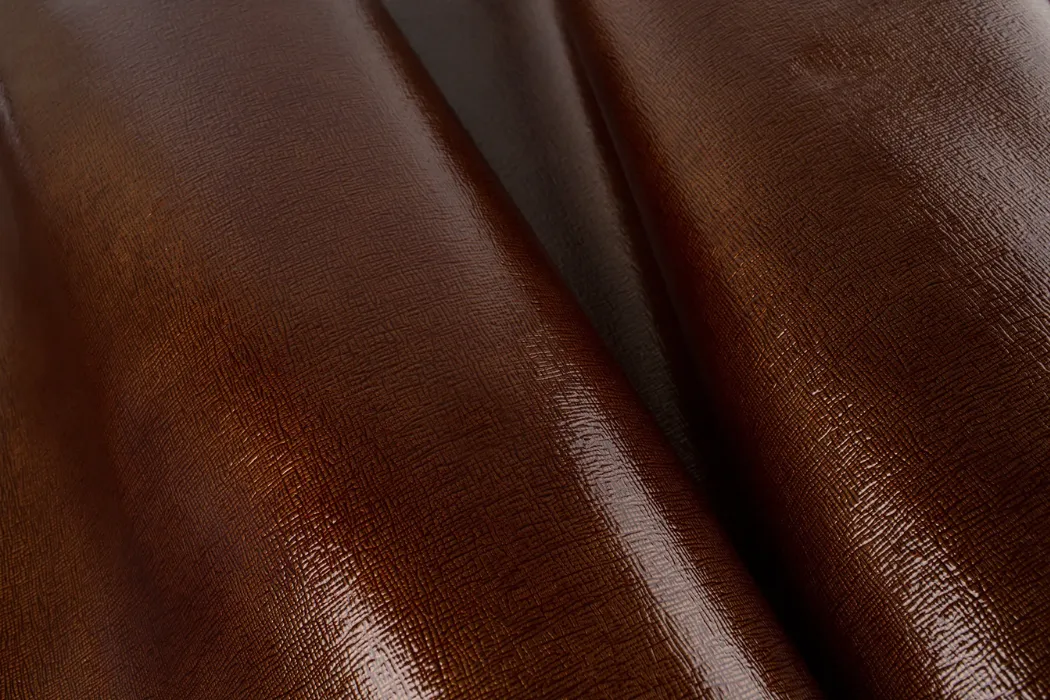
Yes, patent leather is real leather. It typically starts as a high-quality, fine-grain calfskin or cowhide which is then coated with a mixture of polyurethane and acrylic to create a permanent, high-gloss finish. While the surface looks like plastic (because the top layer is plastic), the structural integrity and longevity come from the natural hide underneath, distinguishing it from cheap vinyl imitations.
It looks like plastic. It feels like vinyl. Yet, it carries the price tag of genuine leather. This contradiction confuses thousands of shoppers every year. Is “Patent” just a fancy marketing word for fake? What exactly is hiding beneath that mirror-like shine?
We are going to dissect the anatomy of this unique material. In this guide, we will peel back the glossy layers to explain exactly why patent leather is completely waterproof yet has a Moisture Vapor Transmission Rate (MVTR) of 0 g/m²/24h, and why—despite being real leather—it is infamous for cracking if treated improperly.
How Is Patent Leather Manufactured in Modern Tanneries?
Modern patent leather no longer relies on slow-drying Linseed Oil. Instead, tanneries first subject the hide to extensive buffing to remove the top 10-15% of the grain surface, eliminating natural imperfections. They then apply 2-3 layers of a polyurethane and acrylic solution. This critical step occurs in a clinically dust-free environment and cures at temperatures exceeding 300°F (150°C), permanently fusing the liquid plastic armor to the leather fibers below with a bond strength that must withstand thousands of flex cycles.
The Base Material: Why “Corrected Grain” Is Used
You rarely see “Full-Grain” patent leather because the glossy finish acts like a magnifying glass for imperfections.
- The Sanding Step: Before coating, the tannery takes a cowhide and sands down the top grain. This creates a perfectly smooth, uniform canvas known as “Corrected Grain.”
- Defect Hiding: Because the plastic coating covers the surface completely, tanneries can utilize Grade 3 hides that might have small insect bites or scratches, as these will be sanded away and hidden under the gloss.
The Coating Process: From Linseed Oil to Polyurethane
The technology behind the shine has evolved from a primitive lacquer to advanced polymer science.
- Historical “Japan Black”: In the 1800s, Seth Boyden developed a coating using linseed oil and lampblack. It was thick (over 0.5mm), heavy, and took weeks to dry.
- Modern Flow Coating: Today, hides pass through a “curtain coater” where a liquid waterfall of polyurethane and acrylic falls onto the leather. This creates a thinner, more flexible layer (around 0.15mm) that is less prone to cracking than historical methods.
Evolution of Patent Coatings
| Era | Coating Material | Layer Thickness | Cracking Risk |
|---|---|---|---|
| 19th Century | Linseed Oil & Lampblack | High (>0.5mm) | Extremely High |
| Mid-20th Century | Nitro-cellulose | Medium (0.3mm) | High (Yellows over time) |
| Modern Era | Polyurethane / Acrylic | Low (0.15mm) | Low (With care) |
How Can You Distinguish Real Patent Leather from Faux Vinyl?
The most reliable way to distinguish them is through the Wrinkle Test and Backing Inspection. When you bend real patent leather, it displays fine, organic grain wrinkles beneath the gloss, and any raw cut edges will reveal fuzzy, natural leather fibers. In contrast, Faux Patent (usually PVC fused to fabric) feels dead and rigid like hard plastic; when bent, it creases sharply without grain texture, and cut edges often expose woven fabric threads or white foam.
The Price of Raw Materials
Understanding the cost difference helps explain the retail price gap.
- Real Patent Leather: Raw material costs typically range from $4.00 to $6.00 per sq. ft. due to the tanning and coating process.
- Faux Vinyl (PVC): Synthetic sheets cost manufacturers as little as $0.50 to $1.50 per sq. ft., allowing for mass production of cheap footwear.
The “Fold and Press” Method
Leather mimics skin; vinyl mimics plastic. Test the elasticity.
- The Press: Press your thumb firmly into the surface. Real patent leather will yield and form a “starburst” pattern of tiny wrinkles around your thumb, similar to your own skin. Faux patent will simply depress smoothly like a rubber ball.
- The Fold: Fold the strap in half. Real patent creates soft, rolling curves. Faux vinyl often creates a sharp, angular crease, similar to folding a piece of cardstock.
Real vs. Faux Identification Matrix
| Test Method | Real Patent Leather | Faux (Vinyl/PVC) | Reliability |
|---|---|---|---|
| Backing Inspection | Fuzzy / Suede-like Fibers | Woven Mesh / White Foam | Very High |
| Wrinkle Test | Organic, Fine Grain Lines | Smooth / No Texture | High |
| Smell Test | Musky / Tanned Hide | Chemical / Plastic | Medium |
| Raw Cost | $4.00 – $6.00 / sq. ft. | $0.50 – $1.50 / sq. ft. | High |
Why Does Patent Leather Crack and Peel Over Time?
Cracking occurs due to a fundamental elasticity mismatch between the organic base and the synthetic coating. The underlying leather naturally expands and contracts based on heat and humidity, whereas the plastic topcoat gradually hardens and loses flexibility as plasticizers migrate out. When the leather stretches but the rigid plastic cannot follow, it fractures. This structural failure is most common in temperatures below 32°F (0°C) or areas of high flexion like the toe box.
The “Flexibility Mismatch” Physics
You are essentially gluing two contradictory materials together: one that wants to move and one that wants to stay still.
- Thermal Contraction: In freezing temperatures, the polyurethane coating becomes rigid and glass-like. If you take a step and bend the shoe, the leather flexes, but the frozen plastic snaps instantly.
- Plasticizer Migration: Over a period of 3 to 5 years, the chemical agents that keep the coating flexible evaporate. This leaves behind a brittle shell that cracks at the creases, similar to old rubber bands snapping.
Color Transfer: The Sticky Problem
Patent leather has a unique and frustrating chemical vulnerability: it loves to absorb foreign dyes.
- Irreversible Migration: If you store a light nude patent bag next to a dark denim jacket or a black receipt, the dark dye will migrate into the plastic coating. Once this happens, it is permanent. You cannot clean it off because the stain is inside the plastic, not on top.
- Hydrolysis (The Sticky Feel): If patent leather feels sticky to the touch, it is undergoing hydrolysis. Moisture in the air is breaking down the chemical bonds of the polyurethane. This is terminal “rot” and cannot be fixed, only prevented by dry storage (below 50% humidity).
Is Patent Leather Waterproof or Just Water Resistant?
Patent leather is the only type of leather that can be considered virtually waterproof rather than just water-resistant. The heavy application of the polyurethane/acrylic topcoat completely seals the natural pores of the hide, creating an impermeable barrier against rain, mud, and spills. However, this hermetic seal comes with a significant trade-off: it possesses a Moisture Vapor Transmission Rate (MVTR) of nearly 0 g/m²/24h, effectively turning dress shoes into a “sweat trap” during warm weather.
The Benefit: Easiest Maintenance of All Leathers
Because the surface is essentially plastic, it does not require the complex care of naked leather.
- Wipe-and-Go: Unlike suede which ruins easily, or full-grain which needs conditioning, patent leather can be cleaned with a simple damp cloth. It is immune to water spots.
- Stain Resistance: Liquid spills (coffee, wine) sit on top of the coating and can be wiped away instantly without leaving a mark, provided they are not dye-based.
The Drawback: Zero Breathability
The plastic armor that keeps water out also keeps heat and moisture in.
- The Greenhouse Effect: Your body heat gets trapped inside the shoe. This can lead to discomfort and fungal issues if worn for extended periods in temperatures above 75°F (24°C).
- Structure Softening: Excessive internal moisture and heat can actually soften the inner leather lining, causing the shoe to lose shape faster from the inside out.
How Should You Fix Scuffs and Sticky Residue on Patent Leather?
The secret weapon for fixing minor scuffs on patent leather is simple Petroleum Jelly (Vaseline) or Mineral Oil. Dab a small amount onto a cotton swab and buff the scuff mark; the oils fill the microscopic cracks and restore the shine. If your vintage patent leather feels sticky, it indicates the coating is degrading (hydrolysis). You can temporarily clean this with a mild leather cleaner, but you must never use Acetone or nail polish remover, as they will instantly dissolve the plastic topcoat.
Removing Scuffs with Household Items
You don’t need expensive kits to restore the mirror shine; you just need to lubricate the plastic surface.
- The Eraser Hack: For dark transfer marks (like rubber scuffs on beige heels), take a standard white pencil eraser and gently rub the mark. The friction lifts the foreign rubber off the polyurethane coating without scratching the gloss.
- The Vaseline Polish: Apply a pea-sized amount of petroleum jelly to dull patches or fine scratches. Let it sit for 3-5 minutes to penetrate, then buff it off vigorously with a dry microfiber cloth. This acts like a filler for hairline fractures.
Dealing with “Sticky Shoe Syndrome”
If your old patent leather shoes feel tacky to the touch, the polyurethane is chemically breaking down due to moisture exposure.
- The Cleaning Solution: Mix water with a tiny drop of mild liquid soap. Dampen a cloth (do not soak it) and wipe the sticky residue gently. Dry it immediately with a clean towel.
- Storage is Key: This stickiness is often terminal “rot.” To prevent it in new shoes, always store patent leather in breathable cotton dust bags, never in plastic bags, to allow humidity to escape.
Frequently Asked Questions (People Also Ask)
Does patent leather stretch like regular leather?
Yes, but very minimally. While the leather base has natural elasticity, the rigid polyurethane topcoat acts like a corset, significantly restricting movement to usually less than 5% stretch. You should buy patent leather shoes that fit perfectly right away, as forcing them to stretch will likely cause the coating to crack rather than expand.
Is patent leather considered cheap?
It depends entirely on the base. Traditional Patent Calfskin used by luxury houses is expensive and highly regarded for formal wear. However, the market is flooded with Faux Patent (Vinyl), which is very cheap to produce ($1-$2 per sq. ft) and often peels quickly, giving the “shiny look” a reputation for being low-quality.
Why is my patent leather sticky?
This sticky residue is caused by a chemical process called Hydrolysis. It occurs when humidity breaks down the molecular bonds of the polyurethane coating over time. Unfortunately, this is usually irreversible “rot,” although wiping it with a mild soap solution can temporarily reduce the tackiness.
Is patent leather vegan?
Traditional patent leather is not vegan; it is made from animal hides (cow or calf). However, many modern products labeled as “Faux Patent” or “Vegan Patent” are made 100% from synthetic materials like polyester and plastic, involving no animal products.
Can you iron patent leather?
Absolutely not. The finish is essentially plastic. Applying direct heat from an iron will instantly melt the topcoat, causing it to bubble, burn, and fuse to the iron. To remove creases, try stuffing the item tightly with paper or using a hair dryer on the lowest setting from a safe distance.
Does Vaseline clean patent leather?
Yes. Petroleum jelly (Vaseline) is a safe, effective way to clean and shine patent leather. The mineral oils help to moisturize the coating and fill in microscopic scratches, restoring the mirror-like finish without the risk of harsh chemical damage.
Conclusion: The Glossy Verdict
Patent leather is indeed real leather, but think of it as leather that has undergone “plastic surgery.” It is a material of strict trade-offs: it sacrifices the natural breathability, softness, and patina of full-grain hides in exchange for extreme gloss and virtual waterproofing. It is the ultimate statement material—loud, reflective, and unapologetically synthetic on the surface, yet structurally grounded in organic hide.
For fashion brands, the historical challenge with patent leather has always been the high return rate caused by stiffness and cracking in cold weather.
Ready to upgrade your gloss? At Hoplok, we supply the next generation of “Naplak” (Soft Patent). This crinkled, ultra-soft patent leather is engineered to flex naturally with the foot, effectively solving the traditional rigid cracking issues of standard coatings. Contact Hoplok today to request samples and elevate your next footwear collection with durability that matches the shine.