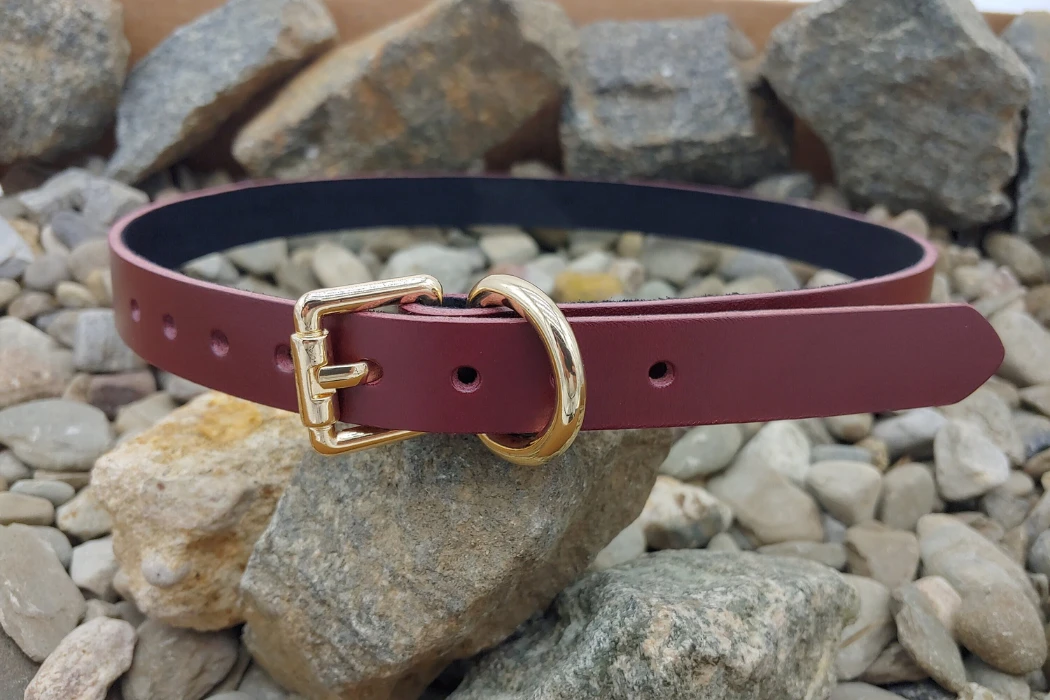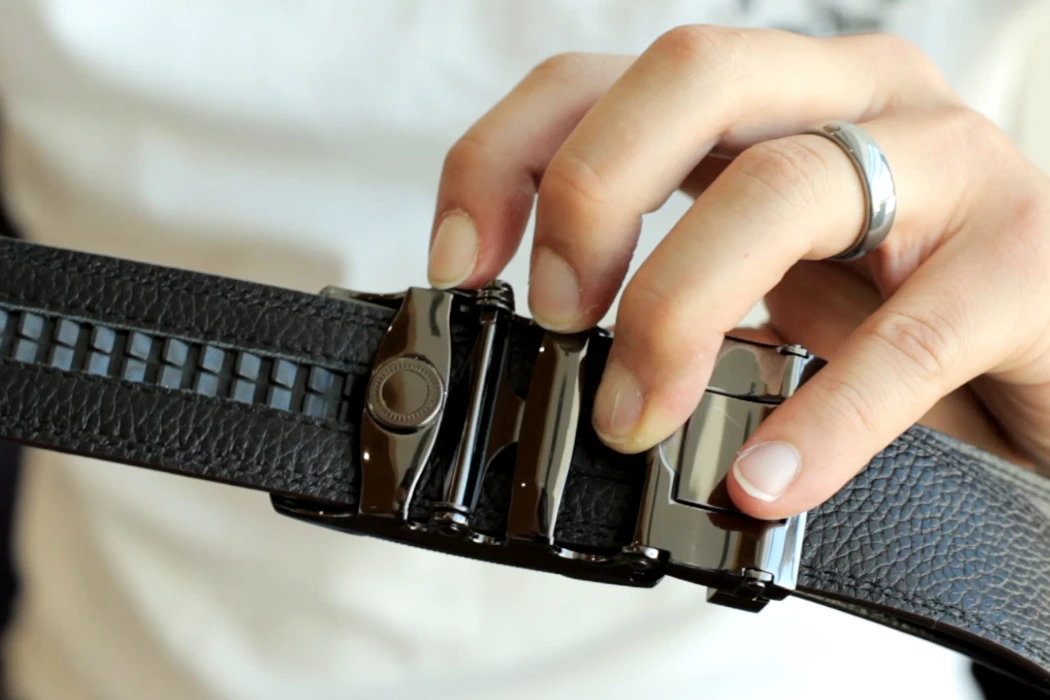
Laser engraving and hot stamping can both create useful belt branding, but neither has a universal service-life advantage. Laser engraving changes or removes material at the marked surface. Blind stamping creates an impression without adding colour; hot foil stamping transfers a decorative layer. Choose between them using the actual leather, artwork, location, appearance and wear requirements.
Key Takeaways for Product Developers
- Compare completed samples before committing to a production method. A deeper logo is not automatically a stronger or longer-lasting logo.
- Tannage matters, but the finish, thickness, temper and construction also affect the result.
- Separate artwork, tooling, setup, processing and sampling charges. No universal order quantity makes one method cheaper.
- Approve legibility and appearance after relevant rubbing and flexing checks. Do not translate a cycle count directly into years of use.
How Do Laser Engraving, Blind Stamping and Foil Stamping Differ?
Laser marking and engraving
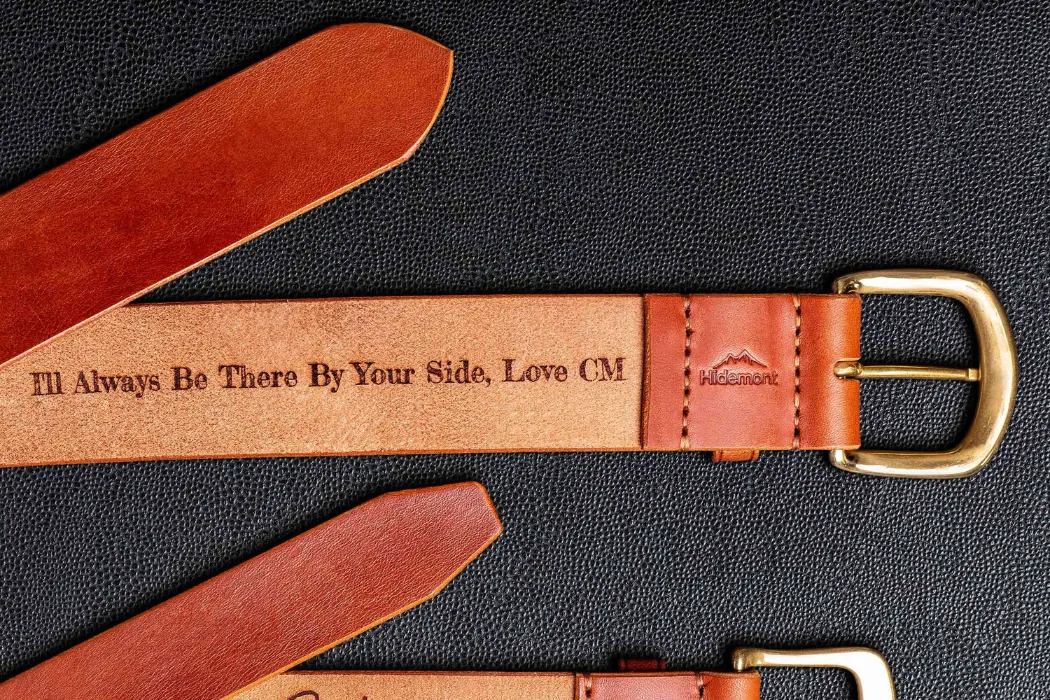
A laser interacts with the surface to produce a visible mark, and engraving can remove material. The colour, depth and edge quality depend on the material and process. It is inaccurate to describe all leather engraving as black charcoal at one fixed depth or as a simple solid-to-gas transition. A natural leather finish and a purpose-designed synthetic engraving material may respond differently.
Equipment maker Trotec’s engraver handbook notes that different leathers react differently and warns against laser processing PVC-containing leatherette. Confirm the complete material composition, including coatings and backing, and follow the equipment supplier’s material and extraction requirements. A generic “PU leather” label alone is not a process qualification.
Blind stamping
A die presses the design into the material without transferring foil or ink. Heat may help develop the desired impression for a particular article, but cold stamping is also possible. Temperature, applied load, contact area, dwell and support need to be established together on the production material. Press force is not the same as pressure at every part of a logo.
Hot foil stamping
Heat and pressure transfer a selected decorative layer. The foil grade and any required bonding system must match the substrate. Blind debossing and foil stamping are therefore different specifications, even when they use related equipment.
| Specification | Laser engraving | Blind stamping | Foil stamping |
|---|---|---|---|
| Visible effect | Surface mark or engraving | Recessed impression without added colour | Transferred decorative colour or metallic effect |
| Main development inputs | Material approval, artwork and equipment settings | Die, material, support and process settings | Foil grade, die, substrate and transfer settings |
| Sample checks | Legibility, residue, appearance and material damage | Definition, recovery and surrounding finish | Coverage, adhesion, rubbing and flex behaviour |
| Depth or colour | Approve actual sample | Approve actual sample | Approve actual sample |
Do not use smell as a ranking of craftsmanship or as proof of material safety. Assess any residual odour against the agreed product requirements and process guidance; this article does not establish an ozone-treatment procedure or a weeks-long airing requirement.
How Should Logo Durability Be Compared?
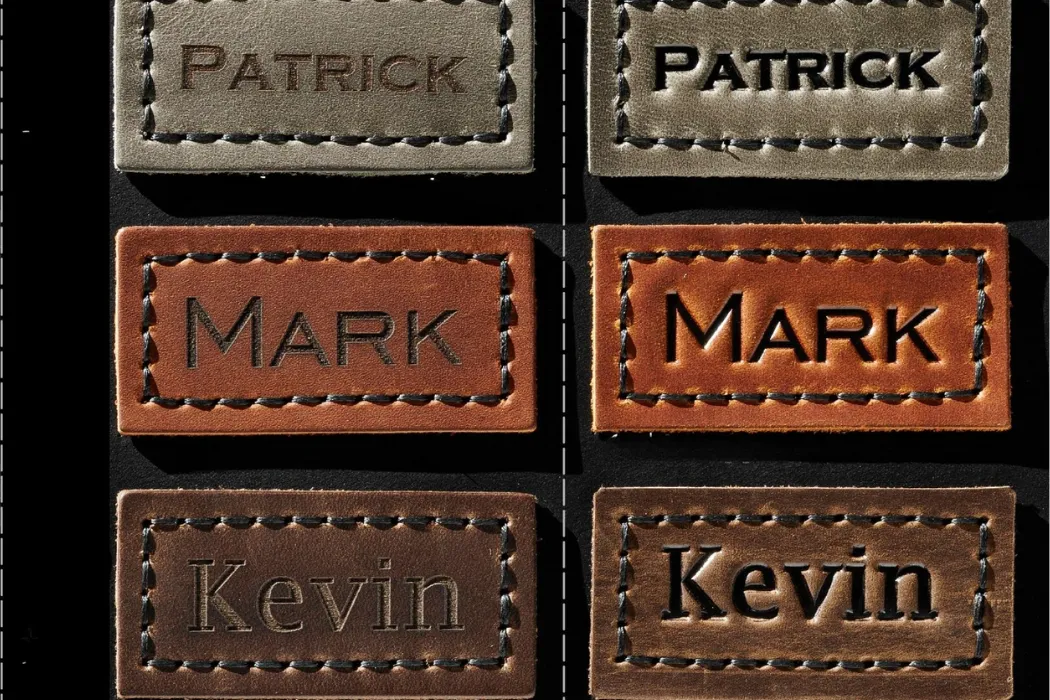
Start with the same production leather and the proposed logo location. A mark on the lining near the buckle experiences different contact from one on the strap face. Finish variation, logo geometry and depth can matter as much as the process name. Neither a recessed mark nor a dark laser mark is guaranteed to remain unchanged throughout the belt’s life.
Set an acceptance brief
Define the required initial appearance: placement, orientation, contrast, edge definition and acceptable variation. Include a reference image and retained sample. For a tactile mark, agree how depth or impression quality will be evaluated rather than using an arbitrary universal depth.
Compare wear under agreed conditions
Use a relevant rubbing and flexing assessment selected with the buyer or laboratory. Record the material, method, conditions and observations, including loss of legibility, colour transfer, finish damage or foil loss. Compare like-for-like samples and keep the results with the approval record.
A test report needs a defined method and acceptance criteria. This article does not establish a Hoplok modified-Martindale protocol, a 10,000-cycle stamping result or a one-to-two-year laser lifespan. Laboratory cycles cannot alone provide a calendar-life promise.
Check the final construction
Evaluate the logo after the intended assembly and finishing steps. A swatch can screen an option, but the assembled strap can reveal bending, contact or placement issues that the swatch does not represent. Recheck when material or logo position changes.
Separate brand style from durability evidence
Blind debossing can suit a discreet tactile identity; a contrasting mark or foil can suit other design briefs. Historic brand styling is not proof that those brands never use lasers, and an “heirloom” marketing position does not technically prohibit a particular process. Make the selection from approved product evidence.
How Do Tooling and Order Quantity Affect Branding Cost?
Compare written quotations for the same artwork, dimensions, placement, leather and quantity. Laser engraving generally avoids a dedicated logo die, but artwork preparation, fixtures, setup and sampling can still be chargeable. Stamping usually needs tooling for a fixed logo, while its processing cost depends on the operation and inspection requirements.
Separate fixed and repeat costs
Ask for artwork preparation, die or fixture, sample development and repeat-order setup as separate items. Then compare per-piece processing and the treatment of rejected pieces. Do not assume free digital resizing, a fixed brass-die price or a universal laser charge per minute.
An illustrative calculation can help: a hypothetical tooling charge of $100 spread over 500 accepted units is $0.20 per unit, before processing and other charges. These are arithmetic assumptions, not a Hoplok quote. A break-even quantity also needs comparable processing costs, so the calculation alone cannot establish a 100-piece threshold.
| Cost item | Question for the quotation |
|---|---|
| Artwork | Which preparation and revisions are included? |
| Tooling and fixtures | What is required for each size, design or placement? |
| Sampling | Which material and finishing trials are included? |
| Processing | Is the rate tied to logo dimensions, coverage, quantity or inspection? |
| Repeat orders | Which setup or maintenance charges can recur? |
| Rejected pieces | How are approval failures and production defects handled? |
Consider variable data and fixed logos
Digital artwork can make laser processing practical for changing names or serial information, subject to material and workflow approval. Interchangeable type and other marking methods also exist, so laser is not the only possible personalization method. A fixed batch logo does not make stamping mandatory or guarantee perfect consistency.
Record tooling terms
Record ownership, permitted use, storage, maintenance, replacement and repeat-order setup charges before paying for a die. Confirm who holds it and how it can be transferred or retired. Tooling payment alone does not establish lifetime maintenance or waive future charges.
Order minimums for the finished belt are separate from branding economics. Hoplok’s minimum orders are 300 genuine-leather belts or 1,000 PU belts; sample and tooling arrangements should be confirmed for the project.
How Do Tannage and Surface Finish Affect the Choice?
Tannage is one input, not a complete decision rule. A firm vegetable-tanned article may hold a different impression from a soft chrome-tanned article, but neither category has one universal stamping response. Oils, waxes, pigments, coatings, grain texture, thickness and support all influence the result.
Test the specified leather article
Use the actual supplier reference and finish, preferably in each relevant colour. A stamp developed on unfinished tooling leather may not transfer directly to a finished belt strap. A colour change caused by heat or pressure may be desirable for one design and unacceptable for another.
Check finish compatibility
Heat or excessive load can damage a finish or leave unwanted marks. Establish settings from the actual material and equipment guidance rather than applying a universal temperature limit to every chrome or vegetable leather. Do not treat a soft leather as automatically unsuitable for debossing or a firm leather as automatically safe to engrave deeply.
Validate adjustments before adopting them
If the initial result lacks definition, review the die, artwork, support, material and method together. Any stabilizer, coating or bonding agent changes the material system and needs approval. This article does not confirm that Hoplok routinely sprays setting chemicals or uses a proprietary deep-laser solution.
Synthetic materials also require article-specific checks. A decorative finish can affect both thermal stamping and laser suitability. Identify composition and use the process supplier’s guidance before trials; do not substitute visual similarity for a material specification.
- Record the leather or synthetic article, thickness and colour.
- Record the finish and any relevant treatment.
- Keep a traceable logo sample and approved settings with the production record.
- Review the result after the intended assembly, storage and wear checks.
How Should Artwork Be Prepared for Each Method?
Evaluate the logo at its finished size. A clean vector file helps define geometry, but it does not guarantee that every thin stroke, small letter or tonal effect will reproduce on textured leather. Equipment, tooling, substrate and the selected appearance determine the usable detail.
Approve strokes and spaces on a sample
Provide dimensions, placement and the smallest text at actual size. Ask the processor to review fine strokes, narrow gaps and large solid areas. A single minimum such as 0.2 mm or 0.5 mm cannot be imposed on every die and leather combination. Check whether letters fill in or lose definition after the relevant wear assessment.
Distinguish a graphic from a functional code
A QR code or barcode must scan reliably in the proposed use. Review size, contrast, quiet areas, surface curvature and location, then verify the finished product with the intended reading method. Laser engraving does not automatically make a code readable, and stamping should not be declared universally impossible without testing the actual design.
Review tonal designs
Laser processing can reproduce some tonal effects through artwork and process control. A conventional single-level blind stamp principally communicates through shape and relief. If a photographic or shaded design is essential, ask for a representative trial rather than assuming that a screen preview is a manufacturing proof.
| Artwork feature | Approval task |
|---|---|
| Small lettering | Read the finished-size sample before and after relevant wear |
| Thin lines and gaps | Check continuity, separation and material damage |
| Large solid logo | Check evenness and surrounding finish |
| QR or barcode | Verify the actual code on the finished product |
| Variable names or data | Approve data handling, layout and sample range |
Excessive local pressure or engraving can damage the strap. The remedy is a validated design and process window, not a universal “safe” depth that applies to every material and logo location.
When Is Foil Stamping Suitable for Belt Branding?
Foil stamping can provide a metallic or coloured identity where the selected transfer system works with the leather and intended use. It needs compatibility and wear checks, but it is not inherently limited to a few months of service. A packaging foil specification should not be assumed suitable for a flexible belt.
KURZ lists hot-stamping applications for genuine and synthetic leather. Its transfer-process description distinguishes the transferred lacquer package from the carrier film. It is therefore misleading to describe every finished foil logo as a rigid polyester film left on the leather. These supplier descriptions establish application possibilities, not a durability guarantee for a Hoplok belt.
Specify the complete transfer system
Identify the foil grade, substrate, finish and any bonding requirements with the processor. Approve coverage, colour and edge definition on the actual surface. Changes to the leather finish or foil grade should trigger review of the approved result.
Check flexing and rubbing
Inspect for cracking, loss of coverage, transfer or loss of adhesion under agreed conditions. Compare the initial sample with the tested one. This article does not establish 500-cycle failure, 20,000-cycle blind-stamp performance or a conversion from flexing cycles to months of service.
Choose location through use assessment
The keeper and lining also experience contact and movement; neither is a guaranteed protected zone. Evaluate the proposed location with the assembled belt. A metal badge is another design option, but its attachment, edges, finish and contact with garments require their own checks rather than a claim of permanent durability.
Choose blind debossing when its appearance and tested performance fit the brief; choose foil when the approved effect and transfer system meet the brief. The decision should be documented in the sample approval rather than framed as a universal ban on foil.
Frequently Asked Questions
Will laser engraving weaken the leather belt?
It can damage the material if the process is unsuitable or excessive. Evaluate the marked strap and relevant performance requirements on the actual construction. No universal 0.2 mm safe depth or 0.3 mm failure threshold is established here.
Can I change my logo size without a new die?
Digital artwork can be resized for laser processing, but preparation and validation may still be chargeable. A different stamped logo size generally requires suitable new or revised tooling. Confirm the tooling and sample charges in the quotation.
Can an incorrect logo be removed?
Treat marking as a process that may permanently change the surface. Do not assume an incorrect mark can be polished or heated away without damage. Agree whether a rejected piece can be reworked, repurposed or must be rejected; any rework needs buyer approval.
Which method lasts longer?
There is no universal winner. Compare the specified materials, logo location and appearance after agreed wear checks. A cycle count alone does not establish a guaranteed number of years.
Approve Branding as Part of the Complete Belt
A useful branding specification connects artwork, material, location, process and acceptance criteria. Resolve appearance and legibility on the sample, then keep the approved reference with the production instructions. Recheck changes instead of relying on a general claim that one method always lasts longer.
Prepare a focused sample request
Send the vector artwork, finished dimensions, proposed location, leather reference and required visual effect. Ask which methods can be developed for the project, what testing is appropriate, and what sample and tooling charges apply. This article does not offer free comparative testing or shipment of free samples.
Discuss the brief through Hoplok’s custom leather belt service. Belt sampling generally takes 2–3 weeks and bulk production 60–90 days, excluding shipping, subject to project confirmation. Approve the actual branding result before bulk production.