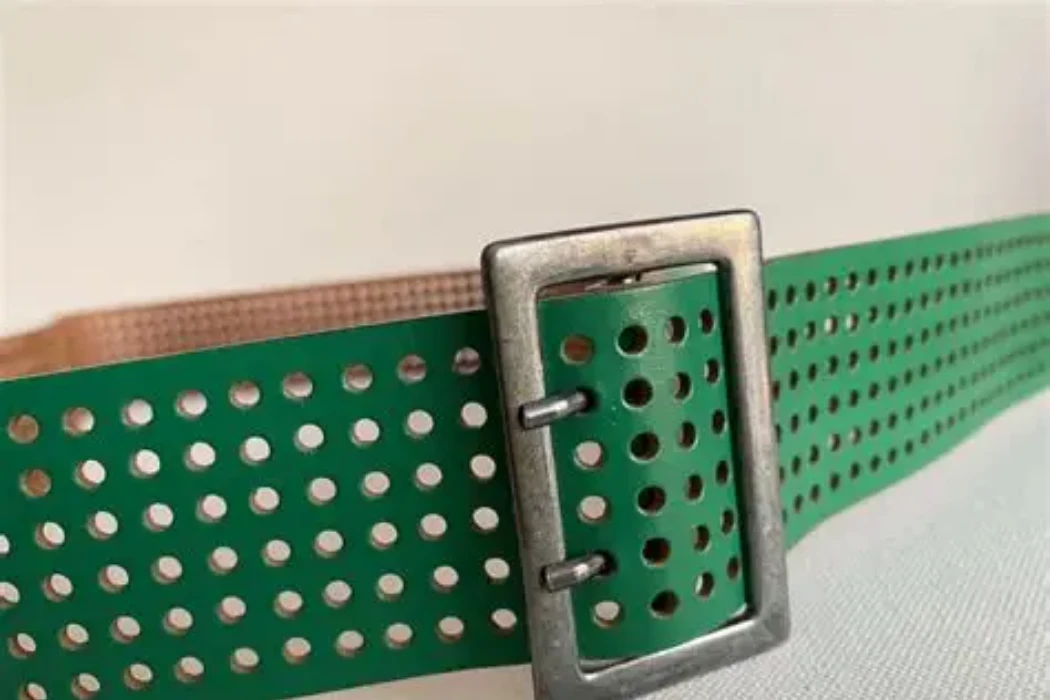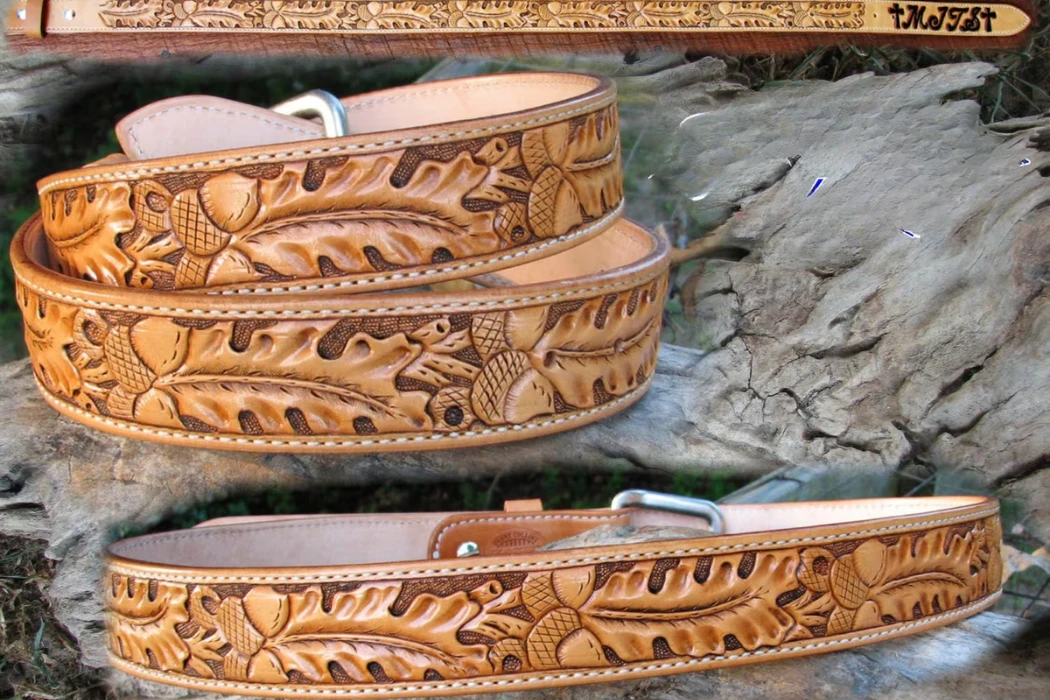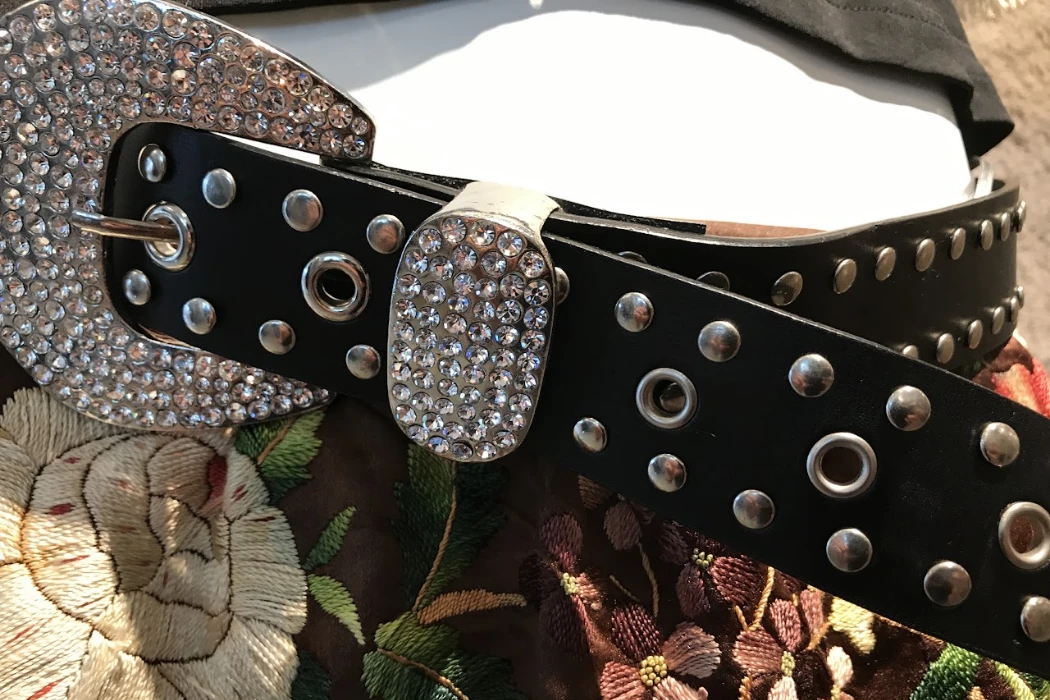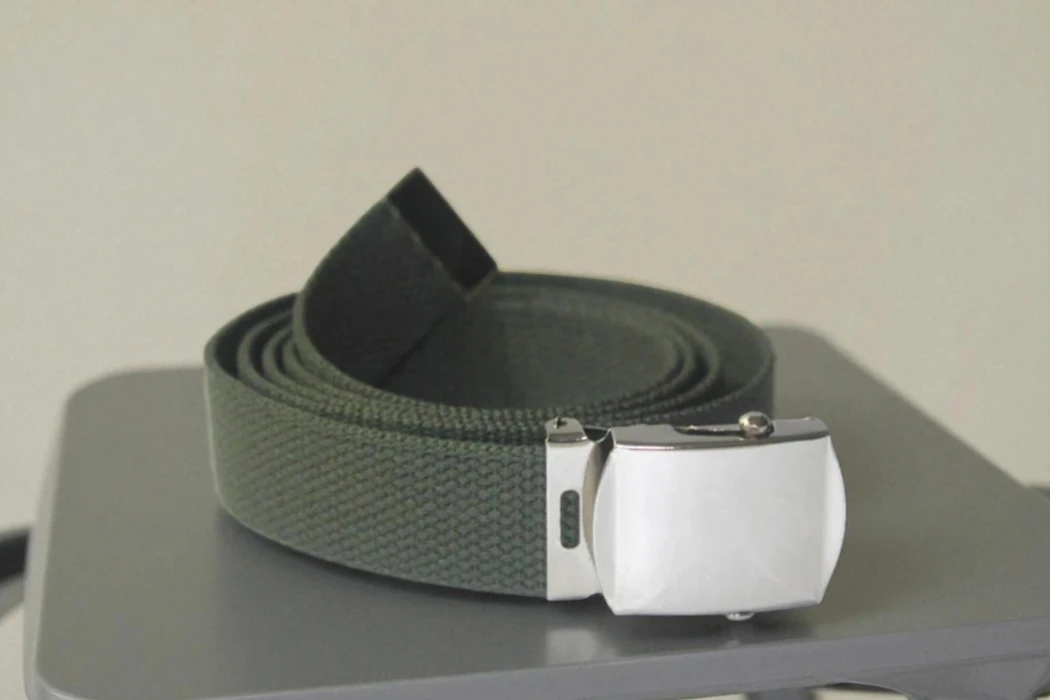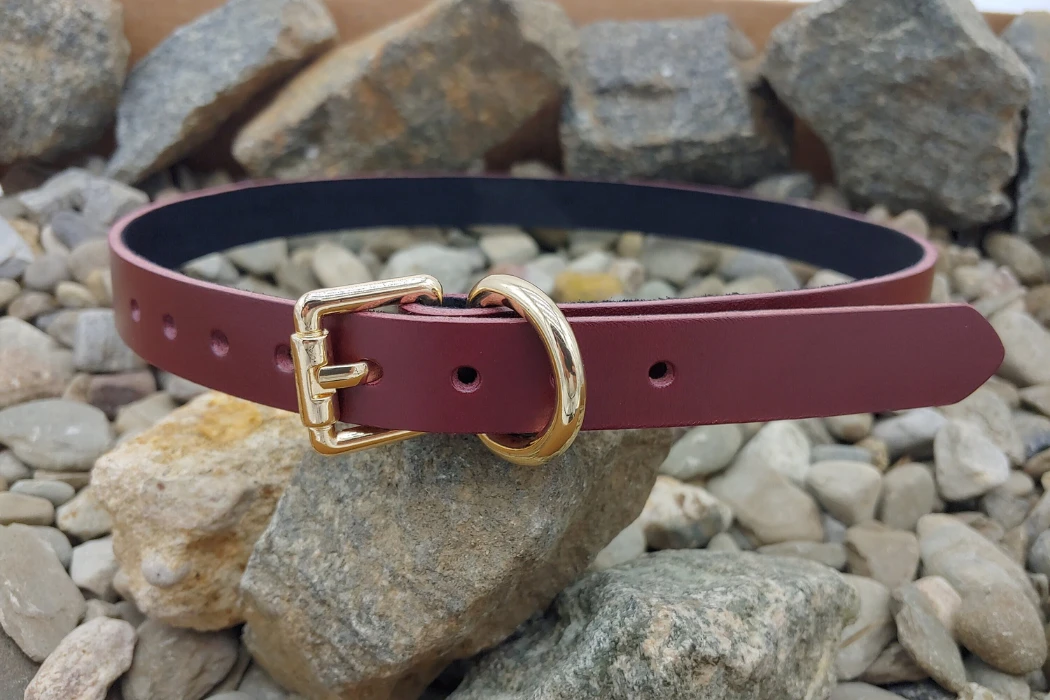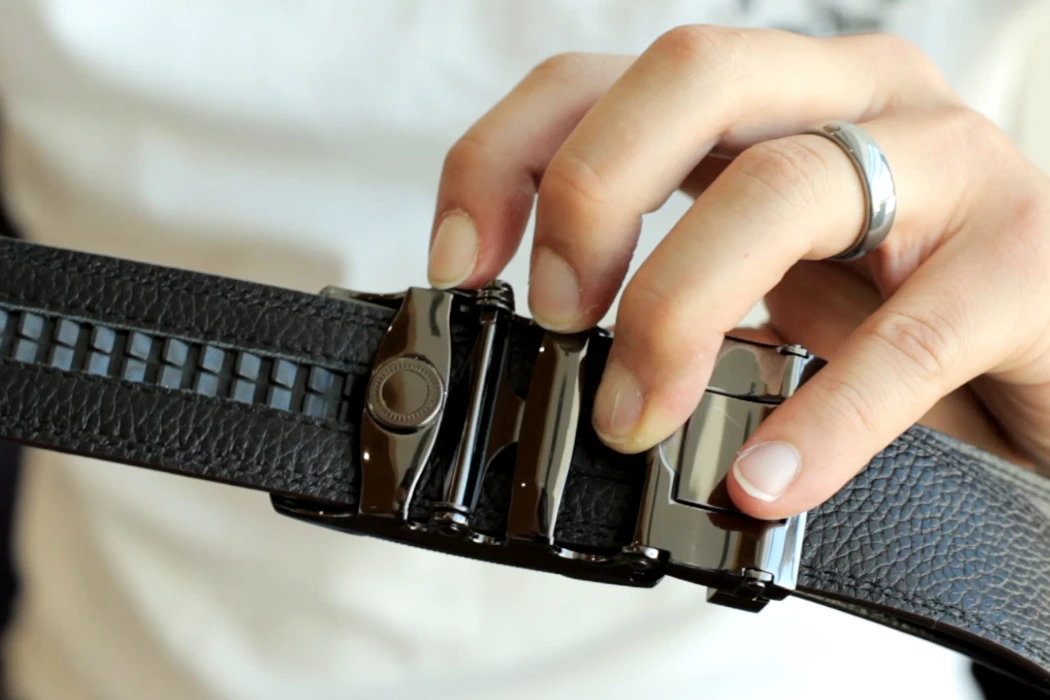
Western belt buckles often use decorative plates, engraved frames or coordinated buckle sets, while an everyday belt may use a simpler frame or other discreet closure. These are style groupings, not fixed technical categories. A Western design can have a prong, and a plain plate can use a hidden hook.
For a brand developing a collection, the practical differences are the visual brief, hardware interface, decoration process and quality checks. A large buckle face does not automatically require a wider strap, and Western styling does not require a snap attachment in every design.
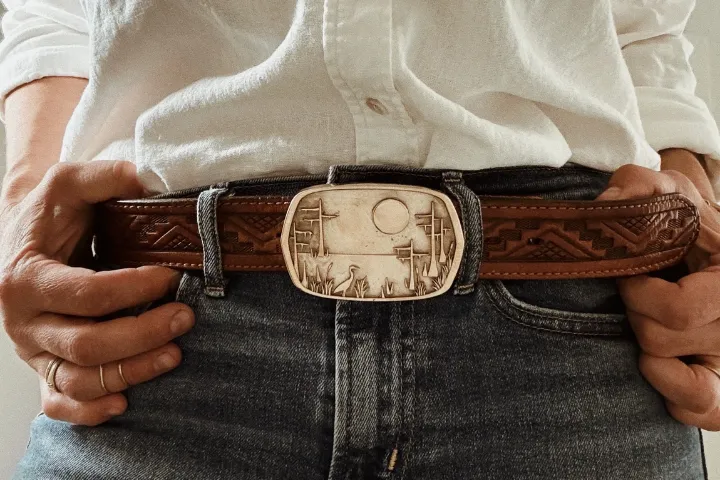
Define the collection’s version of Western styling
Western-inspired ranges may use scrolling, rope borders, floral tooling, contrasting metal tones or a coordinated buckle, keeper and tip. The range can be bold or restrained. Specify the elements your customer expects rather than relying on the label “Western” to define the product.
Decorative trophy buckles have a distinct presentation and may carry event or award details. That is different from producing a fashion buckle with a Western motif. Do not imply that a decorative product is an official award or an authorized branded item unless the program provides that authorization.
For an everyday range, identify the desired level of prominence: a narrow polished frame, a broader casual roller or a plain plate. “Standard buckle” is too broad for an RFQ because it does not identify the closure, size or attachment.
Compare the actual hardware architecture
| Feature | Decorative plate example | Simple frame example |
|---|---|---|
| Visible face | Broad area for relief, engraving or a motif | Open frame exposes more of the strap |
| Common closure arrangement | Rear hook engaging a belt hole | Prong passing through a belt hole |
| Fixed attachment | Rear bar or bail joined to a suitable belt end | Frame bar joined to a suitable belt end |
| Main sample checks | Hook placement, reverse-side comfort, curvature and balance | Prong seating, inside edges, strap passage and keeper clearance |
These are examples rather than definitions of all Western and everyday buckles. Inspect the reverse side and obtain a dimensional drawing for the chosen part. A front photograph cannot show whether the hook, bar or clamp fits your intended strap.
Match the strap to the buckle’s usable opening
The nominal strap size is separate from the buckle’s overall width and height. A broad plate may accept a comparatively narrow strap through its rear bar. Check bar width, depth, fold thickness, hook clearance and the position of the adjustment holes. Do not select the strap from the decorative face measurement.
For interchangeable designs, screws or snaps can provide a removable fold when engineered for the assembly. A stitched or riveted connection may suit a belt intended to remain assembled. No attachment is automatically higher quality; the choice changes serviceability, appearance and inspection needs.
Test keeper position and tail length with each buckle. If a plate includes a keeper or a decorative tip set, allow for its clearance and interaction with trouser loops. Changing from a compact frame to a longer plate may change the fitted size even on the same strap.
Evaluate decoration as a production process
An engraved appearance can come from different routes, including cast relief, stamping, machine engraving or hand work. Ask which process is quoted. “Handcrafted” should not appear in the product description simply because the design looks intricate.
Approve artwork at actual size. Check letter spacing, small recesses, raised edges and any filled color. A polished prototype can hide details that fill in during production finishing. Review the final metal and coating combination rather than approving only an unfinished master.
For applied ornaments, record the attachment method and inspect movement, exposed backs and clothing contact. If stones or inlays are part of the design, identify the actual material and retention method. A turquoise-colored accent does not establish that it is natural turquoise.
Specify metal and finish without a weight-based quality rule
A buckle can be cast from zinc alloy, made from brass or steel, or use other declared materials. A plated surface may look like a precious metal without being solid precious metal. Material declaration, geometry, manufacturing quality and finish performance are more useful evidence than weight.
Montana Silversmiths describes brass and zinc-alloy bases with plated finishes in its product information. This is a useful example of why Western buckles should not be described as universally sterling silver or why zinc alloy should not automatically be dismissed as unsuitable.
Agree a finish reference and relevant test requirements. Inspect recesses, edges, the reverse face and the moving connection. A clean decorative front does not compensate for a rough hook or a weak attachment.
Build care and packing around the approved finish
Do not give every silver-colored buckle instructions to use silver polish. Lacquer and plated finishes may be damaged by abrasive polishing. The same manufacturer’s care guidance warns against cleaners that remove its protective coating. Your own product needs instructions from its finish supplier.
Review packing so the buckle does not rub against the leather during transport. Raised decoration, tips and keepers can create contact marks if compressed against the strap. Trial the proposed wrap, divider or box with the finished belt and inspect it after the agreed transport simulation.
Send two complete briefs if you are comparing styles
Include a front and reverse buckle reference, strap dimensions, leather construction, finish, decoration artwork, size range and packing. Ask for tooling and unit cost separately. Compare quotations at the same quantity and acceptance requirements; an ornate custom plate and an existing simple frame have different development inputs.
For Hoplok belt development, the confirmed MOQ is 300 leather belts or 1,000 PU belts, with 2–3 weeks for belt samples and 60–90 days for bulk production. Custom hardware feasibility, artwork permissions, color splits and the project schedule need to be settled with the quotation. A completed sample should decide whether the chosen style works for the collection.
For an interchangeable range, use the custom strap compatibility checklist.