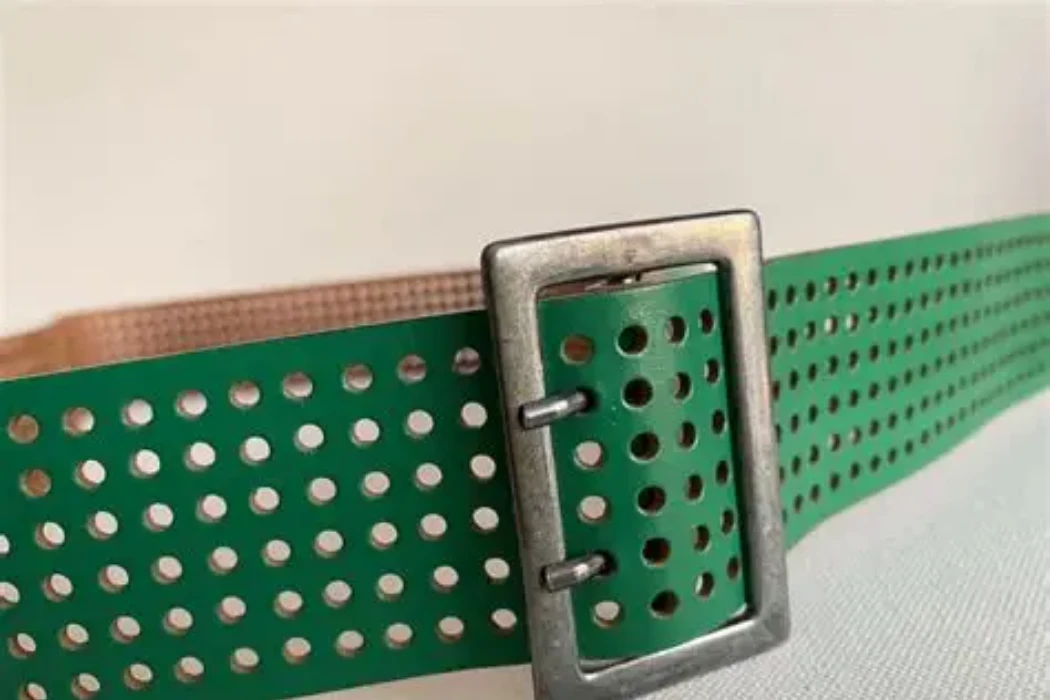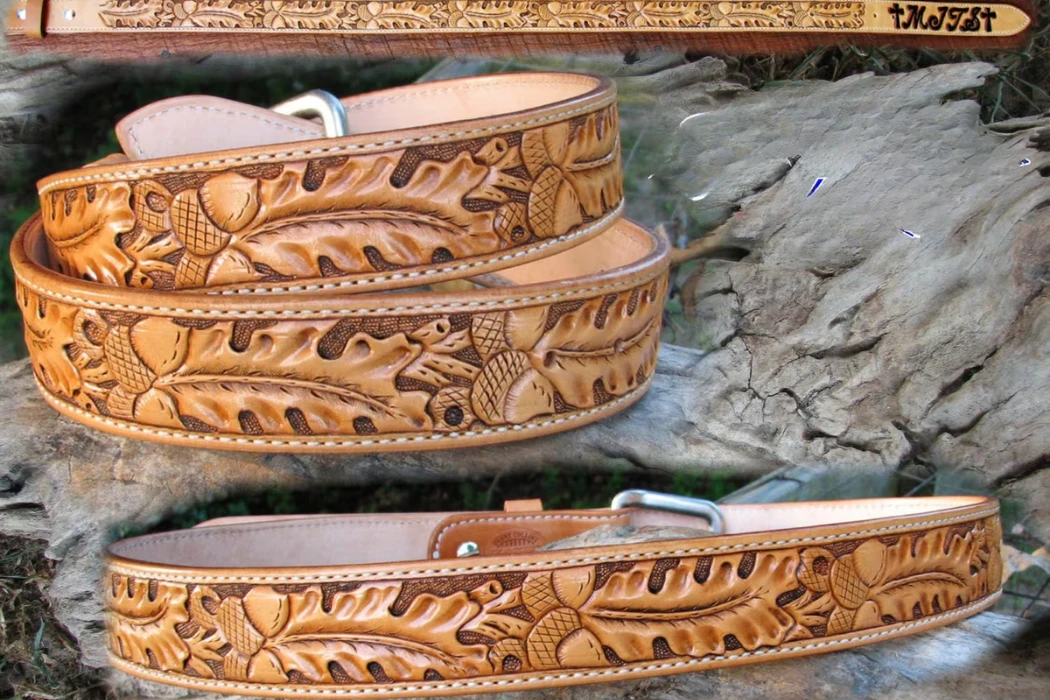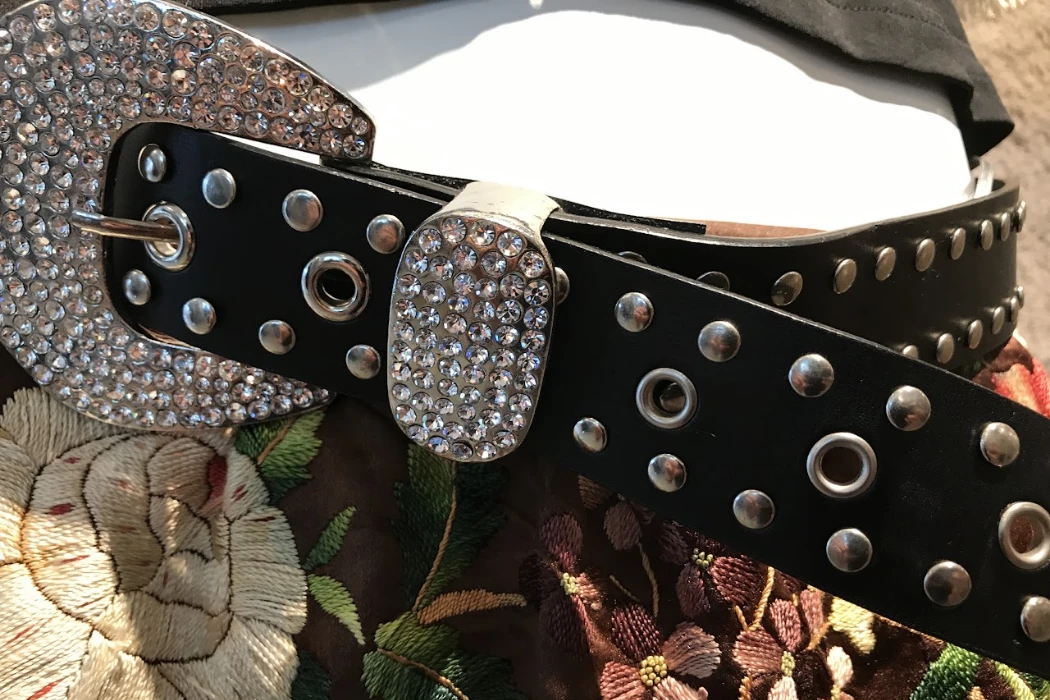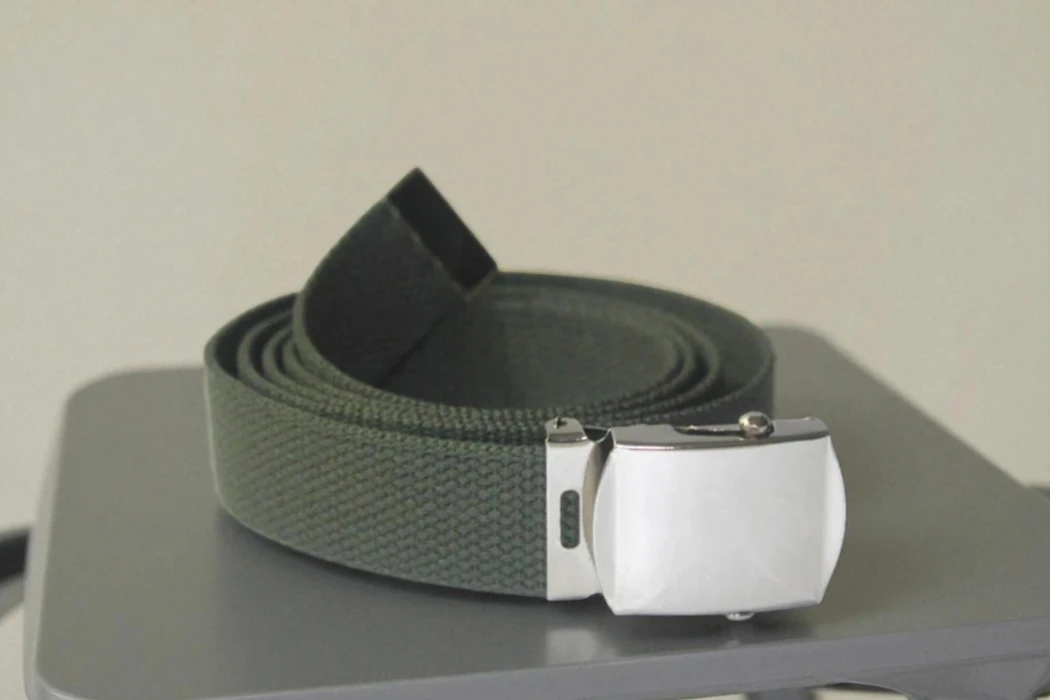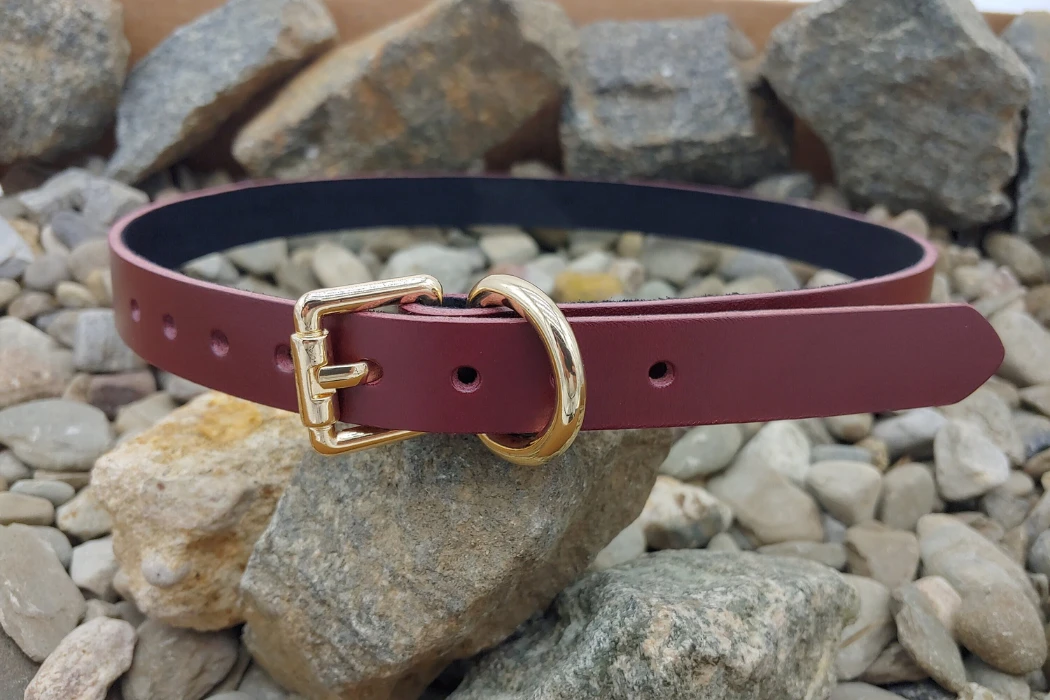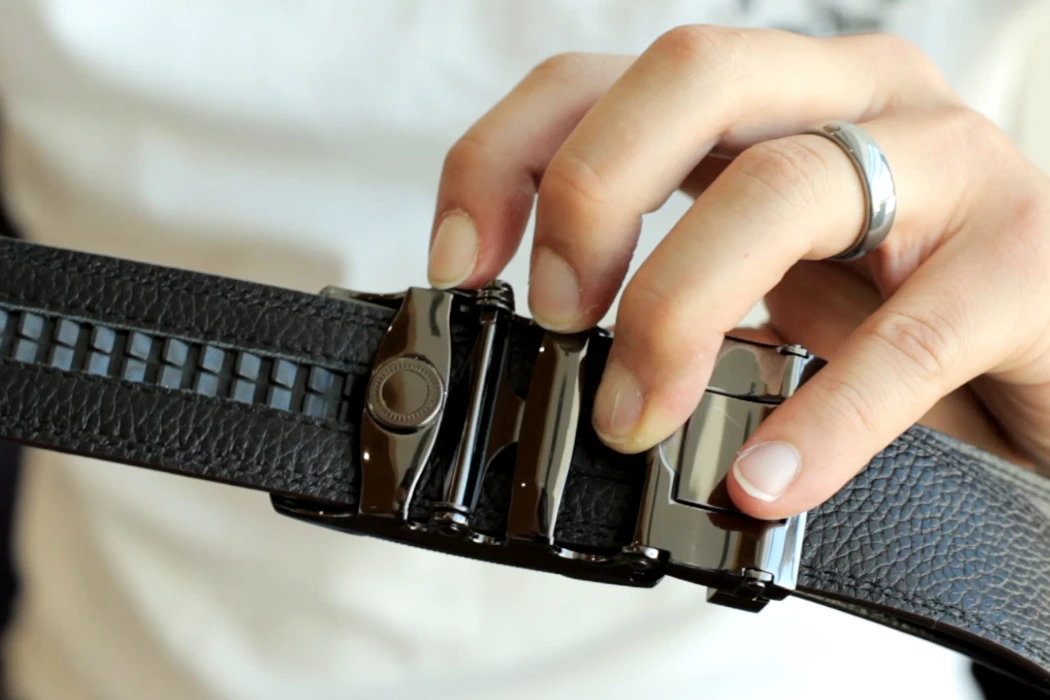
A ratchet belt, a reversible belt and a hand-braided belt can share a retail display while requiring different development work. The track must fit its buckle, a reversible assembly must work on both faces, and a braid must hold its shape at the intended wearing tension.
For buyers, specialty sourcing means defining the mechanism, materials and fit before agreeing the quality plan. This guide covers construction choices, sizing, testing and compliance. Review the belt MOQ guide alongside the technical brief so that colour, hardware and material decisions are priced together.
What Counts as a “Niche” or “Specialty” Belt in OEM Manufacturing?
Specialty is a commercial description, not a regulated product grade. It usually describes a design whose mechanism, decoration or construction needs attention beyond a conventional pin-buckle strap. The actual specification determines the manufacturing route.
Defining the Main Specialty Categories
Ratchet belts use a compatible track and locking mechanism; reversible belts present two wearable faces; braided belts use interlaced strands. Western, golf and studded designs describe styling or intended use and can overlap with these constructions.
Waist-cinching fashion belts and ordinary apparel suspenders are different products. Specify which product is required rather than using “suspender belt” ambiguously. Hoplok accepts ordinary apparel suspenders on a design-specific quotation basis. This guide concerns clothing accessories.
How Niche Production Differs From Standard Dress-Belt Runs
A specialty order may need an additional hardware supplier, embossing die or assembly sequence. A sample can look correct while exposing a fit problem only when the buckle is operated or the belt is worn. Include those actions in sample approval.
Identify the critical interfaces: strap width and buckle opening, thickness and clamping space, track and pawl, or braided end and fastening. A drawing and an approved physical sample should describe the same assembly.
Why Specialty Styles Can Change Lead Times and MOQs
New tooling, non-stock finishes and material minimums can affect quantities and timing. A standard mechanism with custom branding may need less development than an entirely new closure; “specialty” alone does not establish a longer lead time or higher minimum.
Ask the supplier to separate development, component procurement, sample approval and bulk production. Confirm what the quoted quantity includes and which design changes would require a revised quotation.
Which Materials Work Best for Specialty Belt Construction?
Select material for the required appearance and assembled performance. Grain description, tannage, finish, thickness and reinforcement answer different questions. A single material label cannot predict a finished belt’s life.
Full-Grain, Corrected-Grain and Split Leather for Structured Builds
Full-grain leather retains the grain surface without corrective removal. Corrected-grain leather has had surface correction, while a split comes from a separated layer. “Top-grain” is used inconsistently in commerce and can refer broadly to the grain-bearing layer; it is not a reliable fixed quality tier below full-grain.
Ask for a cross-section description and thickness specification. A laminated strap can combine different materials and perform well when designed appropriately. Split leather is not defined by being thin, nor is full-grain automatically suitable for every track, fold or braid. See the belt leather terminology guide.
Embossed Animal Patterns and Genuine Exotic Skins
A crocodile- or snake-pattern emboss can be applied to a suitable bovine leather or synthetic surface. The pattern does not identify the animal species. Describe the substrate clearly on the specification and in consumer-facing copy.
Hoplok does not offer genuine exotic skins. For an animal-pattern project, provide artwork or a reference and ask about an embossed ordinary leather or synthetic option. Do not label embossed cowhide as genuine crocodile leather.
Vegan, Recycled and Vegetable-Tanned Options
Vegetable-tanned leather is animal leather treated with vegetable tanning materials; it is not vegan. A non-animal material can include polymers, textile backing and plant-derived content. Verify the full composition before making a vegan or plant-based claim, including other components where the claim covers the whole product.
Recycled content also needs a defined material, percentage basis and supporting evidence. Bonded leather containing leather fibres is distinct from intact hide leather. No one of these labels establishes lower environmental impact or better durability across all products.
| Material option | Useful specification questions | Sample checks |
|---|---|---|
| Full-grain leather | Tannage, finish, thickness and acceptable natural marks | Flex, appearance and fit with hardware |
| Corrected-grain leather | Surface correction, coating and embossing | Finish adhesion and repeated bending |
| Split leather construction | Layer structure, coating and reinforcement | Edge integrity and joint performance |
| Embossed ordinary leather | Actual species, pattern scale and registration | Pattern consistency after finishing |
| PU or other synthetic | Coating, backing and composition | Flex, abrasion and ageing appropriate to use |
| Recycled-content construction | Content definition and evidence | Performance of the finished composite |
| Vegetable-tanned leather | Suitability for tooling and intended finish | Colour transfer, flex and moisture response |
How Do Buckle Mechanisms Differ Across Belt Types?
Ratchet Buckle Mechanics and Track Adjustment
A ratchet belt commonly uses a toothed or grooved track on the strap and a locking element in the buckle. It avoids conventional pin holes, but describing the mechanism as “toothless” is misleading. Track material, attachment method, adjustment spacing and release action vary by system.
Develop the buckle and strap as a compatible set. Test insertion, retention, release and repeated operation on the actual assembly. Kore’s fashion belt information illustrates a proprietary track system; its dimensions are not an industry-wide specification.
Reversible Belt Swivel and Two-Face Systems
A reversible belt may use a rotating buckle and a strap finished differently on each face. Two bonded layers are one construction option, not the definition of every reversible belt. Confirm how the buckle rotates and locks, and whether the wearer can change faces without damaging the strap.
Inspect both surfaces, edges and the buckle-end fold. Ensure the fastener remains secure in either orientation. A hidden reinforcement may be useful in a particular design, but a universal anchor plate at the strap tip is not required.
Western and Golf Belts: Snap and Screw Attachments
Some belts use snaps or screw posts at the buckle-end fold to support buckle replacement; others have a permanent attachment. Neither a Western label nor a golf label dictates the fastener. Compare Western and standard buckle constructions using the actual drawing.
Check the fastener’s engagement, clearance and resistance to loosening. A screw attachment is not automatically more secure than a snap. Specify any replacement instructions and verify that the intended replacement buckle fits the strap assembly.
Buckleless and Wrap-Style Closures
Buckleless can mean no visible conventional buckle, rather than no hardware at all. A design may use ties, hooks, snaps, elastic or a concealed closure. Magnets are hardware and should not be described as a metal-free solution.
A wrap belt can be adjustable through overlap or tying. Specify the wearing range, tail arrangement and closure security. Claims such as metal-free or nickel-free require a component-level check, not an inference from the product name.
| Mechanism | Interface to specify | Approval action |
|---|---|---|
| Ratchet | Track, locking element and strap attachment | Operate across the usable range |
| Reversible | Swivel, lock and two-face strap | Reverse, fasten and wear both ways |
| Interchangeable buckle | Fold, opening and snap or screw fixing | Remove and refit as instructed |
| Pin buckle | Prong, holes and frame clearance | Check all specified adjustment positions |
| Wrap or concealed closure | Overlap, tie or hidden fixing | Check fit, retention and comfort |
What Are the Manufacturing Steps for Braided and Woven Belts?
Strand Cutting and Lace Preparation
Strands should be specified by material, width, thickness, finish and permitted joins. Cutting direction and material selection affect consistency, but not every lace must come from a prescribed location along the hide. Review stretch and visible defects on the material actually proposed.
Prepare sufficient sample lengths to show how strand variation accumulates across a complete belt. Very short swatches cannot demonstrate finished width, straightness or the behaviour of the end fittings.
Braiding Patterns: Round Braid and Flat Weave
Round and flat constructions can use different strand counts, patterns and methods. Some are made by hand and others by equipment; neither shape alone determines the manufacturing method. The approved pattern should define spacing, tension, width and visual regularity.
The braided belt construction guide provides more context. For the purchase order, use a photographed or retained sample to identify the agreed pattern instead of relying only on a braid name.
Core and Reinforcement Materials Inside the Braid
A braid can be coreless or built around a supporting core. A core may help control stretch or shape, but can also change bulk and flexibility. Identify its material and continuity where present, including how it terminates near the buckle and tip.
Check the assembled belt under the agreed wearing conditions. Excessive strand movement, uneven elongation or a loose end connection may matter more than whether a core appears in the bill of materials.
Edge Sealing and Finishing
Lace edges may be finished before braiding, after assembly or through a combination suited to the material. Burnishing and edge paint are different options; they are not compulsory consecutive steps for every braid.
Inspect colour transfer, tackiness, cracking and finish buildup between strands. Confirm that finishing does not prevent normal movement or conceal a weak end attachment.
How Are Western and Golf Belts Engineered for Durability?
Edge Profiles and Reinforced Stitching
Decorative embossing, edge shape and stitching should work with the strap’s thickness and flexibility. More rows of stitching do not automatically produce a stronger belt. Needle, thread, spacing and edge distance need to suit the construction.
For a golf-oriented range, evaluate comfort during movement and colour transfer to clothing. For a heavily decorated Western style, inspect the pattern and hardware near flex points. These are use-specific checks, not universal width or thread prescriptions.
Interchangeable Buckle Plate Systems
Specify buckle opening, attachment geometry and any plate or keeper clearance. A large decorative buckle can introduce a different contact area and balance from a small dress buckle. Check it on the body as well as on a flat inspection table.
Where interchangeability is advertised, approve the replacement process and compatible buckle dimensions. Agree an operation test appropriate to the design; an invented universal cycle count does not establish durability.
Backing Layers for Flex and Comfort
A lining or backing can change feel, appearance and dimensional behaviour. Some belts are unlined, while others use multiple layers. Specify exposed material, adhesive or stitching where relevant, and the finished thickness at hardware interfaces.
Assess edges and folds after flexing the complete sample. A stiff Western belt and a flexible golf belt are possible design choices, not mandatory definitions of those product categories.
| Buyer question | Western-oriented design | Golf-oriented design |
|---|---|---|
| Appearance | Agree tooling, embossing and decorative hardware | Agree colours, texture and branding |
| Width and fit | Match intended trouser loops and buckle | Match intended trouser loops and buckle |
| Movement | Check comfort and flex at decorated areas | Check comfort through typical movement |
| Buckle replacement | Specify only if offered | Specify only if offered |
| Backing | Approve the chosen construction | Approve the chosen construction |
What Sizing Standards Apply to Specialty Belts?
Men’s, Women’s and Children’s Sizing Logic
Numeric sizes, letters and age labels are retail conventions that vary by brand. Buying a belt a fixed amount larger than a trouser size is not a universal rule. Define the measurement datum, usable wearing range and total strap length in the technical pack.
For children’s products, age grading also informs the safety assessment; it does not replace physical sizing. Check fit on the intended wearer range and ensure that consumer instructions use the same measuring method as factory inspection.
Fixed-Hole and Ratchet Sizing Systems
For a pin-buckle belt, identify the buckle reference point and the target hole, then state hole spacing and the adjustment range. For a ratchet system, specify the usable track range and where engagement begins and ends.
Cut-to-fit designs need a safe, clear trimming method and a secure reattachment system. The amount that can be trimmed depends on the product; do not assume every ratchet belt offers the same number of inches of adjustment.
Sizing Pitfalls Specific to Buckleless Designs
For a wrap design, record overlap and tail length at the minimum and maximum fit. For an elastic design, define relaxed length and the agreed extension condition. A single unqualified “total length” is insufficient for either construction.
| Construction | Measurement to define | Information for approval |
|---|---|---|
| Pin buckle | Buckle datum to target hole | Hole spacing, usable range and tail length |
| Ratchet | Engaged wearing range | Track location, buckle allowance and trim limits |
| Reversible | Wearing range in both orientations | Swivel clearance and face alignment |
| Braided | Length under a stated condition | Adjustment method and permitted extension |
| Wrap | Body fit plus specified overlap | Tail arrangement across the range |
| Elastic or concealed closure | Relaxed and defined extended length | Closure position, retention and comfort |
How Is Quality Tested for Niche Belt Designs?
Tensile and Buckle Attachment Testing
Distinguish material testing from whole-assembly testing. A leather specimen tear result does not establish buckle retention. Define the test fixture, loading direction, conditioning, reported units and acceptance criteria for the actual joint or mechanism.
Newtons measure force; kilograms describe mass unless the report explicitly uses a force unit such as kilogram-force. Record the failure mode as well as the value. Use the belt quality checklist to connect inspection findings to the approved specification.
Colour Fastness for Embossed or Dyed Leathers
Dry rubbing, wet rubbing, perspiration and light exposure address different conditions. Passing one does not establish performance in the others. The finish, lining and decorative areas may require separate evaluation.
Ask the laboratory to identify the method, conditioning and rating criteria. Compare results with the intended market and use, and retain the tested sample reference so a later colour or finish change can be assessed.
Hardware Plating and Corrosion Resistance Checks
Specify substrate, finish, appearance and relevant exposure tests. Coating thickness alone cannot guarantee corrosion resistance. Inspect attachment points, edges and areas that rub during normal operation.
ASTM B117 describes salt-spray apparatus and operation; it does not prescribe a universal belt pass criterion or convert exposure hours into months of consumer life. Agree the relevant requirement before testing.
Do Specialty Belts Need Different Compliance or Certification?
REACH and CPSIA Relevance to Hardware and Materials
The destination, age group, materials and contact conditions determine applicable rules. US children’s-product requirements should not be applied indiscriminately to adult belts. A children’s apparel belt may be subject to lead requirements while falling within the clothing-accessory exemption from the small-parts rule.
For EU nickel restrictions, consider the metal components intended for direct and prolonged skin contact. ECHA’s nickel contact guidance explains the contact concept. Require current product-specific evidence for applicable restrictions rather than a general “REACH certificate” for the factory.
Leather Working Group Certification and Traceability
LWG certification concerns the audited facility and its assessed scope. It does not certify every belt as compliant with chemical laws, guarantee a product’s durability or automatically establish complete supply-chain traceability.
Check the facility, validity and relevant score information, then connect the material supply records to your order. Hoplok’s ProPelli operation receives crust leather for finishing and holds valid facility-level LWG Gold certification; it is not a tannery.
Social Compliance Considerations for Hand-Braiding Labour
Confirm where labour-intensive work takes place, including authorised subcontracting. Review working conditions, working hours, worker protections and corrective actions appropriate to the buyer’s sourcing programme.
SMETA is an audit methodology; Sedex membership and an audit report are not equivalent to a product certificate or a guarantee that no issues exist. Check the site, date, scope and follow-up evidence rather than accepting a logo alone.
FAQs
What Is a Ratchet Belt and How Does It Work?
It uses a compatible track and buckle locking element for incremental adjustment without conventional pin holes. The track, release control and permitted trim range are specific to the system. Approve the complete buckle-and-strap combination.
What’s the Difference Between Full-Grain and Top-Grain Leather Belts?
Full-grain describes an uncorrected grain surface. Top-grain is used more broadly and inconsistently, so request the actual grain treatment, finish and construction. Neither term alone determines the performance of an assembled belt.
Are Vegan Leather Belts Durable?
They can be suitable for an intended use, but performance depends on the coating, backing, reinforcement and assembly. Verify non-animal claims separately from flex, abrasion, ageing and attachment performance.
How Do I Choose the Right Belt Buckle Size?
Match strap width and thickness to the opening and attachment geometry, then check clearance in an assembled sample. The frame’s outside measurement alone does not establish compatibility.
What Leather Is Best for a Western Belt?
A carvable vegetable-tanned leather may suit traditional hand tooling. Other leathers can suit embossed or finished designs. Choose material around the intended decoration, flexibility and hardware rather than a universal grade or thickness.
How Are Braided Leather Belts Made?
Prepared strands are interlaced in an agreed pattern, with or without a core, then connected to end fittings and finished. Pattern control, strand condition and secure ends all matter. The method may be manual or mechanised.
What Is a Buckleless Belt?
It lacks a conventional visible buckle but can still use concealed hardware, ties or other closures. Confirm the actual fastening and adjustment method. The name does not establish that the product is metal-free.
What Certifications Matter for Leather Belt Hardware?
Begin with the target market and intended user. Identify applicable restrictions and physical requirements, then obtain evidence matching the actual alloy, finish and product. Facility environmental or social assessments complement that work but do not replace component or finished-product evidence.
For a private-label belt programme, send reference images, dimensions, materials, closure details, quantity and destination market. Hoplok’s custom leather belt service can review the proposed design and confirm a feasible construction. Leather belt MOQ is 300 units and PU belt MOQ is 1,000 units; belt samples take 2–3 weeks and bulk production 60–90 days. Confirm the design and approval schedule in the quotation.
For a broader category comparison, see the guide to leather belt types.