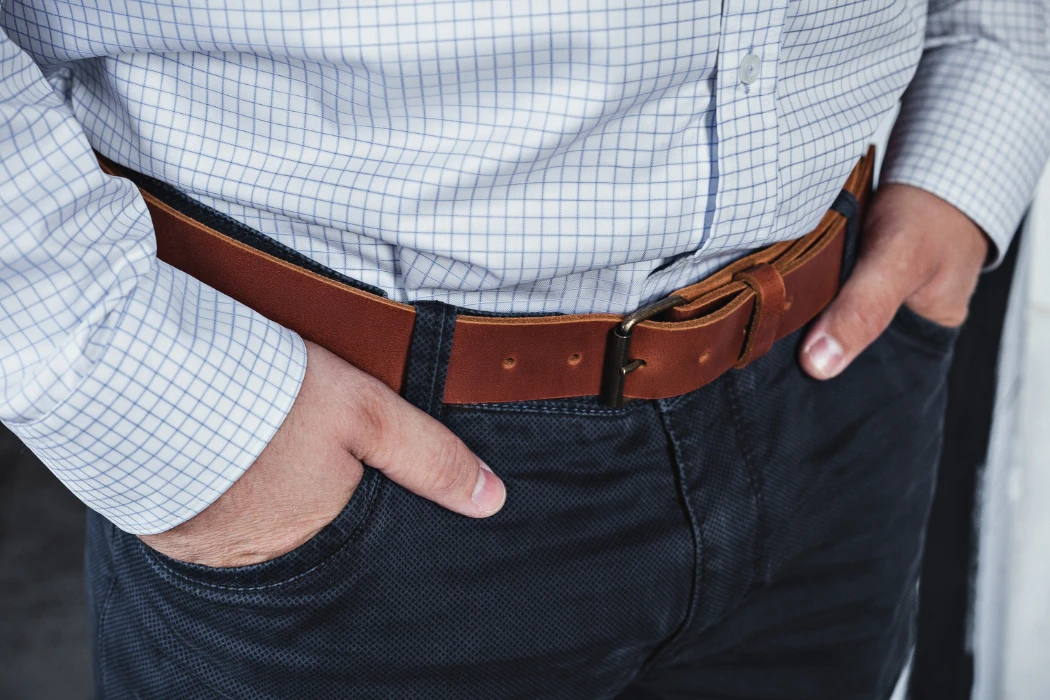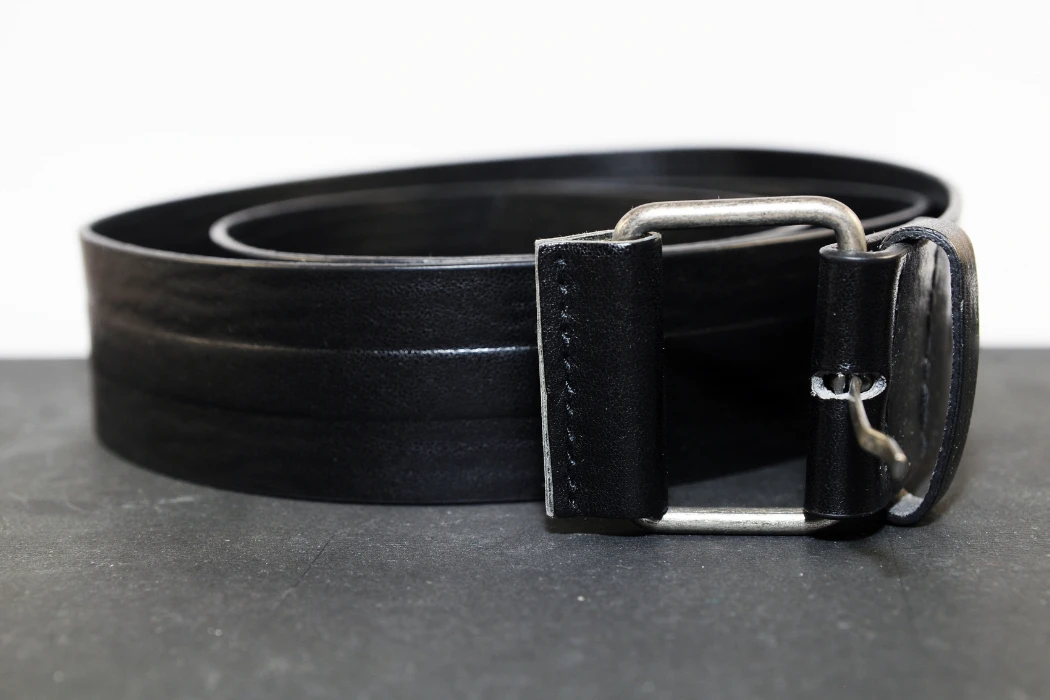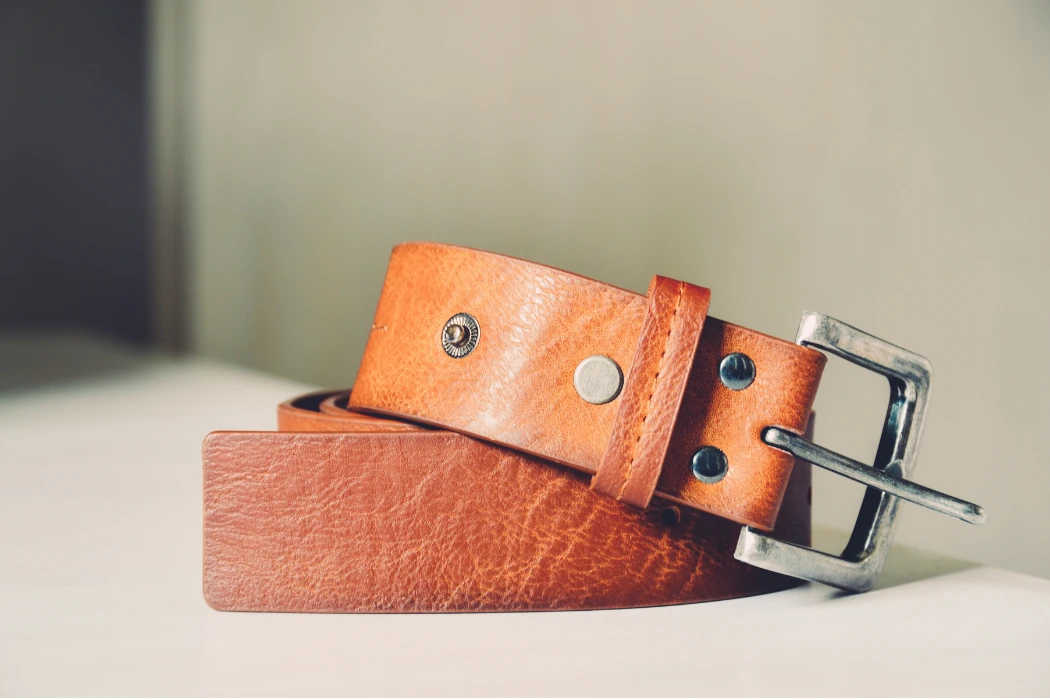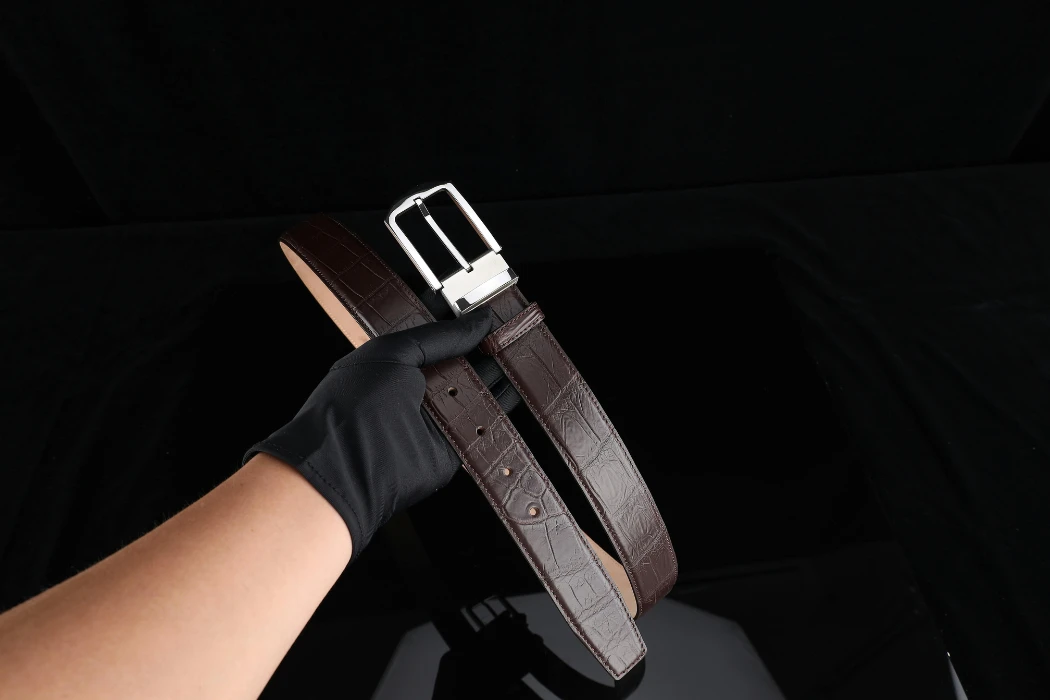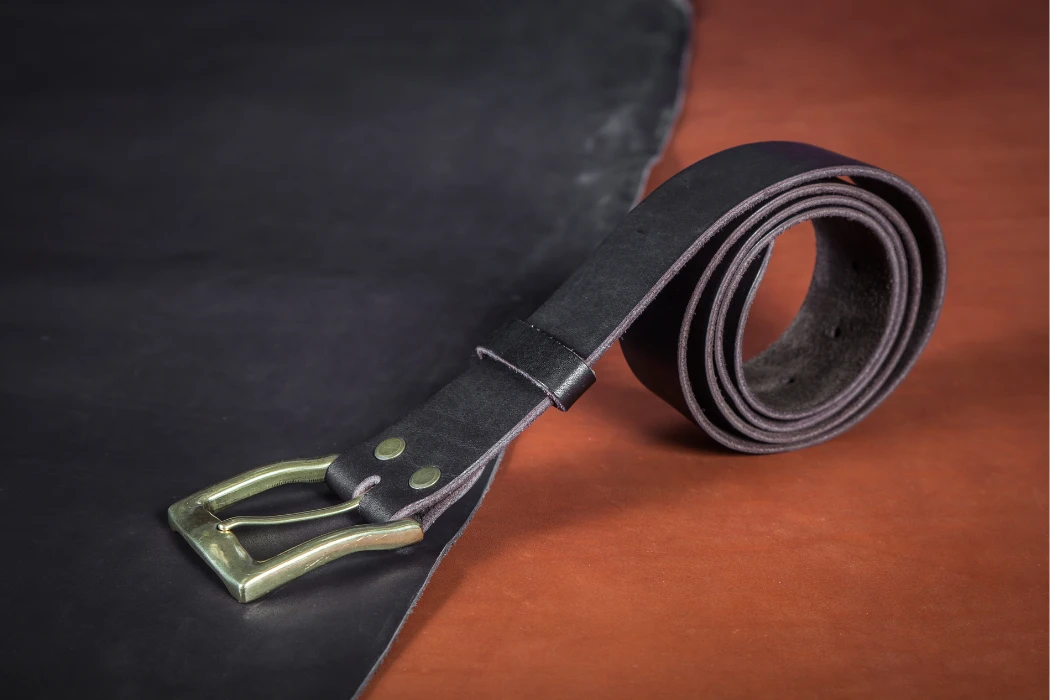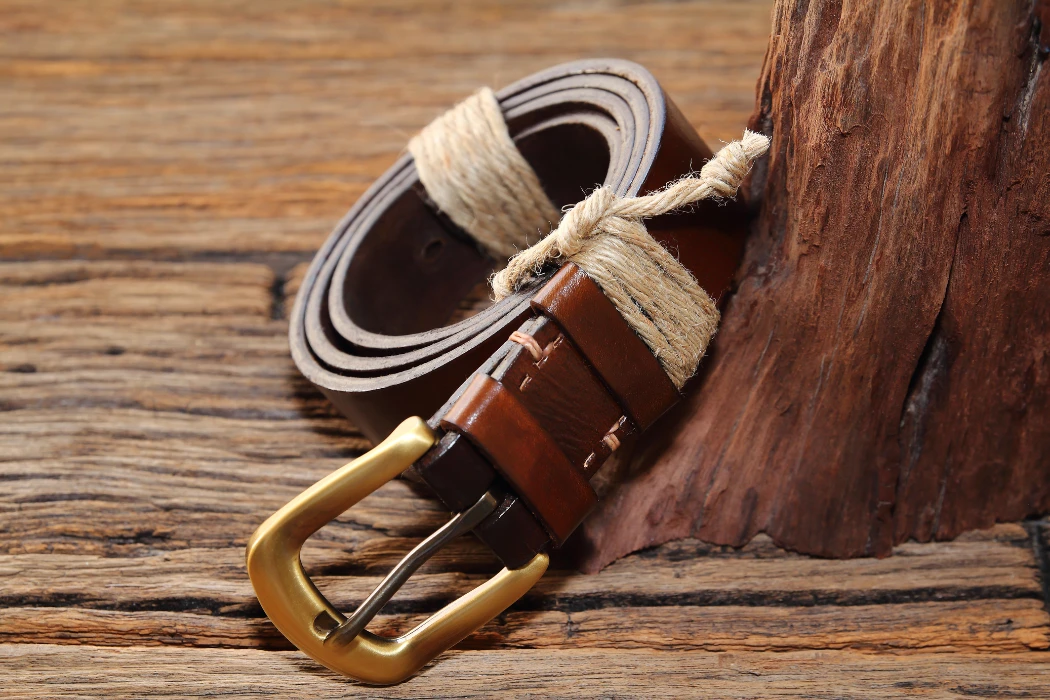
We have all experienced the “post-lunch regret.” You finish a satisfying meal, sit back at your desk or squeeze into a cramped airplane seat, and suddenly, your rigid belt feels like a tourniquet cutting into your abdomen. You are left with two bad options: suffer through the pressure or awkwardly attempt to unbuckle your belt under the table without anyone noticing.
At Hoplok, we built our reputation on processing thick, full-grain vegetable-tanned leather. We understand the value of rigid support better than most. However, as material engineers, we also study Dynamic Tension. We recognize that the human body is not a static cylinder; your waist circumference fluctuates, your torso twists, and your posture changes. When your body moves, your equipment should move with it.
The stretch belt is not just a “comfortable alternative” for casual Fridays; it is the evolutionary successor to the Fixed-Hole System. By replacing static leather with high-retention woven fibers, it eliminates the arbitrary 1-inch gap found on traditional belts, offering a level of custom fit that rigid materials simply cannot match mechanically.
In this analysis, we will break down the physics of micro-adjustment, teach you how to distinguish high-grade woven elastic from cheap synthetics that lose their shape, and show you how to integrate this versatile tool into a polished wardrobe.
What Makes a Stretch Belt Different from a Traditional Belt?
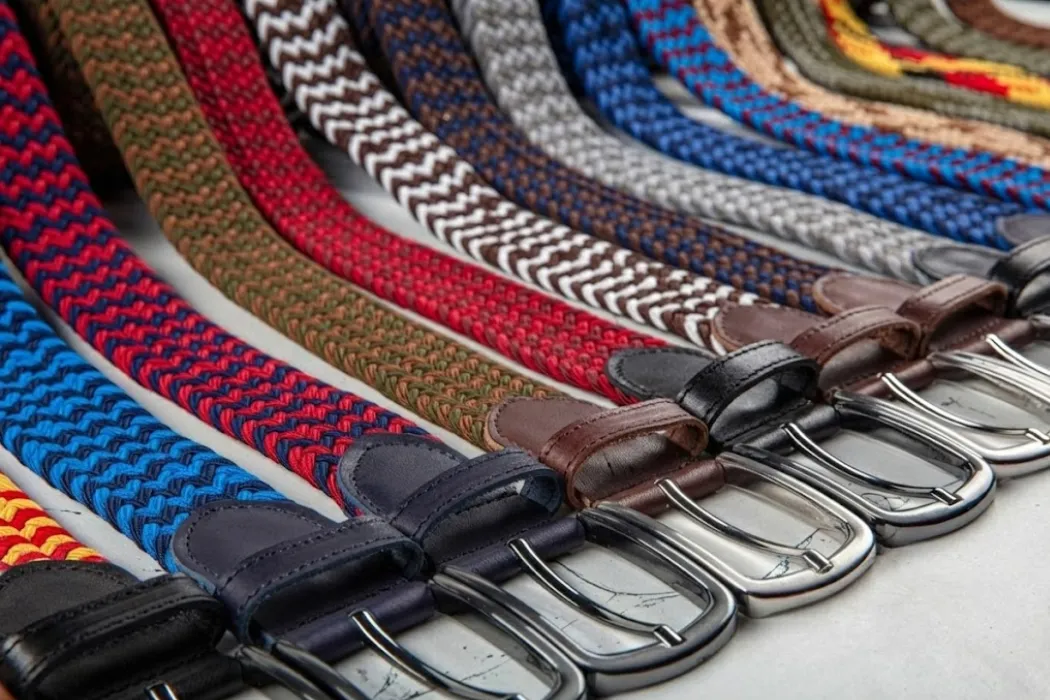
Fundamentally, a traditional belt acts as a static restraint, whereas a stretch belt functions as an active suspension system. By utilizing a woven matrix of high-tenacity filaments (typically polypropylene or waxed cotton) wrapped around an elastic core, a stretch belt provides continuous, dynamic tension that adapts to movement, rather than creating a fixed perimeter that the body must fight against.
The Mechanics of Micro-Adjustment
The primary flaw of the traditional belt is the “Fixed-Hole System.” At Hoplok, we calculate fit tolerances precisely, and the math of a standard belt often fails the user.
- The 1-Inch Gap Problem: Standard belts feature 5 holes spaced exactly 1 inch (2.54 cm) apart. If your waist size fluctuates by even 0.5 inches (common after a meal), you are forced to choose between being too loose or suffocatingly tight.
- Infinite Adjustability (0mm Increments): Woven stretch belts have no pre-punched holes. The buckle prong passes through the braided structure at any point. This allows for millimeter-precise adjustment, ensuring the belt fits your exact waist circumference at any given moment.
Material Composition: Woven vs. Solid
The difference lies in the molecular structure of the material. While leather fibers are dense and interlocking, elastic polymers are designed for excursion.
- Elongation Capacity: High-quality Elastane or Spandex cores used in premium woven belts have an elongation at break of 300–500%. This means the material can stretch significantly to accommodate torque (like swinging a golf club) without snapping or permanently deforming.
- Recovery Memory: Unlike cheap rubber which loses elasticity, engineered elastic blends are tested for “snap-back.” They return to their original length instantly once tension is released, maintaining a secure hold without sagging.
The “Breathable” Structure
Comfort is also thermal. Wearing a wide strip of solid hide around your waist creates a heat seal, which is why your lower back often sweats in summer.
- Air Permeability: The braided construction creates thousands of micro-vents between the weave. This allows for significant airflow and moisture evaporation, making woven belts superior for high-output activities or hot climates.
- Flexibility vs. Rigidity: Solid leather is rigid in the vertical plane. Woven belts conform to the curvature of the hips, preventing the “digging in” sensation at the hip bones.
| Comfort Metric | Rigid Leather Belt | Woven Stretch Belt |
|---|---|---|
| Adjustment Precision | Fixed 1-inch (2.54cm) steps | Infinite (0mm) micro-adjustment |
| Sitting Comfort | Digs into abdomen (High Pressure) | Flexes with body (Low Pressure) |
| Waist Expansion | 0% (Static) | Dynamic expansion (1–3 inches) |
| Breathability | Low (Solid barrier) | High (Ventilated weave) |
Why Do Rigid Leather Belts Sometimes Fail in Comfort?
The core engineering failure of a standard belt is its inability to change length on the fly. Rigid leather belts fail in comfort because they create a static perimeter that forces soft tissue to displace around it, rather than expanding to accommodate the body. This mechanical conflict is most acute when sitting, eating, or traveling.
The “In-Between” Size Problem
Your waist is not a fixed number; it is a variable range. At Hoplok, we often see customers return belts claiming they “shrunk,” when in reality, their body metrics shifted.
- Daily Fluctuation (0.5 – 1.5 inches): Research shows that the average adult male’s waist circumference fluctuates by 0.5 to 1.5 inches throughout the day due to hydration, food intake, and bloating. A rigid belt offers zero accommodation for this.
- The “5th Hole” Dilemma: If you fall exactly between two holes, you are forced to choose between loose pants or a constricted waist. Woven belts eliminate this “dead zone” entirely.
Abdominal Pressure While Sitting
When you transition from standing to sitting, your hips widen, and your abdomen compresses. A rigid belt acts as a tourniquet during this transition.
- Intra-Abdominal Pressure (IAP): Medical studies indicate that tight waistbands significantly increase IAP. While standing pressure might be low, sitting with a rigid belt can spike localized pressure—measurable in kilopascals (kPa)—which restricts diaphragm movement and encourages shallow breathing.
- Digestive Impact: Compressing the stomach after a meal inhibits peristalsis (digestion). A stretch belt expands automatically to lower this pressure, aiding digestion without requiring you to awkwardly unbuckle under the dinner table.
The Travel Assessment
Modern travel is an endurance sport for your wardrobe. The demands of security checkpoints and pressurized cabins expose the limitations of stiff leather.
- Long-Haul Circulation (>4 Hours): During flights exceeding 4 hours, lower body edema (swelling) is common due to cabin pressure and inactivity. A rigid belt becomes a constriction point that can impede blood return. Stretch belts adapt to this swelling in real-time, maintaining consistent, gentle hold.
- Security Efficiency: Rigid belts are difficult to remove quickly in cramped TSA lines. Flexible woven belts are lighter, easier to manipulate, and often feature lower-profile buckles that are less cumbersome to handle.
How to Spot High-Quality Stretch Materials?
The market is flooded with cheap elastic belts that look identical to premium ones on the shelf but fail within months. To spot high-quality stretch materials, inspect the “snap-back” velocity, check for full-grain leather anchors (min 3.5mm thickness), and verify the buckle metallurgy. A true performance belt maintains its structural integrity after thousands of cycles, whereas generic versions degrade into a wavy, loose mess.
The “Snap Back” Elasticity Test
Elasticity is useless without recovery. At Hoplok, we subject our woven materials to rigorous cyclic fatigue testing to ensure the “grip” remains constant over years of use.
- The 10,000 Cycle Standard: We test our high-denier filaments by stretching them to 150% length and releasing them 10,000 times. A passing grade requires a Recovery Rate > 95%.
- The “Bacon Edge” Indicator: Cheap rubber cores oxidize and lose tension unevenly. This results in the infamous “bacon edge”—where the belt edges curl and wave like cooked bacon. If you see this on a used belt, the elastic core has failed.
Leather Trim Integration (The Anchor Point)
The structural weak point of any woven belt is where the fabric meets the buckle. This connection point bears 100% of the tension and is the first place to tear on budget belts.
- Full-Grain Requirement: We insist on using Full-Grain Vegetable-Tanned Leather for the tip and buckle loop. Bonded or “Genuine” leather lacks the fiber density to hold stitches under tension and will tear like paper.
- Thickness Specification (3.5mm+): The leather anchor must be at least 3.5mm thick. Anything thinner allows the needle holes to expand and eventually rip through the leather when the belt is pulled tight.
Buckle Metallurgy
The buckle frame on a stretch belt endures different stress vectors than a standard belt because the prong is constantly moving through the weave.
- Zinc vs. Brass: Most mass-market belts use die-cast Zinc alloy, which is brittle and can snap under sudden torque. We prioritize Solid Brass or Stainless Steel, which have much higher yield strength and will bend rather than shatter under extreme load.
| Durability Metric | Generic Elastic Belt | Hoplok Premium Woven |
|---|---|---|
| Elastic Lifespan | 6–12 Months (Rapid Oxidation) | 5+ Years (UV Stabilized) |
| Recovery Rate | < 80% (Sags quickly) | > 95% (Retains shape) |
| Leather End Quality | Bonded / PU (Tears at stitch) | Full-Grain (3.5mm thick) |
| UV Resistance | Fades / Crumbles in sun | High Color Fastness |
Who Should Be Incorporating Stretch Belts into Their Rotation?
While everyone benefits from comfort, specific lifestyles require the mechanical advantages of a suspension system. Active professionals, frequent travelers, and individuals managing weight fluctuations should incorporate stretch belts as a daily essential to maintain mobility without sacrificing a polished appearance.
The Active Professional (Golf & Field Work)
Movement generates torque. At Hoplok, we analyze how accessories impede biomechanics, and for rotational sports or active jobs, rigidity is the enemy.
- Golf Swing Biomechanics: A full golf swing involves a hip rotation of approximately 45–90 degrees. A rigid leather belt restricts this torque, potentially affecting your follow-through. A woven belt dynamically expands by 1–2 inches during the swing, providing resistance-free motion.
- Field Utility: For architects, photographers, or site managers who transition from standing to squatting frequently, the stretch belt eliminates the need to “hitch up” pants constantly. It keeps the waistband secure against the lower back without creating a gap.
Frequent Travelers and Commuters
The modern commute involves long periods of static posture where comfort is paramount to prevent fatigue and circulation issues.
- Sedentary Duration: The average business traveler spends 6–8 hours sitting in transit. During this time, the abdomen pushes outward against the waistband. A stretch belt automatically adjusts tension to prevent the “digging” sensation that restricts blood flow to the lower extremities.
- TSA Efficiency: While high-quality buckles are metal, the flexibility of woven belts makes them significantly easier to remove and repack quickly in security lines compared to stiff, thick leather straps that require rolling.
Managing Weight Fluctuation
Bodies change. We advise clients that their wardrobe should adapt to them, not the other way around. A fixed-hole belt punishes size changes; a stretch belt accommodates them.
- The “Transition” Tool: For clients on a weight loss or gain journey, a traditional belt requires punching new holes—often ruining the leather’s aesthetic and structural integrity. A woven belt offers infinite micro-adjustability, seamlessly accommodating a waist size change of +/- 5 inches without looking ill-fitted.
- Post-Meal Expansion: It is biologically normal for the waist to expand after a meal. The elastic core provides immediate relief without the social awkwardness of visibly unbuckling a rigid strap.
Can a Stretch Belt Be Worn Formally?
The short answer is yes, but it depends entirely on the material finish. While a colorful synthetic woven belt is strictly for casual wear, a braided leather stretch belt effectively bridges the gap for business casual environments. However, for true formal events (like Black Tie), the rule remains rigid: stick to smooth, solid leather to maintain a seamless silhouette.
The Casual & Smart Casual Sweet Spot
Stretch belts were engineeringly designed for the modern wardrobe, which prioritizes texture and comfort.
- Chinos and Jeans Pairing: In menswear style analysis, over 85% of smart-casual outfits (such as a polo shirt tucked into chinos) benefit from the added texture of a woven belt. The matte finish of the fabric weave complements cotton trousers far better than a shiny dress belt.
- The “Texture” Rule: If your shoes have texture (suede, brogueing, or canvas), a woven stretch belt is the mathematically correct visual match.
Braided Leather: The Formal Hybrid
For those who need the comfort of stretch but the look of authority, “Woven Leather” is the material solution.
- Mechanical Stretch Construction: These belts use strips of full-grain leather braided over an elastic core. This engineering feat provides the visual gravity of leather while still offering 1–1.5 inches of active extension.
- Boardroom Readiness: A dark brown or black braided leather belt is now widely accepted in 90% of business settings, excluding only the most conservative legal or financial boardrooms.
When to Stick to Solid Leather
There are specific scenarios where the “micro-vents” and texture of a stretch belt become a liability rather than an asset.
- Formal Etiquette (Black Tie): Formalwear demands sleekness. The texture of a woven belt clashes with the sheen of Super 120s wool suit trousers. For weddings or funerals, a smooth, high-shine rigid belt is non-negotiable.
- Bulk Management: Woven belts are thicker than dress belts. Under a fitted suit jacket, the buckle and weave can “print” (show through the fabric), disrupting the clean lines of a suit.
| Outfit / Occasion | Synthetic Woven Belt | Braided Leather Stretch | Rigid Dress Belt |
|---|---|---|---|
| Tuxedo / Formal Suit | ❌ Never | ❌ Avoid (Too textured) | ✅ Mandatory |
| Business Casual (Blazer) | ⚠️ Dark Colors Only | ✅ Excellent Choice | ✅ Standard |
| Smart Casual (Chinos) | ✅ Perfect Match | ✅ Adds Sophistication | ⚠️ Can look too stiff |
| Weekend (Jeans/Shorts) | ✅ The Gold Standard | ✅ Good Upgrade | ❌ Often too formal |
Is a Stretch Belt Worth the Investment?
Value is an equation of utility over cost. A high-quality stretch belt is arguably the best investment in a man’s wardrobe because it offers the lowest Cost Per Wear (CPW) of any accessory due to its sheer versatility. Unlike a formal dress belt that sits in the closet 5 days a week, a stretch belt becomes the default grab-and-go option for almost every outfit.
Cost Per Wear Calculation
At Hoplok, we analyze product lifecycles. While a premium stretch belt might cost more than a drugstore elastic band, its utility value is mathematically superior.
- The Usage Multiplier: The average user wears a stretch belt 4–5 times per week due to its comfort. A rigid dress belt ($80) worn once a week has a CPW of $1.53 over a year. A premium stretch belt ($60) worn 5 times a week drops to a CPW of just $0.23 in the same period.
- Replacement Savings: Because woven belts don’t have holes that stretch out and crack (the #1 failure point of leather belts), a single woven belt often outlasts two standard belts, doubling the value proposition.
Versatility Across Wardrobe
The engineering “sweet spot” of a woven belt lies in its physical dimensions, allowing it to cross over categories where specific leather belts cannot.
- Universal Width (1.25″ – 1.375″): Most woven belts are manufactured at a width of 32mm to 35mm. This is the “Golden Ratio” of belts—narrow enough to slide easily through dress pant loops (often 1.25″), yet substantial enough to not look lost on denim jeans (1.5″ loops).
- Color Adaptability: A textured navy or charcoal woven belt absorbs light rather than reflecting it. This matte finish allows it to pair equally well with matte sneakers or polished loafers, reducing the total number of belts you need to own.
Frequently Asked Questions
Do stretch belts lose their elasticity over time?
Yes, eventually, but material quality dictates the timeline. While generic rubber cores oxidize and become brittle within 6–12 months, high-denier filaments (like those used in Hoplok engineering) are UV-stabilized to retain their “snap-back” properties for 5+ years of daily use before showing significant degradation.
Are stretch belts considered professional?
In a Business Casual environment, absolutely. The key is the finish. A neon woven belt is casual, but a dark charcoal or navy braided belt with full-grain leather ends is accepted in almost all modern offices. It offers the visual authority of leather with the comfort of activewear.
Can I cut a woven stretch belt to size?
No, you cannot cut a woven belt. Unlike a solid leather strap that can be trimmed at the buckle, a woven structure relies on the tension of the braid. Cutting it causes the fabric to unravel catastrophically. This is why the prong-through-weave design is superior—it fits any waist size without the need for trimming.
The Verdict: The Ultimate Comfort Solution (With a Caveat)
The stretch belt represents a functional evolution in menswear. It solves the biological reality of waist fluctuation and the mechanical problem of restrictive clothing. Ideally, it is the only belt you should need for 80% of your life. However, this recommendation comes with a strict caveat: the engineering must be sound. A cheap elastic belt is a disposable toy; a premium woven belt is a performance tool.
Hoplok’s Engineering Perspective
We often tell our clients: “Comfort is not a compromise.” There is a misconception that suffering through a rigid belt is “manly” or “proper.” We disagree. True luxury is ergonomic invisibility. The mark of a perfectly engineered accessory is that you forget you are wearing it until you take it off.
Ready to Engineer the Perfect Fit?
If you are a brand looking to source woven belt solutions featuring high-rebound memory fibers anchored by Hoplok’s signature full-grain vegetable-tanned leather ends, our R&D team is ready to collaborate. We don’t just supply straps; we engineer the specific tension and recovery metrics that define a premium product. Contact us today for a comprehensive material sample kit.