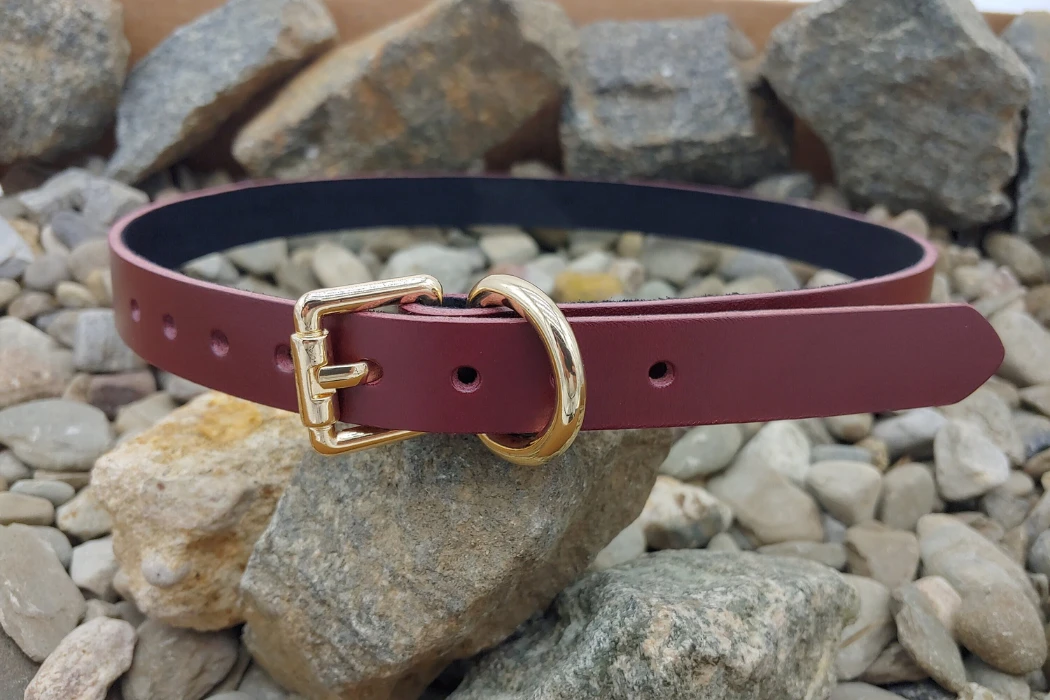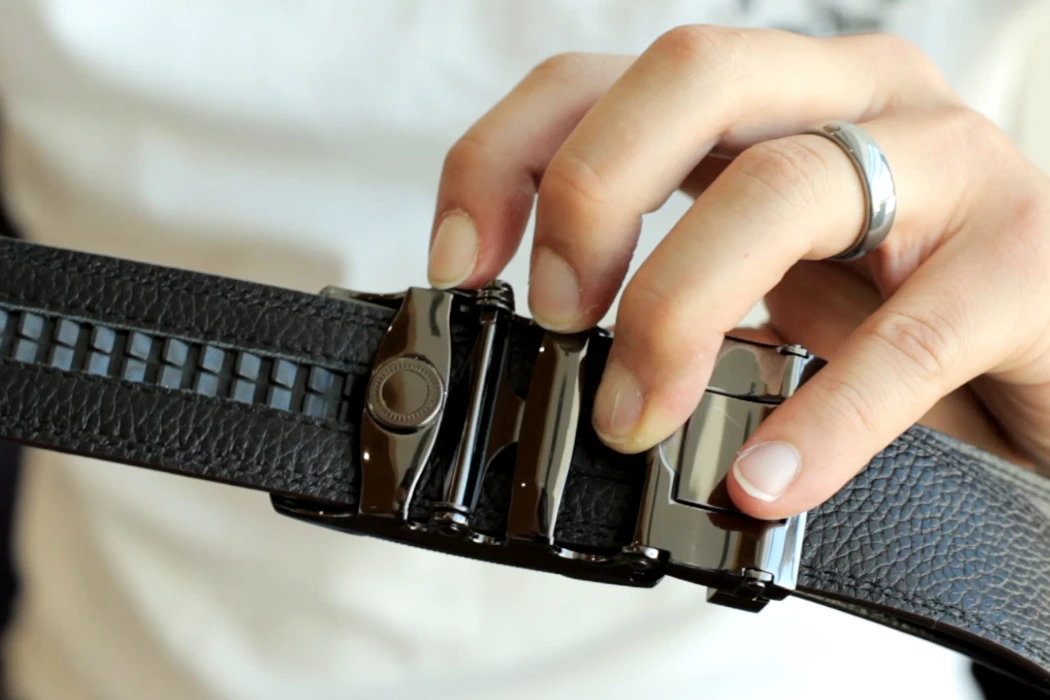
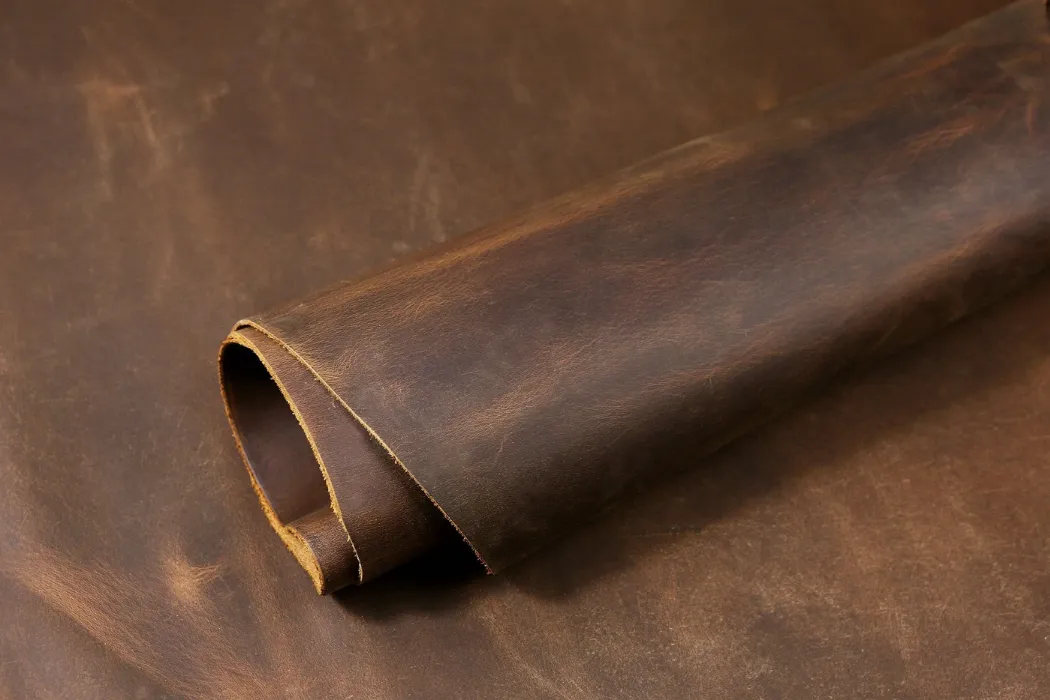
Crazy Horse is a trade name commonly used for leather with a waxy, distressed or pull-up appearance. It usually describes the effect rather than a standardised grade, tanning recipe or animal species. Cowhide is commonly sold under the name; the words do not mean it is horsehide.
When a suitable pull-up leather is bent or handled, its colour can lighten locally. Some superficial marks can be blended, while cuts and broken fibres remain damage. This distinction explains why a newly made product may show character quickly without possessing a literal “self-healing” structure.
For buyers, the important questions are the actual substrate, finish, colour-transfer behaviour and construction. This guide explains the manufacturing options, ageing, limitations and care considerations without assigning a fixed lifespan or universal waterproof claim to the name.
How Is Crazy Horse Leather Manufactured?
The supplier selects suitable leather and develops a waxy or pull-up finish. The tanning route and finishing sequence vary. An oil or wax treatment does not by itself turn a raw hide into leather; tanning and finishing are distinct stages.
The Base Material
Ask for the animal species, grain treatment, tannage, thickness and temper. A seller may offer a full-grain article or a buffed material with a similar effect. Corrective buffing should not be described as leaving the grain completely intact.
Tandy’s Laredo Crazy Pull Up material, for example, is described as chrome-tanned cowhide with a waxy appearance. It illustrates a particular supplier’s construction rather than a universal recipe. The trade name alone cannot establish grain quality or strength.
Oil and Wax Application
TFL’s pull-up finishing guidance describes oil and wax treatments that can be applied cold or warm. Not every Crazy Horse effect requires the same hot-stuffing process, temperature or amount of wax.
Horween’s glossary distinguishes hot stuffing, fatliquoring and other leather-processing terms. Ask the actual supplier which route is used. Approve the finished material rather than treating an unsupported molecular-bonding explanation as evidence of durability.
The Pull-Up Effect Explained
In a suitable pull-up finish, bending or stretching changes the local appearance of the oils and waxes, producing a lighter area. Relaxing or gently working the surface can reduce some of that contrast. The response varies with formulation and material.
Evaluate the effect on a complete component as well as a flat swatch. Corners, folds and stitched areas can look different from an unstressed panel. Agree how much colour movement is desired and distinguish it from coating failure or fibre damage.
Comparing the Material Specification
| Question | Waxy or pull-up article | Other finished leather |
|---|---|---|
| Substrate | Confirm species, grain treatment and tannage | Confirm the same details independently of appearance |
| Surface effect | Approve colour movement, touch and gloss | Approve the chosen coating or texture |
| Performance | Test relevant rubbing, flex and construction | Use requirements appropriate to the same product |
| Care | Use guidance for the specific waxy finish | Use guidance for the actual finish system |
There is no universal maximum fibre density, breathability or tear resistance attached to the Crazy Horse name. Compare materials against the intended use rather than ranking them from the finish label.
Durability and Ageing: The Patina Process
Patina describes changes in appearance through handling and exposure. A waxy leather may develop variation in colour and sheen, but that does not establish a predictable service life or make wear structurally beneficial.
What “Self-Healing” Really Means
Some light marks alter the surface effect without deeply cutting the leather. Gentle handling may blend them, depending on the finish. This is cosmetic movement of the finish, not regeneration of damaged fibres.
A cut, abrasion through the surface or weakened seam needs a different response. Do not promise that a thumb rub or added oil repairs structural damage. Check the supplier’s care guidance before attempting to blend a mark.
How Appearance Changes Over Time
Colour and gloss changes depend on finish, use, light, moisture and care. High-contact areas can become more polished, while protected areas retain a different appearance. Not every product starts fuzzy or becomes glossy on the same schedule.
Show representative samples when the changing look is part of the design. Avoid a fixed day-one/year-five colour promise. For a collection, agree acceptable initial variation separately from expected wear characteristics.
Water Resistance and Its Limits
Oil or wax treatments can affect surface wetting, but Crazy Horse leather is not automatically waterproof or even equally water-resistant across suppliers. Edges, holes, seams and other materials influence the finished product.
Evaluate any claim under a defined method and intended exposure. Avoid soaking and direct heat when drying a wet item unless the product’s instructions specifically provide another method. Re-waxing is not automatically required after every contact with moisture.
Appearance and Maintenance Matrix
| Observation | What to assess | Appropriate response |
|---|---|---|
| Light colour mark after bending | Normal pull-up within the approved range? | Compare with the material reference |
| Polished contact area | Expected wear or unwanted finish change? | Follow product-specific care guidance |
| Stain or persistent colour transfer | Finish behaviour and exposure | Investigate; do not assume it disappears with time |
| Deep cut or torn fibre | Structural damage | Seek suitable repair or replace the affected part |
What Are the Downsides of Crazy Horse Leather?
The same visible response that suits a vintage collection may be unsuitable for a tightly uniform range. Assess colour transfer, weight, feel and customer expectations before choosing the material.
Colour Transfer Risk
Some waxy or dyed leathers can transfer colour onto clothing or adjacent materials. The risk depends on the actual finish and conditions. Waiting a fixed number of weeks does not prove the material is safe against light fabrics.
For production, agree dry and wet rubbing requirements and any perspiration-related assessment relevant to use. ISO 11640 provides a leather rubbing test method. Test the approved colour and construction, including contact panels and edges where appropriate.
A lining or backing can change contact conditions, but it is not a universal remedy for an unsuitable face material. Confirm the complete design and care instructions before approval.
Variation in Appearance
Hide variation and finishing can produce differences in shade, gloss and pull-up response. A colour code alone may not describe the effect. Use a physical reference and agreed limits for components that appear together.
Variation can be deliberate, but it should still be controlled. Review repeat batches and do not excuse every mismatch as natural character. A brand seeking a stable, uniform look may prefer a different finish.
Weight and Stiffness
Thickness, temper, oil or wax loading, lining and hardware all affect weight and feel. Crazy Horse is not necessarily heavier than every chrome-tanned leather; some materials sold under the name are themselves chrome-tanned.
Assess the complete bag or belt rather than assigning an empty-backpack weight to the material. Approve initial comfort and flexibility. A customer should not have to rely on an unspecified break-in period to make an unsuitable construction usable.
How Do You Maintain and Clean Crazy Horse Leather?
Follow instructions for the specific article. Waxy finishes differ, and a cleaner or conditioner suitable for one may alter another. The Leather Naturally care guide also distinguishes care considerations by finish.
Routine Cleaning and Moisture
Remove loose dust gently with a soft cloth or a suitable brush. Blot spills promptly rather than rubbing aggressively. If further cleaning is needed, use a method approved for the material and trial it in an inconspicuous area.
Do not wash or immerse the item unless its care instructions expressly permit it. Let damp leather dry naturally away from direct heat. A categorical ban on every formulated leather cleaner is less useful than confirming compatibility with the actual finish.
Re-Waxing: When and How?
Condition or re-wax only when appropriate for the material and its condition. There is no universal annual frequency. Excess product may change touch, colour and transfer behaviour.
Use the supplier-recommended product and quantity. Mink oil is not mandatory and can change the appearance; a colour change may persist rather than disappear after a fixed number of hours. Test first and assess the dried result before treating a visible area.
Dealing with Deep Scratches
Separate a light surface mark from a cut that exposes or damages fibres. A compatible treatment may reduce colour contrast, but does not restore severed material. For valuable or structurally affected items, seek an appropriate repair assessment.
Do not use a hair dryer as a general repair instruction. Heat can alter the finish and affect nearby adhesives or components. Follow product-specific guidance rather than trying to melt the wax to conceal every mark.
Maintenance Do’s and Don’ts
| Action | Recommended approach | Reason |
|---|---|---|
| Cleaning | Use a compatible method and test discreetly | Finishes respond differently |
| Water exposure | Avoid soaking; blot and dry naturally | Moisture may alter colour and construction |
| Conditioning | Use only as appropriate for the article | More oil or wax is not always better |
| Heat | Avoid direct heating unless specifically instructed | Finish and other components may be affected |
Frequently Asked Questions
Is Crazy Horse leather made from horses?
Usually, products sold under the name are cowhide with a waxy or pull-up effect. The name itself is not a species declaration, so confirm the actual material with the supplier. It should not be treated as proof of horsehide or a documented saddle-making history.
Why does it mark so easily?
Some marks are changes in the waxy finish or pull-up effect. Others are genuine abrasion or cuts. Compare them with the approved material behaviour instead of calling every scratch a harmless feature.
Can it stain clothes?
Yes, some finishes can transfer colour. Evaluate the actual material and relevant exposure conditions. Do not assume a fixed waiting period eliminates the risk.
Is it waterproof?
Not by definition. Oil and wax can influence water resistance, but the actual material and assembled product need evidence for any specific claim.
How do I remove scratches?
Some superficial marks may blend with gentle handling or compatible care. Follow the supplier’s guidance and avoid direct heat. Deep damage cannot be repaired merely by redistributing wax.
Is Crazy Horse leather vegan?
Animal leather sold under this name is not vegan. If considering a non-animal material with a similar appearance, verify its composition and performance separately. Similar styling does not establish the same structure or care needs.
Is Crazy Horse Leather Right for Your Product?
It can suit a collection that welcomes a waxy touch, colour movement and visible character. Approve the substrate, finish, transfer behaviour and complete construction so those features match the customer promise. More wear does not make leather stronger.
For a Hoplok custom leather bag project, share the desired effect and material reference. A waxy leather may also suit a travel or duffle bag design, subject to sample approval. Bag MOQ is 200 leather units or 1,000 PU units; samples take 3–4 weeks and bulk production 60–90 days. Confirm material availability, finish and the approval schedule in the quotation.