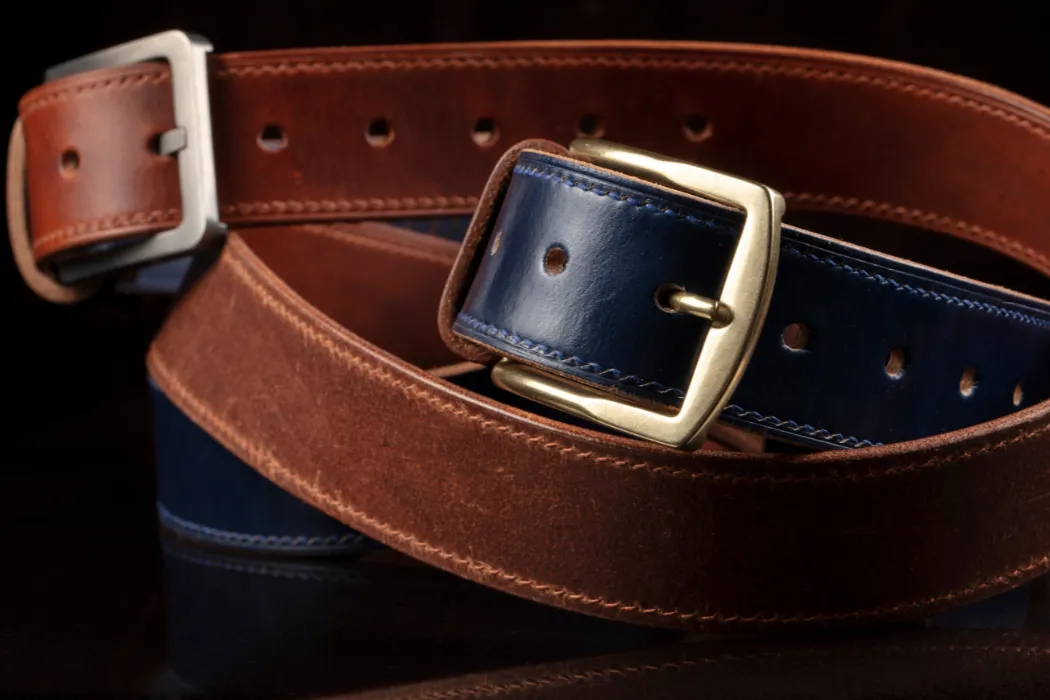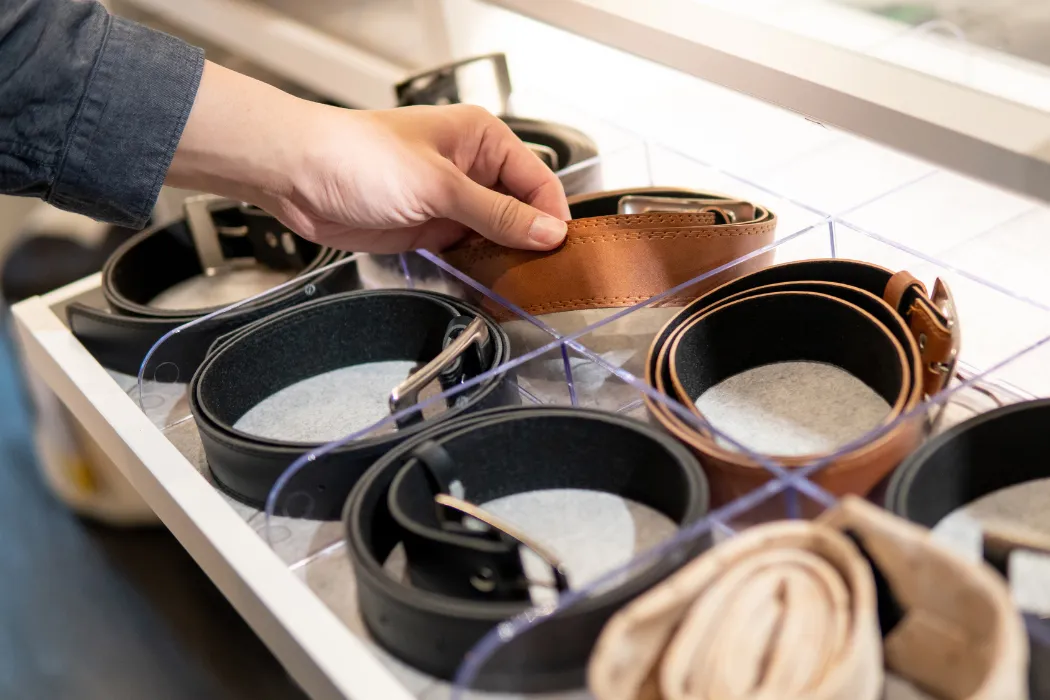
For bulk importers and private-label buyers, sourcing wholesale leather belts isn’t just about unit price—it’s about balancing quality assurance, compliance transparency, and duty efficiency across global trade routes. Cambodia, for instance, combines ISO‑aligned production and verified audits under the ILO–IFC Better Factories program, while offering capacities exceeding one million belts per month—helping wholesalers secure volume consistency without escalating costs.
This article breaks down the full procurement landscape for wholesale leather belts: analyzing low‑cost, compliance‑driven sourcing hubs like Cambodia; exploring potential duty savings of up to 2.7% or more under GSP programs; and assessing quality, packaging, logistics, payment terms, and negotiation strategies. Whether you manage a retail supply chain or design private‑label accessories, these insights will help you source smarter and maximize margin from factory floor to final delivery.

Why Source Wholesale Belts from Cambodia?
Cambodia provides a rare mix of low production costs and high compliance credibility. Its factories operate under ISO-aligned national standards, participate in Better Factories Cambodia audits, and deliver high volume capacity with strong traceability, making it attractive for wholesale belt sourcing.
Compliance-Driven Manufacturing Ecosystem
Cambodia’s industrial environment is defined by its transparent and standards-based production system. Factories operate under the Law on Standards of Cambodia (2007), which empowers the Institute of Standards of Cambodia (ISC) to synchronize local factory operations with international norms such as ISO 9001 for quality management and ISO 14001 for environmental management. This ensures that export goods—such as leather belts—are manufactured under verifiable quality and safety controls.
The ILO–IFC Better Factories Cambodia (BFC) program audits participating factories against over 250 checkpoints covering occupational safety, wage compliance, and labor practices. For international belt buyers, this delivers an auditable and reliable supplier ecosystem aligned with Western social compliance expectations. These factory-level verifications serve as traceable documentation for procurement teams focused on ESG accountability.
Cambodia’s experience under the U.S.–Cambodia Textile Agreement (1999–2004) reinforced this culture of accountability. The program linked export growth directly to compliance performance, pushing leather and garment factories to professionalize human resource, safety, and documentation systems. That legacy continues to benefit global buyers through well-documented, inspection-ready production frameworks.
Production Capability and Quality Metrics
Cambodia’s belt manufacturing sector demonstrates strong industrial performance with verified capacity outputs. Leading producers report exceeding one million leather belts per month, completing design-to-mass-production cycles within 15–20 days. This turnaround time provides a competitive advantage for wholesalers managing seasonal forecasts and rapid order replenishment.
Integrated manufacturers such as Hoplok Leather operate ISO 9001, BSCI, SMETA, LWG, and OEKO‑TEX–aligned facilities. These certifications guarantee consistent process quality, ethical labor practices, and environmentally responsible production, contributing to average defect rates remaining below 1%. Such technical consistency supports large-scale buyers seeking stable performance across consecutive batches.
In addition, Cambodian regulations impose labeling and safety controls requiring traceable material origin and compliance documentation. This nationally enforced traceability improves documentation reliability, minimizes rework, and supports predictable export logistics for belt importers. Collectively, these operational standards make Cambodia a strategically advantageous sourcing base for high-volume, quality-assured leather belts.
How Much Duty Can You Save?
Duty savings depend on origin and trade program eligibility. Standard HTS 4203.30.0000 leather belts carry a 2.7% US import duty, but sourcing from GSP or FTA countries (like Cambodia or Poland) can drop this to 0%, saving up to $2,700 on a $100,000 shipment.
| Country | HTS 4203.30.0000 Duty Rate | Notes |
|---|---|---|
| Poland | 0% (via GSP) | Eligible for duty-free treatment under Generalized System of Preferences if origin rules are met. |
| China | 2.7% + 7.5–25% | Subject to Section 301 tariffs in addition to the base rate. |
| Italy | 15% | Typical EU leather goods rate, plus brokerage cost of ~$15 per entry. |
| Cambodia | ~0% | Can qualify for near-zero duty if FTA/GSP origin criteria are satisfied. |
Understanding Duty Rates and Classification for Leather Belts
Leather belts are classified under HTS 4203.30.0000, corresponding to “Articles of apparel and clothing accessories, of leather – Belts and bandoliers.” The U.S. base duty rate for imports under this classification stands at 2.7% ad valorem, meaning the duty is assessed as a percentage of the total customs value.
Certain origin countries, such as Poland, may qualify for a zero-duty rate under preferential systems like the Generalized System of Preferences (GSP), provided that origin validation documents are furnished and rule-of-origin thresholds are met. This allows importers to enter eligible goods duty-free.
Tariffs vary significantly based on origin and policy adjustments. Imports from China often include an additional Section 301 tariff surcharge ranging from 7.5% to 25%, while Italy-origin belts can carry a combined import cost of roughly 15%. In contrast, Cambodia can benefit from regional trade programs offering near-zero duty under approved Free Trade Agreements (FTAs).
Calculating Savings by Origin and Trade Program
To illustrate, for a $100,000 FOB shipment, a 2.7% duty amounts to $2,700 in customs charges. Selecting an origin country qualified for zero-duty under GSP instantly eliminates that full amount, providing a tangible cost reduction. An importer handling thousands of units in a container shipment amplifies these savings proportionally.
On a per-unit basis, this equates to roughly $0.27 in duty for each leather belt valued at $10 FOB. Beyond this, importers should account for additional landed costs such as the Merchandise Processing Fee, charged at 0.3464% (with a maximum of $485 per entry), and minor brokerage charges of about $15 per customs entry.
Experienced importers often leverage advanced methods, such as shipping through bonded warehouses or utilizing programs under FTAs (e.g., USMCA, CAFTA, ASEAN-based agreements), to defer or completely eliminate duties on qualifying leather goods. Strategic sourcing through approved origins and correct use of preferential certificates can therefore produce duty savings ranging between 2.7% and 15%, and even full duty exemption for compliant shipments.
How to Evaluate Wholesale Quality?
Evaluating wholesale quality involves assessing leather type, craftsmanship, and compliance with measurable technical standards like tensile strength, pH, and LWG certification to ensure consistency and durability.
Core Quality Indicators for Wholesale Leather Belts
Wholesale leather belt quality begins with material selection and craftsmanship. Full-grain leather, recognized by its natural pores and irregular grain, is preferred for superior strength and breathability. Avoid generic “genuine leather” or split hides, which often lack fiber integrity and age poorly under stress.
Thickness consistency across the strap is critical: an average of approximately 3.4 mm with a ±0.2 mm tolerance ensures even strength distribution. Uneven thickness can cause premature cracking or deformation. Edges must be smoothly burnished, free from fuzz or rough fibers.
Stitching acts as a structural element. A density of 6–7 stitches per inch, applied with uniform tension, provides adequate shear resistance without cutting through the leather grain. Threads should not exhibit slack or fraying.
Hardware quality is equally important. Components such as buckles and rivets are typically made from solid brass or high-grade zinc. They should remain free from burrs and show no signs of oxidation after multiple flex cycles, which simulates real-world wear.
Laboratory and Standardized Testing Methods
Beyond visual inspection, laboratory testing confirms that belts meet international performance standards. According to ISO 3376, tensile strength must reach at least 20 N/mm², and elongation at break should fall within 30–80%. These metrics correlate with resistance to pulling and deformation during prolonged use.
Thermal and chemical stability are equally significant. Shrinkage temperature should not fall below 75°C per ISO 3379, while ISO 4045 specifies pH values between 4.5 and 5.5 to avoid acid or alkaline degradation over time. Excessive acidity can weaken collagen fibers, whereas high alkalinity can dull dye penetration.
Color fastness testing (ISO 11640) measures pigment stability under abrasion. Ratings of 4 or higher confirm appropriate dye fixation. Surface coatings undergo adhesion tests (ISO 11644), measuring a minimum of 3.5 N (dry) and 2.0 N (wet), ensuring finish durability against environmental factors.
Quality assurance at the wholesale level also involves third-party audits. The Leather Working Group (LWG) evaluates tanneries on water, energy, and chemical management. Suppliers with Gold or Silver ratings are generally prioritized. Production batches are sampled to identify defects like cracks, grain damage, or color inconsistency—any lot exceeding defect tolerances is rejected.
In practice, wholesalers merge these physical and lab-based evaluations to maintain quality uniformity across shipments. Measurement through precision tools, combined with adherence to international testing protocols, ensures that wholesale belts meet both durability and sustainability expectations before export or market release.
Elevate Your Brand with Custom Leather Belts
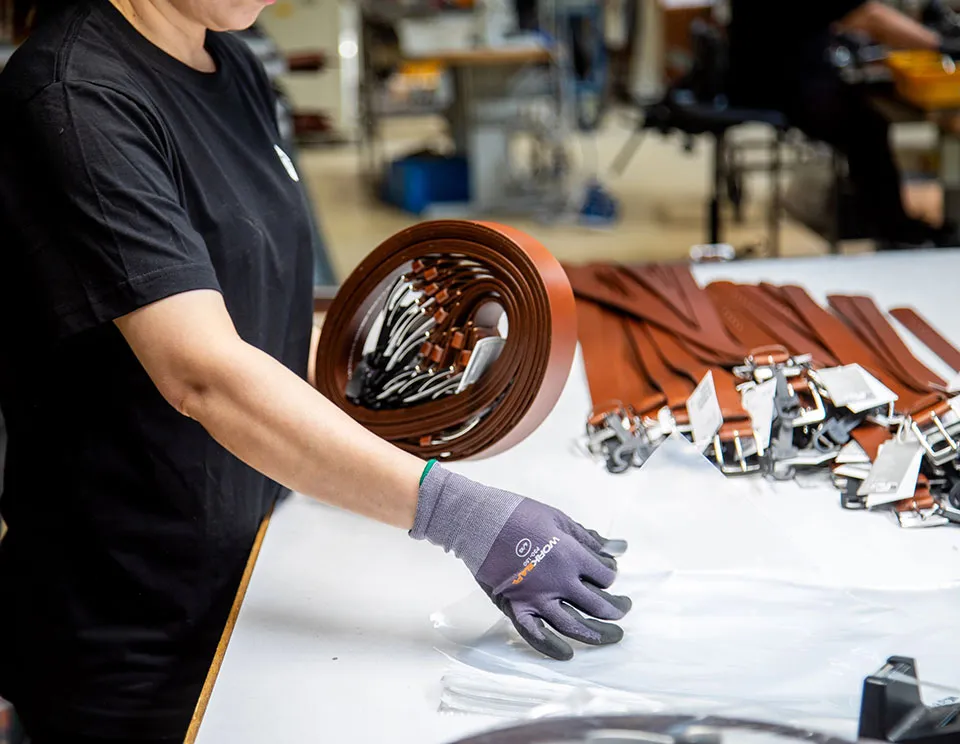
What Are the Best Retail Packaging Options?
The best retail packaging for leather belts combines durability, moisture resistance, and labeling compliance. Options include padded, reusable cartons and custom boxes with inserts that meet FTC labeling and international trade standards while optimizing cost and shelf appeal.
Retail Packaging Fundamentals and Compliance Essentials
Retail packaging for wholesale leather belts serves three critical purposes: physical protection, regulatory compliance, and brand consistency. Proper packaging prevents deformation and moisture damage both in transit and during display. Typically, belts categorized under HS Code 420330 are transported in padded, moisture-resistant cartons that maintain shape and integrity, reducing customer returns and shelf defects.
Compliance requirements under U.S. Federal Trade Commission (FTC) labeling standards are mandatory. Each retail unit must include permanent labeling specifying fiber content (for example, 100% leather), country of origin, manufacturer name or RN number, and standardized care instructions. Labels or hangtags should also include product names, barcodes, and branding elements to ensure SKU consistency across retail environments while meeting global import and export regulations.
Technical Specifications and Customization Options
Technical design of leather belt packaging aligns with product dimensions and international quality specifications. Standard belt lengths range from 90–130 cm, widths span 25–40 mm, and thickness averages 2–4 mm. Inserts and internal supports must be engineered to these parameters for snug, protective fits during stacking or display, minimizing deformation risks during shipping.
Customization options include sturdy cardboard boxes or reusable cartons with moisture-resistant coatings. Most suppliers require a minimum order quantity (MOQ) of at least 1,000 units for custom runs. These boxes may include inserts, printed branding, or embossing to enhance premium shelf appeal. Compliance with ISO 17065 certification and ASTM leather performance metrics — including tensile strength of ≥15 MPa and colorfastness rated grade 4 or higher — ensures durability and color stability in transit and storage. Such structural and performance standards provide consistent packaging reliability, especially in humid or variable environments.
In summary, wholesale belt packaging aligns engineering design with trade compliance. Reusable, padded cartons, compliant labeling, and customization at scale ensure cost-effective protection and marketability of premium leather belts, supporting efficient logistics, lower damage rates, and improved consumer experience across international retail channels.
Stock vs. Made-to-Order?
Stock belts prioritize affordability and immediate delivery using bonded leather and mass production, while made-to-order belts use full-grain leather and handcrafted methods for decades-long durability and brand customization.
Core Differences Between Stock and Made-to-Order Belts
Stock belts focus on quick availability and cost efficiency, often produced with bonded or genuine leather that supports entry-level pricing for wholesale buyers. These belts are typically assembled in large batches to meet immediate inventory needs.
Made-to-order belts are distinguished by their use of full-grain or top-grain leather, which delivers superior patina development, higher tensile strength, and extensive customization potential for brand embossing or sizing precision. The result is a product that aligns with premium or sustainable retail strategies.
While mass-produced belts cater to a general size range for efficiency, made-to-order options are tailored to exact waist measurements. This minimizes excess belt length and ensures optimal aesthetic and ergonomic fit.
Material Quality, Crafting Process, and Durability
Material selection drives both the performance and longevity of a belt. Made-to-order belts typically employ vegetable-tanned leather, a method known for its low environmental footprint and natural color aging. In contrast, stock belts usually undergo chrome tanning—faster and cheaper, but reliant on chemical processes that can affect both texture and sustainability.
Bonded leather, common in stock models, comprises leather fibers bonded with synthetic resins. This composite layer tends to crack or peel after only a few years, particularly under flexing or humidity. Conversely, full-grain or top-grain leather used in made-to-order production can sustain decades of wear if properly conditioned and maintained.
Craftsmanship further differentiates these categories: made-to-order belts are hand-cut, edge-burnished, and feature reinforced saddle stitching for enhanced tensile strength. Stock production, optimized for throughput, employs automated cutting and assembly equipment to achieve uniformity at scale but sacrifices custom adjustments and reinforcement quality.
No official ASTM or ISO testing parameters for leather durability were referenced in available data. Quality comparisons therefore rely on qualitative indicators such as leather grade, stitching precision, and tanning integrity. In B2B procurement, these attributes translate directly into replacement cycles, brand perception, and overall lifecycle cost efficiency.
What is the Best Way to Ship?
The best way to ship wholesale leather belts depends on balancing cost, urgency, and compliance. Most importers use Incoterms® 2020 rules like FOB, CIF, or DAP, choose between air or sea freight, secure proper packaging and insurance, and meet import labeling requirements to ensure customs clearance without delays.
Understanding Shipping Methods and Incoterms® 2020
Common terms for international leather goods logistics include FOB (Free On Board), CIF (Cost, Insurance & Freight), and DAP (Delivered At Place), which are the standard trade definitions under ICC Incoterms® 2020. These frameworks define each party’s responsibilities and costs for freight, insurance, customs, and delivery.
Incoterms identify who bears the risk and expense during each transport stage. For example, under FOB, the buyer assumes control once goods are loaded; CIF transfers goods with the seller managing freight and insurance; DAP ensures delivery to the destination with the seller covering most logistics. Correct use of Incoterms is critical to avoid disputes, manage risk, and calculate landed cost accurately.
New or small-scale importers often benefit from CIF or DAP as they simplify logistics by including freight and basic insurance. Experienced buyers typically select FOB to manage shipping, insurance, and customs directly, achieving better cost control through negotiated freight rates and optimized routing.
Optimizing Freight Mode, Packaging, and Compliance
Selecting between air and sea freight depends on shipment size, urgency, and target market. Sea freight, either less‑than‑container load (LCL) or full‑container load (FCL), is generally more economical for palletized orders. Air freight is reserved for urgent shipments or high‑margin leather belts requiring faster delivery.
A complete landed cost model should consider base freight rates, import fees, and lead times. According to TurkishLeather.com wholesale guides, tracking each cost component gives importers transparency into total expenditure and allows comparison across carriers and modes to prevent stock disruptions.
International packaging for leather belts must meet both supplier and destination country requirements. Platforms like Global Trade Plaza specify materials, labeling positions, container types, and protective measures. Accurate labeling and standard‑compliant packaging contribute to smooth customs handling and product protection during transit.
For U.S. destinations, importers must satisfy CPSC and CPSIA obligations regarding labeling, safety documentation, and tracking labels for applicable goods. Using bonded warehouse strategies can postpone duty payments until labeling finalization and product distribution are complete, reducing upfront costs and improving compliance flexibility.
Cargo insurance, permits, and customs documentation (such as commercial invoices, packing lists, and certificates of origin) are essential risk‑management components. Proper preparation minimizes shipment delays and exposure to loss during international transit, ensuring the supply chain remains reliable and transparent.
Which Payment Terms (T/T vs L/C) are Best?
T/T is faster (1–3 days) and cheaper for trusted or repeat buyers, typically using 30% deposit and 70% balance payments. L/C offers stronger protection for new or large transactions, with 0.1–1% bank fees but slower processing and higher paperwork demands.
Understanding T/T and L/C: Definition and Risk Balance
T/T (Telegraphic Transfer) involves a direct bank transfer, most often structured as a 30% deposit and a 70% balance before shipment or against a Bill of Lading (B/L) copy. This process is straightforward and typically clears within one to three business days.
By contrast, L/C (Letter of Credit) introduces bank mediation under irrevocable or confirmed arrangements that guarantee payment only after valid shipping documents are presented. It ensures that both parties meet their contractual obligations per banking standards.
T/T provides agility and lower bank charges, but the buyer assumes more risk if goods are not delivered. L/C counters that risk by having a bank validate shipment documents before releasing funds, though it incurs 0.1–1% in bank fees.
The balance between T/T and L/C depends on the trust level and trade volume. In wholesale leather belt procurement, buyers working with long-term suppliers tend to use T/T for efficiency, while first-time or higher-value deals favor L/C for documented assurance.
Choosing the Right Payment Term for Your Order Volume and Trust Level
Repeat or lower-value orders frequently employ T/T terms because they enable quick turnover and fewer banking formalities. In typical FOB contracts, funds arrive within one to three days, ensuring production and shipment cycles stay lean.
For new or large orders, L/C—particularly sight or usance letters (e.g., 60/90 days)—is preferred. It secures both sides by aligning bank confirmation with document verification, providing extra control in sizable or high-risk transactions.
While the additional bank fees (0.1–1%) under L/C can raise costs, they minimize exposure to fraud and non-delivery. This makes L/C suitable for trade routes involving emerging markets or unstable political climates.
Ultimately, T/T sustains business speed and working capital efficiency for reliable supplier relationships, while L/C brings layered financial security and compliance benefits for new partnerships or premium leather goods orders.
Key data trends indicate that T/T dominates in repeat sourcing due to its simplicity and cost advantages, whereas L/C remains the tool of choice for secure, document-driven trades. The final decision should balance trust maturity, order value, and transaction speed priorities.
How to Negotiate with Suppliers?
Negotiating with suppliers means balancing price, quality, and flexibility by leveraging order volume, MOQ adjustments, and reliable performance data. Success depends on understanding baseline industry terms and using production consistency to win better long‑term pricing and credit conditions.
Core Negotiation Levers and Strategies
When negotiating with wholesale belt factories, understanding baseline deal structures is essential. Typical payment terms across Yiwu and similar production hubs follow a 30% deposit and 70% payment before shipment model. Buyers can use this as an initial point for discussion but should plan negotiations around proven reliability and future business potential to unlock better terms.
MOQ (Minimum Order Quantity) is one of the most flexible variables. Standard MOQs for belts often start at 300 pieces per style, yet buyers leveraging larger total volume can usually negotiate a reduction to around 150 pieces per style. By demonstrating consistent demand or grouping multiple SKUs within one production batch, importers reduce factory risk and drive more accommodating MOQs.
Factories are generally more willing to adjust prices or offer extended credit once a purchase history is established. Repeat transactions, transparent communication, and clear specification control all improve supplier confidence, creating leverage for either better bulk discounts or deferred payment structures.
The effectiveness of these negotiations often depends on relationship continuity. Buyers that maintain regular orders and operational clarity can secure not only improved pricing but also faster lead times on replenishment runs, which is critical in fashion-driven accessories such as belts.
Data‑Driven Tactics and Benchmarks for Belts
Negotiations in the belt manufacturing sector can be enhanced with quantitative insights. Factories typically classify themselves by capacity range, and aligning expectations with their operational scale helps streamline requests. For traders, MOQs around 50–100 pieces per style are common, while mid-sized factories may require 200–300, and large OEMs exceed 500 units per style.
Volume is directly correlated to cost leverage. Buyers ordering approximately 5,000 units can generally realize additional 5–10% savings, largely through upstream efficiencies with tanneries and plating suppliers. This approach rewards consistent scheduling over opportunistic negotiation and establishes credibility for future cost optimization.
Sampling lead time serves as another measurable negotiation metric. A 7–10 day turnaround for prototypes is common, but prioritization can be negotiated by buyers with confirmed purchase cycles or recurring prototypes. By quantifying this timeline, both parties gain predictability and can benchmark production responsiveness.
Performance indicators are crucial when comparing suppliers. Maintain expectations of at least 95% on‑time delivery and target reorder rates exceeding 25–40% as operational benchmarks. These KPIs serve as negotiation tools: a supplier able to document performance consistency earns justified premium positioning, while buyers can use these metrics to argue for improved financial or scheduling concessions.
Real market evidence from Yiwu’s belt sector reinforces these points. Buyers have successfully secured MOQs reduced from 300 to 150 pieces per style while fixing the unit price at USD 1.50 for larger runs of around 20,000 PU belts. Such outcomes highlight the tangible potential within structured negotiation based on data, volume, and vendor trust, rather than one-off pricing tactics.
Why Partner with Hoplok?
Partnering with Hoplok means working with a vertically integrated leather manufacturer that controls each stage—from tannery to assembly—ensuring ISO-tested belts, sub‑1% defect rates, and consistent export‑grade compliance aligned with international standards.
| Core Strength | Technical Capability | Measured Advantage |
|---|---|---|
| Vertical Integration | Owns tannery and assembly facilities in China and Cambodia | Superior control on quality, cost, and turnaround time |
| Compliance & Certification | Meets ISO 9001, BSCI, SMETA, and LWG Leather standards | Verifiable audit record and export-grade reliability |
| Production Capacity | Over 1 million belts monthly capacity | Meets demands of global retail and private-label clients |
Proven Manufacturing and Vertical Integration
Hoplok operates factories in China and Cambodia with over 4,500 skilled artisans across more than 50,000 m² of production space. This multi-region footprint supports risk-balanced supply chains and consistent output even under shifting global trade conditions.
At the core of its integration advantage is the in-house tannery, ProPelli, producing between 20,000 – 50,000 sq.ft of finished leather each day. By internalizing tanning and finishing operations, Hoplok maintains tight control of chemical inputs, texture, and color reproducibility—ensuring cost stability and technical traceability throughout the belt assembly process.
This vertically integrated setup enables a scalable monthly capacity exceeding one million belts. Such throughput allows brand partners to align bulk production and replenishment cycles to seasonal demand without compromising quality, throughput, or documentation traceability.
Standards, Compliance, and Quality Performance
Hoplok adheres to BSCI, SMETA, ISO 9001, and Leather Working Group (LWG) certification frameworks, maintaining statistical defect rates under 1%. These credentials demonstrate compliance with globally recognized benchmarks for social responsibility, quality management, and sustainable leather production.
Material testing follows internationally recognized ISO methods: ISO 3376 (tensile ≥ 20 N/mm²), ISO 4045 (pH), and ISO 11640 (color fastness). These tests align closely with the Draft East African Standard for leather belts (DEAS “Leather – Men’s and women’s belts – Specification”), which also defines belt breaking strength (≥ 400 N), elongation parameters (30–80%), and finish adhesion thresholds. Hoplok’s adherence to these tests assures mechanical durability and appearance consistency requested by global wholesale buyers.
To reinforce compliance, Hoplok implements corrosion-resistant hardware with controlled strap-to-buckle tolerances, maintaining mechanical balance between components and minimizing “Tolerance Mismatch” defects. Every exported belt lot is subject to sampling-based acceptance testing modeled on DEAS statistical protocols, while packaging and labeling meet international containerized shipment standards that require clear manufacturer and origin identification.
Final Thoughts
Sourcing wholesale leather belts from Cambodia offers a pragmatic balance between compliance, cost efficiency, and speed-to-market. The country’s ISO-aligned infrastructure, Better Factories Cambodia oversight, and favorable trade programs position it as a dependable origin for bulk buyers seeking verified social compliance and tariff savings. For global importers, the consistent quality output—paired with near-zero duty eligibility—creates clear advantages over higher-cost or tariff-burdened production regions like China and parts of the EU.
Ultimately, import success depends on aligning technical quality standards, packaging, shipping methods, and payment terms with trusted manufacturers such as Hoplok. Their vertically integrated production ensures traceability, defect rates below 1%, and compliance with international standards such as ISO 9001 and LWG certification. When combined with careful negotiation and correct tariff classification, these strengths translate into a measurable reduction in landed cost and improved procurement efficiency—making Cambodia-sourced belts a strategic asset for growing retail and private-label operations.
Frequently Asked Questions
What is the HS Code for leather belts?
Commercial imports of leather belts are classified under HS Code 4203.30 (often 42033000 for customs) – “Belts and bandoliers, of leather or of composition leather,” within Chapter 42 for leather articles. This code governs imports and tariff treatments in most countries’ customs systems.
What is the import duty rate for belts from China to USA?
Most finished leather belts imported from China into the USA fall under HTSUS Chapter 42 and attract a base MFN duty of around 10–20%, plus Section 301 China tariffs of 7.5–25%. The effective landed duty on such shipments typically ranges between 20–35%.
How does sourcing from Cambodia save on tariffs?
Sourcing from Cambodia helps U.S. importers avoid Section 301 tariffs of up to 25% that apply to Chinese-origin belts. If the goods meet U.S. rules of origin, Cambodian belts enjoy duty rates roughly 15–25 percentage points lower than comparable Chinese-made products.
What is the standard packaging for wholesale belts?
Wholesale leather belts are typically packed individually in protective sleeves or polybags, then grouped into boxes of about 20 belts each and loaded into master cartons. Both inner and outer cartons must list manufacturer, quantity, size, and country of origin to comply with inspection standards.
Can I mix sizes and colors in a bulk order?
Yes. Suppliers usually allow mixed-size packs in a single color, commonly 12 belts (one dozen) per pack, such as 2 Small, 4 Medium, 4 Large, 2 XL. Mixed colors are typically sold as predefined ‘assorted color’ SKUs rather than fully customized mixes.
Which Incoterms (FOB vs DDP) are best for belt imports?
DDP is best for small or novice buyers because it covers freight, customs, duties, and delivery to your door. Experienced importers moving larger volumes usually prefer FOB, as it allows them to control shipping, negotiate better freight rates, and reduce landed costs per belt.