High-quality real leather bags are significantly more durable than most woven bags. Full-grain leather naturally resists abrasion, tearing, and heavy loads, often lasting 20+ years with proper care. In contrast, woven bags made from natural fibers (like straw, rattan, or raffia) are prone to dry rot, moisture damage, and fraying, typically lasting only 1-3 summers. The notable exception is woven leather (intrecciato), which successfully combines the textured aesthetic of a weave with the structural integrity of a hide.
Why did the handle of your trendy straw tote snap halfway through its second vacation, while your grandmother’s vintage leather satchel still looks pristine after decades of use? The answer isn’t just about “quality”; it is about the fundamental physics of the materials. One is a solid, interlocking network of collagen fibers; the other is a brittle, dried plant structure held together by tension.
This guide compares these two distinct bag structures from a material science perspective. We will analyze their specific breaking points, load-bearing limits, and maintenance costs. We will also explore whether high-end “woven leather” offers a “best of both worlds” solution for brands seeking durability without sacrificing seasonal style.
What Defines the Structural Integrity of a Leather Bag?
A leather bag’s durability is defined by its continuous fiber structure. A full-grain hide is a dense, interlocking mesh of collagen fibers that naturally possesses extreme tensile strength and puncture resistance. Unlike woven materials that rely on mechanical tension between separate strands to hold together, a leather bag is cut from a single, solid sheet. This structure allows it to bear heavy loads (often exceeding 15kg / 33lbs) without significant deformation or risk of catastrophic structural failure.
The Physics of a Solid Hide (Tensile Strength)
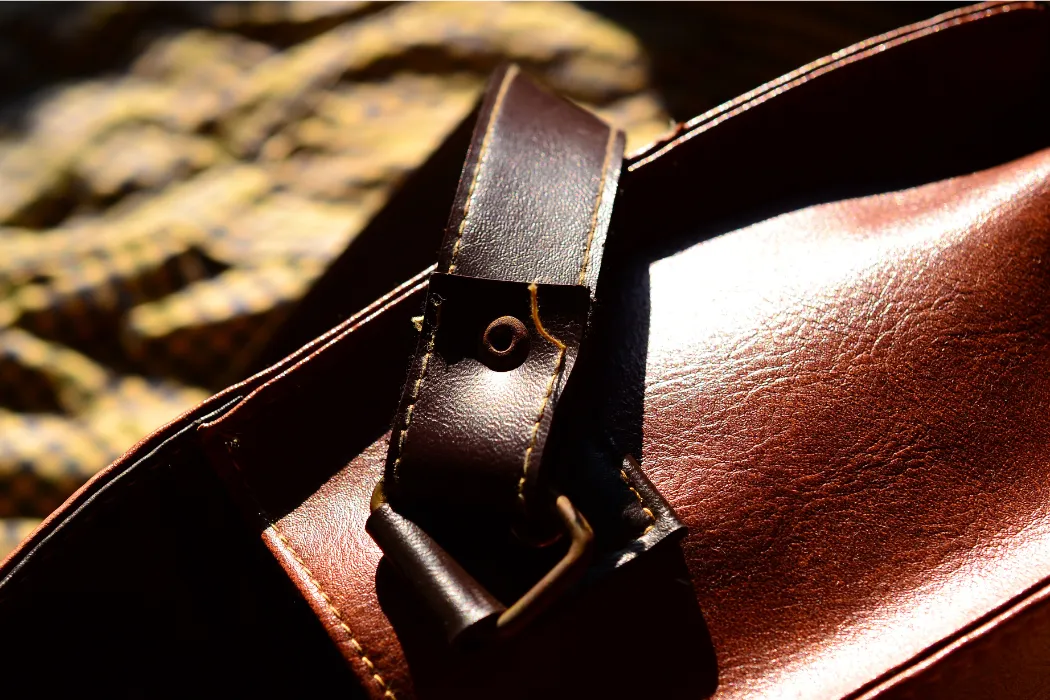
To understand durability, we look at the material’s physics. Leather is a bio-material evolved for protection. The dermis layer of a cowhide consists of millions of collagen fibers woven together by nature in a random, 3-dimensional pattern. This gives it high tensile strength (resistance to being pulled apart) in all directions.
- Single-Piece Integrity: A leather tote is often made from large, continuous panels. There are no gaps, no holes, and no mechanical weak points other than the stitched seams.
- Woven Weakness: A woven bag is composed of thousands of individual strands. Its structural integrity depends entirely on the friction and tension *between* those strands. If one strand snaps, the tension is released, creating a hole that rapidly expands (unravels). A leather bag cannot “unravel.”
Abrasion Resistance: Patina vs. Fraying
Friction is the enemy of all bags. Every time a bag rubs against your hip, a rough wall, or the floor, material is removed.
- Woven Bags Fray: When a natural fiber (straw/raffia) is abraded, the fibers snap and stick out. This is called “fraying.” Once fraying begins, the structural integrity of that strand is compromised, eventually leading to a hole.
- Leather Bags Develop Patina: When high-quality full-grain leather is abraded, it does not lose structural integrity. Instead, the surface fibers are compressed or slightly roughed up. Over time, with exposure to oils and sunlight, these scuffs darken and blend into the leather, creating a patina. A scuff on a leather bag is “character”; a scuff on a woven bag is “damage.”
Manufacturer’s Insight (Hoplok): Sourcing for durability starts at the tannery. At Hoplok’s ProPelli facility, we specifically select high-density bullhides for our heavy-duty tote bags. Bullhide has a tighter fiber structure than standard cowhide. We test these hides to ensure they can withstand the “Laptop Test”—carrying a 5lb laptop and daily gear without the bottom sagging or the handle attachment points stretching out, a common failure in woven bags.
Why Are Most Woven Bags Less Durable? (Materials Matter)
The durability of a woven bag is fundamentally limited by two factors: the brittleness of the material and the openness of the structure. Unlike leather, which relies on millions of microscopic fibers holding each other together, a woven bag relies on the tension of macroscopic strands. If one strand snaps due to dryness or stress, the entire structural integrity of that section fails, leading to rapid unraveling.
Natural Fibers (Straw, Raffia, Rattan): The “Dry Rot” Risk
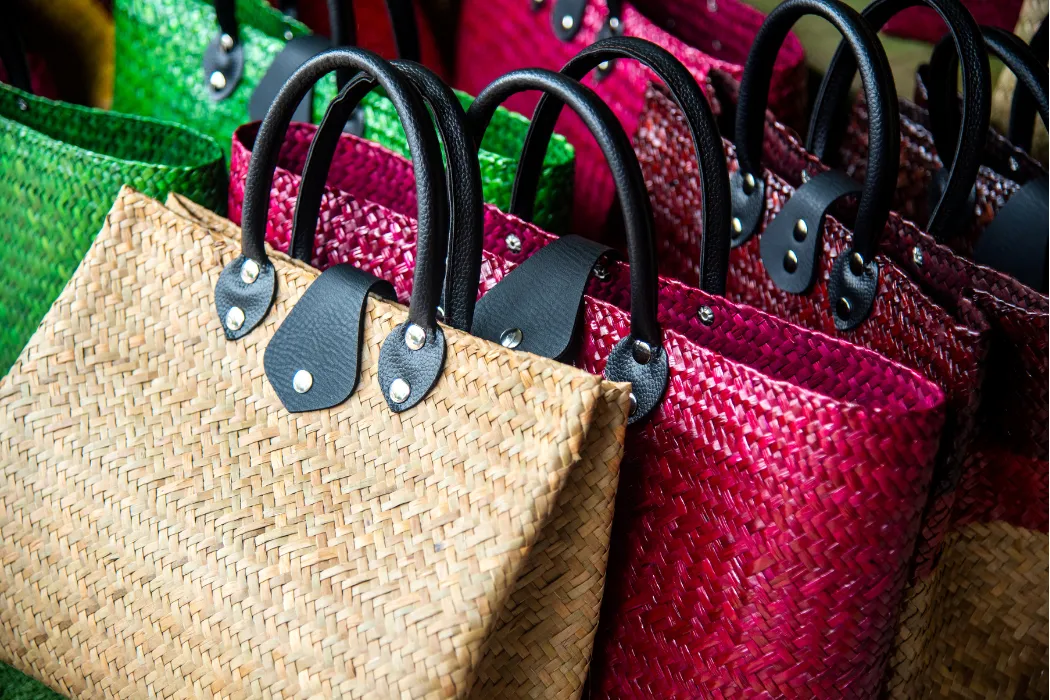
Bags made from harvested plant fibers like straw, raffia, or rattan have a built-in expiration date. Once harvested, these fibers stop receiving nutrients and moisture. Over time, they inevitably dry out.
- No Natural Oils: Unlike leather, which retains natural fats and can be conditioned to stay flexible, dried plant fibers become brittle.
- The “Snap” Point: As they age, they lose flexibility. When a dry straw bag is bent or crushed (like in a suitcase), the fibers don’t flex—they snap. This is “dry rot.” Once a hole forms in a natural weave, it is virtually impossible to repair invisibly.
Synthetic Wovens (Nylon, Polyester): A Durable Alternative?
Synthetic woven bags (often made to look like raffia or used in “market totes”) solve the dry rot problem. Plastic strands do not dry out and are impervious to water. However, they suffer from a different fatal flaw: Snagging.
Because the weave creates loops and texture, it easily catches on keys, jewelry, or rough surfaces. A single snag can pull a loop of nylon out of the weave, puckering the entire bag. While the material itself is strong, the structure is vulnerable to mechanical damage that a smooth leather surface would simply deflect.
The Structural Weakness: Why Handles Fail First
The number one failure point for woven bags is the handle attachment. This is a simple engineering problem.
- Leather Bag: The handle is riveted or stitched onto a solid, continuous sheet of hide. The stress is distributed evenly across the skin.
- Woven Bag: The handle is stitched onto a grid of holes. When you load the bag with weight (like a laptop), the handle pulls up, putting immense stress on the few individual strands of straw or plastic it is attached to. These strands stretch, separate, and eventually snap, causing the handle to rip clean off the body of the bag.
How Do They Compare in Real-World Durability Tests?
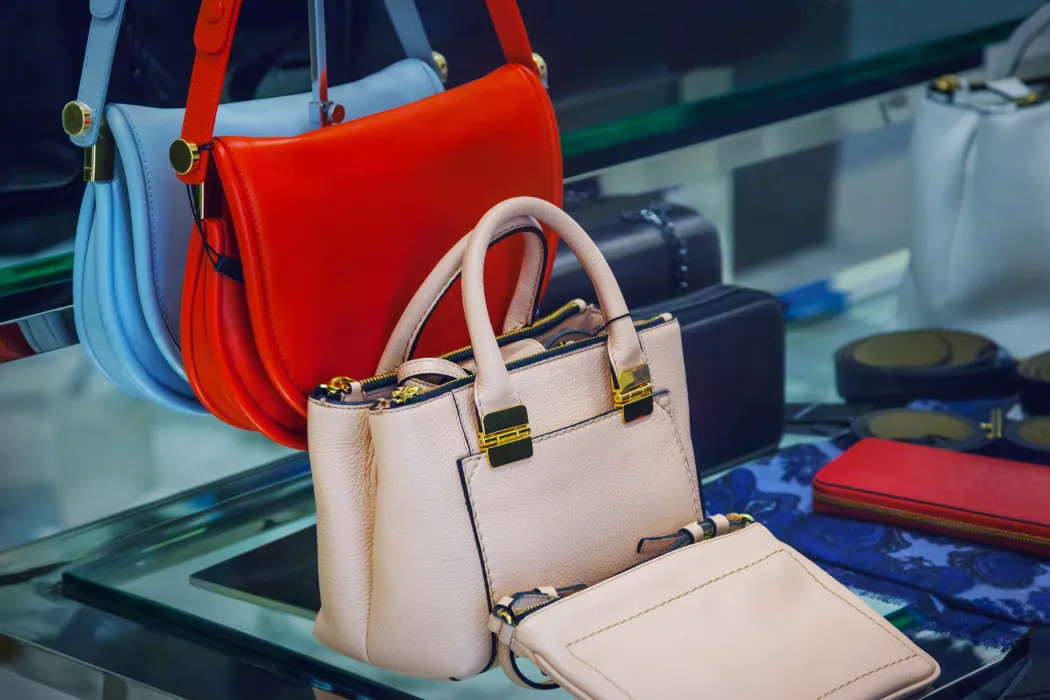
In real-world testing scenarios, leather bags significantly outperform woven bags in water resistance, load capacity, and maintenance. A leather bag is naturally resilient; it can be wiped dry after a spill and conditioned to resist moisture. In contrast, a natural woven bag is highly porous, absorbing water like a sponge, which leads to structural warping and dangerous mold growth. While leather maintains its shape under heavy loads, loose-weave straw bags stretch and deform permanently.
Moisture & Mold: The Enemy of Natural Fiber
This is the silent killer of summer bags. Natural fibers like straw, rattan, and raffia are hydrophilic (water-loving).
- The “Swell and Warp” Effect: When a straw bag gets wet (from rain or a wet poolside towel), the fibers swell. As they dry, they shrink unevenly, causing the bag to warp and lose its shape permanently.
- The Mold Risk: Because the weave traps moisture in its crevices, a damp woven bag stored in a closet is a breeding ground for mold. Once mold penetrates the fibers, the bag is often ruined.
- Leather’s Defense: Leather is skin. It has natural oils that repel water to a degree. If it gets wet, it can be wiped down and air-dried. Applying a conditioner restores its water resistance, making it a survivalist compared to straw.
The “Laptop Test”: Weight Capacity
We advise our B2B clients to never market a natural woven tote as a “work bag.” Here is why:
Put a 5lb (2.2kg) laptop in a leather tote, and the bag maintains its structure. The dense fiber network distributes the weight across the entire panel. Put that same laptop in a straw tote, and gravity pulls the heavy, rectangular object straight down. The loose weave stretches at the bottom, creating an unsightly bulge. Over just a few weeks, this focused pressure will stretch the bottom fibers beyond their elastic limit, causing the bag to sag permanently or the bottom to blow out completely.
Leather vs. Woven Bags Durability Matrix
This table summarizes the performance differences for a buyer deciding on their next investment.
| Feature | Leather Bag | Natural Woven (Straw/Raffia) | Synthetic Woven (Nylon) |
|---|---|---|---|
| Lifespan | 20+ Years | 1 – 3 Summers | 3 – 5 Years |
| Water Resistance | Moderate to High (Wipeable) | Very Low (Absorbs & Molds) | High (Plastic is waterproof) |
| Repairability | High (Stitch/Patch/Dye) | None (Cannot fix broken fibers) | Low (Hard to fix snags) |
| Load Capacity | High (Laptop ready) | Low (Light beach gear only) | Moderate (Can stretch) |
| Aging Style | Develops Patina | Becomes Brittle / Dry Rot | Looks Worn / Frayed |
Is “Woven Leather” (Intrecciato) the Most Durable Option?
Woven leather, often known by the Italian term Intrecciato, represents a unique hybrid that can be, in specific ways, more durable than solid leather. Because it is constructed by weaving double layers of leather strips together, the resulting material has immense tensile strength and elasticity, often exceeding that of a single hide. While it is significantly heavier and more expensive to produce, the textured surface excels at hiding scratches, making it a premier choice for long-term durability.
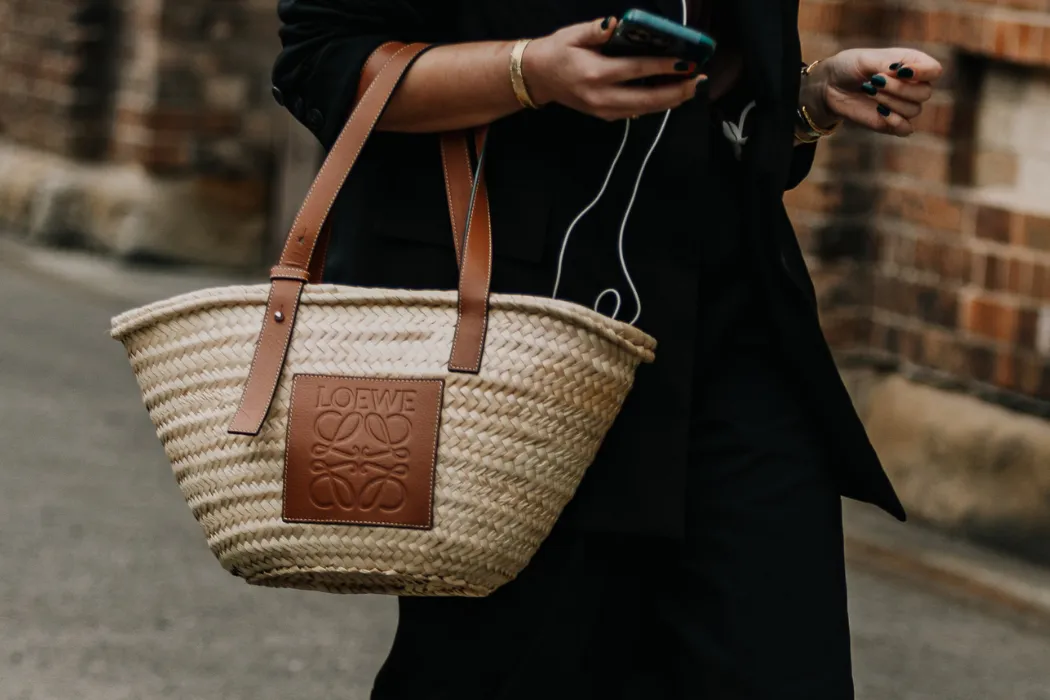
What is Intrecciato? (The Bottega Method)
This technique, popularized by brands like Bottega Veneta, transforms leather manufacturing. Instead of using a single panel of hide, the leather is cut into long, precise strips called “fettuccine.” These strips are then hand-woven through a slotted base sheet or woven together on a loom.
From a manufacturing perspective, this is an inefficient process in terms of yield. It typically requires 1.5 to 2 times the amount of leather to make a woven bag compared to a solid leather bag of the same size. This density is what gives the bag its characteristic weight and luxurious “slouch.”
Why It Can Be Stronger Than Solid Leather
The structural advantages of woven leather are significant for durability:
- Micro-Elasticity: A solid piece of stiff leather can crease or crack if bent repeatedly at sharp angles. A woven structure has natural “give.” The individual strips can shift slightly, allowing the bag to flex and absorb stress without damaging the fiber structure.
- Scratch Camouflage: On a smooth “Box Calf” leather bag, a single scratch is a scar. On a woven bag, the complex, 3D texture visually breaks up the surface. Scuffs and scratches disappear into the weave pattern, keeping the bag looking newer for longer.
- Double Thickness: Because strips overlap, most parts of the bag are effectively two layers of full-grain leather thick, providing exceptional resistance to puncture.
Manufacturer’s Insight (Hoplok): We operate a specialized weaving workshop for our high-end clients. The difference between a luxury woven bag and a cheap one lies in the edge finishing. At Hoplok, we laser-cut our leather strips to a tolerance of 0.1mm. Crucially, we often apply edge paint or burnish the sides of every single strip before weaving. This prevents the raw edges of the strips from fraying or absorbing moisture over years of use, a time-consuming step that budget manufacturers always skip.
Which Bag is Easier to Maintain and Repair?
While leather bags generally require more active maintenance (like regular conditioning), they offer a critical advantage over woven bags: repairability. A high-quality leather bag is an asset that can be restored, restitched, and redyed, extending its life indefinitely. In contrast, woven bags, while low-maintenance day-to-day, are essentially consumable goods. Once a natural fiber strand snaps or a hole forms in the weave, it is structurally impossible to repair invisibly, meaning a damaged woven bag is often a ruined bag.
Cleaning and Conditioning Leather
Leather is organic material; like skin, it needs to be kept clean and moisturized. This maintenance “cost” is actually an investment in longevity.
- Cleaning: Surface dirt on full-grain leather can be easily wiped away with a damp cloth and mild soap. Unlike a woven crevice that traps sand and dirt permanently, leather is smooth and hygienic.
- Conditioning: Applying a leather cream every 6-12 months replenishes natural oils. This simple act prevents cracking and allows the leather to self-heal minor scuffs, blending them into a rich patina rather than showing them as damage.
The “Impossible Repair” of Broken Woven Strands
The physics of a woven bag make repair a nightmare. The structure relies on the tension of continuous strands.
If a piece of straw, rattan, or synthetic wicker snaps:
- Tension Release: The tension in that specific area collapses, causing the surrounding strands to loosen and the hole to widen rapidly.
- No Patching: You cannot “patch” a straw bag. Glues rarely hold on dry, dusty fibers, and stitching through brittle straw usually causes more breakage.
- Unraveling: For synthetic wovens, a single snag that breaks a thread can cause a “run” in the fabric, ruining the aesthetic of the entire bag.
Longevity Expectation: Decades vs. Seasons
This difference in repairability dictates the lifespan.
A Leather Bag measures its life in decades. If a handle breaks, a cobbler can rivet on a new one. If a seam pops, it can be restitched.
A Woven Bag measures its life in seasons. It is designed to look perfect for a summer or two. Once the elements make the fibers brittle and a handle snaps, the bag has reached the end of its lifecycle.
How Should Brands Choose Between Woven and Leather?
The choice between woven and leather isn’t just about durability; it’s about aligning material performance with your brand’s promise. If your product line focuses on “Resort/Summer” aesthetics, woven materials are essential, but they should be marketed as seasonal accessories. If your brand promise is “Daily Carry” or “Heritage Quality,” full-grain leather is the only viable option to meet customer expectations for longevity.
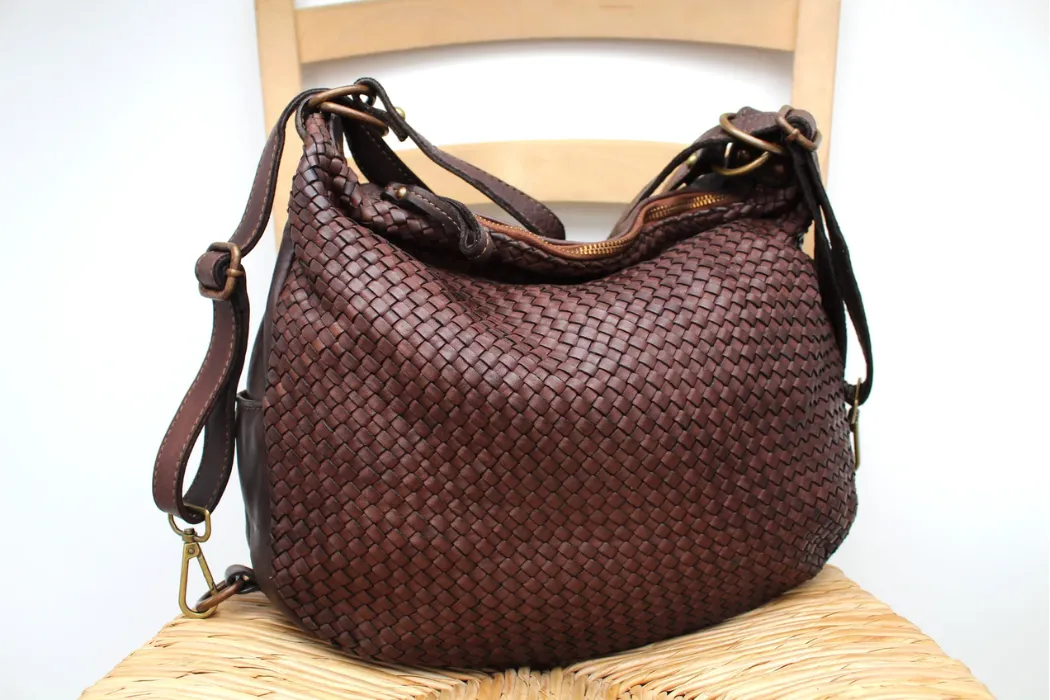
The Summer Resort Collection
For a capsule collection targeted at beach vacations, poolside lounging, or summer weddings, durability takes a backseat to style and weight.
Recommendation: Use high-quality natural raffia or a robust synthetic weave.
Why: The customer prioritizes a lightweight, breathable bag that matches a summer aesthetic. They accept that a straw tote is not a “forever bag” but a seasonal statement piece. However, to reduce returns, reinforce stress points (like handles) with leather patches.
The Corporate/Commuter Line
For a work tote, briefcase, or daily backpack, the bag must withstand heavy loads (laptops), abrasion (commuting), and variable weather.
Recommendation: Use Full-Grain or Top-Grain Leather.
Why: A woven bag will sag and fray under the weight of a laptop within weeks. Leather provides the necessary structure and professional appearance. For brands wanting a “woven look” in this category, embossed leather (leather stamped with a woven pattern) is a durable compromise.
Material Selection Guide for Brand Managers
This matrix helps product developers match the material to the target consumer’s lifestyle.
| Target Audience | Recommended Material | Key Selling Point |
|---|---|---|
| Vacationer / Beachgoer | Natural Raffia / Straw | Lightweight, Breathable, Seasonal Style |
| Office Worker / Commuter | Full-Grain Leather | Structure, Load Capacity, Professional Look |
| Luxury Collector | Woven Leather (Intrecciato) | Artisanal Craft, Scratch Camouflage, Soft Structure |
| Budget Shopper | Synthetic Woven (Poly/Nylon) | Water Resistant, Affordable, Durable enough for 1-2 seasons |
Frequently Asked Questions
1. How long do woven leather bags last?
High-quality woven leather (intrecciato) bags are exceptionally durable, often lasting 10 to 20 years or more—comparable to solid leather bags. Because they are constructed from double layers of leather strips, they possess high tensile strength and flexibility. Unlike straw bags that dry out and crack, woven leather maintains its integrity if conditioned regularly.
2. Are woven bags waterproof?
No. Natural woven bags (straw, raffia, cane) are highly porous and absorbent. They will soak up water, swell, and potentially rot. Synthetic woven bags (nylon) are water-resistant materials, but the open weave structure means water will pass right through the holes, soaking the contents. Leather bags offer much better protection against rain.
3. Can you repair a straw bag?
It is very difficult and usually not worth the cost. When a natural fiber strand snaps, it releases the tension of the weave, causing a hole to form and widen. Because the fibers are dry and brittle, you cannot sew them back together without causing more breakage. Glues rarely hold effectively on dusty, dry fibers. Once damaged, a straw bag is typically at the end of its life.
4. Is woven leather real leather?
Yes. Authentic woven leather bags are made from real animal hides, typically high-end Nappa (sheepskin) or Calfskin. These leathers are chosen for their softness and pliability, which is necessary to weave the strips without cracking. However, cheap “woven style” bags are often made from embossed PU (fake leather stamped with a grid pattern), so always check the material tag.
5. Why are woven leather bags so expensive?
The price reflects the extreme labor costs and material yield. A woven bag requires 1.5x to 2x more leather than a solid bag due to the overlapping strips. Furthermore, weaving is a slow, manual process. A skilled artisan might spend 1-2 days hand-weaving a single bag, whereas a standard leather tote can be stitched by machine in under an hour.
6. Do leather bags get moldy?
Yes, if stored improperly. Leather is organic and can grow mold if left in a damp, dark closet. However, leather is much easier to rescue than straw. Surface mold on leather can often be wiped off with a mild vinegar solution and the bag re-conditioned. Mold in a straw bag penetrates the dry fibers deeply, making it nearly impossible to remove without destroying the structural integrity of the bag.
Conclusion: Investing in the Right Kind of Durability
Comparing a woven bag to a leather bag is like comparing a sprinter to a marathon runner. Both have their place in a wardrobe, but they are built for completely different races. A woven bag (straw/raffia) is designed for the sprint of a single summer season. It is lightweight and stylish, but structurally fragile with a lifespan measured in months. A leather bag (full-grain) is built for the marathon. It is heavier, but its dense fiber structure allows it to withstand decades of daily abrasion, heavy loads, and weather.
For a fashion brand, the secret to a successful accessories line is not choosing one over the other, but deploying them correctly based on the use-case. A balanced collection requires the seasonal excitement of woven textures for the resort line, and the perennial reliability of solid leather for the core collection.
Hoplok Leather offers a unique competitive advantage in this divided market. We possess the dual capability to manufacture rugged, full-grain leather totes (using our ProPelli hides) and intricate, hand-woven Intrecciato leather bags that combine the best of both worlds. Contact Hoplok Leather today to let us help you select the most durable, appropriate materials for your next collection, ensuring your products last as long as your brand reputation demands.