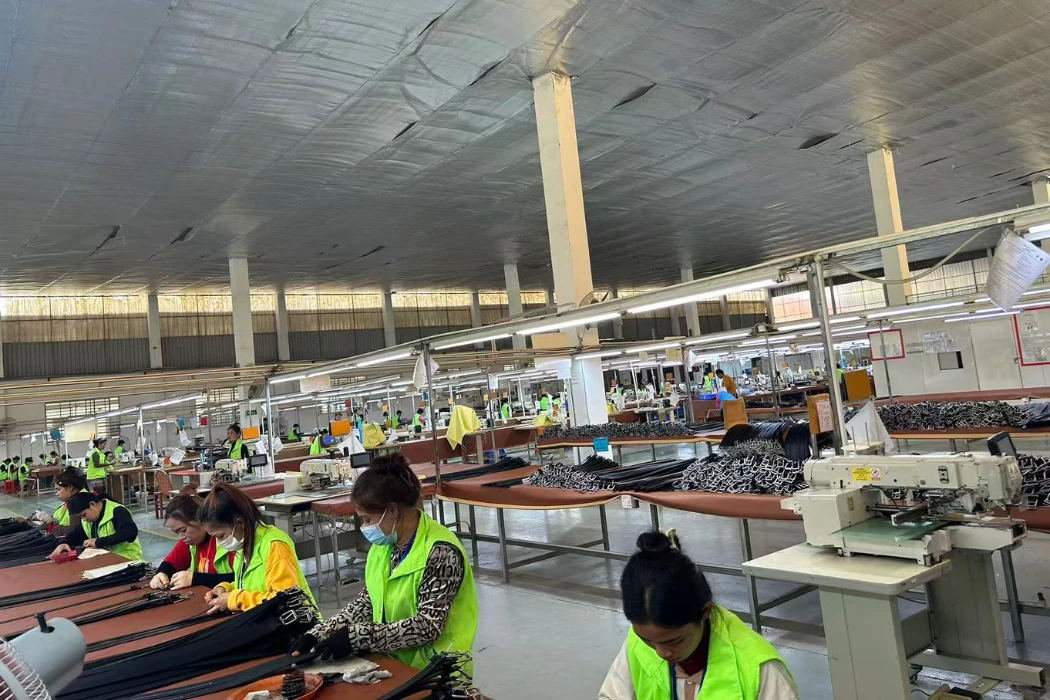
For luxury brands and B2B buyers, a factory audit is the only firewall between a premium legacy and a supply chain catastrophe. In an era where global manufacturing hubs often present falsified BSCI or SMETA credentials, relying on paperwork alone exposes your brand to ethical violations and sub-par craftsmanship. To protect your brand equity, you must move beyond basic quality control and implement an engineering-grade assessment that holds suppliers to the same rigorous standards as industry leaders like LVMH and Kering.
This guide provides a professional roadmap for auditing a bag factory, covering everything from verifying LWG and GRS certifications to technical machinery benchmarks. You will learn how to evaluate precision equipment—ensuring stitch speeds of 1,800–2,700 SPM and cutting tolerances of ±1 mm—while implementing AQL 1.5/2.5 sampling plans to keep defect rates below the critical 1% threshold. Whether you are conducting a physical walk-through or reviewing a Material Review Board (MRB) disposition, these steps ensure your production partners consistently embody the technical and ethical standards of the luxury market.

Why is a comprehensive factory audit critical for luxury brands?
For luxury brands like LVMH and Kering, factory audits act as a critical firewall. They move beyond basic quality control to verify ethical labor practices, environmental stewardship (LWG/GRS), and the technical precision required to maintain a luxury legacy while mitigating risks of certification falsification.
The Three Pillars: Ethics, Product Consistency, and Sustainability
A luxury-grade audit functions as a sophisticated filter designed to protect brand equity. Unlike standard manufacturing assessments, these evaluations prioritize long-term stability and ethical integrity over simple output volume, focusing on three core domains identified by industry research.
- Social Responsibility: Verifying employment standards, wage fairness, and SA8000 compliance to prevent child labor and ensure workplace safety.
- Quality Consistency: Evaluating production equipment stabilization and defect prevention systems to keep defect rates below the 1% threshold.
- Environmental Stewardship: Assessing wastewater management and the use of LWG-certified or GRS-certified recycled materials.
Mitigating Supply Chain Vulnerabilities and Certification Risks
The modern supply chain faces a “certification paradox” where global manufacturing hubs often present valid BSCI or SMETA credentials that may be falsified or maintained only superficially during the window of an official audit. Comprehensive audits mitigate this risk through unannounced physical walk-throughs and deep-dive documentation reviews.
Luxury conglomerates such as LVMH and Kering now mandate rigorous adherence to internal benchmarks, including the “Life 360” initiative and the Kering Sustainability Index. These frameworks require annual re-assessments to ensure that suppliers do not lose compliance between official certification cycles, focusing heavily on operational documentation and safety protocols.
- Addressing the risk of falsified BSCI or SMETA credentials common in global manufacturing hubs.
- Meeting LVMH “Life 360” and KERING Sustainability Index requirements for annual re-assessments.
- Validating health and safety measures, REACH (Europe) compliance, and CPSIA (USA) safety protocols through physical walk-throughs.
Ultimately, these audits serve as a defensive mechanism against structural vulnerabilities. By extending oversight beyond direct suppliers to include the verification of chemical compliance and labor standards, luxury brands can ensure their partners consistently embody the premium standards their heritage represents.
Step 1: Verifying Social and Environmental Certifications (BSCI/SMETA)
Verifying certifications involves a multi-step audit of labor standards, health and safety, and business ethics. By reviewing BSCI and SMETA (2-pillar or 4-pillar) reports, brands ensure factories like Hoplok meet ETI Base Codes, protecting against child labor and unsafe working conditions while maintaining a defect rate below 1%.
The Core Pillars of BSCI and SMETA Audits
To maintain transparency in the bag manufacturing sector, auditors focus on the foundational pillars of the ETI Base Code. These assessments are not merely administrative; they represent a commitment to human rights and physical facility safety within high-capacity production environments.
- Labor Standards: Rigorous assessment of child labor, forced labor, living wages, and maximum working hour limits per the ETI Base Code.
- Health and Safety: Inspection of the 50,000 sqm manufacturing environment to ensure fire safety, PPE usage, and ergonomic workstation setups.
- Business Ethics and Environment: For 4-pillar SMETA audits, verifying anti-corruption policies and waste management protocols for leather scraps and chemical runoff.
Technical Audit Workflow and Documentation Review
The verification process follows a technical sequence that transitions from theoretical self-reporting to on-site reality checks. This ensures that the documentation provided by management matches the lived experience of the workforce and the physical state of the equipment.
- Pre-Audit SAQ: Reviewing the Self-Assessment Questionnaire (SAQ) results against actual on-site conditions to identify discrepancies.
- Document Reconciliation: Cross-referencing labor contracts, chemical usage records (REACH/CPSIA compliance), and training logs with worker interviews.
- Corrective Action Plan Report (CAPR): Monitoring the 12-to-24 month audit renewal cycle and ensuring all non-conformities are addressed via a formal closing meeting.
While the current audit frameworks provide a strong process-level overview, buyers should remain aware of the critical gaps in standard reports. Most standard audits do not automatically include specific ISO numbers or comparative failure rates, requiring auditors to request supplemental documentation for a complete engineering-grade assessment of the facility’s compliance thresholds.
Step 2: Evaluating Raw Material Management and Storage
An effective audit of raw material management focuses on documented traceability through Bill of Materials (BOM), adherence to global quality standards like ISO 9001 and LWG, and specialized storage protocols for sustainable fibers such as GRS-certified recycled content.
The integrity of the bag manufacturing process begins long before the first stitch is placed. For technical writers and auditors, evaluating raw material management is about verifying the “DNA” of the product. This phase of the audit ensures that every roll of fabric, spool of thread, and hardware component is not only accounted for but also meets the specific environmental and qualitative claims marketed to the end consumer.
Core Standards for Material Sourcing and Traceability
To ensure accountability, factories must demonstrate a rigorous sourcing methodology that aligns with international textile and leather standards. This involves a granular review of the supply chain journey from the raw fiber to the factory warehouse.
- Verification of the Bill of Materials (BOM) logging material type, technical specifications, and manufacturer data before storage entry.
- Check for LWG (Leather Working Group) certifications for hides and GOTS/OCS labels for organic raw textiles.
- Inspection of GRS (Global Recycled Standard) compliance requiring a minimum of 20% recycled content with a verified chain-of-custody.
- Implementation of ISO 9001 quality management systems and ISO 14001 environmental protocols for material handling.
Technical Storage Protocols and Inventory Control
Sourcing high-quality materials is futile if the storage environment compromises their physical integrity. Auditors must inspect the technical infrastructure of the warehouse, focusing on atmospheric controls and the digital systems used to track material aging and movement.
- Assessment of track-and-trace functionality integrated into storage systems for full transparency from receipt to dispatch.
- Evaluation of storage hygiene including Clean-in-Place (CIP) systems for bulk handling and wastewater/scrap management.
- Testing of biodegradable raw materials against ASTM D6400 or EN 13432 standards (requiring 90% breakdown in 180 days).
- Auditing inventory for AQL 1.5/2.5 standards via ISO lab reports and verification of FSC-certified shipping cartons.
Expert auditors typically look for a synergy between physical storage conditions and documented quality. For instance, the presence of GRS or OCS labels on inventory should be matched by digital entries in the ERP system that prevent the commingling of certified sustainable materials with conventional stock. This prevents cross-contamination and ensures the environmental claims made on the final bag are legally and technically defensible.
Scale Your Brand with Premium Custom Leather Bags

Step 3: Assessing Cutting and Stitching Precision Equipment
Precision auditing focuses on verifying machinery output against industry standards, such as stitch speeds of 1,800–2,700 SPM and cutting tolerances of ±1 mm. Utilizing CNC and laser technology alongside ISO #101 or #401 stitch classifications ensures the durability and aesthetic consistency required for premium bag manufacturing.
Evaluating Cutting Precision and Material Yield
The foundation of a high-quality luxury bag lies in the initial dimensional accuracy of the raw material panels. Advanced facilities have transitioned away from manual die-cutting toward automated systems that minimize human error and drastically reduce material waste. When auditing a factory’s cutting department, the focus must remain on the integration of hardware and software designed to handle challenging substrates without deformation.
- Audit for CNC or laser cutting systems that provide cleaner edges on luxury materials and complex patterns.
- Verify the use of servo-motor driven systems that achieve cutting tolerances of ±1 mm for woven fabrics to ensure perfect alignment.
- Assess material-specific feed pressure settings, crucial for substrates like kraft paper, laminates, or high-grade leather used in premium manufacturing.
- Check for the integration of real-time QC software that documents any deviations in dimensional accuracy during the pre-stitching phase.
Technical Benchmarks for Stitching Speed and Seam Integrity
Stitching is both a functional and aesthetic requirement in the luxury bag sector. Industrial capacity must be balanced with precision to ensure that high-speed production does not compromise the tensile strength of the seams. Technical benchmarks should be verified against ISO standards to ensure the longevity of the product under stress.
- Benchmark stitch speeds against industry tiers: 1,800–2,600 SPM for portable units and up to 2,700 SPM for high-speed industrial machines.
- Validate stitch classifications: Single-thread chainstitch (ISO #101) for light utility and dual-thread plain stitch (ISO #401) for heavy-duty structural seams.
- Ensure industrial capacity meets targets of 500–1,400 bags/hour with adjustable stitch lengths between 7 mm and 10.5 mm.
- Confirm maintenance of compressed air requirements (4 kg/cm²) for automated thread cutting and pneumatic height-adjustable heads.
Ultimately, the combination of high SPM (stitches per minute) and consistent air pressure ensures that the machinery can operate at peak efficiency without overheating or causing thread breaks. For premium brands, these technical specifications are non-negotiable indicators of a factory’s ability to maintain AQL 1.5/2.5 compliance throughout a mass-production run.
Step 4: Reviewing Inline and Final Quality Control Protocols
Effective quality control in bag manufacturing follows ISO 9001 standards, utilizing inline inspections for stitching and seam tension alongside final AQL 1.5/2.5 sampling. This two-phase approach ensures structural integrity, material compliance, and functional durability of components like zippers and straps before bulk dispatch.
| Inspection Phase | Key Technical Metrics | Primary Standard/Goal |
|---|---|---|
| Inline Monitoring | Stitching alignment, seam tension, zipper attachment | ISO 9001 Catch-at-source |
| Final Pre-Shipment | GSM tolerance, colorfastness, load-bearing tests | AQL 1.5/2.5 Compliance |
| Functionality Testing | Zipper cycle tests, strap stress tests, print registration | Structural Durability |
Inline Monitoring and Real-Time Defect Prevention
Inline quality control centers on real-time monitoring during the assembly process to identify defects at the source. By implementing a systematic approach at each workstation, factories can prevent minor misalignments from escalating into bulk batch failures. This phase is characterized by a blend of human oversight and high-precision mechanical validation.
- ISO 9001 compliance for consistent in-process monitoring of assembly line workstations.
- Stitching alignment and seam tension verification to prevent structural failures in heavy-duty bags.
- Component integration checks for zipper attachment, bar-tacks, and hardware sturdiness.
- Implementation of automated precision tools like laser cutting and QC software for real-time workmanship validation.
AQL Standards and Technical Functionality Testing
The final verification stage transitions from process monitoring to rigorous technical data validation. Utilizing statistical sampling methods, the factory ensures that the bulk production adheres to the agreed-upon technical specifications and safety regulations before the goods leave the facility.
- Adherence to AQL 1.5/2.5 sampling levels for identifying critical and major defects in bulk batches.
- Fabric performance metrics including GSM (grams per square meter) tolerance and colorfastness verified by spectrophotometer.
- Mechanical stress tests: Zipper cycle tests (rapid open/close) and load-bearing capacity spot testing for straps.
- Dimensional accuracy and print registration checks to ensure the final product matches the 3D design specifications.
To ensure total transparency, auditors and procurement managers should request comprehensive lab reports that tie directly to these standards. Validating factory claims through measurable outputs like GSM tolerances and mechanical cycle tests provides a level of security that verbal assurances cannot replicate.
Step 5: Testing Staff Skill Levels and Technical Knowledge
Assessing staff skill levels involves verifying ISO/IEC 17025 accreditation for lab technicians and utilizing Knowledge, Skills, and Abilities (KSA) benchmarking. Auditors should review formal skills matrices, mechanical aptitude scores (minimum 70%), and documented inspector training protocols to prevent quality control errors and ensure production consistency.
Standardizing Competency via ISO/IEC 17025 and KSA Benchmarking
The foundation of technical proficiency in luxury bag manufacturing is built upon international standards that guarantee impartial and accurate testing. For on-site laboratories, auditors prioritize ISO/IEC 17025 accreditation, which ensures that and the facility operates under a rigorous management system capable of producing valid results. Without this accreditation, the reliability of stress tests on leather and hardware remains questionable.
- Requirement of ISO/IEC 17025 accreditation for testing laboratories to verify technical competence and impartiality.
- Utilization of the Knowledge, Skills, and Abilities (KSA) model, targeting a minimum score of 70 for job eligibility.
- Recognition of regional accreditation bodies such as CNAS (China), UKAS (UK), and DAkkS (Germany) in validating lab operations.
- Assessment of core manufacturing competencies including mechanical aptitude, cognitive reasoning, and problem-solving abilities.
Technical Training Protocols and Skills Matrix Management
Moving beyond theoretical knowledge, the audit must evaluate the practical application of training programs. Effective factories utilize a two-way training protocol where inspectors do not just receive instructions but provide feedback on the clarity of visual standards. This dialogue minimizes “false-positive” reports where acceptable variations are incorrectly flagged as defects, which can unnecessarily stall production lines.
- Implementation of a two-way inspector training protocol to align visual standards and minimize false-positive quality reports.
- Maintenance of an updated Skills Matrix to track technician certifications in tensile strength, abrasion resistance, and buckle performance testing.
- Verification of personnel development records, including ongoing education on specific test procedures and hardware finishes.
- On-the-job practical testing requirements to evaluate work quality and precision over extended production cycles.
To maintain oversight, management must utilize a Skills Matrix that provides a real-time overview of current personnel qualifications. This document serves as a roadmap for auditors to verify that the staff performing critical tests—such as corrosion resistance on metallic zippers or the tensile strength of handles—have the specific, up-to-date certifications required for those high-stakes evaluations.
How to implement an AQL standard for bulk bag batches?
Implementing an AQL standard involves selecting a sampling plan (typically ISO 2859-1, Level II) based on your total batch size. You then pre-define acceptable defect thresholds—commonly 0.0% for critical safety issues, 2.5% for major functional flaws, and 4.0% for minor aesthetic variances—to determine if a batch passes or fails.
Selecting the Statistical Framework and Inspection Level
Establishing a rigorous quality control process begins with the adoption of recognized international sampling standards. Most global manufacturers utilize ISO 2859-1 or the North American equivalent, ANSI/ASQ Z1.4. These frameworks provide the mathematical foundation necessary to ensure that a small sample size can accurately represent the quality of an entire production run, minimizing the need for 100% inspection while maintaining statistical integrity.
- Utilize General Inspection Level II as the default industry standard for balancing inspection effort with statistical confidence.
- Determine the ‘Sample Size Code Letter’ from the AQL tables by matching your total lot size (e.g., 5,000 units) with the selected inspection level.
- Secure pre-alignment on these standards within your supplier contract to prevent disputes during batch rejection.
Defining Defect Thresholds and Accept/Reject Criteria
Once the sampling framework is in place, you must categorize potential defects based on their severity and impact on the end-user. In the context of bulk bag production, these categories serve as the quantitative “pass/fail” markers that inspectors use to evaluate the sample lot. These thresholds are not arbitrary; they are specifically calibrated to safety, functionality, and brand aesthetics.
- Set a 0.0% critical defect tolerance for safety hazards or legal non-compliance items.
- Apply a 2.5% Major Defect limit for functional issues like broken zippers or structural stitching failures.
- Establish a 4.0% Minor Defect limit for aesthetic issues such as loose threads or minor pigment variations.
- Compare the physical count of defects against the ‘Ac’ (Accept) and ‘Re’ (Reject) numbers provided by the ISO 2859-1 tables.
- Incorporate logistics-specific defects for bulk shipments, such as overfilled shoppers or stacking heights exceeding 1.4m.
To practically apply this to a batch of 5,000 units, an inspector would typically pull a sample of 200 units. At an AQL of 1.0%, the batch is accepted if 5 or fewer defects are found, but rejected if 6 or more are identified. This systematic approach ensures that even large-scale orders move through the supply chain with predictable quality levels and manageable risk.
What are the red flags to look for during a physical factory walk-through?
Key red flags during a bag factory walkthrough include safety violations like missing PPE or blocked fire exits, lack of equipment calibration, and poor material storage. Operational failures, such as failing zipper/drop tests (ISTA 1A) or inconsistent metal detection, signal deeper systemic risks that could lead to high defect rates.
| Inspection Category | Critical Red Flag | Acceptable Standard |
|---|---|---|
| Compliance & Labor | Missing export licenses or underage workers on lines. | Zero-tolerance; valid legal documentation present. |
| Durability Testing | Zipper or button failure within 20 cycles. | Smooth operation; 100% functionality. |
| Safety Protocols | Blocked fire exits; no broken needle procedure. | Clear exits; mandatory metal detection logs. |
| Storage & Environment | Presence of mildew or strong chemical odors. | Proper ventilation; segregated chemical storage. |
Operational and Environmental Deficiencies
A factory’s environment serves as the first indicator of its management’s commitment to quality and ethical standards. During a walkthrough, the presence of zero-tolerance indicators, such as the absence of business licenses or the presence of underage workers, should result in an immediate termination of the audit. Beyond legal adherence, the baseline facility conditions—including lighting sufficiency in Quality Control areas and temperature regulation—directly impact the physical integrity of materials like leather and synthetic textiles.
- Facility Basics: Inadequate lighting in QC and storage areas, or poor ventilation that increases material degradation risks.
- Safety and Hygiene: Missing Personal Protective Equipment (PPE), unmarked fire exits, or lack of labeling on hazardous cleaning chemicals.
- Material Mismanagement: Improper labeling of leather hides and failure to separate chemicals, leading to potential contamination or “bleeding” of colors.
Technical Performance and Quality Control Failures
Technical red flags often hide in plain sight and require a specialized eye to detect. In bag manufacturing, functional reliability is paramount. If a factory cannot demonstrate consistent internal testing—such as the ISTA 1A drop test or zipper endurance checks—it signals that the finished goods may fail prematurely in the hands of the consumer. Furthermore, precision in measurements is a non-negotiable metric for high-end soft goods.
- Functional Failures: Zippers or buttons malfunctioning before 20 open-close cycles or bags showing structural damage after a standard drop test.
- Precision Deviations: Final product measurements or weights deviating more than +/- 3% from the approved gold sample or technical specification sheet.
- Integrity Risks: Absence of broken needle procedures or failure to utilize calibrated metal detection equipment for bags containing metal hardware.
- Traceability Gaps: A failure to maintain documented batch records for raw materials and a lack of routine calibration logs for testing equipment.
These red flags are not merely isolated incidents but often point to a systemic failure in the factory’s Quality Management System (QMS). When manufacturers prioritize output over calibration and documented batch records, the likelihood of an AQL (Acceptable Quality Level) failure during final inspection increases exponentially.
How to document and manage non-conformity reports effectively?
Effective non-conformity management involves documenting the defect’s severity (Critical, Major, Minor), identifying the violated ISO 9001 or SOP requirement, and utilizing root cause analysis tools like the 5 Whys. This process ensures products are quarantined, reviewed by a Material Review Board (MRB), and resolved through Corrective and Preventive Actions (CAPA).
Core Components and Severity Classification of an NCR
A robust Non-Conformity Report (NCR) serves as the primary technical record for any deviation from established quality standards. In a manufacturing environment, such as a bag factory, this document must provide a clear bridge between the physical defect observed and the regulatory or internal requirement that has been violated.
- Identification of non-conformance type categorized by severity: Critical (safety/recall risk), Major (significant quality impact), or Minor (isolated procedural issues).
- Mandatory reference to unmet requirements, specifically citing ISO 9001 clauses, internal SOPs, or customer specifications.
- Requirement for objective evidence including high-resolution photos, physical measurements, and defect trend charts to support the claim.
- Traceability mapping to specific lot numbers, production dates, and material batches to ensure localized containment.
Proper classification is vital because it determines the speed and depth of the response. While a minor seam deviation might only require localized correction, a critical failure in material integrity could trigger an immediate production halt and a full-scale forensic audit of the supply chain.
Technical Resolution Workflow: Root Cause Analysis and MRB Disposition
Once a non-conformance is identified and the affected materials are quarantined, the workflow transitions from documentation to engineering-led resolution. This phase focuses on systemic prevention rather than merely fixing the immediate physical symptom.
- Implementation of engineering-grade Root Cause Analysis (RCA) using tools such as Ishikawa (Fishbone) Diagrams, 5 Whys, and Fault Tree Analysis.
- Formation of a Material Review Board (MRB) to determine product disposition, such as rework, scrap, or ‘use-as-is’ with documented justification.
- Integration with CAPA (Corrective and Preventive Action) systems to update FMEA (Failure Mode and Effects Analysis) and prevent recurrence.
- Final verification and closure protocols involving post-implementation monitoring and notified body verification for compliance with standards like EU MDR or FDA regulations.
The closure of an NCR is not simply the completion of a form; it is a regulatory milestone. For factories complying with international standards, the Material Review Board must provide a rigorous technical justification for every decision, especially when opting for a “use-as-is” disposition, which requires evidence that the deviation does not compromise the final product’s safety or intended function.
Final Thoughts
Conducting a professional leather bag factory audit is not merely an administrative hurdle, but a strategic investment in brand longevity and consumer trust. By moving beyond a superficial review of certificates and diving deep into technical precision, raw material traceability, and the actual skill levels of the workforce, luxury brands can transform their supply chain from a source of risk into a competitive advantage. The integration of high-level standards like ISO 9001 and AQL 1.5/2.5 ensures that every stitch and seam reflects the heritage of quality that premium markets demand.
Ultimately, the success of a luxury partnership hinges on the move from reactive monitoring to proactive quality management. When brands utilize technical benchmarks—such as CNC cutting tolerances, specific SPM stitching speeds, and rigorous root cause analysis for non-conformities—they establish a transparent ecosystem where defects are caught at the source rather than the retail shelf. In the modern era of “Life 360” and heightened sustainability oversight, a robust audit remains the final, most effective baseline for delivering excellence at scale.
Frequently Asked Questions
How can I verify if a bag factory is truly reliable?
Reliability is verified through a technical auditing framework focusing on ISO 9001 certification, achievement of AQL 2.5 Level II standards, and documented 99% pass rates. Key indicators include multi-stage inspection protocols (incoming, in-line, and final) and REACH compliance for all materials and hardware.
What are the industry standard AQL levels for luxury bags?
The industry benchmark for bag inspections uses Level II sampling. A ‘good’ standard allows for 0.01 critical defects, 2.5 for major defects, and 4.0 for minor defects. Top-performing facilities like Hoplok maintain a total defect rate consistently below 1%.
How do I ensure a SMETA audit report is authentic?
You must verify SMETA reports directly through the Sedex Platform rather than relying on PDF copies. The platform provides authenticity checks and audit history; ensure the audit was conducted by an APSCA-approved firm or CSCA-level auditor. Results are typically accessible within 14 days of the audit.
What specific safety standards should a factory meet?
Factories should demonstrate OSHA compliance, including proper PPE (NIOSH/ANSI standards), guarded machinery (such as 1/8 inch tool rest clearance on grinders), and regular testing of emergency equipment like eyewash stations. Social compliance is further validated through BSCI and SMETA certifications.
Can factory audits be conducted remotely?
Yes, remote audits are permitted under ISO 9001 and ISO 14001 standards. Many frameworks allow up to 100% remote monitoring for recertification based on risk analysis, though initial certifications or high-risk ‘Good Manufacturing Practice’ (GMP) facilities usually require physical presence.