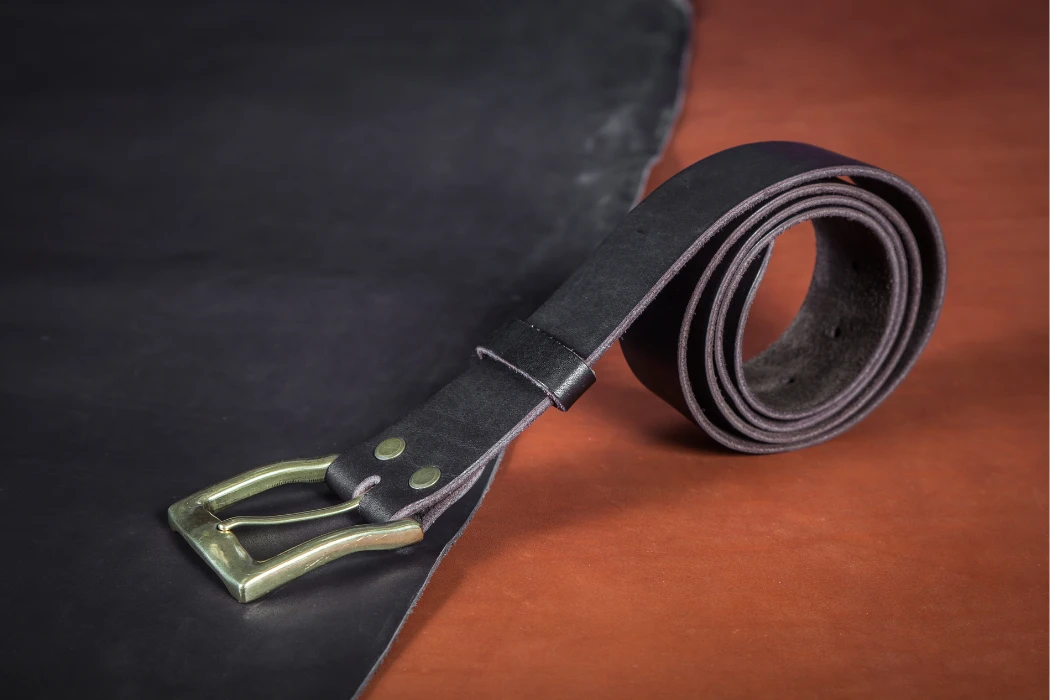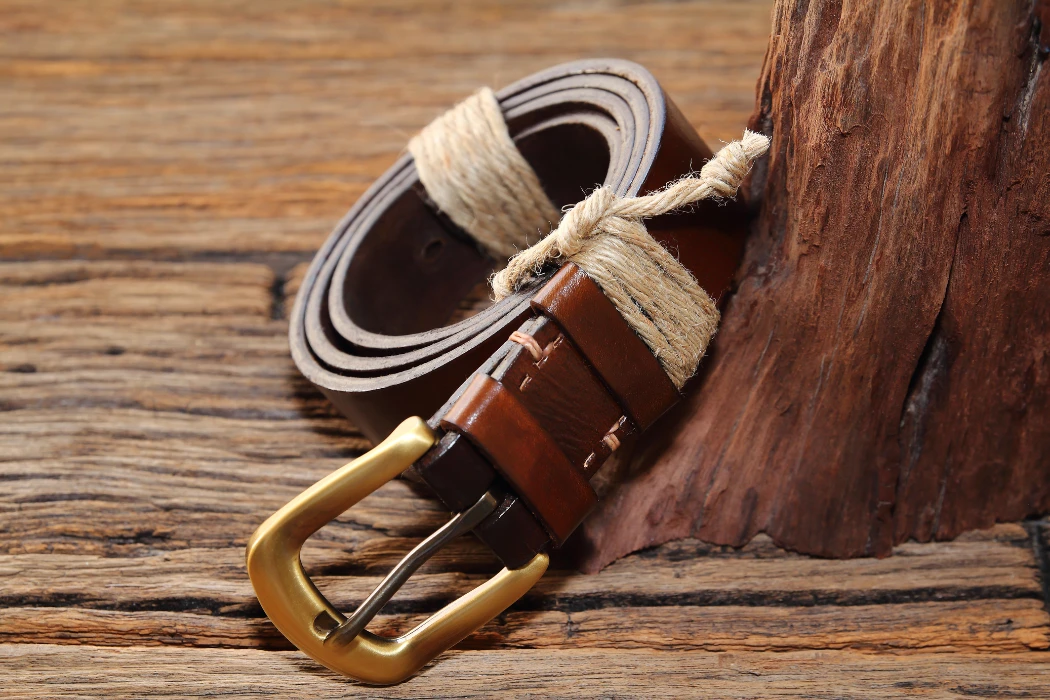
Every man, regardless of his style, fights the same invisible battle every day: gravity. At 9.807 m/s², the force pulling your trousers down is constant. The question isn’t if you need support, but how you choose to counteract that force without sacrificing comfort or aesthetics.
At Hoplok, we handle thousands of square feet of full-grain leather annually. We engineer straps designed to withstand immense tensile strength, and we see firsthand how different attachment methods stress materials. We are frequently asked by our clients: “Should I stick to the classic leather belt, or is it time to switch to suspenders?”
The answer is rarely just about fashion. It is a question of physics and ergonomics. Choosing between circumferential compression (a belt) and vertical suspension (suspenders) changes how your clothes hang, how your body moves, and even how your digestion functions after a heavy meal.
In this guide, we will move beyond subjective style advice. We will use material science, historical menswear rules, and ergonomic data to help you make the definitive choice for your wardrobe.
What Are the Functional Differences Between Belts and Suspenders?
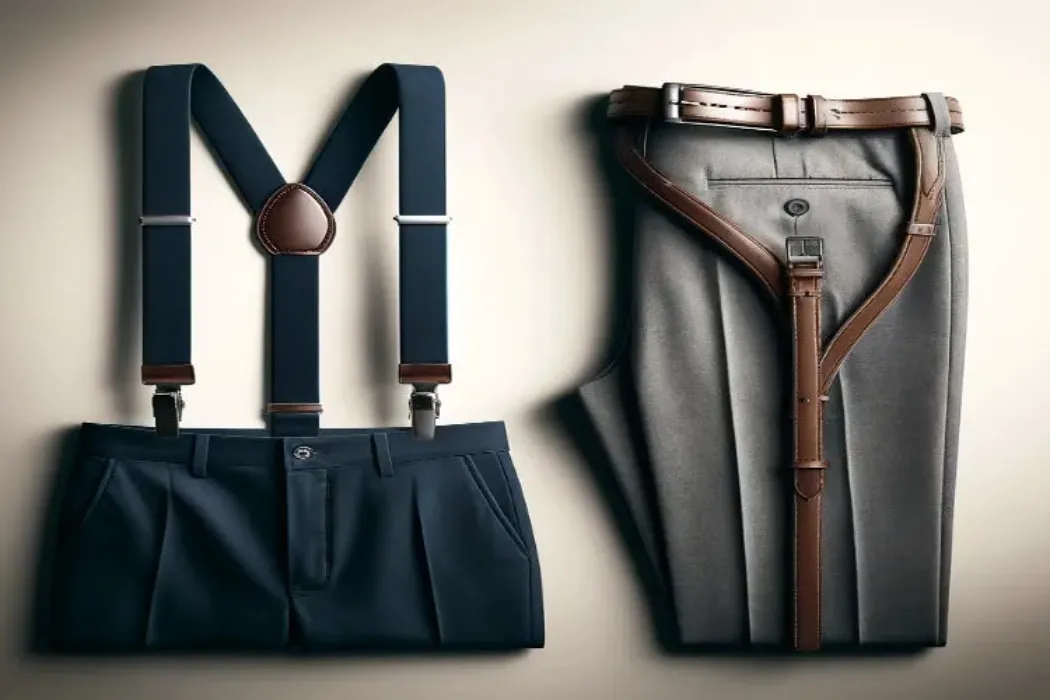
The primary functional difference lies in the direction of force used to combat gravity. Belts work through friction and circumferential compression, cinching the waist to create a ledge for trousers to rest on. In contrast, suspenders (or braces) utilize vertical suspension, transferring the garment’s weight directly to the shoulders, allowing the fabric to drape naturally without constricting the midsection.
Mechanics of Weight Distribution (Waist vs. Shoulders)
From an engineering standpoint, the method of load transfer defines the wearer’s comfort. Understanding the physics helps explain why one might feel more restrictive than the other.
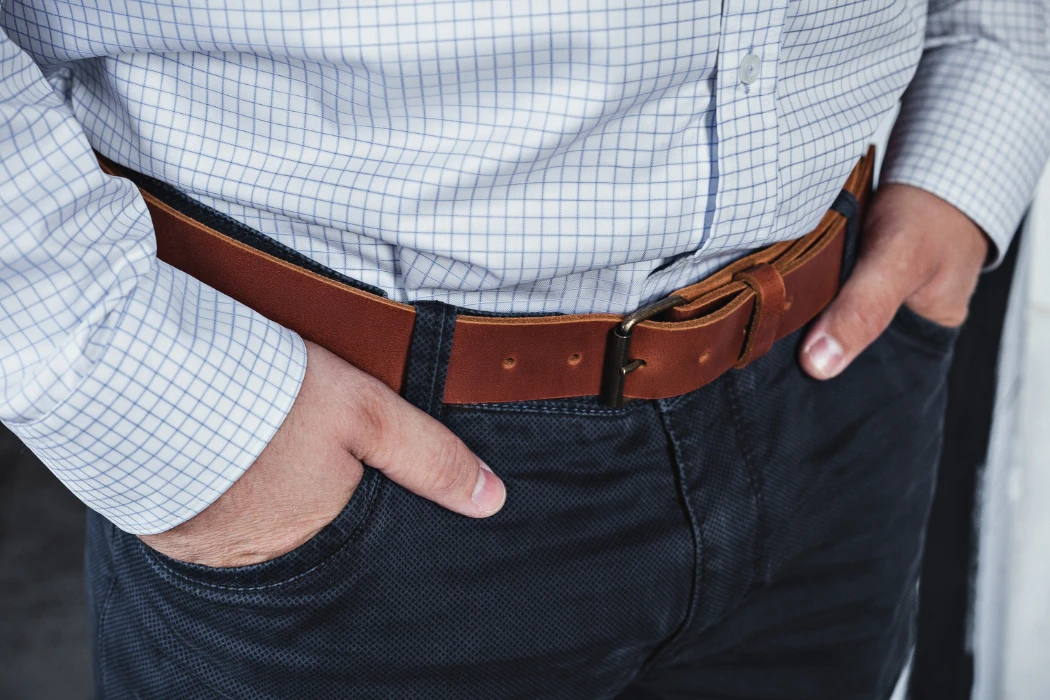
- Belts (Circumferential Tension): To function effectively, a belt must apply inward pressure greater than the downward pull of the pants. This creates a “hoop stress” effect around the soft tissue of the waist.
- Suspenders (Vertical Suspension): These function like a suspension bridge. The weight of the trousers (typically 0.5 kg to 1.2 kg for heavy wool or denim) is hung from the trapezius muscles.
- The Friction Factor: Belts rely on friction against the hips. If your hips are narrower than your waist (common in men with a higher BMI), a belt must be tightened significantly more to prevent slippage, increasing discomfort.
The Impact on Pant Drape and Silhouette
In our workshop, we often test how leather behaves under tension. Fabric works similarly; it wants to hang straight. The support system you choose dictates the cleanliness of your silhouette.
- The “Break” Consistency: Suspenders allow the trouser to float. This ensures the “break” (where the pant leg hits the shoe) remains constant whether you are standing or sitting.
- Bunching at the Waistband: Because a belt cinches the fabric to make the circumference smaller than your actual waist, it inevitably causes fabric bunching (gathering). Suspenders require no cinching, allowing the waistband to lie perfectly flat.
- Visual Height: By eliminating the horizontal line that bisects the body, suspenders can visually elongate the torso, whereas a high-contrast belt can make the wearer appear shorter.
The Golden Rule of Menswear (Never Both)
There is one non-negotiable rule in menswear history, often cited as the “Redundancy Rule.”
- Functional Redundancy: Wearing both is akin to wearing a raincoat under an umbrella. They serve the exact same mechanical purpose.
- The “Clutter” Effect: Visually, the hardware of a belt buckle combined with suspender clips or buttons creates a chaotic center mass.
- Historical Context: Traditionally, suspenders were considered underwear (to be hidden under a vest or jacket). While modern style allows them to be seen, pairing them with a belt remains a fundamental faux pas.
Comparison Summary: The Functional Breakdown
| Feature | Belts | Suspenders |
|---|---|---|
| Support Mechanism | Circumferential Compression (Waist) | Vertical Suspension (Shoulders) |
| Comfort Level | Variable (can constrict when sitting) | High (no waist pressure) |
| Formality | Casual to Business Casual | High Formal / Black Tie |
| Ease of Use | High (5-10 seconds to put on) | Low (requires buttons/adjustment) |
| Ideal Body Type | Athletic / Hips wider than waist | All types / Heavy midsections |
Which Option Offers Superior Comfort for All-Day Wear?
When measuring comfort over an 8 to 12-hour period, suspenders generally offer superior comfort, particularly for sedentary work, as they eliminate abdominal pressure. However, belts provide greater convenience for quick adjustments and are less intrusive for active movement. The “comfort winner” depends largely on your Body Mass Index (BMI) and daily activity level.
Ergonomics for Different Body Types
The geometry of your body dictates the mechanical efficiency of your support system. At Hoplok, we analyze waist-to-hip ratios to determine which accessory will function with the least amount of friction.
- Athletic Build (Waist < Hips): For men with a defined hip shelf, belts work efficiently. The natural curvature of the hips prevents the belt from sliding down without requiring excessive tightening.
- Larger Midsections (Waist > Hips): For men with a waist circumference exceeding 40 inches (or simply larger than their hips), belts fail mechanically. To stay up, the belt must be tightened aggressively, digging into the soft tissue. Suspenders bypass this geometry entirely by hanging the load.
- The “Flat Butt” Syndrome: Without gluteal prominence to act as an anchor, belts have nothing to rest on. This leads to the “hitch-up” dance every time you stand up—a problem completely solved by suspenders.
Adjustability and Ease of Use
There is often a trade-off between the precision of the fit and the speed of application. We engineer our leather straps for durability, but the physics of attachment remains constant.
- Adjustment Precision: Standard belts typically feature holes spaced exactly 1 inch (2.54 cm) apart. If your waist fluctuation (bloating after a meal) falls between these increments, the fit is either too loose or suffocating. Suspenders offer infinite adjustability via sliding buckles.
- Donning Time: A belt is efficient, taking approximately 5–10 seconds to loop and buckle. In contrast, traditional button-on suspenders can take 60–90 seconds to attach correctly to trousers.
- Restroom Logistics: Belts are simple to undo. Suspenders, especially if worn under a sweater or vest, can present a logistical challenge that requires partial undressing.
Health Implications of Waist Constriction
Constricting the abdomen for prolonged periods has documented physiological consequences. We often suggest clients evaluate their accessories based on health needs, not just style.
- Digestive Impact: Tight belts increase intra-abdominal pressure. Medical advice often suggests loosening waistbands to alleviate acid reflux (GERD) and heartburn, which are exacerbated by sitting with a tight belt after eating.
- Nerve Compression (Meralgia Paresthetica): This condition involves numbness or burning in the outer thigh caused by compression of the lateral femoral cutaneous nerve. A tight belt is a known primary culprit.
- Circulation and Skin Health: Continuous pressure can impede surface circulation, often leaving deep red welts or indentations on the skin at the end of the day, a clear sign of poor ergonomics.
How Do Material Choices Affect Durability and Style?
The lifespan of your support system is dictated entirely by material integrity. While a full-grain leather belt can last 10–20 years and develop a rich patina, elastic suspenders typically degrade within 3–5 years due to rubber oxidation. Choosing the right material requires understanding the trade-off between longevity and flexibility.
Engineering High-Quality Leather Belts
At Hoplok, we treat leather as a structural engineering material, not just a cosmetic finish. A belt must withstand constant hoop stress without stretching or deforming.
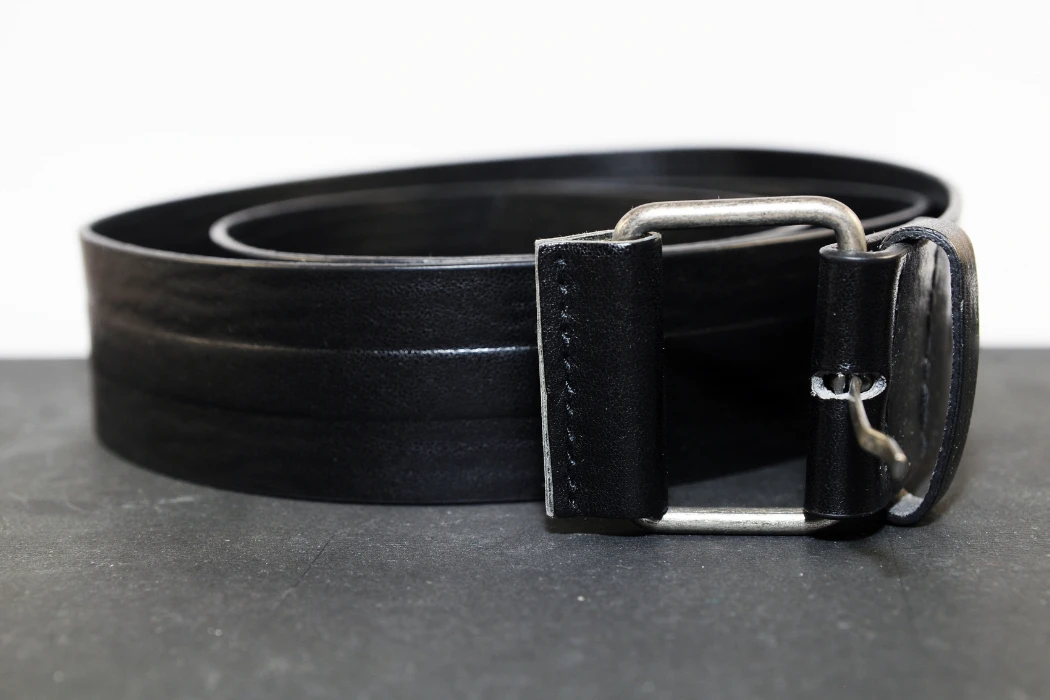
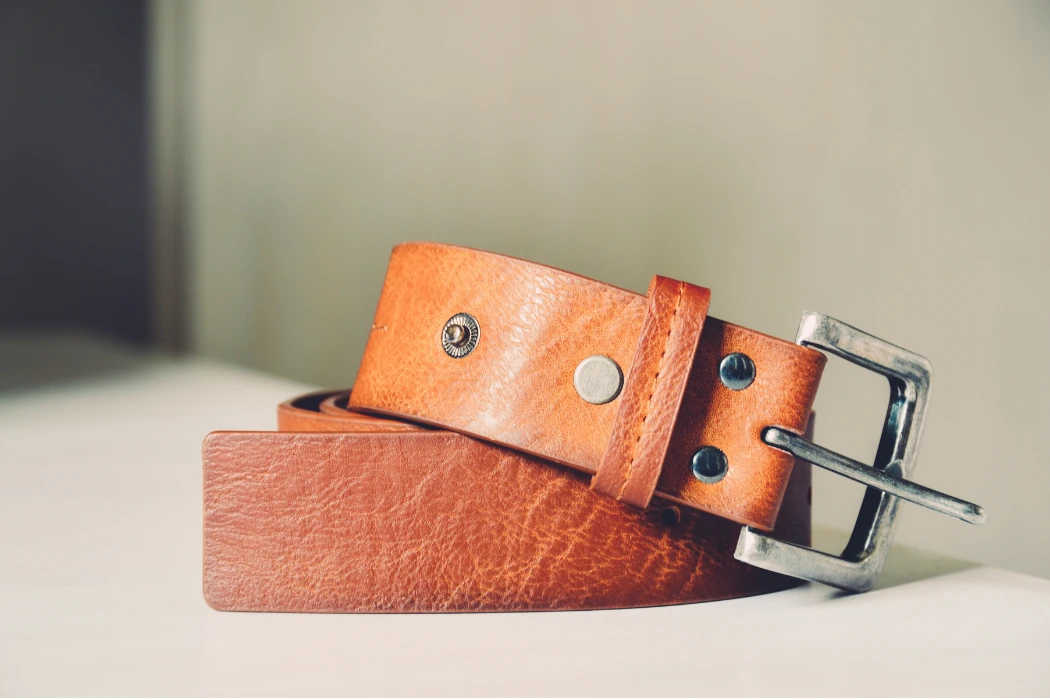
- Thickness Matters (3.5mm – 4.0mm): We strictly source vegetable-tanned hides in this thickness range. Anything thinner (under 3mm) tends to curl and lose structural rigidity within a year.
- Tensile Strength (>2500 PSI): Full-grain leather has a tensile strength exceeding 2500 PSI. This is why at Hoplok, we discard the “belly” portion of the hide. Although it looks like leather, the fiber structure in the belly is loose and spongy, leading to rapid stretching—a common flaw in department store belts.
- Layer Construction: Avoid “bonded” or “genuine” leather stamped belts. These are essentially glued leather dust that will delaminate (peel apart) under the daily torque of a buckle.
Materials Used in Premium Suspenders
Suspenders rely on elasticity or rigid tension to function. The material choice dramatically changes the formality and lifespan of the accessory.
- Elastic Webbing: The most common and comfortable option. However, rubber threads oxidize over time. Expect elasticity loss of 20–30% over 3 years of regular use, resulting in the “bacon edge” wave pattern.
- Boxcloth (Wool Felt): The “gold standard” for durability in suspenders. This dense, non-stretch wool felt is virtually indestructible but offers less “give” than elastic, requiring a more precise fit.
- Silk (Grosgrain): Reserved strictly for formalwear (tuxedos). Silk is strong but fragile against abrasion; it creates a sleek, non-bulky silhouette under a dinner jacket.
Hardware Longevity: Buckles vs. Clips
Often, the strap outlasts the metal hardware. The difference between a $20 accessory and a $100 investment is usually metallurgy.
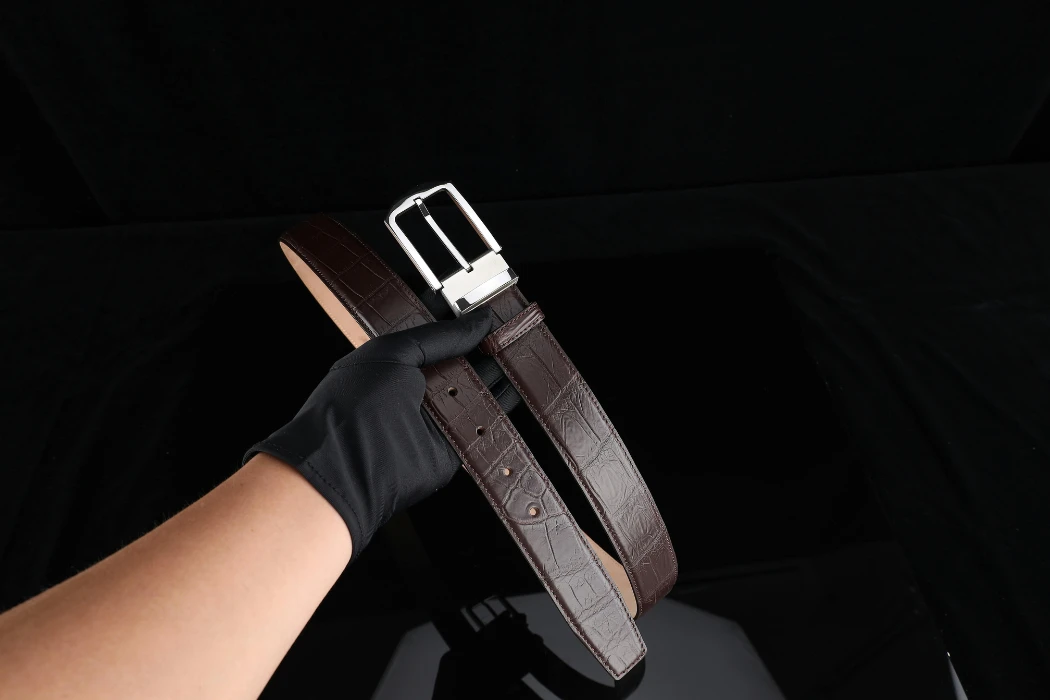
- Zinc Alloy vs. Solid Brass: Most mass-market belts use pot-metal zinc alloys. In standard Salt Spray Tests (ASTM B117), zinc plating often pits or bubbles after just 24 hours. Solid brass hardware, which we prioritize for our heavy-duty lines, withstands 96+ hours without corrosion.
- Suspender Clips vs. Button Tabs: Mechanical clips have “teeth” that eventually damage the waistband fabric. Button tabs (leather loops) are not only more secure but protect the integrity of your trouser fabric.
Hoplok Lab Data: Durability Analysis
| Material Parameter | Full-Grain Leather Belt (Hoplok Std) | Elastic Suspenders (Avg. Quality) |
|---|---|---|
| Lifespan | 10–20+ Years | 3–5 Years |
| Tensile Failure Point | >2500 PSI | N/A (Loses elasticity) |
| Aging Property | Develops Patina (Increases Value) | Oxidizes/Frays (Decreases Value) |
| Maintenance | Condition every 6 months | Difficult to clean / None |
When Should You Wear a Belt vs. Suspenders?
The choice between belts and suspenders is often dictated by the formality of the occasion and the construction of the trousers. Generally, suspenders are mandatory for formal Black Tie events and high-rise trousers, while belts are the standard for business casual, denim, and trousers with belt loops. Wearing a belt with a tuxedo is a functional error, just as wearing formal silk suspenders with work boots is a stylistic clash.
Formal Events and Black Tie Rules
In formal menswear, the goal is a seamless, unbroken line from shoulder to shoe. A belt breaks this line and is considered visually disruptive.
- The “No Belt Loop” Rule: Proper tuxedo trousers are manufactured without belt loops. This is a physical constraint, not just a suggestion. They feature side adjusters or buttons for suspenders inside the waistband.
- Cummerbund Interaction: If you are wearing a cummerbund, a belt creates an unsightly bulge underneath. Suspenders (typically white or black silk) remain invisible under the jacket, maintaining the clean profile required for Black Tie etiquette.
Business Casual and Daily Workwear
For the modern office environment, the belt is the dominant accessory. It bridges the gap between the shirt and trousers in a less severe way than suspenders.
- Chinos and Slacks: Approximately 90% of off-the-rack chinos come with belt loops. Leaving these loops empty looks “unfinished.” A matching leather belt is the expected standard for business casual.
- The “Clip-On” Stigma: While suspenders are acceptable in business settings, clip-on suspenders are often viewed as juvenile or unprofessional. If you choose suspenders for work, they must be button-on, which requires tailoring buttons into your waistbands.
Rugged Workwear and Denim Pairing
Workwear relies on heavy fabrics that require substantial support. Here, the dimensions of the hardware must match the garment.
- Belt Loop Width (1.5″ – 1.75″): Denim jeans typically feature wider loops designed for 1.5-inch (38mm) or 1.75-inch (44mm) belts. A narrow dress belt (1.25″) will shift around, providing poor support.
- Load Bearing: For those carrying tools or EDC (Everyday Carry) items on their waist, a thick full-grain leather belt is structurally superior. Suspenders can support weight, but a heavy belt distributes the load of tools around the hips effectively.
Occasion Compatibility Matrix
| Garment / Occasion | Leather Belt | Suspenders (Button) | Suspenders (Clip) |
|---|---|---|---|
| Tuxedo / Black Tie | ❌ Avoid (Faux Pas) | ✅ Mandatory (Silk) | ❌ Avoid |
| Business Suit | ✅ Standard | ✅ Classic / Elegant | ⚠️ Not Recommended |
| Chinos / Smart Casual | ✅ Standard | ⚠️ Bold Choice | ❌ Avoid |
| Jeans / Workwear | ✅ Essential (Wide Width) | ✅ Rugged (Leather ends) | ✅ Acceptable (Functional) |
Which Accessory Provides Better Long-Term Value?
Value is not determined by the sticker price, but by the Cost Per Wear (CPW) over the item’s lifespan. From a manufacturing perspective, a full-grain leather belt is a long-term asset that improves with age, whereas elastic suspenders are consumables that inevitably degrade and require replacement.
Cost Per Wear Analysis
When you amortize the cost over a decade, the economics of high-quality leather become clear. We encourage clients to look beyond the initial purchase price.
- Quality Leather Belt ($120): With a conservative lifespan of 10 years wearing it 3 times a week, the cost is approximately $0.07 per wear.
- Quality Elastic Suspenders ($60): With a lifespan of 3 years (before elasticity failure) wearing them once a week, the cost jumps to $0.38 per wear.
- The Replacement Cycle: In the time you own one Hoplok-standard belt, you might purchase 3–4 pairs of suspenders, making the belt the mathematically superior investment.
Maintenance and Care Requirements
Durability often requires maintenance. The care routines for these two accessories are drastically different, affecting their convenience.
- Leather Conditioning (Every 6 Months): Leather is organic skin. A simple application of conditioner or neatsfoot oil twice a year keeps fibers flexible. Scratches can often be buffed out.
- Textile Care (Dry Clean Only): High-end silk or boxcloth suspenders cannot be machine washed. Sweat stains on silk are notoriously difficult to remove without professional dry cleaning.
- Heat Sensitivity: You cannot iron elastic suspenders; heat destroys the rubber core. Leather, conversely, is highly heat-resistant compared to synthetic textiles.
Resale Value and Patina Development
One of the unique properties of vegetable-tanned leather is that it gains value—aesthetically and monetarily—through use. This phenomenon is unique to leather goods.
- The “Patina” Effect: Exposure to sunlight, oils, and friction darkens the leather and creates a unique sheen. Vintage leather belts often sell for 40–60% of their original value on second-hand markets because buyers desire this aged look.
- Fabric Degradation: Suspenders do not age gracefully. Frayed edges, stretched elastic, or discolored silk are viewed as damage, rendering used suspenders virtually valueless.
How Do You Choose the Perfect Fit for Your Wardrobe?
A support accessory only functions if the fit is mechanically precise. For belts, the “Golden Standard” is sizing up exactly 2 inches from your pant waist size, while suspenders require a vertical torso measurement to ensure the adjusters sit comfortably on the chest, rather than digging into the collarbone.
Sizing Guide for Belts
We often see customers buying the wrong size belt because they confuse “vanity sizing” with actual inches. A proper fit ensures the buckle pin rests in the center hole, offering maximum aesthetic balance.
- The “+2 Rule”: If your jeans are a size 34, order a size 36 belt. This provides enough tail length (typically 3–4 inches) to tuck into the first belt loop without wrapping halfway around your hip.
- The Center Hole Logic: High-quality belts typically have 5 holes. We engineer them so the middle hole (Hole #3) corresponds to the stated size. This allows for exactly 2 inches of adjustment in either direction for weight fluctuation.
Sizing Guide for Suspenders
Suspenders are sold by length, not waist size. A “One Size Fits All” label is often misleading for men with longer torsos, leading to uncomfortable riding up.
- Standard Lengths (42″ – 52″): Most off-the-rack suspenders are 42 to 46 inches long. If you are over 6’2″ or have a longer torso, you specifically need 52-inch or 54-inch sizes to prevent “wedging.”
- Measuring Your Torso: Use a flexible tape measure from the center-back waistband, over the shoulder, to the front waistband attachment point. This is your “working length.” The adjuster hardware should ideally sit on your chest, not high up on your shoulder.
Matching Leather Accessories
Cohesion is key to a polished look. While you don’t need an exact Pantone match, the tones and textures should align to create a deliberate aesthetic.
- Leather-to-Leather: The rule is simple: If you are wearing brown leather shoes, your belt (or suspender leather ends) must be brown. Black pairs with black. Walnut pairs with walnut.
- Metal-to-Metal: Match your buckle hardware to your watch and cufflinks. Solid brass (gold tone) generally clashes with stainless steel (silver tone), creating visual clutter.
- Color Fastness Grade: Cheap belts bleed dye onto light chinos. At Hoplok, we test for Grade 4/5 Color Fastness (ISO 105-X12) to ensure sweat or friction doesn’t transfer the leather dye to your clothing.
Frequently Asked Questions
Can I wear a belt and suspenders at the same time?
Absolutely not. Wearing both is considered a major menswear faux pas because it creates functional redundancy—like wearing a raincoat under an umbrella. Both accessories serve the exact same mechanical purpose (holding pants up). Doing so clutters the waistline, creating an unsightly bulge where the belt buckle and suspender hardware compete for visual attention.
Are suspenders better for heavy men?
Yes, suspenders are significantly better for men with larger midsections. Mechanically, a belt requires hips wider than the waist to prevent slippage; if the waist is the widest point, a belt must be tightened painfully to stay up. Suspenders bypass the waist entirely, hanging the trousers from the shoulders, which improves comfort, prevents the “hitch-up” dance, and creates a cleaner vertical silhouette.
Do belts cause back pain?
Yes, an overly tight belt can contribute to back pain and nerve issues. Compressing the waist can trigger Meralgia Paresthetica, a condition where the lateral femoral cutaneous nerve is compressed, causing numbness or burning in the outer thigh. Furthermore, a rigid belt forces the lumbar spine and pelvis into a fixed position while sitting, which can exacerbate lower back strain during long commutes or desk work.
What is the most durable material for a belt?
Full-grain vegetable-tanned leather is the gold standard for durability. Unlike “genuine leather” (which is often bonded scraps) or synthetic PU (which cracks within 3 years), full-grain leather utilizes the outermost layer of the hide, retaining the strongest fibers. At Hoplok, our lab tests show that a 3.5mm vegetable-tanned strap can withstand over 10 years of daily torque while developing a protective and aesthetic patina.
The Verdict: Choosing Your Support System
After analyzing the physics, ergonomics, and style rules, the choice becomes clear based on your priorities. If you prioritize clean lines, vertical drape, and all-day comfort—especially if you spend hours sitting or have a larger midsection—suspenders are the superior engineering choice. However, if you prioritize convenience, quick adjustability, and casual versatility for a fast-paced lifestyle, the leather belt remains the undisputed king of daily wear.
Hoplok’s Engineering Perspective
From our manufacturing standpoint, the debate between belts and suspenders is secondary to a more critical factor: material integrity. The best design cannot save a poor material. A cheap belt made of bonded dust will eventually snap under torque, and low-grade elastic suspenders will inevitably oxidize and sag. No matter which support system you choose, it is only as reliable as its weakest fiber.
Ready to Build with the Best?
Whether you are crafting the ultimate heavy-duty belt or designing suspenders that require non-stretching anchor points, the material foundation is everything. If you are looking for vegetable-tanned leather that is lab-tested to withstand 10+ years of daily wear, or if you need custom-cut full-grain leather ends for premium suspenders, the artisan team at Hoplok is ready to assist. We don’t just sell leather; we provide material solutions backed by rigorous laboratory data.