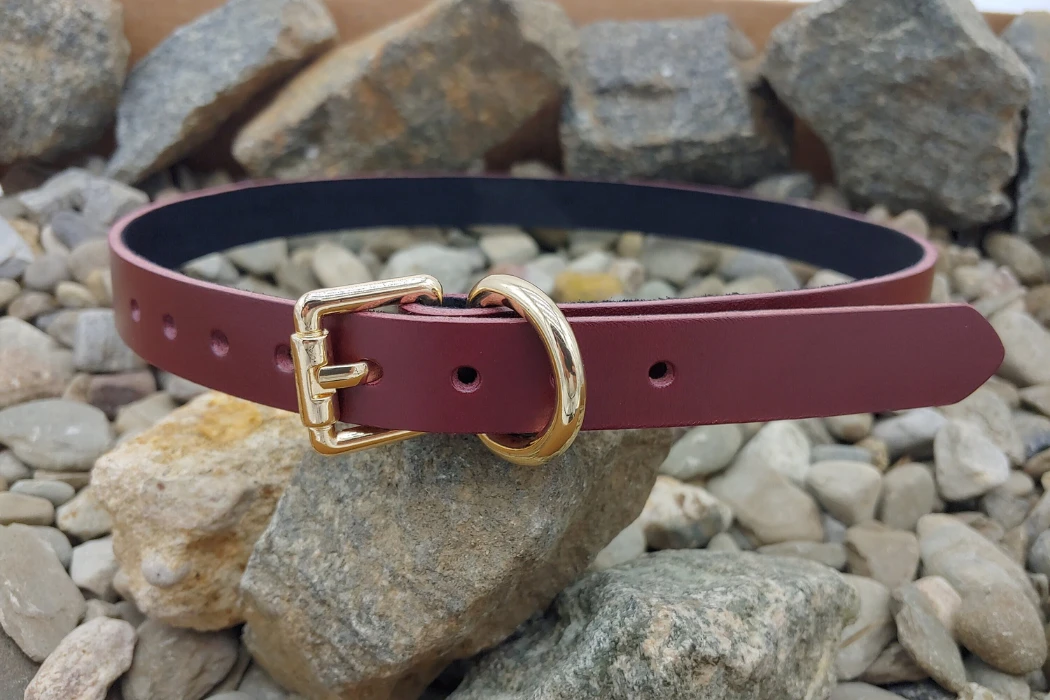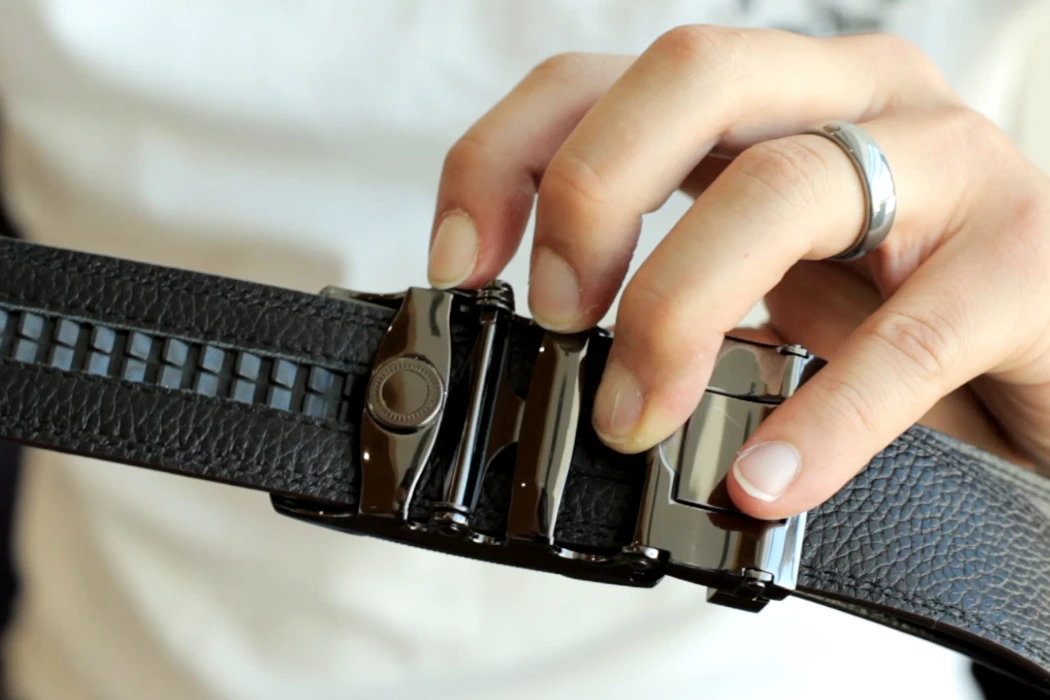
The best belt thickness is the thickness that fits the intended garment, buckle and construction while giving the required flexibility. A slim dress belt and a substantial casual strap need different samples. Specify the finished thickness in millimetres, including lining and reinforcement, rather than treating leather weight alone as a quality grade. The example dimensions in this guide are specification examples, not universal dress, casual or load-bearing standards.
A thin belt can work well when its materials and construction suit the design. A thicker belt can feel bulky or resist bending, but thickness alone does not predict either stretching or service life. Compare complete samples through the intended buckle and trouser loops before choosing a target for production.
This guide explains ounce-to-millimetre conversion, layered construction, measurement tolerances and hardware fit. It focuses on fashion and everyday trouser belts. Tool-support, holster and other load-bearing equipment need separate design and validation; an ordinary belt thickness specification is not a safety rating.
How Is Leather Thickness Measured? (Ounces vs. Millimeters)
In leathercraft, ounces are commonly used as a thickness convention: 1 oz is approximately 1/64 inch, or 0.4 mm. For example, 9 oz is approximately 3.6 mm. This is a trade conversion, not a way to determine thickness by weighing a finished belt; different leathers and layered constructions have different densities. See the Tandy thickness guide.
The Conversion Science: Why “Weight” Means “Thickness”
An ounce label helps compare stock leather, but the purchase drawing should state the measured dimension and tolerance. A supplier may quote a range such as 8–9 oz rather than one nominal value. For production approval, distinguish that raw-material range from the final belt’s centre, edge and buckle-fold thickness.
- Measurement: Agree the instrument, measurement positions and conditioning method. ISO 2589 specifies a method for determining leather thickness; it does not prescribe one thickness for all belts.
- Material range: Variation across a hide and the supplier’s splitting specification can affect thickness. A range on a stock listing does not replace a finished-product tolerance agreed with the factory.
Agreeing a Measurement Tolerance
A useful tolerance states what is measured and where. A domed belt, a flat strap and a skived buckle fold intentionally have different profiles. Compare like positions before treating variation as a defect.
For example, a buyer may propose a nominal thickness with a stated plus/minus allowance, but that allowance must be agreed against the material and process. Do not present ±0.2 mm as a universal industry rule. Record the approved sample, measuring method and any deliberately thinner areas so inspection does not reject the intended construction.
Leather Thickness Conversion Chart
These rounded conversions describe stock thickness. The application column gives development considerations, not mandatory product specifications.
| Ounces (oz) | Millimeters (mm) | Inches (approx.) | Development consideration |
|---|---|---|---|
| 6 – 7 oz | 2.4 – 2.8 mm | About 0.094–0.109 in | Compare a slim strap or the combined layers of a dress design |
| 8 – 9 oz | 3.2 – 3.6 mm | About 0.125–0.141 in | Check flexibility and finished hardware fit |
| 9 – 10 oz | 3.6 – 4.0 mm | About 0.141–0.156 in | Assess a substantial casual strap against the intended garment |
| 12 – 14 oz | 4.8 – 5.6 mm | About 0.188–0.219 in | Thick construction: confirm the complete assembly; no load rating implied |
What Is the Ideal Thickness for a Formal Dress Belt?
A formal belt normally benefits from a low profile that works with the intended trousers and jacket. A development team might compare, for example, 2.5 mm and 3.0 mm finished samples, but neither dimension is a dress-belt standard. The leather’s temper, lining, edge profile and buckle fold determine whether the result feels refined or bulky. Approve the assembled belt rather than selecting thickness from a chart alone.
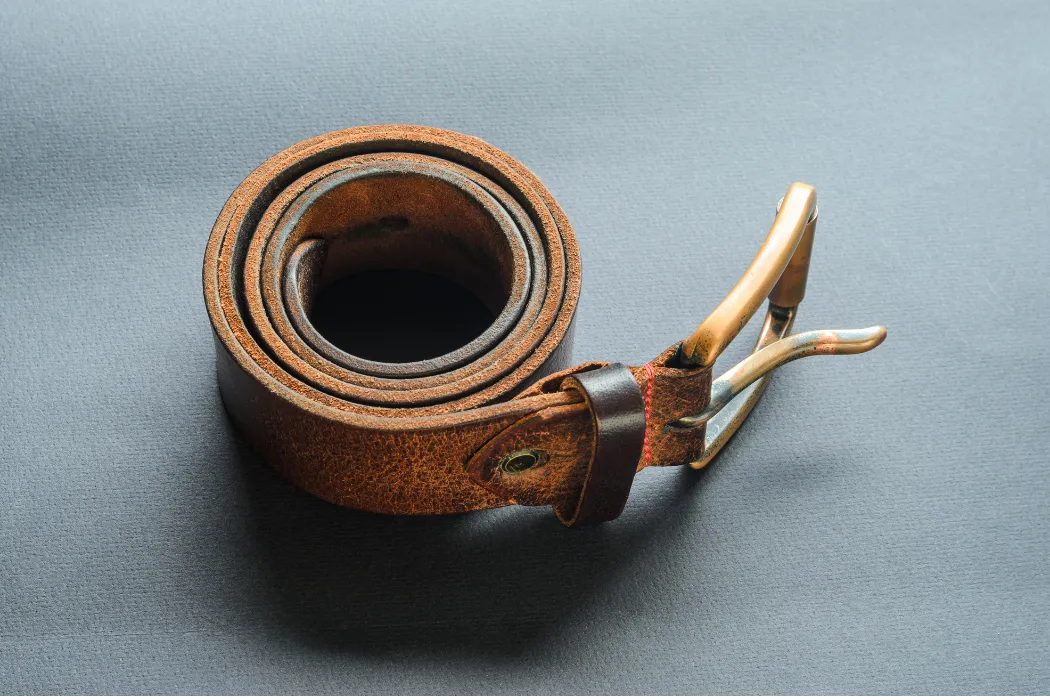
The “Dome” Effect: Lined vs. Flat Construction
A lined dress belt can combine a leather face, lining and optional shaped core. A domed or feathered profile creates a fuller centre and slimmer edge. It is one construction choice, not a requirement for every strong, thin belt.
- The Construction: A top layer of fine leather (like Calfskin) is glued and stitched to a bottom lining leather.
- Profile: The centre may contain a suitable core while the edges are skived before assembly. Specify the centre and edge dimensions separately; a single overall number does not describe this shape.
Keeping a Dress Belt Comfortable
Test the sample through the actual trouser loops and buckle, then assess it while standing and sitting. An attractive flat sample may become bulky where it folds around the buckle bar or passes through the keeper. If it catches or distorts the garment, review the width, local thickness and edge shape together rather than simply ordering a softer leather.
Specifying Reinforcement in a Lined Belt
If length stability is important, evaluate the complete layered construction under the agreed use conditions. Reinforcement is one possible design choice, but its benefit depends on how it is incorporated.
Request the reinforcement material, thickness, placement and attachment method in the bill of materials. Review a cross-section and an assembled sample for bulk, flex and bond performance. Do not assume that a named tape guarantees unchanged length or hole spacing for years, and confirm any proposed reinforcement with Hoplok before including it in the order.
What Is the Best Thickness for a Casual or Jean Belt?
For a casual belt, compare enough body to hold its shape with enough flexibility to wrap comfortably. A 3.5 mm or 4.0 mm sample can be a useful design comparison, but a different temper or layered build can behave differently at the same dimension. Check the belt’s recovery after bending, edge finish, holes and buckle fold instead of treating the thickest sample as the best one.
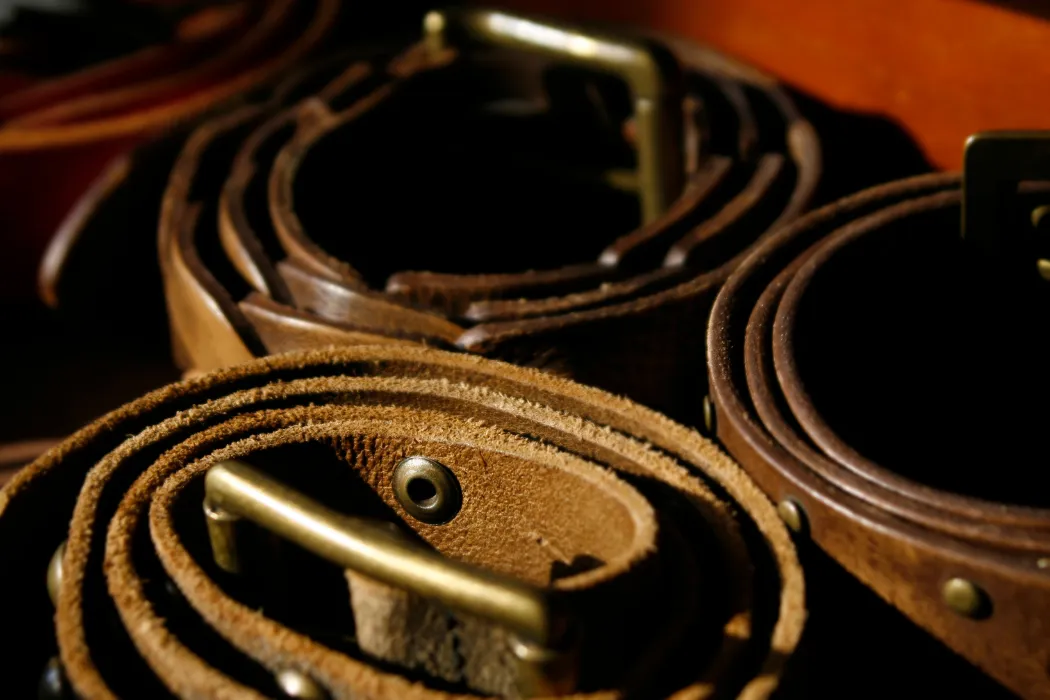
The Power of the “Single Strap” (Unlined)
A single leather strap is a common casual-belt construction. It avoids the bond interfaces of a laminated strap and makes the cut edge easy to inspect. Lined belts can also be well made; construction should match the intended appearance, flexibility and price rather than a simple one-piece-versus-layered ranking.
- Layer interfaces: A one-piece strap has no face-to-lining adhesive joint, but its surface finish can still wear or crack, and leather can be damaged. “One piece” does not mean indestructible.
- Rugged Edge: The edges are usually burnished (polished) or raw, showcasing the full, solid thickness of the leather.
For an unlined design, both the grain face and exposed flesh side need an agreed appearance. Confirm the material type, selection criteria and thickness range with the supplier. Natural marks do not automatically make a strap unusable, and thickness alone does not identify hide quality.
Balancing Body and Flexibility
Compare how the sample resists folding across its width and how it bends around the waist. These are useful design observations, not properties that can be inferred from millimetres alone.
- Body: Check whether the belt folds or curls undesirably in the intended garment. Leather temper, cutting direction, construction and thickness all affect the result.
- Flexibility: Check comfort immediately and after representative flexing. Increasing thickness may make a given construction harder to bend, but it cannot establish a break-in time or a twenty-year lifespan.
Leather Types: Bridle and Buffalo
Tannage, finishing and thickness all influence a strap’s feel. Select by a documented leather article and an approved sample instead of relying on an animal name or a heritage marketing term.
- Bridle leather: Ask the tannery or stock supplier for the actual finish, temper and available thickness. The name alone does not establish a particular ounce range or performance specification.
- Buffalo or bison: Specify the actual species and material article; buffalo and bison should not be treated as interchangeable identities. Compare grain appearance and flex on supplied samples rather than assuming all such hides are thicker or stronger than cowhide.
When Does a Thicker Fashion Belt Make Sense?
A thicker profile may suit a rugged-looking casual collection, but it must still fit the garment and buckle. Consider the finished fold, keeper and hole area as well as the straight strap. A thicker fashion belt is not automatically suitable for carrying equipment, supporting a holster or serving a protective function.
Thickness Is Not a Load Rating
A buyer should not infer supported weight from a millimetre value. Material strength, holes, joins and hardware all affect an assembled strap. Products intended to carry tools or other loads require a separate specification and relevant validation.
For a fashion-belt inquiry, describe the intended garment and everyday wear conditions. Keep equipment-support requirements separate and confirm business suitability before developing them. A thick casual design should be approved for apparel use on its own merits.
Double-Ply Construction: 2 Layers vs. 1 Layer
A layered design can reach a desired profile without depending on one unusually thick piece of stock. It also introduces joints and process variables that need approval.
- Method: A face and lining can be bonded and stitched, with optional reinforcement or a core. Identify each layer rather than ordering only the total thickness.
- Review: Check both exposed faces, the cut edge, bond integrity and bending behaviour. Two layers do not automatically make a belt stronger, more sweat-resistant or more comfortable than one.
Comfort Trade-offs with Thick Construction
A thick or firm build can feel bulky at the waist and buckle. The effect depends on the material and pattern, so assess an assembled sample rather than prescribing a fixed break-in period.
- Wear-in: Do not use a promised softening period to excuse an uncomfortable approval sample. Agree the required hand-feel and fit before production.
- The Feel: It can feel bulky and may dig into your hips when you sit down.
- Loop compatibility: Check the intended garment directly. Trouser brand names and categories do not establish a universal maximum belt thickness.
Does Thickness Always Equal Durability? (The “Filler” Trap)
No: thickness does not equal durability. Two belts with the same overall dimension can contain very different materials. A single leather strap, a leather-faced lined belt and a bonded-leather composite have different potential failure modes. Ask for the bill of materials and relevant sample checks; neither a thick profile nor the phrase full-grain supports a lifespan guarantee.
Single-Strap and Layered Construction
Layered construction is used for shaping, lining and reinforcement as well as cost control. It is not inherently deceptive. The important distinction is whether the supplier accurately identifies the materials and delivers the approved structure.
- Single strap: One piece of leather forms the strap body. Confirm its thickness, temper, finish and cut-edge appearance. Buckle attachments and surface coatings still need inspection.
- Layered strap: Request a cross-section identifying every layer. A possible structure includes:
- Face: The specified leather or synthetic surface material, with its own thickness and finish.
- Core: Any shaping or reinforcement material, identified by composition and function rather than hidden behind the total thickness.
- Lining: Leather, synthetic or other agreed material. Confirm the contact surface, adhesion and edge construction.
Repeated bending can expose weak bonds or incompatible layers. Review delamination, wrinkling and cracking against a suitable sample test. Do not assign a fixed failure date merely because a belt contains a core or adhesive.
How to Verify a Thick Belt’s Construction
Use the product specification, a cross-section sample and appropriate material identification. Visual and tactile checks can flag questions, but are not conclusive tests.
- Edge: Painted, folded, raw and burnished edges are construction choices. Edge paint is not proof that a belt contains cardboard or is fake. Ask for a cut sample if the layers are concealed.
- Feel: Compressibility and weight can help compare approved samples, but leather temper and lining vary. They cannot establish leather percentage or composition without supporting evidence.
Construction and Inspection Matrix
Use the construction to decide what to inspect, rather than predicting service life from thickness.
| Construction | Thickness specification | Composition evidence | Inspection priority |
|---|---|---|---|
| Solid Full-Grain | Measure the actual strap | Material identity and finish specification | Flex, holes, edges and surface finish |
| Solid Bridle | Specify supplier article and finished range | Tannage/finish description and material identity | Hand-feel, finish transfer and bending |
| Lined dress belt | Centre, edges and buckle fold separately | Bill of materials for all layers | Bonds, profile, stitching and fit |
| Composite or bonded construction | Total plus functional layer dimensions | Supplier composition and accurate product labeling | Layer adhesion, flex damage and finish wear |
How Does Thickness Affect Hardware Compatibility?
Match the buckle to the finished strap, especially at the folded attachment and adjustment holes. Check bar clearance, prong geometry and the keeper opening on the actual assembly. Stitching, screws and snaps can all work when correctly specified; thickness alone does not determine which one is acceptable.
The Buckle Problem: Prong Length and Gap
When sourcing a buckle for a thick belt, two dimensions are critical:
- Clearance: Verify that the strap and fold pass through the intended openings without scraping or binding. Include finishes and edge paint in the sample evaluation.
- Prong: Confirm its alignment, reach and engagement with the frame when passed through the finished hole. A buckle selected from width alone may not suit the strap profile.
Chicago Screws vs. Snaps vs. Stitching
The attachment method must suit the design, local thickness and intended buckle replacement or adjustment.
- Stitching: Match needle, thread, seam design and machine capability to the finished stack. Check stitch placement and damage around the buckle fold.
- Snaps: Match the fitting to the local stack thickness and verify closure and retention on the assembled sample. Do not infer reliability from belt thickness alone.
- Screws: Specify post length, engagement and the assembly method. Check for loosening and finish damage; a screw attachment is not automatically superior to a stitched one.
Belt Loop Fit: Will It Fit Your Pants?
Use a reference garment or loop sample when approving the belt. Width and thickness both matter, particularly where the strap doubles through a keeper.
- Dress trousers: Confirm loop clearance and the desired silhouette on the actual style.
- Jeans or chinos: Test the belt and keeper assembly instead of assuming one standard opening.
- Uniform trousers: Obtain the customer’s garment and buckle specification. Do not infer an equipment-carrying function from a workwear appearance.
Frequently Asked Questions
1. Is a thicker belt always better?
No. A thick belt can be uncomfortable or incompatible with the buckle and garment. Select the complete construction around the intended use, then verify fit and relevant performance. Millimetres alone do not establish strength or value.
2. What thickness is a standard Gucci or LV belt?
There is no reliable brand-wide thickness for Gucci or Louis Vuitton belts. Models and constructions differ. If a particular design is a reference, obtain its current published specification or measure a legitimate sample; do not turn an estimated range into a production requirement.
3. How thick is 10 oz leather?
Using the leathercraft conversion, 10 oz is approximately 4.0 mm or 5/32 inch. That describes a thickness class, not guaranteed strength. In a lined belt, the combined finished thickness may differ from the face leather’s quoted ounce weight.
4. Will a 4mm belt fit in dress pants?
It depends on the actual trouser loops, belt width and edge profile. Test a 4 mm sample through the intended garment and buckle. If it binds or creates unwanted bulk, revise the sample instead of relying on a universal maximum for dress trousers.
5. Does belt thickness include the lining?
A finished-belt thickness specification should include the lining and other layers at the stated measuring position. A raw-material ounce listing may describe just one leather layer. For a layered or domed belt, request both the layer breakdown and the final profile so the quote is unambiguous.
6. How do I measure my belt thickness at home?
A caliper can provide a useful comparison if applied gently at consistent positions, but compressible leather and shaped edges affect the reading. For supplier inspection, agree a suitable thickness gauge and measurement method. Record several specified positions and compare them with the approved tolerance; do not impose an unagreed ±0.2 mm limit.
Conclusion: The Perfect Spec for the Perfect Purpose
Choose thickness together with material, construction, garment fit and hardware. A slim lined design and a firm single-strap casual belt can both be appropriate when they meet the brief. A thicker profile is a design choice, not proof of durability or a load-bearing capability.
For buyers, the most useful evidence is an accurately described, assembled sample. Ask what is inside the strap and how the supplier checks the finished profile. Treat lifetime claims based only on thickness as marketing rather than a verified specification.
For a tech pack, record nominal thickness, tolerances, measurement positions, layer materials, buckle clearance and the approved sample reference. If an example target such as 3.8 mm is proposed, confirm its feasibility with the factory before treating it as an order commitment.
Hoplok can review the material, profile and construction for a custom fashion-belt project. ProPelli is its leather finishing facility in Cambodia; that fact does not by itself establish a universal thickness tolerance. Send the garment reference, buckle drawing and desired sample profile to discuss a belt specification and the checks needed for your order.