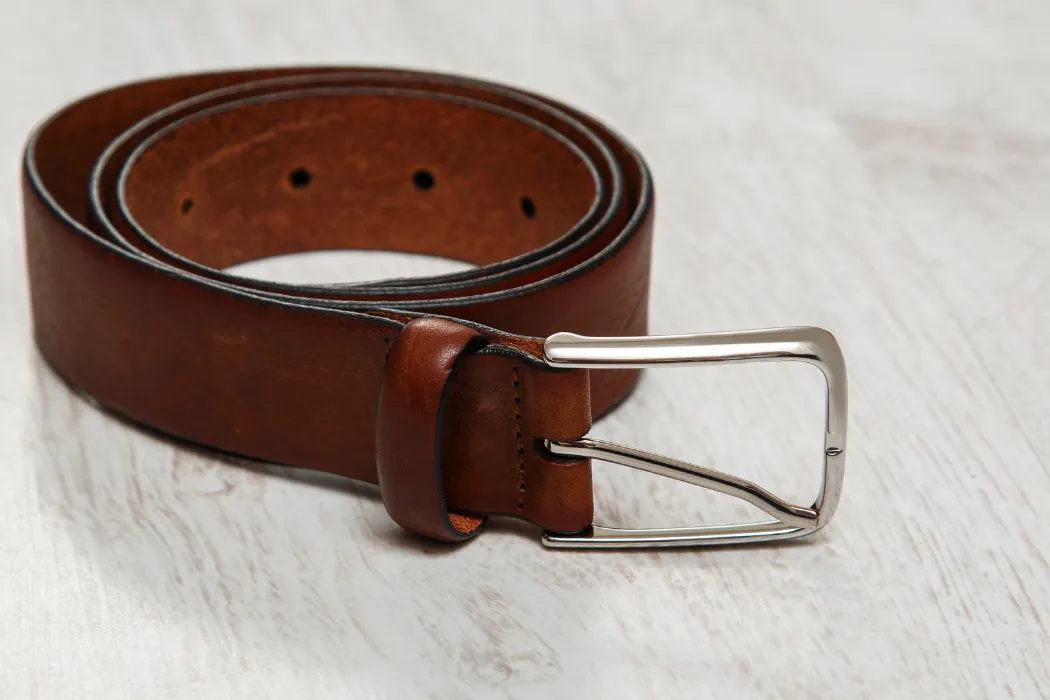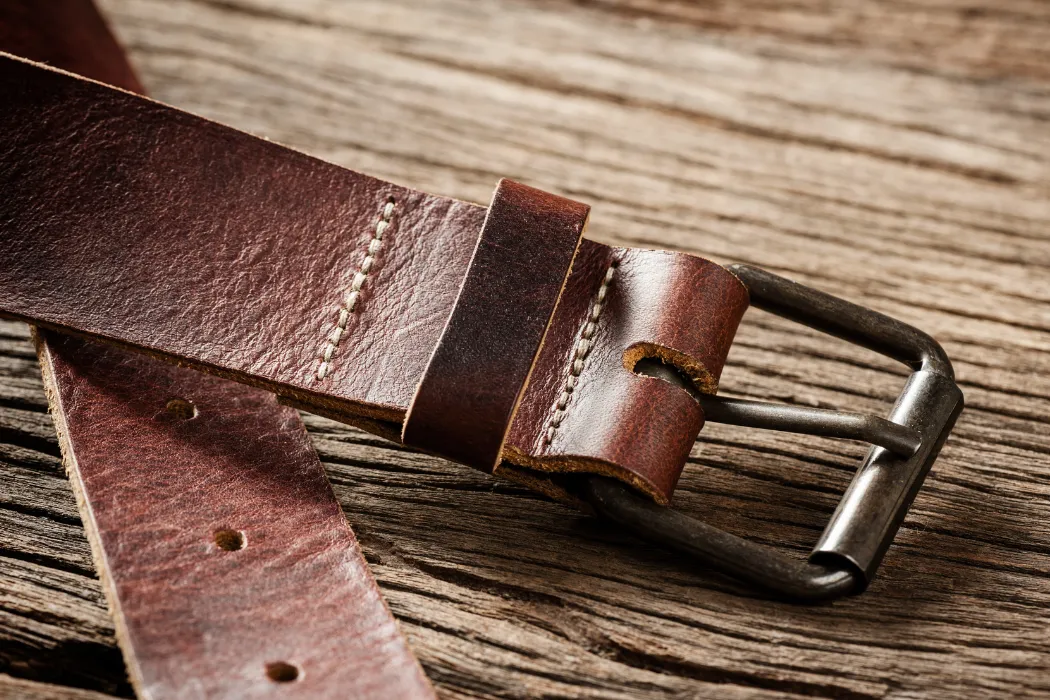
Global sourcing directors currently face a brutal paradox: raw leather material costs are climbing, yet retail price points remain frozen. To protect margins without sacrificing quality, smart brands are moving beyond the traditional “China Only” strategy. The solution is the “Hybrid Model.” This strategic approach bifurcates the manufacturing process: complex design, hardware sourcing, and technical R&D remain in China’s mature industrial ecosystem, while labor-intensive bulk cut-and-sew operations move to Southeast Asia, specifically Cambodia.
This guide provides a technical roadmap for executing this strategy effectively. We will move beyond basic cost savings to analyze the structural advantages of the “China Plus One” model. Key topics include leveraging Cambodia’s duty-free GSP status for US and EU markets, managing cross-border quality control protocols, and utilizing advanced local leather finishing to replicate premium aesthetics. This is your objective engineering blueprint for balancing risk, cost, and quality in today’s volatile trade environment.
Why is the China Plus One strategy urgent for leather goods now?
Relying solely on one country for manufacturing creates a single point of failure. The “China Plus One” strategy diversifies production to mitigate risks from rising tariffs, increasing labor costs, and unpredictable supply chain disruptions. It is no longer just an option; it is a necessary insurance policy for global brands.
Tariffs and Trade Uncertainty are Eating Margins
The primary driver for moving leather belt production is financial defense. Trade policies between major economies fluctuate, and duties on leather goods from China can be volatile. For example, Section 301 tariffs in the US have historically added up to 25% on specific Chinese imports. These costs directly erode profit margins because retail prices cannot easily increase to match them.
- Duty-Free Access: Countries like Cambodia often benefit from Generalized System of Preferences (GSP) status. This allows eligible leather goods to enter major markets like the EU and Canada duty-free, and the US with significantly reduced rates.
- Cost Avoidance: By shifting the final assembly of belts to a “Plus One” nation, brands can legally bypass these high punitive tariffs.
- Long-term Stability: Diversifying ensures that if trade relations with one country sour, your entire product line does not become suddenly unaffordable.
So, the strategy is not just about finding the cheapest needle and thread. It is about engineering a tax-efficient supply chain that protects your bottom line from political unpredictability.
Balancing Skilled Labor Costs
China has the world’s most skilled leather artisans, but that expertise now comes at a premium. As China’s economy matures, manufacturing wages have risen steadily. This is excellent for quality but challenging for maintaining the low “FOB” (Free On Board) prices that mass-market retail demands.
- Wage Differentials: Manufacturing wages in Southeast Asian hubs like Cambodia are significantly lower, often stabilizing around $200-$250 USD per month for garment and leather workers.
- The Trade-off: Lower wages traditionally meant lower skill levels. However, the “Hybrid Model” solves this by keeping complex R&D in China while moving repetitive cut-and-sew tasks to the lower-cost region.
- Scalability: For high-volume orders, such as 100,000 basic leather belts, the labor savings per unit in Southeast Asia are substantial compared to China.
Therefore, the goal is not to abandon China’s skill base but to use it more strategically. You pay for Chinese expertise where it counts (design) and Southeast Asian efficiency where it matters (volume).
Risk Mitigation: The “Single Source” Danger
Recent global events taught sourcing directors a harsh lesson: never put all your eggs in one basket. Relying 100% on a single country for your entire supply chain is a massive operational risk.
- Supply Chain Shocks: If a factory in one region locks down due to health crises, power shortages, or logistical jams, your entire inventory stops.
- Dual-Factory Security: Operating with a partner who owns factories in both China and Cambodia provides an automatic backup plan. Production can shift between locations based on urgency and capacity.
- Flexibility: This setup allows you to react faster. Need a complex sample in 3 days? Use the China team. Need 50,000 units at the lowest price? Use the Cambodia line.
Ultimately, the “China Plus One” strategy transforms your supply chain from a rigid line into a flexible network. It gives you options, and in sourcing, options are power.
How does the Hybrid Design-Production workflow actually operate?
The hybrid model splits the supply chain into two distinct phases. Phase One happens in China, handling complex tasks like material sourcing, hardware development, and prototyping. Phase Two shifts to Cambodia, focusing on high-volume cutting, sewing, and finishing. This separation leverages China’s infrastructure for the “Brain” work and Cambodia’s labor force for the “Muscle” work, ensuring high design standards at a lower unit cost.
The “Brain” in China: Sourcing and R&D
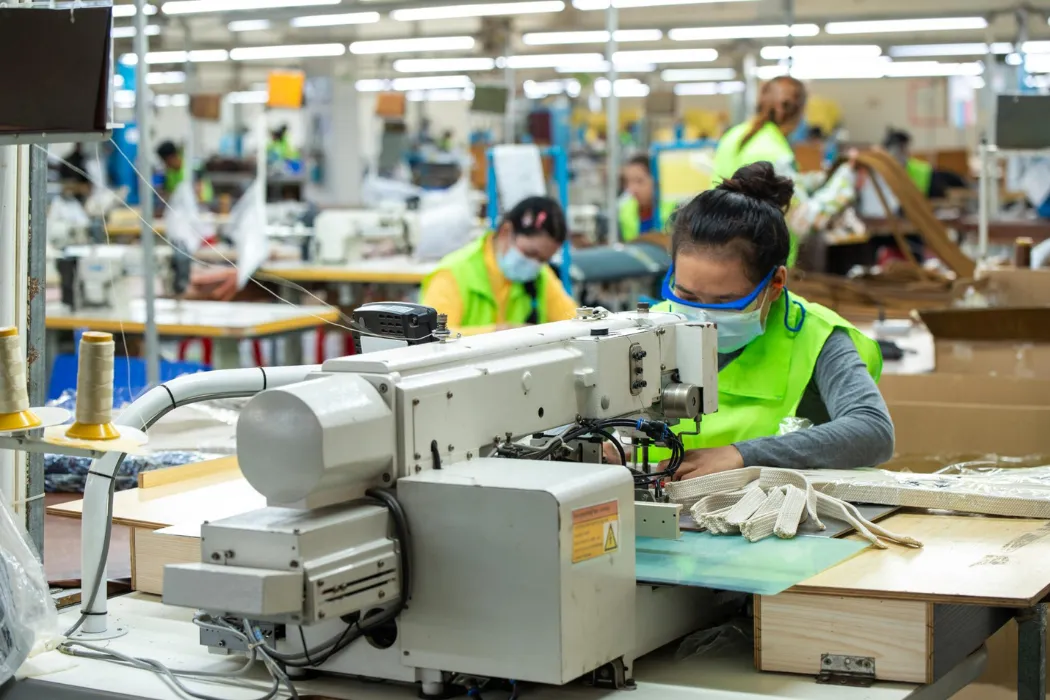
The process begins in China because the industrial ecosystem there is unmatched for speed and variety. Sourcing teams can access specialized components that are simply not available in Southeast Asia yet.
- Rapid Prototyping: A mature sample room in a hub like Dongguan can produce a complex “Golden Sample” in just 3-5 days.
- Hardware Access: China controls the vast majority of metal hardware production. Sourcing buckles, rivets, and logo plates locally allows for immediate physical approval.
- Technical Engineering: Experienced pattern makers resolve structural issues—like strap flexibility or edge paint adhesion—before mass production ever starts.
By keeping the development phase in China, you avoid the communication delays and technical errors often found when developing strictly in emerging manufacturing regions.
The “Muscle” in Cambodia: Bulk Efficiency
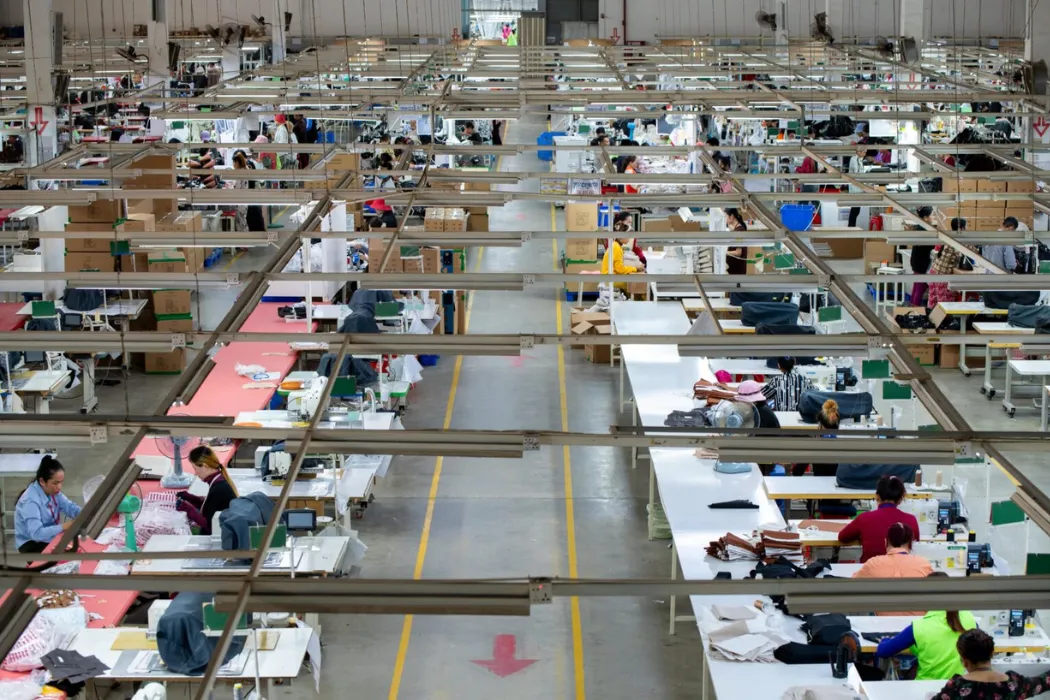
Once the design is locked and the “Golden Sample” is approved, the physical production moves to Cambodia. This is where the heavy lifting happens.
- Scale and Capacity: Factories here are built for volume, easily handling orders of 50,000+ units per month.
- Focused Labor: Workers specialize in specific, repetitive assembly tasks. This specialization increases speed and consistency across large batches of belts.
- Cost Structure: Lower overheads allow for competitive pricing on standard operations like cutting, stitching, and final packaging.
This division of labor allows you to scale up production volume without exponentially increasing your unit costs, which is critical for maintaining healthy margins.
Synchronizing the Supply Chain
The success of this model depends on the seamless flow of materials and information between the two hubs. It requires a logistics strategy that connects the two locations like a single entity.
- Material Transit: Raw materials or semi-finished components are often consolidated in China and then shipped to Cambodia. You must plan for an extra 7-10 days of transit time.
- Centralized Management: A single management team usually oversees both locations. This prevents “finger-pointing” if quality issues arise, as the same company is responsible for both the sample and the final product.
- Unified Standards: The technical packs (Tech Packs) created in China serve as the “bible” for the Cambodian floor managers, ensuring no details are lost in translation.
Effective synchronization transforms two separate factories into one cohesive manufacturing unit, giving you the best of both worlds: Chinese engineering and Cambodian efficiency.
Can Cambodia really match China’s leather finishing quality?
Yes, but only if the factory utilizes a “Crust Import” model. The misconception is that Cambodia lacks the tanning infrastructure of China. While true for raw hide tanning, advanced manufacturers solve this by importing premium semi-finished “crusts” (from Italy or Brazil) and performing the high-tech surface finishing locally. The result is Italian-grade leather with Cambodian labor costs.
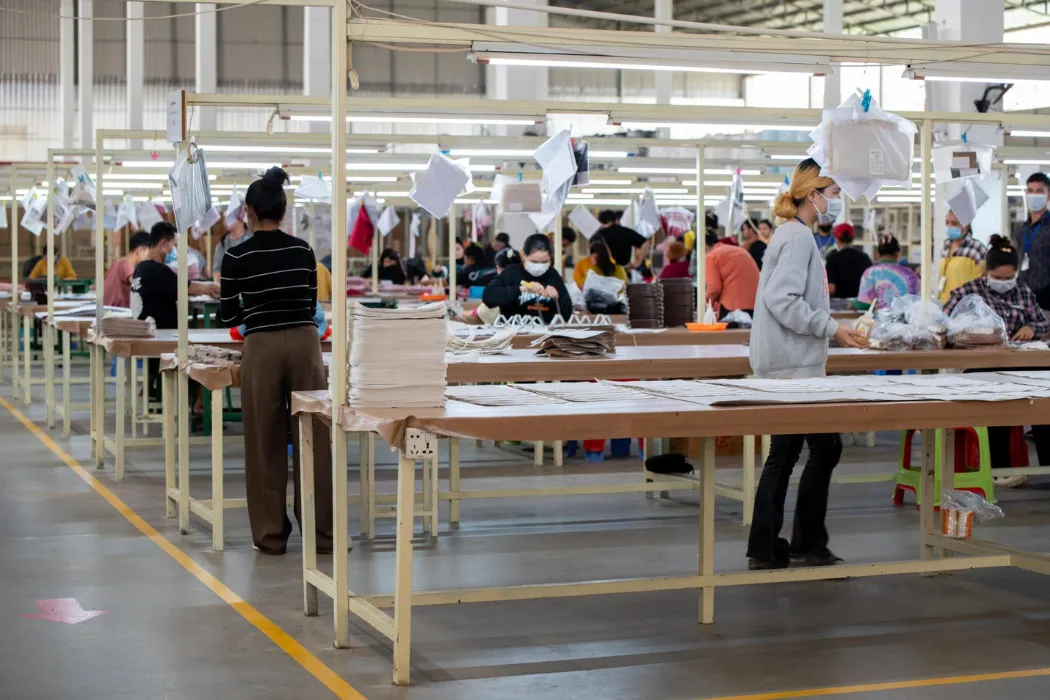
The “Crust” Strategy: Importing the DNA
Quality leather starts with the raw hide. Instead of tanning raw cowhides in Cambodia (which requires massive water treatment infrastructure), the hybrid model imports “crusts”—leather that has been tanned and dried but not colored or finished.
- Global Sourcing: Facilities like Pro Pelli in Cambodia import crusts directly from established tanneries in Italy, Argentina, and Brazil.
- Consistency: Because the base material comes from the same world-class tanneries used by luxury brands, the structural integrity (grain tightness) is identical to leather finished in Europe or China.
- Agility: Storing crusts allows the factory to dye and finish leather on demand, reacting to color trends without waiting for raw hide shipments.
This strategy bypasses the need for a local raw tanning industry, effectively “teleporting” high-quality base materials directly to the assembly line.
Technical Capabilities: Beyond Basic Colors
Modern Cambodian facilities have evolved beyond simple pigment spraying. They now house advanced finishing lines capable of complex chemical and mechanical effects required by Western fashion brands.
- Special Effects: In-house technicians can now execute complex finishes such as Oil Tanned, Crazy Horse, and Pull-up effects.
- Mechanical Processing: Factories are equipped with tumbling drums to create “Vintage” or “Washed” looks, and plating machines for “Saffiano” or “Crocodile” embossing.
- Output Volume: A dedicated finishing plant can process approximately 20,000 to 50,000 square feet of leather daily, ensuring that the finishing line never becomes a bottleneck for the sewing floor.
By owning the finishing process in-country, manufacturers control the exact aesthetic outcome, eliminating the color variance risks associated with buying pre-finished leather from third parties.
Certified Sustainability (LWG)
For global buyers, the chemical safety of the leather is non-negotiable. The “Plus One” model must adhere to the same environmental standards as Chinese production.
- Traceability: Sourcing crusts from Leather Working Group (LWG) certified tanneries ensures the supply chain remains audit-compliant.
- Chemical Safety: In-house finishing allows for strict control over dyes and solvents, ensuring compliance with REACH (EU) and Prop 65 (US) standards.
- Audits: Top-tier Cambodian facilities integrate these standards into their SOPs, making them ready for retailer compliance audits immediately.
Quality is no longer about geography; it is about process control. If the machinery and chemistry are correct, the location of the machine is irrelevant.
| Feature | Traditional China Model | Hybrid Cambodia Model |
|---|---|---|
| Base Material Source | Domestic Chinese Hides or Imported | Imported Crusts (Italy, Brazil, Argentina) |
| Finishing Technology | Mature, Full-Spectrum Capability | Advanced Specific (Oil, Wax, Emboss) |
| Supply Chain Speed | Immediate (Local Suppliers) | Planned (Crust Inventory Strategy) |
| Cost Efficiency | Medium (Rising Labor/Regulations) | High (Vertical Integration) |
| Sustainability | Strict Govt Regulations | LWG Certified Sourcing + Compliance |
What are the concrete duty and tariff advantages?
Duties are often the single largest variable in your landed cost. For the US market, manufacturing in Cambodia avoids the punitive “Section 301” tariffs applied to Chinese goods. For the European and Canadian markets, Cambodia enjoys “Least Developed Country” (LDC) status, often allowing for 0% import duties. This geographical arbitrage can instantly save brands 15-25% on the final landed price.
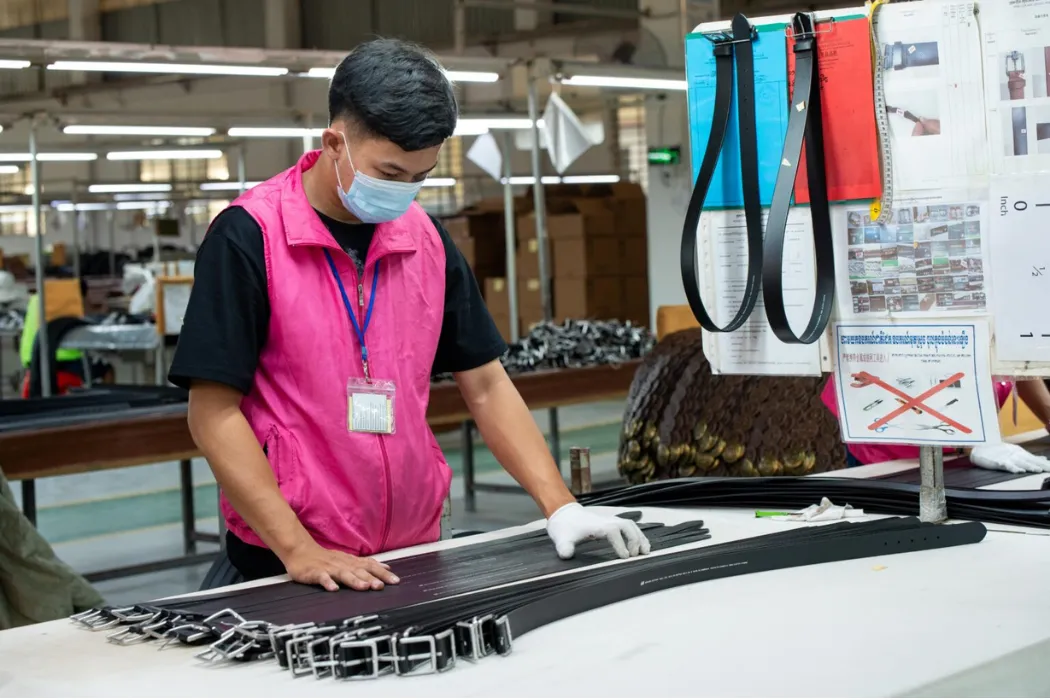
The US Advantage: Avoiding Section 301
While the US Generalized System of Preferences (GSP) program is subject to periodic expiration and renewal by Congress, the primary financial driver for US brands is avoiding the “Section 301” tariffs targeting China.
- The China Penalty: Leather belts from China are typically subject to the standard MFN duty plus a punitive Section 301 tariff, which can add significant percentage points to your cost.
- The Cambodia Solution: Goods made in Cambodia are currently subject only to the standard “Most Favored Nation” (MFN) rates. They are exempt from the China-specific punitive taxes.
- The Math: Even if standard duties apply, avoiding the extra 25% penalty on a large program translates to millions in savings annually.
Simply put, the “Plus One” strategy is the only legal, structural way to bypass the trade war costs that have inflated Chinese manufacturing prices.
The EU & Canada Advantage: True Duty-Free Status
For brands selling into Europe or Canada, the savings are even more direct and guaranteed due to Cambodia’s economic classification.
- Europe (EBA): Under the European Union’s “Everything But Arms” (EBA) arrangement, leather goods from Cambodia can enter the EU duty-free (0%), provided they meet rules of origin.
- Canada (LDC): Canada grants duty-free access to imports from Least Developed Countries. Leather belts that are cut and sewn in Cambodia generally qualify for 0% duty.
- Origin Rules: To qualify, the product must undergo a “substantial transformation” in Cambodia. Simple packaging isn’t enough; the cut-and-sew operation establishes the legal Country of Origin.
For European buyers, this 0% duty vs. the standard rate (often around 5-6% or higher from non-preferential origins) is a direct boost to net margin.
Estimated Landed Cost Breakdown
To visualize the impact, let’s look at a hypothetical cost structure for a standard leather belt. While the “FOB” (factory price) in Cambodia is lower due to labor, the real magic happens at the customs border.
| Cost Component | China Production (Est.) | Cambodia Production (Est.) |
|---|---|---|
| FOB Price (Factory Cost) | $5.00 | $4.60 (Lower Labor) |
| Freight (to US West Coast) | $0.40 | $0.45 (Slightly Higher) |
| Est. Import Duty (US Scenario) | $1.40 (Standard + Sec 301) | $0.28 (Standard MFN Only) |
| Total Landed Cost | $6.80 | $5.33 |
| Savings Per Unit | – | $1.47 (21% Savings) |
*Note: Duty rates are estimates based on standard HS Code 4203.30 and typical Section 301 applications. Always consult a licensed customs broker for exact current rates.
Which specific belt types belong in China and which belong in Cambodia?
Not every belt should move to Southeast Asia. The decision depends on “Volume vs. Complexity.” China remains the king of high-complexity, low-volume “fashion” orders requiring fast turnarounds. Cambodia is the powerhouse for high-volume, stable “replenishment” programs where cost consistency is paramount.
China: The Solution for Complexity and Speed
China’s manufacturing ecosystem is mature, meaning suppliers for every niche component—from specialized studs to unique edge paints—are often within a 50km radius. This makes China the ideal location for “fast fashion” or complex seasonal items.
- Complex Hardware: Belts requiring intricate metalwork, multi-part buckles, or heavy embellishments (like studs or rhinestones) are best made in China to avoid shipping heavy components across borders.
- Small Batches: For limited edition runs or tests (e.g., 300-500 units per color), the setup costs in a massive Cambodian factory don’t make sense. China’s agile workshops handle these efficiently.
- Speed to Market: If a trend spikes and you need product in store within 30-40 days, China’s shorter raw material lead times win every time.
Think of the China factory as your “Development Kitchen”—perfect for testing new recipes and serving complex, time-sensitive dishes.
Cambodia: The Solution for Volume and Value
Cambodia is designed for “programs”—products that sell year-round with predictable demand. The production lines here are longer, optimized for rhythm and repetition rather than constant changeovers.
- Basic Programs: Reversible belts, classic dress belts, and uniform belts are perfect candidates. Once the line is set up, it runs with incredible efficiency.
- High Volume: The minimum order quantity (MOQ) typically starts higher, often around 1,000 – 2,500 units per style, to justify the logistics of moving materials.
- Stable Pricing: For core items where a $0.50 cost increase kills the program, Cambodia’s stable labor and duty environment protects your margin for years.
Think of the Cambodia factory as your “Bakery”—optimized to produce thousands of consistent, high-quality loaves at the best possible price.
Production Allocation Matrix
Use this simple matrix to decide where to place your next purchase order.
| Belt Style / Type | Ideal Location | Why? |
|---|---|---|
| Core Basic / Dress Belts | Cambodia | High volume, steady demand, duty savings maximize margin. |
| Reversible Belts | Cambodia | Labor intensive assembly benefits from lower wage costs. |
| Fashion / Studded Belts | China | High complexity, requires local component sourcing. |
| Braided / Woven Belts | China / Cambodia | Split: Complex weaves in China; simple mass weaves in Cambodia. |
| Seasonal “Test” Orders | China | Low MOQ (500 pcs), faster reaction time. |
| Gift Sets (Wallet + Belt) | Cambodia | High manual labor for packaging; duty benefits on sets. |
How do you maintain consistent Quality Control (QC) across borders?
Distance should not dilute quality. The “Quality Fade” phenomenon only happens when standards are ambiguous. Successful cross-border manufacturing relies on a rigid, three-step protocol: The “Golden Sample” lock, Pre-Production Inspection (PPI) of raw materials, and Final Random Inspection (FRI) based on international AQL standards.
The “Golden Sample” Protocol
Before a single meter of leather is cut in Cambodia, the standard must be physically set in China. This is the non-negotiable reference point for the entire production run.
- The Transfer: The China R&D team produces the final approved sample—the “Golden Sample.” This item is tagged, sealed, and physically flown to the Cambodia factory floor.
- The Twin Rule: We create two identical Golden Samples. One stays with the sourcing team (the buyer), and one goes to the factory manager. If a dispute arises later, these two samples are the judge and jury.
- Visual Standards: This sample dictates the acceptable limits for grain texture, edge paint thickness, and stitch density (SPI – Stitches Per Inch).
Without a Golden Sample physically present on the sewing line, quality control is just an opinion. With it, QC becomes an objective measurement.
Pre-Production Inspection (PPI)
The most expensive defects are the ones found after the product is made. The hybrid model emphasizes catching issues at the raw material stage.
- Leather Grading: Incoming crusts or hides are inspected before finishing. Defects like insect bites, open scars, or loose grain are marked and excluded from the cutting yield.
- Hardware Testing: Buckles arriving from China are tested for lead compliance (Prop 65) and corrosion resistance (salt spray test) before being attached to the belts.
- Lab Testing: Physical tests for crocking (color transfer), flex resistance, and tensile strength are conducted in-house to ensure the batch meets the specs of the Golden Sample.
By filtering out bad inputs at the PPI stage, you ensure that the Cambodia factory is only spending labor hours on “good” materials, maximizing efficiency.
Final Random Inspection (FRI) & AQL
The final gatekeeper is the pre-shipment inspection. This must follow a mathematical standard, not a “feeling.”
- AQL Standards: Industry standard usually dictates an AQL 2.5 for major defects (functional issues) and AQL 4.0 for minor defects (cosmetic issues).
- The Checklist: Inspectors check for specific “kill points” typical in belts: weak buckle prongs, cracking edge paint, or incorrect size stamping.
- Third-Party Verification: For large programs, unbiased third-party agencies (like SGS or Intertek) often validate the factory’s internal QC report before the goods are released to the port.
A rigorous QC protocol turns the “black box” of overseas manufacturing into a transparent, predictable process.
Frequently Asked Questions (FAQ)
Is manufacturing in Cambodia always cheaper than in China?
Not always on the factory floor price (FOB) alone. While labor is cheaper, raw material logistics add cost. However, when you calculate the Landed Cost (FOB + Freight + Duty), Cambodia is almost universally cheaper for the US and EU markets due to duty exemptions.
What is the lead time difference for China Plus One production?
Plan for an additional 2-3 weeks compared to pure China production. This accounts for the transit of raw materials (buckles/hides) from China or South America to the Cambodian facility.
Can I source vegan or PU leather belts in Cambodia?
Yes. The machinery for cutting and sewing PU (Polyurethane) is identical to genuine leather. The key is sourcing high-quality PU rolls, which are typically imported from China before assembly.
What certifications should a Cambodian factory have?
At a minimum, look for social compliance audits like SMETA (Sedex) or BSCI. For environmental standards, an LWG (Leather Working Group) audit rating for the tannery or finishing plant is the gold standard.
Does “Made in Cambodia” negatively affect brand perception?
No. Major global brands (from fast fashion to premium labels) have manufactured there for a decade. The label now signifies ethical, compliant, and duty-optimized manufacturing, rather than “low cost.”
How do I handle shipping logistics in a hybrid model?
You simply ship from the Cambodian port (Sihanoukville or Phnom Penh). Your freight forwarder treats it exactly like a shipment from Shanghai, just with a different point of origin documentation for customs.
Conclusion
The “China Plus One” strategy is not a retreat from China; it is an evolution of global manufacturing. By combining China’s technical “Brain” with Cambodia’s efficient “Muscle,” sourcing directors can secure a supply chain that is resilient, cost-effective, and high-quality.
The math is simple: Avoid 25% punitive tariffs, leverage lower labor costs, and maintain European-standard finishing.
However, execution is everything. This model requires a partner who owns the entire vertical stack—from the sample room in Dongguan to the finishing drums in Phnom Penh. This is exactly where Hoplok Leather operates. We have spent decades refining this hybrid ecosystem so you don’t have to build it from scratch. If you are ready to future-proof your leather sourcing, let’s talk engineering.