No, you should not wear a belt with suspenders for fashion. They serve the identical purpose of holding up your trousers, making the combination functionally redundant and a major style faux pas. The only exception is for utility and workwear, where the belt holds tools and the suspenders support the weight of both the pants and the heavy belt.
It’s one of the most-asked questions in menswear, often summed up by the famous quip: “How can you trust a man who wears both a belt and suspenders?” The question hits on a core dilemma: is your outfit about integrated style, or is it about pure function?
This guide will go beyond a simple “yes” or “no.” We will explore the physics of why they conflict, detail the one major exception where they must be worn together, and show you how to properly wear both accessories as we head into 2025.
Why Should You Not Wear a Belt and Suspenders?
You should not wear a belt and suspenders together because it is functionally redundant and aesthetically clumsy. Since both items do the same job, wearing them implies a lack of confidence in both (the “belt and suspenders” cliché). A belt, which cinches the waist horizontally, actively fights with suspenders, which are designed to drape the pants vertically, leading to a bunched and unflattering silhouette.
The “Belt and Suspender Rule” Explained
The core fashion rule is simple: Choose one. Never both. This rule exists because both items serve the exact same function. Wearing both is like wearing two hats. This redundancy has become a cultural cliché, captured by the famous, often-asked question: “How can you trust a man who wears both a belt and suspenders?” The phrase implies someone who is overly cautious, indecisive, and lacks confidence. In the world of style, confidence and effortlessness are key; this combination signals the exact opposite.
The Aesthetic Problem: Cinching vs. Draping
Beyond redundancy, the two items are at war with each other mechanically. This creates a poor silhouette, which is a common and unflattering style error.
- A belt works by cinching. It creates horizontal tension, squeezing the waistband against your hips. This inevitably causes the fabric around your waist to bunch up or pucker.
- Suspenders work by draping. They attach to the waistband and use your shoulders to lift, allowing the trousers to hang cleanly and smoothly in an unbroken vertical line from your waist to your shoes.
When you wear both, the belt cinches and creates the bunching, while the suspenders try to pull that bunching upwards. This creates an awkward, lumpy, and unnecessarily bulky look around your midsection. You get the worst of both worlds.
Do You Wear a Belt with Suspenders in GQ?
The answer from every major style authority is a resounding “No.” Guides from GQ, Esquire, and The Gentleman’s Gazette are unanimous: wearing both is the number one “rookie mistake” or fashion faux pas. They all cite the functional redundancy and the poor silhouette it creates. For 100+ years of classic menswear rules, this has been a hard-and-fast guideline. If you are wearing a suit or any formal/business casual outfit, you must choose one or the other.
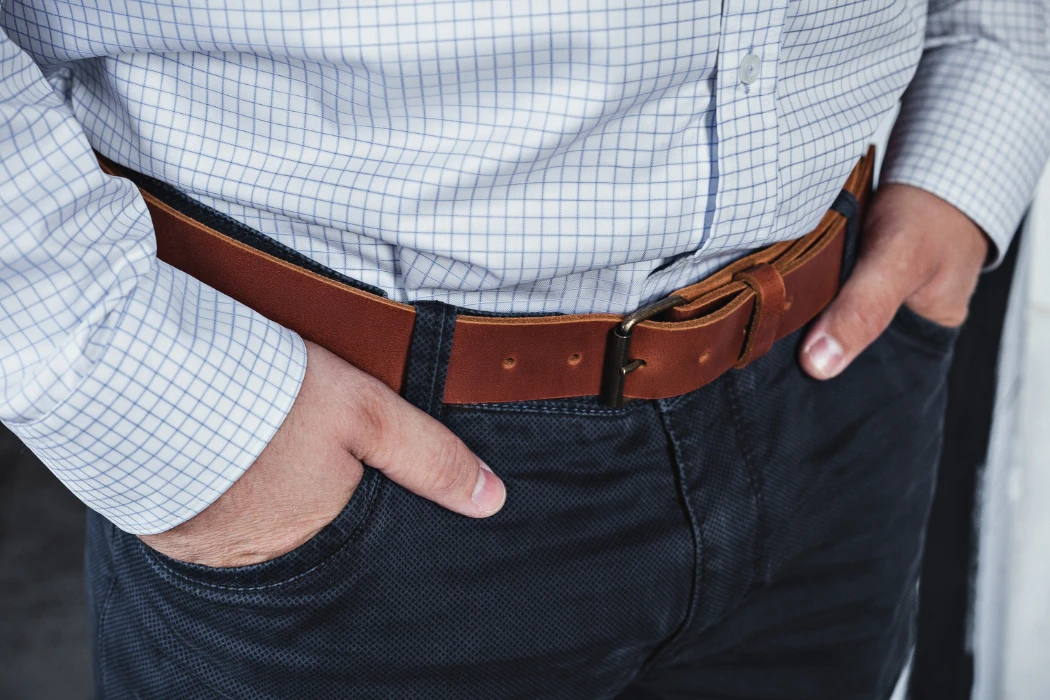
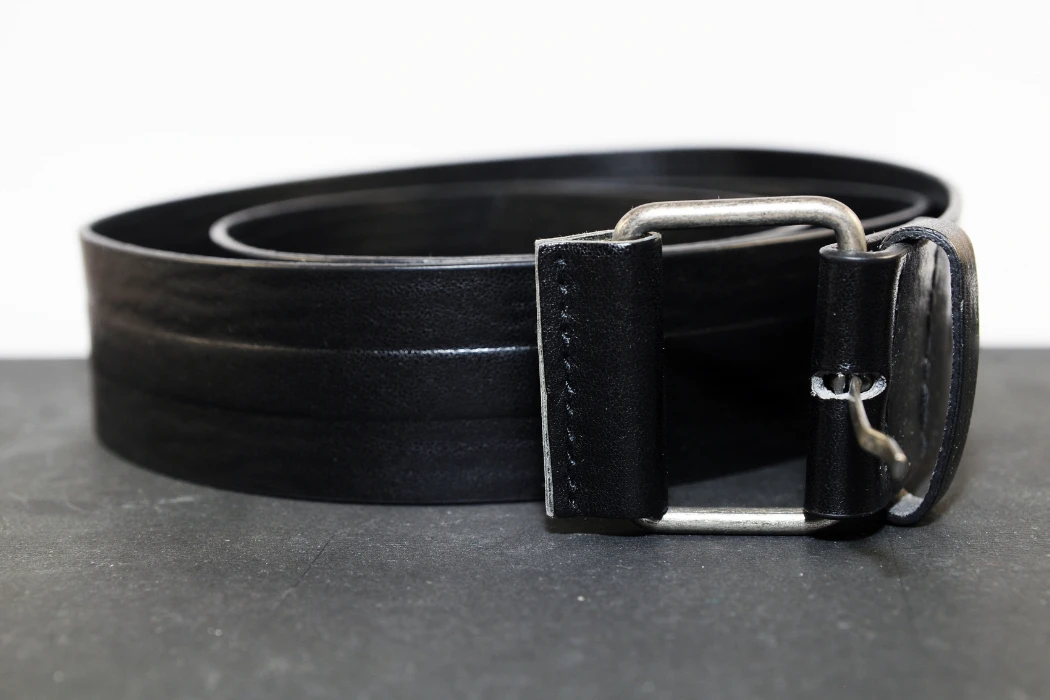
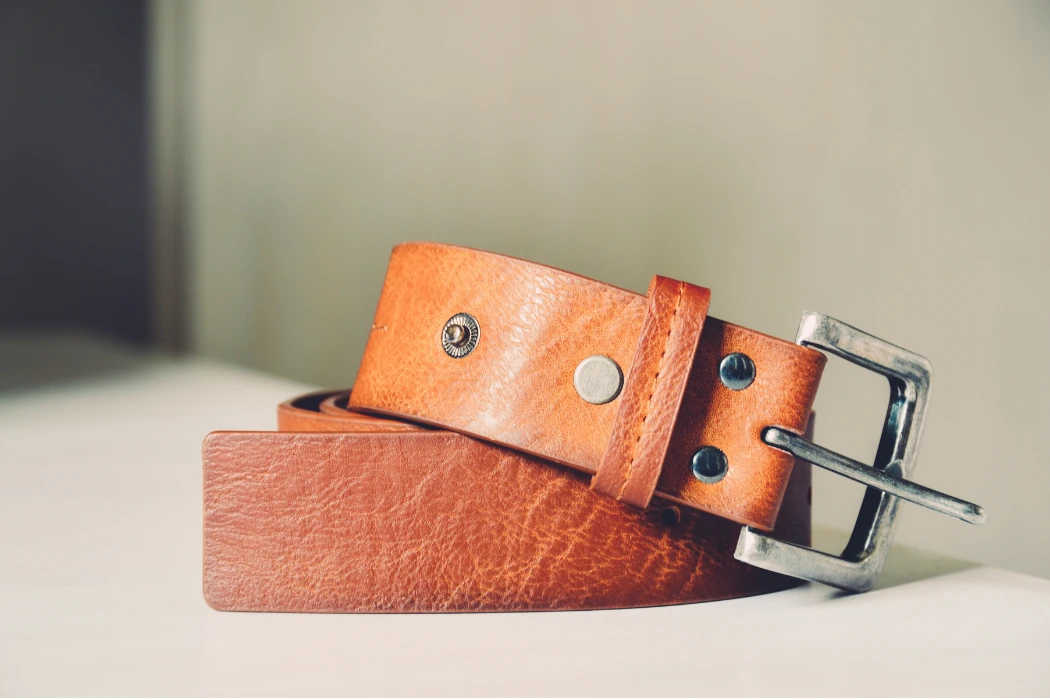
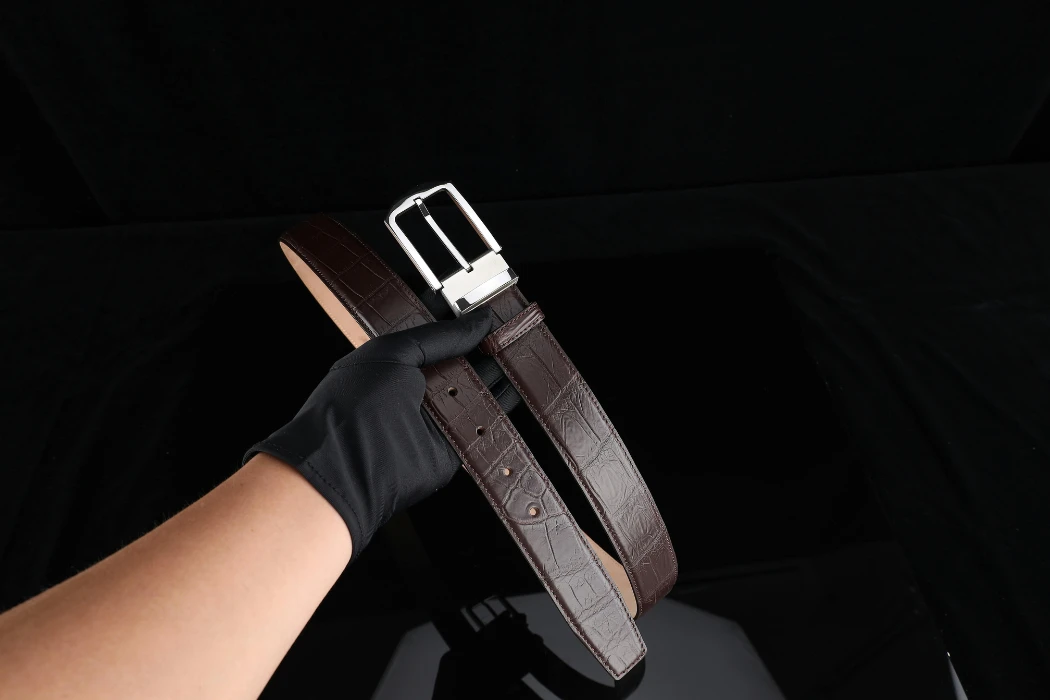
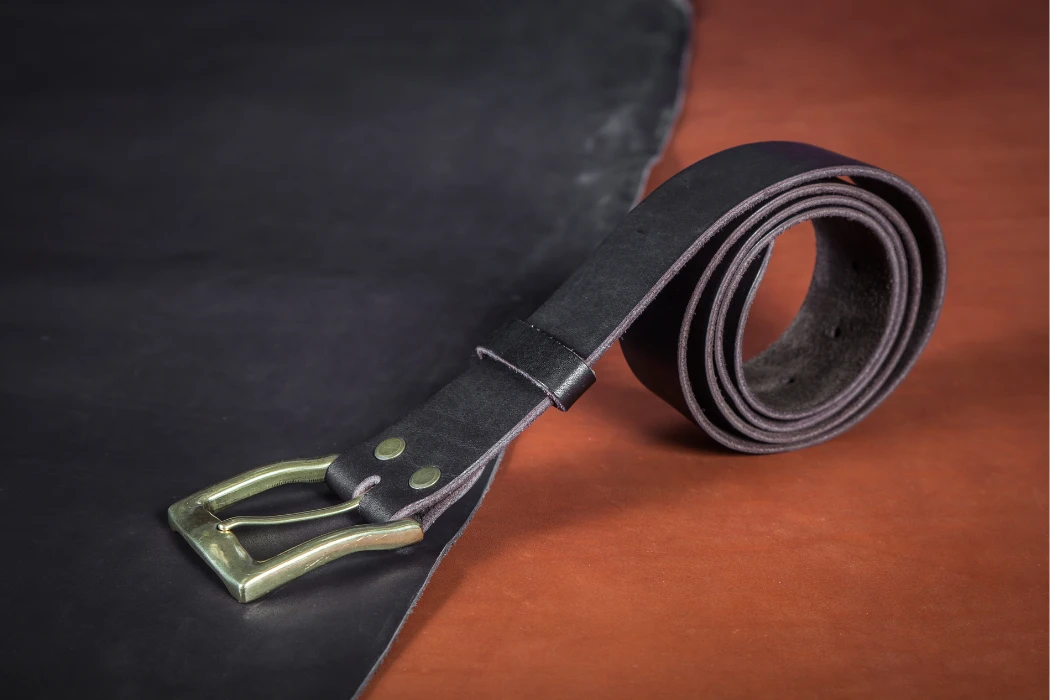
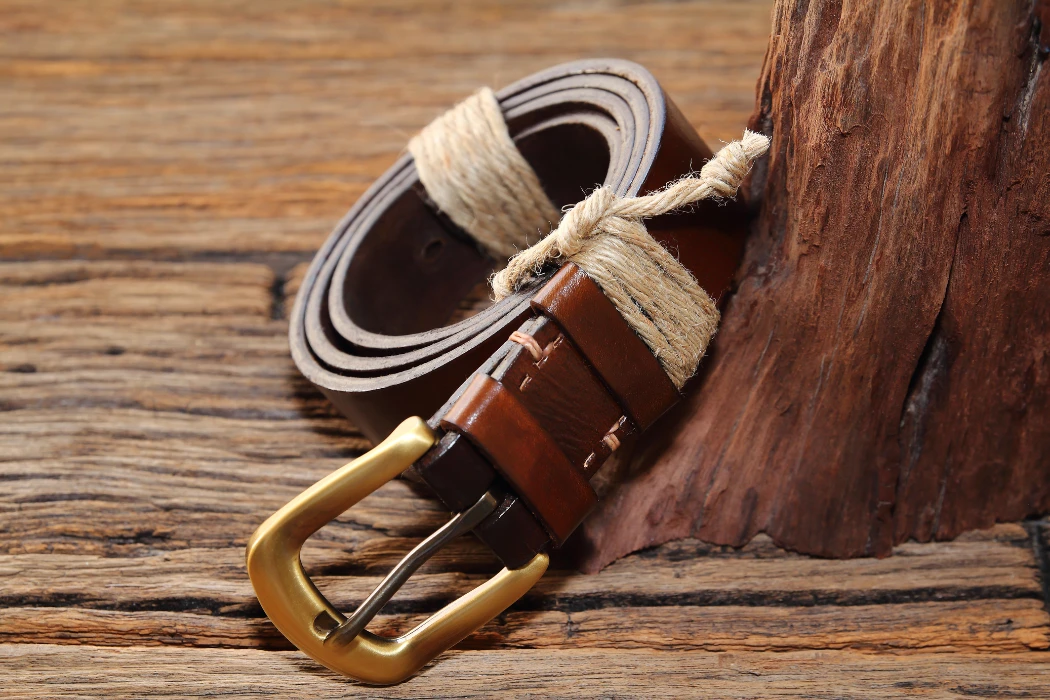
Manufacturer’s Insight (Hoplok): As manufacturers, we design these products for two opposing forces. A Hoplok leather belt, made from thick, vegetable-tanned full-grain leather, is engineered to provide rigid horizontal support (cinching). Our leather suspenders are built with high-grade elastic and full-grain leather tabs to provide flexible vertical support (draping). They are two mechanically different solutions to the same problem. We know from the design phase that they are not intended to work together.
Why Do Some Men Wear a Belt and Suspenders?
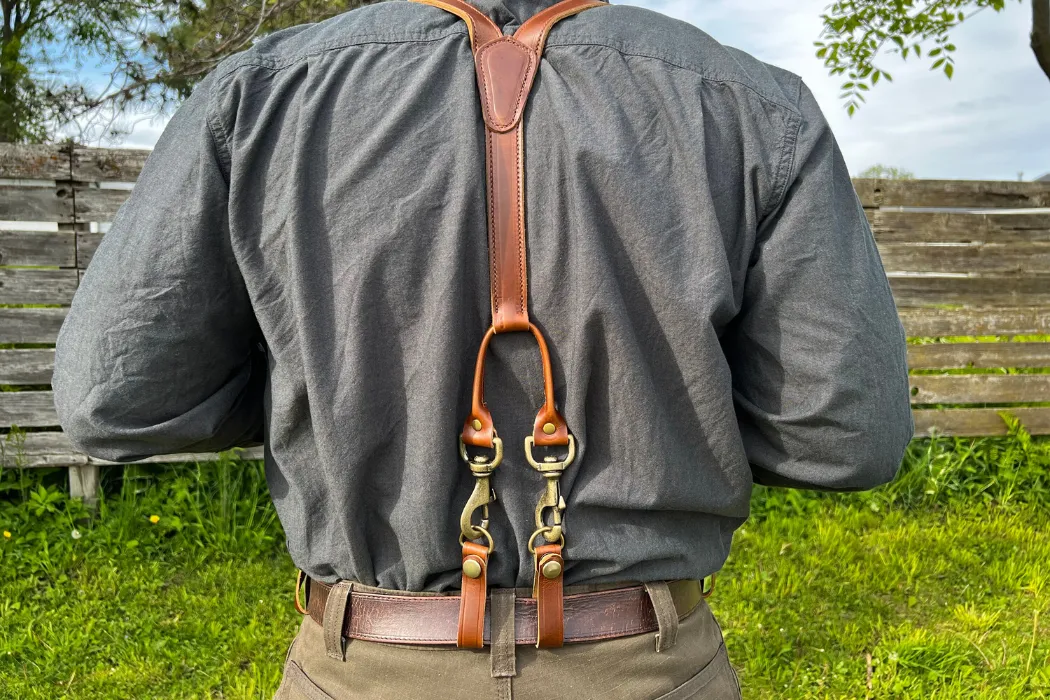
The only exception to the “no belts and suspenders” rule is for utility and heavy-duty workwear. In this specific context, the two items serve two completely different purposes. The belt ceases to be for holding up the pants and becomes a tool-carrying system, while the suspenders take on the full job of supporting the weight of both the pants and the heavy belt.
Different Jobs: A Tool Belt is Not a “Pants Belt”
This is the key distinction. A fashion belt is an accessory. A work belt is a piece of equipment. When you see a construction worker or a police officer wearing both, they are not making a style mistake; they are using a professional system.
- The Belt’s Job: The work belt (often a 2-inch or 3-inch wide, thick leather or nylon rig) is designed to hold tools: hammers, drills, tape measures, or a duty firearm. It is not cinching the pants.
- The Suspenders’ Job: The suspenders (often wide, heavy-duty elastic straps) attach directly to the *pants* or sometimes to the *tool belt itself*. Their job is to hold up the combined, massive weight of the pants *and* all the gear on the belt.
The Physics of Support (Why Tool Belts Need Suspenders)
This system is born from pure physics and ergonomics. A fully-loaded tool belt for a carpenter can weigh 20 to 30 pounds (or more). No “pants belt” on earth can hold this weight up. Without suspenders, the worker would have to cinch the belt so tightly it would cause nerve and circulation problems, while the weight would still pull their pants down.
Suspenders solve this by transferring the entire load from the waist to the shoulders, which are far more capable of bearing the weight. This provides crucial back support and comfort, preventing long-term injury and allowing the worker to move freely. This is the exception that proves the rule: when belt and suspenders have *different* jobs, they work perfectly together.
Real-World Examples: Police, Construction, and Firefighters
This is the direct answer to “why do some men wear a belt and suspenders?” You see this combination on professionals who rely on it for their safety and livelihood.
- Police Officers: Wear a heavy “duty belt” with a firearm, radio, cuffs, and other gear. Heavy-duty suspenders (often worn under the uniform shirt) attach to the pants to hold everything up.
- Construction Workers: Wear suspenders to support a tool belt loaded with hammers, nails, and drills, preventing the 20-lb+ rig from sliding down their hips.
- Firefighters: Wear extremely heavy-duty suspenders (often called “braces”) to hold up their bunker pants, which are made of thick, heavy, fire-resistant material.
Manufacturer’s Insight (Hoplok): As a manufacturer, we build products for both of these worlds. The “leather suspenders” in our fashion line are made with thin, 1-inch full-grain leather straps and small, polished brass clips for style. In contrast, our “work-grade” suspenders for B2B clients are built with 2-inch wide, heavy-duty non-stretch nylon, 4,500-lb test webbing, and industrial-grade steel “alligator” clips designed to bite into a thick work belt and never let go. They are two entirely different products.
Are Suspenders (Braces) Still in Style in 2025?
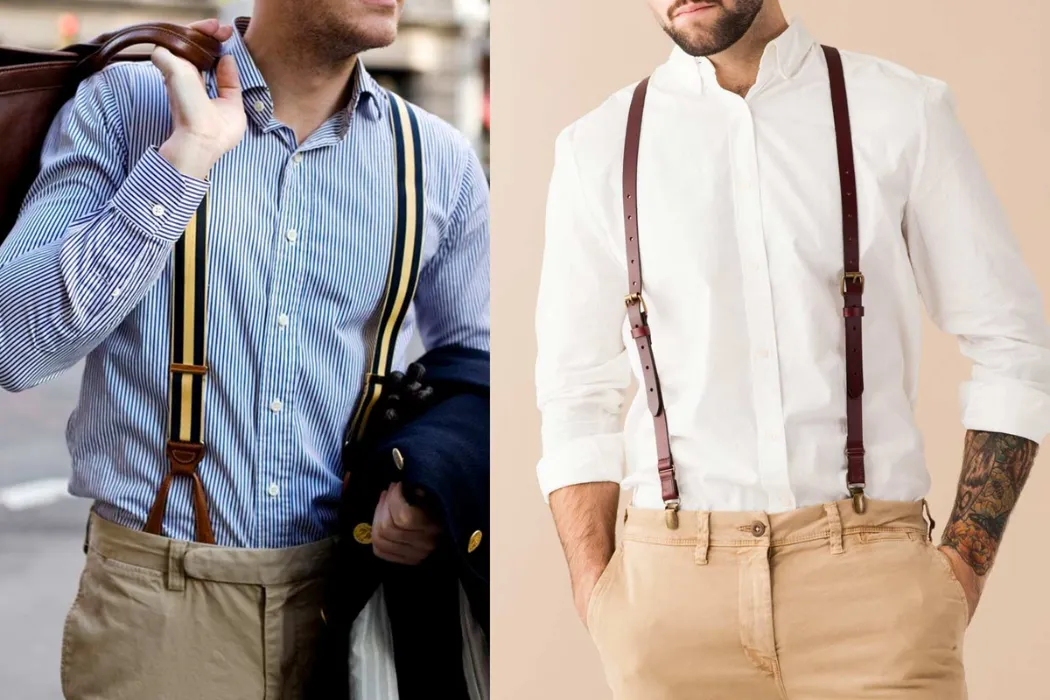
Yes, suspenders are absolutely in style for 2025, but they are a specific fashion statement, not an everyday mainstream item. They remain the undisputed standard for formalwear (like tuxedos) and have seen a strong resurgence in vintage and heritage workwear styles. They are no longer a daily default, but they are a powerful, stylish choice when worn correctly.
Why Do Men No Longer Wear Suspenders Daily?
This is a common question. Before the 1920s, suspenders (or “braces”) were the *only* way men held up their trousers. This was because trousers were cut with a very high waist, a style that belts simply don’t work with.
The change was driven by two things after World War I:
- Low-Rise Trousers: Trouser waists dropped from the natural waist (near the navel) down to the hips. Belts are much more effective at cinching pants at the hips.
- Belt Loops: Jeans and military-inspired chinos popularized belt loops as a standard feature, making the belt the new default.
By the 1940s, the belt had taken over as the primary choice for daily wear, and suspenders became associated with older generations or ultra-formal attire. Men no longer wear them daily simply because our pants are now designed, by default, for belts.
The 2025 Resurgence: Formalwear & Heritage Style
Today, suspenders are thriving in two key areas, driven by a return to classic, well-structured style:
- 1. Formalwear (The “Black Tie” Rule): For any black tie or formal event, suspenders are the *only* correct choice. A tuxedo trouser should never have belt loops. Suspenders create the clean, unbroken line that a tuxedo requires and ensure the pants drape perfectly. They are hidden under a waistcoat or cummerbund.
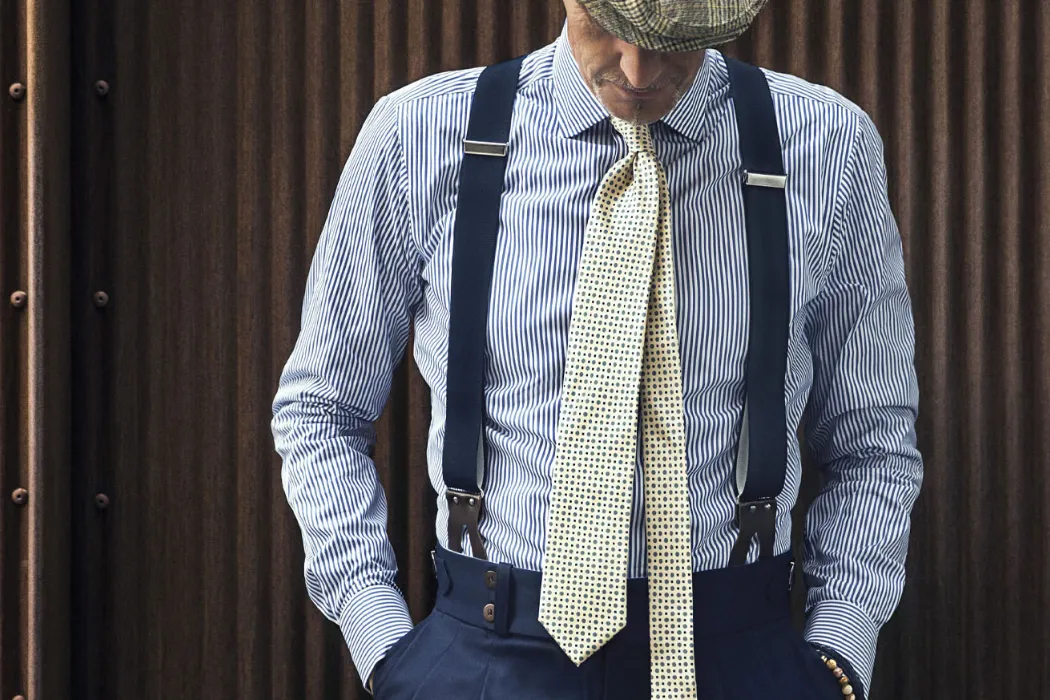
- 2. Heritage & Workwear (The “Peaky Blinders” Effect): Thanks to cultural trends, the 1920s-style “heritage” look (think Peaky Blinders or Pitti Uomo) has made suspenders a powerful style statement. Paired with high-waisted trousers, button-on suspenders (often in 1.5-inch widths) are a sign of a man who truly understands classic style.
Who Should Wear Suspenders Today?
Suspenders are an excellent choice for several types of men:
- The Formal Man: Anyone attending a wedding, gala, or black-tie event.
- The Man with a Larger Midsection: Suspenders are far more comfortable than a belt for larger men. A belt cinches at the stomach (which is uncomfortable), while suspenders allow the trousers to drape comfortably from the shoulders.
- The Tall Man: Suspenders help create a more balanced vertical line for men over 6’2″, preventing the “low-slung” look a belt can sometimes cause.
- The Style Enthusiast: Any man who appreciates vintage or heritage workwear and wants to stand out from the crowd.
Suspender Style Guide 2025
Here is a simple guide for a brand or consumer on how to deploy different types of suspenders.
| Style | Leather/Material | Width | Worn With |
|---|---|---|---|
| Formal (Black Tie) | Black or White Silk/Moiré | 1.25″ – 1.5″ | Tuxedo (Always Button-on) |
| Business (Boardroom) | Full-Grain Leather Tabs, Navy or Burgundy Elastic | 1.25″ | Business Suits (Button-on) |
| Heritage (Workwear) | Full-Grain Leather Suspenders (all leather) | 1.5″ | Wool Trousers, Selvedge Denim (Button-on) |
| Casual (Clip-on) | Patterned Elastic, Faux Leather Tabs | 1.0″ – 1.5″ | Chinos (Often Clip-on, seen as less formal) |
What Should You Not Wear With Suspenders?
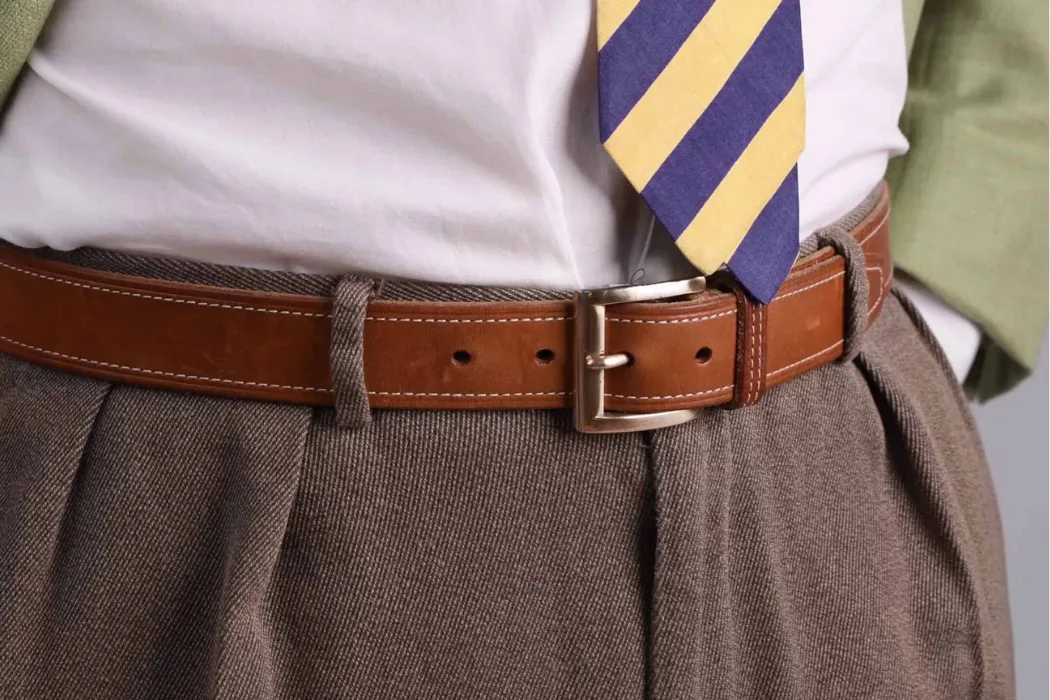
When wearing suspenders, you must never wear a belt, as it’s functionally redundant. You should also avoid wearing them with trousers that have belt loops, as the empty loops look unfinished. Finally, avoid clip-on suspenders for formal events and T-shirts for any occasion, as both create a significant formality mismatch.
The #1 Rule: Never Wear a Belt
This is the cardinal sin of menswear and the primary rule of this guide. As we’ve established, they serve the same purpose. Wearing both is a style contradiction that signals you don’t understand the function of either accessory. You must choose one.
The Problem of Empty Belt Loops
This is the most common visual mistake. Wearing suspenders (especially button-on ones) with a pair of trousers that still have belt loops is not a “faux pas” on the same level as wearing a belt, but it looks sloppy. The empty loops are a sign that the trousers were designed for a belt, making the suspenders look like an afterthought. A true pair of “suspender trousers” (like tuxedo pants) will not have belt loops at all, creating a much cleaner line.
The Clip-on vs. Button-on Faux Pas
This is a crucial distinction for quality and formality.
- Clip-on Suspenders: These are considered casual or a novelty. The metal clips are aggressive, and they will, over time, damage and tear the waistband of your trousers. They are seen as a cheap, temporary solution.
- Button-on Suspenders (Braces): This is the traditional, correct, and more secure way to wear them. Trousers intended for suspenders have small buttons (usually 6) sewn on the inside of the waistband. The leather tabs of the suspenders loop onto these buttons, creating a seamless, elegant look that places no stress on the fabric.
The Formality Mismatch (T-Shirts, etc.)
Suspenders are, by nature, a component of classic, structured tailoring. They are designed to be worn with a collared shirt. Wearing suspenders with a T-shirt is a stylistic clash. The T-shirt is the most casual item in a man’s wardrobe, while suspenders are rooted in formal or semi-formal wear. This combination is generally seen as a costume, not a cohesive outfit.
Manufacturer’s Insight (Hoplok): As manufacturers, we focus on the “button-on” tabs for our high-end leather suspenders. This is a key B2B quality marker. We use our precision die-cutters to stamp the buttonholes from full-grain leather, ensuring they are durable and will not tear or stretch over time, unlike the cheap, glued-together faux leather tabs found on clip-on models. This focus on component quality is what brands should look for in a supplier.
What Did Cowboys Wear: Belts or Suspenders?
This is a common myth, largely thanks to Hollywood. In the late 19th century (the classic “Old West” era), cowboys almost exclusively wore suspenders. Trousers at the time were cut with a high waist and did not have belt loops. Belts did exist, but they were worn over the suspendered trousers as “cartridge belts” (gun belts) to carry ammunition and tools. This is the perfect historical proof of the “Utility Exception.”
The Myth of the Hollywood Cowboy
Our image of the cowboy (think John Wayne) wearing a low-slung belt with jeans is a 20th-century invention. This look was popularized by Hollywood Westerns in the 1930s and 1940s because it was considered more rugged and “cool” for audiences. Historical photographs from the 1870s and 1880s, however, overwhelmingly show men wearing suspenders to hold up their pants, just like everyone else at the time.
The High-Waist Trousers of the 19th Century
The original Levi’s “waist overalls” (the first blue jeans, patented in 1873) were not designed for belts. They were cut very high on the waist and came standard with suspender buttons sewn onto the waistband. Belt loops were not added to Levi’s 501 jeans until 1922, nearly 50 years later, as fashion shifted towards lower-rise pants and belts became the new standard.
The “Cartridge Belt”: The Original Utility Exception
So, did cowboys wear belts? Yes, but not to hold up their pants. A cowboy, sheriff, or outlaw would wear suspenders to hold up his high-waisted trousers, and *then* buckle a separate, heavy-duty leather “cartridge belt” (gun belt) over the top. This perfectly aligns with the modern utility exception: the suspenders hold the pants, and the belt holds the tools. They served two different functions.
How Do I Choose Between a Belt and Suspenders?
When choosing, let your trousers be your guide. If your pants have belt loops (like jeans, chinos, and most suits), wear a belt. If your pants do not have belt loops (like tuxedo trousers or formal, high-waisted pants), wear suspenders. For 99% of fashion situations, the choice is that simple and they are not interchangeable.
Decision 1: Check Your Trousers (Loops vs. No Loops)
This is the simplest, most important rule. Belt loops without a belt look sloppy and unfinished. Suspenders worn with belt loops also look redundant (as covered in H2.5). The trousers themselves are telling you what to wear. Trousers with “side-tabs” are the exception and are designed to be worn with neither.
Decision 2: Consider the Formality (Formal vs. Casual)
The event’s formality dictates the choice. For any “Black Tie” event, suspenders are the only acceptable option, as a belt will break the clean line of a tuxedo. For most business and casual settings (like a suit or jeans), a belt is the modern default. Suspenders in a casual setting are a deliberate, vintage-inspired style choice.
Decision 3: Consider Your Body Type (Comfort)
For men with a larger midsection, suspenders are often a far more comfortable and flattering choice. A belt cinches at the widest part of the stomach, which can be uncomfortable and cause the belt to roll. Suspenders, by lifting the trousers from the shoulders, allow the waistband to drape comfortably and create a smoother, more slimming vertical line.
Decision-Making Matrix: Belt vs. Suspenders
Use this simple matrix to make the right choice every time.
| Outfit | Trouser Type | Recommendation | Why? |
|---|---|---|---|
| Tuxedo (Black Tie) | Formal, No Belt Loops | Suspenders (Button-on) | Creates a clean, unbroken line. Belts are forbidden. |
| Business Suit | Suit Trousers with Belt Loops | Belt | The modern default. Matches shoes. Fills the loops. |
| Jeans / Chinos | Casual, with Belt Loops | Belt | Standard for all casual wear. |
| Work Rig w/ Tools | Work Pants (with loops) | Belt AND Suspenders | The Utility Exception: Belt holds tools, suspenders hold the belt. |
Frequently Asked Questions
1. What is the belt and suspender rule?
The primary rule is: do not wear them together for fashion. They serve the same purpose, so wearing both is considered redundant and a style faux pas. You must choose one.
2. Is it okay to wear a belt with suspenders?
For fashion, no. For utility, yes. A police officer or carpenter wears a belt to hold tools and suspenders to hold the heavy belt up. In this case, they have two different jobs.
3. Why do police officers wear both?
Police officers wear both because their belt is a heavy “duty belt” for carrying a firearm, radio, and cuffs, not for holding up their pants. They wear suspenders (often hidden under their shirt) to support the weight of the duty belt and their trousers, preventing back strain.
4. Do I wear suspenders over or under my waistcoat (vest)?
Always wear suspenders under your waistcoat. A waistcoat is a formal garment; the suspenders are considered functional (like underwear) and should be hidden beneath it.
5. Can I wear clip-on suspenders to a wedding?
It is not recommended. Clip-ons are considered casual or a novelty and can damage the trousers. For a formal event like a wedding, button-on suspenders (braces) are the correct and more elegant choice.
6. Are suspenders old-fashioned in 2025?
No, they are classic. They are not “old-fashioned” but rather the timeless standard for formalwear (tuxedos) and a popular, strong style choice for heritage and vintage-inspired looks (as seen in trends like “Peaky Blinders”).
7. Did cowboys really wear suspenders?
Yes. Historically, in the late 1800s, cowboys almost exclusively wore suspenders. Their high-waisted trousers (like the first Levi’s) were made with suspender buttons, not belt loops. The “cowboy with a belt” look was largely popularized by Hollywood movies decades later.
Conclusion: The Right Tool for the Right Job
So, should you wear a belt with suspenders? For 99% of style situations, the answer is a clear “No.” They serve the same purpose and are aesthetically redundant. You must choose one: the modern cinch of a belt, or the classic drape of suspenders. But for that 1% of heavy-duty workwear, the answer is a definite “Yes.” In that case, they serve different jobs: the belt holds tools, and the suspenders hold up the belt.
As a brand, your customers are looking for this authority. They need the right accessory for the right occasion. A high-quality accessory line doesn’t just sell a product; it provides the correct solution.
Hoplok is a master manufacturer of both solutions. We produce millions of durable full-grain belts for global brands and craft high-quality leather suspenders with solid hardware. We can help your brand build a complete, authoritative accessories collection from a single, certified supplier. Contact Hoplok Leather to get samples for your next belt and suspender collection.