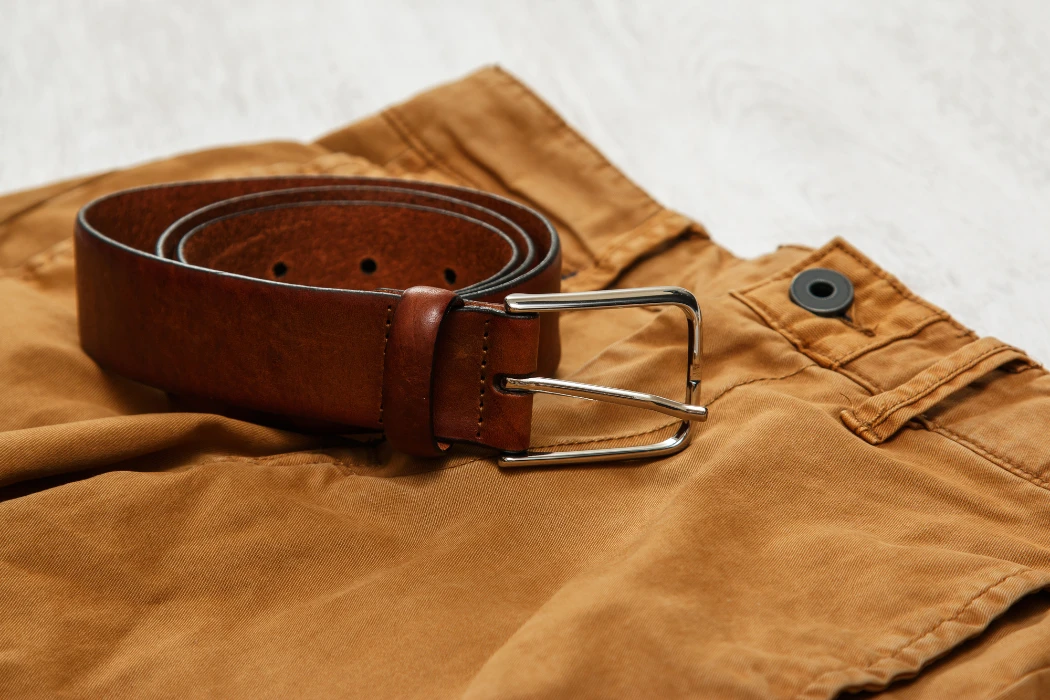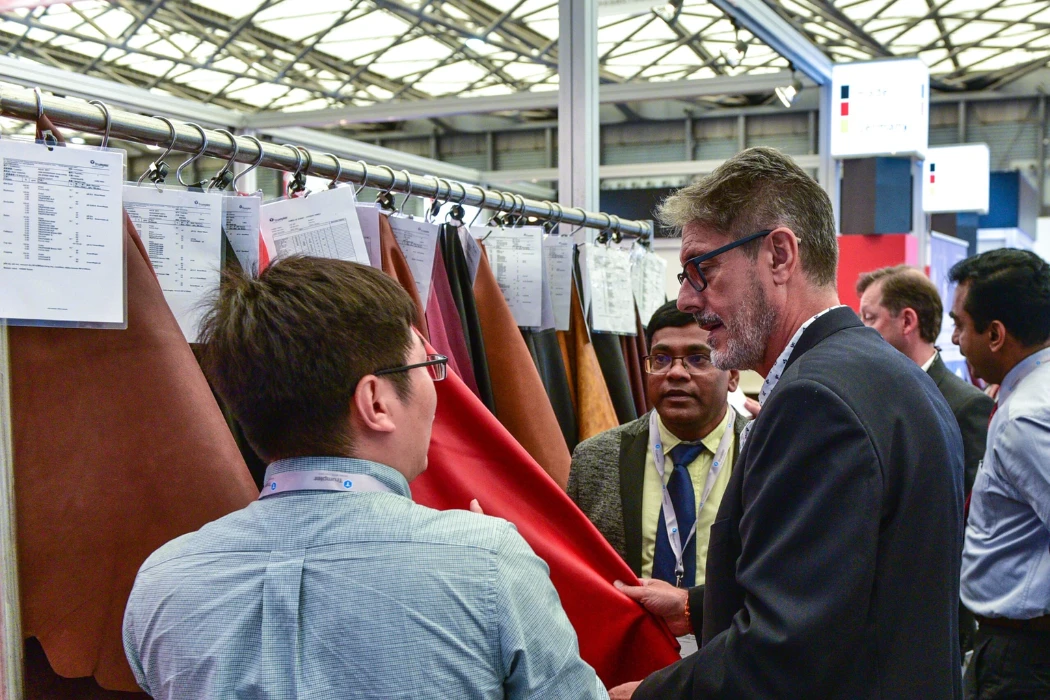
For B2B procurement officers and luxury designers, the term “Genuine Leather” is often a semantic trap that masks structural deficiencies and compromises long-term ROI. In the high-stakes manufacturing of small leather goods (SLGs), relying on marketing labels instead of technical benchmarks leads to high warranty claim rates and premature product failure. Choosing between full-grain and top-grain is not merely an aesthetic preference; it is a critical engineering decision that dictates the tensile strength and mechanical integrity of every bifold and cardholder in your collection.
In this technical guide, we break down the mechanical differences between leather grades, analyzing why full-grain’s vertical collagen bundles are essential for maintaining a slim 10.05mm profile without sacrifice. We will explore professional testing protocols like ASTM D2209, the compounding effects of 0.4mm layer increments on pocket ergonomics, and why LWG certification has become the non-negotiable standard for global retail supply chains. By the end of this analysis, you will have the technical specifications required to audit material quality and ensure your leather goods evolve into heirlooms rather than disposable assets.
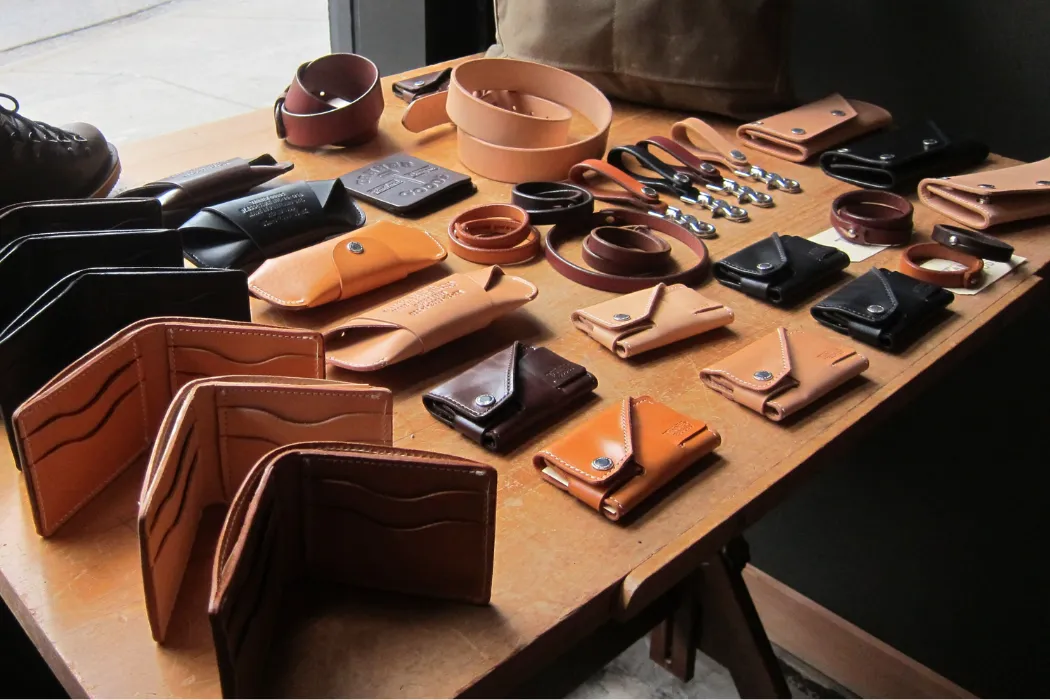
What is the structural difference between full-grain and top-grain leather?
The primary difference lies in the preservation of the grain layer. Full-grain leather retains the entire epidermis with its dense, vertical collagen bundles, ensuring maximum tensile strength. Top-grain leather has this outermost layer sanded away to remove imperfections, which compromises the fiber density and long-term durability of the hide.
Fiber Density and Collagen Bundle Integrity
To understand the mechanical differences between these leather grades, one must look at the biological composition of the hide. The “grain” refers to the uppermost layer of the dermis, where the collagen fibers are most concentrated. In full-grain leather, this section remains entirely intact, preserving the natural orientation of the fibers which are designed by nature to protect the animal from punctures and environmental stress.
- Full-grain leather preserves the outermost surface where collagen bundles are most tightly interwoven and oriented.
- Top-grain leather involves the removal of the top grain layer through sanding, leading to a less tight fiber structure.
- Retention of the ‘grain’ layer in full-grain provides superior fiber density compared to the grain-corium junction found in top-grain.
Surface Processing and Mechanical Durability
The way a hide is processed directly dictates its performance in finished goods. Full-grain leather is left in its natural state, which prevents the weakening of the material’s internal matrix. Conversely, top-grain leather is often skived or sanded to achieve a uniform, “perfect” aesthetic. While this makes the leather easier to work with for manufacturers, it fundamentally alters the mechanical integrity of the hide, making it more susceptible to stretching or tearing over time.
- Full-grain leather maintains natural markings like scars and creases, which signify the untouched integrity of the hide.
- Top-grain undergoes surface thinning/sanding to create a uniform appearance, which reduces the material’s overall longevity.
- Thin-skived wallet applications require the high tensile strength of full-grain to prevent tearing at stitch lines.
Ultimately, while top-grain leather offers a refined aesthetic and a thinner profile suitable for high-fashion accessories, it lacks the structural “memory” and extreme durability of full-grain. For products intended to last decades—such as heavy-duty boots or heritage-quality saddlery—the uncompromised fiber structure of full-grain is technically superior.
Why is full-grain leather considered the gold standard for luxury wallets?
Full-grain leather is the gold standard because it retains the hide’s outermost layer, preserving the densest protein fibers for maximum tensile strength. Unlike corrected leathers, it resists cracking and peeling, develops a prestigious natural patina over time, and maintains structural integrity even when skived to widths as slim as 10mm.
Structural Integrity and Superior Tensile Strength
The primary reason full-grain leather dominates the luxury sector is its unrivaled physical composition. By utilizing the top layer of the hide—where the fiber density is highest—this material provides the maximum possible resistance to daily abrasions and long-term wear. Because the grain remains completely intact, the leather avoids “break,” a common defect in sanded or corrected leathers where the surface begins to crack and peel under repeated flexing.
- Inherently moisture-resistant and breathable due to the preserved natural pore structure of the animal skin.
- High tear strength ensures high-stress points like card slots and bifold hinges remain functional for decades.
- Unaltered fiber structure prevents the degradation and thinning typically seen in lower-grade “genuine” leathers.
Aesthetic Longevity and Precision Engineering Specs
Beyond raw strength, full-grain leather is prized for its ability to age gracefully through aniline dyeing. Unlike painted leathers, aniline dyes saturate the fibers without masking the natural grain, allowing the wallet to absorb oils and light. This process creates a dark, lustrous sheen known as a patina, which is the hallmark of a high-quality leather heirloom.
From a technical perspective, this material allows for extreme precision in modern leatherworking. Luxury wallets can maintain ultra-slim profiles—often as thin as 10.05mm (5/16 inch)—without sacrificing the durability required to hold multiple cards and currency. Advanced manufacturing techniques further enhance these properties to meet modern consumer needs.
- Optimization for thermoforming with heat/pressure bonding to prevent stretching while remaining supple.
- Compatibility with vegetable tanning processes that ensure skin-contact longevity and environmental sustainability.
- Supports high-end finishes like beveled and polished edges which prevent fraying in small leather goods (SLGs).
For the discerning user, choosing full-grain leather is an investment in both engineering and art. While market-tier products often rely on “premium” labels as marketing fluff, authentic full-grain is identified by its natural markings and its refusal to degrade, ensuring the wallet’s form factor remains consistent from the first day of use to the last.
How does hide thickness (mm) affect the final “bulkiness” of a wallet?
Leather thickness is measured in ounces (oz) or millimeters (mm), where 1 oz equals approximately 0.4 mm. For functional small leather goods, a thickness of 0.8 mm to 1.6 mm is the industry standard; exceeding a combined panel thickness of 2.0 mm typically results in excessive bulk and pocket discomfort, while falling below 0.8 mm compromises structural integrity.
Understanding the relationship between raw material weight and the physical dimensions of a finished wallet is the primary challenge for both manufacturers and consumers. Because leather is a natural substrate, its thickness directly dictates how many layers can be stacked before the item becomes impractical for everyday carry.
Weight vs. Thickness: Understanding the Ounce-to-Millimeter Conversion
In the leather industry, thickness is traditionally referred to as “weight,” though it is a linear measurement of depth rather than mass. Identifying the correct weight for specific wallet components is essential for maintaining a slim profile.
- The standard conversion ratio used by tanneries is 1 oz of leather thickness equaling approximately 1/64 inch or 0.4 mm.
- For wallet interior specifications, a range of 2–3 oz (0.8–1.2 mm) is recommended for card slots and internal dividers to minimize the cumulative “stack-up” effect.
- Wallet exterior specifications typically require 3–4 oz (1.2–1.6 mm) for the outer shell to provide necessary structural integrity and wear resistance.
- Professional manufacturers use precision calipers to manage natural variation, as hide thickness is rarely uniform across the entire surface of the leather.
The Compound Effect: How Layering Impact Pocket Ergonomics
The true thickness of a wallet is rarely the result of a single piece of leather; rather, it is the sum of various panels, linings, and reinforcements. When these layers are combined with credit cards and currency, the dimensions grow exponentially.
- The 4.0 oz Threshold: Most leatherworkers identify 3.5–4 oz (1.4–1.6 mm) as the functional “sweet spot” for balancing long-term durability with ergonomic comfort.
- Stitch Integrity: Leather skived below 3 oz (1.2 mm) in high-tension areas risks the “cheese-cutter” effect, where stitches pull through the fibers during the stress of daily use.
- The Stacking Problem: Each incremental 0.4 mm increase in panel thickness compounds in bifold designs, as the fold doubles the total thickness of every internal layer.
- Rigidity Constraints: Hides exceeding 5 oz (2.0 mm) are generally too rigid for the tight radii required in wallet construction, leading to pockets that do not sit flush.
Ultimately, the choice of thickness must be balanced against the intended use of the wallet. While thicker leather suggests a more rugged aesthetic, it often results in a product that is too stiff to conform to the user’s body. Conversely, overly thin leather may feel sophisticated at first but will stretch and lose its shape rapidly without internal reinforcements.
Craft Premium Custom Wallets for Your Global Brand
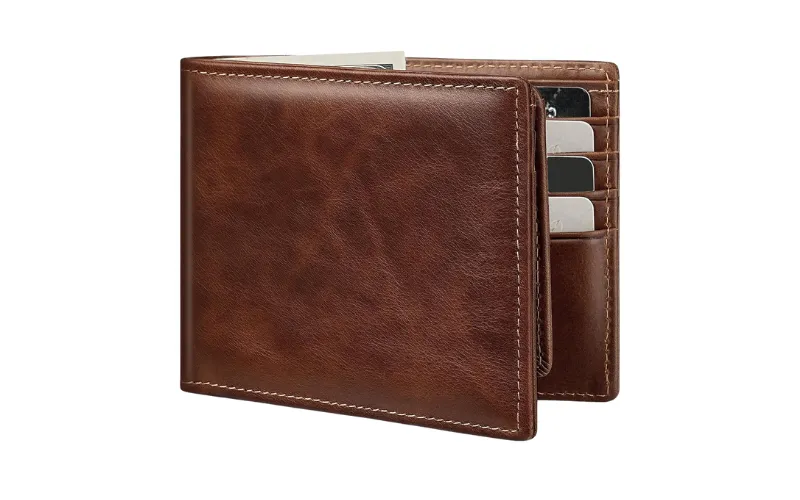
What are the pros and cons of vegetable vs. chrome tanning for SLGs?
Chrome tanning uses chromium sulfate to produce soft, water-resistant leather in just 1 day, accounting for 90% of the market. In contrast, vegetable tanning utilizes natural oak and chestnut extracts over days or months to create firm, eco-friendly leather that develops a prized patina over time.
Chrome Tanning: Scalability and Color Versatility for Mass Production
Chrome tanning is the modern industrial standard, optimized for efficiency and consistency within the global supply chain. By utilizing chromium sulfate solutions, manufacturers can transform raw hides into finished leather in approximately 24 hours, a stark contrast to the traditional methods that defined previous centuries.
- Rapid 24-hour processing time using chromium salts compared to the weeks required for traditional tanning.
- Produces “wet-blue” hides that offer superior initial flexibility and a “short break-in” period for wallets.
- High color consistency and versatility allows for vibrant dyes beyond standard browns and blacks.
- Market dominance: Chrome-tanned leather currently represents 90% of global leather production.
While highly efficient, this method relies heavily on chemical intervention. Small leather goods (SLGs) produced this way remain soft and maintain their original color brilliantly over time, though they lack the ability to age or “evolve” that many leather enthusiasts seek.
Vegetable Tanning: Artisan Longevity and the Patina Value Proposition
Vegetable tanning represents the pinnacle of artisanal leathercraft, relying on organic matter rather than synthetic chemicals. This process uses tannins found in oak bark, chestnut, and other botanical sources to slowly stabilize the hide fibers, resulting in a material that is as durable as it is environmentally conscious.
- Utilization of organic oak bark and chestnut tannins for a chemical-free, environmentally conscious finish.
- Superior structural integrity and firmness, ideal for maintaining the shape of minimalist cardholders and bifolds.
- Natural aging process yields a unique patina, increasing long-term brand value as the product darkens and softens with use.
- Enhanced breathability and scent, though it requires more maintenance due to lower initial water resistance compared to chrome.
For the premium SLG market, vegetable-tanned leather is often the preferred choice for full-grain products. Although it requires a longer production lead time and demands more attention from the end-user to prevent water spotting, the aesthetic payoff is a unique, personalized item that reflects the owner’s history through its developing patina.
Why do “Genuine Leather” labels often mislead B2B procurement officers?
In the B2B context, ‘Genuine Leather’ is a marketing term rather than a quality grade; it typically refers to the lowest layer of a split hide that lacks a natural grain. It is often corrected with artificial imprints and polymer coatings, failing to meet the durability and tensile strength requirements of premium wallet manufacturing.
| Leather Grade | Structural Composition | Expected Lifespan |
|---|---|---|
| Full-Grain | Intact top layer; high-density collagen fiber matrix. | 10–30+ Years (Develops Patina) |
| Genuine (Split) | Lower corium split; sandened and machine-embossed surface. | 5–10 Years (Surface Degradation) |
| Bonded | 10-20% leather scraps shredded and bonded with polyurethane. | 2–5 Years (Peeling & Cracking) |
The Semantic Trap: Legal Minimums vs. Structural Integrity
The primary challenge for procurement officers lies in the vast chasm between legal definitions and the mechanical reality of the material. While “Genuine Leather” sounds reassuring to a consumer, in technical terms, it often identifies the lower split hide layer remaining after the premium top-grain has been harvested. This lower layer lacks the dense, interlocking fiber structure required for long-term durability.
- Genuine leather often utilizes the lower split hide layer after the top-grain has been removed, requiring artificial grain imprints and heavy dyes to mimic premium textures.
- Bonded leather is a composite material containing only 10-20% real leather fibers mixed with polyurethane or latex binders pressed onto fiber backings.
- The lack of an intact dermal fiber matrix in these lower-tier materials results in a lifespan of only 2-5 years compared to 10-30+ years for full-grain hides.
- Legal labeling allows these scraps and split layers to be marketed under the “Genuine” umbrella, obscuring their poor mechanical properties.
Procurement Risks: Performance Failures in SLG Manufacturing
When sourcing Small Leather Goods (SLGs) such as wallets, the choice of material directly impacts the brand’s Return on Investment (ROI) and warranty claim rates. Materials labeled as “Genuine” or “Bonded” often fail in the high-flex areas of a wallet—specifically the spine and card slots—where mechanical stress is concentrated. Unlike full-grain hides, which distribute loads across a complex collagen network, these inferior materials rely on chemical binders that eventually fatigue.
- Bonded and corrected-grain “genuine” leathers are prone to delamination and surface peeling under the high-flex mechanical stress common in wallet usage.
- Synthetic binders used in these products often emit chemical odors and lack the organic scent expected by luxury consumers.
- These materials do not develop a natural patina; instead, they suffer from UV fading and surface fracture because they lack the authentic collagen structure for load distribution.
- B2B durability audits identifying a “machine-embossed” uniform grain often signal a failure to meet tear resistance and break test specifications.
To mitigate these risks, procurement professionals should look beyond the label. Professional audits frequently reveal that a “machine-printed” grain is used to mask the structural deficiencies of the split layer. Incorporating strict ISO or ASTM standards for tear strength and flex resistance into the sourcing contract is the only way to ensure the material performs to a professional standard.
How is the tensile strength of thin-skived wallet leather professionally tested?
Professional testing involves stretching standardized, die-cut specimens (ASTM D2209 or ISO 3376) until they rupture. Using Universal Testing Machines, technicians measure the maximum force applied relative to the leather’s cross-sectional area to ensure thin-skived materials maintain sufficient tensile strength for daily use.
| Standard Protocol | Specimen Geometry | Key Metric Tracked |
|---|---|---|
| ASTM D2209 | 150mm x 25mm Strip | Maximum Rupture Force |
| ISO 3376 | Dogbone / Dumb-bell | Elongation at Break |
| SATRA TM43 | Small Dumb-bell | Grain Crack Stress |
Standardized Testing Protocols: ASTM D2209 and ISO 3376
To ensure the durability of luxury goods, laboratories utilize established international standards that define exactly how a leather sample should be prepared and handled. These protocols are essential for thin-skived leather, as even minor variations in moisture or sample shape can significantly skew the results of a strength test.
- ASTM D2209 standards utilize specimens 150 mm long and 25 mm wide with a 20 mm central gauge length.
- ISO 3376 protocols require dogbone-shaped samples to ensure the break occurs in the center rather than at the grips.
- Specimens must be pre-conditioned for 24 hours at 23°C and 50% relative humidity to stabilize moisture content.
- SATRA TM43 is specifically applied to thin leathers, such as footwear uppers and wallet linings, to measure grain crack stress.
Technical Execution and Tensile Strength Calculation
The actual testing process requires mechanical precision using a Universal Testing Machine (UTM). Because thin-skived leather is prone to slipping or tearing at the attachment points, specialized hardware and mathematical rigor are applied to generate the final performance metrics.
- Universal testing machines use pneumatic wave-form jaws to prevent thin-skived leather from slipping or breaking at the clamp.
- Testing is conducted at a constant pull speed of 100 mm/min (± 20 mm) until material failure.
- Tensile strength is calculated by dividing the maximum force (N or lb) by the average cross-sectional area of the gauge length.
- High-precision measurements involve taking thickness readings at 3 points and width readings at 6 points with 0.1 mm accuracy.
- Critical data outputs include Young’s modulus, elongation at break (%), and the force-elongation curve.
Ultimately, these tests provide the “stress-strain” profile of the leather. For thin-skived materials used in wallets, this data confirms that the thinning process hasn’t compromised the structural fibers of the hide to the point of failure under the repetitive stress of daily wallet use.
What impact do different leather finishes (Epsom vs. Nappa) have on durability?
Epsom finishes utilize heavy embossing and pigmented coatings to achieve superior abrasion resistance and a 50,000-cycle flex rating, making them ideal for high-wear environments. Conversely, Nappa leather prioritizes natural suppleness and tensile strength but possesses lower adhesion thresholds and higher susceptibility to surface scuffing.
Embossed Protection vs. Natural Suppleness
The fundamental distinction between Epsom and Nappa lies in the mechanical treatment of the grain surface. Epsom leather is a corrected-grain material where the surface is leveled and then heat-embossed with a distinctive pattern. This process creates a dense, structured finish that acts as a physical shield against environmental stressors and minor mechanical impacts. Because the surface is essentially a pressurized resin-and-pigment matrix, it offers a consistent barrier that is significantly more resilient to moisture and liquid penetration than its more natural counterparts.
In contrast, Nappa leather is characterized by its aniline or semi-aniline finish, which preserves the original hide structure. While this results in a superior tactile “hand-feel” and greater natural breathability, the adhesion baseline for these minimal coatings typically hovers around 1.5N. This lower threshold means that while Nappa excels in natural tensile strength due to its intact fiber structure, it is far more susceptible to surface scuffing and finish delamination when subjected to localized friction or sharp contact.
Ultimately, the choice between these finishes represents a trade-off between luxurious pliability and long-term mechanical protection. For applications requiring high-frequency handling, such as small leather goods or commercial accessories, the thickness and density of pigmented finishes like those found in Epsom-style leathers provide the necessary B2B durability claims required for extreme longevity.
Technical Performance Metrics: Adhesion and Flex Endurance
Quantifying the durability of leather finishes requires adherence to international ISO standards, which reveal significant performance gaps between structured and smooth variants. The following benchmarks illustrate how technical coatings influence lifespan:
- Finish Adhesion (ISO 11644): Corrected leathers like Epsom require 2.0 to 3.0 N/10 mm of adhesion to prevent peeling, though some heavily bonded finishes can reach 10N.
- Flexing Endurance (EN ISO 5402): Pigmented leather types are engineered to withstand a minimum of 50,000 flex cycles without showing signs of surface cracking or finish damage.
- Abrasion Resistance (EN ISO 11640): In Taber or felt rubbing tests, pigmented Epsom-style finishes typically achieve a rating of 3-4 on a 5-point scale after 500 dry cycles.
- Environmental Resilience (EN ISO 17233): Both finishes are tested for cold crack resistance, ensuring the surface remains intact and flexible at temperatures as low as -15°C.
While Nappa leather often outperforms Epsom in “vamp flex” tests—where the underlying fibers are stressed—the thinner coating on Nappa tends to reach its failure point sooner during dry and wet rub tests. Data suggests that aniline-type finishes require a Grey Scale rating of ≥4 for colorfastness, yet they rarely match the sheer physical barrier performance of a 2.0N+ adhesive pigmented finish under sustained abrasive force.
How does the natural patina effect influence long-term brand value?
Patina is the biological signature of high-grade leather, serving as a ‘visual proof’ of quality. For brands, it shifts the value proposition from a depreciating asset to an evolving heirloom, significantly reducing churn by rewarding long-term ownership with a unique, protective aesthetic layer.
Patina as a Visual Indicator of Full-Grain Authenticity
The development of a patina is the primary aesthetic differentiator between premium full-grain hides and corrected-grain or synthetic alternatives. While lower-grade leathers such as “Genuine” or bicast varieties utilize heavy polymer coatings that eventually crack, peel, or flake under mechanical stress, full-grain leather possesses an open pore structure that allows for a graceful maturation process.
This transformation is driven by a combination of natural factors that interact with the material over years of use:
- Absorption of ambient moisture and lipids from human touch that darken the hide.
- Exposure to UV sunlight which oxidizes the natural tannins within the fibers.
- Mechanical friction that burnishes the surface into a mahogany-like sheen.
Ultimately, the patina acts as a “protective layer” of sorts. Rather than indicating product failure, the sheen communicates product maturity. This visual narrative serves as a biological authenticity seal, reassuring the owner that the substrate is a resilient, organic material rather than a disposable commodity.
Quantifying Brand Value: Retention and Resale Perspectives
From a brand positioning standpoint, the ability for a product to age “upward” rather than “downward” fundamentally alters the customer lifetime value (CLV). When a product acquires a unique character through use, it triggers an emotional attachment that transitions the item from a functional commodity to a personal heirloom. This emotional “lock-in” is a powerful tool for luxury houses to reduce customer churn and foster multi-generational brand loyalty.
The economic implications of this aging process are visible in the secondary market and procurement benchmarks:
- Higher price retention percentages for heritage brands whose leather is known for high-patina potential.
- Zero-impact on structural longevity despite significant aesthetic shifts over decadal timelines.
- A shift in marketing focus where “pre-aged” or “patina-ready” narratives justify premium B2B price points.
For engineering validation and rigorous B2B procurement, it is vital to distinguish between marketing claims and mechanical data. While the “beauty” of patina is widely accepted, the industry still requires more robust data—specifically relating to ISO 3918 aging standards and quantified tensile strength retention—to fully bridge the gap between aesthetic evolution and technical performance metrics.
Why is LWG certification a critical material benchmark for global retailers?
LWG certification is the global gold standard for sustainable leather manufacturing, providing a rigorous third-party audit of environmental performance. For retailers, it ensures tier-2 supply chain traceability, mandates chemical safety (MRSL compliance), and mitigates reputational risk by validating that leather is sourced from facilities with verified energy, water, and waste management protocols.
The Environmental Audit: Protocol 7 and Performance Thresholds
The Leather Working Group (LWG) utilizes a sophisticated auditing framework known as Protocol 7 (P7) to evaluate the environmental footprint of leather manufacturing facilities. This protocol is not merely a qualitative overview; it represents a data-driven assessment of how a tannery manages its most critical resources and outputs. Since its launch in 2021, P7 has set a rigorous baseline that forces facilities to look beyond simple production volumes toward long-term ecological impact.
- Comprehensive Metrics: Audits specifically target water usage efficiency, energy consumption patterns, and the management of solid waste and liquid effluents.
- Air and Noise Emissions: Facilities must demonstrate proactive measures to mitigate atmospheric pollution and noise disruption to surrounding communities.
- The Lowest Score Wins Rule: A facility’s final medal rating (Gold, Silver, or Bronze) is dictated by its lowest individual category score, preventing manufacturers from balancing poor waste management with high energy efficiency.
- Chemical Governance: Mandatory compliance with the Manufacturing Restricted Substances List (MRSL) ensures that leather is free from hazardous chemicals, aligning production with REACH and CPSIA standards.
- Recertification Cycles: Manufacturers and subcontractors must undergo audits every 24 months, while traders are required to re-certify every 12 months to maintain their status.
Supply Chain Traceability and Retailer Strategic Value
For global retailers like Macy’s, Lancel, and J.Crew, the strategic value of LWG certification lies in its ability to clarify a historically opaque supply chain. Leather sourcing often involves multiple intermediaries, making it difficult for brands to verify the origins of their raw materials. LWG addresses this by quantifying traceability through physical checks and documentation audits, assigning a specific percentage score for hides that can be traced back to the slaughterhouse level.
This transparency is vital for modern ESG (Environmental, Social, and Governance) reporting. Retailers who are members of the LWG are required to submit an annual declaration stating the exact percentage of leather they source from certified facilities. This push toward 90-99% certified leather in core collections allows brands to make credible marketing claims and use the LWG logo, which serves as a beacon of trust for environmentally conscious consumers. With over 1,800 certified sites performing across 55 countries, the LWG provides a standardized, global language for sustainability that bridges the gap between local production and international retail markets.
Final Thoughts
Selecting the appropriate leather for small leather goods is a delicate balance between mechanical engineering and aesthetic evolution. While the market is saturated with ambiguous terms like “Genuine Leather,” the data confirms that full-grain hides remain the only technical benchmark capable of delivering high tensile strength at ultra-slim profiles. By prioritizing the preservation of the natural collagen matrix, manufacturers ensure that products withstand the repetitive mechanical stress of daily use while rewarding the owner with a signature patina that signifies authentic quality.
For B2B procurement officers and luxury retailers, the shift toward LWG-certified, full-grain materials is no longer just a matter of prestige—it is a strategic move to minimize warranty claims and align with global sustainability standards. Whether choosing the rugged durability of a vegetable-tanned hide or the refined abrasion resistance of an Epsom finish, understanding these technical specifications allows for the creation of SLGs that transcend disposable fashion, ultimately maturing into high-value heirlooms that protect both the brand’s reputation and the consumer’s investment.
Frequently Asked Questions
What is the best leather for high-end wallets?
Full-grain leather is considered the gold standard. Sourced from the unaltered top hide layer, it offers maximum fiber density, durability, and the unique ability to develop a rich patina over time compared to processed alternatives.
Is full-grain leather better than top-grain for wallets?
Yes, for longevity and value. While top-grain leather is sanded to remove imperfections and is more affordable, full-grain preserves the natural grain strength, resisting tears and wear much more effectively over decades of use.
Why do some leather wallets peel or crack?
Peeling typically occurs in bonded leather or low-grade composites where a polyurethane (PU) coating is glued over leather scraps. High-quality full-grain leather does not peel; cracking in real leather is usually the result of extreme dryness or exposure to harsh chemicals.
How thick should wallet leather be?
Professional standards suggest 4oz-5oz (1.6mm-2.0mm) thickness for the outer shell to ensure structural integrity, and thinner 2.5oz-3oz (1.0mm-1.2mm) skived layers for internal pockets to minimize unnecessary bulk.
How often should I condition a luxury leather wallet?
To maintain suppleness and prevent fiber dehydration, you should apply a high-quality leather conditioner containing natural oils every 3-6 months. Monthly wiping with a soft, dry cloth is recommended to remove surface dust.