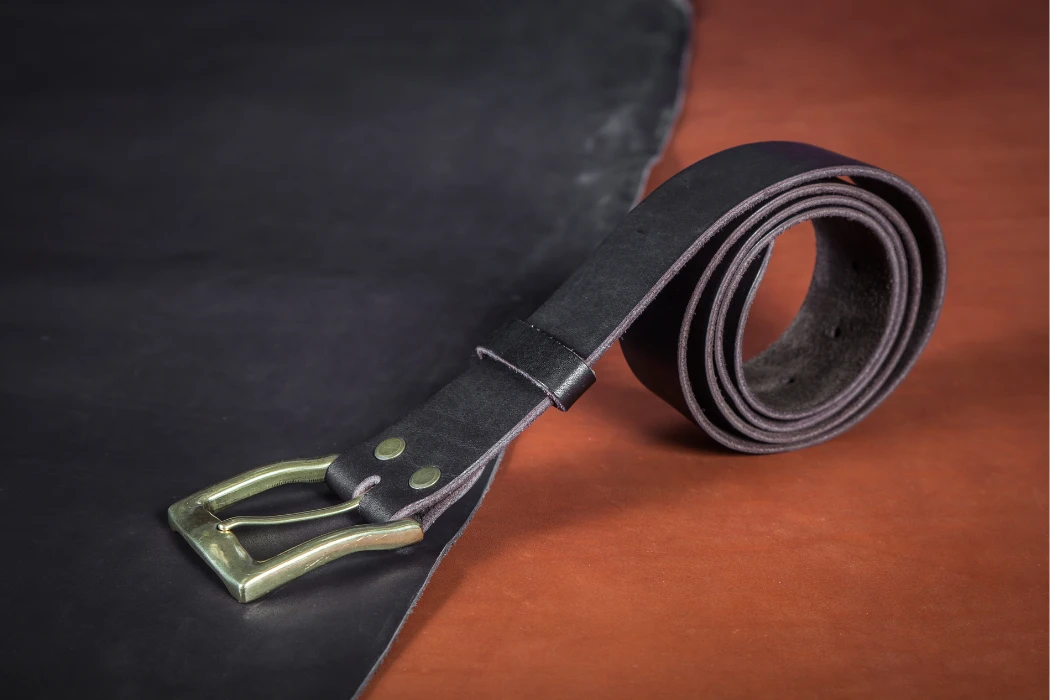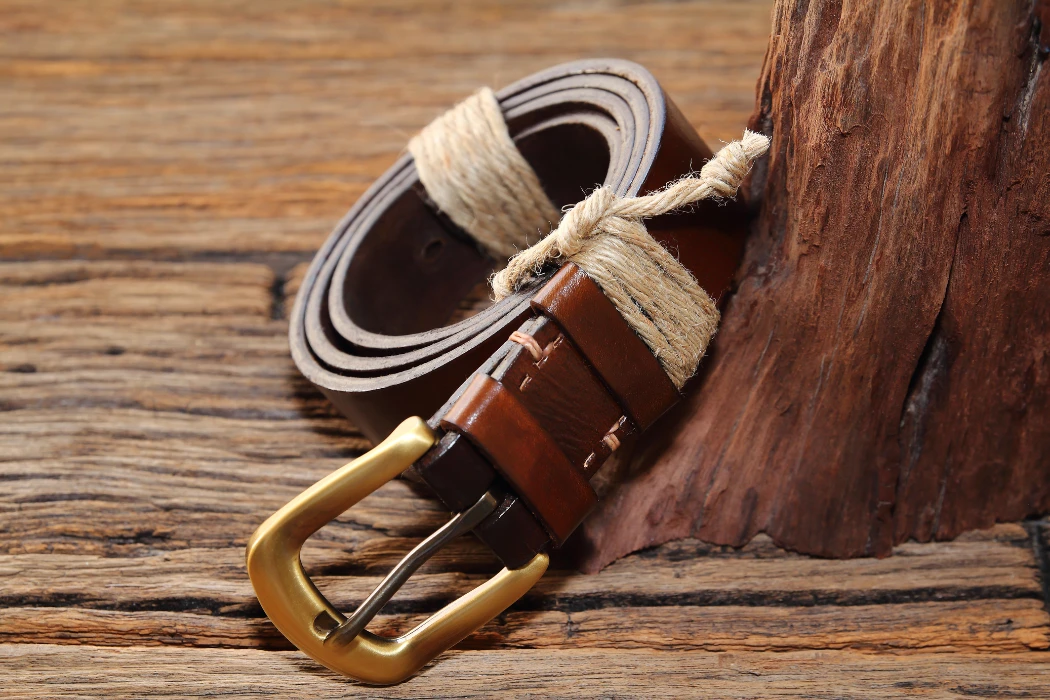
Open your bottom dresser drawer. Chances are, you will find a “belt graveyard”—a tangled mess of cracked, warped, and misshapen straps that look more like pretzels than accessories. We often blame the quality of the leather for this deterioration, but in many cases, the culprit is not the material; it is improper physical compression caused by bad storage habits.
At Hoplok, we treat leather not as a static material, but as a Memory Fiber Structure. Like a muscle, leather fibers adapt to the stress placed upon them. If you force a thick strap to curl tightly for months, the collagen fibers will permanently realign to that stress point, eventually snapping under the tension. We don’t just sell belts; we engineer them, and we know exactly what breaks them.
The debate between hanging and rolling is not a matter of preference; it is a calculation of Thickness and Tannage. While travel necessitates compression, for 90% of daily storage, utilizing gravity via hanging is the only mechanically sound choice to maintain structural integrity.
In this guide, we will analyze how gravity acts as a natural restorative force, define the specific scenarios where rolling is safe (and when it is destructive), and explain how invisible environmental factors like humidity can destroy your collection even if you store it perfectly.
Why Does Storage Method Matter for Leather Longevity? (The Science)
Leather is not a synthetic sheet; it is a complex biological matrix of interwoven collagen fibers. How you store it determines whether these fibers remain aligned or break down. The storage method is the single biggest variable in preventing premature cracking and permanent warping.
Fiber Memory and Creasing
Leather possesses a property known as “fiber memory.” When you bend a strap, you are compressing the fibers on the inside of the curve and stretching the fibers on the outside.
- The 90-Degree Threshold: If a belt is forced into a tight curve exceeding 90 degrees for a prolonged period (like being tightly rolled in a drawer), the collagen fibers eventually “set” in this position. This results in Permanent Deformation—that stubborn curve that refuses to straighten out when you put the belt on.
- Micro-Fractures: On the outside of the curve, the grain is stretched to its limit. Over time, this constant tension causes the grain surface to separate, creating those ugly cracks near the holes.
Gravity’s Role in Restoration
Gravity is the most effective (and free) tool for leather maintenance. It acts as a gentle, constant straightening force.
- The 24-Hour Reset: Just as a suit hangs to release wrinkles, a leather belt benefits from its own weight. Our observations show that vertically hanging a belt for 24 hours after wearing can naturally restore 15–20% of minor shape distortions caused by body heat and tension, allowing the fibers to relax back into a neutral state.
The Cost of Improper Storage
Bad storage is expensive. This is particularly true for lower-grade leathers which lack elasticity.
- Bonded Leather Failure: Bonded leather (leather dust mixed with glue) has zero tensile flexibility. When stored in a tight roll, the rigid glue layer cannot stretch. Testing indicates that bonded leather belts stored rolled have a lifespan 60% shorter than identical belts that are hung, primarily due to catastrophic coating failure (delamination).
| Impact Metric | Hanging (Gravity Assist) | Rolling (Compression) |
|---|---|---|
| Fiber Stress | Neutral (Relaxed state) | High (Constant tension) |
| Shape Retention | Maintains original straightness | Induces “Banana” curvature |
| Airflow | Maximum (360° circulation) | Restricted (Traps moisture) |
| Crack Risk | Low | High (Especially for bonded/coated) |
Is Hanging the Superior Method for Daily Use?
For the vast majority of leather belts, vertical hanging is the mechanically superior storage method. It aligns with the natural grain direction and utilizes gravity to counteract the curvature caused by daily wear. However, “hanging” does not mean throwing it over a doorknob; the hardware you use matters as much as the method itself.
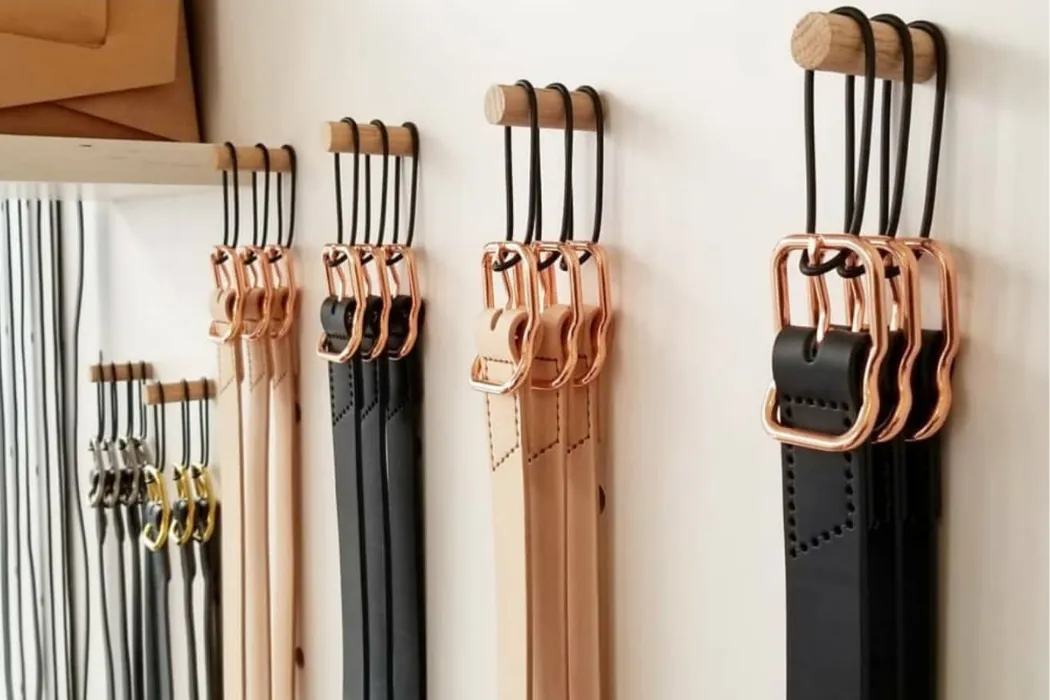
The Buckle Hanger Logic
The attachment point dictates the stress distribution. Never use “clip” hangers that pinch the leather strap itself, as this crushes the fibers.
- The Frame Support: Always hang the belt by the buckle frame. This places the weight on the strongest part of the assembly—the metal hardware—rather than the soft leather.
- Hook Radius (>5mm): Avoid thin wire coat hangers. We recommend using hooks with a rod radius greater than 5mm. Thin wires create a focused pressure point that can dent or scratch the finish of a zinc or brass buckle, whereas a thicker rod distributes the weight evenly.
Airflow and Moisture Control
Leather is hydroscopic; it absorbs moisture from the air. Proper spacing is a critical defense against biological degradation.
- The “Breathing Room” Rule: Belts should never touch each other in storage. We recommend a spacing of 1–2 inches (2.5–5 cm) between hooks.
- Mold Prevention: If belts are packed tightly together (like ties often are), air cannot circulate. This stagnant micro-climate traps humidity, creating the perfect breeding ground for mold spores to penetrate the leather grain, especially in humid closets.
Visual Inspection Utility
Storage is also an opportunity for maintenance. A hanging collection is a visible collection.
- Edge Wear Detection: When a belt hangs vertically, the edges are clearly visible. This allows you to spot Edge Paint Wear or fraying stitching early. Catching a small crack in the edge paint allows for a $5 repair; missing it leads to moisture ingress and total strap failure.
When Is Rolling the Correct Engineering Choice?
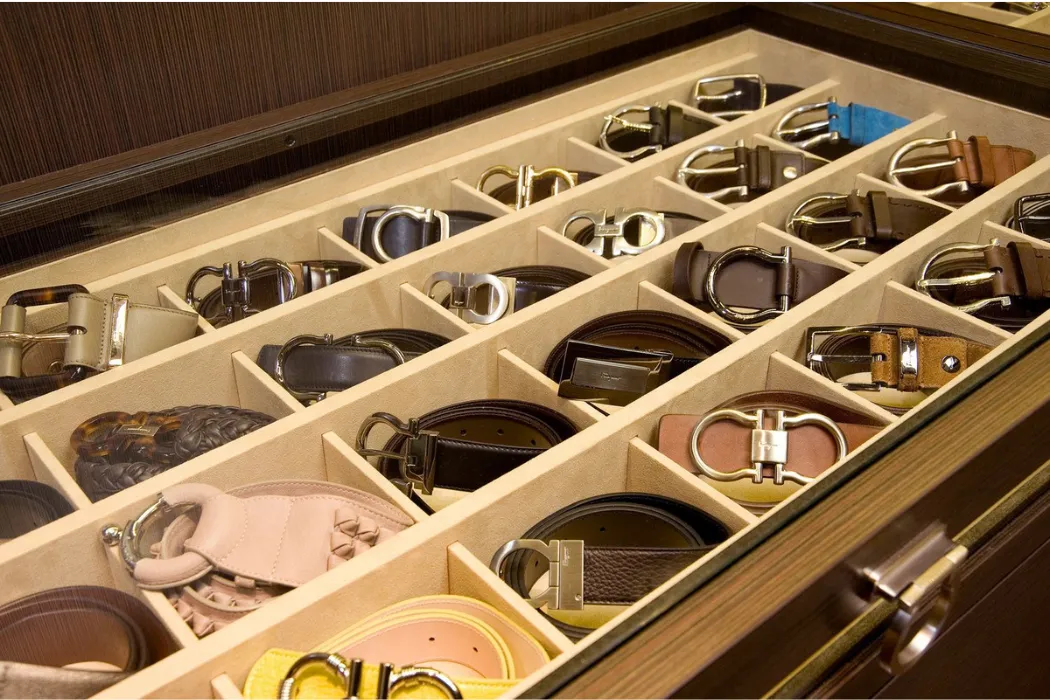
While hanging is superior for long-term preservation, rolling is an acceptable—and sometimes necessary—method for travel or space-constrained drawers. However, rolling is not a “one size fits all” strategy; it is a calculated compromise. The key is to control the radius of the curve to stay within the elastic limit of the material.
The Loose Roll Technique
There is a distinct difference between “coiling” and “crushing.” Most damage occurs when users roll the belt tight enough to fit inside a coffee mug.
- The 4-Inch Rule: According to Hoplok’s Rolling Standard, a leather belt should never be rolled tighter than a diameter of 4 inches (10 cm). This gentle curve minimizes stress on the grain surface.
- The Danger Zone (<3 inches): Rolling a belt into a tight coil smaller than 3 inches forces the outer grain to stretch beyond its tensile limit, resulting in immediate micro-cracking of the finish, especially near the holes where the structure is already weakened.
Travel Compression
When packing a suitcase, space efficiency often overrides material care. Rolling is the only logical way to transport accessories.
- Space Efficiency (40% Savings): Laying a belt flat along the perimeter of a suitcase is often suggested, but rolling it effectively reduces its footprint by approximately 40%, creating a dense, manageable unit.
- The “Buckle Guard” Method: To prevent the metal buckle from scratching the leather surface during travel, start the roll from the buckle end, keeping the buckle on the inside of the coil.
Material Suitability (Fabric vs. Leather)
Not all materials possess fiber memory. Understanding the physics of your specific belt determines if it can survive a tight roll.
- Woven/Elastic Belts (No Memory): These materials have no grain structure to crack. They can be rolled tightly (down to 2 inches) without any risk of permanent deformation. They are the ideal travel companion.
- Vegetable-Tanned Leather (Strong Memory): Heavy veg-tan leather is rigid. Rolling it creates significant internal tension. It fights the roll, trying to spring open. It should only be loosely coiled for short durations (like a flight), then immediately hung upon arrival.
| Material Category | Recommended Method | Max Roll Tightness |
|---|---|---|
| Full-Grain Leather (>4mm) | Hang Only | Loose Coil (Travel only, >5″ dia) |
| Dress Leather (<3mm) | Hang Preferred | Medium Roll (4″ dia) |
| Bonded / “Genuine” | Hang Only | Do Not Roll (Will crack) |
| Woven / Canvas | Roll or Hang | Tight Roll (2-3″ dia) |
How Does Environment Affect Leather Storage?
Even if you hang your belt perfectly, the air surrounding it can still destroy the fibers. Leather is organic; it reacts to its micro-climate. Ignoring humidity and UV exposure is the fastest way to turn a supple strap into a brittle stick.
Humidity Control (Mold Prevention)
Leather is hydroscopic, meaning it seeks equilibrium with the moisture in the air. The closet environment is critical.
- The Safe Zone (40% – 50% RH): We recommend maintaining a relative humidity between 40% and 50%. This keeps the collagen fibers lubricated without saturation.
- The Mold Threshold (>60%): Once humidity exceeds 60%, dormant mold spores can activate and penetrate the pores of the leather. This results in “spew” (a white, fatty bloom) or permanent mildew rot that compromises the tensile strength of the strap.
Temperature and Sunlight
Your closet should be cool and dark. Treat leather like fine wine.
- UV Degradation: Direct sunlight is a bleaching agent. Our lab tests show that 100 hours of UV exposure can drop the color fastness from Grade 5 to Grade 3 or 4. More importantly, it evaporates the natural oils (fatliquors) introduced during tanning, causing the leather to shrink and harden.
- Heat Sources: Never store belts near a radiator or heat vent. Cyclic heating dries out the fibers, leading to “dry rot” where the leather cracks upon flexing.
The “Buckled-in-Pants” Error
The most common storage mistake is pure laziness: leaving the belt looped in the trousers overnight or between wears.
- Torque Vectors: When left in pants, the heavy buckle pulls the front down while the rear belt loops pull the back up. This creates opposing torque vectors.
- The “Banana Curve”: Over time, this torque sets the leather into a permanent “Banana Curve” shape. A belt stored this way will never hang straight again and will sit awkwardly on the hips, twisting away from the body.
Does Belt Thickness Change the Storage Rule?
One rule does not fit all strap gauges. At Hoplok, we mill leather to precise specifications, and we know that thickness dictates flexibility. A heavy-duty gun belt reacts to bending stress very differently than a supple dress belt.
Heavy Duty Belts (>4mm)
Thick, vegetable-tanned leather is prized for its rigidity, but that same rigidity makes it vulnerable to coiling.
- The Surface Tension Multiplier: Hoplok laboratory data indicates that rolling a 4mm+ thick belt creates a 300% increase (3x) in surface tension on the grain side compared to a 3mm belt. This extreme tension forces the grain to separate, causing immediate cracking. These belts must always be hung to preserve their structural integrity.
Dress Belts (<3mm)
Formal belts are often made from Chrome-Tanned leather or thinner skived hides, which have a looser fiber structure.
- Flexibility Threshold: Because they are thinner (typically 2.5mm – 3.0mm) and softer, dress belts can safely withstand a tighter roll radius of 3 inches without structural damage. Their fibers are more pliable and forgive compression better than veg-tan.
Bonded Leather Fragility
If you own budget-friendly belts made of “Genuine” or Bonded leather, you are walking on eggshells.
- Zero Elasticity: Bonded leather has no natural fiber matrix; it is glue and dust. Rolling it is a death sentence. It lacks the elasticity to stretch on the outside of the curve, leading to the top coating snapping instantly. Never roll bonded leather.
| Risk Factor | Hanging (Closet) | Rolling (Drawer) |
|---|---|---|
| UV Exposure | Low (Inside dark closet) | Zero (Inside closed drawer) |
| Humidity Control | Good (Air circulates freely) | Poor (Stagnant air traps moisture) |
| Dust Accumulation | Moderate (Needs occasional wipe) | Low (Protected from settling dust) |
| Mechanical Stress | None (Gravity assists shape) | High (Constant curvature stress) |
How to Restore a Misshapen Belt?
If you have retrieved a belt from the “graveyard” that is twisted or curved, all is not lost. Because leather is a memory fiber, you can sometimes “overwrite” the bad memory with correct tension and lubrication. However, this is a delicate procedure that requires patience.
The Reverse Roll Method
If a belt has taken on a severe “banana curve” from being stored tightly coiled, you need to apply counter-force.
- Physics of Reverse Tension: Gently roll the belt in the opposite direction of the curve. Do not roll it tightly (keep it >5 inches diameter). Secure it with a rubber band and let it sit for 12 to 24 hours. This applies tensile stress to the compressed inner fibers, helping to neutralize the set curvature.
Conditioning and Hanging
Dry fibers are brittle fibers. To reshape leather, you must first make it pliable.
- Fiber Lubrication: Apply a high-quality leather conditioner (neatsfoot oil or leather cream) to both sides of the strap. The oil penetrates the collagen matrix, reducing friction between fibers.
- Gravity Assist (48 Hours): Immediately after conditioning, hang the belt by the buckle. The weight of the moist, lubricated leather combined with gravity will pull the fibers straight. Allow it to hang undisturbed for 48 hours to “reset” the fiber memory.
When Is It Too Late?
Not every belt can be saved. There is a structural point of no return.
- The 0.5mm Crack Depth: Inspect the surface cracks with a magnifying glass. If a crack has penetrated through the top coating and into the dermis (a depth greater than 0.5mm), the structural integrity is compromised. No amount of oil will fuse the broken fibers back together. This belt is effectively dead.
Frequently Asked Questions
Can I store leather belts in plastic bags?
Never. Leather is organic skin that needs to respirate. Storing it in sealed plastic creates a “greenhouse effect” where trapped moisture condenses, leading to rapid mold growth and chemical degradation of the finish. Always use breathable cotton dust bags or old pillowcases if you need to cover them for long-term storage.
Do cedar hangers help leather belts?
Yes, cedar is the superior material for closet storage. Aromatic red cedar acts as a natural desiccant, absorbing excess moisture from the air to prevent mildew. Additionally, its natural oils repel moths and silverfish, which can damage stitching and leather surfaces.
Should I clean my belt before storing it?
Yes, specifically to remove salt. Human sweat contains salts and enzymes that act as corrosive agents. If left on the leather during long-term storage, these salts crystallize and dry out the fibers, leading to micro-cracking. A quick wipe with a damp cloth and mild saddle soap is essential before putting a belt away for the season.
Can I use pant hangers with clips to hang belts?
No, avoid metal clips at all costs. The serrated teeth of pant hangers exert focused crushing pressure that will permanently indent and scar the leather surface (grain). Always hang the belt by the buckle frame using a smooth hook, ensuring the leather hangs freely without mechanical compression.
Will hanging a belt cause it to stretch out over time?
No, the effect is negligible for quality leather. A standard leather belt weighs between 5–8 ounces. The tensile strength of full-grain leather is engineered to withstand hundreds of pounds of force. The force of gravity alone is not enough to elongate the fibers structurally; it is only enough to beneficialy straighten the curvature caused by wearing it.
The Verdict: Gravity is Your Friend
In the engineering battle between hanging and rolling, hanging is the undisputed champion for long-term leather preservation. It respects the fiber memory and prevents the micro-cracking associated with tight coils. Rolling should be viewed strictly as a temporary travel solution, not a permanent storage strategy.
Hoplok’s Perspective
We must be brutally honest: Storage cannot save a bad product. If your belt is made of bonded leather dust and glue, it will crack eventually, whether you hang it, roll it, or shrine it. Proper storage only protects high-quality material. If you are starting with a solid foundation of full-grain leather, hanging it simply ensures that your investment lasts for decades rather than years.
Stop Losing Inventory to Warping
For retailers, display methods dictate shrinkage rates. A belt that warps on the hanger doesn’t sell. If you are a brand looking for 4mm+ Vegetable-Tanned Leather belts with superior fiber density that resist curling and maintain their shape on the rack, Hoplok engineers products designed to withstand the test of gravity. Contact us to upgrade your raw material standard.