In competitive leather goods manufacturing, procurement decisions hinge on measurable quality—buyers can no longer rely on surface appeal alone. A truly high-quality belt demonstrates structural integrity through its material and construction: full-grain vegetable‑tanned leather around 12 oz thick provides the durability foundation, while precise stitching densities between 10–12 SPI ensure mechanical consistency and long service life.
This article dissects the full anatomy of a high-quality belt—from the fiber composition that separates genuine from synthetic hides, to the engineering standards governing stitch density, hardware mass, and reinforcement methods. It helps B2B buyers, manufacturers, and sourcing managers identify quantifiable benchmarks of excellence, ensuring every belt produced or procured meets premium durability, finish, and performance standards.
What are the key indicators of a high-quality leather belt?
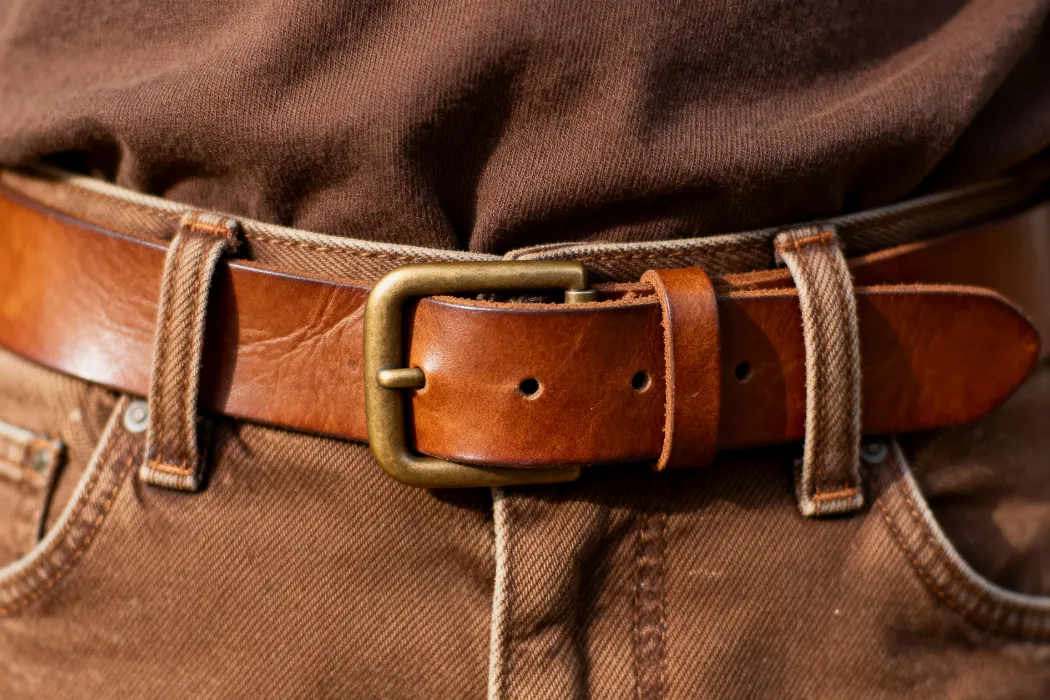
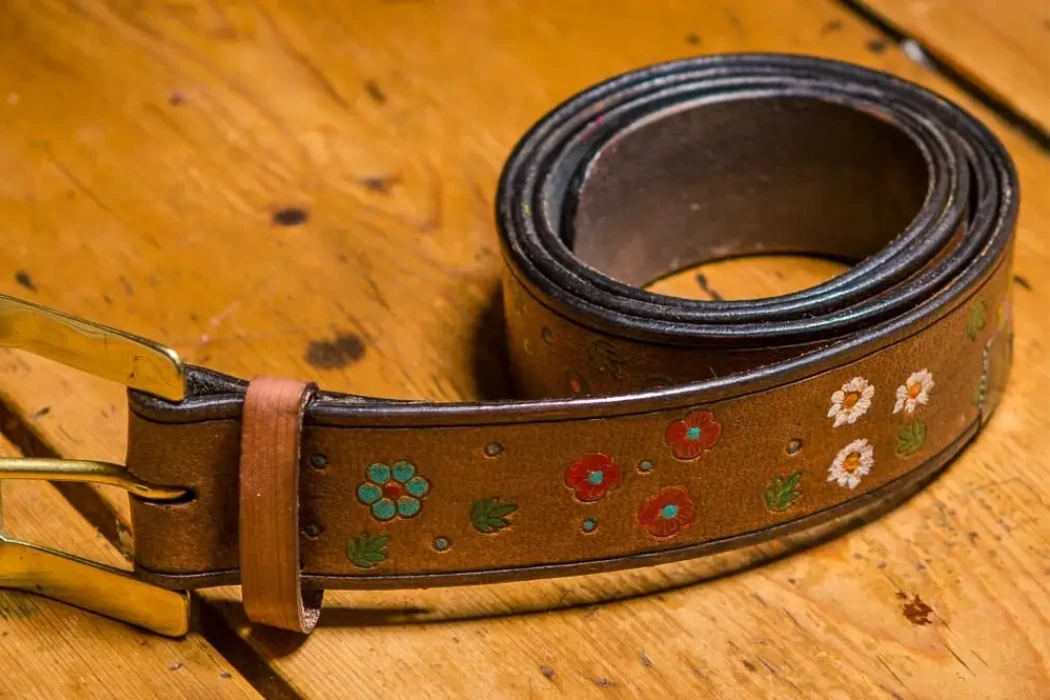
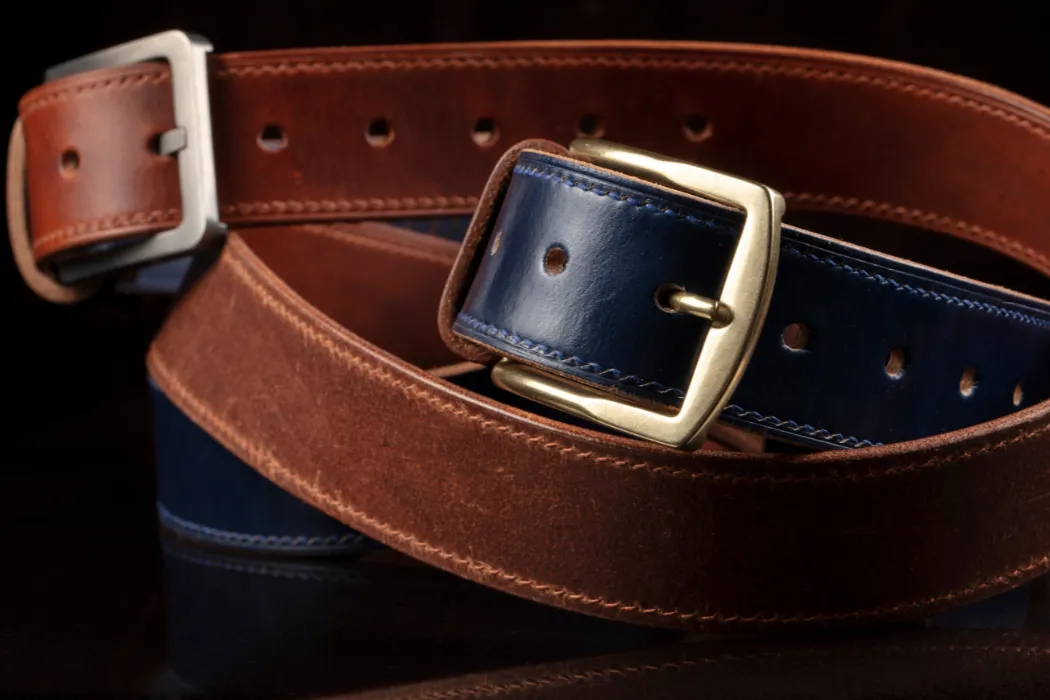
A high-quality leather belt is defined by full-grain vegetable-tanned leather around 12oz thick, solid metal hardware, precise stitching or riveting, and a clean, well-finished edge—all ensuring long-term strength, flexibility, and patina development.
| Core Feature | Quality Indicator | Purpose |
|---|---|---|
| Leather Thickness & Grade | 12oz Full-Grain Vegetable-Tanned Leather | Ensures durability, flexibility, and patina over time |
| Construction | Even Stitching or Solid Rivets | Provides reinforcement against wear and mechanical stress |
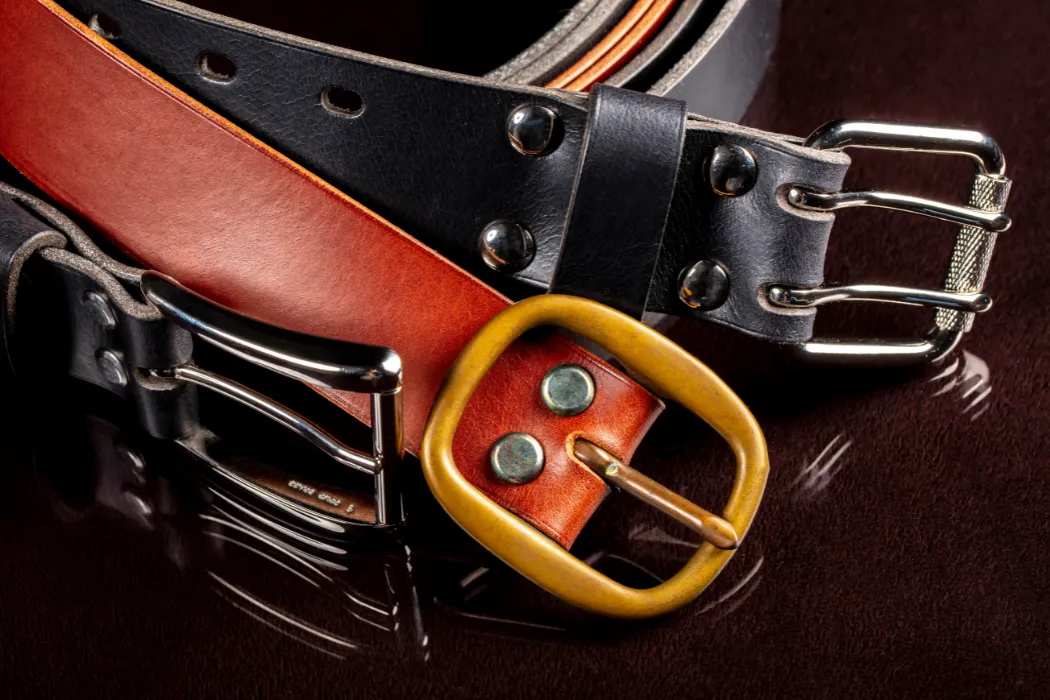
| Hardware | Solid Brass or Stainless Steel Buckles | Prevents corrosion and guarantees long-term attachment integrity |
Core Material Quality and Natural Leather Indicators
Full-grain leather represents the pinnacle of material selection for a premium belt. As the uppermost cut of the hide, it retains natural characteristics—subtle scars, wrinkles, and insect bites—that speak to authenticity rather than defect. Each mark reflects the life of the hide and testifies to the absence of artificial corrections or coatings.
- Full-grain leather is the top layer of the hide, preserving scars, wrinkles, and insect bites that signal authenticity.
- Vegetable-tanned leather of approximately 12oz offers optimal thickness, pliability, and enduring fiber strength for everyday wear.
This grade of leather develops a patina with age, a soft sheen and darkening that enhance rather than weaken the belt. Unlike corrected-grain or synthetic substitutes, full-grain vegetable-tanned hides breathe, flex, and conform to the wearer without delaminating or cracking.
Construction Details, Stitching, and Hardware Strength
Durability emerges not solely from robust material but from precise assembly. The joining methods—stitching, riveting, and edge finishing—dictate how the belt endures tension and daily wear. Where inferior belts may show unraveling or loose fittings, a high-quality piece demonstrates strict attention to alignment and fastening integrity.
- Even, straight stitching with no loose threads or gaps, or the presence of robust metal rivets, provides reinforcement for heavy use.
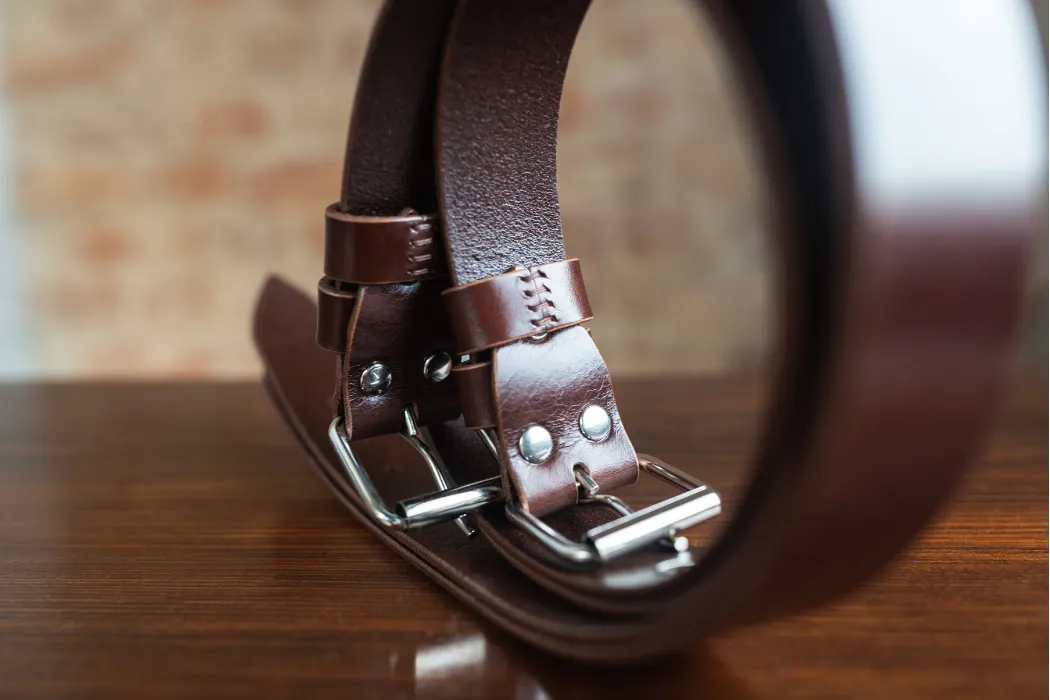
- Solid brass or stainless steel buckles and fittings must be securely fixed, paired with smooth, burnished edges for structural and aesthetic quality.
In high-grade craftsmanship, edges are carefully burnished and sealed, preventing fray and moisture intrusion. Riveted designs may outlast stitched ones under heavy load, and hardware made from solid metals resists corrosion, ensuring that the belt remains both functional and refined through years of use.
Across professional leatherworking references, the absence of ASTM or ISO numeric measures is typical—the benchmarks of quality remain tactile and visual. Uniform finishing, balanced rigidity, and genuine full-grain composition collectively identify a belt built for longevity and character.
How to tell the difference between authentic leather and synthetic imitations?
Authentic leather shows natural irregular pores, fibrous rough edges, and skin-like flexibility, while synthetics like PVC or PU exhibit uniform surface patterns, clean-cut edges, and a plastic feel, often confirmed through smell and water absorption tests.
Visual and Textural Clues of Genuine vs. Synthetic Leather
One of the most immediate ways to distinguish genuine leather from synthetic counterparts is through careful observation and tactile assessment of the surface and edges. Real leather, being an organic material derived from animal hide, carries variations born from natural growth and fiber patterns.
- Genuine leather displays irregular pore patterns and rough, fibrous edges.
- Synthetic leather such as PVC or PU has uniform pores, smooth shiny edges, and mechanical consistency.
Practical Identification Tests and Material Behavior
Beyond visual inspection, real leather and synthetic substitutes behave differently when exposed to natural elements and heat. These practical tests rely on simple interactions that reveal underlying material properties.
- Water absorption test: untreated authentic leather absorbs water, synthetics repel it.
- Burn test: genuine leather smells like burnt hair due to collagen, synthetic smells like burning plastic.
Research Context and Key Findings
- Synthetic materials: primarily flexible polyvinyl chloride (PVC) or polyurethane (PU).
- Pore pattern: genuine leather shows irregular, inconsistent pores; synthetic has uniform, even pattern.
- Edge texture: genuine leather edges are rough and fibrous; synthetic edges are clean, smooth, and shiny.
- Burn test (destructive): genuine leather emits a burnt hair scent; synthetic releases a plastic odor.
- Water absorption: untreated genuine leather absorbs water drops; synthetic surfaces repel or bead up.
- Flex behavior: genuine leather wrinkles and stretches under pressure like skin; synthetic depresses rigidly and retains shape.
Genuine leather, derived from animal hides, exhibits natural variability in texture due to organic fiber structure, resulting in an irregular surface, rough edges with visible fibrous strands, and supple elasticity reminiscent of skin. In contrast, synthetic materials like PVC and PU offer a machined uniformity — consistent grain, smooth molded edges, and a colder tactile feel. Sensory examinations further strengthen the distinction: leather tends to be warm and earthy, while synthetics feel cooler and carry chemical undertones.
The behavior under simple tests also confirms these differences. When exposed to moisture, untreated leather gradually absorbs water through its porous structure, whereas synthetic materials deflect it. A cautious burn test can reveal the composition more definitively—real leather contains collagen that chars with a scent of burnt hair, while synthetics melt and emit a plastic smell, making this method better reserved for small scraps.
Currently, there are no officially recognized ASTM or ISO mechanical standards that rely solely on numeric indicators to differentiate belts or accessories made from genuine versus imitation leather. Most identification practices remain empirical, centering on observation, touch, and nuanced sensory evaluation rather than quantitative metrics. The craftsmanship of the base material continues to serve as the most reliable indicator of authenticity and durability.
Why is stitch density (SPI) a hallmark of manufacturing excellence?
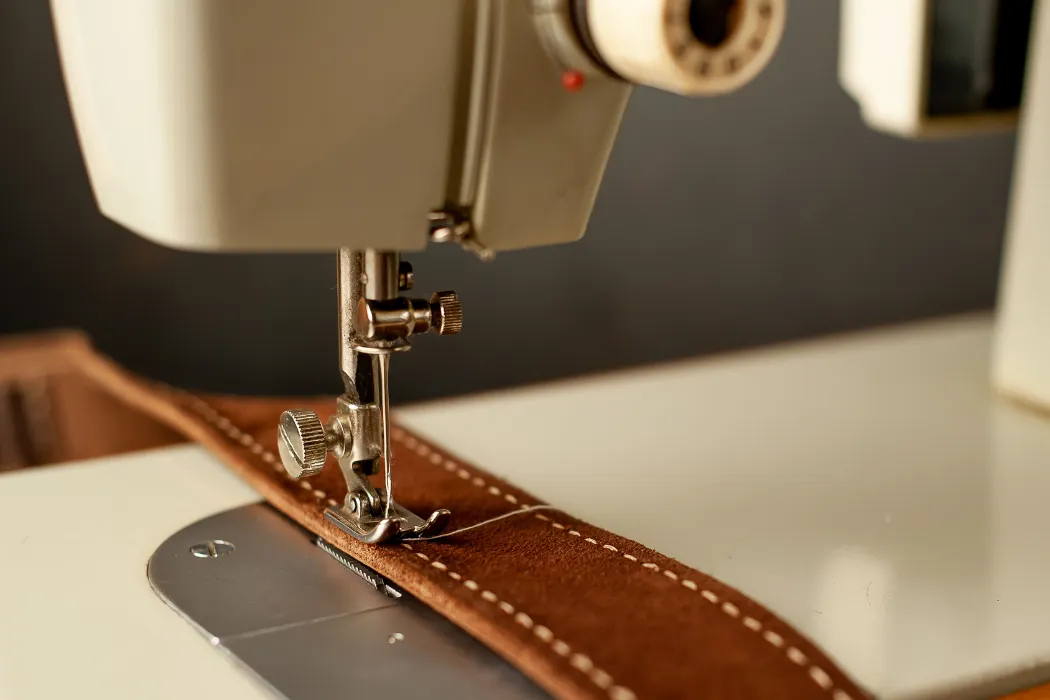
Stitch density (SPI) measures how many stitches appear within an inch of seam and reflects both technical control and material performance. Consistent and optimized SPI ensures strong, smooth, and balanced seams that resist tearing and distortion, representing exceptional manufacturing precision.
| SPI Range / Parameter | Application or Material Type | Performance Insight |
|---|---|---|
| 6–8 SPI | Heavy-duty denim, workwear, and uniforms | Prioritizes flexibility and strength with robust thread structure |
| 8–12 SPI | General garments and machine embroidery | Balances reinforcement, prevents puckering or stiffness |
| 10–12 SPI | Lockstitch and chainstitch on woven fabrics | Delivers peak seam strength and tight seam integrity |
| 12–20 SPI | Luxury dress shirts and fine leather goods | Enhances fineness and minimizes visible seam grinning |
Understanding Stitch Density as a Precision Benchmark
Stitch density, often expressed as stitches per inch (SPI), defines the compactness of a seam. A higher SPI indicates refined control, mechanical calibration, and even thread distribution—attributes that collectively convey superior craftsmanship. Uniformity in SPI is not just an aesthetic concern but a mechanical signature of stable machine performance and operator precision.
- SPI (stitches per inch) quantifies seam compactness—higher values indicate refined control and evenness in stitching.
- Uniform SPI consistency within ±1–3 stitches per inch is the hallmark of professional sewing quality and mechanical calibration.
- ASTM D6193 standard identifies SPI as fundamental for seam security, puckering control, and fabric compatibility.
- In luxury leathercraft, consistent SPI contributes to symmetrical seam lines, smoother drape, and tactile refinement.
Optimal SPI Ranges and Engineering Significance
Selecting the optimal SPI depends on balancing material characteristics, desired seam performance, and production efficiency. Engineering data reveal that while higher SPI values increase seam compactness and visual finesse, excessive density can compromise flexibility and introduce unwanted stiffness.
- Typical ranges include 6–8 SPI for heavy materials like denim, and 8–12 SPI for balanced reinforcement without stiffness.
- 10–12 SPI achieves peak seam efficiency; further increases yield diminishing strength gains and increased thread use.
- Example: Class 602 Lockstitch yields ≈68 lbs seam strength at 10 SPI with 4 lbs/strand thread rating (formula: SPI × Thread Strength × 1.7).
- ASTM D6193 and enterprise QA protocols link SPI with seam strength, flexibility, and abrasion resistance across production environments.
Research reinforces that SPI consistency directly governs seam integrity. A variation of 1–3 stitches per inch is acceptable in precision manufacturing, while abrupt shifts reveal uneven feeding or tension imbalance, often visible as seam grinning or early rupture under load. As codified by ASTM D6193, SPI remains a measurable proxy for both functional and aesthetic excellence, ensuring every stitch embodies structural balance and material harmony.
Premium Custom Leather Belts for Global Brands
Should you use rivets or heavy-duty stitching for reinforcements?
Heavy-duty stitching usually offers more reliable reinforcement than rivets for dynamic loads, as properly spaced lock-stitches distribute tension and allow for slight elasticity. Rivets serve best as secondary supports in fixed-stress areas like buckle attachments.
Understanding Reinforcement Methods: Rivets vs. Heavy-Duty Stitching
- Rivets lock overlapping layers and prevent slippage but offer low elasticity, making them optimal for static load points.
- Heavy-duty stitching distributes force evenly along the leather and maintains elasticity under tension, reducing tear risk.
- Stitching alone can reach about 3,000 lbs static failure on 9,000 lbs tensile webbing, making it suitable for dynamic applications.
Technical Standards and Best Practices for Reinforcement Strength
Different sewing patterns, thread types, and stitch densities play a direct role in how leather reinforcements withstand tension. The technical parameters below translate directly into field durability and performance under stress.
- Ideal stitch density ranges from 4–7 SPI (stitches per inch), using size 6 top and size 5 or 6 bobbin thread for optimal seam elasticity.
- Preferred lock-stitch patterns include double “W” (strongest) or boxed-cross arrangements for lateral tension zones.
- Rivets should be reinforced with burrs/washers to prevent material movement in 4-inch overlaps, as seen in D-ring stress tests.
- No universal ASTM or ISO standard favors rivets; most implementations blend both, prioritizing stitching for loads exceeding 4,000 lbs.
Research Highlights and Performance Insights
Extensive testing across industrial-grade webbings and safety harness materials establishes clear mechanical behavior differences between reinforcement types.
- Stitching SPI of 4–7 provides best balance; anything below or above risks durability or elasticity loss.
- Optimal thread setup uses size 6 top thread and size 5–6 bobbin thread so the seam remains stronger yet more flexible than the leather substrate.
- Common reinforcement forms include the double “W” stitch pattern for vertical loads or a boxed-cross pattern for lateral stress.
- Stitched seams target about 3,000 lbs static failure on 9,000 lbs tensile webbing—meeting safety-grade expectations of 5,000 lbs equipment rating.
- Riveted overlaps should use compression-locked burrs or washers for consistency but may lower overall seam elasticity and peak performance.
In practical belt construction, stitching acts as the primary structural layer—absorbing stretch and vibration—while rivets serve to anchor fixed stress zones such as buckle attachments. This combination mirrors safety harness design logic: flexible resilience reinforced by rigid hold points. Though rivets provide local mechanical locks, physics consistently favors distributed stitching for high-load, movement-heavy applications such as premium leather belts.
What is the “Pinch Test” for verifying leather fiber integrity?
The Pinch Test is a simple tactile evaluation where leather is pinched between the fingers to check for natural wrinkles and color changes. Genuine leather responds with soft creases and a subtle shade shift, proving intact collagen fibers and authentic flexibility.
Understanding the Purpose of the Pinch Test
- The Pinch Test evaluates leather’s natural flexibility and deformation when folded between thumb and forefinger.
- Authentic full-grain leather shows organic wrinkling and minor color variation due to porous collagen fibers.
- Faux or plastic-coated materials remain stiff, uniform, or may crack under the same pressure.
- This method provides a quick, non-destructive verification of genuine hide structure without lab equipment.
Proper Technique and Interpreting Test Results
- Pinch the belt leather on a discreet edge with moderate pressure to create a small fold.
- Real leather (typically 1.0–1.4 mm thick) forms visible wrinkles and a light shade shift at the bend.
- Synthetic or PU leather shows no wrinkles, maintains plastic stiffness, or cracks when folded too sharply.
- Perform the test only on inconspicuous sections to avoid marking the finished surface—no formal ASTM or ISO standard applies.
- Used alongside stitch-per-inch (SPI) checks and tactile inspections, it confirms base material integrity before production.
Research Insights
The Pinch Test evaluates leather fiber integrity by assessing natural flexibility and wrinkle formation when folded, distinguishing genuine hides from synthetic or heavily coated fakes. Authentic leather, derived from animal collagen fibers, deforms with visible creases and subtle shading changes due to its porous, non-uniform structure, confirming intact fiber networks without fillers or plastic backing. This contrasts with faux materials, which resist folding rigidly and lack organic response, often revealing uniform edges or cracking.
No ASTM or ISO standards were identified for this tactile test; it serves as a practical, non-destructive field check for belt quality, aligning with hand-feel assessments for elasticity in high-grade full-grain leather. Sources emphasize executing the test on inconspicuous areas like belt edges to avoid damage, prioritizing fiber authenticity over tensile strength metrics usually covered in lab evaluations. For novices, a successful test indicates durability and breathability, while experienced artisans pair the Pinch Test with SPI evaluation to confirm substrate integrity before stitching or hardware assembly.
How to identify “Painted” vs. “Hand-Burnished” belt edges?
Painted edges show a uniform, surface-level color layer with minimal fiber bonding, while hand-burnished edges display a naturally darkened, rounded sheen formed by frictional heat that compresses leather fibers for lasting smoothness.
Understanding the Difference Between Painted and Hand-Burnished Edges
When comparing painted edges to hand-burnished ones, the most immediate cues relate to surface feel, texture, and sheen. Hand-burnished edges are created through mechanical friction that compresses and seals fibers, resulting in a soft gloss and naturally rounded edge. This subtle gloss comes not from added coating, but from frictional heat bonding the fibers tightly together.
- Hand-burnished edges are naturally glossy with tightly bonded fibers and a smooth, rounded finish created by frictional heat.
- Painted edges rely on surface coatings or dyes that form an external color layer and appear flat and even but lack fiber compression.
Visually, burnished edges will darken organically with wear, while painted finishes may remain uniform or begin to chip with abrasion. The burnished look complements vegetable-tanned leather where the fibers respond well to compression, creating a natural, durable sheen preferred in traditional leatherwork.
Edge Preparation and Technical Identification Cues
Identifying a genuine hand-burnished edge involves recognizing the meticulous preparation and multi-stage friction process behind it. Each stage enhances fiber cohesion before final polishing. Painted edges, conversely, are often smoothened mechanically but finish with an external, colorized coat that lacks the heat-sealed texture.
- Edge sanding typically follows a sequence: 150 grit (shaping), 220 grit (smoothing), 600–800 grit (fiber removal and final polish) before burnishing.
- Burnishing involves heavy canvas or denim with Fiebing’s glycerin soap or gum tragacanth to generate frictional heat, giving a tacky sound and darkened natural polish, while painted edges may show flaking or uniform color without heat sealing.
During tactile inspection, burnished edges will feel slick and emit a faint tackiness when rubbed due to the sealed fiber surface, while painted finishes may feel dry or plasticky. Under magnification, one can see fiber alignment and compression in burnished work compared to the painted layer’s flat coating. These physical cues remain among the most reliable indicators for authentic hand craftsmanship in belt edge finishing.
Why is hardware weight a reliable indicator of component quality?
Hardware weight can signal higher material density, better alloy composition, and superior structural performance. Heavier buckles or rivets often use solid metals and tighter tolerances, resulting in greater resistance to deformation, corrosion, and long-term wear under mechanical stress.
Understanding the Link Between Mass and Material Quality
In premium leather goods, hardware isn’t just decorative—it’s the mechanical anchor holding stress-bearing components together. The physical mass of a buckle or clasp often tells a quiet story about what’s beneath the surface coating or polish.
- Heavier belt buckles generally signify denser metal compositions such as solid brass or zinc alloy, rather than hollow or plated plastic cores.
- Material density directly affects strength and resistance to bending or cracking, especially in stress points like prong hinges and belt loops.
In essence, weight communicates authenticity. It’s a tactile indicator that the hardware has been forged or cast from material designed for endurance, not compromise.
Engineering Standards and Performance Implications
Manufacturing tolerances and standardized testing reveal how mass and metallurgy correlate with measurable durability. Solid, heavier components seldom appear by accident—they result from precision fabrication practices aligned with international standards.
- High-grade hardware passes cycle-life testing exceeding 10,000 cycles without deformation, aligning with ISO 9001–based quality assurance systems.
- Heavier components maintain dimensional precision within ±0.05 mm and use alloys like 304 or 316 stainless steel for improved load-bearing and corrosion resistance.
When hardware feels substantial, it reflects not only material selection but also the engineering discipline behind its manufacture—precise tolerances, slower casting cycles, and superior surface finishing. These traits collectively increase performance predictability and ensure that aesthetic craftsmanship aligns with mechanical reliability.
How does the “Water Test” identify different tanning methods?
The “Water Test” reveals tanning type by showing how quickly and deeply leather absorbs or resists water. Vegetable-tanned leathers absorb water and darken noticeably, while chrome-tanned leathers resist immediate absorption and remain lighter, reflecting their respective chemical compositions and treatments.
Principle of the Water Test and its Role in Leather Identification
The Water Test provides a simple, visual way to distinguish between different tanning types by examining how the leather interacts with moisture. It is often applied on the grain side, where natural pores and finishes most clearly display water behavior.
- A small drop of water is placed on the leather’s surface, and the rate of absorption and any darkening tone are observed.
- Vegetable-tanned leathers typically absorb the droplet within seconds, quickly darkening due to their more open fiber and organic tannin structure.
- Chrome-tanned leathers resist absorption longer because crosslinked chromium salts stabilize the collagen more tightly and reduce hydrophilicity.
This difference arises fundamentally from the chemistry of the tanning agents. Vegetable tannins are polyphenolic compounds that bond organically and maintain flexibility and permeability. By contrast, chrome tanning uses inorganic complexes that occupy water-reactive sites, giving the hide increased water resistance.
Interpreting Water Absorption Patterns for Tanning Verification
Manufacturers and quality control teams translate the quick visual results of the Water Test into measurable standards aligned with international testing methods. These data-based approaches validate the observable characteristics the craftsperson sees at the bench.
- Water resistance and permeability are quantified under ISO 5403 (Bally Penetrometer Test) and ISO 2417 (Water Absorption Test).
- Chromium-tanned hides show minimal absorption during ISO 2417 testing due to their tighter molecular matrix, while vegetable-tanned leathers exhibit higher uptake values resulting from their open, fibrous structure.
- These measurable behaviors also help specify product suitability—vegetable-tanned belts deepen in color and develop patina over time, while chrome-tanned belts hold their brightness and dimensional stability in humid environments.
Thus, whether through visual inspection or laboratory testing, the water test provides a useful proxy for identifying tanning type—offering insights that combine craftsmanship intuition with modern material science.
What are the structural requirements for a belt to last 10 years?
A belt can achieve a 10-year operational life only when each structural layer—from the carcass tensile framework to the outer covers and joints—meets internationally recognized standards such as ISO 14890, DIN 22131, and EN 13827 for strength, abrasion, and tear resistance.
The endurance of a conveyor belt over a decade depends on complex interactions between its core construction, cover performance, and the integrity of its joints. Each of these elements is governed by rigorous international standards that aim to minimize wear, resist mechanical stress, and ensure consistent tensile stability in demanding conditions such as mining, ports, and bulk handling systems.
Core Construction and Tensile Framework
The belt’s core construction is its skeletal system—responsible for carrying loads and maintaining structural shape. Whether the carcass is built from textile plies or steel cords, tensile strength and alignment precision are non-negotiable for extended service life.
- Textile carcasses must comply with AS 1332, ensuring high tensile strength and controlled elongation under continuous load.
- Steel cord belts, defined under DIN 22131 or AS 1333, require durable core alignment and carefully engineered splices to minimize fatigue and structural weakening over time.
- Joint integrity in accordance with EN 13827 and DIN 22112 prevents localized weak points that can lead to early tearing or separation.
- ISO 505:2017 testing verifies that carcass layers resist longitudinal tear propagation under heavy stress scenarios.
In practical operation, this combination of tensile resilience and verified joint performance ensures stable load distribution, minimizing the risk of belt failure even under high-impact or long-distance transport conditions.
Outer Cover Performance and Environmental Resistance
While the carcass defines internal strength, the outer cover determines resistance to abrasion, temperature, and environmental damage. Its formulation and thickness directly control wear rates and protection from cuts or heat degradation—key factors in the 10-year longevity target.
- ISO 14890 specifies the cover layer’s hardness, tensile strength, and minimum thickness to ensure sustained wear performance under heavy-duty applications.
- DIN 22102 and ISO abrasion grades—DIN Y (normal), DIN W (high-abrasive), and DIN X/ISO H (wide-spectrum protection)—determine resistance levels against cuts, impacts, and gouging by sharp materials.
- Abrasion resistance, coupled with heat tolerance (ISO H), is the most influential property for extending service lifespan across industrial environments.
- For risk-heavy operations like ports or mining, flame resistance per ISO 340 and AS 4606 ensures reliability and safety even in elevated temperature or spark-prone zones.
By combining robust tensile frameworks with properly graded outer covers and validated joints, manufacturers align with international standards that collectively enable continuous, stable operation over a decade or more—even in highly abrasive and thermally variable conditions.
Final Thoughts
The mark of a high-quality leather belt lies in the sum of its tangible and tactile details—genuine full-grain leather, balanced stitch density, hand-burnished edges, and solid metal hardware. Each component, from tanning chemistry to mechanical reinforcement, contributes to an integrated standard of craftsmanship that endures daily wear while gaining aesthetic richness through use. Observing features such as natural pore patterns, even stitching, and hardware weight allows both artisans and customers to recognize authentic quality without reliance on branding alone.
In practice, identifying excellence means reading the belt as an engineered object—its durability grounded in the harmony between material integrity and manufacturing precision. Whether tested by time, tension, or touch, a well-made leather belt exemplifies how skilled technique transforms raw hide and metal into an enduring instrument of everyday utility and subtle luxury.
Frequently Asked Questions
What are the key differences between a high-quality belt and a fake one?
High-quality belts meet international standards like ISO 14890 or DIN 22102, featuring abrasion resistance ≤150 mm³, tensile strength exceeding minimum specs by 10%, and uniform carcass strength. Counterfeit or low-quality versions often show inconsistent EP layers, bubbles, and high wear loss.
How can you tell a good leather belt?
A good leather belt uses full-grain leather from a double butt hide, in 8.5–9.5 oz thickness. It has even stitching, waxed or burnished edges, solid brass or stainless hardware, and 1–1.5 inch (25–40 mm) width for durability and long-term use.
What makes a belt high quality?
A high-quality belt is defined by tensile strength (≥15–25 MPa), abrasion resistance per ISO 14890/DIN 22102, and low elongation (≤1.3%). Premium belts exceed tensile specifications by 10%, achieve adhesion between layers ≥3.5–5 N/mm, and meet DIN Grade X for best wear resistance.
How can you tell if leather is real?
Use microscopy following BS EN ISO 17131:2020. Real leather reveals collagen fiber bundles, irregular patterns, and natural pore structures, while synthetics show uniform, non-fibrous cross-sections with consistent grain.
What is the best leather for belts?
Full-grain leather from a double butt cut hide, with a thickness of 8.5–9.5 ounces (approx. 3.4–3.8 mm), is ideal. It offers superior strength, durability, and natural appearance compared to top-grain or corrected-grain alternatives.
Will a high-quality belt crack?
No. A premium belt passing ISO 283 tensile tests and ISO 505 tear resistance standards won’t crack under normal conditions. Ozone exposure tests (96 hours at 40°C, 50pphm, 20% strain) confirm no visible cracking for high-grade products.