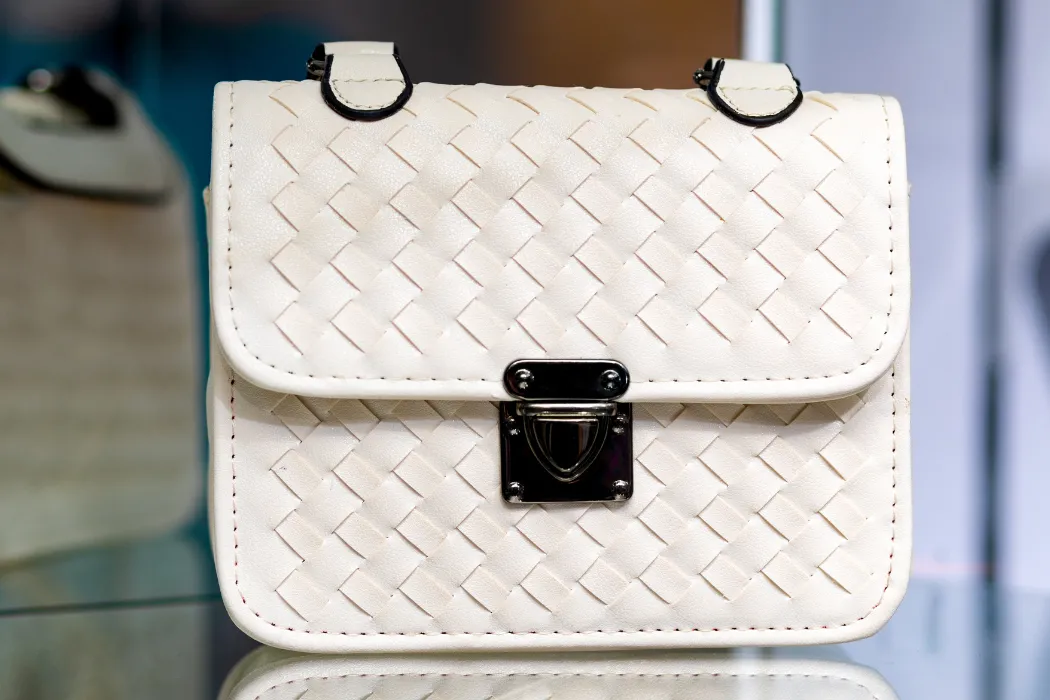
When developing white handbags, evaluate the silhouette, shade and texture together. Structured top handles, elongated shoulder bags, soft hobos and woven surfaces are different design directions; none should be called the latest bestseller without dated evidence from the market you serve.
This guide turns those style ideas into a collection brief. The practical challenge is to preserve the intended white appearance across leather, edges, lining, hardware and packaging, while meeting the customer’s capacity and care expectations.
Choose the role of white in the range
Define whether white is a core neutral, an occasion option or a limited colour trial for your own customers. Use your sales, requests and return reasons to make that decision. A runway photograph can inspire a silhouette but does not establish demand or acceptable order quantities in your market.
Specify a physical shade reference. Bright white, ivory, cream and chalk are not interchangeable names, and screen images are insufficient for matching. Compare all visible components under the agreed viewing conditions and retain an approved reference.
Translate a silhouette into a sample question
| Direction | What the design offers | What to resolve before approval |
|---|---|---|
| Structured top handle | A defined outline and controlled opening | Panel support, edge alignment, closure access and empty weight |
| Doctor-inspired shape | A broad opening or framed visual character | Actual opening mechanism, hinge clearance and interior access |
| Elongated shoulder bag | A low horizontal profile | Phone insertion, centre sag, strap drop and closure |
| Soft hobo | Drape and a relaxed outline | Loaded appearance, lining movement and strap attachment |
| Woven surface | Texture and shadow across a pale colour | Strip edges, joins, backing, snag points and colour consistency |
| Quilted surface | Raised volume and repeated stitching | Padding profile, seam tension and alignment at joins |
These are design options, not universal construction recipes. A structured bag does not always require one thickness or tanning method, and a soft bag does not automatically omit reinforcement. Approve the combination on the actual sample.
Choose the finish with aftercare in mind
Smooth, grained, glossy and napped surfaces create different visual effects. Ask for the named material and approved care method. Do not use an unsupported “durability score” to rank every white suede below every smooth leather.
Test the care wording on a representative finished sample, including edge paint and lining. A high-gloss surface should not be described as stainproof merely because a liquid can be wiped from one sample. See the white leather care guide for distinguishing dirt, dye transfer and yellowing.
Check the complete material combination
- Colour matching: compare shell, handles, edges, thread and lining against the agreed references.
- Contact: review where hardware, straps, darker lining or packaging touch pale surfaces.
- Use exposure: identify rubbing against clothing, expected light exposure and the cleaning method in the brief.
- Assessment: agree suitable methods and acceptance criteria with the supplier or laboratory.
- Retention: keep a control sample and records for later batch or complaint comparisons.
Colour change can have more than one cause. Do not assume all yellowing comes from one oil or that a plating type eliminates every mark. A report on one component does not establish that the complete bag will remain unchanged for years.
Hardware and packaging are part of the colour brief
Choose metal colour, finish, shape and attachment together. A heavy decorative lock changes empty weight and how a soft panel hangs; it is not inherently more premium because it feels heavy. Check movement and contact marks on the complete sample.
Pack the bag with compatible non-marking materials and suitable shape support. Inspect after the proposed packing trial for pressure marks, transferred colour and hardware contact. A white dust bag should also be suitable for the finish; colour alone is not proof of compatibility.
Develop an original collection brief
Describe the useful design attributes in your own drawing: opening, proportions, drape, handle arrangement and branding location. Avoid making a competitor’s signature hardware or logo the specification. Reference images should explain the feature to develop, with an original product proposal to approve.
Hoplok can discuss material sourcing and finishing for a white bag collection. ProPelli specializes in belt leather and other leather finishing on crust received from tanneries; it is a finishing facility, not a tannery. Send the shade, silhouette and intended performance requirements through the contact page.
Frequently asked questions
Which white handbag shape is the current bestseller?
That requires dated sales or market evidence for the relevant region and channel. The styles here are design options, not a verified ranking.
Does white leather always yellow for the same reason?
No. Investigate the material, finish, contact components, storage and exposure before assigning a cause.
Does gold or silver hardware perform better?
Appearance is a design choice. Performance depends on the actual component, finish and material combination, which need assessment.