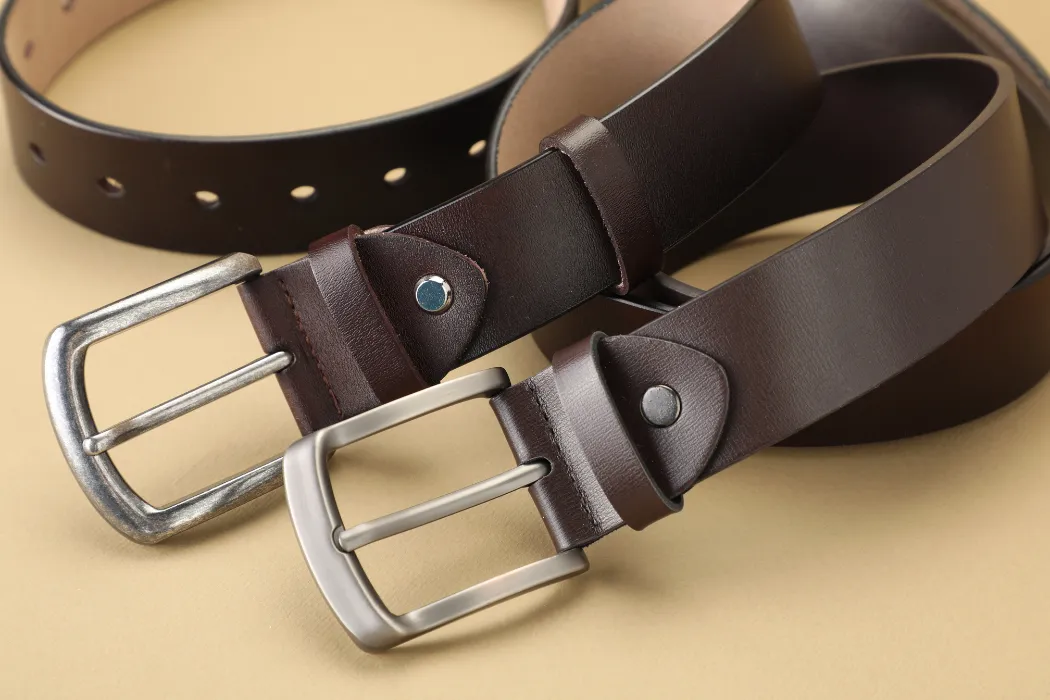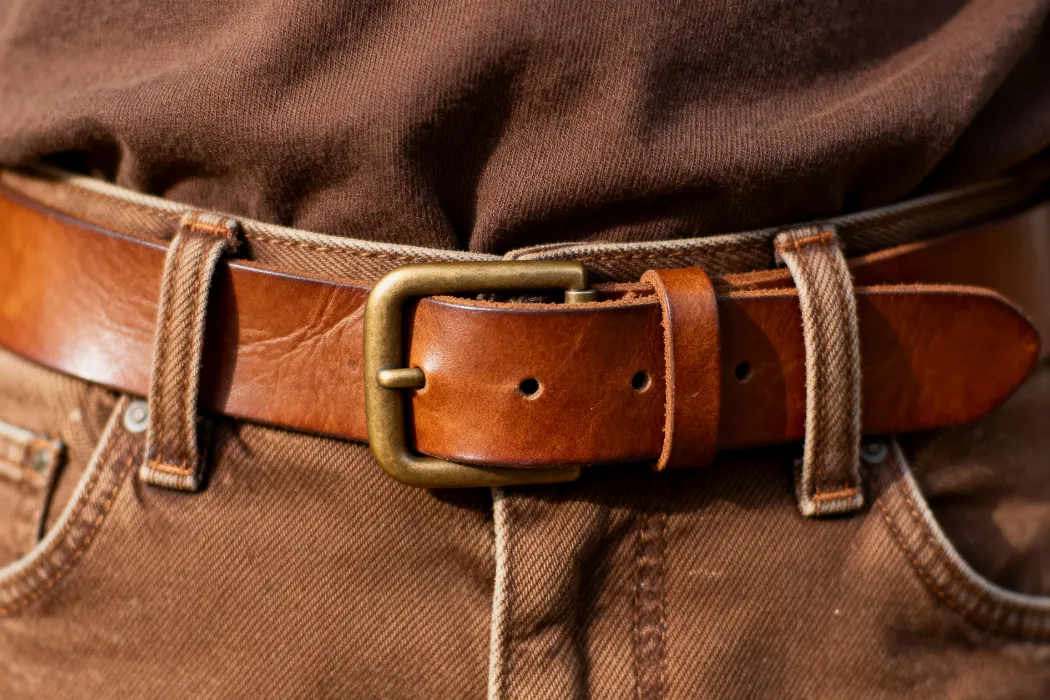
You’re about to buy a perfect leather belt online. You’ve found the style and color you want, but then you hit the size selection. You pause. “My pants are a size 34 waist, so I should buy a size 34 belt, right?”
It seems logical, but it’s a costly mistake. No one wants the hassle of a return, the wait for an exchange, or the disappointment of a belt that’s too short.
Here is the simple rule for buying a belt: choose a size 2 inches larger than your pant waist size. If you wear size 34 pants, you should buy a size 36 belt. This “Pants Size + 2” rule ensures the belt is long enough to buckle comfortably in the middle hole, leaving the perfect tail end.
But why “+2”? Does this rule always work? What if you are a size 33, or if the brand’s sizing is strange? The simple sizing rule is just the beginning.
This guide will show you why that rule works. We will also give you two other professional measurement methods to find your *perfect* size. You will be able to buy with confidence and get it right the first time, every time.
What Size Belt to Buy? (The Quick Answer & Sizing Chart)
The fastest way to find your belt size is to add 2 inches to your pant waist size. A 34 waist needs a 36 belt. A 36 waist needs a 38 belt. This “Pants Size + 2” rule is the industry standard. It’s designed to make sure the belt fits perfectly on the center hole. The chart below gives you a quick reference for all common sizes, so you can buy with confidence right now.
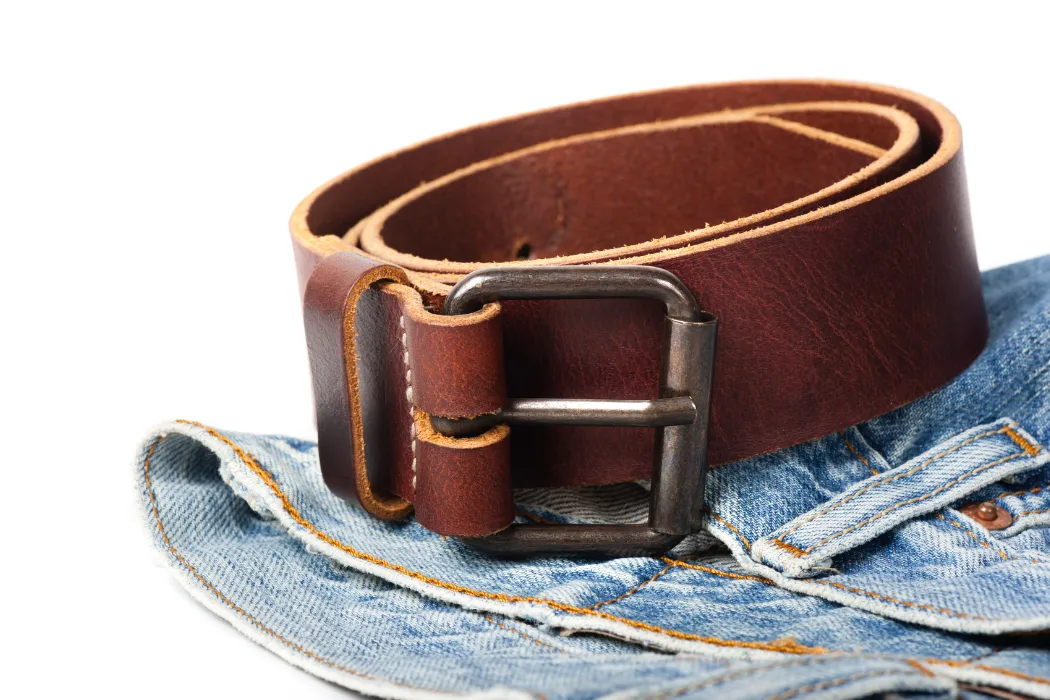
The Official Belt Size Conversion Chart
This chart is the easiest way to find your size. Simply find your pant waist size in the left column and buy the corresponding belt size from the right column.
| If Your Pant Waist Size Is… | You Should Buy This Belt Size… | Why It Works (The “Pants + 2” Rule) |
|---|---|---|
| 32 inches | 34 | 32 + 2 = 34. This provides the ideal length. |
| 34 inches | 36 | 34 + 2 = 36. This is the standard fit. |
| 36 inches | 38 | 36 + 2 = 38. This allows room to buckle in the middle. |
| 38 inches | 40 | 38 + 2 = 40. This is the correct size. |
| 40 inches | 42 | 40 + 2 = 42. This ensures a comfortable fit. |
| 42 inches | 44 | 42 + 2 = 44. This provides the right amount of extra length. |
What size belt for 32 waist?
For a 32-inch waist, you should buy a size 34 belt. Following the “Pants Size + 2” rule, adding two inches to your pant size (32 + 2 = 34) gives you the perfect length. This allows the belt to fasten on the middle hole, which is the most balanced and best-looking fit.
What size belt for 34 waist?
For a 34-inch waist, you need to buy a size 36 belt. This is the most common belt size query. The “Pants Size + 2” rule (34 + 2 = 36) is the standard for a reason. It accounts for the thickness of your pants and shirt material, ensuring the belt isn’t too tight.
What size belt for 36 waist?
For a 36-inch waist, you should purchase a size 38 belt. Do not buy a size 36. A belt that is the same size as your pants will be too short and will barely buckle, if at all. The 38-inch belt (36 + 2) will fit comfortably on the center hole, just as it’s designed to.
What size belt for 38 waist?
For a 38-inch waist, the correct belt size to buy is a size 40 belt. This 2-inch jump (38 + 2 = 40) is crucial. It gives you the proper amount of “tail” (the end of the belt) to tuck neatly into the first belt loop without being too long or too short.
What size belt for 42 waist?
For a 42-inch waist, you should order a size 44 belt. The “Pants Size + 2” rule (42 + 2 = 44) applies to all sizes, including larger sizes. This simple formula ensures your belt will fit perfectly and provide room for adjustment in either direction.
What about in-between sizes (like 33, 35)? Always round up to the next even number and then apply the “+2” rule. For example, if you are a size 33, you would buy a size 36 belt (round 33 up to 34, then add 2).
Why Is Your Belt Size 2 Inches More Than Your Pant Size?
Your belt size needs to be larger because it must go around more than just your waist. It has to fit over your pants material, your tucked-in shirt, and still have enough length to buckle. A belt’s “size” (e.g., “36”) is actually a standard measurement from the buckle’s fold to the middle hole. The “+2 rule” is a simple way to ensure you land perfectly on that center hole.
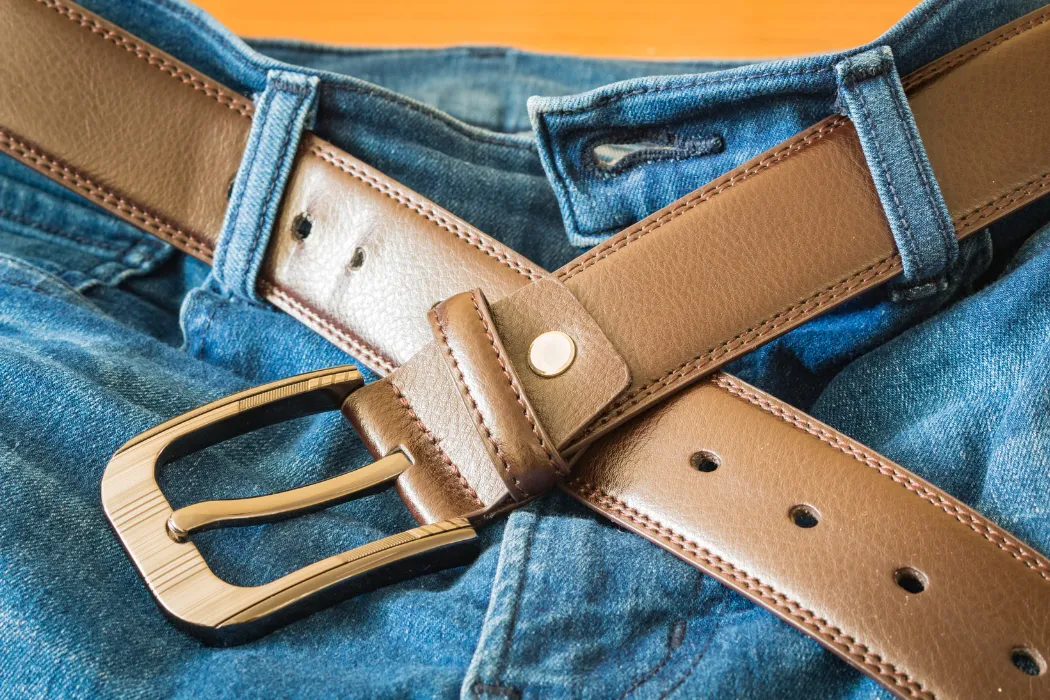
The “Middle Hole” Rule: The Goal of a Perfect Fit
A well-designed leather belt typically has 5 holes, spaced 1 inch apart. The goal of a perfect fit is to buckle the belt on the center hole. This isn’t just for looks; it’s for function.
Buckling on the center hole provides the most balanced and practical fit:
- It leaves room for adjustment. You have two holes (2 inches) to tighten if you lose weight or wear thinner trousers. You have two holes (2 inches) to loosen if you gain weight or tuck in a thicker shirt.
- It creates the perfect “tail.” The tail (the end of the belt) will be just long enough to tuck neatly into the first belt loop on your pants without a long, sloppy piece hanging off.
The “Pants Size + 2” rule is simply a reliable shortcut to make sure you achieve this ideal middle-hole fit.
How Manufacturers Measure “Belt Size” (From Buckle Fold to Center Hole)
This is the most important concept to understand. A belt’s size number is **not** its total length from tip to tip. This common confusion is the source of most sizing errors.
When a manufacturer labels a belt as “Size 36,” they are stating an industry-standard measurement: the distance from the buckle fold (where the leather wraps around the buckle pin) to the center hole is 36 inches.
A belt’s size is not its total length. It is the measurement from the buckle’s fold to the center hole, which is where the belt is designed to be worn.
This is precisely why the “+2” rule works. If your pant size is 34, your body plus your clothing is roughly 34 inches around. You buy a “Size 36” belt. This gives you the 36 inches you need to fasten the belt at its center hole, accounting for that extra 2 inches of material and comfort.
Why Your Pant Size Isn’t Your “True” Waist Size (The “Vanity Sizing” Problem)
Here is the final piece of the puzzle. You might think, “Why not just buy a belt that matches my 34-inch pant size?” The reason is that your “Size 34” pants are probably not 34 inches around.
This practice is called “vanity sizing.” Clothing brands often label their pants with a smaller size than the actual measurement to make customers feel better. A pair of pants labeled “Size 34” might have an actual waistband measurement of 35, 36, or even 37 inches.
The “Pants Size + 2” rule is a brilliant shortcut because it automatically accounts for two things at once:
- The extra 1-2 inches of “vanity sizing” built into your pants.
- The extra 1-2 inches of material from your shirt and the pants themselves.
This is why simply measuring your own waist is not always accurate. The “+2” rule is the most reliable method because it works with the clothing industry’s own sizing system.
How to Find Your Perfect Belt Size: 2 Professional Methods
The “Pants Size + 2” rule is a fast and excellent guide. But for a 100% perfect fit, two other methods are even more reliable. The most accurate method is to measure an existing belt that you own and love. This removes all guesswork. The second-best method is to measure your waist directly over your pants with a tape measure. We will walk you through both.
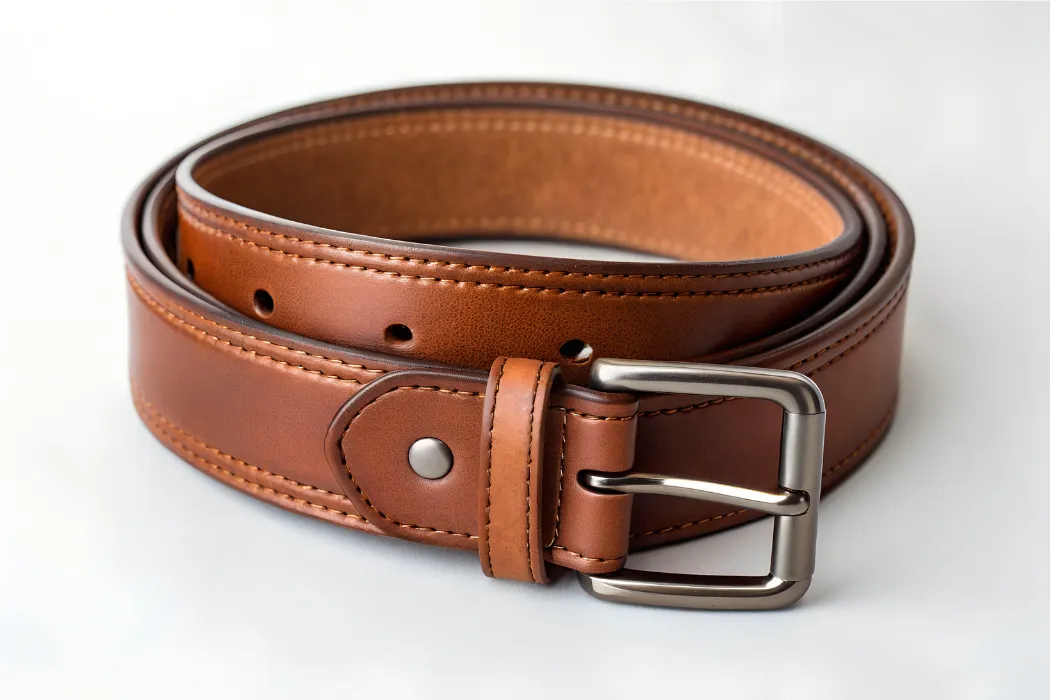
Method 1 (Most Accurate): How to Measure a Belt You Already Own
This is the gold standard for getting a perfect fit because you are using a real-world item that you already know works for you. It completely bypasses “vanity sizing” and any confusion about pant sizes.
Here is the step-by-step process:
- Lay your belt on a flat surface. Choose a belt that you currently wear and that fits you comfortably.
- Find the “buckle fold.” Do not measure from the tip of the buckle. Start your measurement from where the leather folds over the buckle pin. This is where the measurement for “belt size” truly begins.
- Find the hole you use. Look at the holes on your belt. One of them will likely be more stretched, worn, or curved than the others. This is the hole you use most often.
- Measure the distance. Take your tape measure and measure the distance from the buckle fold (Step 2) to the center of the hole you use most (Step 3).
That measurement in inches *is* your belt size. If the distance is 38 inches, you should buy a “Size 38” belt. It’s that simple. This measurement is what manufacturers use to define their sizes.
Method 2 (Very Accurate): How to Measure Your Waist with a Tape Measure
This is the best method if you don’t have a well-fitting belt to measure, or if you are buying your very first dress belt.
- Put on the right pants. Wear the exact pair of pants (or a very similar style) that you plan to wear with the new belt. This is critical because dress trousers are much thinner than heavy jeans.
- Thread the tape measure. Run a flexible, soft tape measure (like a tailor’s tape) through the belt loops of your pants. This is more accurate than just wrapping it around your waist.
- Stand naturally and measure. Stand in a relaxed, normal posture. Pull the tape measure snug, but not tight. It should feel like a perfectly fitted belt.
- Read your measurement. The number you see in inches is your true waist-over-pants measurement.
- Add 1-2 inches for comfort. Most experts recommend adding 1 to 2 inches to this measurement to find your final belt size. This gives you room to breathe and tuck in a shirt.
For example, if you measure 35 inches over your pants, you should look for a Size 36 belt. If you measure 36 inches, a Size 36 or Size 38 belt would both be good choices, depending on if you prefer a shorter or longer tail.
What to Do If You’re Between Sizes (The Pro Tip: Always Size Up)
This is a common problem, especially for those with odd-numbered pant sizes (like 33 or 35). The golden rule is simple: when in doubt, always size up.
A belt that is one size too long is still perfectly wearable. You can use the next hole in, or in many cases, a cobbler can professionally shorten it or add a new hole. However, a belt that is even one inch too short is completely useless. It won’t buckle, or it will buckle on the very first hole, which looks terrible.
For the “Pants Size + 2” rule, if you have an odd size, you round up first. Here is the formula:
- If your pant size is 33: Round up to 34, then add 2. Buy a Size 36 belt.
- If your pant size is 35: Round up to 36, then add 2. Buy a Size 38 belt.
Measurement Method Comparison
Which method is best for you? Here is a quick comparison of the three ways to find your size.
| Measurement Method | Accuracy Level | Best For | Pro Tip |
|---|---|---|---|
| Method 1: Measure Old Belt | Highest | Anyone who has a belt that already fits them perfectly. | Measure from the buckle fold to the hole you use, *not* the total length. |
| Method 2: Measure Waist | High | First-time belt buyers or those with new pant styles (e.g., high-rise). | Measure *over* your pants, right where the belt will sit. |
| Rule: “Pants Size + 2” | Good (Estimate) | Quick online purchases when you know your pant size is consistent. | Becomes less accurate with “vanity sizing” or thick jeans. |
Does Sizing Change for Different Types of Trousers?
Yes, your belt size might change depending on your pants. A dress belt for thin suit trousers may feel looser than a casual belt worn with thick jeans, even if both pants are the same “size.” This is because the thickness of the waistband material and the rise of the pants (where they sit on your body) both affect the total circumference your belt needs to cover.
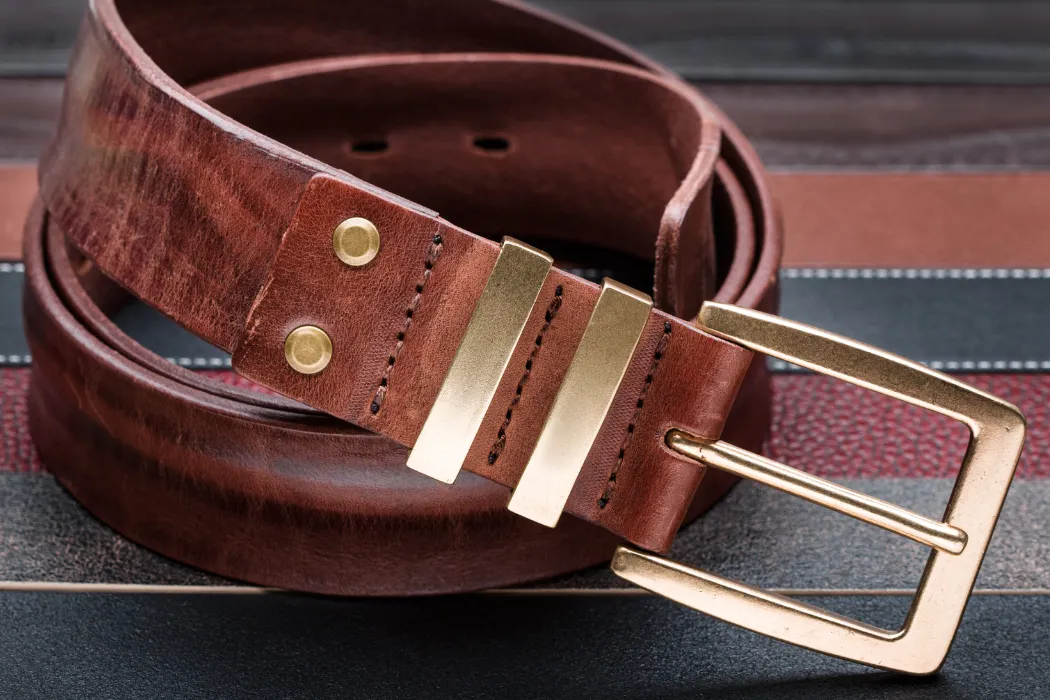
Dress Belts (Thinner Trousers) vs. Casual Belts (Thicker Jeans)
The “Pants Size + 2” rule is a perfect baseline, but it’s most accurate for dress pants. Think about the materials.
- Dress Pants: The waistband is made of a thin layer of suiting wool or cotton. The “+2” rule works perfectly here as it accounts for this thin layer and your tucked-in shirt.
- Jeans: The waistband is made of thick, heavy denim. This extra bulk can easily add another full inch to your waist’s circumference.
Because of this, many people find the “Pants Size + 3” or “+4” rule works better for casual jeans. For example, if you wear a size 34 in dress pants (buying a 36 belt), you might still wear a 34 in jeans, but you may be more comfortable in a size 38 belt to account for the thick denim.
High-Rise vs. Low-Rise Pants (Why It Changes Your Measurement)
Where your pants sit on your body drastically changes the measurement. A “34-inch waist” is not a fixed point.
- High-Rise Trousers: These are designed to sit at your natural waist, which is the narrowest part of your torso (near your navel). This is a smaller circumference.
- Low-Rise Trousers: These are designed to sit lower, on your hips. For most people, the hips are a wider measurement than the natural waist.
This is why you cannot assume one belt will fit all your pants. Your 36 belt for your high-rise suit pants may be too short for your 34 low-rise jeans, because your “hip” measurement is larger. This reinforces why Method 1 (measuring an existing belt) is the most accurate, as you should measure a belt you already wear with that specific style of pants.
A Note on Belt Width (1.25″ vs 1.5″) and Loop Size
Finally, there’s a practical, physical limit you must consider: the belt loops themselves. This isn’t just a style rule; it’s a functional one. You must match the width of your belt to the loops on your pants. Belt width is a key part of belt etiquette, not just fit.
Belt Width & Formality Guide
Here is a quick guide to choosing the right width for the right occasion.
| Belt Width | Common Name | Best For (Pants Type) | Formality |
|---|---|---|---|
| 1.25 inches (or slimmer) | Dress Belt | Suit Trousers, Dress Slacks | Formal / Business |
| 1.5 inches | Standard / Casual Belt | Jeans, Chinos, Casual Trousers | Casual / Business Casual |
| 1.75 inches (or wider) | Wide / Utility Belt | Heavy-duty work jeans, fashion statements | Very Casual / Workwear |
You simply cannot fit a 1.5-inch casual belt through the 1.25-inch loops of most dress pants. This helps enforce the style rules and is a good reminder to own at least two types of belts: a slim one for the office and a wider one for the weekend.
What Are the Most Common Sizing Mistakes to Avoid?
The biggest mistake is buying a belt that is the same size as your pants, which will be too short. The second common error is measuring your natural waist (near your navel) instead of your actual pant line, which is usually lower. Avoiding these simple mistakes will save you the frustration of a return and ensure you get a perfect fit the first time.
Mistake 1: Buying Your Exact Pant Size
This is the most common error. A “Size 34” pant is not 34 inches around. And even if it were, your belt must go *around* those pants, plus a tucked-in shirt. You must add extra length. Forgetting to add at least 2 inches is the number one reason a new belt is too short. Remember: Your belt size is always larger than your pant size.
Mistake 2: Measuring Your Body, Not *Over* Your Pants
If you use a tape measure, you might be tempted to measure your waist directly against your skin. This measurement is useless for buying a belt. Your belt doesn’t sit on your skin; it sits over your clothing. The thickness of your pants’ waistband and your shirt adds 1 to 2 inches to your total circumference. Always measure *with your clothes on* for an accurate, real-world number.
Mistake 3: Confusing “Belt Size” with “Total Belt Length”
A “Size 36” belt is not 36 inches long from end to end. As we covered, a “Size 36” belt is 36 inches from the buckle fold to the center hole. The “tail” adds another 5-6 inches. If you measure your old belt from tip to tip and order that size, you will end up with a belt that is far too long. Never use the total length as your size number.
Mistake 4: Forgetting to Account for Tucked-In Shirts or Layers
Your belt size can change based on how you wear it. If you are buying a dress belt to wear with a suit, you will always have a shirt tucked in. The “Pants Size + 2” rule accounts for this. But if you are buying a casual belt to wear with a very thick flannel shirt or a tucked-in sweater, that extra bulk might require you to go up yet another size. Always consider the thickest layer you plan to wear with your belt.
Common Sizing Mistakes: A Quick Summary
| The Mistake | The Correct Way |
|---|---|
| Buying your exact pant size (e.g., Size 34 pants = Size 34 belt). | Always add at least 2 inches. (e.g., Size 34 pants = Size 36 belt). |
| Measuring your total belt length, end to end. | Measure from the buckle fold to the center hole you use. |
| Measuring your natural waist (on your skin). | Measure over your pants, right where the belt will actually sit. |
| Forgetting thick materials like jeans. | Consider adding 3 or 4 inches to your pant size for heavy denim. |
Frequently Asked Questions (FAQ)
Q1: What size belt for 33 waist (or other “in-between” sizes)?
If you have an odd-numbered pant size, always round up to the next even number, then add 2 inches. For a 33 waist, you would round up to 34, then add 2. This makes your ideal belt size 36. This ensures you will land on or near the center hole.
Q2: Should I round up or down if I’m between sizes?
Always size up. A belt that is one inch too long is perfectly wearable (you can use the next hole). A belt that is one inch too short is completely useless. Sizing up is the safest choice every time. You can always have a cobbler add a hole if needed.
Q3: How many holes should be left on a properly fitted belt?
A perfectly fitted belt buckles on the center hole. On a standard 5-hole belt, this means you will have two empty holes on the inside and two empty holes on the outside. This gives you 2 inches of room to adjust in or out, which is ideal.
Q4: How much “tail” should be left over after buckling?
The “tail” (the end of the belt) should be just long enough to pass through the buckle and be tucked securely into the Give me the next part.
first belt loop on your trousers. This is usually about 3 to 4 inches of leather past the buckle. If it’s too long, it will flap; if it’s too short, it will look cheap and won’t stay tucked.
Q5: Is women’s belt sizing different from men’s?
Yes, it can be very different. Men’s sizing is typically based on a pant waist size. Women’s sizing is often S/M/L/XL or based on a measurement at the natural waist, which can be much higher than where pants sit. Always check the specific brand’s sizing chart for women’s belts.
Q6: What if my new belt doesn’t have holes (e.g., a ratchet belt)?
Ratchet belts (or “click” belts) are much simpler. You typically buy one size (e.g., “Fits up to 48″ waist”) and then cut the leather strap to your perfect length. The “Pants Size + 2” rule does not apply here. You will simply measure, cut, and attach the buckle yourself.
Q7: Does the “Pants Size + 2” rule work for all brands?
It is a very reliable rule of thumb, but it is not a law. Some brands (especially “vanity size” pants) may have different measurements. This is why Method 1 (measuring your old belt) is always the most accurate. When in doubt, check the brand’s specific size chart.
Q8: I bought the wrong size. Can a leather belt be resized?
It’s easy to make a belt shorter, but it’s impossible to make it longer. A cobbler can professionally remove the buckle, cut the strap to the correct length, and re-attach the buckle. They can also punch a new hole, but this can sometimes look unbalanced if it’s not near the other holes.
Conclusion: A Perfect Fit Starts with Clear Sizing
As we’ve seen, choosing the right belt size is simple once you know the rules. Just remember the industry standard: Pants Size + 2 inches. This simple formula is the most reliable way to get a perfect fit, ensuring your new belt buckles comfortably on the middle hole with just the right amount of tail.
This highlights a crucial insight for brands. The number one anxiety for an online customer is choosing the wrong size. This confusion leads to frustration, lost sales, and costly returns. A brand that can provide clear, reliable, and standardized sizing information isn’t just selling a product; it’s selling confidence. This attention to detail, which ensures a customer can “get it right the first time,” is what builds long-term brand loyalty.
For brands dedicated to providing this seamless customer experience, the work starts with a manufacturing partner who understands precision. At Hoplok Leather, we have over 22 years of experience producing perfectly sized, consistent, and high-quality leather goods for global brands. Contact us today for a free design and manufacturing consultation, and let’s build the perfect, confidence-inspiring products your customers deserve.