A useful tote and purse collection gives each style a clear job: work carry, compact essentials, occasional use or an alternative carrying format. Designer references can help identify shapes, but popularity, price and resale claims need current market evidence. They should not substitute for an original product specification.
The fifteen directions below compare capacity, access and construction questions. They are options for range planning rather than a ranking of brands or a promise that every style will sell equally well.
Start with the customer task and contents
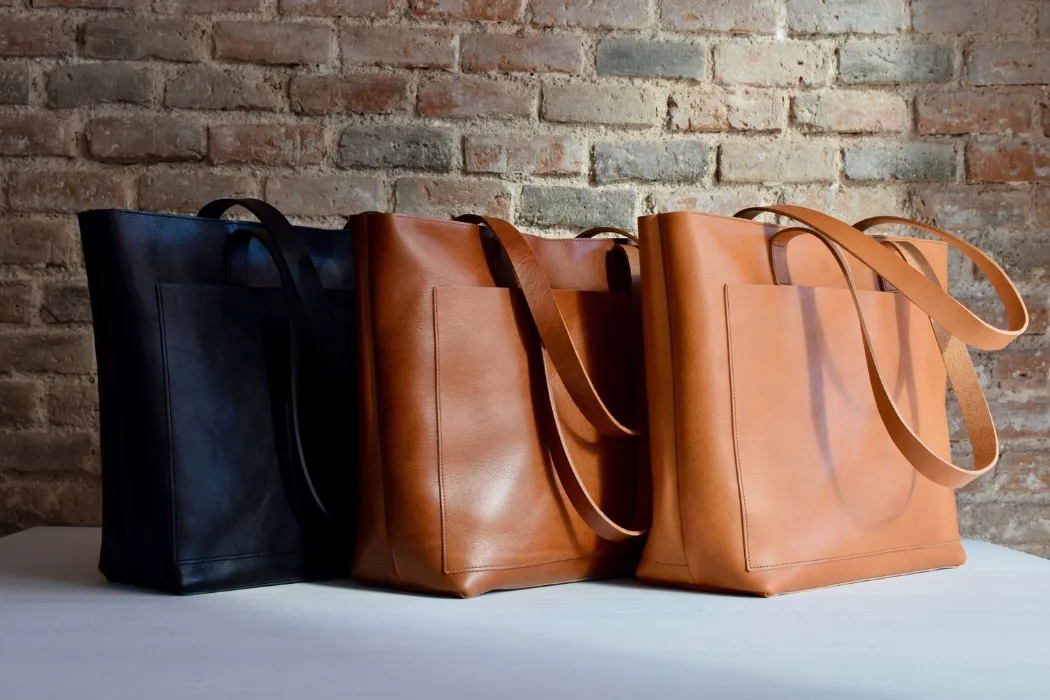
Identify the expected contents and how the bag is carried. A tote intended for a device needs its actual dimensions and access route checked; a smaller purse may focus on quick access to a phone and cards. A broad opening is convenient but does not provide the same containment as a fully closed compartment.
Use your sales and returns to decide how much of each direction belongs in the range. A large social following or a competitor’s retail price does not prove your unit economics or demand.
Fifteen directions for a tote and purse range
| Direction | Role in a collection | Sample question |
|---|---|---|
| 1. Open everyday tote | Simple access and a broad main compartment | Do contents remain contained in intended carrying positions? |
| 2. Zip-top work tote | A closed main compartment for commuting | Does the opening clear the actual device and sleeve? |
| 3. Structured top-handle bag | Defined silhouette with hand carrying | Do support, weight and opening work together? |
| 4. Soft unlined tote | A relaxed outline and visible reverse surface | Are interior finish and seams suitable for contact with contents? |
| 5. Lined soft tote | Drape with a separate interior | Does the lining stay in place and avoid reducing access? |
| 6. Foldable tote | A planned compact packing format | Does repeated folding mark the finish or hardware? |
| 7. East–west shoulder bag | A horizontal profile for essentials | Can contents pass through the low opening? |
| 8. Hobo bag | Soft curve and shoulder carrying | Does loaded drape match the approved appearance? |
| 9. Woven-surface bag | Texture as a main visual feature | How are edges, joins and snag points controlled? |
| 10. Quilted purse | A padded, stitched surface | Is the pattern aligned across panels and closures? |
| 11. Compact crossbody | Hands-free carrying for essentials | Does the strap range work with intended clothing? |
| 12. Bucket bag | Vertical space and gathered or flap access | Are small items accessible and the closure practical? |
| 13. Frame-opening bag | A defined opening mechanism | Is there clear access without pinching material? |
| 14. Convertible tote | More than one carrying configuration | Are all modes usable with attachments in the same positions? |
| 15. Detachable-pouch tote | A main bag with a separate organizer | Do the pouch, attachment and contents work together? |
These categories overlap. A woven bag can also be a hobo, and a zip-top tote can be soft. Choose the combination deliberately instead of adding features until the sample becomes heavy or confusing.
Material selection is more specific than a luxury label
Agree the leather or PU reference, finish, thickness, lining and reinforcement. Natural grain character, embossed texture and a glossy finish serve different visual briefs. None establishes “scratchproof” performance by itself.
Compare quotations using the same specification. Record differences in hardware, pockets, packaging and material yield assumptions. Do not infer a competitor’s manufacturing cost or profit margin from the exterior material. The price of a finished design includes choices that may not be visible in a photograph.
Review craftsmanship on the completed assembly
Look at edge finish, seam alignment, handle symmetry and closure operation. More stitches or more edge-paint layers do not automatically make a better bag. Assess whether the process produces the approved appearance and function for that material and shape.
Inspect the inside as carefully as the outside: pocket openings, lining seams, exposed fasteners and the underside of the top edge. Load the bag with the agreed contents and confirm that access and appearance remain acceptable.
Turn inspiration into your own technical brief
Translate references into descriptive requirements—softness, opening width, carrying mode, proportion and colour. Develop original panel lines and branding rather than treating another brand’s logo, monogram or signature hardware as a component to reproduce.
Specify which details are essential and which can change to meet the budget. This allows sampling to resolve concrete questions instead of comparing a prototype against an undefined idea of “designer quality.”
Approve the range before increasing quantities
Keep a record for each style: target user task, contents, dimensions, material, carrying options, approved sample and packing. Review the smallest and largest sizes where scaling may affect the closure, strap or proportions.
For an original tote or purse collection, Hoplok’s confirmed MOQ is 200 leather pieces or 1,000 PU pieces, with 3–4 weeks for bag samples and 60–90 days for bulk production. Discuss quantity splits, materials and schedule through the contact page.
Frequently asked questions
Are these the fifteen bestselling designer bags?
No. They are design directions for collection planning; a sales ranking would require current, verifiable market data.
Does a designer reference prove a manufacturing specification?
No. Turn the useful attributes into your own drawing, material requirements and sample criteria.
Is a heavier bag or denser stitching always better?
No. Evaluate the complete construction against the intended use, appearance and weight requirement.