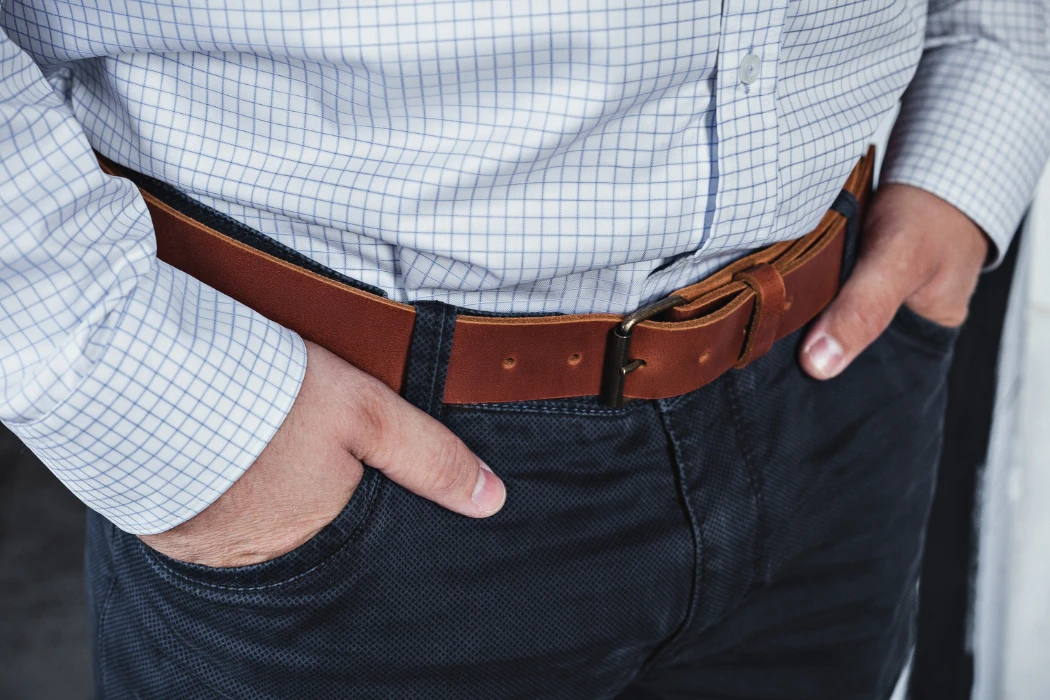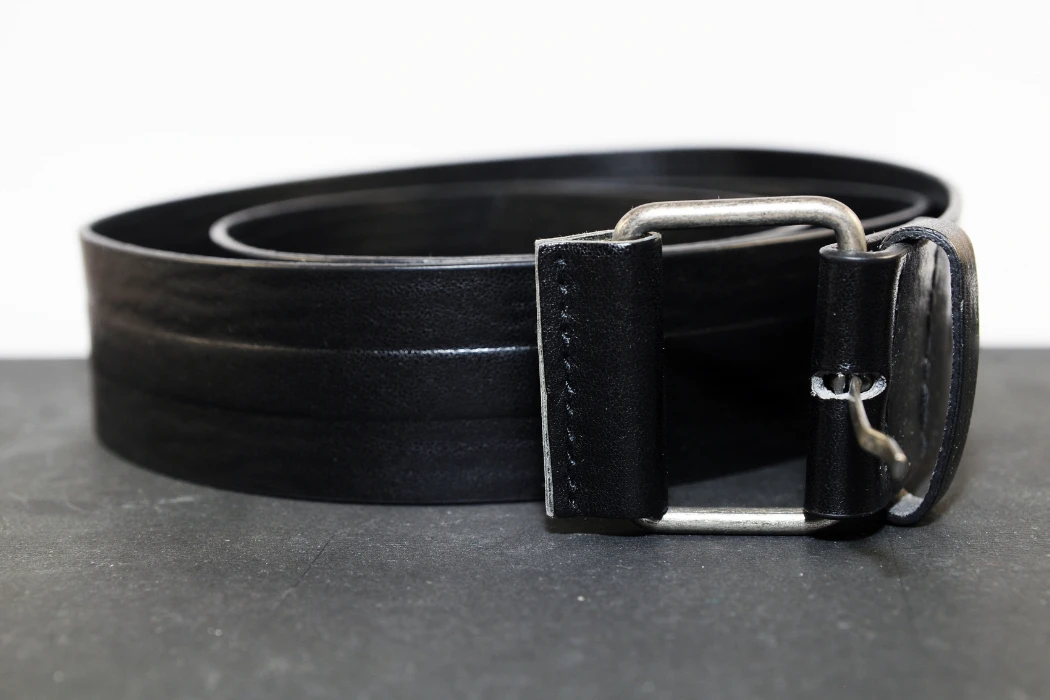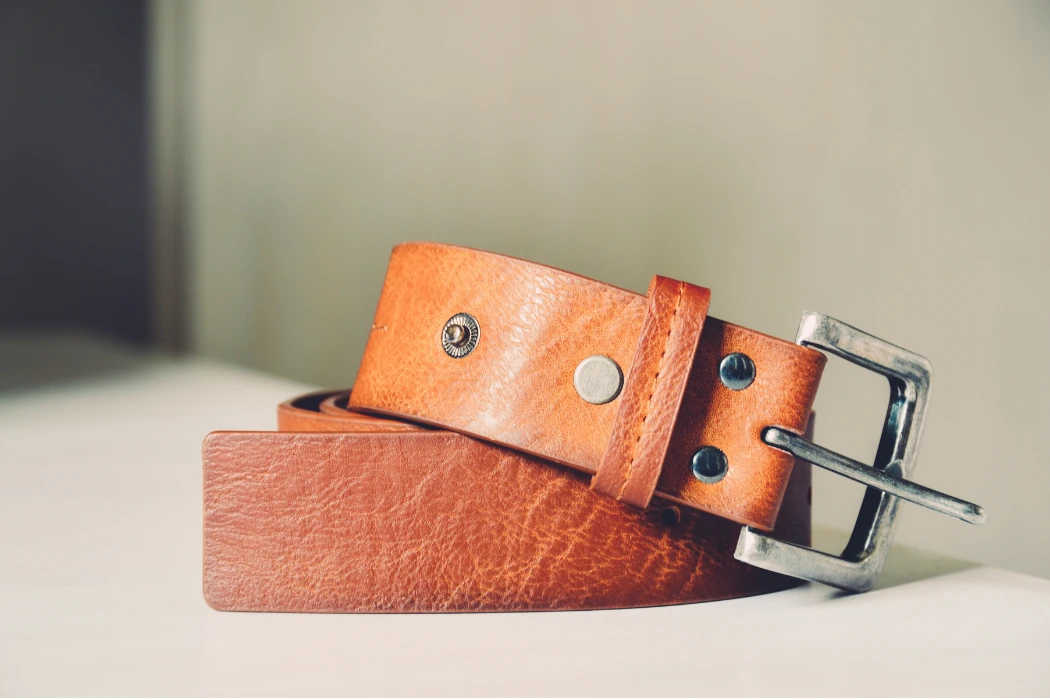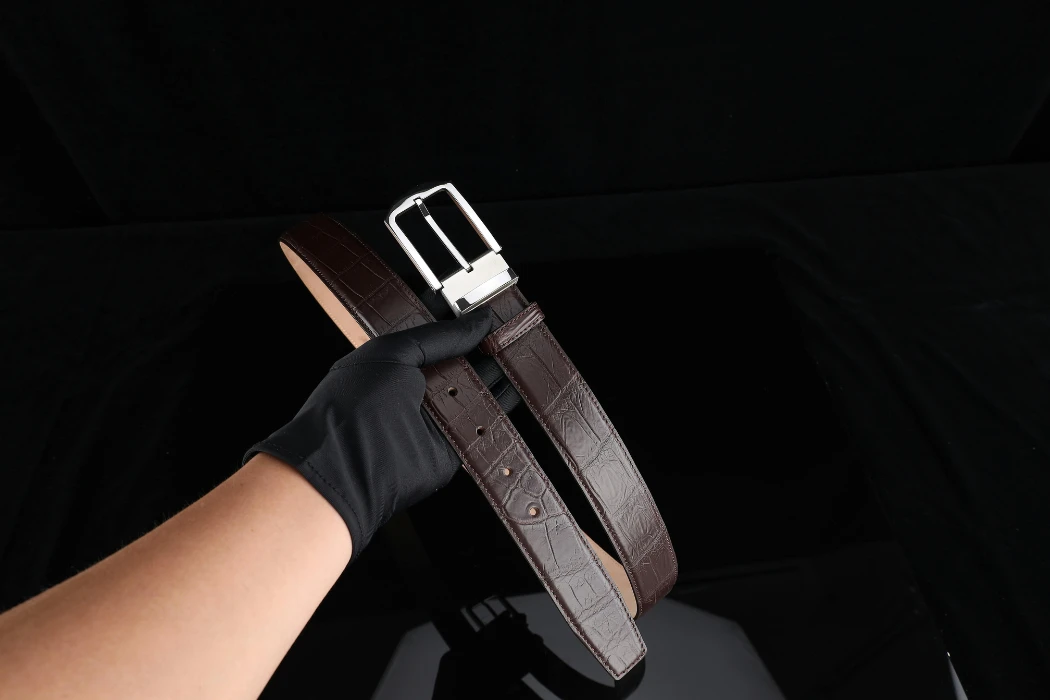
Private Label Costing is a systematic calculation based on the Bill of Materials (BOM). It is composed of three core elements: Raw Material Yield (utilization rates typically hover between 65-75%), Direct Labor (cutting, edge painting, stitching), and Manufacturing Overhead (mold amortization and defect rates). Unlike finished goods wholesale pricing, OEM costing is non-linearly affected by MOQ (Minimum Order Quantity) and specification complexity.
Key Takeaways for Sourcing Managers
- Cutting Yield Reality: Due to natural scars and insect bites, the actual utilization of Grade A full-grain leather is only ~70%. This wastage factor accounts for 40–50% of the total unit cost.
- Hardware Economics: The cost differential between Barrel Plating and Rack Plating is approximately 3x. This choice directly dictates the corrosion resistance (Salt Spray Test hours) of the buckle.
- Labor Arbitrage Strategy: Manufacturing in our Cambodia factory allows US brands to bypass Section 301 tariffs, reducing the Total Landed Cost by 15–20% compared to China-only production.
- Hidden Costs: Packaging, third-party compliance testing (e.g., CA Prop 65, REACH), and QC wastage typically consume 10–15% of the final BOM budget.
The Raw Material Reality: Why Leather Grade Dictates 50% of the Unit Price
For a sourcing manager, the most common shock comes from the disparity between the raw material market price and the finished product BOM. Leather is an organic byproduct, not a uniform textile. Unlike polyester rolls which offer 100% cutting efficiency, animal hides are irregular shapes filled with natural defects. Understanding how we calculate “Utilization Rate” is key to auditing your supplier’s quote.
Understanding Cutting Yield and Loss
When you purchase a 25 sq. ft. hide, you cannot use 25 sq. ft. of material. We must navigate around scars, brand marks, and the loose fiber structure of the belly.
- Utilization Rates: For Grade A Full-Grain hides, the industry standard utilization rate is approximately 75%. For Grade C hides, this drops to 55–60%.
- The Wastage Premium: If a factory quotes you without a wastage buffer, they are likely using the “belly” (inferior, stretchy parts) in your product. At Hoplok, our quotes include a transparent 30% Wastage Premium because we strictly discard the belly sections to ensure tensile consistency, which prevents the belt from stretching out of shape.
The Price Delta: Full-Grain vs. Corrected Grain
The base cost of the skin varies wildly based on the surface integrity required.
- TR (Tannery Run) Pricing: High-quality Full-Grain leather (TR Grade) currently trades between $4.50 – $5.50 per sq. ft. It requires pristine hides with minimal damage.
- Utility Grade Savings: “Corrected Grain” or Utility Grade hides cost roughly $2.50 per sq. ft. These hides have surface damage that is sanded off and painted over. While they lower the BOM significantly, they result in a plastic-like feel that degrades the brand value of premium labels.
Lining and Fillers (The Hidden Savings)
The easiest way for a factory to undercut a competitor by $1.00 is to change the lining material, which is hidden from the consumer’s immediate view.
- The Split Leather Trick: A standard high-end belt uses full-grain leather for both the top and bottom layers. To cut costs, many factories switch the bottom layer to Split Leather (the fibrous byproduct of splitting the hide). This reduces the unit cost by $1.00 – $2.00 but drastically increases the risk of delamination and absorbing sweat, leading to odors.
| Material Type | Avg. Price (per sq. ft.) | Cutting Yield (Utilization) | Net Material Cost Impact |
|---|---|---|---|
| Full-Grain Veg-Tan (Grade A) | $5.00 | 75% (High Waste) | High (Premium Quality) |
| Corrected Grain (Grade C) | $2.50 | 85% (Defects Sanded) | Medium (Uniform Look) |
| Bonded / Split Leather | $0.80 – $1.00 | 95% (Rectangular Sheets) | Low (Risk of Returns) |
Hardware Economics: Mold Fees and Plating Quality
The buckle is not just jewelry; it is a mechanical component. In Private Label costing, hardware often represents the most significant variable after leather. A factory can quote you $0.50 for a buckle or $2.50 for a visually identical one. The difference lies in the metallurgy and the plating method, which directly dictates the lifespan of the product.
Zinc Alloy vs. Solid Brass Costing
The base metal determines the tooling investment. Most fashion brands opt for Zinc Alloy (Zamak), while heritage brands demand Solid Brass.
- Mold Fees (The Barrier to Entry): Zinc alloy is die-cast. The mold is relatively simple to cut, typically costing $150 – $250 per design. Solid Brass is often sand-cast or forged, requiring more complex tooling that ranges from $500 to $800.
- Unit Cost Variance: A standard zinc buckle costs roughly $0.60 – $0.90 per unit. A solid brass equivalent starts at $2.50 and climbs based on weight. Brass offers superior durability and will never rust, justifying the premium for high-end SKUs.
The Plating Process: Rack vs. Barrel
If your current supplier’s buckles tarnish within months, they are likely using “Barrel Plating” to cut costs.
- Barrel Plating (The Cheap Method): Thousands of buckles are tumbled in a rotating drum. It is fast and cheap, but the buckles scratch each other, and the plating thickness is inconsistent (often < 0.05 microns).
- Rack Plating (Hoplok Standard): We utilize Rack Plating (Hang Plating), where each buckle is individually mounted on a rack and dipped. This labor-intensive process ensures a plating thickness exceeding 0.1–0.2 microns and a mirror finish with zero contact scratches. It costs 3x more than barrel plating but passes the 24-hour Salt Spray Test mandated by global retailers.
Custom Logo Tooling Amortization
Brands often balk at separate mold fees, but understanding amortization is key to calculating true unit cost.
- The Math of MOQ: A $300 custom logo mold fee might seem steep. However, on an order of 300 units, it adds $1.00 to your unit cost. On a volume order of 3,000 units, that impact drops to just $0.10. This is why we encourage clients to forecast annual volume rather than ordering batch-to-batch.
Direct Labor and Manufacturing Complexity
Labor is the most variable component of the BOM. A “simple” leather belt can undergo 15 process steps or 45, depending on the finishing standard. Sourcing managers often overlook that specific aesthetic requirements—like a perfectly smooth edge or complex stitching—exponentially increase the Standard Minute Value (SMV) of production.
Edge Painting Passes
The edge of the belt is where the difference between mass-market and luxury manufacturing is most visible. It is also a massive labor sink.
- The 1-Pass Standard: Cheap belts receive a single coat of edge paint. It feels rough and often peels because the leather fibers weren’t sealed.
- The 3-Pass Premium: Hoplok’s standard for premium clients involves a cycle: Paint → Heat Dry → Sand → Paint. This is repeated 3 times to achieve a domed, smooth edge. This tripling of labor adds approximately $0.30 – $0.50 to the unit cost but eliminates the “cracked edge” return reason.
Stitching Precision and Time
Speed kills quality in leather stitching. The stitch density (SPI – Stitches Per Inch) and the machine speed dictate the output.
- UPH (Units Per Hour): A high-speed sewing operator can blast through 150 belts per hour on a straight stitch setting. However, high-end specification requires slower speeds to ensure perfect back-tacking and corner turning.
- Thread Tension: Adjusting tension for thick 4mm veg-tan leather requires skilled technicians. Poor tension results in “bird nesting” on the underside. We allocate higher-paid master sewers for thick leather lines, increasing the labor burden rate.
The Cambodia Advantage (Labor Rates)
As labor costs in China rise (averaging $6.00–$7.50/hour loaded cost in coastal provinces), labor-intensive leather goods are becoming prohibitively expensive to manufacture there.
- Arbitrage Opportunity: Our Cambodia facility operates at a labor efficiency rate competitive with China but at a significantly lower wage structure ($2.00–$3.00/hour equivalent). For labor-heavy styles (like braided belts or hand-painted edges), moving production to our Cambodia line can reduce the CM (Cut & Make) cost by 30–40% without sacrificing ISO 9001 quality standards.
| Process Step | Standard (Mass Market) | Premium (Hoplok Std) | Est. Cost Variance |
|---|---|---|---|
| Edge Finishing | 1 Coat (Raw feel) | 3 Coats + Sanding | +$0.40 / unit |
| Stitching | High Speed (Loose ends) | Low Speed (Hand-tied) | +$0.25 / unit |
| Logo Embossing | Cold Press (Fades) | Heat Press + Foil | +$0.15 / unit |
| Labor Location | China Only | Cambodia (Duty Advantage) | -$1.50 / unit (Savings) |
Overhead, QC, and Logistics (The Hidden 20%)
Novice buyers often calculate BOM + Labor and assume that is the final price. They forget the “friction costs” of manufacturing. Overhead, Quality Control wastage, and logistics typically add a 20% buffer to the final quote. Ignoring these factors leads to margin erosion when the goods actually land in your warehouse.
Defect Rates and Quality Control
There is a cost to perfection. Every belt we reject on the inspection line increases the cost of the belts that pass.
- Industry Standard vs. AQL 2.5: Many low-cost factories operate on a “ship it if it works” mentality, accepting a 3–5% defect rate. Hoplok enforces an AQL 2.5 (Acceptable Quality Limit) standard. This means we aggressively cull belts with minor cosmetic flaws (scratches, uneven paint). While this rigorous QC increases the factory overhead, it saves you thousands of dollars in customer returns (RMA) and brand reputation damage.
Packaging and Tagging
Packaging is not just a material cost; it is a labor and volumetric cost.
- The “Folding” Labor: A simple polybag is fast. A custom magnetic gift box requires manual folding, tissue paper wrapping, and sticker application. This manual assembly can take 2–3 minutes per unit, adding significantly to the labor bill.
- Volumetric Weight: Bulky packaging reduces the number of units per shipping carton, skyrocketing your freight cost per unit. We advise Private Label clients to balance “unboxing experience” with logistics density.
Duty-Free Strategy (Geopolitical Advantage)
In the current trade war climate, Geography is Strategy. Sourcing from China subjects leather goods to punitive tariffs (Section 301), drastically inflating the landed cost.
- The Cambodia Solution: By manufacturing in our Cambodia facility, US brands can leverage MFN (Most Favored Nation) status or GSP (where applicable) to bypass the 25%+ additional tariffs imposed on Chinese goods. Although the raw material logistics to Cambodia add slightly to the EXW price, the savings on Import Duty result in a significantly lower Total Landed Cost.
| Cost Component | China Production (High Tariff) | Cambodia Production (Hoplok) | Savings Impact |
|---|---|---|---|
| EXW Unit Price | $6.00 | $6.30 (Logistics premium) | +$0.30 (Higher) |
| Shipping (Ocean) | $0.50 | $0.60 | +$0.10 (Higher) |
| US Import Duty | $1.50+ (Standard + 301) | $0.00 – $0.30 (Duty Adv.) | -$1.20 (Massive Saving) |
| Total Landed Cost | $8.00 | $7.20 | 10% Net Profit Gain |
Frequently Asked Questions
What is the MOQ for a private label leather belt?
Hoplok’s standard is 300 pieces per color. This volume is calculated as the mathematical “break-even” point for efficiency. It allows us to amortize the setup costs of custom molds and consume whole hides efficiently without incurring excessive raw material wastage fees that would inflate the unit price on smaller batches.
Why are mold fees charged separately?
Molds are a one-time fixed asset investment (CAPEX). By separating the tooling cost from the product cost, we keep your per-unit price transparent and strictly tied to BOM and labor. Once paid, you own the mold, and it is never charged again for subsequent reorders, maximizing your margin on long-term programs.
How does cutting yield affect my belt price?
Yield is the inverse of waste. Specifying Grade A Full-Grain leather requires our cutters to discard sections with natural scars or insect bites, resulting in a 30–40% planned wastage rate. This “lost” material is a necessary cost of quality and must be amortized into the final price of the finished goods.
The Verdict: Transparency is the Ultimate Cost Saver
In the opaque world of OEM manufacturing, a “low price” often hides a multitude of sins—from substituting split leather for full-grain to using brittle zinc alloy instead of brass. At Hoplok, we reject the industry norm of “black box quotes.” We believe a sourcing manager deserves to know exactly where every cent goes: how much finances the hide, how much pays for the skilled labor, and how much covers the duty.
Partner with a Manufacturer, Not a Middleman
Profit margins are not found by squeezing suppliers until they cut corners; they are found through strategic engineering and geopolitical positioning. If you are a brand manager seeking an OEM partner capable of providing Open-Book Costing and leveraging the massive landed-cost advantage of our Cambodia Duty-Free Factory, do not settle for a standard price list.
Contact the Hoplok Sourcing Team today to request a custom BOM analysis for your upcoming collection. Let us prove that premium quality and competitive pricing can coexist through smart manufacturing.
— The Hoplok Senior Cost Accounting Team