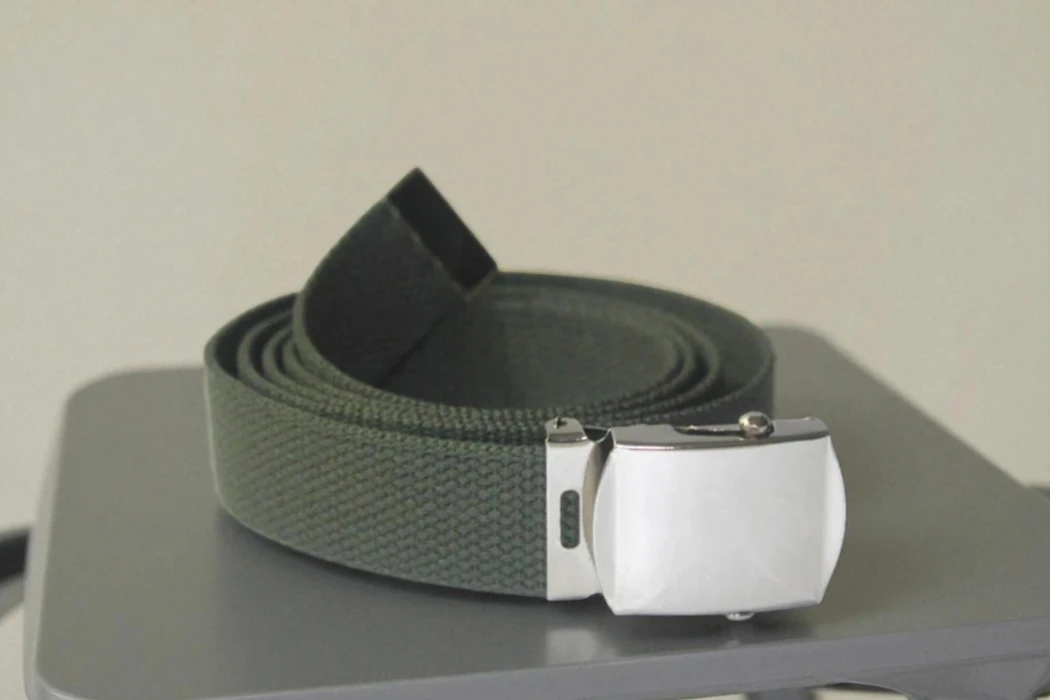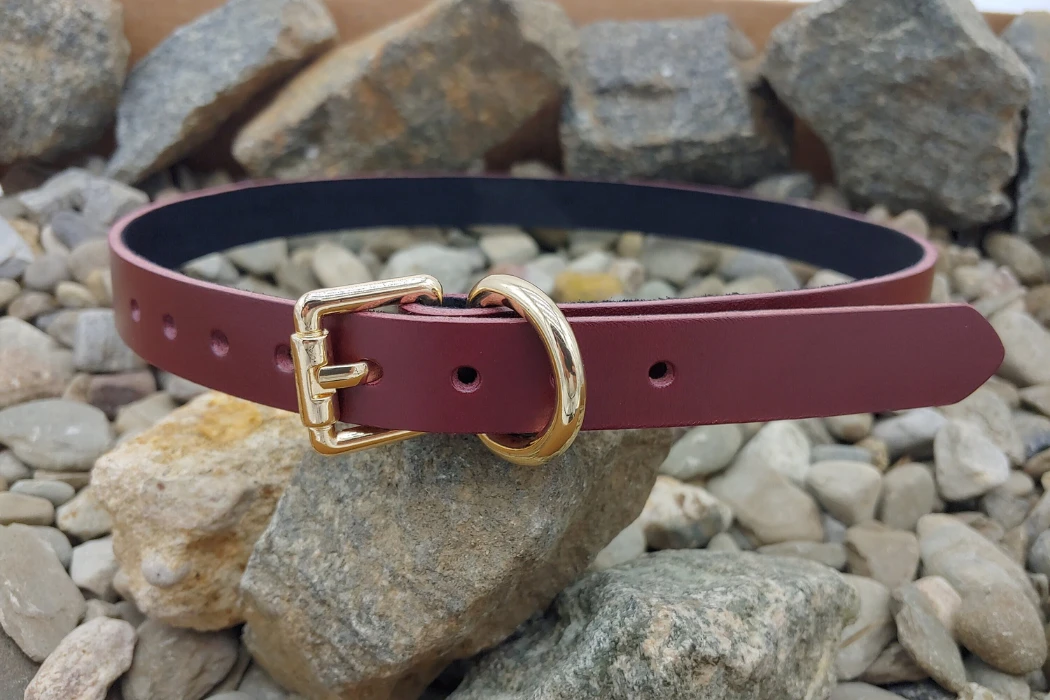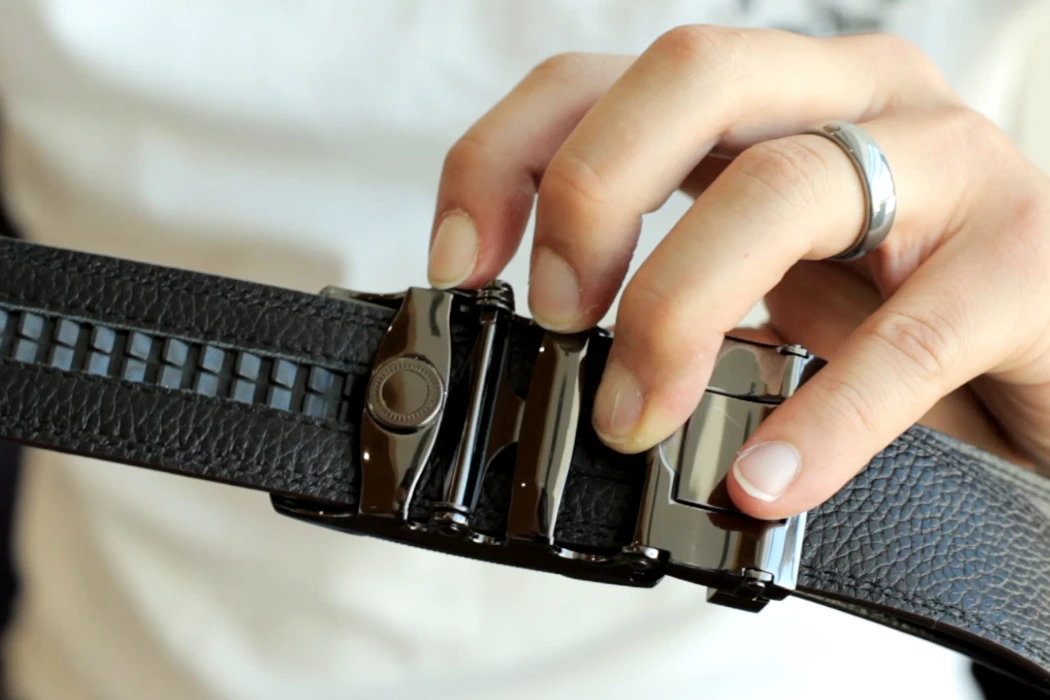
A stretch belt can accommodate movement through an elastic material or an elastic section in its construction. It can suit a casual or sports-inspired fashion collection, but the word “stretch” does not establish how firmly the belt holds, how far it extends or how well it returns to its original length.
For product development, define the desired adjustment and feel first. Then compare the complete strap, buckle and end construction. A comfortable swatch and a successful finished belt are different approvals.
Distinguish elasticity from adjustable fastening
Elasticity is the material’s response to a pull. Adjustment changes the belt’s effective length through its closure or another mechanism. A belt can be adjustable without being elastic, and a braided design is not automatically a stretch construction.
| Construction | How fit can change | What to verify |
|---|---|---|
| Woven elastic strap | Extension within the strap, with a suitable closure | Tension at the intended extension and recovery after use |
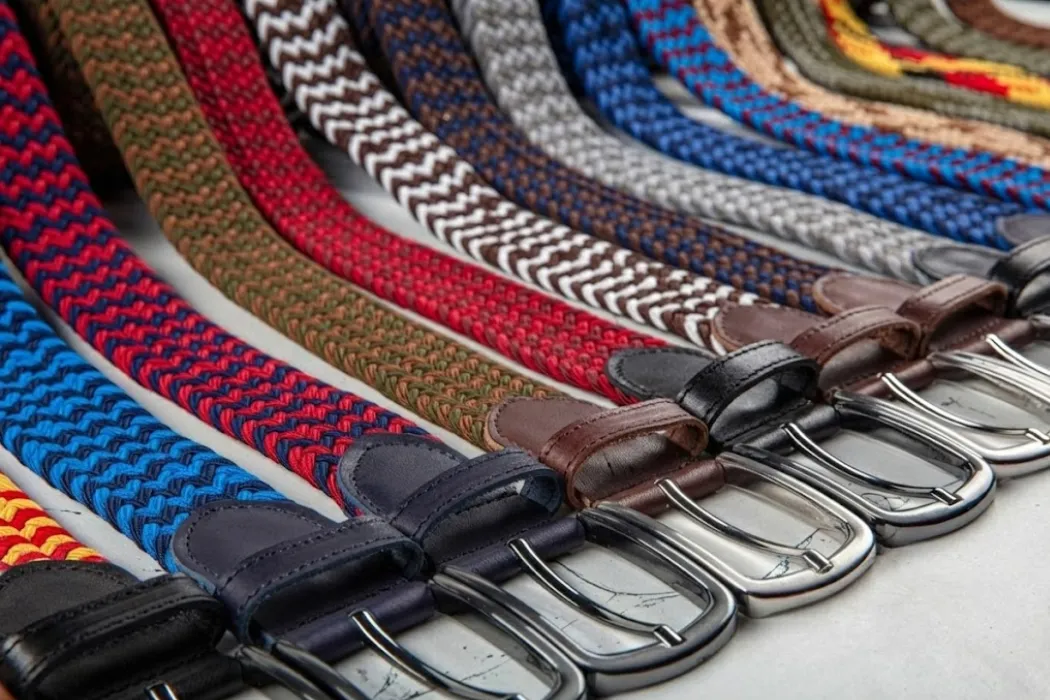
| Elastic braid | Extension and, in some designs, prong placement through the braid | Braid opening, width change, end security and closure compatibility |
| Leather or fabric with an elastic section | Movement concentrated in part of the assembly | Transition between materials and the usable extension range |
| Non-elastic adjustable belt | Length changes through holes, rings, a clamp or a track | Adjustment range and retention without an elastic assumption |
Do not promise “infinite” fit. Every product has a practical length range, hardware limits and an intended amount of extension. Define those boundaries in the size guide.
Specify stretch together with the force required
Two straps can reach the same extended length but feel very different because they require different forces. A very easy stretch may feel soft yet allow movement the wearer does not want. A stiffer elastic may hold more firmly but be less comfortable at the chosen fit.
Ask the material supplier for data relevant to the proposed webbing or braid. Record specimen preparation, starting length, applied force or extension, cycles where relevant, recovery time and the assessment method. ASTM D4964 addresses tension and elongation of elastic fabrics; its scope is a useful starting point for discussing a suitable laboratory assessment, not a universal pass value for every belt.
Agree how performance will be judged after the intended conditioning and use sequence. Avoid converting a laboratory cycle count into a promised number of years without evidence connecting those conditions to actual use.
Check where the strap meets the hardware
The buckle attachment and tip turn a textile length into a usable accessory. Specify whether ends are folded, stitched, capped or joined to a leather or PU component. Review the layers, stitch placement, edge treatment and how the end passes through the keeper.
For a prong-through-braid design, test the selected prong on the actual braid. It should engage and release as intended without an unacceptable pulled yarn or distorted opening. A closure designed for a punched leather hole may not work well with an open textile structure.
For leather trims, identify the construction rather than requiring one universal thickness. Review the completed joint after movement. A full-grain label alone does not prove attachment strength, and a synthetic trim is not automatically unsuitable.
Evaluate comfort without health or performance promises
Use representative fit samples to compare sitting, standing and ordinary movement. Record strap pressure, buckle position, slippage and whether readjustment is needed. Try the intended trouser loops and waistband rather than assessing the belt in isolation.
A stretch belt should not be sold as improving digestion, circulation, posture or a sports swing based on its material name. The buying task here is garment fit and appearance. Industrial support, load-bearing and protective applications need a separate product design and are outside this fashion-belt scope.
Match the look to the collection
Woven texture can complement a casual range, while a dark or leather-trimmed version can give a quieter appearance. Approve the buckle proportion, strap width, color, edge appearance and visible end length together. There is no universal percentage of offices or occasions in which a particular belt is appropriate.
Compare the sample under the intended clothing layers. A soft strap can still create bulk at a folded attachment or large buckle. For a dress-oriented brief, consider whether a different construction provides the desired line more reliably.
Control care, ageing and repeat orders
Inspect the selected article for permanent length change, uneven edges, color transfer, surface wear and damage at the ends. Investigate a failure rather than attributing every wavy edge to one material or mechanism.
Cleaning instructions should cover the finished product. A washable textile does not make leather tabs, adhesive, printed marks or metal hardware machine-washable. Have the proposed care method checked on representative production samples.
Record the strap supplier reference, composition, width, color and elastic characteristics. If the source changes, repeat the relevant fit and performance approvals instead of assuming a visually similar braid will behave the same way.
What should the sourcing brief include?
- Intended fashion use and appearance references.
- Required size range and the measurement method.
- Preferred elastic or adjustable construction.
- Buckle, keeper and end-tab references.
- Target fit, retention and recovery requirements.
- Logo, packing, care expectations, quantity and destination.
Discuss the design with Hoplok and confirm availability of the particular stretch construction before planning the order. Our belt manufacturing page covers the broader leather and PU program; a different textile or elastic assembly needs its own confirmed specification and commercial terms.
Compare elastic webbing, braided textile and TPU in the flexible belt material guide.