The best leather for a wallet is the article that meets the design’s requirements for thickness, feel, appearance and construction. Full-grain leather can be a suitable choice, but the grade name alone does not establish durability. A slim cardholder, a folded bifold and a zipped wristlet need different material and assembly decisions.
Start with the finished wallet: how many cards it holds, where it folds, how the closure works and what appearance the buyer expects after use. Then select the shell, pocket layers, lining, reinforcement and trims together. A good leather cannot compensate for a poorly fitted zipper or an unsuitable ID window.
This guide helps brands compare leather articles, control bulk, choose decoration and approve a complete sample. It covers ordinary wallets and wristlets using conventional leather or PU materials; material availability and performance should be confirmed for the project.
Which Leather Grades Should Wallet Buyers Compare?
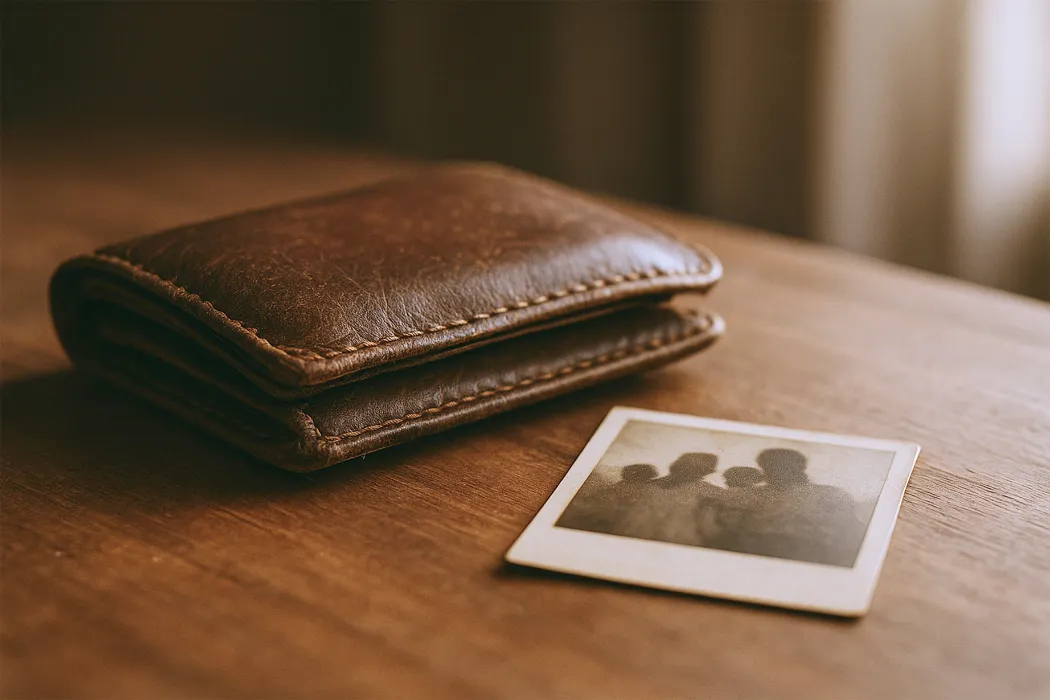
Full-grain leather retains the original grain surface. Corrected-grain leather has had surface correction, while a flesh or middle split does not retain that grain surface. These distinctions help define a material, but they are not a fixed ladder of years of service. Specify the actual article, thickness and finish, then inspect it in the proposed wallet.
Full-grain leather: natural surface with a specified finish
A full-grain article may suit a design that values visible grain variation or changes in appearance with use. Agree which natural marks and colour differences are acceptable. Do not assume that full-grain leather cannot scratch, crack or suffer finish damage, or that every article develops the same patina. The finishing system and use conditions affect how it looks over time.
Corrected-grain leather: controlled appearance
Surface correction and finishing can produce a more uniform look, but neither uniformity nor softness establishes quality by itself. Review the approved texture, gloss, coating, fold behaviour and colour transfer. “Top-grain” alone is not enough to tell the buyer exactly how the surface was treated.
Split, genuine and bonded: keep the descriptions distinct
“Genuine leather” is a broad material description, not a reliable grade specification or proof of a low-quality split. Ask what layer and finish it describes. A split retains the hide’s fibrous structure; bonded or reconstituted sheets combine leather fibres with a binder and are a different construction. An embossed surface does not, by itself, identify either material.
| Material description | Information to request | Wallet approval focus |
|---|---|---|
| Full-grain | Species, article, finish and thickness range | Natural variation, folding and intended appearance changes |
| Corrected grain | Surface treatment, finish and thickness | Finish behaviour at folds and pocket edges |
| Split leather | Layer, coating or nap and reinforcement | Suitability of the complete layered construction |
| Bonded/reconstituted material | Declared composition, binder and backing | Accurate description and finished-sample performance |
| “Genuine leather” only | A more specific substrate and finish declaration | Do not approve from this label alone |
Use the LWG definitions to align terminology with the supplier. Neither appearance nor smell is a dependable substitute for material records and, when necessary, qualified material identification.
How Should Buyers Compare Calfskin, Goatskin and Cowhide?
Species and age descriptions can help narrow a material search, but they do not fix the thickness, softness or strength of a finished leather article. Request actual swatches and samples rather than selecting from a species ranking. Confirm availability and the declared material with the supplier.
Calfskin
Calfskin is commonly selected for a fine-grained appearance in small leather goods. The article may be finished in different ways, and calfskin is not automatically full-grain. Review the surface, hand feel, thickness and scratch visibility on the proposed finish, then test the construction at folds and pocket openings.
Goatskin
Goatskin can provide a distinctive surface for wallets, but its grain appearance and flexibility depend on the article and finish. Do not assume a universal water-resistance, abrasion advantage or a particular oil content. Compare the swatch with the required thickness and the actual pocket construction.
Cowhide and bullhide
Cowhide is widely used as a commercial cattle-leather description; bullhide identifies hide from a male animal. That description does not establish the thickness of the finished wallet leather. Splitting, skiving and finishing can change the delivered article, so specify the thickness and desired feel directly instead of using a heavy hide weight as a wallet requirement.
Patterned leather within the project scope
For a scale-pattern or other decorative appearance, consider an embossed conventional leather or a specified PU material. Identify the base material accurately and approve the pattern, colour and fold behaviour. Hoplok’s wallet scope does not include real exotic skins such as crocodile, python, lizard or ostrich. A decorative pattern should not be marketed as the animal skin it imitates.
A species comparison is only useful when the articles have comparable thickness, finish and intended construction. Avoid unsupported claims such as a material being ten times stronger than cowhide, or a fixed price multiple applying to every order.
How Does Construction Affect Wallet Durability?
The shell, stitching, lining, folds and closures work together. Review the complete wallet after the intended contents are loaded, because an empty sample can conceal excessive bulk, tight card slots or stress around a zipper. Material testing and product trials address different questions.
Stitching and seam design
Machine lockstitch and hand saddle stitching use different constructions. Neither method guarantees an indestructible seam. Thread, stitch placement, tension, hole preparation, seam allowance and the leather around the stitch all affect the result. Agree the visible stitch quality and inspect seams after the proposed use trial, especially at pocket corners and closure attachments.
Lining and reinforcement
An unlined design may be appropriate for a particular wallet. A lining can change friction, appearance and reinforcement, but adding one does not automatically reduce bulk. Review the total thickness and adhesive coverage, then check pocket fit, colour transfer and separation. Specify lining composition and reinforcement placement in the bill of materials.
ID windows
Select the actual transparent material by its flexibility, clarity, thickness and resistance to the intended conditions. PVC and TPU articles vary, so do not assign all cracking to PVC or promise that every TPU window survives cold flexing. Inspect the window, its attachment and the opening with the intended card inserted.
Zippers and coin compartments
Specify the zipper size, construction, puller and attachment. A brand name does not replace the correct zipper selection or sample evaluation. Check slider operation, access, seam alignment and the interaction with the wallet’s contents. Agree any cycle test and its acceptance criteria rather than assigning a universal failure rate to branded or unbranded components.
| Area | Check on the assembled sample |
|---|---|
| Card pockets | Card fit, retention, access and edge wear |
| Main fold | Bulk, creasing, coating behaviour and seam stress |
| Zipper compartment | Smooth operation, access and clearance from contents |
| ID window | Visibility, flexing and secure attachment |
| Wrist strap | Attachment, comfort and loaded handling |
| Layered edges | Separation, finish consistency and abrasion |
Match tanning and finishing to the required feel
Vegetable, chrome and combination tanning can lead to different articles, but no tanning label alone makes every wallet rigid, soft or water-resistant. Specify the hand feel and construction, then review the sample. A zipped wallet can use different leather types when the pattern, thickness and finish work together. The Horween glossary explains tanning and finishing terms that may appear in material discussions.
How Can Buyers Specify Colour, Prints and Embossed Designs?
Colour and decoration should be approved on the same leather or PU article intended for production. A print that works on one finish may behave differently on another, especially at a fold or edge. Give the supplier the artwork, placement, colour reference and intended use, then agree which processes are suitable and available.
Solid colours
Confirm the approved surface colour, cross-section appearance where relevant, finish and acceptable batch variation. Through-dyeing and surface pigmentation serve different purposes; neither is automatically the only correct method. Dye penetration does not guarantee that a deep scratch will be invisible or that the surface colour will never transfer.
Printed patterns
Ask for a decorated swatch and a complete wallet sample. Review registration, fine detail, colour, adhesion and flexing on the actual substrate. UV printing or another process should be specified only after the supplier confirms suitability; curing does not guarantee that an image will never crack or peel.
Embossed or debossed details
Agree the artwork, dimensions, location and visible depth with the material sample. The appearance depends on the leather, finish, tooling and processing conditions. Avoid a universal pressure or temperature prescription. Inspect folds and edges near the decoration and confirm that the result matches the approved reference.
Licensed and brand artwork
Provide artwork that the buyer is entitled to use, with any required approval process included in the schedule. A themed design is not evidence of poor manufacturing, and a character or sports mark should not be used to imply an unverified customer relationship. State the material and decoration accurately in product descriptions.
- Approve colour and decoration on the production article, not only a digital mock-up.
- Check dry and wet rubbing where appropriate, including transfer onto adjacent materials.
- Review decoration at the most demanding fold or seam location.
- Reapprove after changes in substrate, finish, ink or artwork placement.
Hoplok can review the desired colour and decoration with the wallet brief. Confirm the available process, material sourcing and sample result before describing it as an in-house capability or promising a particular performance level.
How Should Materials Change for a Slim Wallet or Wristlet?
Slimness depends on the whole construction: shell thickness, pocket layers, folded edges, reinforcement, adhesive and intended contents. There is no universal leather thickness that suits every cardholder, bifold or wristlet. Ask for a component thickness schedule and inspect the assembled prototype.
Slim cardholders and bifolds
Reduce unnecessary overlapping layers and review pocket geometry before selecting an unusually thin leather. Skiving can control local bulk, but the remaining material must still suit the seam and fold. Compare the proposed layer stack with the intended number and type of cards, then assess access and retention.
Wristlets and phone compartments
Confirm the actual phone dimensions, including any case, and the intended additional contents. Review zipper clearance, opening size, strap attachment and the loaded shape. Softness can improve handling in one design while a different design needs more structure; the approved sample should establish the balance.
Thickness measurements
Use consistent units and specify where thickness is measured. Leather weight in ounces is sometimes used as an approximate thickness convention, but the purchase order should state the required range and measurement method. The Tandy conversion chart is useful for interpreting units; its example applications are not mandatory wallet specifications.
Functional linings
If RFID attenuation is requested, confirm the intended frequency, card type and test arrangement and evaluate the loaded, closed wallet. Do not infer universal protection from a lining name or a metal-looking layer. Any optional functional material must be confirmed for the project and described according to the evidence obtained.
Keep the focus on the product being sourced. A rigid metal or carbon-fibre card case has different construction requirements from a leather wallet and does not establish a capability or performance promise for a Hoplok leather-goods order.
How Should Buyers Evaluate PU and Plant-Based Alternatives?
PU materials and other non-animal alternatives vary in backing, coating and construction. A wallet made with them is not automatically disposable, and a plant-based content claim does not establish superior durability. Compare the exact material articles under the same intended use and sample plan.
Specify the complete composition
Ask for the coating, backing and relevant content declarations. If a plant-derived ingredient is claimed, determine which layer contains it and the basis of the stated percentage. A partly bio-based composite may also contain synthetic materials. “Vegan” should be assessed across the relevant components, including adhesives and trims, rather than inferred from the shell alone.
Review wear and storage behaviour
Request suitable flexing, rubbing and ageing evidence for the material and the intended conditions. These tests do not create a fixed number of years of service. Inspect the complete wallet for layer separation, edge wear and fold behaviour, and agree storage and care guidance for the actual article.
Compare commercial value against the specification
A cost-per-wear estimate depends on assumed retail price and service life. Without credible product-specific evidence, it is not a useful basis for comparing leather with PU. Compare quotations, material usage, assembly requirements and the agreed quality criteria instead.
| Option | Material information | Sample focus |
|---|---|---|
| Conventional leather | Species, layer, finish and thickness | Folds, colour transfer, edges and intended appearance |
| PU material | Coating and backing details | Flexing, surface wear, layer integrity and storage |
| Plant-content composite | Declared components and basis of any content claim | The actual article’s performance, not its ingredient name |
| Any non-animal claim | Relevant full-product component declarations | Accurate label and marketing wording |
Hoplok combines leather sourcing and finishing with a separate supply chain for PU materials. ProPelli is its LWG Gold-rated leather finishing facility and receives externally sourced crust; its rating does not certify PU or plant-content alternatives. Confirm availability of any specialty material with the project quotation.
Frequently Asked Questions
1. How can buyers confirm full-grain leather?
Request the material article and a declaration of the leather layer and surface treatment. Natural grain variation can inform inspection, but appearance and smell alone cannot reliably identify grade. Use qualified material identification where the evidence is insufficient.
2. Is a bifold always more durable than a trifold?
No. The number of folds affects the design, but pattern, thickness, seams and contents determine how the wallet behaves. Evaluate the actual loaded constructions under the same intended use rather than ranking them solely by format.
3. Why can an ID window crack?
Material formulation, thickness, temperature, repeated flexing and attachment design may contribute. Inspect the failed component and conditions before assigning the cause. Approve the actual window material and its assembled construction.
4. Is calfskin suitable for everyday wallets?
It can be, when the selected article and construction meet the required appearance and performance criteria. Calfskin does not automatically mean full-grain or guarantee resistance to scratches. Review the finish and complete sample.
5. Does bullhide require a thick wallet?
No. The finished article and component thickness determine bulk. Specify the desired hand feel, thickness and construction; the animal description alone does not establish them.
6. What leather is best around a zipper compartment?
Choose an article whose flexibility, thickness and finish work with the zipper and pattern. Tanning type alone does not decide suitability. Inspect access, smooth operation and seam behaviour with the intended contents in place.
Approve the Wallet as a Complete Product
Select the leather or PU article, layer stack, lining, trims and decoration together. Then compare a complete sample with the intended contents and the agreed appearance and performance requirements. This gives the buyer a clearer basis for production approval than a grade label or a promised lifespan.
For a custom wallet enquiry, send Hoplok the format, dimensions, card and phone capacity, material preference, colour, artwork, quantity and destination. Confirm the proposed manufacturing site, materials, optional functions and testing requirements in the quotation. Hoplok does not offer real exotic-skin wallet production.
Minimum orders are 300 genuine-leather wallets or 1,000 PU wallets. Confirm wallet sample timing for the design; bulk production generally takes 60–90 days, with approvals and shipping planned separately. ProPelli’s current LWG Gold status applies to its leather finishing facility scope, not every finished wallet or all Hoplok factories.