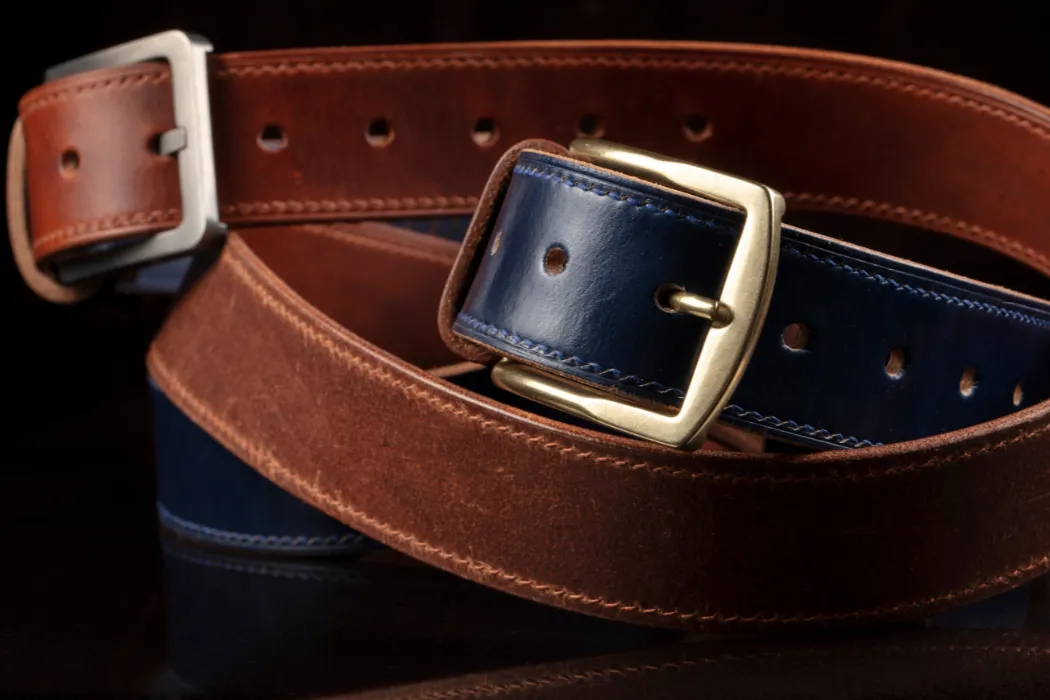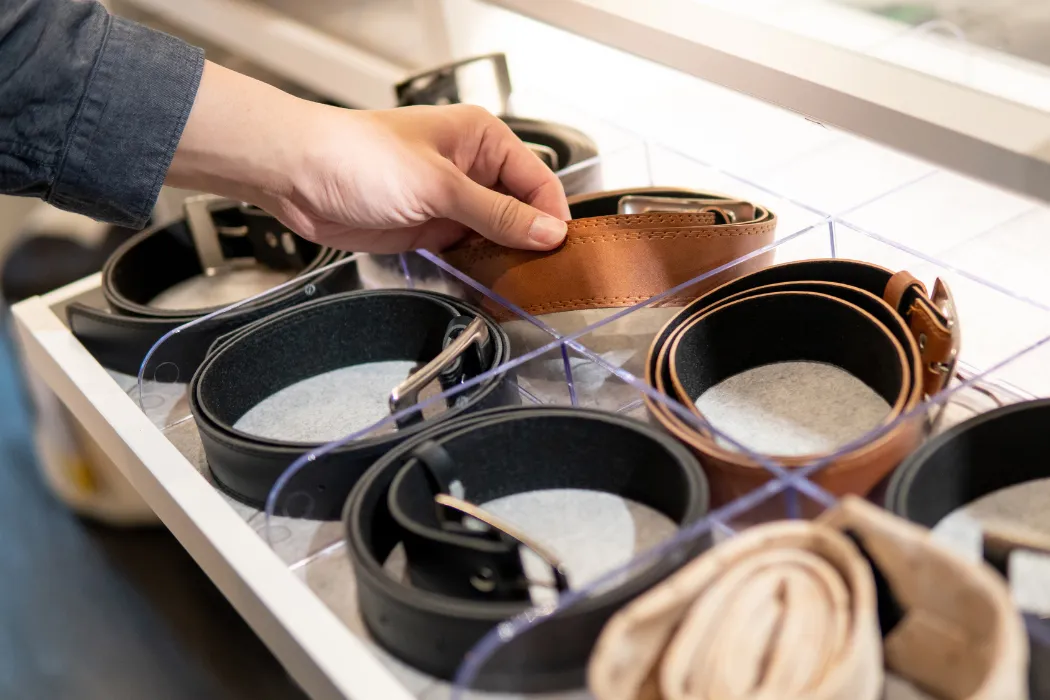
The right leather weight for making a wallet is typically between 2-4 oz (0.8-1.6 mm). However, this is not a single number. The best manufacturing practice is to use a durable 3-4 oz (1.2-1.6 mm) leather for the wallet’s exterior, and a much thinner 2-3 oz (0.8-1.2 mm) leather for the interior pockets to reduce bulk and prevent stiffness.
Why do some “full-grain leather” wallets feel like a “pocket brick”—a stiff, bulky burden—while others feel slim, supple, and almost invisible in your pocket? The answer isn’t the grade of the leather, but its weight. This (the technical term for thickness) is arguably the most critical and most overlooked decision in wallet design. Using a leather that is too thick creates a clumsy, unusable product. Using one that is too thin feels cheap and will fail at stress points.
This guide will explore the manufacturing science of leather weights. We will translate “ounces” to “millimeters,” show you how to match the right weight to the right wallet design (a bifold vs. a minimalist cardholder), and explain the professional “skiving” techniques used to build a wallet that is both slim and truly durable.
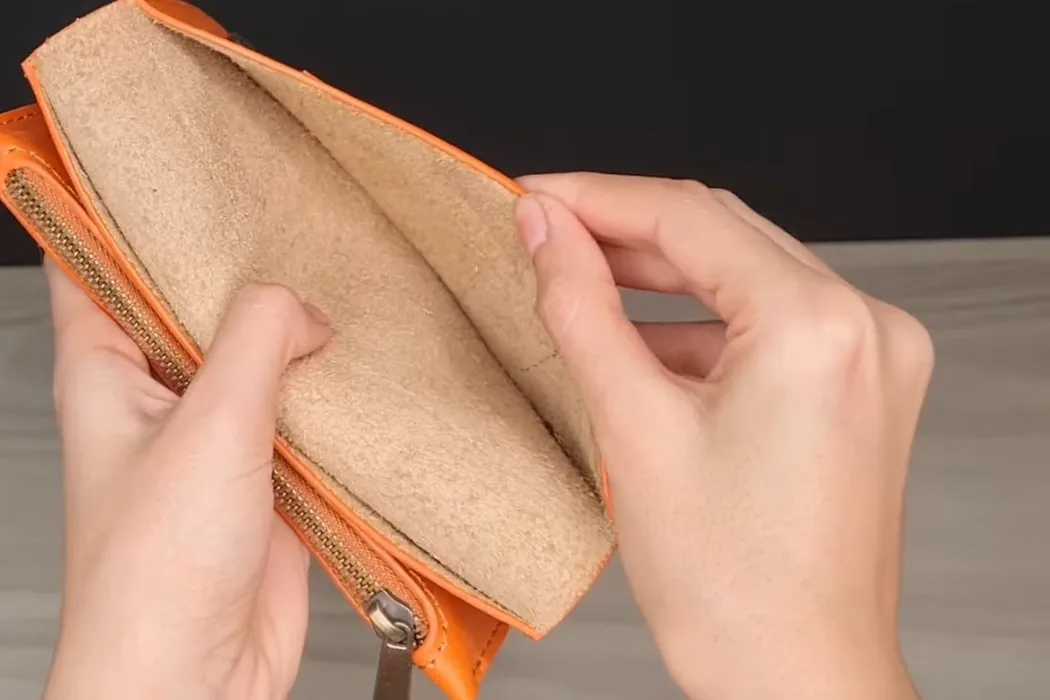
What Do “Leather Weight” and “Ounces” Actually Mean?
“Leather weight” is the industry term for thickness, not how heavy the wallet is (though they are related). In the US, this thickness is measured in “ounces” (oz). This can be confusing, as it is not a standard unit of weight. In this context, 1 ounce (oz) is equal to 1/64th of an inch, or approximately 0.4 mm. For a wallet, a single ounce (just 0.4mm) of difference is massive and can determine the success or failure of a design.
The “Ounce” vs. Millimeter Conversion (A Simple Chart)
Understanding this conversion is the first step for any brand designer or aspiring crafter. Here is a simple reference chart that translates these measurements into practical, real-world applications.
| Ounces (oz) | Millimeters (mm) | Inches (approx.) | Common Manufacturing Use |
|---|---|---|---|
| 1-2 oz | 0.4 – 0.8 mm | 1/64″ – 1/32″ | Wallet Interiors, Thin Linings, Small Goods |
| 2-3 oz | 0.8 – 1.2 mm | 1/32″ – 3/64″ | Wallet Pockets, Slim Cardholders, Linings |
| 3-4 oz | 1.2 – 1.6 mm | 3/64″ – 1/16″ | Wallet Exteriors, Bifolds, Journal Covers |
| 4-5 oz | 1.6 – 2.0 mm | 1/16″ – 5/64″ | Durable Bags, Totes, Laptop Cases |
| 8-9 oz | 3.2 – 3.6 mm | 1/8″ – 9/64″ | Heavy-Duty Belts, Tool Straps, Saddlery |
Why Is It Measured in Ounces? (A Tanner’s Perspective)
The “ounce” measurement is a holdover from the old days of tanning. Tanneries would use a simple gauge to measure the hide’s thickness. This gauge was often based on the weight of a standard-sized coin, and the name simply stuck. While the rest of the world (and most modern factories, including ours) primarily uses precise millimeter measurements, the “ounce” system is still deeply embedded in the American craft and heritage market. Knowing how to speak both “languages” is essential for a brand.
How Thickness is Measured (Using a Gauge)
Leather is a natural product; a single hide is never perfectly uniform. The neck area will be thicker, and the belly area will be thinner.
- In a craft setting: A hobbyist uses a handheld leather thickness gauge. They will measure multiple spots on their hide to find a consistent area to cut from.
- In a factory setting: This process is industrialized. A hide is first run through a “splitting machine.” This massive machine uses a band-knife blade to split the hide horizontally into two or more layers, guaranteeing a uniform thickness (e.g., 3.5 oz) across the entire hide with a tolerance of less than +/- 0.1 mm.
This precision is non-negotiable. It’s the only way to ensure that the 10,000th wallet produced feels identical to the first prototype. This is the foundation of quality control in leather goods manufacturing.
Why Is Choosing the Right Weight the Mot Critical Design Decision?
Choosing the right weight is critical because it directly dictates three key attributes: durability (thicker is stronger), flexibility (thinner is more pliable), and bulk (the total “stacked” thickness of all layers). Using the wrong weight is the number one reason wallets feel cheap, break prematurely, or become unusable “pocket bricks.”
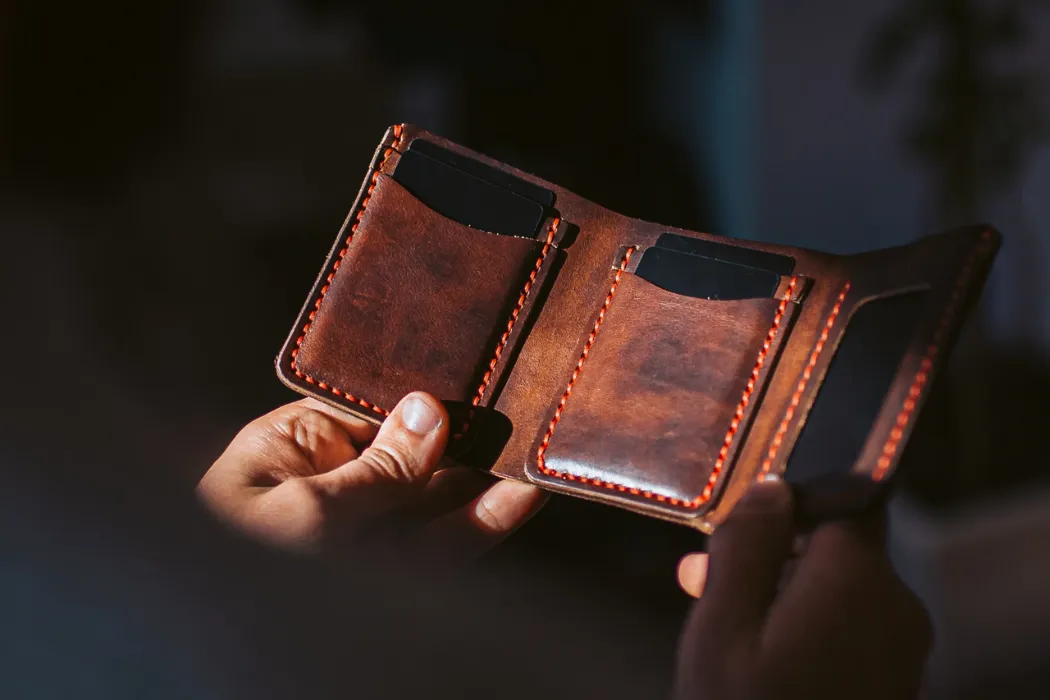
The “Pocket Brick” Problem: What Happens When Leather is Too Thick
This is a common mistake for beginner designers who associate “thick” with “quality.” They might build a bifold wallet where every single piece—the exterior shell and all interior pockets—is made from a durable 4 oz (1.6 mm) leather.
The result is a functional disaster.
- Extreme Bulk: When you fold this wallet, you are bending two 4 oz layers (the exterior and the main interior panel), which is already 3.2 mm thick.
- Card Slot Failure: The wallet is too stiff to function. The card slots, also made of 4 oz leather, will be so rigid that inserting or removing a credit card becomes a two-handed struggle.
- Unusable Size: The final product will be over an inch thick when empty, making it impossible to carry comfortably in a pocket. This is a “pocket brick.”
The “Flimsy” Problem: What Happens When Leather is Too Thin
The opposite problem is just as bad. To create an “ultra-slim” wallet, a brand might use 2 oz (0.8 mm) leather for everything.
The result is a wallet that feels cheap and fails quickly.
- Lack of Structure: The 2 oz exterior will feel flimsy and thin, lacking the substantial, high-quality “hand-feel” customers expect.
- Card Slot Stretching: The 2 oz interior card slots will be too thin and flexible. After just a few months, they will stretch out, losing their grip. This causes the #1 complaint of cheap, slim wallets: cards constantly falling out.
- Poor Durability: The thin outer shell will wear through much faster at the corners and fold points.
The “Stacking” Effect: How 4 Pockets Create 8 Layers of Leather
This is the most important manufacturing concept to understand. The final thickness of a wallet is not the thickness of one layer, but the *sum* of all layers at its thickest point.
Consider a standard card slot (a “T-Slot”):
- It has a main panel.
- It has a second panel stitched on top.
- Each of those panels is folded at the edge to create a finished look.
A single card slot can involve 4 layers of leather. A bifold with two slots on each side, when folded, can have 8 to 10 layers of material (plus the exterior) all stacking up at the fold. If you use 2.5 oz (1.0 mm) leather for your pockets, a stack of 8 layers is already 8 mm thick—before you’ve even added cards or the outer shell! This is why professional manufacturers must use a thinner leather (like 2 oz) for interiors and use special techniques (like skiving) to manage this “stacking” effect.
Engineering the “Hand-Feel” (A Manufacturer’s Insight)
The perfect wallet is an engineering solution. It balances durability and bulk by using a combination of weights: a thick, durable exterior (3-4 oz) and a thin, functional interior (2-3 oz).
Manufacturer’s Insight (Hoplok): Our New York and California-based design teams and our 1,500+ monthly prototypes are focused on solving this exact problem. A new bifold design may go through 5-6 iterations, testing a 2.5 oz interior vs. a 2.0 oz interior, just to find the perfect “hand-feel” and the precise tension for a card to slide in and out smoothly. This prototyping is the only way to move from a “pocket brick” to a luxury-grade product.
What is the Best Leather Weight for a Bifold or Trifold Wallet?
For a classic bifold wallet, the best balance is a 3-3.5 oz (1.2-1.4 mm) leather for the exterior shell, combined with a thinner 2-2.5 oz (0.8-1.0 mm) leather for the interior pockets. For a trifold wallet, which has more layers, using an even lighter interior (around 2.0 oz) is critical to prevent it from becoming a “pocket brick.”
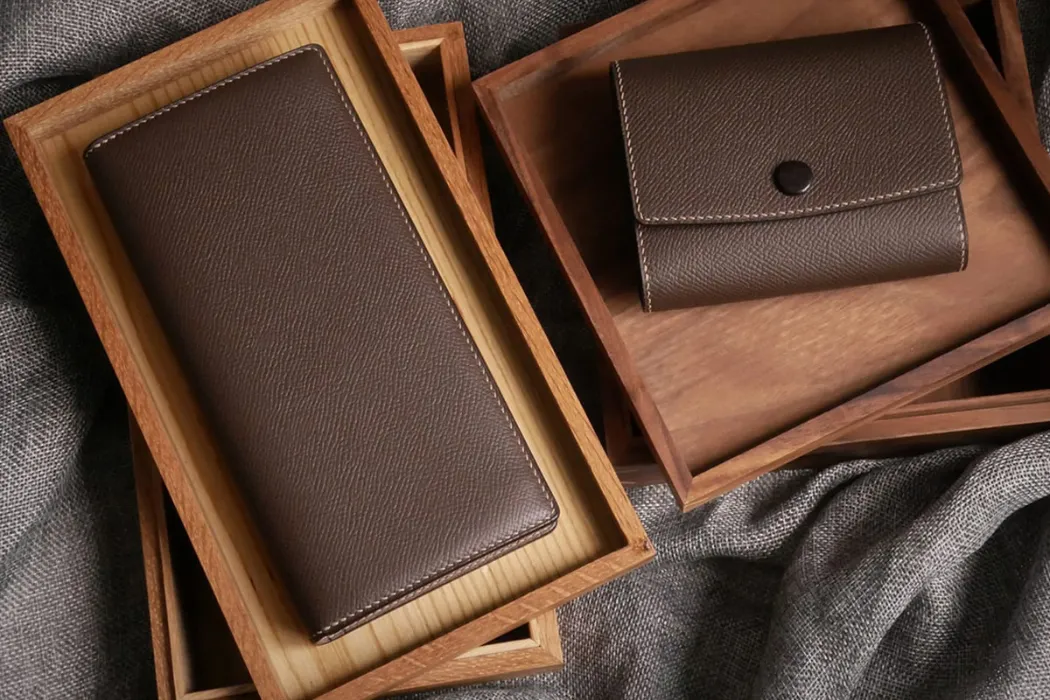
Standard Bifold: Balancing Durability and Bulk
The bifold is the most common wallet style, and its engineering is a perfect case study in combining weights. The ideal, high-quality bifold is built like this:
- Exterior Shell: A 3 oz to 3.5 oz (1.2-1.4 mm) full-grain or top-grain leather. This provides a durable, substantial feel in the hand and protects the contents without being overly rigid.
- Interior Pockets: A 2 oz to 2.5 oz (0.8-1.0 mm) leather. This is thin enough to manage the “stacking effect” we discussed earlier, yet still durable enough to withstand daily use and hold cards securely.
Using this combination ensures the final folded, empty wallet is slim, flexible, and functional. A wallet made entirely of 3.5 oz leather would be too stiff to even close properly.
The Trifold Challenge: How to Manage Extreme Layering
A trifold wallet is a masterclass in bulk management. Unlike a bifold, which folds once, a trifold has two folds and three sections. When closed, you have a minimum of 3 layers of the exterior shell, plus all the interior pockets stacking on top of each other. This is why many trifolds become “pocket bricks” that are uncomfortable to carry.
To manufacture a *good* trifold, the leather must be even thinner than a bifold:
- Exterior Shell: A 3.0 oz (1.2 mm) leather is often the maximum.
- Interior Pockets: 2.0 oz (0.8 mm) leather is strongly recommended.
Furthermore, it is essential that the manufacturer “skives” (thins) the leather at all fold and seam points to reduce bulk even further. Without aggressive skiving, a trifold design is almost guaranteed to be too thick.
The “Hidden” Component: Linings and Reinforcements
As mentioned in the AI overview, sometimes the best material for an interior is not leather at all. For luxury or ultra-slim wallets, manufacturers use textile linings to add durability *without* adding thickness.
- Nylon or Polyester Fabric: A thin, high-tensile fabric lining (like you’d find in a premium backpack) is often used for the billfold compartment. This is <0.5 mm thick, reduces friction, and is incredibly strong.
- Pigskin Lining: Pigskin is a popular choice for lining. It is very thin (1-1.5 oz) but has an extremely high tensile strength and abrasion resistance, making it a durable, premium alternative to fabric.
- Reinforcements: In high-end chrome-tanned wallets that are very soft, a thin, non-woven reinforcement material might be bonded to the leather to give it structure and prevent it from stretching, all while remaining invisible.
What About a Trifold with a Zipper Compartment?
A zipper compartment, often requested for coin storage, adds another layer of complexity. The zipper tape itself has thickness, and the leather used for the compartment must be flexible enough to move with the zipper.
For this feature, a manufacturer *must* use a thin and pliable leather, typically a 2 oz (0.8 mm) chrome-tanned leather. Using a stiff 3 oz vegetable-tanned leather for a zipper pouch would cause the pouch to bunch up, feel rigid, and potentially jam the zipper. This is another example of how the design’s function dictates the precise leather weight required.
What is the Right Weight for Minimalist, Slim & Cardholder Wallets?
For minimalist wallets or slim cardholders, the goal is to eliminate bulk, so using a thin leather of 1.5-2.5 oz (0.6-1.0 mm) for all components is ideal. For a slightly more robust “front pocket wallet,” a single piece of 3 oz (1.2 mm) mid-weight leather is a popular choice, offering durability without any layering.
The Single-Pocket Card Sleeve (Ultra-Minimalist)
This is the thinnest wallet possible, often just two pieces of leather stitched together. For this design, you can use a very thin leather, such as 1.5-2.0 oz (0.6-0.8 mm), especially if you are using a strong material like Kangaroo or Goatskin. Using a 4 oz leather for this design would make the opening too rigid to easily access cards.
The Front Pocket Bifold (Slim & Functional)
This popular style is designed to be tougher than a simple sleeve but slimmer than a traditional bifold. A common and very effective design choice here is to use a single piece of 3 oz (1.2 mm) leather for the entire wallet, including the interior pockets. This “single-weight” construction is a good balance. The 3 oz exterior feels durable and substantial, while the 3 oz interior pockets are *just* thin enough to be functional, though they will be stiffer than the 2 oz pockets of a luxury wallet.
The Money Clip Wallet (Durable & Rigid)
This design presents a unique challenge. A money clip, whether it’s a spring-loaded bar or a simple leather flap, must be rigid and have strong clamping force. This is one case where a thicker leather is required.
It’s common for manufacturers to use a heavier 4-5 oz (1.6-2.0 mm) leather for the main body to provide structure. For rigid, book-like money clips, some makers even use two layers of 4 oz leather laminated together, or a single piece of 8-9 oz (3.2-3.6 mm) vegetable-tanned leather—the same thickness used for a heavy-duty belt.
Wallet Style vs. Recommended Leather Weights
Here is a quick-reference table for brands and designers to help guide the prototyping process.
| Wallet Style | Rec. Exterior (oz/mm) | Rec. Interior (oz/mm) | Key Consideration |
|---|---|---|---|
| Bifold (Classic) | 3.0 – 3.5 oz (1.2-1.4 mm) | 2.0 – 2.5 oz (0.8-1.0 mm) | Balance durability with bulk. |
| Trifold | 3.0 oz (1.2 mm) | 2.0 oz (0.8 mm) | Must use thin leather to manage extreme layering. |
| Minimalist Cardholder | 1.5 – 2.5 oz (0.6-1.0 mm) | 1.5 – 2.5 oz (0.6-1.0 mm) | Thinness is the primary goal. |
| Front Pocket Wallet | 3.0 oz (1.2 mm) | 3.0 oz (1.2 mm) | A good all-around single-weight choice. |
| Money Clip (Rigid) | 4.0 – 8.0 oz (1.6-3.2 mm) | 2.0 oz (0.8 mm) | Exterior needs to be stiff and strong. |
How Do Manufacturers Manage Thickness? (The Skiving Technique)
Professional manufacturers use a technique called “skiving” to manage thickness and create a slim, high-end product. This is the process of precisely thinning the leather, but only in specific areas where it will be folded or stitched. It allows a durable 4 oz exterior to fold over a 2 oz interior and create a clean, thin seam, not a thick, clumsy bulge.
What is Skiving? (The Secret to Thin Edges)
Skiving is the single biggest difference between a “craft” wallet and a truly professional, luxury-grade product. A cheap wallet simply stitches two thick pieces of leather together, creating a bulky edge that is 4-5 mm thick. A high-end wallet is “skived-to-zero” at the edge, where both pieces are thinned down before being folded and stitched, resulting in a sleek, elegant edge that is only 1.5-2.0 mm thick.
Hand Skiving (Craft) vs. Machine Skiving (Manufacturing)
This process can be done in two ways, both of which require immense skill:
- Hand Skiving: An artisan uses an extremely sharp, flat knife (a “skiving knife”) to manually shave off layers of the leather. This is time-consuming (30+ minutes per wallet) and requires years of practice to achieve a consistent thickness.
- Machine Skiving: In a factory, this is done with a “Bell Skiving Machine.” This machine has a high-speed, bell-shaped blade that shaves the leather as it’s fed through. A skilled operator can thin the edge of a wallet panel from 1.4 mm down to 0.3 mm with +/- 0.1 mm of accuracy, and they can do it in seconds.
Where to Skive: The T-Slot and the Fold
Skiving is not just for the outer edges. It is critically important for the wallet’s interior function. The two most important places to skive are:
- The Main Fold: The exterior shell is thinned down only on the center line where it will be folded, allowing the wallet to close flat without a massive, spring-loaded bulge.
- The “T-Slots”: This is the most complex part. The top edge of every card pocket (the “T-Slot”) is folded and stitched. To prevent this tiny fold from creating a thick “speed bump” that blocks the card, the edge must be skived down to almost paper-thinness (0.3-0.5 mm) before being folded and stitched.
If your card slots are hard to use or the wallet doesn’t close flat, it’s a sign that the manufacturer skipped this critical, high-skill skiving step to save costs.
Manufacturer’s Insight (Hoplok): Precision skiving is a hallmark of our BSCI-certified manufacturing. An un-skived, low-quality wallet can have an edge thickness of 6-8 mm. Our automated bell skivers allow us to take a 1.4 mm exterior and a 1.0 mm interior and create a turned-edge seam that is only 2.0-2.4 mm thick—a 70% reduction in bulk. This creates the slim, elegant, and highly durable profile that luxury brands demand.
Which Leather Types Are Best for Different Weights?
The leather’s type must be matched to its intended weight. For a thick and durable 4 oz exterior, Full-Grain Cowhide or Bullhide is best. For a thin but strong 2 oz interior, Kangaroo or Goatskin is superior, as they are stronger than cowhide at the same thickness. Calfskin is the premium choice for a soft, luxurious 3 oz wallet.
Thick & Durable (3.5oz+): Cowhide, Bullhide, and Bridle
When the design calls for a thick, rigid, and durable exterior (like a money clip or a rugged bifold), you need a leather with a dense fiber structure.
- Cowhide/Bullhide: As discussed, these are the industry standards for durable goods. A 4 oz cut of full-grain cowhide will be strong and substantial.
- Bridle Leather: This is a veg-tan cowhide that is “hot-stuffed” with waxes and tallows. It is extremely dense, weather-resistant, and stiff, making it a perfect choice for a 4-5 oz rigid wallet exterior.
Thin & Strong (1.5-3oz): Kangaroo and Goatskin
This is the key to engineering a slim wallet. You cannot just use a “thin” piece of cowhide, as it may be a weak “split.” You must use a leather that is naturally thin and strong.
- Kangaroo: This is the ultimate “thin & strong” material. Its fibers are interlocked in a different pattern than cowhide, making it up to 10x stronger at the same weight. This allows a manufacturer to use a 1.5 oz (0.6 mm) piece that has the tear strength of a 3 oz cowhide.
- Goatskin: Naturally thin (2-3 oz) and lightweight, goatskin has a high abrasion resistance due to its natural lanolin content and pebbled texture. It’s an excellent choice for durable wallet interiors.
Soft & Luxurious (2.5-3.5oz): Calfskin and Top-Grain
For luxury and designer wallets, the “hand-feel” is more important than rugged durability. The goal is a soft, smooth, and flawless surface.
- Calfskin: Sourced from young animals, this leather has a very fine, tight grain, making it incredibly soft and smooth. It is the material of choice for high-end luxury bifolds, typically used at a 2.5-3.5 oz weight.
- Chrome-Tanned Top-Grain: This is the workhorse of the luxury goods industry. It is split to a uniform 3 oz, corrected for a perfect grain, and finished to be soft and pliable.
Leather Type vs. Ideal Weight Range
This final table connects the material type to its ideal, “best-use” weight for a wallet project.
| Leather Type | Natural Strength | Ideal Weight (oz/mm) | Best For (Wallet Type) |
|---|---|---|---|
| Cowhide (Veg-Tan) | High / Firm | 3.0 – 5.0 oz (1.2-2.0 mm) | Durable Bifold Exterior, Money Clip |
| Cowhide (Chrome-Tan) | High / Soft | 2.5 – 3.5 oz (1.0-1.4 mm) | Soft Bifold Exterior, Zipper Wallet |
| Calfskin | Medium / Very Soft | 2.5 – 3.0 oz (1.0-1.2 mm) | Luxury & Dress Bifolds |
| Goatskin | Medium-High / Thin | 2.0 – 3.0 oz (0.8-1.2 mm) | Durable Interiors, Linings, Cardholders |
| Kangaroo | Extremely High / Thin | 1.5 – 2.5 oz (0.6-1.0 mm) | Ultra-Slim Wallets, Minimalist Interiors |
| Exotic (Alligator, etc.) | Varies / Delicate | 2.0 – 3.0 oz (0.8-1.2 mm) | Luxury Exteriors (must be lined) |
FAQ Section (People Also Ask)
1. What’s the difference between 3 oz and 4 oz leather?
The difference is 1 oz, which is ~0.4 mm (1/64th of an inch). This sounds tiny, but in wallet making, it’s a huge deal. A 4 oz (1.6 mm) leather is 33% thicker than a 3 oz (1.2 mm) leather. When you stack multiple layers in a fold, this difference becomes dramatic and is the deciding factor between a slim wallet and a “pocket brick.”
2. Can I use a single weight for the whole wallet?
Yes, but only for minimalist designs. A simple card sleeve or a “front pocket wallet” is often made from a single piece of 3 oz (1.2 mm) leather, which is a great balance of durability and slimness. It is not recommended for a traditional bifold or trifold, as the interior pockets will be too thick, making the wallet bulky and hard to use.
3. Is thicker leather always more durable?
Yes, generally speaking, a thicker cut of the *same* leather grade is more durable and has higher tensile strength. A 4 oz full-grain exterior will last longer than a 2 oz full-grain exterior. However, this always comes with a trade-off in flexibility and bulk. A 2 oz Kangaroo hide may be more durable than a 2 oz Cowhide split.
4. What weight leather do luxury brands use?
Luxury brands (like Gucci or Prada) prioritize “hand-feel” and a slim profile over rugged durability. They typically use a very thin 2-3 oz (0.8-1.2 mm) Top-Grain Calfskin or Goatskin for the exterior. To give the wallet structure and keep it thin, they almost always use a fabric or canvas lining for the interior instead of leather pockets.
5. What does “skiving” mean in wallet making?
Skiving is the professional technique of thinning leather in specific areas. Before folding or stitching a seam, a manufacturer will use a “bell skiver” machine to shave the edge of the leather down (e.g., from 1.2 mm to 0.5 mm). This allows the two thinned edges to be joined together, creating a final seam that is incredibly thin, strong, and sleek, eliminating bulk.
6. Why are my card slots so tight?
Your card slots are likely too tight because the leather used for the interior pockets is too thick (e.g., 3 oz or more). A tight, stiff pocket makes it difficult to insert and remove cards. This problem is made worse if the manufacturer did not properly skive the “T-Slots” (the pocket openings), which adds even more bulk and reduces flexibility.
7. What is the best leather weight for a trifold wallet?
A trifold wallet must be made from very thin leathers to be functional. The absolute maximum weight for the exterior should be 3 oz (1.2 mm), but the interior pockets must be even thinner, ideally 2 oz (0.8 mm). Because a trifold stacks so many layers, this is one design where using a fabric lining for the billfold is almost essential to reduce bulk.
Conclusion: Your Wallet is Your Brand’s Daily Handshake
The right leather weight is not a single number; it’s a “recipe.” It’s the art of balancing a durable 3-4 oz exterior with a slim 2-3 oz interior, and then using the engineering technique of skiving to make the seams disappear. A wallet made from one single, thick piece of leather is a sign of an amateur; a wallet that is perfectly balanced is the mark of a master manufacturer.
As a brand, your wallet is in your customer’s hand every single day. It is a daily, physical handshake. A wallet that is too thick feels clumsy. A wallet that is too thin feels cheap. This daily “hand-feel” is your brand’s quality. This is why prototyping is essential.
Don’t guess at the right weight; partner with a manufacturer that has mastered the engineering. Hoplok’s New York/California design teams and our ProPelli tannery connections give us total control over this process. We produce over 1,500+ prototypes monthly for brands like Calvin Klein and J.Crew, obsessively testing these combinations to create a product with the perfect feel. Contact Hoplok Leather to build a custom wallet collection that is engineered to last and designed to impress.