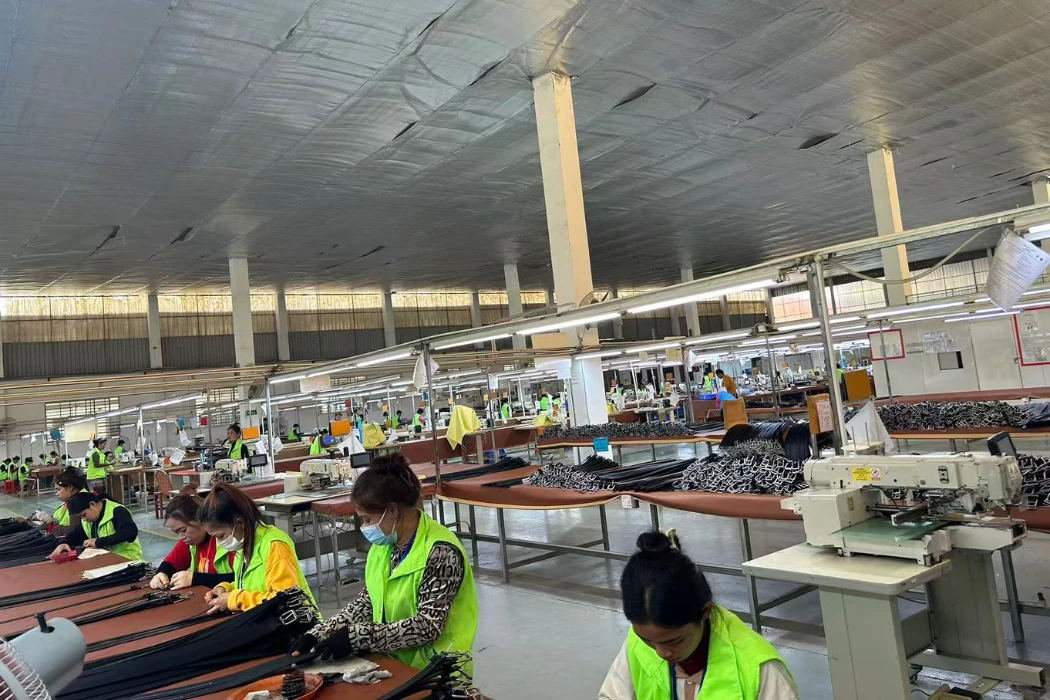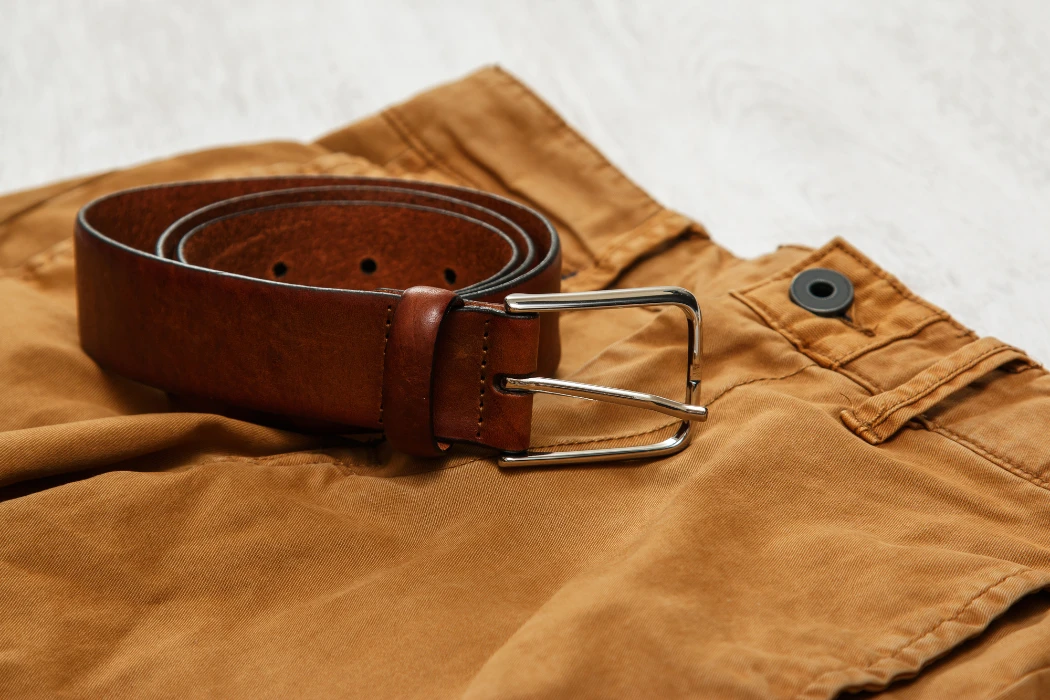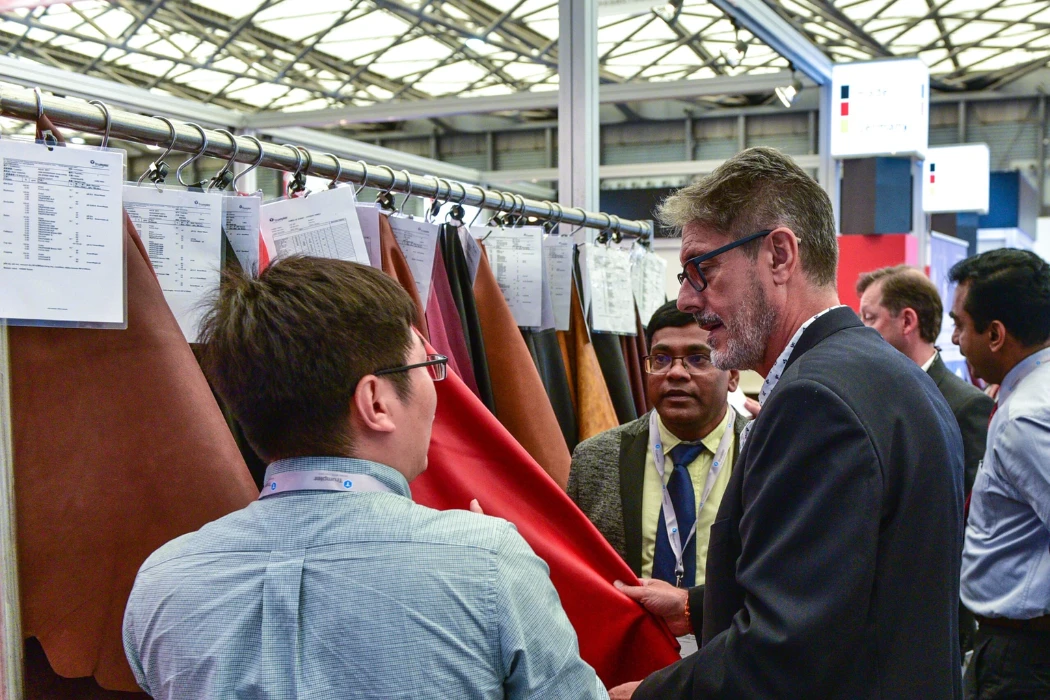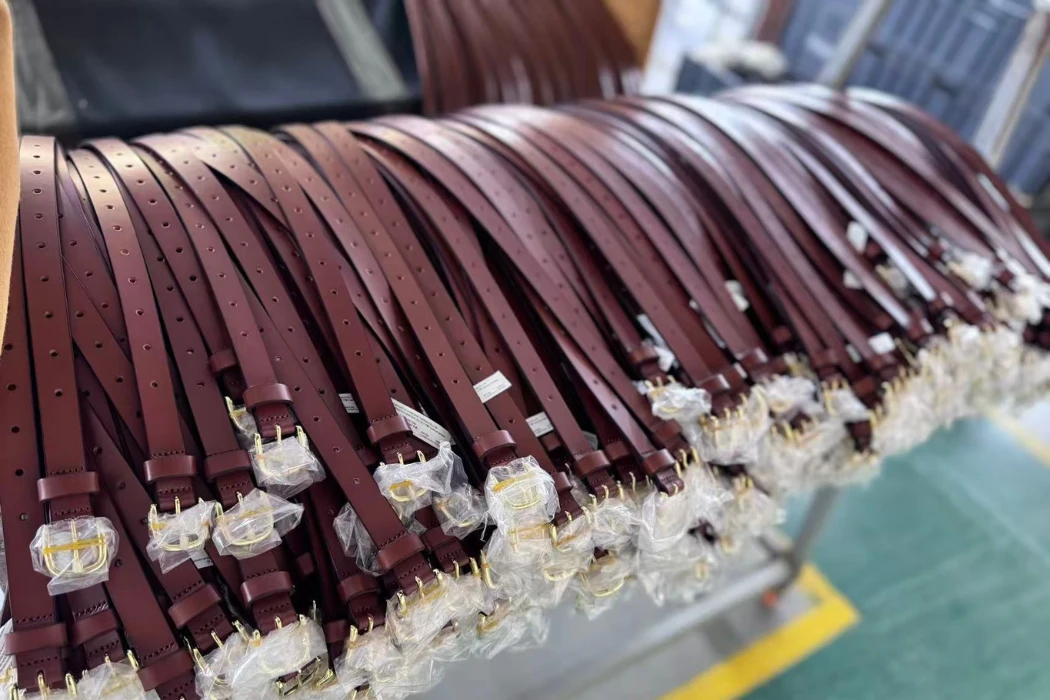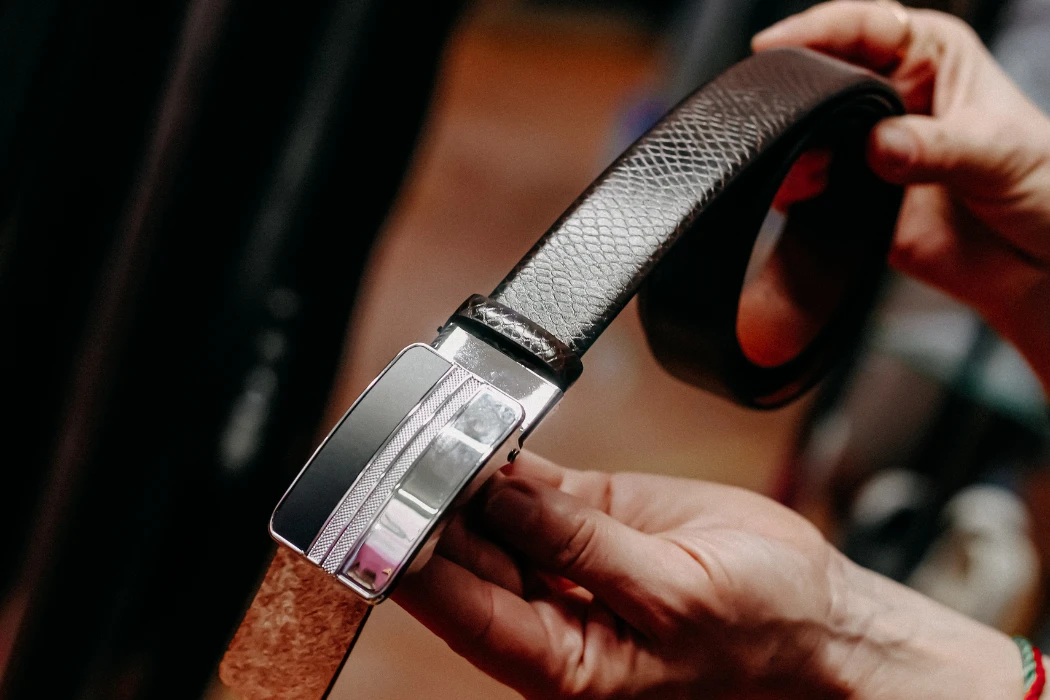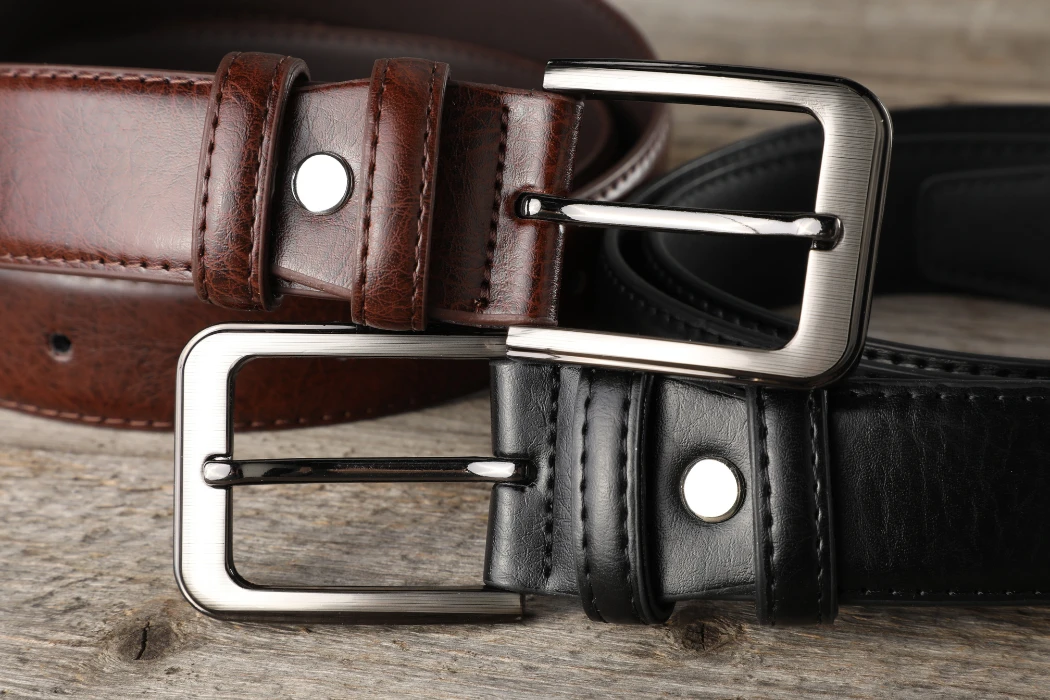
For centuries, making a leather belt meant a craftsman sitting at a workbench with hand tools. They cut, stitched, and finished every piece slowly by hand. This traditional method is beautiful, but it cannot meet the massive volume demands of modern global retail. Today, the leather industry has shifted toward high-speed engineering. Large factories now use advanced software and heavy machinery to produce thousands of belts daily.
The core difference between these two methods comes down to scale and strict consistency. A traditional artisan relies on human touch, so every belt is slightly different. An automated leather belt factory relies on perfectly calibrated machines. Because of this technology, automated lines cut, skive, and stitch leather with exact precision every time. This guarantees that a massive bulk order of belts will look exactly the same.
Understanding how these modern production lines operate is very important for global sourcing managers. So, let us look closely at the exact technical processes, machines, and advanced finishing techniques that define modern belt manufacturing today.
How Do Traditional and Automated Belt Manufacturing Differ?
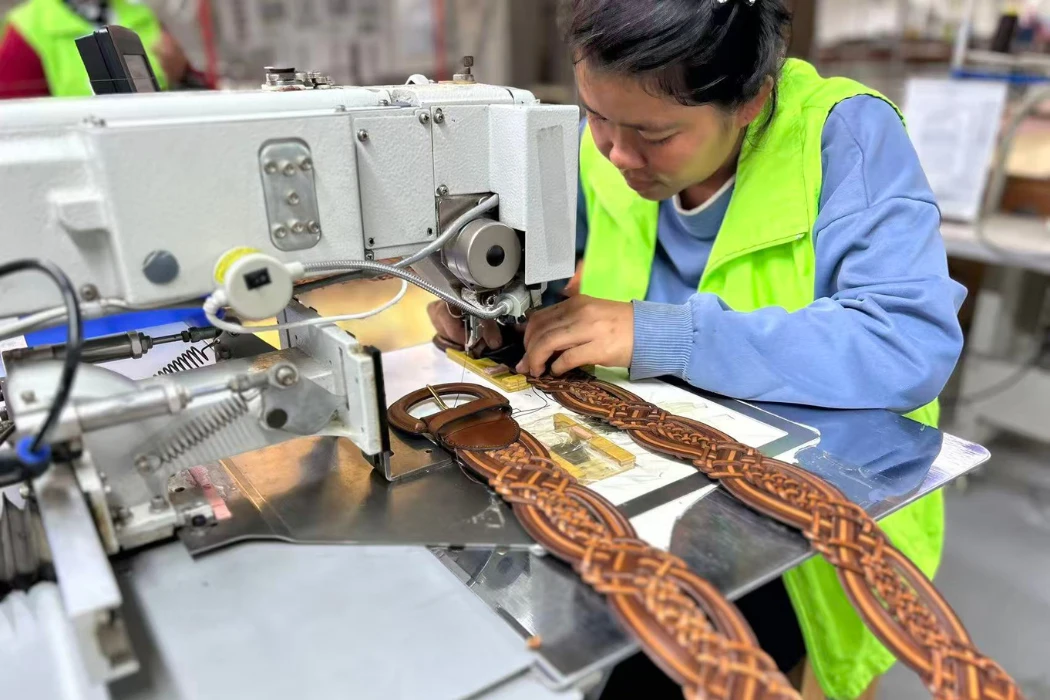
Traditional manufacturing relies heavily on human skill and hand tools. This makes the process slow and prone to slight physical variations. Automated manufacturing uses programmed machines for cutting, stitching, and finishing. This means an automated factory can produce identical belts at a massive scale. The main difference is that automation guarantees strict dimensional accuracy and high-speed volume, while hand-crafting focuses on unique, slow-batch production.
The Role of Hand-Cutting vs. Precision Die-Cutting
Cutting is the foundation of any leather belt, and the method used completely changes the final product.
- In traditional shops, workers use hand knives or simple strap cutters. This can cause the width to vary by a few millimeters depending on the worker’s hand steadiness.
- Automated factories use heavy hydraulic die-cutting machines or computer-guided laser cutters.
- These industrial machines cut leather hides with exactly 0.1mm tolerance.
- This extreme precision ensures every single belt strap matches the exact technical pack specifications without deviation.
Because of this technology, automated cutting completely removes human error from the sizing process.
Stitching Speed and Consistency
The stitching holds the belt materials together and provides a clean visual frame for the leather.
- Hand-stitching, such as the classic saddle stitch, is very durable but extremely slow. A skilled worker might finish only a few belts per day.
- Automated production lines use high-speed industrial sewing machines.
- These machines are programmed to hit an exact stitches-per-inch (SPI) rate, often running at thousands of stitches per minute.
- The tension of the thread is controlled mechanically, preventing loose loops, broken threads, or skipped stitches.
Therefore, automated sewing delivers perfectly straight, uniform lines across hundreds of thousands of units.
Edge Finishing and Burnishing Techniques
Raw leather edges must be sealed and smoothed to prevent fraying and moisture damage over time.
- Artisans burnish edges by hand using a wooden slicker, water, and wax. This requires intense physical labor and friction to melt the wax into the edge.
- Modern factories utilize automated edge-painting and burnishing machines.
- These mechanical systems apply a perfectly even coat of edge paint and then use heated rollers to polish the edge instantly.
- They can easily process edges on straps ranging from narrow 15mm dress belts to wide 49mm casual belts without slowing down.
As a result, automated edge finishing creates a sealed, highly professional look much faster than manual rubbing.
| Metric | Traditional Craftsmanship | Automated Manufacturing |
|---|---|---|
| Monthly Output | 500 – 2,000 units | 200,000 – 800,000 units |
| Dimensional Tolerance | +/- 2.0 mm | +/- 0.1 mm |
| Stitching Consistency | Varies by worker fatigue | 100% mechanically uniform |
| Sampling Speed | 10 – 14 days | 2 – 7 days |
What Are the Steps in an Automated Belt Manufacturing Process?
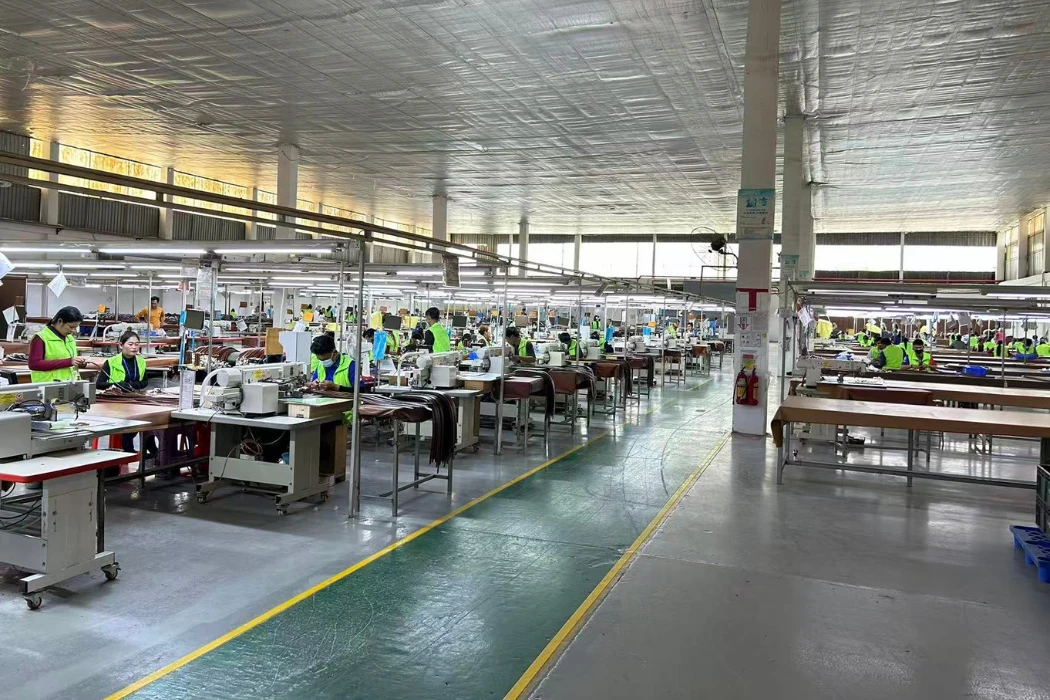
The automated process moves leather from raw hides to finished belts through a highly controlled assembly line. It involves precise mechanical splitting, computer-guided cutting, edge preparation, and synchronized sewing. Because every step uses calibrated machinery, the production flow is continuous. This system drastically reduces manufacturing time while maintaining identical physical specifications across millions of units.
Leather Selection and Automated Splitting
Before any cutting begins, the raw leather must be prepared to an exact, uniform thickness.
- Factories receive full leather crusts that naturally vary in thickness across the hide.
- Industrial splitting machines feed the leather through fast-moving, high-carbon steel blades.
- These machines shave the bottom layer off, setting the top grain to a precise thickness, such as exactly 3.0mm or 3.5mm.
- Electronic sensors monitor the thickness continuously to prevent any thin spots.
So, mechanical splitting guarantees that the final belt will not have weak points or uneven flexibility.
Automated Cutting and Skiving
Once the thickness is uniform, the leather moves to the dimensional cutting and edge preparation phase.
- Hydraulic die-cutters or laser systems slice the large hides into long straps, which highly optimizes material usage.
- Then, the straps go through automated skiving machines.
- Skiving physically thins out specific connection areas, like the fold where the buckle attaches, reducing the local thickness to around 1.0mm.
- This step prevents bulky, uncomfortable folds when the metal hardware is installed.
Because of this mechanical precision, the buckle area remains flat, strong, and visually perfectly balanced.
High-Speed Sewing and Assembly
The final major structural step is binding the layers together and attaching the metal components.
- Conveyor systems feed the prepared straps into automated sewing stations.
- Programmable logic controllers (PLCs) direct the needles to stitch at high speeds, often handling up to 2,000 stitches per minute.
- Simultaneously, mechanical presses automatically punch perfectly spaced adjustment holes into the strap.
- Finally, pneumatic machines securely rivet the buckles, metal keepers, and loops into the skived folds.
By synchronizing high-speed sewing and hardware assembly, the factory ensures maximum structural integrity for every finished belt.
How Does Automation Improve Leather Belt Quality?
Automation does not just make belts faster; it fundamentally changes their structural quality. When humans perform repetitive tasks, fatigue naturally causes small physical mistakes. But machines do not get tired, so they maintain the exact same quality standards from the first belt to the millionth. This strict mechanical control drastically lowers the defect rate for large retail orders.
Consistency in Thickness and Width
The physical dimensions of a belt dictate how well it fits through belt loops and how long it lasts.
- Automated splitting machines use digital calipers to measure hide thickness continuously during processing.
- They hold thickness variations to an extremely tight tolerance, usually within +/- 0.1mm.
- Die-cutting machines slice the width perfectly straight, preventing the wavy edges often seen in manual strap cutting.
- This guarantees that a belt designed to be exactly 35mm wide will never accidentally measure 34mm or 36mm.
Because of this automated sizing, every belt in a massive shipment behaves and wears exactly the same way.
Precision in Hole Punching
The adjustment holes take the most physical stress, making their exact placement critical for durability.
- Hand-punching relies on human eyesight, which can lead to slightly uneven spacing between the holes.
- Automated punching presses use computerized templates to strike the leather with exact mechanical force.
- They create perfectly spaced intervals, such as exactly 25.4mm (1 inch) apart, perfectly centered on the strap.
- The mechanical press also cleanly cuts the leather fibers without tearing, which prevents the holes from stretching out later.
So, automated hole punching ensures the buckle tongue engages smoothly and securely every single time.
Uniform Edge Coating Applications
Edge finishing protects the internal leather fibers from moisture, sweat, and daily physical friction.
- Manual edge painting often leaves thick globs of paint in some areas and thin, weak spots in others.
- Automated edge coating machines use precision mechanical rollers to apply the liquid polymer.
- They lay down an exact, calculated thickness of edge paint, usually measured strictly in microns.
- Infrared drying tunnels then cure the paint instantly, ensuring it binds deeply to the leather fibers without cracking.
Then, the result is a perfectly smooth, highly durable edge that resists peeling even after years of daily use.
| Quality Metric | Manual Processing Risk | Automated Factory Standard |
|---|---|---|
| Thickness Tolerance | Uneven spots causing weak points | Strictly +/- 0.1mm variance |
| Hole Spacing Accuracy | Off-center or uneven intervals | 100% perfectly centered and spaced |
| Edge Paint Consistency | Drips, bubbles, or peeling | Smooth, micron-level uniform coating |
| Overall Defect Rate | High depending on human fatigue | Consistently below 1% |
Why Is Leather Finishing Crucial Before Belt Assembly?
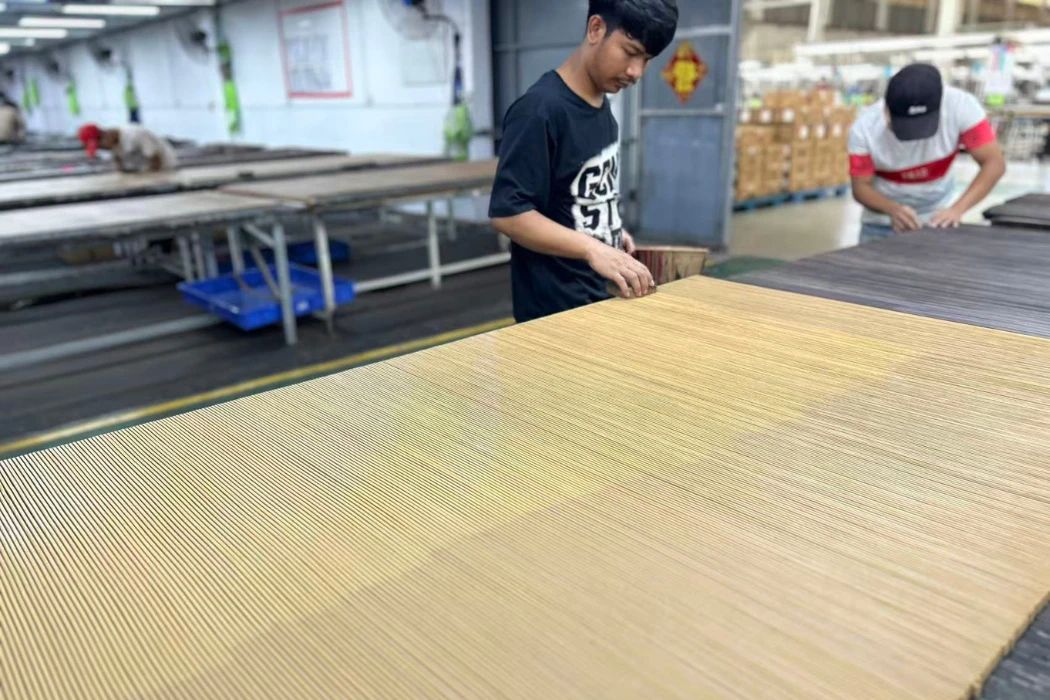
Leather finishing is the chemical and physical process that transforms raw animal hide into a usable, beautiful material. Raw leather crusts look dull and absorb water easily. So, factories must apply oils, waxes, and colors before cutting the leather into belts. This finishing stage is completely crucial because it dictates the final color, texture, and weather resistance of the belt. Without proper finishing, the leather would dry out, crack, and fail quickly.
Controlling the Base Crust
The finishing process always starts with a blank canvas called a crust.
- Tanneries send dry, dyed leather crusts to the finishing facility.
- Engineers then stretch the hides on large mechanical frames to remove wrinkles.
- They use automated tumbling drums to soften the leather, processing thousands of square feet at once.
- They grade the crusts carefully, separating hides meant for heavy 4.0mm work belts from hides meant for soft 2.0mm dress belts.
By controlling this base crust first, engineers guarantee the leather will accept the final colors and oils evenly.
Automated Spraying and Heat Polishing
Next, machines apply the protective and decorative surface layers.
- Conveyor belts move the large hides through automated spray booths.
- Programmed nozzles apply exact amounts of stain, dye, and polyurethane topcoats.
- The leather immediately passes through infrared drying tunnels to bake the color in permanently.
- Finally, heavy steel rollers heat-polish the surface at over 100 degrees Celsius to create a smooth, sealed finish.
Therefore, automated spraying and polishing create a highly consistent, water-resistant surface that looks completely uniform.
Creating Vintage and Pull-Up Effects
Many modern belts require special visual textures rather than just a flat color.
- To create a “pull-up” effect, technicians mechanically inject heavy hot waxes into the leather fibers.
- When you bend a pull-up belt, the wax moves, revealing a lighter color underneath.
- For vintage styles, rotating wire brushes physically scratch the surface to create a perfectly worn look.
- Factories can finish up to 50,000 square feet of leather daily using these exact chemical and mechanical recipes.
Because of these advanced finishing recipes, automated lines can mass-produce highly complex, artisanal-looking leathers at maximum speed.
Can Automated Factories Handle Custom Belt Designs?
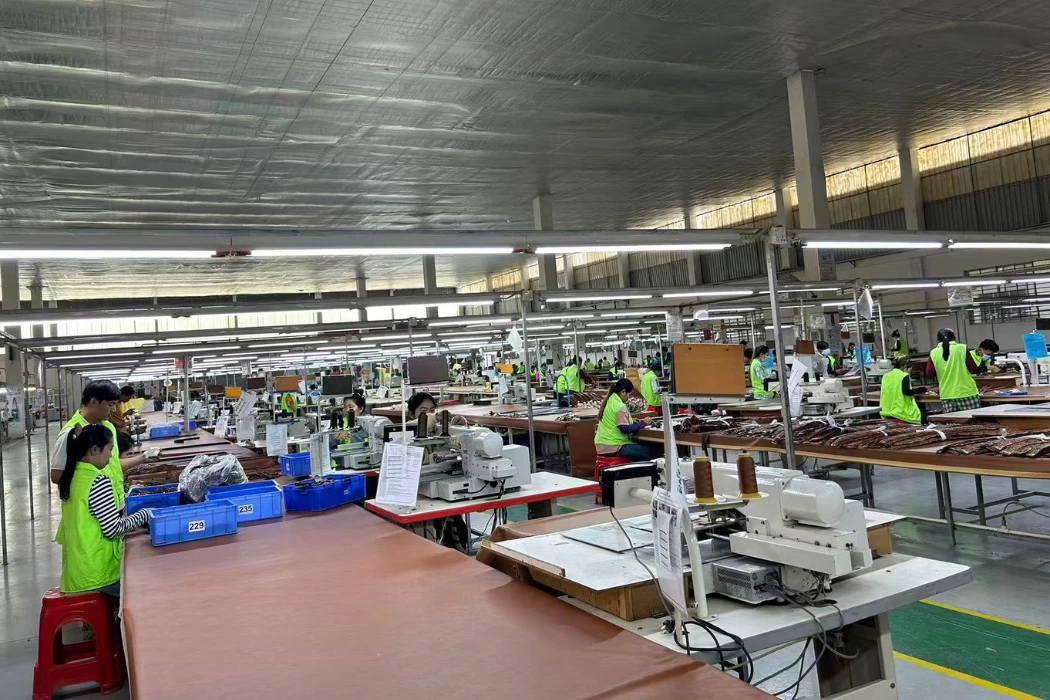
Many people think automation means every belt must look identical and boring. But modern factories use highly flexible programming. This allows brands to customize almost every detail of the belt. The machines can easily switch between different styles, materials, and sizes without slowing down the assembly line. Automation actually makes complex customization much safer and highly scalable.
Integrating Custom Hardware and Buckles
The metal hardware completely changes how a belt functions and looks.
- Workers normally struggle to hammer rivets consistently without accidentally damaging the metal.
- Automated assembly lines use soft-touch pneumatic presses to install custom buckles.
- They can instantly switch between classic pin buckles, roller buckles, or complex reversible designs.
- These machines apply mathematically calculated pressure to set brass or stainless steel rivets safely.
So, machines ensure that even the heaviest custom hardware is attached securely without any surface scratches.
Programmed Embossing and Debossing
Adding custom brand logos or deep textures requires a perfect balance of heat and force.
- Manual stamping often leads to crooked logos or uneven depth if the worker is tired.
- Modern factories use heavy hydraulic stamping machines equipped with heated metal plates.
- They can press a small, detailed logo exactly into the tip of the belt strap.
- They can also roll continuous custom textures, like crocodile or heavy pebbled grain, down the entire leather surface.
Because of this exact hydraulic pressure, every custom logo looks incredibly sharp and perfectly placed.
Adjusting for Different Belt Widths
Global fashion brands constantly need belts in many different specific sizes for different markets.
- Changing sizes in a traditional shop means building entirely new physical cutting templates.
- In an automated factory, engineers simply type new digital measurements into the laser or die-cutting machines.
- The line can quickly shift from cutting thin 15mm metallic women’s belts to wide 49mm men’s casual belts.
- The edge-painting and sewing machines also automatically adjust their mechanical guides to fit the new specific width.
Then, the automated line can seamlessly produce highly customized seasonal collections in any size.
| Customization Type | Manual Limitation | Automated Factory Capability |
|---|---|---|
| Width Adjustment | Hard to cut long, perfectly straight lines | Digital adjustments from 15mm to 49mm+ |
| Hardware Assembly | Hammering causes scratches and uneven force | Pneumatic pressing ensures zero hardware damage |
| Logo Embossing | Often off-center or pressed too lightly | Hydraulic pressing guarantees exact depth and centering |
| Surface Textures | Hand-dyeing and rubbing is inconsistent | Programmed rollers create exact vintage and pebbled effects |
Are Automated Leather Belt Factories Sustainable?
The leather industry faces high pressure to protect the environment and reduce chemical waste. Traditional craftsmanship uses less energy, but manual cutting often wastes a lot of raw material. Today, automated belt factories use smart software and strict digital controls to solve these environmental problems. This technology allows large facilities to manufacture millions of belts while actively shrinking their ecological footprint.
Reducing Leather Waste with Software
Leather is a valuable natural resource, so minimizing scrap material is absolutely essential.
- Manual workers cut leather by eye, which often leaves large, unusable gaps between the cut straps.
- Automated factories use computer nesting software to map the entire leather hide digitally.
- The software scans for natural flaws and perfectly aligns the belt patterns to use over 85% of the raw material.
- Lasers or hydraulic dies then cut the hides exactly according to this mathematically optimized map.
Therefore, digital cutting software drastically reduces the amount of scrap leather that ends up in landfills.
Efficient Use of Finishing Chemicals
Leather finishing requires liquid dyes, oils, and polyurethane, which workers must handle responsibly.
- Manual hand-spraying wastes a large amount of chemical paint into the surrounding air.
- Automated spray booths operate using closed-loop mechanical systems.
- Sensors calculate the exact micro-liters of chemical needed per square foot of leather and spray it precisely.
- The machine captures and filters any airborne overspray before it can leave the exhaust vents.
Because of this exact precision, automated lines prevent toxic chemical runoff and keep the factory air safe for workers.
Compliance with Global Material Standards
Modern manufacturing must meet strict international environmental and safety rules to sell globally.
- Automated factories source their raw crusts directly from Leather Working Group (LWG) certified tanneries.
- They strictly monitor all edge paints and metal hardware to ensure they pass REACH (Europe) and CPSIA (USA) chemical safety tests.
- Large facilities completely standardize their waste management under guidelines like ISO 14001.
- They also track their environmental impact using industrial measurement tools like the Higg Index.
So, an automated and certified supply chain guarantees the final leather belt is safe for the consumer and the planet.
Frequently Asked Questions (FAQ)
How are genuine leather belts manufactured?
Genuine leather belts are made by splitting raw hides to a precise thickness. Then, automated machines cut the leather into long straps, skive the connection edges, and stitch the layers together. Finally, the edges are painted and the metal buckles are attached using pneumatic presses.
What machinery is used in a leather belt factory?
Modern factories use heavy hydraulic die-cutters, electronic splitting machines, automated spray booths, and high-speed industrial sewing machines. These machines ensure massive production output with exact mechanical precision.
How do you finish the edges of a leather belt?
Automated lines finish raw edges using mechanical rollers that apply a liquid polymer paint. Then, infrared drying tunnels and heated rollers cure and polish the edge perfectly so it will not peel.
What is the difference between full-grain and split leather belts?
Full-grain leather uses the strong, natural top layer of the animal hide. Split leather is the bottom layer, which factories often coat with polyurethane (PU) to look smooth and highly uniform.
How are belt holes punched evenly?
Factories use computer-guided pneumatic presses to punch holes. Because of this technology, the machine strikes the leather with exact force, making perfectly spaced and centered adjustment holes every time.
Can automated factories produce braided leather belts?
Yes, they can. While some intricate braiding is guided by hand, automated machines cut the thin leather strips perfectly straight. Then, heavy automated presses secure the braided ends safely to the buckle.
How long does it take to manufacture a bulk belt order?
An automated factory can usually complete a massive bulk production order in 15 to 20 days. Also, initial prototype sampling normally takes only 2 to 7 days depending on the design.
Conclusion
The shift from traditional craftsmanship to automated manufacturing has completely changed the leather belt industry. By using digital cutting, precise skiving, and automated finishing, factories now produce massive volumes with zero compromise on quality. This technology ensures strict dimensional accuracy, physical durability, and environmental compliance. For global brands seeking these exact high-tech manufacturing standards, Hoplok Leather Goods provides the ultimate turnkey solution. With over 22 years of experience and advanced automated facilities in China and Cambodia, Hoplok delivers highly customized, premium leather accessories at a global scale.