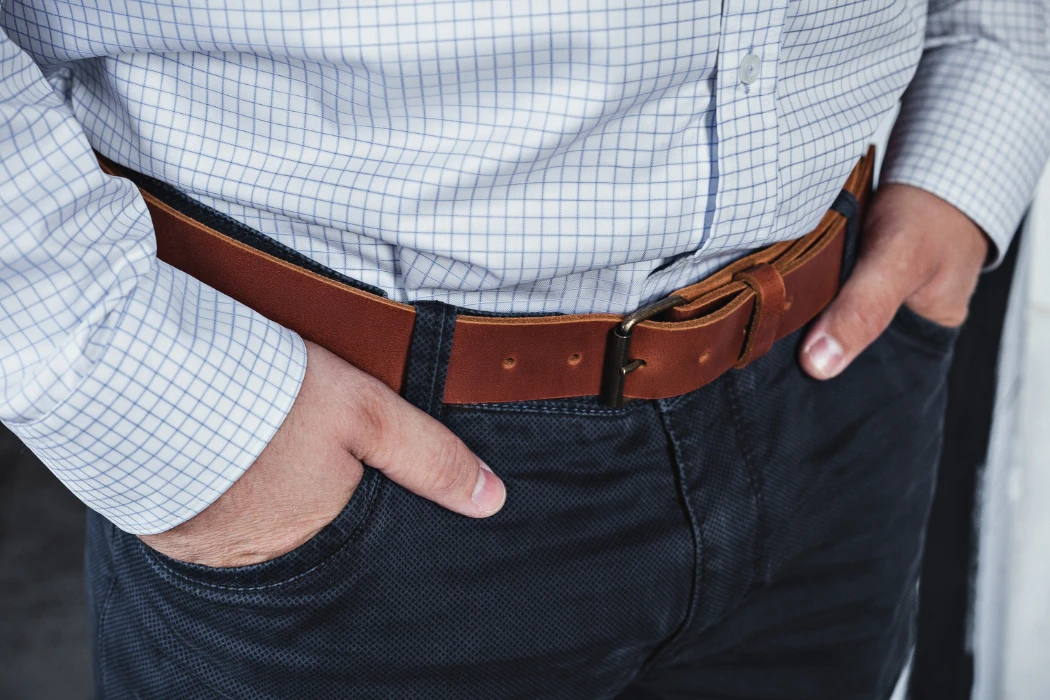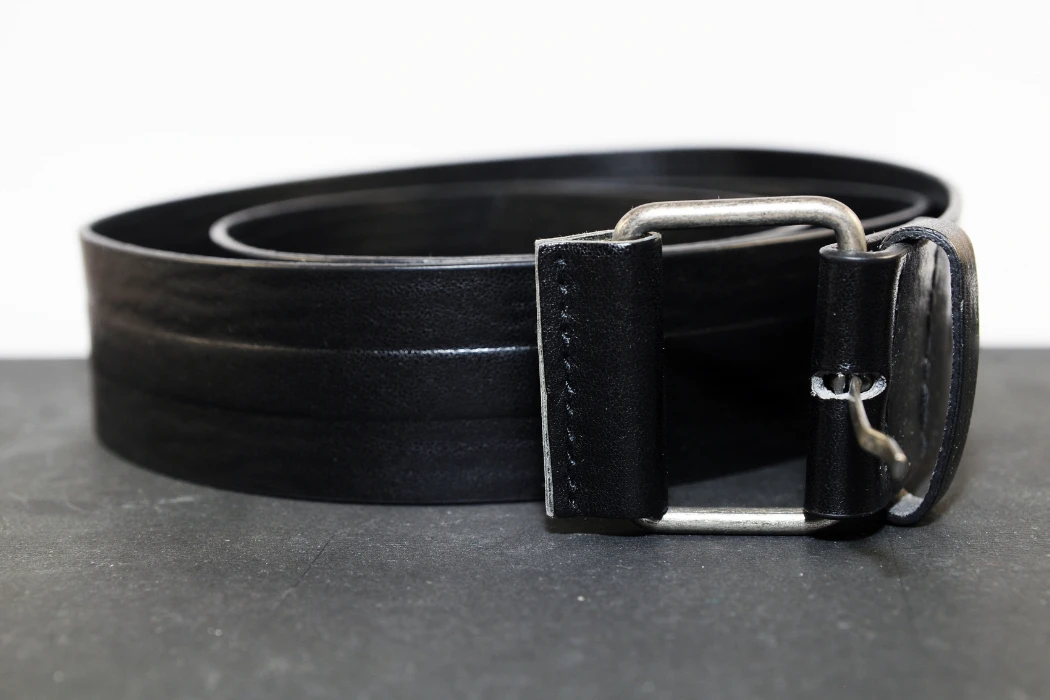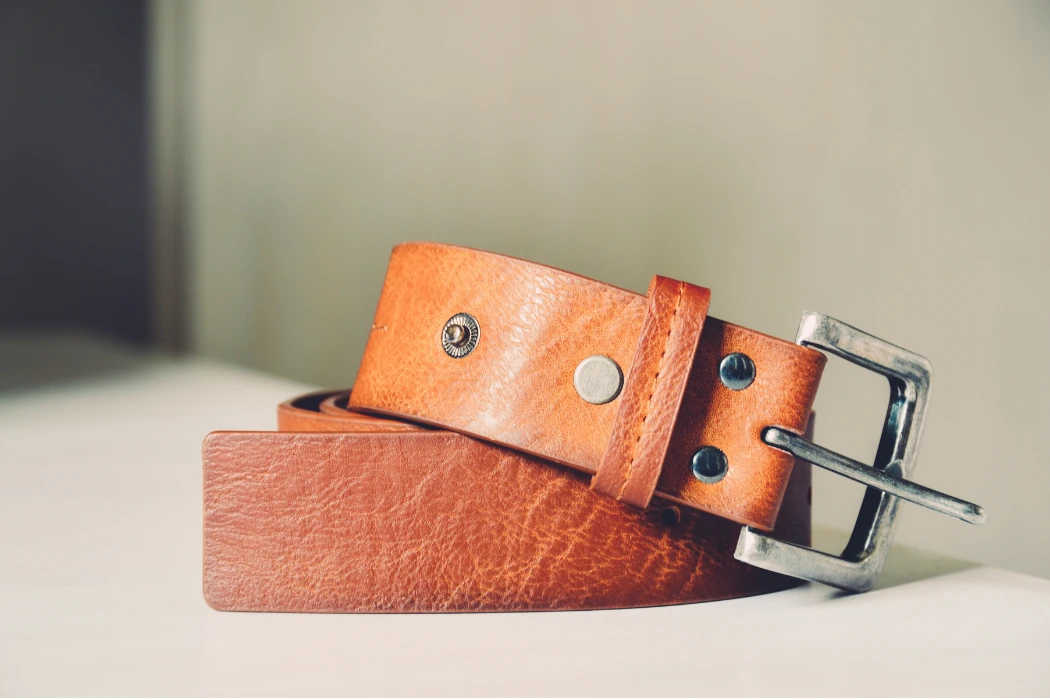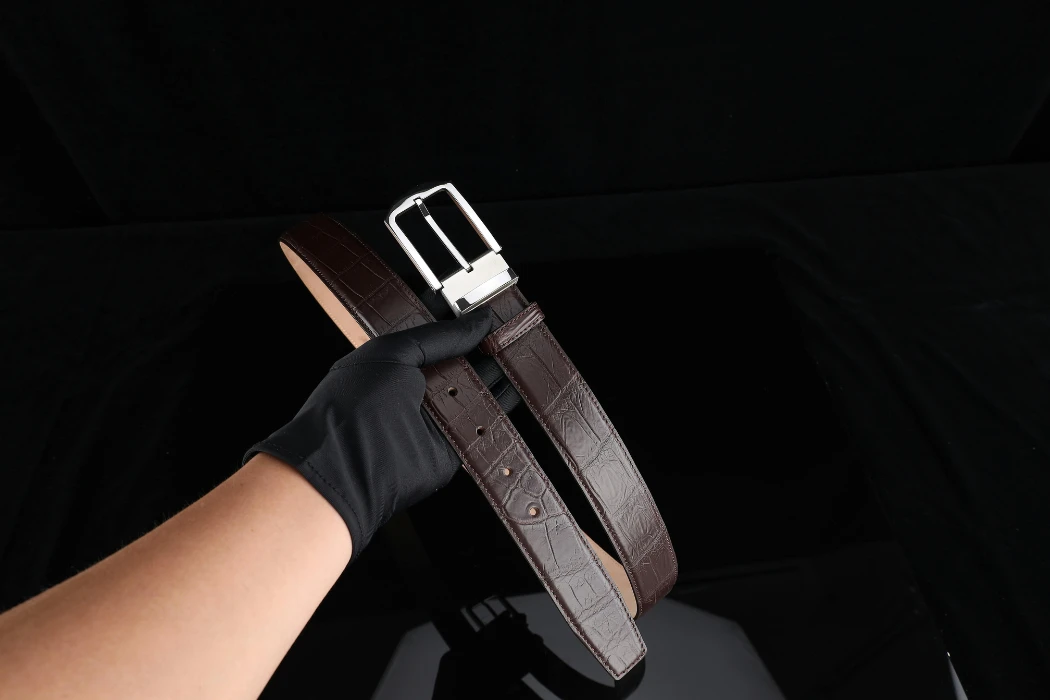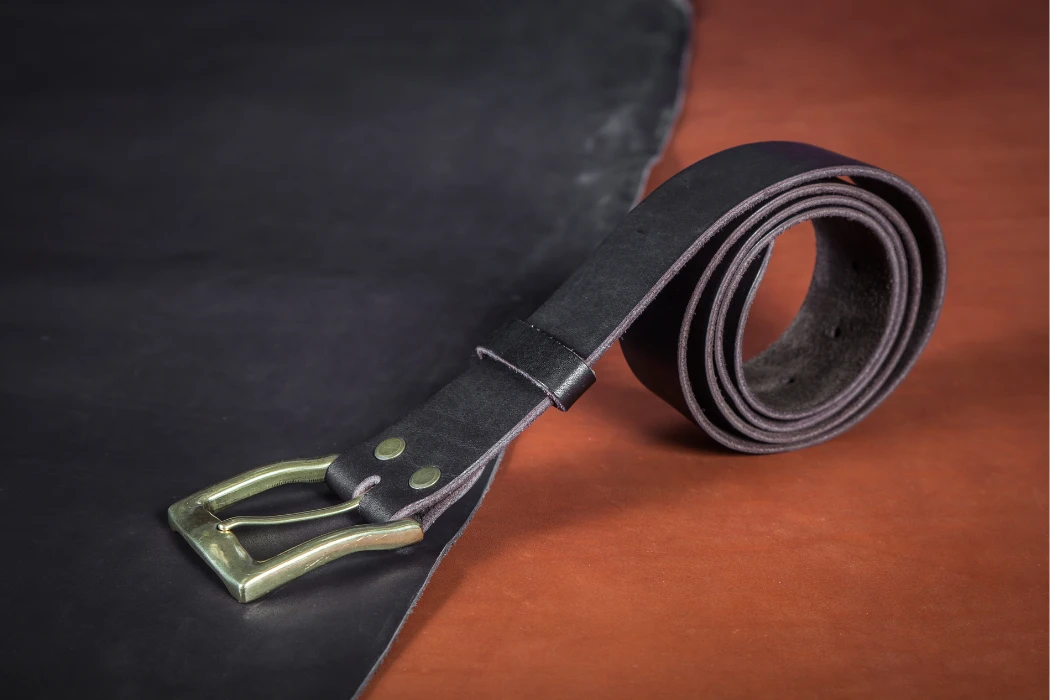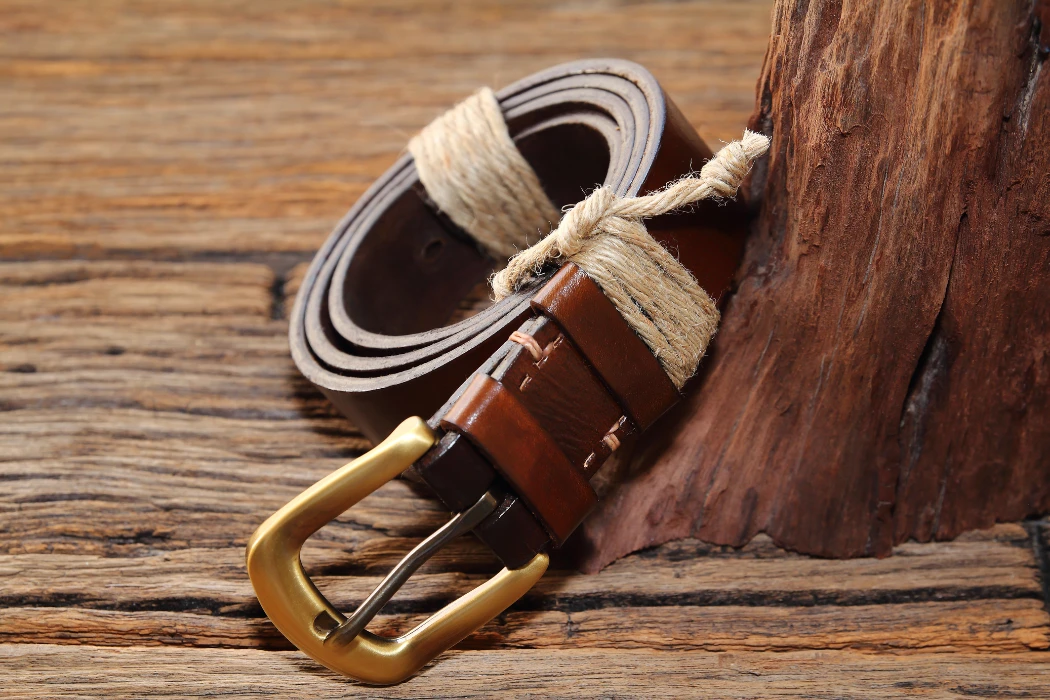
The best thickness for a leather belt depends entirely on its intended use. Generally, a Formal Dress Belt should be between 2.5mm – 3.0mm (6-8 oz) to maintain a sleek, low profile under a suit. For a durable Everyday Casual Belt, the ideal balance of strength and comfort is found in the 3.5mm – 4.0mm (9-10 oz) range. Heavy-duty Work or Gun Belts require a thickness of 4.5mm – 6.0mm (12-15 oz) to prevent sagging under load.
Thickness is the “Goldilocks” variable of leather manufacturing. A belt that is too thin (under 2.5mm) will stretch, warp, and lose its shape within months. A belt that is too thick (over 5mm) can feel like wearing a hula hoop—rigid, uncomfortable, and difficult to thread through standard pant loops. The “perfect” thickness is a precise engineering decision that balances the physical weight of the leather against the need for flexibility.
This guide will teach you to speak the language of the tannery, translating “ounces” into “millimeters.” We will explain why a 4mm Full-Grain belt is an heirloom, while a 4mm “filler” belt is destined for the landfill, helping you make the right choice for your wardrobe or your brand’s next collection.
How Is Leather Thickness Measured? (Ounces vs. Millimeters)
In the leather industry, thickness is measured in “ounces” (oz), which technically refers to the weight of one square foot of the leather. The standard conversion rule is: 1 ounce ≈ 0.4 mm (1/64 inch). For example, a standard 9 oz casual belt has a thickness of approximately 3.6mm. Understanding this conversion is critical for sourcing high-quality belts, as a difference of just 2 oz (0.8mm) can completely change a belt from a flexible “dress” grade to a rigid “workwear” grade.
The Conversion Science: Why “Weight” Means “Thickness”
The term “ounce” can be confusing because it sounds like a measure of mass, but in the tannery, it is a precise measure of thickness. Historically, if a square foot of leather weighed 8 ounces, it was uniform thickness. Today, we use precise calipers and thickness gauges to measure this.
- The Gauge: A leather thickness gauge presses a spring-loaded anvil against the leather to measure the distance in millimeters or ounces.
- The Scale: Because leather is a natural material, it is rarely sold as a single, exact number (e.g., “3.0mm”). It is sold in a range (e.g., “8-9 oz”). This accounts for the natural variation across the hide.
Understanding Tolerance (+/- 0.1mm)
Unlike metal or plastic, leather varies in density. The “butt” (rear) of the hide is thicker and denser than the “belly.” When you order a 3.5mm belt, there is an accepted industry tolerance.
A high-quality strap should have a variance of no more than +/- 0.2mm across its length. If a belt varies from 3.0mm at the buckle to 4.0mm at the tip, it indicates poor “splitting” (the process of shaving the leather level) or the use of a lower-quality cut of the hide.
Leather Thickness Conversion Chart
Use this chart to translate the technical specs into real-world applications.
| Ounces (oz) | Millimeters (mm) | Inches (approx.) | Best Use |
|---|---|---|---|
| 6 – 7 oz | 2.4 – 2.8 mm | 3/32″ | Formal Dress Belts (often lined/stitched) |
| 8 – 9 oz | 3.2 – 3.6 mm | 1/8″ | Standard Casual / Jeans Belts |
| 9 – 10 oz | 3.6 – 4.0 mm | 9/64″ | Heavy-Duty Casual / Work Belts |
| 12 – 14 oz | 4.8 – 5.6 mm | 3/16″ | Gun Belts / Holster Belts |
What Is the Ideal Thickness for a Formal Dress Belt?
The ideal thickness for a formal dress belt is between 2.5mm and 3.0mm (6-8 oz). This specific range is engineered to be sleek enough to slide easily through the narrower belt loops of dress trousers and lie flat against the waist without creating a bulky silhouette under a tailored suit jacket. Unlike casual belts, formal belts often achieve this profile through a lined construction, stitching two thin layers of leather together to combine flexibility with strength, rather than using a single thick strap.
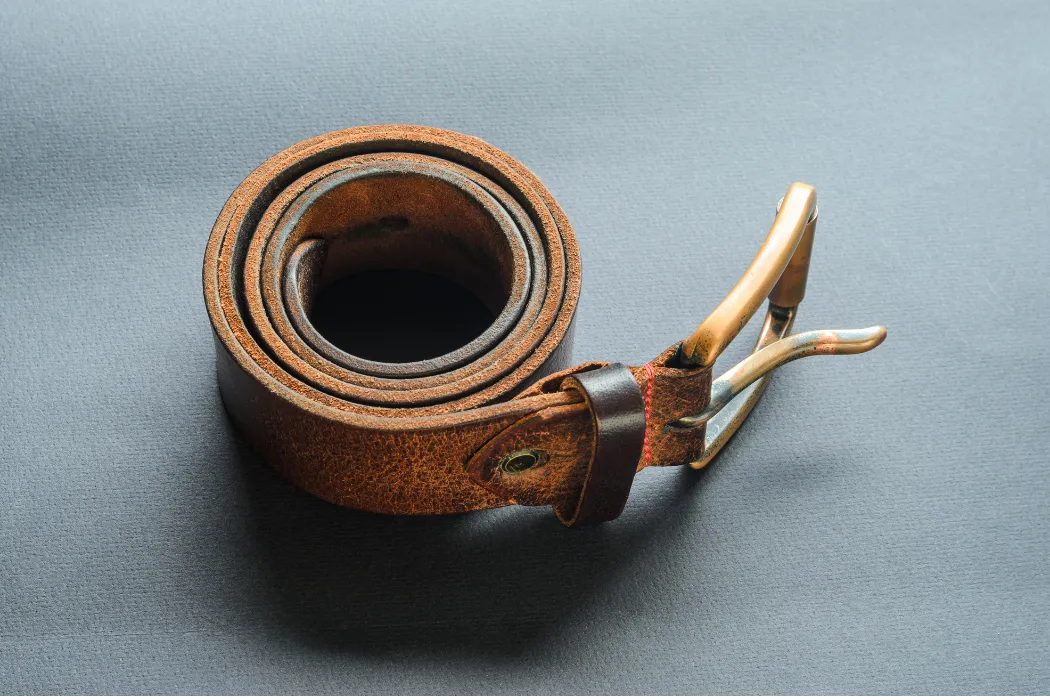
The “Dome” Effect: Lined vs. Flat Construction
Achieving a belt that is both thin (2.8mm) and strong requires a specific manufacturing technique known as the “Feather Edge” or “Domed” construction. A casual belt is usually a flat, single strap. A high-end dress belt is a sandwich.
- The Construction: A top layer of fine leather (like Calfskin) is glued and stitched to a bottom lining leather.
- The “Dome”: Before stitching, a “filler” material is often placed in the center, and the edges are skived (thinned) down to 1.0mm. This creates a belt that is thicker in the center for strength but tapers to a very thin edge. This “domed” shape adds elegance and shadow lines that flat belts lack.
Why Thick Belts Ruin Formal Outfits
In formalwear, “bulk” is the enemy. A standard casual belt (4.0mm) creates a noticeable ridge under a fitted suit jacket or a fine merino wool sweater. Furthermore, the belt loops on dress pants are often narrower and tighter than those on jeans. Forcing a thick, wide casual belt through delicate suit loops causes the fabric to bunch and pull, ruining the clean vertical lines of the trousers. A proper 2.5mm dress belt disappears into the outfit, serving its function without disrupting the silhouette.
Manufacturing Sleek Strength (Hoplok Insight)
One of the biggest challenges in manufacturing dress belts is preventing them from stretching. A thin strip of leather is naturally stretchy.
Manufacturer’s Insight (Hoplok): To solve the stretch issue in thin belts, Hoplok uses a high-tech solution hidden inside. Between the top-grain calfskin exterior and the lining, we insert a non-stretch “Viledon” reinforcement tape. This material is less than 0.3mm thick but has immense tensile strength. It ensures that even a sleek 2.8mm dress belt maintains its exact length and hole spacing for years, offering the durability of a work belt in the body of a suit belt.
What Is the Best Thickness for a Casual or Jean Belt?
For jeans, chinos, and everyday wear, the gold standard for thickness is 3.5mm to 4.0mm (9-10 oz). This range provides the necessary structural rigidity to prevent the belt from “rolling over” or sagging under the weight of denim, while maintaining enough flexibility for all-day comfort. A casual belt thinner than 3.0mm (7-8 oz) often feels flimsy, stretches out of shape quickly, and lacks the substantial “heft” associated with quality leather goods.
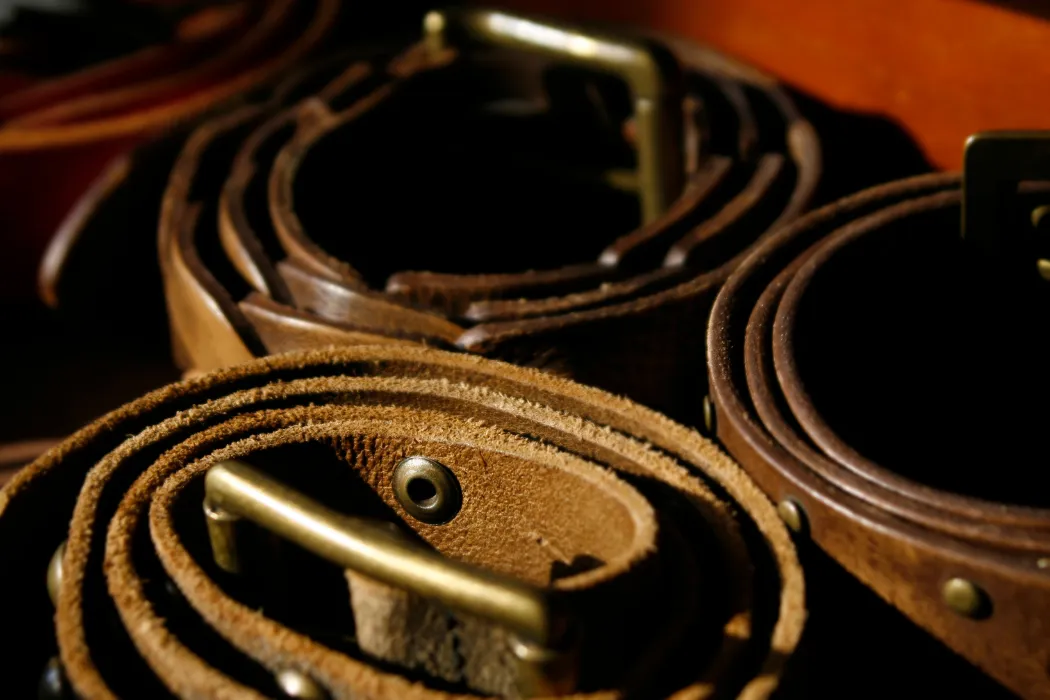
The Power of the “Single Strap” (Unlined)
Unlike the complex “sandwich” construction of a dress belt, the best casual belts are made from a Single Strap of solid Full-Grain leather. There is no lining, no filler, and no glue. The durability of the belt relies entirely on the natural thickness of the hide.
- No Delamination: Because it is one solid piece, it is physically impossible for the belt to peel or split apart.
- Rugged Edge: The edges are usually burnished (polished) or raw, showcasing the full, solid thickness of the leather.
Using a single strap requires a much higher grade of raw material. The hide must be naturally thick (at least 9-10 oz) and free of scars on both the front and the back (the “flesh” side), as the back is visible.
Why 3.5mm-4.0mm is the “Sweet Spot”
Engineering a casual belt is a balancing act between two forces: Vertical Stiffness vs. Horizontal Flexibility.
- Vertical Stiffness: The belt must be thick enough (3.5mm+) so that it doesn’t collapse vertically when you sit down or under the tension of a belt loop. Thinner belts tend to curl and warp at the back loop.
- Horizontal Flexibility: The belt must wrap comfortably around your waist. Once leather exceeds 4.5mm, it can become “boardy” and stiff, digging into your hips. The 3.5mm-4.0mm range offers the perfect compromise: tough enough to last 20 years, but soft enough to wear immediately without a painful break-in period.
Leather Types: Bridle and Buffalo
Not all leathers naturally reach this thickness. Standard upholstery leather is often split to 1.2mm. For a heavy casual belt, manufacturers use specific heavy-weight hides.
- Bridle Leather: Originally designed for horse tack, this vegetable-tanned leather is stuffed with waxes and oils. It is naturally thick (often 10-12 oz before skiving) and incredibly dense. It is the benchmark for a heritage casual belt.
- Buffalo (Bison) Leather: Buffalo hides are naturally thicker and have a looser, more pronounced grain structure than cowhide. They often come in weights of 8-10 oz naturally, providing a rugged, textured look that doesn’t require artificial thickening agents.
When Should You Choose a Heavy-Duty or Work Belt (4.5mm+)?
When a belt’s primary job shifts from holding up pants to carrying gear, the rules of thickness change completely. If you need to support the weight of tools, a holster, a radio, or heavy outdoor equipment, you require a belt with a thickness of 4.5mm to 6.0mm (12-15 oz). This extreme thickness is rarely achieved with a single piece of leather; instead, it is often engineered using a “Double-Ply” (Dual Layer) construction to provide maximum vertical rigidity.
The “Gun Belt” Standard: Preventing Sag
In the tactical and workwear industry, the enemy is “sag” or “roll-over.” A standard 3.5mm casual belt is flexible. If you clip a 2 lb (0.9 kg) loaded holster or a heavy tape measure to it, the leather will twist outward and the pants will sag locally.
To prevent this, the belt must have Vertical Rigidity (the resistance to twisting). By increasing the thickness to 5.0mm or 6.0mm, the belt acts less like a fabric strap and more like a steel hoop. It distributes the weight of the gear across the entire waist, keeping the weapon or tool tight against the body without deforming the belt.
Double-Ply Construction: 2 Layers vs. 1 Layer
Finding a single cowhide that is naturally 6.0mm (15 oz) thick and consistent enough for a belt is incredibly rare and expensive. Therefore, manufacturers engineer this thickness.
- The Method: Two separate straps of 6-7 oz (2.4-2.8mm) Full-Grain leather are glued back-to-back and then stitched together with heavy-duty nylon thread.
- The Benefit: This creates a belt that is 12-14 oz (5-6mm) thick. It also ensures the belt has a finished “grain side” on both the front and the back, making it smoother and more resistant to sweat than a raw single strap. Furthermore, the glue layer between the hides adds an extra stiffening element.
Comfort Trade-offs with Thick Leather
There is a significant comfort penalty for this level of durability. A 6mm double-ply belt is extremely stiff.
- The Break-In: It will not conform to your waist immediately. It often requires 1-3 months of daily wear to soften up.
- The Feel: It can feel bulky and may dig into your hips when you sit down.
- Loop Compatibility: A 6mm belt is so thick it may not fit through the belt loops of standard dress pants or even some chinos. It is strictly designed for denim, canvas work pants, or tactical gear.
Does Thickness Always Equal Durability? (The “Filler” Trap)
No, thickness does not equal quality. This is the most dangerous misconception in belt buying. A 4mm Full-Grain belt is an heirloom piece that will last decades. However, a 4mm belt found in a department store gift box is often a “sandwich” of cheap materials engineered to look thick but designed to fail. Durability comes from fiber density, not just measurement. A thick belt made of “filler” materials will crack and delaminate in 6-12 months, whereas a solid strap of the same thickness is virtually indestructible.
The “Sandwich” Belt vs. The Solid Strap
To cut costs while maintaining a substantial feel, mass-market manufacturers use the “sandwich” construction method. It mimics the thickness of a solid strap but uses a fraction of the actual leather.
- The Solid Strap (The Real Deal): This is one single piece of cowhide, cut from the hide at a thickness of 3.5mm – 4.0mm. It has structural integrity all the way through. There are no layers to separate.
- The Sandwich Belt (The Fake): This consists of three low-quality layers glued together:
- Top Layer: A paper-thin (0.4mm – 0.8mm) slice of “Genuine” or “Top-Grain” leather to give it the look and smell of leather.
- Core: A thick (2.5mm – 3.0mm) filler material made of cardboard, fiberboard, or foam. This provides the bulk and “thickness” cheaply.
- Bottom Layer: A cheap bonded leather backing.
Under the tension of wearing it, the different layers flex at different rates. The glue eventually fails, causing the top layer to bubble, wrinkle, and peel off the cardboard core.
How to Spot a Fake Thick Belt
You can identify these imposters without cutting them open. Look at the Edge and feel the Density.
- The Edge Test: A “sandwich” belt almost always has a thick, rubberized Edge Paint to hide the layers. If the edge looks like plastic or is peeling, it’s a filler belt. A solid belt will have a raw or burnished edge where you can see the fibers.
- The Squeeze Test: Squeeze the belt between your fingers. A solid leather belt feels dense and firm. A filler belt often feels “puffy,” “squishy,” or unnaturally light, like foam.
Thickness vs. Durability Matrix
Use this table to understand what you are actually buying when you see a “4mm” spec.
| Construction | Total Thickness | Real Leather Content | Est. Lifespan |
|---|---|---|---|
| Solid Full-Grain | 3.5mm – 4.5mm | 100% | 20+ Years |
| Solid Bridle | 4.0mm – 5.5mm | 100% | Lifetime |
| Lined Dress (High-End) | 2.5mm – 3.0mm | 90-100% (Leather Core) | 5 – 10 Years |
| Filler / Bonded (Low-End) | 3.5mm – 4.5mm | 10-20% (Veneer only) | 6 – 18 Months |
How Does Thickness Affect Hardware Compatibility?
As leather thickness increases, the hardware requirements change drastically. A standard dress buckle is engineered for a strap between 2.5mm and 3.0mm. Trying to force a 4.0mm+ heavy-duty belt into it will result in a “jammed” fit, scratched leather, or a snapped prong. Heavy-duty belts require specialized hardware with longer prongs, wider roller gaps, and often use Chicago Screws instead of stitching to secure the fold, as standard thread struggles to hold such thick layers without breaking.
The Buckle Problem: Prong Length and Gap
When sourcing a buckle for a thick belt, two dimensions are critical:
- The Gap (Throat): This is the space between the buckle’s bar and the prong. If the gap is too narrow (common in dress buckles), a thick 4mm belt will rub against the metal every time you put it on, ruining the edge finish.
- Prong Length: A thick belt needs a longer prong. The prong must pass through the 4mm hole and still have enough length to rest securely on the buckle frame. If the prong is too short (designed for a 2.5mm belt), it will slip out of the hole under tension, causing the belt to pop open.
Chicago Screws vs. Snaps vs. Stitching
The method of attaching the buckle is also dictated by thickness.
- Stitching: Great for dress belts (2.5mm). However, stitching through a double-layer gun belt (6mm) requires massive industrial machines. If the thread tension isn’t perfect, the stitches will cut through the leather.
- Snaps: Convenient, but often fail on thick leather. The stiffness of a 4mm belt puts too much torque on the snap, causing it to pop open unexpectedly.
- Chicago Screws: The best choice for heavy belts (3.5mm+). These are threaded posts that clamp the leather layers together. They don’t rely on the leather’s flexibility and are strong enough to compress even a rigid 15 oz gun belt securely.
Belt Loop Fit: Will It Fit Your Pants?
Before buying a “beast” of a belt, check your pants.
- Dress Pants: Loops are designed for 3.0mm max thickness and 1.25″ width. A thick casual belt will physically not fit or will cause the loops to bulge and rip.
- Jeans/Chinos: Standard loops accommodate 4.0mm thickness and 1.5″ width comfortably.
- Work Pants (Dickies/Carhartt): Designed for the thickest 5mm+ belts and wider 1.75″ straps.
Frequently Asked Questions
1. Is a thicker belt always better?
No, thicker is not always better; it depends on the application. While a 6mm gun belt is “stronger” than a 3mm dress belt, it would be catastrophic for a formal suit. It would bulge under the jacket, ruin the line of the trousers, and be uncomfortable to sit in. “Better” means the correct thickness for the intended job: 3.0mm for dress, 4.0mm for jeans, and 5.0mm+ for work.
2. What thickness is a standard Gucci or LV belt?
Most luxury designer belts (like the Gucci Marmont or LV Initiales) are engineered to be versatile “fashion” belts, sitting right between formal and casual. They typically measure between 3.0mm and 3.5mm (7.5-8.5 oz). This allows them to fit into both suit trousers and designer denim. They almost always use a lined construction (leather top, filler, leather bottom) rather than a single thick strap to achieve a refined, domed look.
3. How thick is 10 oz leather?
10 oz leather is approximately 4.0mm (5/32 inch) thick. This is a substantial, heavy weight. It is generally too thick for a lined dress belt but is the perfect “sweet spot” for a high-quality, single-strap unlined casual belt. It provides excellent durability and vertical stiffness without requiring a break-in period as long as a 12 oz belt.
4. Will a 4mm belt fit in dress pants?
It is risky. Standard belt loops on wool dress trousers are often sewn with a flat profile, allowing for a max thickness of about 3.5mm. Forcing a 4mm (10 oz) belt through these loops will cause friction damage to the leather’s edges and may eventually rip the loops off the pants. For dress pants, stick to 3.0mm or less.
5. Does belt thickness include the lining?
Yes. When you see a spec for a belt (e.g., “3.5mm thick”), that refers to the total finished thickness of the final product. For a lined belt, this might be a 1.5mm top layer, a 1.0mm filler, and a 1.0mm lining, glued and stitched together to achieve the 3.5mm total.
6. How do I measure my belt thickness at home?
Do not use a ruler; it is too imprecise to distinguish between 3mm and 4mm. The only accurate way is to use a Vernier Caliper. Close the jaws of the caliper gently on the edge of the belt (avoiding the stitching if possible) to get an exact reading. If you are checking quality, measure at three points: near the buckle, the middle hole, and the tip. They should all be within 0.2mm of each other.
Conclusion: The Perfect Spec for the Perfect Purpose
There is no single “best” thickness for a leather belt. There is only the correct engineering for the specific use case. A 2.8mm lined calfskin belt is the pinnacle of elegance for the boardroom. A 3.8mm full-grain bridle belt is the ultimate daily driver for denim. A 5.5mm double-ply bullhide belt is an essential tool for carrying gear. Quality is not defined by maximizing thickness, but by optimizing it.
For consumers, understanding these specs allows you to buy based on value and longevity, rather than just brand marketing. If a brand claims a belt is “heavy duty” but specs it at 3mm, you know to look elsewhere.
For brand managers and product developers, the lesson is precision. Vague requests for “thick leather” on a Tech Pack lead to production inconsistencies. Defining the exact tolerance—e.g., “3.8mm +/- 0.2mm”—is what separates a professional product from a generic one.
Hoplok Leather brings this level of engineering precision to every order. With our integrated ProPelli tannery, we control the splitting and skiving process at the source, ensuring consistent thickness across thousands of units. Whether you need a sleek 2.5mm formal collection or a rugged 4.5mm workwear line, we have the machinery and expertise to deliver the exact spec. Contact Hoplok Leather today to request material samples and start building your next precision-engineered belt collection.