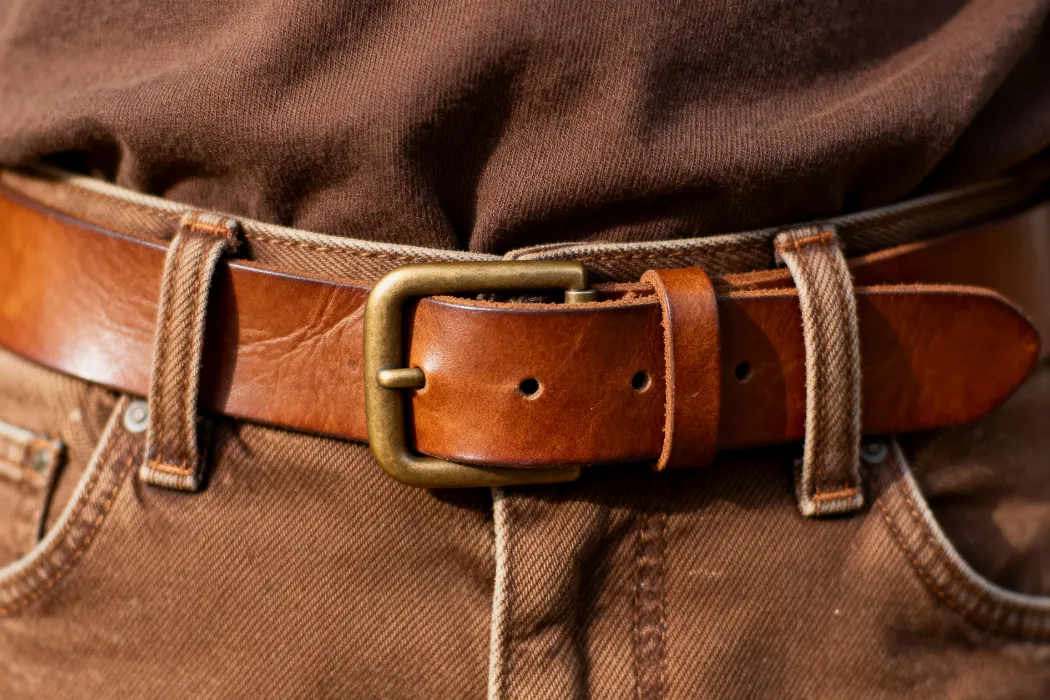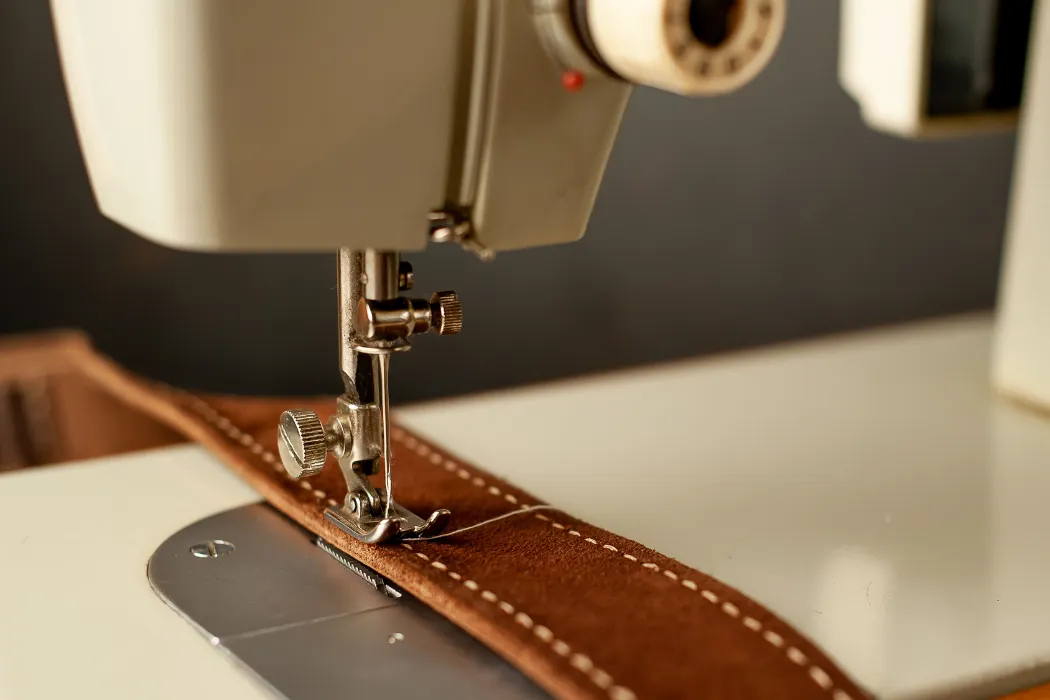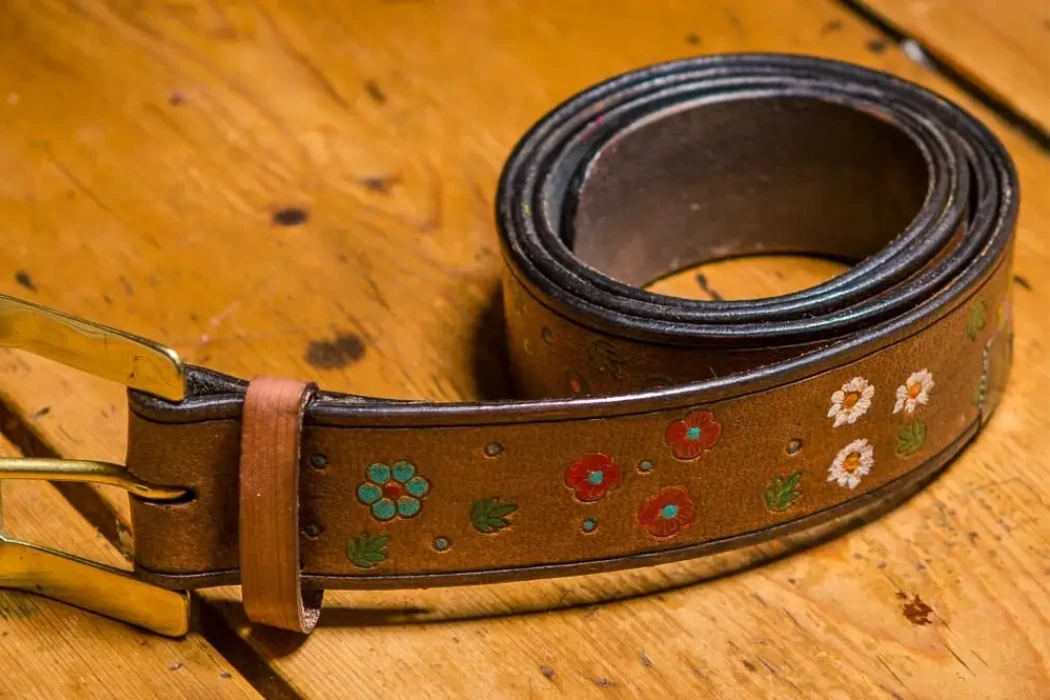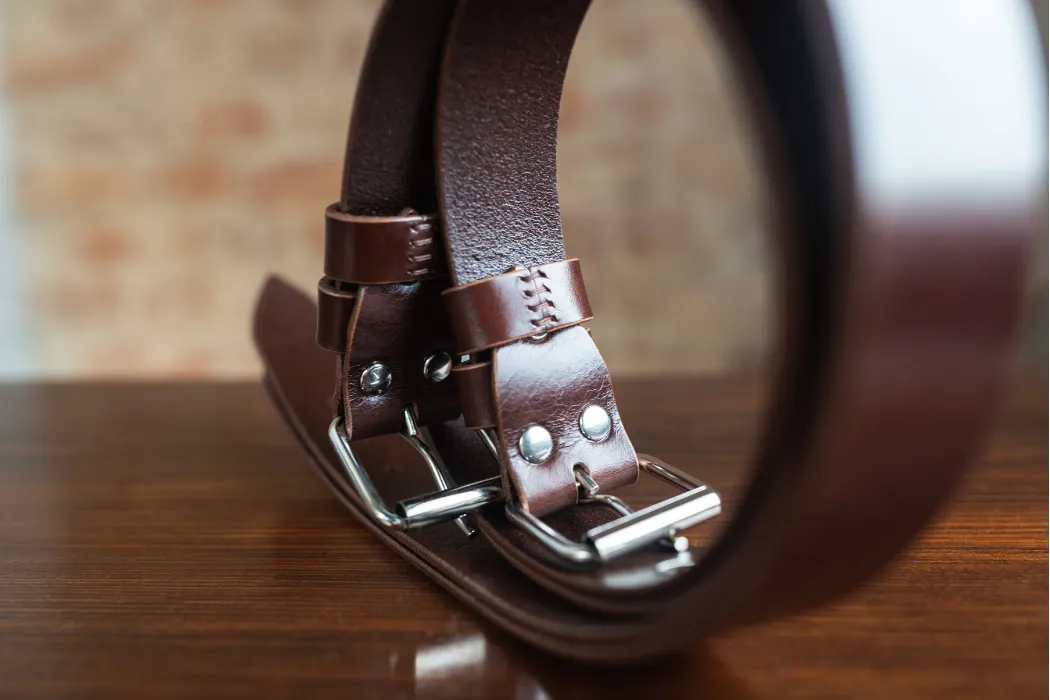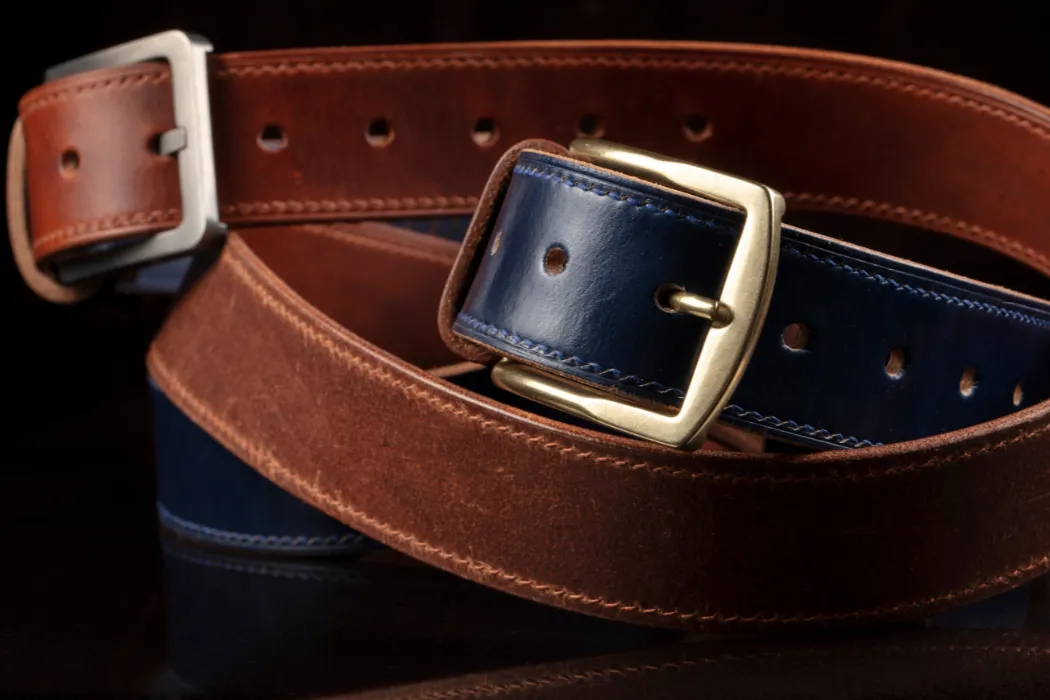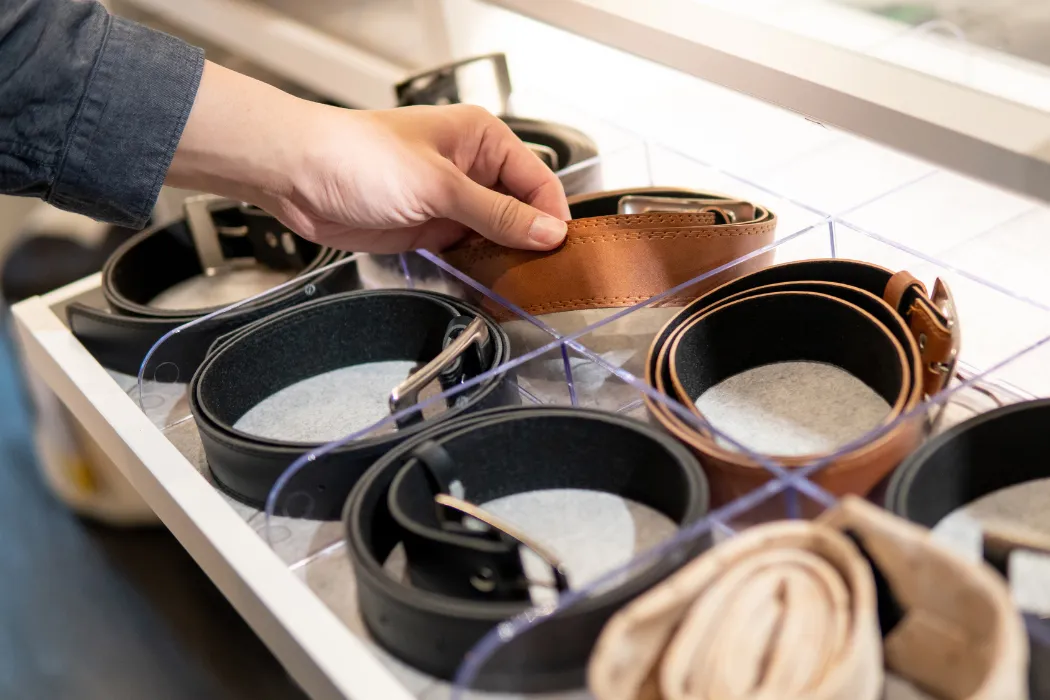
Corporate gifting is no longer about generic tokens—it’s about presenting something that feels both personal and enduring. For HR leaders, procurement specialists, and brand managers seeking meaningful ways to recognize teams or impress clients, corporate and promotional leather belts stand out. Offering full-grain quality that lasts over a decade and the ability to develop a distinguished patina with time, a leather belt transforms a simple accessory into a symbol of reliability and prestige.
This article explores why leather belts make exceptional business gifts, detailing the differences between full-grain and PU options, branding techniques like debossing and foil stamping, and material specifications such as 8.5–9.5 oz thickness and 3.3 cm width. You’ll also discover how to create premium unboxing experiences, manage mass sizing through cut-to-fit designs, and meet tight event lead times in as little as 2–4 weeks—all essential insights for building a corporate gifting program that truly reflects brand quality.
Why Choose Leather Belts for Corporate Gifts?
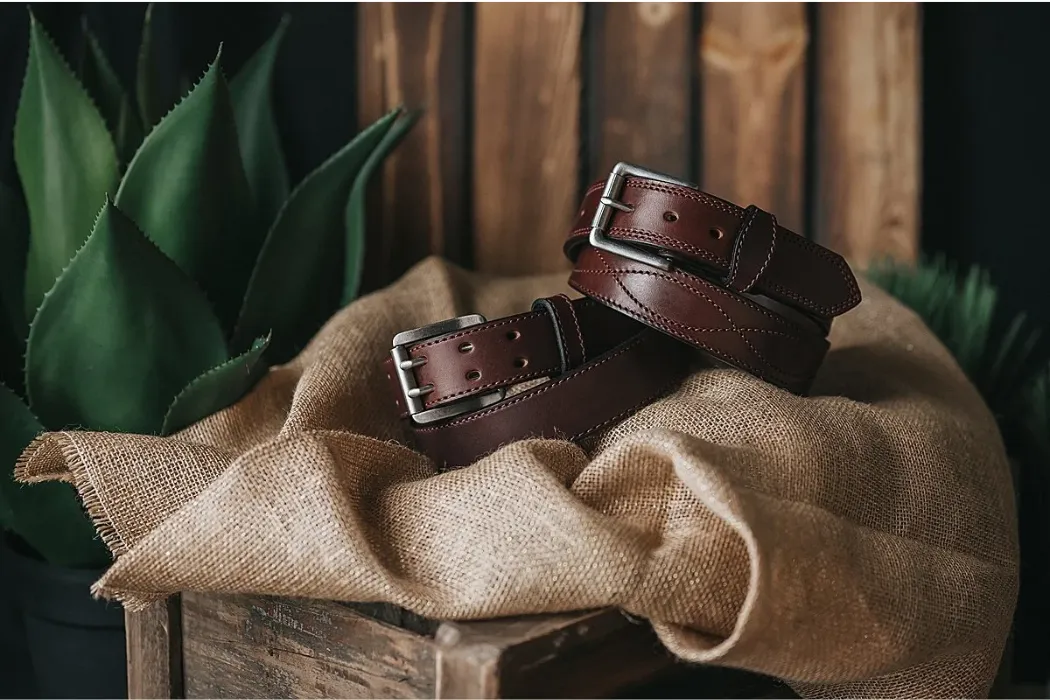
Leather belts make perfect corporate gifts because of their lasting quality, functional appeal, and high perceived value. Full-grain leather offers durability, develops an elegant patina over time, and aligns with professional aesthetics suited for business environments.
Timeless Professional Appeal and Brand Value
Leather belts carry an inherent sense of refinement—universally practical yet unmistakably sophisticated. They project confidence and professionalism, making them suitable for executives, clients, and team recognitions alike. As a corporate gift, they seamlessly fit within professional dress codes while adding tangible everyday value.
Over time, the natural patina of genuine leather builds character, enhancing the belt’s appearance and reinforcing an impression of longevity and quiet luxury. This evolving texture mirrors ideals many brands strive for: durability, credibility, and enduring prestige. For corporate gifting, a genuine leather belt becomes more than a gesture—it becomes a shared symbol of quality and permanence.
Material Choices, Durability, and Technical Superiority
When choosing leather belts as corporate gifts, understanding the technical quality of the material ensures both practical and reputational value. Premium belts are distinguished by their grade, thickness, and certification, which directly affect how they age and perform under daily use.
- Full-grain cow leather from double butt cuts, 8.5–9.5 oz thick (~0.4 cm), provides optimal tensile strength and exceptional resistance to stretching or distortion, maintaining structure even after years of wear.
- High-end manufacturers often use LWG-certified leathers, ensuring sustainability and consistent quality, while offering warranties from 5 years (Von Baer) up to 100 years (Saddleback), signifying deep confidence in material craftsmanship and ISO-aligned production integrity.
Such technical superiority doesn’t only guarantee longevity – it demonstrates brand reliability. From the dense fiber structure of full-grain hides to the meticulous finishing processes, each belt conveys attention to detail, echoing the same standards companies want reflected in their corporate culture.
Research Insights and Specifications
Supporting research reinforces why full-grain leather is the optimal material for executive gifting. The following data points summarize its physical performance and customization potential, which collectively elevate its appeal in both luxury and practicality.
- Full-grain cow leather from double butt cut hides, 8.5–9.5 oz thick (approx. 0.4 cm), provides consistent durability and flexibility for daily wear.
- Belt dimensions: 70–119 cm lengths, 3.3 cm width, 0.4 cm thickness, and weight around 200 g — a balanced profile for comfort and sturdiness.
- Dress belts typically use 8.5 oz or lighter full-grain/top-grain leather for sleek professional presentation.
- Warranties range from 5 years (Von Baer) to 100 years (Saddleback), signaling robust material confidence.
- Customization options include embossed logos or initials, reversible colors, 180° rotating buckles, and gift box packaging—ideal for branding integration.
These physical and functional characteristics reflect a balance of mechanical strength and aesthetic finesse—qualities rarely matched by synthetic alternatives. For brands, that balance translates into reliability, sophistication, and a lasting impression with every gift delivered.
How to Subtly Brand a Belt (Debossing vs. Foil)?
Debossing creates a subtle, long-lasting indentation ideal for understated branding, while foil stamping applies metallic layers for a premium finish but requires careful sealing for durability.
Understanding Debossing and Foil Stamping on Leather Belts
When designing a branded belt, the finish chosen—whether debossed or foil-stamped—defines not only the appearance but also the tactile impression and longevity of the logo or motif. Both techniques are rooted in precision craftsmanship but vary greatly in process and result.
- Debossing uses cold-press pressure to create up to 3mm deep indentations using brass or magnesium dies, with no heat applied.
- Foil stamping involves a heated die to transfer metallic or colored foils such as gold, silver, black, or clear, producing a high-contrast visual effect.
- Debossing yields a timeless, tactile mark suitable for subtle corporate branding, while foil stamping emphasizes luxury and shine.
Debossing offers a restrained elegance that communicates authenticity—a physical impression pressed into the hide that speaks to endurance and craftsmanship. Foil stamping, conversely, provides sparkle and prestige. When used together (deboss with foil overlay), they can merge texture and sheen for high-end results.
Technical Process, Durability, and Application Considerations
Beneath the surface, both techniques require experienced handling and well-calibrated machinery. The die, the material thickness, and the chosen finish influence not only the visual consistency but also how the branding endures over time.
- Die production requires around 24 hours to create precise brass or magnesium dies from AI/EPS/PDF artworks, with another 24 hours for stamping completion.
- Debossing is physically embedded and extremely durable for high-contact surfaces, while foil can fade or peel under abrasion or sunlight unless coated with transparent film.
- Thicker leather requires higher pressure calibration; excess force can damage thinner grades, calling for precise equipment and expert control.
- Foil stamping suits premium or commemorative gifting runs, whereas debossing is ideal for large orders (e.g. 500 belts) that need longevity and consistency.
For corporate gifting, debossing represents timeless craftsmanship—low maintenance with consistent results across large production volumes. Foil stamping, while visually elevated, demands additional coatings and handling care, best reserved for limited premium collections where artistic impact outweighs wear exposure.
Choosing the Right Price Point: PU vs. Leather?
PU leather belts cost nearly half as much as genuine leather options but offer limited lifespan and lower perceived luxury value. Genuine leather lasts over a decade, develops patina, and enhances brand prestige, ideal for premium or executive gifting.
| Material Type | Durability & Lifespan | Average Cost Range (Corporate Gifting) |
|---|---|---|
| PU (Polyurethane) Leather | 2–4 years; prone to cracking and reduced breathability | Approx. 50% of genuine leather pricing; best for bulk promotion orders |
| Genuine Leather (Full-Grain / Top-Grain) | 10–20 years; improves with patina over time | Higher cost; ideal for executive and premium gifting |
Understanding PU and Genuine Leather Value Differences
PU leather and genuine leather differ fundamentally in composition, texture, and role within gifting programs. PU leather is a synthetic product formed by coating a fabric base—usually polyester or cotton—with a polyurethane layer. This gives it a consistent appearance but lacks the organic nuances of real leather. Genuine leather, on the other hand, is produced from animal hides and retains natural fibers and textures that develop a patina over time, enhancing its appeal and lifespan.
- PU leather is made by applying a polyurethane layer over a polyester or cotton base, offering a uniform but synthetic look.
- Genuine leather, derived from animal hides, develops a natural patina and can last 10–20 years with proper care.
- PU options are cost-effective for promotional volumes (e.g., 500+ belts), while genuine leather conveys enduring brand quality.
Technical and Cost Comparison: Durability, Breathability & Longevity
From a technical standpoint, genuine leather offers stronger tensile integrity, superior breathability, and a longer product lifecycle compared to PU alternatives. These material attributes influence both perceived and practical value in gifting scenarios, especially when longevity or executive quality matters.
- PU belts are typically thinner, less breathable, and more prone to cracking due to their polyurethane coating and fabric base.
- Genuine leather variants like full-grain and top-grain maintain strength and structure for 10–20 years.
- PU materials cost roughly 50% less than genuine leather due to streamlined synthetic production.
- Hoplok’s certified quality standards (ISO 9001, LWG) ensure both PU and leather belts meet reliable durability benchmarks for gifting programs.
In summary, PU leather provides short-term affordability and consistent appearance, making it suitable for high-volume promotional orders. Genuine leather demands higher investment but reinforces lasting prestige, tactile sophistication, and sustainability credentials worth aligning with executive or long-service award gifting strategies.
Create Your Signature Leather Belts with a Trusted Global Manufacturer
Creating a Premium Unboxing Experience?
A premium unboxing experience uses high-stiffness boards, layered inserts, and tactile materials like dust bags and tissue to elevate perceived value. When combined with magnetic closures and ISO-tested durability, this ensures every gifted belt feels exclusive from the first lift of the lid.
Designing the Sensory Journey: From Rigid Box to Reveal
The premium unboxing journey begins the moment the recipient touches the package. Every surface, texture, and motion forms part of the story of quality and craftsmanship behind the belt inside. Luxury accessory packaging takes cues from heritage brands where the box architecture is as thoughtfully engineered as the product itself.
- Rigid outer boxes (1.5–2.0 mm greyboard or blackboard) wrapped with printed paper create a stable, luxury feel during lid lift.
- Layered presentation elements—outer lid, dust bag (100–150 g/m² cotton/microfiber), and 17–22 g/m² tissue—guide the user through sequential tactile and visual cues.
- Magnetic closures using 10–15 mm neodymium magnets introduce a crisp ‘snap’ for closure satisfaction, common in premium gift boxes.
- Design inspired by Hermès and Ferragamo multi-piece kits ensures that each belt and buckle have dedicated compartments and coverings.
By orchestrating rigidity, layering, and tactile materials, the act of unboxing becomes more than functional—it transforms into a ceremonial experience that reinforces the exclusivity of the corporate gift.
Engineering Luxury Through Materials and Standards
The material and structural integrity of a premium gift box define how well the experience translates across hundreds or thousands of units. Engineering standards such as ISO and ISTA provide a measurable framework to ensure that each box delivers the same sense of luxury, durability, and precision.
- Use 400–450 g/m² GC1/GC2 folding boxboard or 1.5–2.0 mm rigid boards for high bending stiffness and edge crush resistance.
- Follow ISO 186 and ISO 536 to measure board grammage and ISO 5629 for bending stiffness to ensure consistent tactile performance across units.
- E-flute or F-flute micro-corrugated inserts (1.0–1.8 mm) cradle belts securely, minimizing damage during transport.
- Perform ISTA 3A transit testing (drop, vibration, compression) to verify that boxes survive global distribution while maintaining shape and finish.
Through integration of these technical standards, packaging teams can specify not only appearance but also how each box feels in motion, resists deformation, and maintains pristine presentation on arrival—qualities that define modern luxury packaging for corporate leather gifts.
Technical research highlights the link between measurable board stiffness, closure tolerance, and perceived luxury. Moving from 250 g/m² folding cartons to 450 g/m² GC boards drastically alters the tactile “hand feel” and lid behavior—converting a simple box into an experience of engineered precision. When paired with ISO‑defined grammage testing and ISTA‑certified shipping durability, the result is a gift that arrives in perfect condition and opens with confidence, reflecting both brand excellence and attention to detail.
Sizing Solutions for Mass Gifting (Cut-to-Fit)?
Cut-to-fit belts simplify corporate gifting by using adjustable designs and standardized size blanks that fit a 4–6 inch range. This approach allows for bulk production, minimal returns, and easy distribution across mixed-size recipients.
The Concept of Cut-to-Fit Belts for Corporate Gifting
Cut-to-fit design eliminates the need for precise waist measurements, making belts ideal for mass gifting programs. These belts feature adjustable holes or buckle tracks that comfortably accommodate a range of waist sizes, reducing sizing issues among diverse recipients.
- Cut-to-fit design accommodates waist sizes within a 4–6 inch range (e.g., 28–32 inches), minimizing the need for custom sizing.
- Standardized hole spacing at 1-inch intervals supports size flexibility and reduces distribution complexity.
Technical Sizing Standards and Production Specifications
Behind the simplicity of cut-to-fit belt gifting lies careful standardization of sizing formulas and production tolerances. These metrics guide both design precision and manufacturing efficiency for large-scale orders.
- Add 2 inches to trouser waist to determine belt length (e.g., 36-inch pants = 38-inch belt).
- Blank cutting typically adds 10.5 inches (3.5-inch buckle flap + 7-inch tip) to the measured length.
- Available size range spans from 26–70 inches, with widths typically 35mm or 40mm.
- Blanks are standardized for mass manufacturing, ensuring high yield and reduced waste in bulk gifting.
Standard belt sizes often follow 4–6 inch spreads: XS (26–30″), S (28–32″), SM (30–34″), and XL (38–42″), all maintaining 1-inch hole spacing with an additional 5-inch extension beyond the last hole. This consistency ensures comfort adjustments and accounts for future stretch. By aligning on these standardized models, procurement teams can streamline production across large-volume gifting events.
Furthermore, distribution logistics benefit from pre-cut, adjustable blanks rather than individualized belts. Belts may be cut from a master blank of 44.5 inches or longer, then trimmed or re-punched as required prior to final packaging. The result is reduced waste, fewer returns, and uniform presentation across a range of recipients—all while preserving a premium, tailored unboxing experience.
Can You Personalize Belts with Employee Names?
Yes, belts can be personalized with employee names using laser engraving or hand-tooling processes on 3.5 mm thick cowhide leather straps. High-resolution laser systems and skilled finishing maintain durability and a premium look for bulk corporate gifts.
Personalization Options for Employee Name Engraving
Each belt can carry an employee’s name through engraving, embossing, or hand-tooled detailing. The process is refined to ensure that personalization never compromises the structural quality or lifespan of the belt. When designed for corporate gifting, such subtle customization reinforces a sense of belonging and recognition among recipients.
- Employee names can be engraved or hand-tooled on full-grain cowhide without affecting belt integrity.
- Laser engraving ensures consistent and professional results ideal for bulk corporate orders.
- Hand-tooling or debossing offers a crafted, artisan feel reflective of premium corporate branding.
- Finishes like Fiebing’s Resolene add protection and enhance visual appeal.
By combining skilled craftsmanship with advanced laser systems, manufacturers can scale personalization across hundreds of belts while preserving a handmade appeal. This balance between precision and artistry is what makes each belt a meaningful gesture rather than just a uniform accessory.
Technical Specifications and Production Workflow
The manufacturing process supporting personalized belts is detail-oriented, following specific material characteristics and machine settings to ensure repeatable quality. Each belt moves through a standardized production sequence, allowing name engraving to fit seamlessly within a mass-production context.
- Uses 3.5 mm thick, 38 mm wide cowhide straps with total belt length of 104 cm including buckle.
- Laser engraving via Speedy 400flexx system, 120 watts, 2” lens, 500 dpi resolution for sharp name detailing.
- Belt holes of 3/16 inch diameter spaced 1 3/8 inch apart; belt length adds 11 inches to waist measurement for overlap.
- Edge skiving, burnishing, and sealing processes ensure durable and professional finishing for each personalized unit.
- Bulk runs can scale to 500+ units with standardized loop sizes (3/8 x 4 inches) and consistent laser settings.
These standardized metrics underpin consistent outcomes across multiple batches, from laser alignment to hole spacing. Finish layers such as protective Resolene coatings enhance durability while preserving the tactile quality of natural leather. As a result, corporate gifting programs can deliver belts that feel distinctly individualized yet professionally uniform across teams.
How to Match Belts with Other Leather Goods?
Belts should visually coordinate with other leather accessories by aligning in color tone, finish, and material type. Matching metals, surface texture, and width with outfit style enhances cohesion, especially in formal or corporate settings.
The Fundamentals of Belt Coordination
Belt coordination begins with visual alignment. This means staying within a consistent color family, maintaining material symmetry, and syncing the surface finish of the belt with that of shoes, wallets, or bags. These subtle alignments are what make an outfit appear thoughtfully balanced rather than pieced together.
- Maintain color-family consistency: dark brown with dark brown, tan with lighter brown; avoid strong contrast unless supported by sole or accent color.
- Match texture and finish: glossy shoes with glossy belts, matte Chelsea boots with matte belts, braided leather only when tonal harmony exists.
Technical Aspects: Width, Material, and Hardware Matching
Beyond visual appeal, several measurable attributes influence a belt’s ability to complement other leather goods. These include the width, material compatibility, and metallic hardware tone. Such technical considerations ensure proportional balance across formal and casual settings.
- Formal widths range from 1 to 1.25 inches; casual or work belts use 1.5–3 inches for utility and loop fit.
- Match materials—leather-to-leather, suede-to-suede—and ensure buckle metal aligns with shoe hardware, watches, or cufflinks.
- Standard sizing adds 2–4 inches to waist for adjustability, targeting the middle of 5 belt holes (~15 cm).
Research across leather goods manufacturing references supports these guidelines. Widths typically follow structured proportions—1″ to 1.25″ for dress shoes, 1.5″ to 2″ for casual looks, and wider for utility belts. Material and color tone matching retain the highest value-perception in professional environments, particularly in gift or corporate runs where consistency signals quality. Texture or tone variations are best reserved for casual contexts, where a degree of asymmetry adds personality without undermining coherence.
Lead Times for Urgent Event Orders?
Urgent event leather-belt orders typically require 2–4 weeks for production, with rush manufacturing and air freight as the main accelerators. Full custom or high‑volume runs may extend lead times to 5–7 weeks, while smaller, simpler orders can ship in as little as 1–2 weeks.
| Maker / Brand | Product or Context | Lead Time / Notes |
|---|---|---|
| Nicks Boots | Everyday, Natural Veg Tan, Stitched Work Belts | 4–18 weeks depending on model |
| Mason Leather | Semi‑custom belts & holsters | 3–5 weeks to ship |
| Galen Leather | Handmade leather goods | 1–2 weeks typical, 3–4 weeks extended |
| Frank Clegg | Made‑to‑order leather bags | 5–7 weeks benchmark |
| Wright Leather Works | Custom holsters with rush option | Rush option: 2–3 weeks |
| Lider Kemer (Turkey) | OEM belt manufacturer | Air cargo for urgent orders: 2–5 days transit |
Understanding Typical and Rush Lead Times
Lead time for a made‑to‑order leather belt depends primarily on workshop capacity, material readiness, and customization level. Across artisan and boutique manufacturers, the general baseline falls between three and six weeks, although some operations can consistently achieve faster results with simpler builds.
- Made‑to‑order belts generally take 3–6 weeks to produce depending on complexity and finishing.
- Mason Leather cites 3–5 weeks, Nicks Boots ranges from 4 to 18 weeks by model, and Galen Leather achieves 1–2 weeks on simpler builds.
- Wright Leather Works offers a rush slot cutting turnaround to 2–3 weeks, demonstrating what’s possible with prioritized scheduling.
- Complex stitched or large‑quantity orders may extend to 5–7 weeks, mirroring the production pattern seen at Frank Clegg’s workshop.
These benchmarks show why corporate or event‑driven orders demanding full customization or large volumes should plan for at least a three‑week horizon, while smaller runs on standardized templates can ship within two weeks under rush conditions.
How Hoplok Compresses Production for Event Deadlines
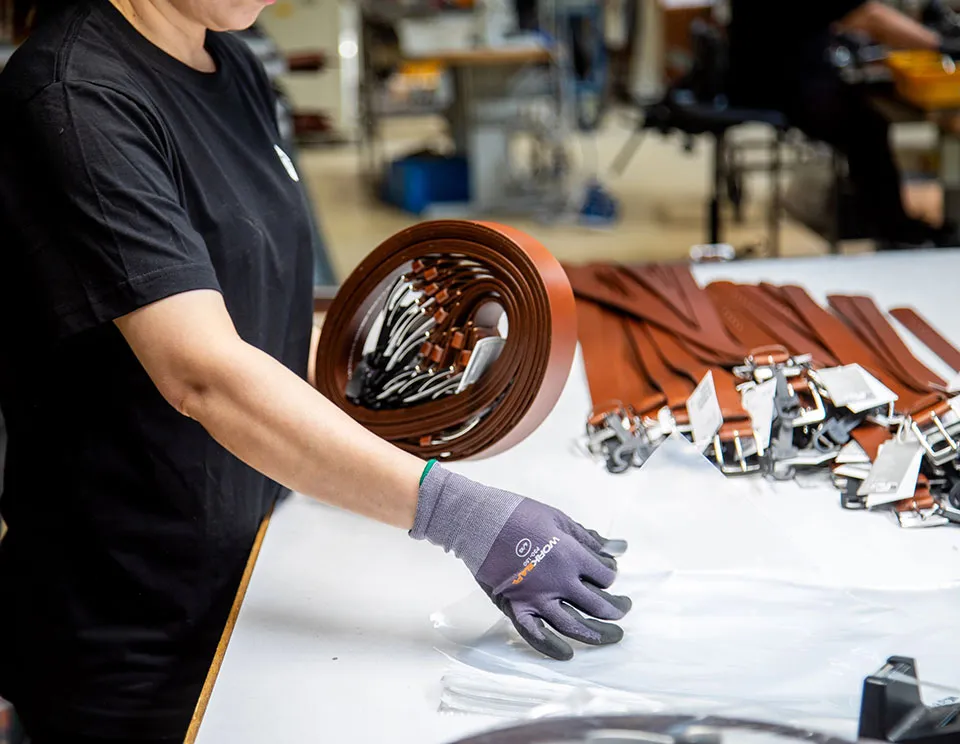
Hoplok’s production workflow is designed to manage tight, event‑specific schedules without sacrificing build quality. Through in‑house tanning, concurrent processes, and expedited logistics, the company can compress what is typically a month‑long cycle into mere weeks.
- An integrated tannery (ProPelli) ensures immediate access to leather, removing dependencies on outside suppliers.
- A dedicated sample unit can deliver prototypes within 2–7 days, allowing client approvals before bulk production.
- The Speed‑to‑Market workflow enables concept‑to‑mass‑production in 15–20 days for prioritized event runs.
- Air freight transit of 2–5 days replaces sea freight for urgent shipping, providing crucial time savings.
- Flexible minimum order quantities (100 units) and dual production lines enable overlapping stamping, assembly, and inspection to accelerate throughput.
By combining agile supply‑chain control with rapid logistics, Hoplok consistently achieves delivery cycles well within 2–4 weeks — the range that aligns with most corporate event deadlines.
Final Thoughts
Corporate leather belts strike the perfect balance between usefulness, craftsmanship, and brand storytelling. Their longevity, tactile richness, and professional aesthetic make them a standout choice for organizations that want to elevate their gifting program beyond ordinary merchandise. Whether personalized with a discreet logo or packaged in a rigid magnetic box, a genuine leather belt conveys appreciation with quiet sophistication—turning every gesture into a tangible symbol of enduring partnership and corporate pride.
For businesses, the decision to invest in premium leather gifting is more than a design choice—it’s a statement of long-term values. From full-grain material selection and sustainable certifications to precision embossing and ISO‑tested packaging, every technical detail reflects the standards that define a trusted, forward‑thinking brand. When executed thoughtfully, corporate leather belts become lasting ambassadors of quality, ensuring your brand is remembered every single day they’re worn.
Frequently Asked Questions
What is the minimum order for custom logo belts?
Typical minimum order quantities (MOQs) for custom logo belts range from 12 to 50 units for standard logo-printed designs. Specialty or fully custom programs may require 100–500 units, while some vendors offer minimal or no minimums for print‑on‑demand runs. A practical benchmark for corporate gifting is around 25–50 pieces per logo design.
What is the best way to brand a belt (Debossing vs Foil)?
For corporate belts, debossing is preferred for durability and long-term brand presence, as the logo is pressed into the leather and remains visible over time. Hot foil stamping creates a more luxurious shine but is better for short-term use since foil can fade or peel on high-contact areas.
Can you produce ‘Cut-to-Fit’ belts for mass gifting?
Yes, cut‑to‑fit belts are ideal for mass gifting due to their universal sizing. They are made at a standard adjustable length of about 120–130 cm (47–51 in) and can be trimmed by the recipient. Factories typically produce hundreds to thousands of units per batch, making 500‑piece orders routine.
How long does it take to produce 500 custom gift belts?
Producing 500 custom belts generally takes 4–5 weeks, including 1–1.5 weeks for design and sample approval, 1–2 weeks for sourcing, and around 2–3 days for assembly and packaging. Factory scheduling may add an additional 5–7 days for final readiness.
Do you offer custom gift box packaging for corporate orders?
Yes, most manufacturers provide tailored gift box options for corporate belt orders. Boxes can be made in rigid lid-and-base styles with paper or cardstock finishes, starting from 100 up to 1,000 pieces as the minimum order for fully branded designs with logo embossing or prints.
Can I mix men’s and women’s belts in one corporate order?
Yes, you can combine men’s and women’s belts in one order. Factories handle mixed batches easily, differentiating mainly by width—men’s dress belts are usually 1–1.5 in wide, and women’s belts are generally narrower, often under 1 in.