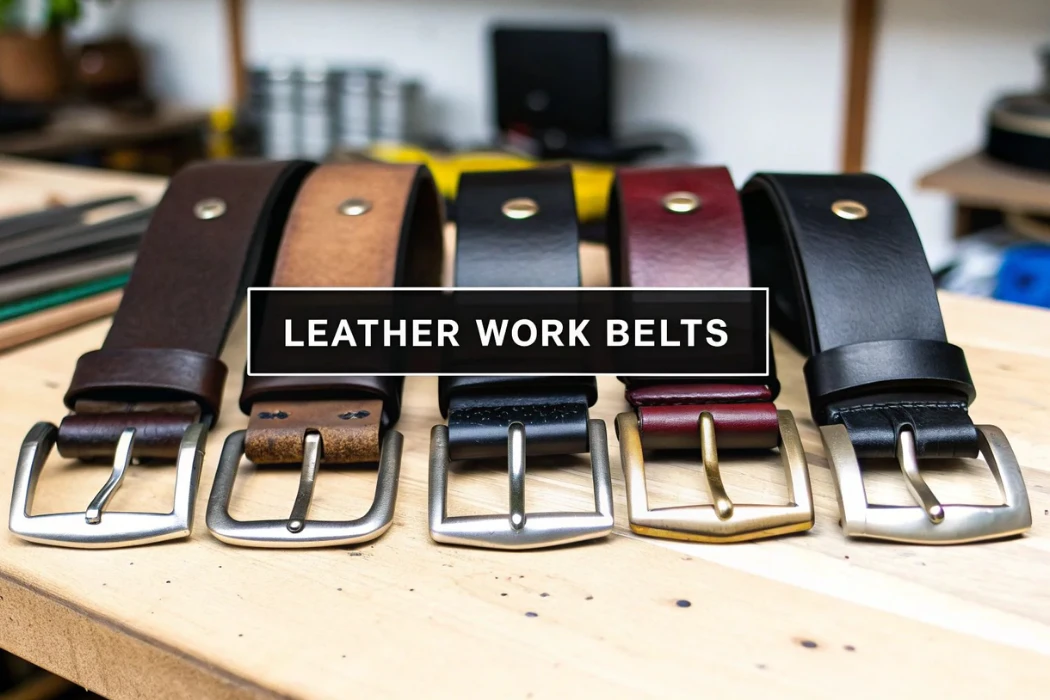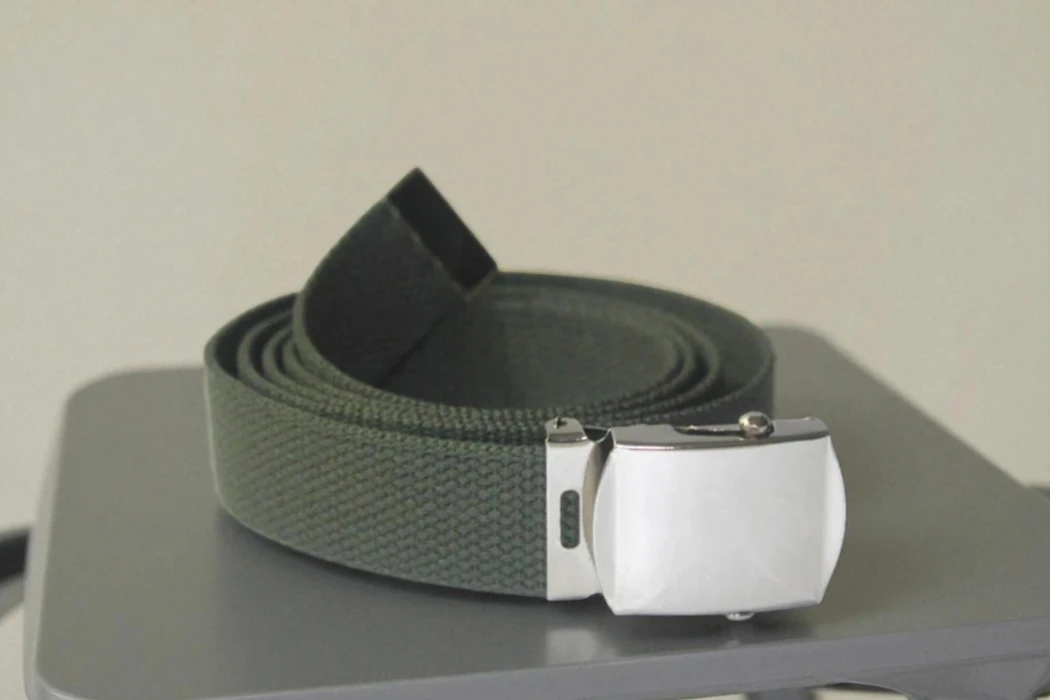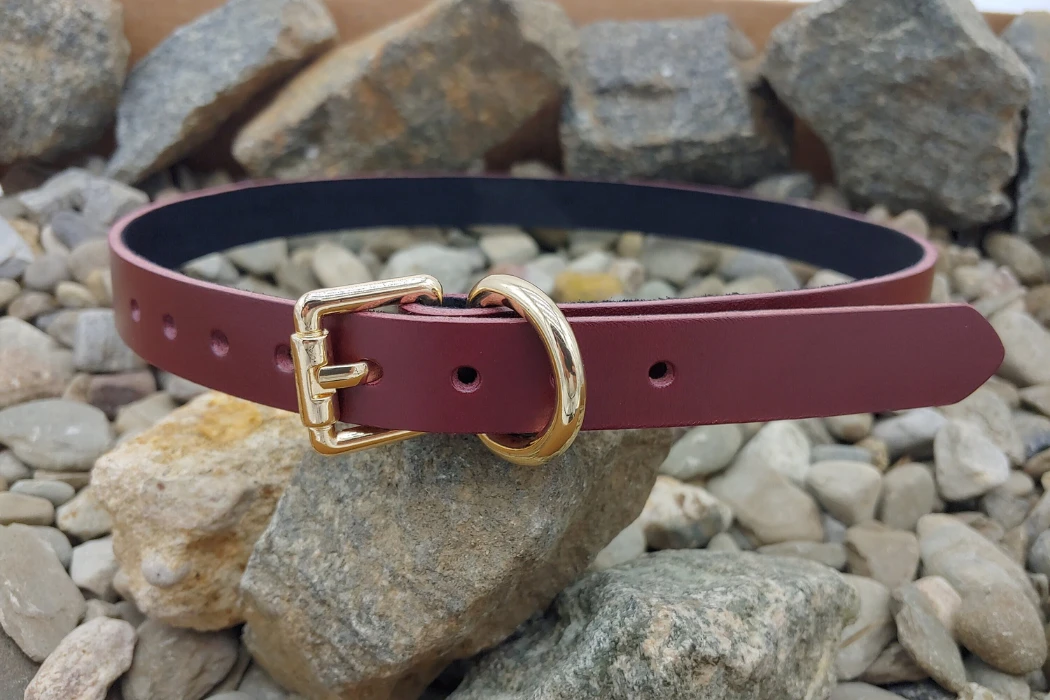
A tool belt on a construction site earns its keep in ways a dress belt never will. It gets soaked in rain, scraped against rebar, loaded down with hammers, pliers, and tape measures, then left baking in a hot truck cab overnight. Most belts simply cannot handle that kind of daily punishment. So buyers need to know what actually separates a rugged job-site belt from a fashion accessory.
A heavy-duty leather work belt comes down to five things: leather thickness and grain, stitching strength, buckle hardware, safety-rated attachment points, and supplier reliability. Skip any one of these checks, and a belt that looks tough on day one can fail by month three.
This guide breaks down each of those five factors so buyers can spot a genuinely durable belt before placing an order. For teams sourcing belts alongside other job-site leather gear, this specialty belt manufacturing guide covers the wider category in more depth.
What Makes a Leather Belt “Heavy-Duty” Enough for Trade Work?
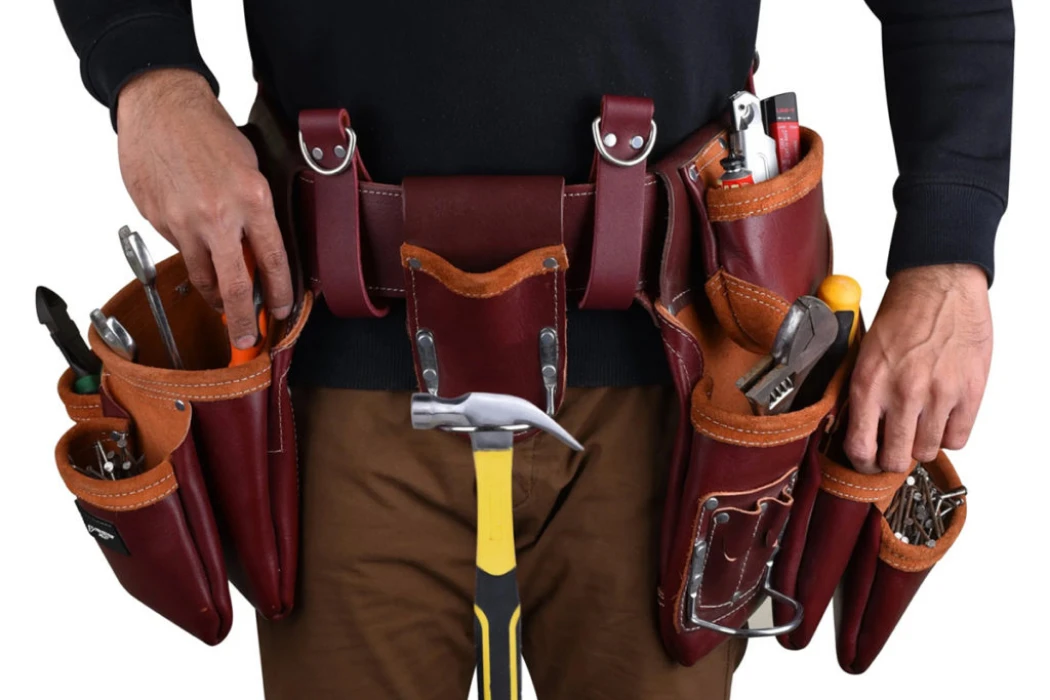
A heavy-duty leather work belt depends on three things working together: leather thickness, the cut of the hide, and the tanning method. Buyers should look for a full-grain or top-grain belt that measures at least 8 to 10 ounces thick. Anything lighter than 6 ounces tends to stretch and crack fast under tool weight. So thickness and leather quality set the baseline before hardware or stitching even come into play.
Leather Weight and Thickness, Measured in Ounces
Leather suppliers measure thickness in ounces, not millimeters, because that is the traditional tannery unit. One ounce equals about 1/64 of an inch, or roughly 0.4mm. This number tells a buyer almost everything about how a belt will hold up.
- 2-3 oz (0.8-1.2mm): Too thin for belts. Works well for wallets, linings, and small leather goods.
- 4-5 oz (1.6-2mm): Common in fashion and dress belts, but it can’t handle tool weight.
- 6-7 oz (2.4-2.8mm): A mid-range option, common in casual belts and light-duty aprons.
- 8-9 oz (3.2-3.6mm): The starting point for genuine work belts and tool rigs.
- 10-12 oz (4-4.8mm): Heavy-duty territory that suits holsters, tool belts, and industrial rigging straps.
For any belt meant to carry a hammer loop or a full tool pouch, buyers should look for at least 9 ounces of leather. Anything thinner will stretch out of shape within weeks.
| Weight (oz) | Thickness (mm) | Recommended Use Case |
|---|---|---|
| 2-3 oz | 0.8-1.2mm | Wallets, linings, small leather goods |
| 4-5 oz | 1.6-2mm | Fashion and dress belts |
| 6-7 oz | 2.4-2.8mm | Casual belts, light-duty aprons |
| 8-9 oz | 3.2-3.6mm | Standard work belts, tool rigs |
| 10-12 oz | 4-4.8mm | Holsters, heavy tool belts, rigging straps |
Full-Grain vs. Top-Grain vs. Split Leather
Not all leather cut to the same thickness performs the same way, because the layer of the hide matters just as much as the ounce weight. Tanneries split hides into layers, and each layer behaves differently under stress.
- Full-grain leather: Uses the outermost layer of the hide, including the natural grain. It keeps the tightest fiber structure, so it resists tearing and stretching the best. It also develops a patina over years of use instead of just wearing out.
- Top-grain leather: Workers sand and buff the surface to remove natural marks, then often coat it for a uniform look. It stays strong but loses a small amount of the fiber density found in full-grain.
- Split leather: Tanneries take this from the lower layers after cutting away the top grain. It is thinner in fiber strength and usually needs a coating, embossing, or backing to hold its shape. Split leather costs less, but it is not the right choice for heavy tool loads.
Full-grain and top-grain leather both work for job-site belts, but split leather should be reserved for linings or low-stress accessories.
Vegetable-Tanned vs. Chrome-Tanned Leather for Job-Site Durability
Tanning turns raw hide into usable leather, and the tanning method changes how a belt handles heat, moisture, and repeated bending. Two methods dominate the belt industry.
- Vegetable-tanned leather: Uses tannins from tree bark and plant matter. It holds its shape well, keeps a firm structure under load, and molds slightly to the wearer over time. This is the standard choice for holsters, gun belts, and heavy tool belts.
- Chrome-tanned leather: Uses chromium salts instead of plant tannins. It tans faster, stays more flexible in cold weather, and takes dye more evenly. Many bags and garments use chrome-tanned hides, but it is less common in structured work belts because it holds a shape less firmly.
For a belt that needs to stay rigid while carrying a loaded tool pouch, vegetable-tanned leather is the more common industry choice. But chrome-tanned leather still works well for belts that prioritize flexibility over rigidity.
Which Stitching and Reinforcement Methods Hold Up Under Daily Stress?
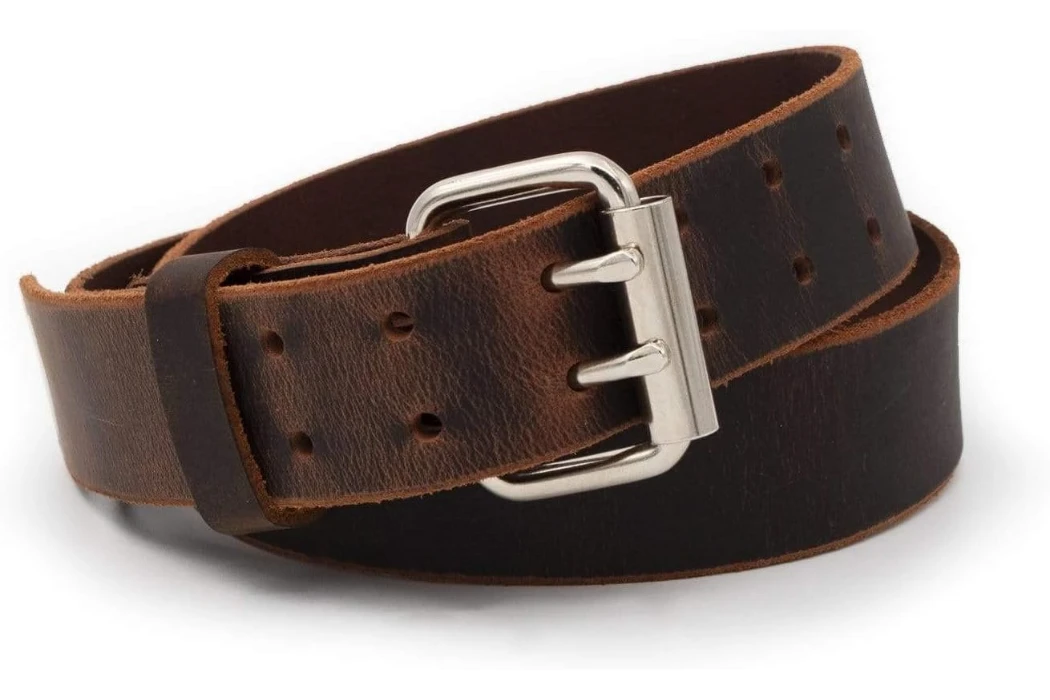
Stitching and reinforcement decide whether a belt survives years of tool pulling or fails at the seams within months. Lock-stitch construction holds up best because each stitch locks independently, so one broken thread will not unravel the whole seam. Bar-tacking adds extra strength at stress points like loop attachments and buckle ends. Rivets often back up stitching at the heaviest load points, since metal fasteners resist sudden pulling force better than thread alone.
Lock-Stitch vs. Chain-Stitch Construction
Belt makers pick between two main stitch types, and the choice affects how a seam behaves once something finally goes wrong. Each thread path handles stress in a different way.
- Lock-stitch: Two threads, a needle thread and a bobbin thread, interlock in the middle of the material layers. If one stitch breaks, the lock holds neighboring stitches in place, so the seam only fails at that single point. Most industrial single-needle and double-needle leather machines use this method as the default.
- Chain-stitch: A single thread loops through itself in a chain pattern, which sews fast and flexes easily. But if the thread breaks or an end comes loose, the whole seam can unravel the way a pulled thread unravels a sweater.
- Thread weight: Belt stitching commonly uses bonded nylon thread rated V69, V92, or V138, with the heavier V138 reserved for the seams that take the most load.
For belts that take daily abuse, lock-stitch construction is the safer structural choice. Chain-stitch still shows up in decorative topstitching, where the unraveling risk matters less.
Bar-Tacking at High-Stress Points
Certain spots on a belt take far more pulling force than the rest of the strap. Plain stitching alone can wear through at those points over time. That is where bar-tacking comes in.
- What it is: A dense, short zigzag or box stitch pattern, usually a quarter to half an inch long, packed with far more thread than a normal seam.
- Where it’s used: Buckle attachment points, belt loop tabs, tool loop bases, and the corners of pouches or holsters where straps meet hardware.
- Why it matters: A bar tack packs dozens of stitches into a tiny footprint. That spreads the pulling load across many threads instead of one line. That lets the point resist tearing even after repeated yanks.
A belt without bar-tacking at its hardware points often tears at the buckle end long before the rest of the strap shows any wear.
Rivets vs. Stitching on Load-Bearing Areas
Stitching and rivets solve the same problem in different ways, and most heavy-duty belts end up using both instead of picking one over the other.
- Rivets: Metal fasteners that pass through multiple leather layers and lock in place with a die. They resist sudden shock and pulling force well, and they will not fray or loosen the way thread sometimes can.
- Stitching: Spreads stress along a line instead of a single point, and it flexes with the leather as the belt bends around the body. It is also easier to repair in the field than a rivet.
- Combined approach: Many tool belts and rigging straps rivet the buckle end and keeper loops, then stitch the rest of the seam. That way the belt gets rivet strength where the pulling force runs highest and stitching flexibility everywhere else.
Buyers should expect rivets at the buckle and loop attachment points on a genuine heavy-duty belt, with stitching handling the rest of the seam.
How Do Buckle and Hardware Choices Affect Durability and Comfort?
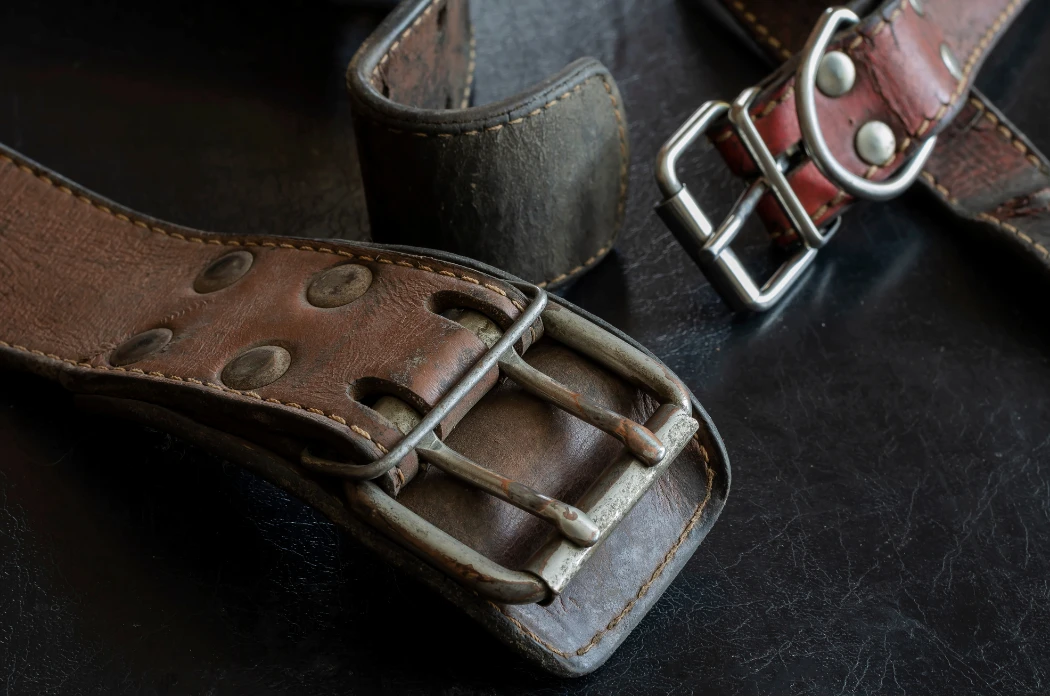
Buckle and hardware choices affect two things on a work belt. They decide how long the metal survives daily wear, and how comfortable the belt feels by the end of a shift. Garrison buckles are the simplest and toughest design. Roller buckles cut down on strap friction, while ratchet buckles allow finer sizing adjustments. Solid brass and stainless steel resist rust and heavy pulling best. Zinc alloy hardware works fine for lighter-duty gear at a lower cost.
Garrison, Roller, and Ratchet Buckle Systems
Belt buckles come in a few standard mechanisms. Each one trades off simplicity, adjustability, and cost in a different way.
- Garrison buckle: A single metal frame with a fixed prong that passes through a punched hole in the strap. It’s the oldest and simplest design, used on military-style and classic work belts. Few moving parts mean less to break, but sizing stays fixed to the hole spacing punched into the strap.
- Roller buckle: Adds a rotating bar or roller where the strap passes through the frame. The roller cuts down friction and wear on the leather at the point the belt bends. That means the strap doesn’t crease or crack as fast at that spot. Common on belts that get buckled and unbuckled many times a day.
- Ratchet buckle: Uses a track of teeth on the strap and a ratcheting mechanism in the buckle instead of a single prong hole. It allows sizing in small increments rather than fixed hole spacing, so the wearer can fine-tune fit through a full shift as clothing layers change.
Garrison buckles suit belts that stay set at one size. Roller buckles suit belts that get adjusted often, and ratchet buckles suit belts that need fine sizing control.
| Buckle Type | Mechanism | Best For | Durability Trade-off |
|---|---|---|---|
| Garrison | Fixed prong through punched holes | Simple, low-cost belts with stable sizing | Fewest moving parts, but sizing is fixed to hole spacing |
| Roller | Rotating bar or roller at the frame | Belts buckled and unbuckled often | Less strap wear, but one extra moving part |
| Ratchet | Toothed track with ratcheting mechanism | Belts needing fine, incremental sizing | More adjustment precision, more mechanical parts that can wear |
Hardware Metals — Brass, Steel, and Zinc Alloy
The metal used for buckles and hardware decides how well it holds up to weight, weather, and years of use.
- Solid brass: A copper-zinc alloy that resists corrosion well and holds its shape under heavy load. It’s heavier than other options and costs more, but it lasts for years even in humid or coastal environments.
- Stainless steel: Highly resistant to rust and corrosion, and it handles high pulling force without bending. A common choice for hardware that sees constant tension, like tool belt D-rings and ratchet mechanisms.
- Zinc alloy (also called zamak): A lighter, lower cost die-cast metal common on mid-range and fashion hardware. It works fine under light to moderate loads, but it can crack or bend under heavy, repeated stress. It also corrodes faster than brass or stainless steel without a plating layer.
For genuine heavy-duty belts, solid brass or stainless steel hardware is worth the extra cost. Zinc alloy fits better on lighter-duty or fashion-focused belts.
Corrosion Resistance for Outdoor Job Sites
Job sites expose hardware to rain, sweat, dust, and temperature swings that indoor accessories never face. That makes corrosion resistance a real durability factor, not just a cosmetic one.
- Plating matters: Many steel and zinc alloy parts get a plating layer, like nickel, chrome, or powder coating, to add a barrier against moisture. Once that plating wears through, the base metal underneath can start to rust or pit.
- Solid metals resist longer: Solid brass and stainless steel don’t rely on a plating layer, so scratches and wear don’t expose a weaker material underneath. That makes them the more reliable choice for belts used outdoors every day.
- Environment matters too: Coastal, humid, or high-sweat environments speed up corrosion on lower-grade hardware, while dry inland climates stay more forgiving even for zinc alloy parts.
Buyers sourcing belts for outdoor or humid regions should prioritize solid brass or stainless steel hardware over plated zinc alloy, since plating eventually wears away.
Are There Safety Standards or Load Ratings Buyers Should Check?
No single regulation dictates exactly how a work belt must be built, but two frameworks shape what serious buyers should look for. OSHA’s General Duty Clause and its rules on falling object hazards require employers to prevent tools from dropping at height. ANSI/ISEA 121 is the voluntary industry standard covering design and testing requirements for tool tethering attachment points, lanyards, and containers.
OSHA General PPE Guidance for Trade Workers
OSHA does not publish a rule that names tool belts directly, but several existing standards still shape how employers treat them.
- General Duty Clause: Requires employers to keep the workplace free of recognized hazards, which includes the risk of tools falling from height and striking someone below.
- Falling/dropped object standards: OSHA addresses this risk through general industry rules (1910.23, 1910.28) and construction rules (1926.451, 1926.501, 1926.759), both of which cover work at height.
- PPE assessment: Employers typically run a hazard assessment for each job site. A securely fitted tool belt with rated attachment points is one common way to address that risk.
None of these OSHA rules describe belt construction directly. But they push employers toward gear, like a properly rated tool belt, that keeps tools from becoming a falling hazard.
ANSI/ISEA 121 and Tool-Tethering Attachment Points
ANSI/ISEA 121 fills the gap OSHA leaves open, since it spells out exactly how a tool attachment point should perform.
- What it covers: First published in 2018 and updated in 2023, the standard covers tool attachments, anchor points, tethers, and containers used at height. It sets design, testing, and labeling requirements for each of these.
- Matched capacity rule: The standard requires the tool attachment, the tether, and the anchor point to each carry a rated capacity at or above the tool’s weight. That way the whole chain holds under load, not just one link.
- Voluntary, not mandatory: ANSI/ISEA 121 itself is a voluntary standard, not an OSHA regulation. But referencing it in a company’s fall protection plan gives employers a documented way to meet the intent of the General Duty Clause.
Buyers who need tool-tethering points on a belt should look for hardware rated to ANSI/ISEA 121. That rating confirms a lab has actually tested the attachment, rather than just assumed it will hold.
Weight Capacity Testing for Tool Loops
Belt tool loops and D-rings don’t come with a universal weight rating the way climbing gear does. So buyers need to look at how a supplier actually tests them.
- Static load testing: Applies a steady, held weight to a loop or attachment point, well above its rated working limit. This confirms the point doesn’t tear or deform under sustained load.
- Dynamic drop testing: Drops a weighted object from height, a method used in ANSI/ISEA 121 testing, to confirm an attachment survives sudden shock loading, not just steady pulling.
- Real-world tool loads: A fully loaded tool belt with a hammer, pliers, a drill, and fasteners can easily carry over 15 pounds. Loops rated only for light accessories will fail fast under that kind of daily use.
Buyers should ask suppliers for actual test data on loop and D-ring capacity, rather than accepting a general claim of heavy-duty at face value.
What Should Buyers Look for in a Work Belt Supplier?
A reliable work belt supplier should offer flexible minimum order quantities, clear customization options, documented quality control, and realistic lead times. Buyers should ask for actual test reports rather than marketing claims, and confirm sample turnaround before committing to a bulk order. A supplier that can explain its own process in specific terms, not vague promises, is usually the safer long-term partner.
MOQ Flexibility and Customization Range
Minimum order quantity, or MOQ, decides who a supplier can work with in practice. It changes based on production scale, tooling costs, and material sourcing. It also varies widely across the belt manufacturing industry.
- Large-scale manufacturers: Often set MOQs in the thousands of units per style, since their production lines are built for scale and long runs. This suits large retailers and established brands placing seasonal or private-label orders.
- Small workshops and studios: Can sometimes accept MOQs in the dozens or low hundreds, but usually at a higher per-unit cost and with less capacity for large reorders.
- Customization range: Covers leather type, color matching (commonly done through Pantone references), hardware finish, stitching color, and logo method. Buyers should ask exactly which of these a supplier can adjust without triggering a new tooling or setup cost.
Buyers testing a new belt line should look for suppliers whose MOQ and customization range match their order size, not the other way around.
Quality Control Checkpoints and Test Documentation
Quality control on a leather belt happens in stages, not just at the very end. Each stage catches a different kind of problem.
- Raw material inspection: Checks incoming leather and hardware for grain quality, thickness consistency, and finish before cutting begins.
- In-line inspection: Monitors stitching, cutting accuracy, and assembly during production, catching defects before they reach the final batch.
- Final inspection and testing: Covers dimension checks, color consistency, and physical tests like tensile strength and color fastness, which measures resistance to rubbing or fading.
- Third-party documentation: Independent lab reports or audit certificates give buyers evidence beyond a supplier’s own claims. Common examples include ISO 9001 for quality management, and social compliance audits such as BSCI and SMETA.
A supplier that can produce actual inspection records and test reports gives buyers something they can verify, rather than a general assurance of “good quality.”
Sample Lead Time and Bulk Production Timelines
Timelines matter as much as quality, especially for brands working against a retail season or a launch date.
- Sample development: Typically takes about 2 to 3 weeks for a leather belt. The exact time depends on how many rounds of revision are needed and how complex the hardware or finish is.
- Bulk production: Commonly runs 60 to 90 days from sample approval to shipment, though this shifts with order size, leather sourcing, and factory backlog.
- Buffer for revisions: Buyers should build in extra time for at least one round of sample correction. The first sample rarely matches the final spec on the first try.
Buyers planning around a fixed launch date should confirm both sample and bulk lead times in writing before agreeing on order quantities.
| Belt Width | Typical Trade Application | Notes |
|---|---|---|
| 1″ (2.5cm) | Everyday carry, light-duty accessory belts | Not built for tool loads |
| 1.5″ (3.8cm) | General trade use, light tool belts, aprons | Entry point for job-site use |
| 1.75″ (4.4cm) | Standard tool belts (carpenters, electricians) | Common all-purpose trade width |
| 2″ (5cm) | Heavy tool belts, framing, tactical and rigger belts | Spreads load across a wider surface |
| 2.25″ (5.7cm) | Heavy load-bearing rigs, suspension systems | Common on suspender-style tool rigs |
| 3″ (7.6cm) | Rigging straps, heavy suspension and support belts | Prioritizes load spread over flexibility |
Frequently Asked Questions About Work Belts
What is the best leather for a tool belt?
Full-grain or top-grain leather in the 8 to 10 ounce range works best for tool belts. It resists tearing and holds its shape under repeated loading. Vegetable-tanned leather is the more common choice for structured, rigid belts, while chrome-tanned leather suits belts that need more flexibility.
How thick should a leather work belt be?
Most genuine work belts fall between 8 and 12 ounces, or roughly 3.2mm to 4.8mm thick. Anything under 6 ounces tends to stretch and lose its shape under daily tool weight.
What is the weight limit for a tool belt?
There is no single industry-wide weight limit, since it depends on the belt’s leather thickness, stitching, and hardware rating. Buyers working with heavier loads should look for hardware tested to ANSI/ISEA 121 and ask suppliers for the actual rated capacity of loops and D-rings.
Are leather tool belts better than nylon ones?
Leather tends to hold its shape and resist abrasion better over years of use. Nylon, on the other hand, is lighter, cheaper, and dries faster after exposure to rain. The better choice depends on the job: leather suits belts that carry heavy tools daily, while nylon suits lighter loads or wet environments.
How do you break in a stiff leather work belt?
Wearing the belt regularly and flexing it by hand around a rounded edge helps loosen the fibers over the first few weeks. A small amount of leather conditioner can help too, but too much softens the leather more than a tool belt actually needs.
What size tool belt do I need?
Belt size should match waist measurement, plus enough room for the tool pouches and loops attached to it. Width should scale with the tool load. A width of 1.5 to 1.75 inches suits light to standard use, while 2 inches or wider suits heavier rigs.
How long do leather tool belts usually last?
A well-made leather work belt, with proper stitching, hardware, and leather weight, commonly lasts several years of daily job-site use. Exact lifespan still depends on climate, load, and maintenance.
Can a leather tool belt be repaired instead of replaced?
Yes, in many cases. A repair shop can re-sew loose stitching, reinforce worn holes, and often replace hardware without rebuilding the whole belt. Full-grain leather tends to be the easiest to repair, since its dense fiber structure holds a new stitch line well.
Choosing a Work Belt That Lasts on the Job
Sourcing a genuinely heavy-duty work belt comes down to five checkpoints. Buyers should look for leather at 8 ounces or more, lock-stitch construction with bar-tacking, and brass or stainless steel hardware. Attachment points should carry a recognized safety rating, and a good supplier documents its quality control and lead times in writing. Skipping any one of these often shows up later as a cracked strap or a bent buckle. For brands and buyers who need belts built to these standards, Hoplok provides the manufacturing solution, backed by vertical leather integration and documented testing.