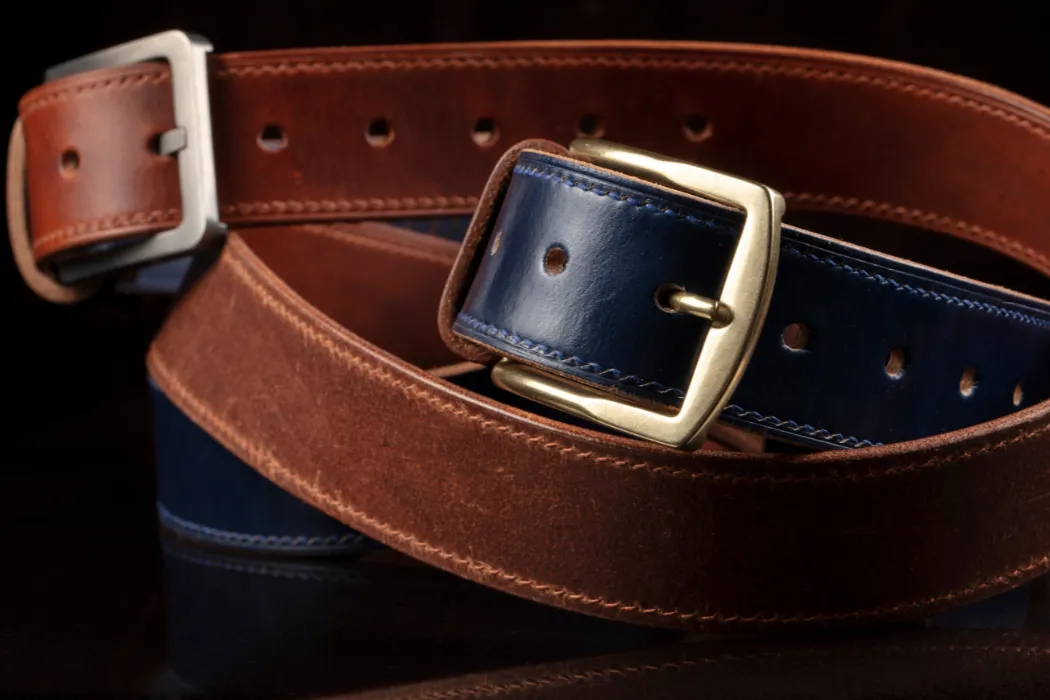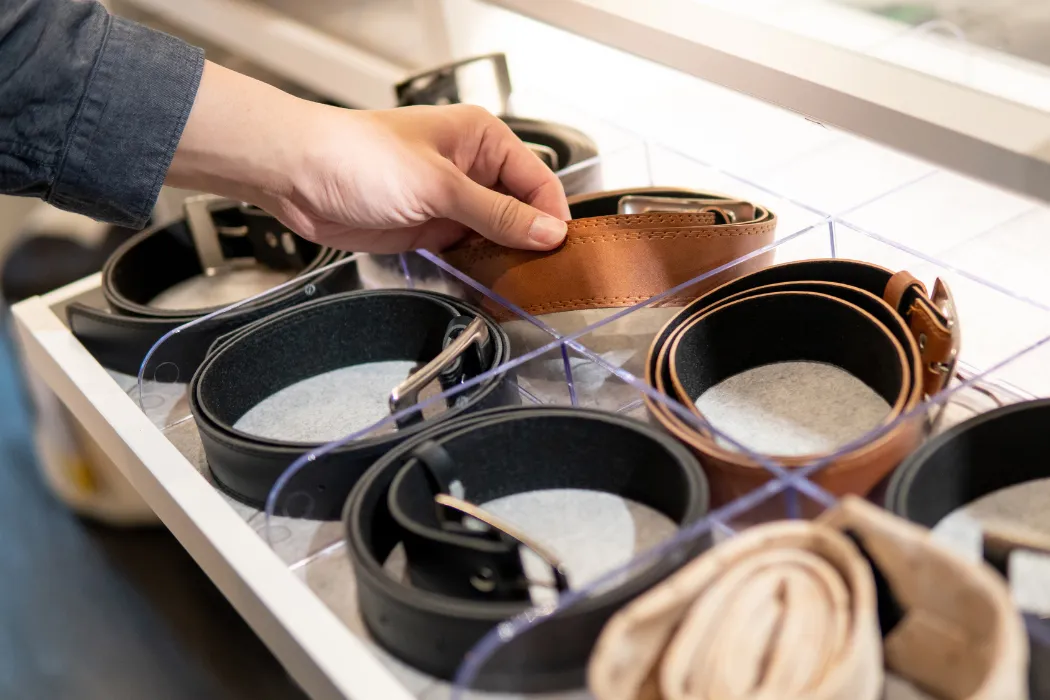
Inaccurate belt sizing can quietly erode retailer margins—driving preventable returns, inconsistent product labeling, and customer dissatisfaction. For global brands, even a one-inch variance in measurement or a misunderstood “+2-inch” rule can result in mismatched inventory and added logistics costs. Getting this right isn’t only about aesthetics; it’s about maintaining comfort, production alignment, and cross-market consistency across belts that range from 1.25 to 1.75 inches in width and use hole spacing of roughly 25 mm.
This comprehensive Leather Belt Sizing Guide equips retailers and manufacturers with data-backed standards for accurate measurement, labeling, and production control. You’ll learn the geometry behind the buckle-to-middle-hole method, how U.S. and EU systems align (1 inch = 2.54 cm), and why adhering to ISO 2589 thickness protocols improves cross-market sizing reliability. From understanding the “plus 2” rule to creating conversion charts that minimize returns, this article serves as a definitive blueprint for consistent, globally reliable belt sizing.
Why is Accurate Belt Sizing Critical?
Accurate belt sizing ensures optimal comfort, balanced wear, and proper alignment with standard hole spacing. Correct sizing minimizes returns, avoids poor aesthetics, and guarantees consistent production quality across global sizing systems.
Functional and Aesthetic Importance of Accurate Sizing
Belts are measured from the buckle to the middle (3rd) hole, allowing 2–4 inches of adjustment for daily wear and waist fluctuation. This measurement method ensures the belt can adapt to small changes in body size while maintaining comfort and usability across its entire lifecycle.
Incorrect sizing can lead to belts that are either too short—leaving no usable holes—or too long, which results in an excess leather tail that reduces aesthetic appeal and causes functional imbalance. The correct sizing keeps the buckle and holes centered, ensuring both even pressure distribution and visual symmetry.
Technical Considerations and Industry Standards in Belt Measurement
Common specification parameters include a 1-inch hole spacing, leather thickness between 0.20–0.22 inches, and a width around 1.5 inches (38 mm). These tolerances ensure belts maintain flexibility, strength, and stability under repeated use, preventing cracking or overstretching of the leather.
Measurement conventions vary significantly between regions: the U.S. typically applies the “waist size +2 inches” rule, while European systems measure in centimeters to the buckle tip. Despite the prevalence of these standards, no unified ASTM or ISO specification exists for belt lengths, requiring manufacturers to apply internal quality metrics to maintain cross‑market consistency and precise sizing alignment.
Research Summary
Belt sizes are generally referenced to the middle hole, providing approximately 2–4 inches of adjustment flexibility and ensuring the middle hole bears the most consistent load. For instance, a 36″ belt accommodates waist sizes from roughly 34″ to 38″, distributing stress evenly across the leather and preventing edge wear. The leather construction, typically full-grain steer hide weighing ~13 oz with thickness around 0.20–0.22″, supports these dynamic loads while preserving the belt’s structural integrity.
Industry data indicate that U.S. sizing is based on inch increments, while EU sizing favors centimeter-based scales (e.g., US 32″ ≈ EU 80 cm, US 34″ ≈ EU 85 cm). Hole spacing is commonly set at 1″ on center, offering predictable adjustment intervals. These factors highlight that accurate measurement not only drives comfort and appearance but also underpins material longevity and brand consistency. No formalized ASTM/ISO belt-sizing standards were identified, which confirms that most brands rely on proprietary size charts to meet functional and aesthetic performance expectations globally.
How Do US, EU, and UK Sizes Differ?
US and UK belt sizes are measured in inches, typically 2 inches longer than trouser size, while EU sizes use centimeters measured from the buckle to the middle hole, usually in 5 cm increments. Conversion between units ensures consistent fit across global markets.
Understanding Regional Belt Sizing Systems
US belt sizing follows waist measurement conventions, meaning the belt length in inches generally matches the numeric waist size, but manufacturers recommend selecting a belt that is 2 inches longer than the trouser waist. For example, someone wearing 34-inch trousers should opt for a 36-inch belt to ensure correct fit around the middle hole.
In contrast, EU belt sizing uses the metric system, measuring in centimeters from the buckle’s inside edge to the middle hole of the strap. Common increments are 5 cm (e.g., 75, 80, 85, up to 120 cm for men). An EU 90 cm belt equates to approximately a 35.5-inch waist, making metric conversion critical when manufacturing for multiple markets.
The UK system parallels US methods by referencing trouser waist size in inches and adding around 2 inches for belt sizing. Thus, UK 32 trousers typically require a 34-inch belt. Minor brand variations may occur, but most rely on the “+2 inch” convention for middle-hole alignment.
Differences between these systems primarily stem from unit type (inches versus centimeters) and measuring point (waist circumference versus belt midpoint). Standardization across regions helps eliminate confusion and improves global fit uniformity.
Conversion Data and Practical Application
When converting between systems, the key ratio is 1 inch equals 2.54 centimeters. For example, an EU size 90 corresponds to approximately US/UK 35–36 inches, while an EU 100 equates to around US/UK 38–39 inches. Recognizing these equivalencies is vital for labeling, e-commerce size charts, and cross-border retail listings.
Sample mappings show consistent proportional relationships: an IT/EU 44 belt of 80 cm corresponds to US size 30 or UK size 10, while an EU 50 belt (100 cm) matches US 36 or UK 34. Such examples aid technical designers and merchandisers in defining accurate measurement conversions across production lines.
A standard belt typically has five holes spaced about 2.5 cm apart, providing an adjustment range of 5–10 cm. The intended fit should align the buckle on the middle hole, offering flexibility without compromising the belt’s tailored fit aesthetics. Manufacturers like Hugo Boss and Dents standardize this through the “+2 inch” sizing rule, whereas EU producers rely on direct centimeter measurement taken at the wearer’s preferred height around the waist.
These conversion and measurement conventions form the practical foundation for belt sizing harmonization in global production, ensuring that a given numeric label corresponds to roughly the same physical fit regardless of the unit system or retailer location.
What is the “Plus 2” Rule?
The “Plus 2” Rule means selecting a belt that is two inches longer than your pant waist size. This adjustment allows for buckle length and gives flexibility through the center hole for a comfortable fit, aligning functionally with most standard leather belt designs.
Understanding the Plus 2 Concept
The +2 inches rule means that the belt length equals the pant waist size plus two inches. For example, a pant labeled 32 inches would typically pair with a 34-inch belt, ensuring fit alignment around the midsection.
The added length compensates for the buckle’s span, which commonly measures between 1 and 2 inches, and provides functional flexibility across approximately five to seven holes along the belt strap.
When worn, the ideal position is to secure the belt at its center hole. This placement offers a balanced range for adjustment, allowing equal tolerance for tightening or loosening as needed.
Over time, this +2 inch practice evolved as an industry standard, not from any formal ISO or ASTM sizing protocols, but from repeated user testing and manufacturer consensus that produced consistent fitting results across most men’s waist measurements.
Measurement Data and Application Guidelines
The technical geometry behind the Plus 2 Rule includes hole spacing averaging 0.75 inches apart, enabling a combined fit tolerance of approximately ±1 to ±1.5 inches through the adjustment range for most standard belts.
In practical sizing, pant-to-belt correlations follow predictable conversions: pant 28 → belt 30–32; pant 30 → 32–34; pant 32 → 34–36; pant 34 → 36–38; pant 36 → 38–40. These overlapping ranges ensure that most waist sizes align naturally with the center hole during normal wear.
Premium belt makers or thicker handmade leather models may use a slightly larger adjustment, usually recommending +2 to +3 inches, to accommodate heavier materials and extended buckle spans.
During measurement, manufacturers determine belt length from the leather start point at the buckle end to the most commonly worn hole. To maintain size precision, any fractional readings are rounded up to the nearest inch, ensuring standardized labeling across production runs.
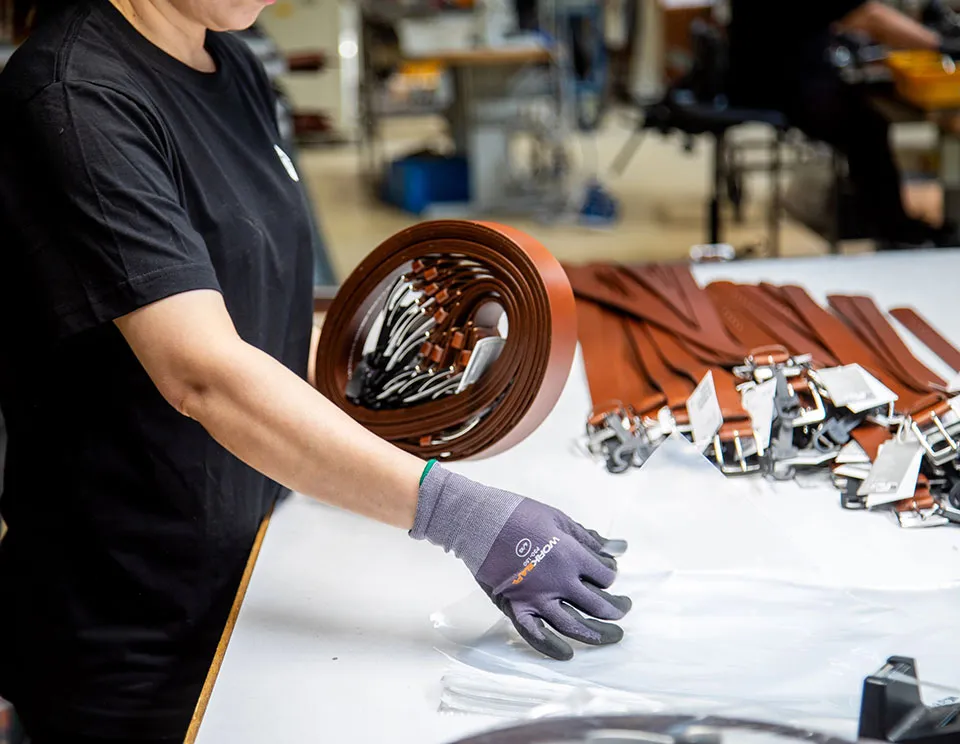
Custom Leather Belts Crafted for Your Brand
Should You Choose 5-Hole or 7-Hole?
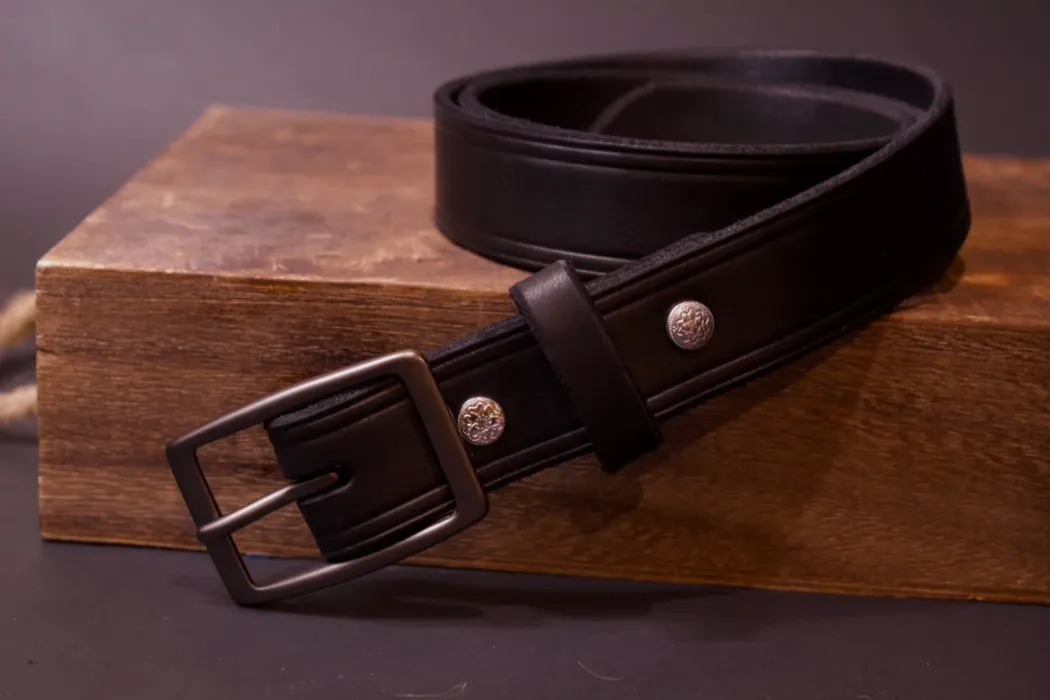
A standard 5-hole layout provides a neat, minimal 4-inch adjustment span, ideal for standard daily wear, while a 7-hole or extended setup offers a broader 6–9-inch adjustment range for manufacturing tolerance, market variations, or user flexibility.
Understanding 5-Hole vs. 7-Hole Belt Designs
5-hole belts are the industry baseline, starting at 5 inches from the English Point tip, with holes spaced 1 inch apart to create a 4-inch adjustment range. This layout defines the conventional adjustment span for most users, letting them move across 2–3 holes for everyday comfort and size fluctuation. Templates standardize these measurements across belt widths ranging from 25mm to 38mm, providing consistent center-line alignment for buckle compatibility.
7-hole configurations, or extended 9-hole variations, expand the usable range up to 8–9 inches by centering the layout around a middle hole. This approach is practical for manufacturers targeting multiple regions or dynamic waist size markets, as it gives end-users broader adjustment flexibility without redesigning the belt structure.
Technical Implications and Production Considerations
Templates support widths from 25mm to 38mm, ensuring consistent hole alignment across belt sizes and buckle slot standards from 2-5/8″ to 3-3/8″. Each belt pattern fixes hole positions at 1-inch intervals starting from the first hole at 5 inches from the tip, producing alignment repeatability during mass production and DIY fabrication. Buckle-end oblong slots remain 1 inch wide and are centered precisely at 2-3/4″ from the end for optimal loop stability.
Manufacturers tend to select 5-hole layouts when prioritizing minimalist aesthetics and compact sizing. This method maintains a proportional belt length while providing necessary waist adjustment. In contrast, 7-hole belts are chosen for export markets, larger waist distributions, or when compensating for potential leather stretch during long-term wear. The extended configuration also simplifies inventory management for producers serving diverse demographics, offering functional and visual balance.
What is the Standard Width for Men?
There is no universal ISO standard, but most men’s belt makers converge on 1.25–1.5 inches (≈30–38 mm) for dress belts and 1.5–1.75 inches (≈38–45 mm) for casual or jeans belts, depending on loop compatibility and design intent.
Understanding Standard Belt Widths by Style
Formal belts are typically narrower, measured at 1.25–1.5 inches (30–38 mm), aligning with suit and dress pant loops. This keeps the appearance streamlined and proportional to the tailored silhouette of business attire.
Casual and jeans belts trend wider, between 1.5–1.75 inches (38–45 mm), to fit denim loops yet remain comfortable. Wider straps visually balance the thicker fabrics and casual proportions of jeans or chinos.
Brands like BuckleMyBelt and the Art of Manliness describe these ranges as the accepted ‘standard’ across menswear, reflecting what most consumers and manufacturers perceive as normal production bands.
Loop dimensions in trousers directly dictate these ergonomic and aesthetic standards. Because dress pants feature narrower loop geometry, slimmer belts prevent distortion and maintain proper alignment, whereas denim loops accommodate wider widths up to roughly 1.75 inches.
Production Ranges and Industry Reference Points
Elliot Rhodes lists 35 mm and 40 mm as standard men’s widths for chinos and jeans, which equates to conventional casual belt specifications. These values form part of a repeatable cluster found in contemporary menswear production.
Marakesh Leather and Style N Craft specify 1.25 in for dress belts and 1.5 in for jeans loops. Dalgado, for premium lines, defines 3.0–3.2 cm as a classic dress belt width, pinpointing the precision manufacturing range used in formal wear.
Most men’s loops cap at 1.75 in (≈44–45 mm), establishing an engineering limit for mainstream belts. That measurement represents the upper mechanical limit compatible with standard denim loop dimensions.
These converging figures define two production clusters: approximately 30–32 mm for dress belts and roughly 35–40 mm for casual belts. Manufacturers adhere to these intervals to ensure interchangeability across global markets and garment categories.
Research Summary and Observed Industry Patterns
Across manufacturer and apparel guides, no formal ISO or ASTM specification dictates belt width. Instead, a commercial consensus defines “standard” within two use categories: dress/formal belts at 1.25–1.5 in (≈30–38 mm) and casual/jeans belts at 1.5–1.75 in (≈38–45 mm). These bands have persisted for decades and remain validated by loop geometry standards within menswear manufacturing.
Elliot Rhodes, Marakesh Leather, Style N Craft, Art of Manliness, and BuckleMyBelt all provide overlapping references in their sizing charts. Dalgado’s specification of 3.0–3.2 cm (≈30–32 mm) aligns precisely with the midpoint for formal belts, while Elliot Rhodes’ 35–40 mm defines a similar cluster for casual or denim use.
Functionally, belt width remains subordinate to belt-loop openings on men’s trousers. Formal garments are cut for slimmer belts, whereas denim allows wider profiles. This engineering constraint limits maximum width to about 1.75 in in most designs, ensuring belt usability and avoiding interference with loops during wear.
These data points establish a consensus that the men’s belt industry operates around two normalized width brackets — approximately 30–32 mm for dress belts and 35–40 mm for casual belts — forming a practical, global “standard” recognized by leading leather manufacturers and style authorities alike.
How to Measure a Belt for Production?
In production, a belt is measured from the inside edge or tip of the buckle to the center (wearing) hole, following standardized geometry. Material thickness and width are controlled using ISO 2589 protocols and calibrated gauges to maintain uniform product sizing and quality.
| Parameter | Specification / Range | Standard / Reference |
|---|---|---|
| Leather Thickness | 2.5–5.0 mm (typical production range); 7–8 oz ≈ 2.8–3.2 mm | ISO 2589 / IUP 4 “Determination of apparent thickness” |
| Finished Widths | Men: 30–42 mm; Women: 13–45 mm | Production SKU ranges |
| Hole Diameter | 3.0–4.0 mm | OEM tooling specs (≈ prong Ø + 0.5 mm) |
| Hole Pitch / Array | ~25 mm spacing, 5–7 holes per belt | Production and craft standards |
Understanding the Belt Measurement Convention
Factories define belt size as the distance from the buckle tip (or inside edge) to the central wearing hole, aligning with wearer waist size. This geometric definition allows consistent scaling between pattern design and wearable fit, ensuring the labeled size directly represents the effective waist measurement when worn.
This method ensures repeatable pattern measurements for CAD cutting and quality control consistency across production. By maintaining this buckle‑to‑hole reference, manufacturing systems can reliably translate digital patterns into physical components that match sizing tables and customer specifications.
Measurement Standards, Tools, and Specifications
Leather thickness measured under ISO 2589 / IUP 4 using a calibrated dial gauge ensures uniformity across 2.5–5.0 mm bands (commonly 7–8 oz ≈ 2.8–3.2 mm). The specified load and presser‑foot geometry used during testing minimize measurement error due to material compressibility, ensuring consistent thickness profiles during production runs.
Common production data include men’s belt widths of 30–42 mm, hole diameters between 3.0–4.0 mm, hole pitch of approximately 25 mm, and prong‑to‑hole clearance equal to prong diameter plus 0.5 mm. All dimensions are validated through quality control measurement tables, combining dimensional verification and functional testing for buckle engagement, ensuring consistency across batches and compliance with international process standards.
Research Summary
In industrial manufacturing, measuring a belt involves controlled, standard‑based methods rather than simple end‑to‑end measurement. The production convention defines belt size as the linear distance from the inside edge or tip of the buckle to the primary (generally middle) hole. This parameter directly corresponds to the wearer’s waist size and drives standardized CAD cutting and sizing logic within manufacturing systems.
Material parameters are equally governed by norms such as ISO 2589 / IUP 4 for thickness control. Under these standards, belts typically fall in the 2.5–5.0 mm range, with most mainstream belts using about 7–8 oz leather (≈2.8–3.2 mm). These values ensure dimensional balance between flexibility and structural integrity.
Hardware geometry—including prong diameter and hole positioning—is treated as part of the measurement process. Manufacturers define a clearance where hole diameter equals prong diameter plus approximately 0.5 mm. Hole diameters of 3.0, 3.5, and 4.0 mm are common standards, typically arranged in a set of 5–7 holes spaced about 25 mm apart. This ensures both functional adjustment range and aesthetic uniformity in production lines.
Together, these protocols—geometric conventions, ISO‑certified thickness measurement, controlled dimensions, and standardized spacing—create a repeatable measurement framework for belt production, ensuring consistency between design intent, manufacturing accuracy, and end‑user fit.
How Does Buckle Length Impact Total Size?
Buckle length adds directly to total belt size. Since most sizing systems measure from the buckle base to the middle hole, a longer buckle shifts the belt’s fit on the body by the same amount. Ignoring buckle length can cause fit errors of up to 2 inches (≈50 mm).
Understanding Buckle Length in Belt Measurement
Cipriani Leather defines buckle length as the distance from the tip to the hinge or bar where it connects to the strap. This specification ensures measurement consistency across different buckle styles and materials, as it establishes a fixed physical reference point for both aesthetic and functional evaluation.
Most sizing systems include buckle length in the total belt measurement, measured from the buckle base to the middle hole. This convention ensures that the belt’s labeled size corresponds to its effective usable length, accounting for buckle geometry that directly contributes to overall circumference.
Sizing Impact and Production Adjustment
Formula: Belt Size = Strap Length + Buckle Length; conversely, Strap Size = Total Belt Length – Buckle Length. This relationship allows designers and manufacturers to account precisely for dimensional tolerances when creating belts across varying buckle styles.
If buckle length is ignored, sizing can be off by up to 2 inches (≈50 mm) — roughly two hole positions, based on 25 mm standard spacing. Such a discrepancy significantly affects fit accuracy and wear comfort, emphasizing the importance of controlling buckle length as a variable in the production specification.
Research Summary and Technical Findings
Engineering analysis shows that buckle length directly adds to the total functional length of the belt since size definitions typically measure from the buckle connection point to the central hole. For example, Hanks Belts defines the belt size as the distance from the buckle base to the middle hole, and Cipriani Leather includes the total buckle length in its computation formula. A change in buckle length by even 20 mm, such as switching from a 60 mm to an 80 mm buckle, correspondingly shifts the belt’s effective fit by 20 mm.
Manufacturers like BuckleMyBelt highlight that disregarding buckle length can produce measurable sizing errors—up to 50 mm—translating to a mismatch of nearly two holes on the strap. Given that standard hole spacing is approximately 25 mm and hole diameter is 3–4 mm, this tolerance deviation is critical in both retail fit and production calibration. As a result, buckle length must be standardized within narrow limits to maintain consistent fit when substituting hardware or cross-applying strap components.
Industry References
Cipriani Leather – technical belt measurement guide and buckle-length formula.
BuckleMyBelt – custom leather sizing method and tolerance control guidance.
Hanks Belts – sizing definition based on buckle base to middle hole standard.
How to Size for Big & Tall Customers?
Big & tall belt sizing follows the same ‘pant size +2″’ rule as standard sizing but extends it through the 40–60″ waist range. Manufacturers provide about 4″ of adjustability around the middle hole, using larger total lengths and fewer size increments to maintain consistent fit and ease of production.
Understanding Extended Belt Sizing Logic
The same foundational rule—pant size plus 2 inches—continues to guide belt sizing into the big & tall segment, extending comfortably up to 60-inch waistlines. This ensures that wearers with larger measurements receive the same proportional fit as standard sizes.
The adjustability range remains centered around roughly 4 inches of usable movement distributed around the middle hole, allowing flexibility without compromising balance or buckle alignment.
Industry examples such as Nike and Popov Leather support this logic, confirming consistent grading behavior into the mid-40s and higher numeric sizes. By continuing uniform scaling, brands simplify both consumer understanding and factory calibration for larger size runs.
In practice, this uniform progression prevents misalignment between labeled size and functional fit, ensuring big & tall customers experience the same predictability found in regular sizing ranges.
Technical Ranges and Production Standards for Large Sizes
Large-size belts are produced in extended numeric bands to streamline SKU management and preserve measurement accuracy. Typical production mapping defines XL as fitting 40–45 inches and XXL as covering 45–50 inches, while some brands extend coverage to 51–60-inch waists.
For example, a size 50 belt provides a middle-hole measurement of 53 inches, offering a standard 51–55-inch usable range. This approach guarantees the same 4-inch adjustment margin seen in smaller belts, although larger patterns use longer blanks and optimized increments.
Incremental scaling typically follows a two-inch progression in total blank length: a size 42 belt measures 51 inches from buckle fold to tip; size 44 measures 53 inches; size 46 reaches 55 inches; 48 is 57 inches, and 50 extends to 59 inches. This preserves consistent proportionality between functional range and material consumption.
Big & tall models retain the same 5-hole array commonly used in standard belts, providing approximately 4–5 inches of wiggle room while maintaining hole spacing uniformity for punch press tooling and visual alignment on production lines. This design uniformity improves manufacturing efficiency and ensures reliable fit data across extended size categories.
How to Create a Size Guide to Reduce Returns?
Effective size guides reduce returns by defining a consistent measurement point—buckle fold to middle hole—converting pant sizes accurately to belt sizes, and illustrating the hole range and tolerance in a clear visual or table format.
| Pant Size | Labeled Belt Size | Middle Hole / Total Length |
|---|---|---|
| 30–32″ (S) | 32–34″ | 35″ middle hole / 41″ total length |
| 34–36″ (M) | 36–38″ | 39″ middle hole / 45″ total length |
| 38–40″ (L) | 40–42″ | 43″ middle hole / 49″ total length |
Establishing Accurate Belt Measurement Standards
To reduce returns, a brand must first agree on one consistent measurement definition: measuring belt size from the buckle fold to the middle hole. This ensures both production teams and consumers use the same reference standard. When a belt is labeled 36″, that dimension corresponds to the distance from the buckle fold to the 3rd hole, giving ±2 holes of adjustment. This rule standardizes quality control across all manufacturing styles.
To align sizing with garment expectations, specify the conversion offset clearly. Most brands apply a +2 inch rule above trouser waist size for standard-rise pants and +3–4 inches for low-rise jeans or fashion cuts. This small tolerance eliminates guesswork and creates consistency across collections. Each production line should define a tolerance of ±2–3 mm at the control point (middle hole) to preserve consistent fit across material batches.
For documentation, diagrams should mark the control point at the middle hole, showing spacing progression outward. Production sheets and sample approvals should validate this specification to avoid size drift caused by leather stretch or buckle variance during assembly.
Building a Table and Visual Chart for Pant-to-Belt Conversion
A structured sizing table translates these definitions into customer-facing clarity. Each entry should include pant size, labeled belt size, middle-hole measurement, hole range, and total product length in both inch and centimeter values. For instance: pant size 32 → belt 34 → 35″ middle hole → 33–37″ range → 41″ total length. Metric versions increment at 5 cm per size, typically 80–115 cm ranges in European standards.
Hole spacing defines the belt’s “forgiveness zone.” A 5-hole pattern spaced 1″ apart offers roughly 4″ of adjustability; using 6 holes increases this to 5″. Metric equivalents use 2.5 cm spacing. Clear disclosure of this adjustment range helps users understand fit margin for weight variation, tucked vs. untucked wear, or layered clothing.
Each visual chart should also show width and style fit notes. For instance, 1.25″ widths suit dress trousers while 1.5″ widths fit jeans or casual silhouettes. Including this specification reduces returns due to misfit loops or mismatched aesthetics. Finally, incorporate production details like leather thickness (0.20–0.22″), single-piece construction, and buckle attachment type to support transparent, high-trust sizing communications with buyers.
Final Thoughts
Accurate belt sizing is far more than a retail detail—it’s a quality control, design, and customer satisfaction issue that touches every link of the supply chain. From establishing a consistent “buckle fold to middle hole” standard to implementing clear conversion charts between regions, precision in measurement prevents costly returns, protects brand reputation, and ensures global consistency. Retailers that define and communicate these standards effectively create a predictable, frustration-free buying experience for customers across all markets.
In practice, brands that invest in robust belt sizing systems—supported by manufacturing tolerances, visual guides, and clear education—gain measurable reductions in return rates and improved consumer trust. Standardized sizing data drives harmony between production, merchandising, and retail presentation, ensuring every belt fits as expected and performs beautifully over time. For forward-focused retailers, precision in belt sizing is no longer optional; it’s the cornerstone of efficient, data-driven apparel operations.
Frequently Asked Questions
Why should you add two inches to pant size for a belt?
The industry standard is to add 2 inches to the pant or waist size to determine belt length. This accounts for the distance from the buckle end to the middle hole, allowing the user to comfortably wear the belt using the 2nd–4th holes to accommodate different fits and clothing styles.
What is the ‘Middle Hole Rule’ for belt sizing?
The Middle Hole Rule means that the labeled belt size corresponds to the center hole—typically hole 3 of 5. This ensures equal adjustment range on both sides, with hole spacing of about 1 inch (25–30 mm) between each hole, providing ±2 inches of flexibility.
What is the standard width for a men’s dress belt?
Men’s dress belts are commonly between 1.0 and 1.25 inches wide, with 1.25 inches (approximately 32 mm) considered the classic width suited for formal trousers and suits.
How are belt lengths measured in production?
In production, a belt’s size is measured from the inner edge of the buckle to the center hole—not the tip. The typical spacing between holes is standardized at around 25 mm (1 inch) to ensure consistent fit and adjustment for all manufactured belts.
Do leather belts stretch over time?
Yes, leather belts naturally stretch up to about 3 inches with use. Full-grain leather stretches moderately and maintains shape better, while bonded or lower-grade leather can stretch significantly more over time.
What is the standard tolerance for belt length manufacturing?
Standard length tolerance in leather belt manufacturing is about ±0.5%, allowing for small variations while maintaining consistent sizing accuracy during mass production.