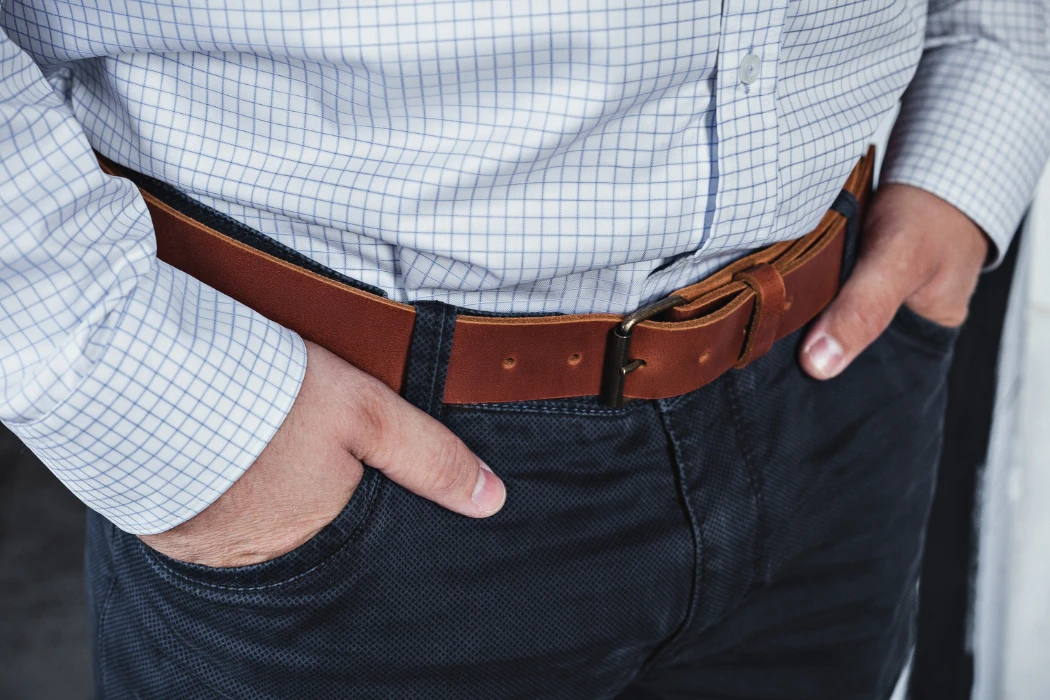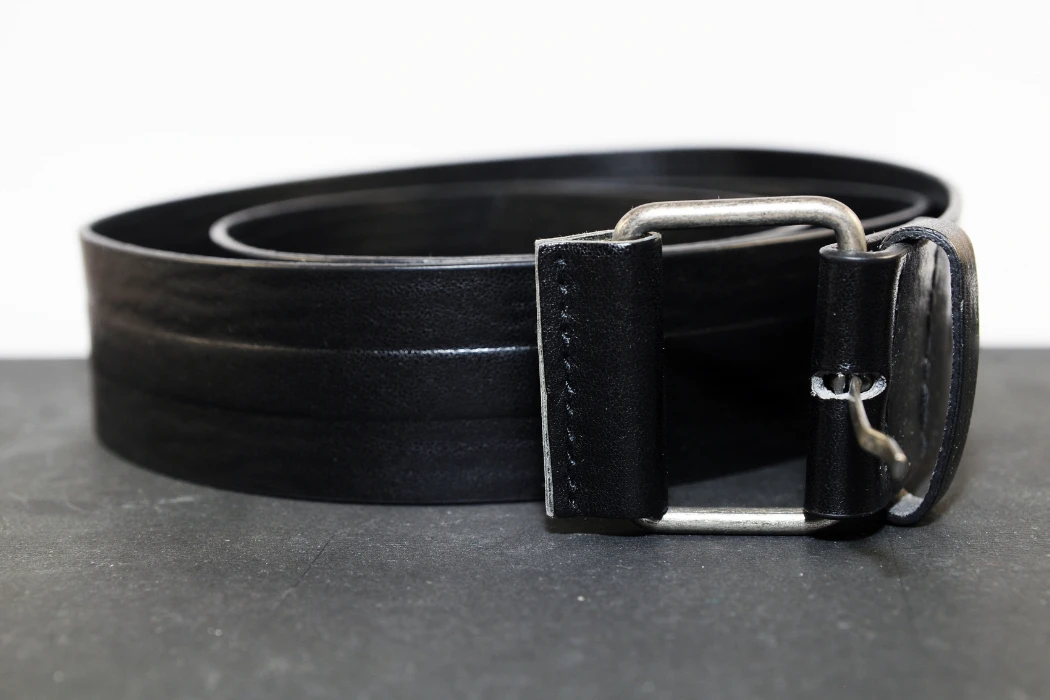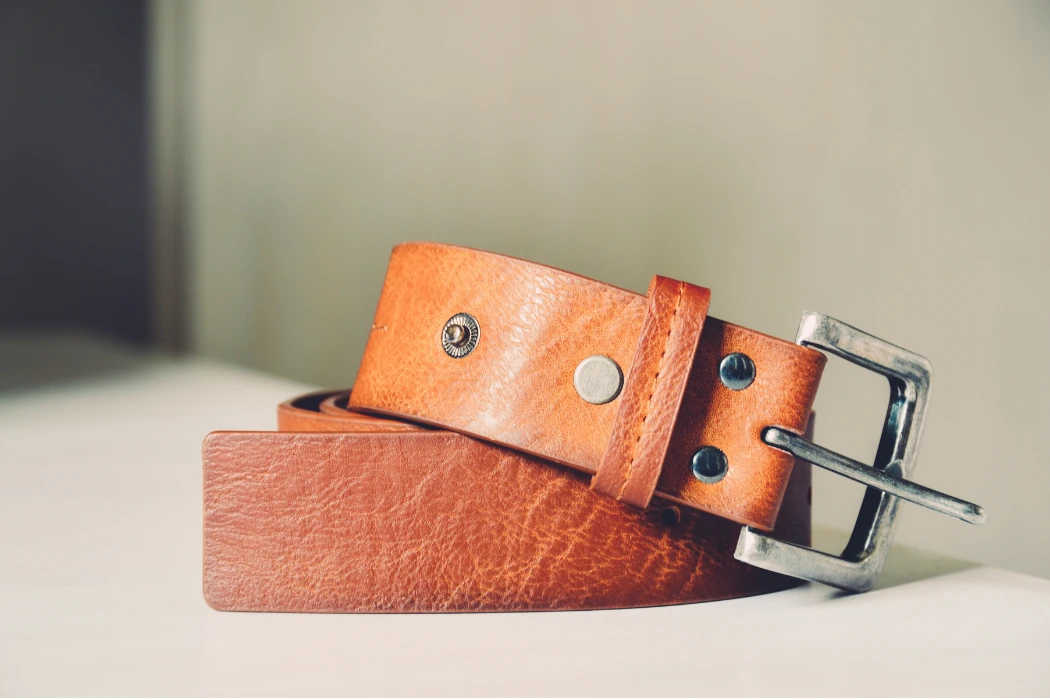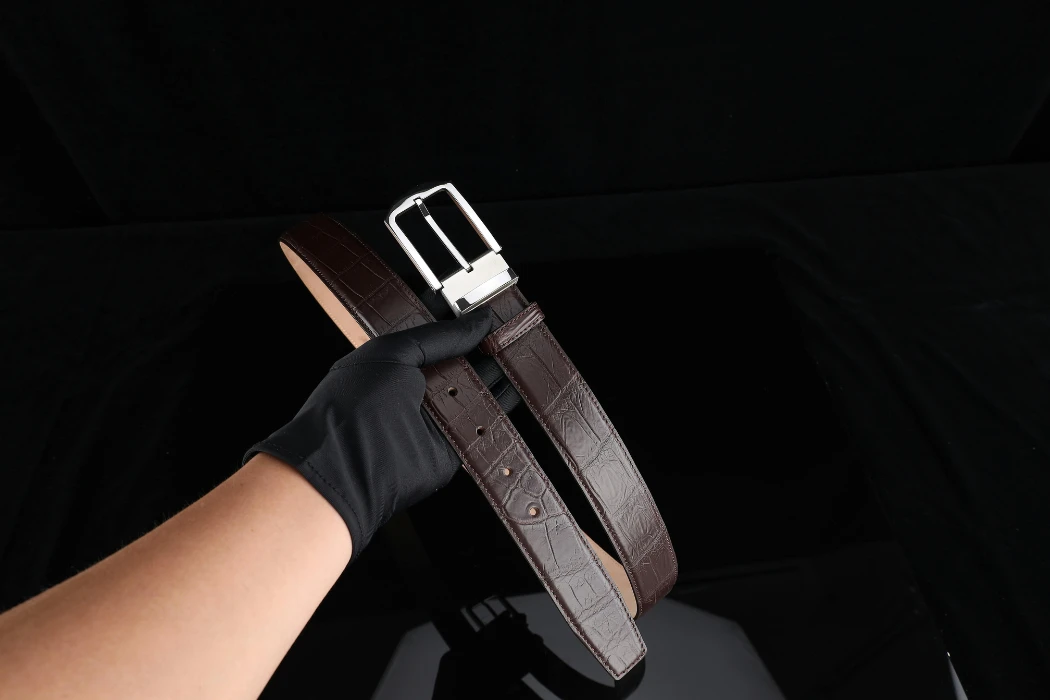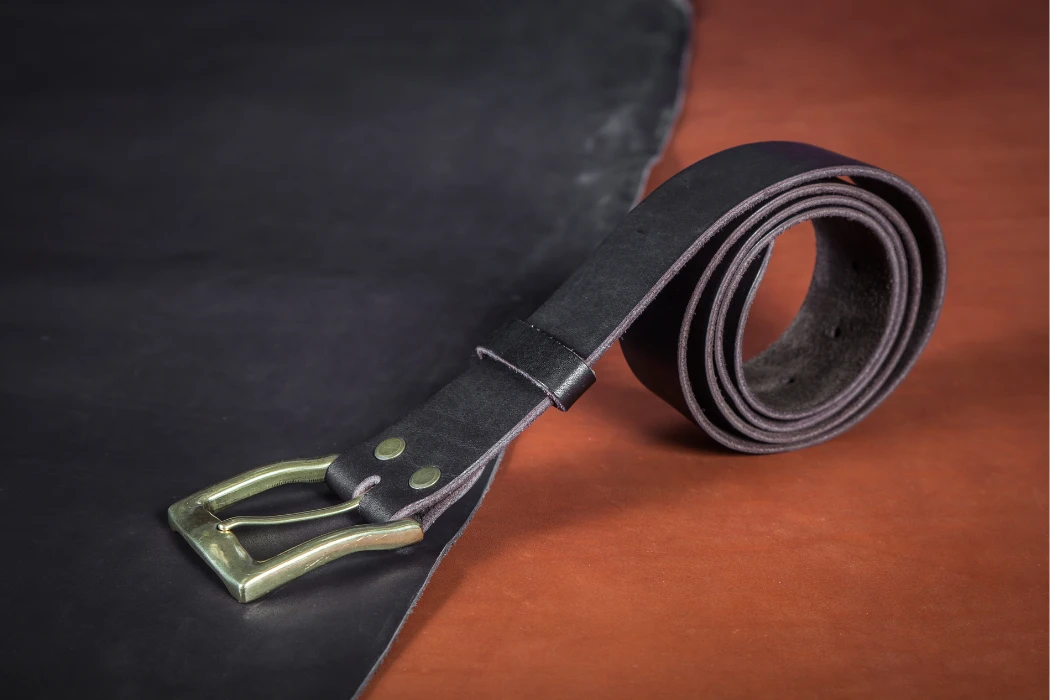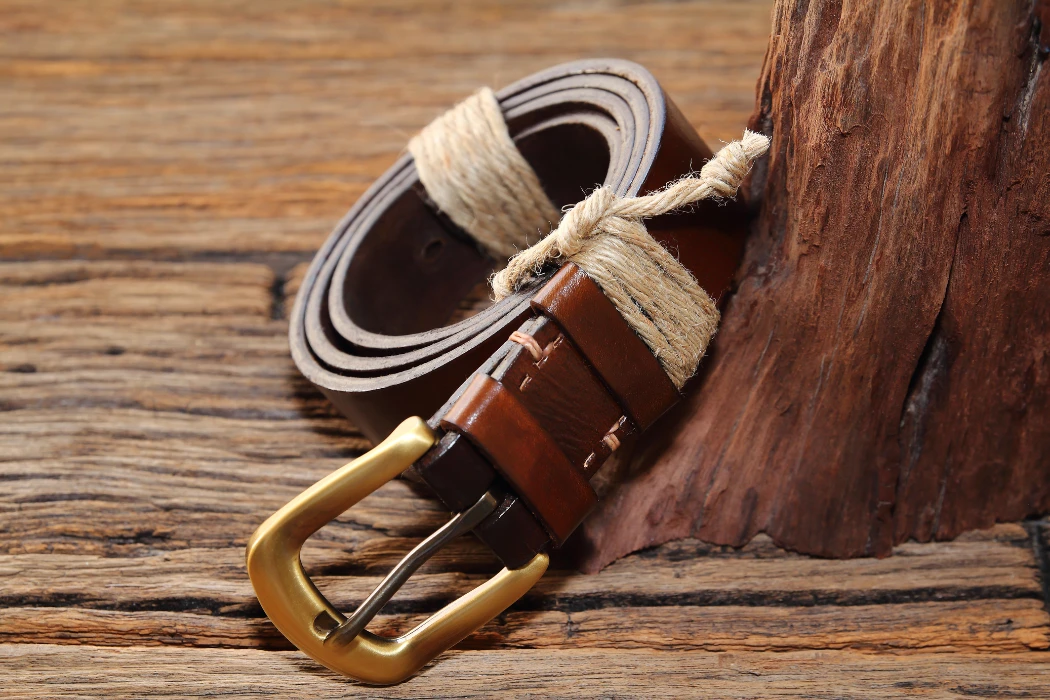
The era of invisible accessories is ending. For 2026, belt design is shifting aggressively from passive minimalism to structural engineering. We are seeing a definitive move away from standard 30mm dress straps towards architectural pieces that demand precise manufacturing tolerances and higher leather grades. This isn’t just a style update; it is a recalibration of how weight, width, and hardware interact to create a “Brutalist” aesthetic that dominates the silhouette rather than simply complementing it.
Three technical pillars define this manufacturing landscape: Maximalist Widths exceeding 40mm, Bio-Circular Materials that pass rigorous LWG Silver/Gold audits, and Industrial Hardware finished with durable matte PVD coatings. Brands are no longer asking for simple strips of leather; they are requesting complex, multi-layered constructions—such as corset belts and braided structures—that require specialized splitting, precise skiving, and heavy-duty edge-painting machinery to maintain durability under tension.
To manufacture these trends at scale, specification accuracy is non-negotiable. Before sourcing a single hide, product developers must align on the physical constraints of these new materials. The following technical roadmap outlines the critical data points and validation standards required to execute the 2026 production cycle without compromising structural integrity.
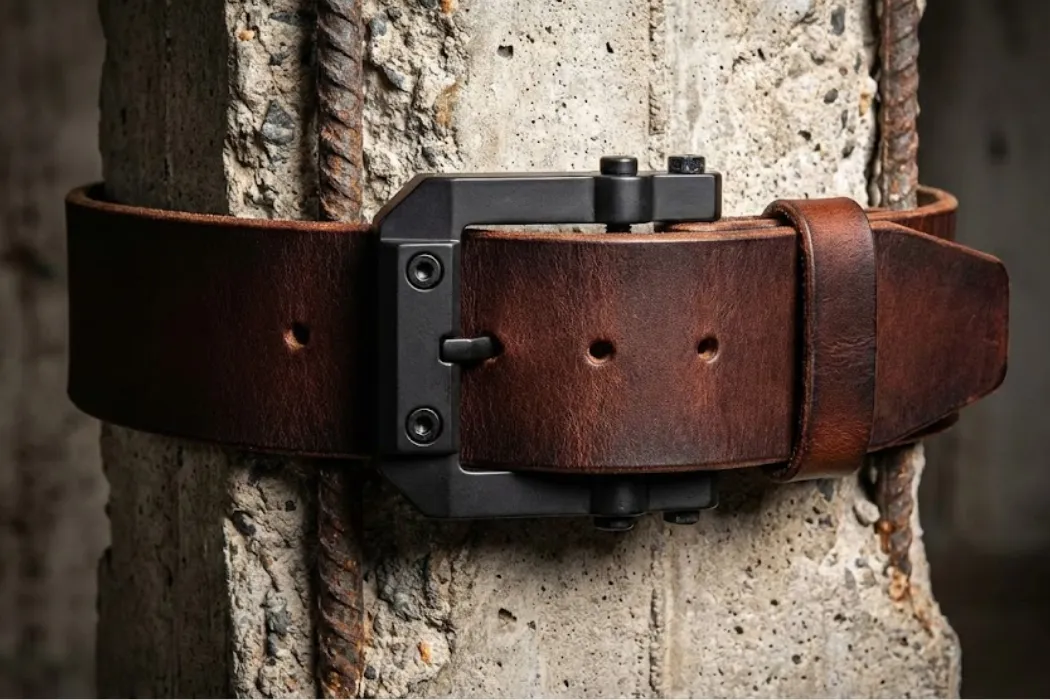
The 2026 Technical Spec Sheet: Manufacturing Requirements
| Trend Category | Key Tech Specs | Primary Material Options | Validation Standard |
|---|---|---|---|
| Structural Widths | Width: 40mm – 60mm Thickness: 3.5mm – 4.0mm |
Vegetable Tanned Double Butt, Full Grain Cowhide |
Dimensional Stability: ISO 17131 |
| Industrial Hardware | Weight: >120g (Zinc Alloy) Finish: Matte PVD / Gunmetal |
Zinc Alloy (Zamak 3/5), Solid Brass |
Corrosion Resistance: ISO 9227 (48h Salt Spray) |
| Eco-Composite | Tensile Strength: >350N Recycled Content: >40% |
Recycled Bonded Leather, Bio-PU Composites |
Sustainability Audit: LWG Silver/Gold, GRS |
| Surface Engineering | Emboss Depth: 0.8mm – 1.2mm Heat Set: 110°C (High Pressure) |
Corrected Grain, Oil-Tanned Pull-Up |
Flex Resistance: ISO 5402 (50,000 cycles) |
| Tech-Utility | Pull Force: >500N Stitch Pitch: 3.5mm (7 SPI) |
Nylon Webbing + Leather Trim, Fidlock Magnetic Buckles |
Seam Strength: ISO 13935-1 |
Width Dynamics: The Shift to Structural Maximalism
The standard 35mm belt is no longer the default anchor for denim or tailoring. In 2026, width is the primary design variable, moving toward a “Power Width” standard of 40mm to 60mm. This shift forces manufacturers to rethink hide utilization, as wider straps magnify natural imperfections, requiring strict selection of the double butt area to ensure structural stability.
Trend 01: The Return of the 40mm+ “Power Width”
For the past decade, the 30mm-35mm range was the safe “commercial” zone, but the 2026 silhouette demands a belt that acts as a visual girder, pushing widths into territories that require higher-grade raw materials to avoid warping.
- Target Dimensions: The new baseline for denim is 40mm, while utility aesthetics are pushing limits to 45mm and 50mm.
- Hide Selection Rule: We strictly utilize the Double Butt section for any width exceeding 38mm to prevent the “banana curve” effect common in shoulder cuts.
- Surface Defect Logic: A 40mm strap has 33% more surface area than a 30mm strap, exponentially increasing the probability of visible scars or loose grain.
- Cutting Tolerance: Hydraulic dies must hold a tolerance of ±0.5mm to ensure the strap passes smoothly through standard industrial buckles.
Manufacturing a 40mm+ belt is not just about cutting a wider strip; it requires a rejection of the belly and shoulder areas, increasing raw material consumption but guaranteeing a strap that remains linear under years of tension.
Trend 02: Corset & Obi-Style Engineering
Moving beyond the simple linear strap, the “Corset” and “Obi” styles represent the convergence of leather goods and apparel engineering, requiring complex pattern cutting rather than simple stripping.
- Temper Calibration: Unlike rigid dress belts, these require Semi-Soft or Medium Temper leathers (Milled Vegetable Tanned or Heavy Nappa) to contour to the ribcage.
- Variable Thickness Splitting: The strap is often split to a robust 3.5mm at the center back for support, tapering down to 2.0mm at the tying ends for knotting flexibility.
- Internal Reinforcement: Wide corset sections often require internal Salpa (bonded leather) stiffeners or micro-fiber backing to prevent vertical collapsing.
- Edge Execution: Due to the soft temper, edges must be folded or binding-wrapped rather than simple cut-edge, as soft fibers do not hold edge paint well.
The engineering challenge here is balancing structural support with comfort; the leather must be rigid enough to cinch the waist but pliable enough to allow the wearer to sit without the belt digging into the torso.
Engineering Specs: Width Optimization Table
| Application Category | Target Width Range | Required Leather Thickness | Hide Selection Strategy |
|---|---|---|---|
| New Standard Denim | 38mm – 40mm | 3.6mm – 4.0mm | Double Butt Only (High Tensile) |
| Statement / Utility | 45mm – 60mm | 3.8mm – 4.2mm | Firm Temper Vegetable Tanned |
| Corset / Obi | 80mm – 120mm (Center) | 2.0mm – 2.5mm | Medium Temper / Milled Grain |
Technical Protocol: Managing Tolerance & Waste
Executing these wider silhouettes requires strict adherence to physical tolerances to prevent rejection rates during QC, as cost implications for error are significantly higher on wide belts.
- Machine Calibration: Automated cutting machines must be calibrated to a tolerance of ±0.5mm to prevent jamming in hardware loops.
- Knife Maintenance: For belts over 40mm, splitting knives must be sharpened every 500 units to prevent “chatter marks” on the flesh side.
- Waste Factor Calculation: Anticipate a 15-20% increase in waste when cutting 45mm straps compared to 30mm, as avoiding natural range marks requires maneuvering around larger pristine sections.
Engineers must calculate these higher consumption rates during the costing phase, as the shift to maximalist widths directly correlates to higher raw material consumption per unit and lower yield per hide.
Hardware Architecture: Industrial & Matte Finishes
In 2026, hardware is no longer jewelry; it is industrial equipment. The delicate, hollow-back buckles of the previous cycle are being replaced by solid, heavy-gauge components that utilize “Brutalist” geometry. This aesthetic shift requires a transition from standard Zamak 3 to higher-tensile alloys and advanced plating techniques like PVD to achieve the requisite matte, “stealth” finishes that resist abrasion.
Trend 03: The “Brutalist” Buckle Architecture
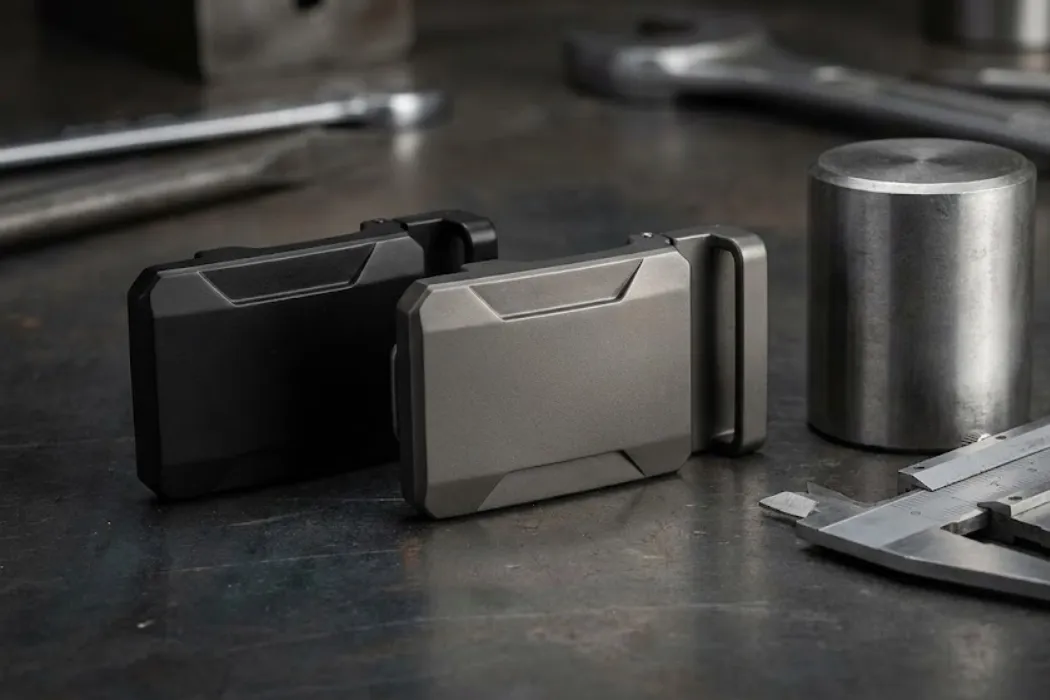
The defining characteristic of this hardware trend is Mass. Designers are demanding buckles that feel cold and heavy in the hand, signaling quality through density rather than shine. This requires specific die-casting protocols to prevent internal porosity in thicker molds.
- Material Specification: We are shifting from standard Zamak 3 to Zamak 5 zinc alloy for these designs. Zamak 5 has a higher copper content (approx. 1%), providing greater creep resistance and surface hardness for bulky, angular designs.
- Weight Benchmarks: A standard 35mm buckle weighs approx. 45g-60g. The new 2026 “Brutalist” 40mm buckles often exceed 120g – 150g per piece.
- Mold Engineering: Casting a 150g solid buckle requires high-pressure die casting with prolonged cooling cycles to prevent “sink marks” on the large flat surfaces characteristic of this trend.
- Pin Construction: The prong (pin) must be upgraded to solid brass or stainless steel. A cast zinc prong is too brittle for the torque applied by a 40mm strap and will snap under tension.
Achieving this look is not just about adding volume; it is about controlling the cooling rate of the molten alloy to ensure a flawless, pore-free surface that can accept matte plating without blistering.
Trend 04: Matte & PVD Surface Engineering
High-shine Nickel and Gold finishes are retreating. The 2026 palette is dominated by Matte Black, Gunmetal, and Satin Silver. These finishes are notoriously difficult to execute because matte surfaces highlight scratches, necessitating harder, more durable coating technologies.
- PVD Technology: For premium lines, we utilize Physical Vapor Deposition (PVD) rather than traditional electroplating. PVD deposits a titanium or zirconium based ceramic coating (0.3 – 0.5 microns) that is significantly harder than standard electroplating.
- Electrophoretic Lacquer: For mid-market options, we use a double-layer electrophoretic lacquer cured at high temperatures. This creates a matte “rubberized” or ceramic-feel surface that resists fingerprints.
- Tumbling Media: To achieve the “Industrial Tumbled” look before plating, hardware undergoes ceramic media tumbling for 4-6 hours, deburring sharp edges while creating a uniform, non-directional surface texture.
The move to matte finishes forces brands to prioritize plating hardness. A scratch on a shiny silver buckle can be buffed out; a scratch on a matte black PVD buckle is permanent, making the coating’s adhesion quality critical.
Testing Protocol: Salt Spray & Adhesion
With the shift to matte and industrial finishes, corrosion resistance becomes the primary failure point. The following validation tests are mandatory for all 2026 hardware production runs.
- Salt Spray Test (ISO 9227): All hardware must pass a minimum of 48 hours neutral salt spray testing (NSS) without showing signs of “white rust” (zinc corrosion) or “red rust” (base metal corrosion). Premium lines target 72 hours.
- Cross-Cut Adhesion (ISO 2409): For lacquered matte finishes, a cross-cut tape test is performed to ensure the matte topcoat does not peel away from the base plating layer.
- Pencil Hardness: Matte finishes are tested against a standard hardness of 2H or 3H to simulate resistance to key scratches and daily abrasion.
Hardware is the most common reason for customer returns. By enforcing ISO 9227 standards, we filter out sub-par plating batches before they are assembled onto the leather straps.
Material Science: The LWG & Eco-Composite Standard
In 2026, the question is no longer “Is it real leather?” but “What is its provenance?” The market has bifurcated into two distinct high-value streams: Certified Heritage (LWG-rated vegetable tans) and Engineered Circularity (High-tensile recycled composites). Brands cannot simply list “Genuine Leather” on a tech pack anymore; consumers and regulators demand traceability. We are now engineering materials that meet strict chemical limits (REACH) while delivering the tactile depth that plastic alternatives fail to replicate.
Trend 05: Certified Vegetable-Tanned Leather
The synthetic boom has peaked, and we are seeing a massive swing back to authentic, vegetable-tanned leathers that patina over time. However, the 2026 requirement is that this traditional material must be produced in modern, Leather Working Group (LWG) Gold or Silver rated tanneries.
- Tannin Composition: We utilize specific blends of Quebracho and Mimosa tannins to achieve a firm temper that holds the “Power Width” structure without sagging.
- The “Vachetta” Standard: For premium un-dyed belts, the leather must be photosensitive, darkening from a pale beige to a rich caramel (Honey Gold) within 3-6 months of UV exposure.
- Chemical Compliance: Unlike old-school veg-tan, modern production must be strictly Chromium-Free (or low chrome for semi-veg) and free from heavy metals, verified by periodic chemical audits.
- Finish Application: At our Pro Pelli facility, we apply a proprietary hot-oil finish to these crusts, which allows the grain to remain open and breathable while providing water resistance.
This trend is about “living materials.” The consumer wants a belt that records their daily wear through scuffs and darkening, but the brand needs the assurance that the tanning process didn’t poison a river to achieve it.
Trend 06: High-Performance Recycled Composites
Bonded leather (Salpa) was once considered a cheap filler. In 2026, it is an engineered material. We are using High-Performance Recycled Leather that binds leather fibers with natural latex rather than heavy glues, creating a substrate that rivals split leather in tensile strength.
- Latex Content: High-quality recycled composite must contain at least 15-20% natural latex. This gives the material flexibility (flex resistance) that prevents it from cracking when wrapped around the waist.
- GRS Certification: The material must be Global Recycled Standard (GRS) certified, proving that the fibers are post-industrial waste from the tanning process, closing the loop.
- Surface Tech: Because the base is uniform, it is the perfect canvas for high-pressure foil transfer, allowing us to apply exotic prints (Croc, Python) that look hyper-realistic without the inconsistency of natural hides.
- Cost-Efficiency: This material offers 95% cutting yield (vs. 70% for natural hide), making it the only viable option for mass-market brands targeting under $20 FOB.
Do not underestimate this category. With the right finishing technology, a GRS-certified recycled belt can outperform a low-grade genuine leather split in both durability and environmental impact score.
Comparative Data: Tensile & Flex Performance
| Material Type | Tensile Strength (N) | Flex Resistance (Dry) | Cutting Yield |
|---|---|---|---|
| Full Grain Veg-Tan | > 350N | 50,000 Cycles (No Crack) | 65% – 75% |
| High-Perf Recycled (Bonded) | > 280N | 30,000 Cycles | 90% – 95% |
| Standard PU / Synthetic | > 200N | 15,000 – 20,000 Cycles | 98% |
Technical Protocol: The LWG Audit Trail
Sourcing is no longer just about price; it is about risk management. Verification is integrated into the production line.
- Traceability: Every batch of leather is tagged with a unique lot number that traces back to the specific drum in the LWG-rated tannery.
- Restricted Substances List (RSL): We conduct random spot checks for Azo Dyes, Lead, and Formaldehyde to ensure compliance with California Prop 65 and EU REACH regulations.
For a brand in 2026, the cost of a recall due to chemical non-compliance far outweighs the savings of buying cheap, uncertified leather. We act as the firewall between your brand and that risk.
Surface Engineering: Texture & Tactility
Flat, uniform leather is dead. The 2026 aesthetic is defined by Tactile Depth. Designers are requesting surfaces that mimic the chaotic beauty of nature or the worn-in patina of vintage workwear. Achieving this on an industrial scale requires “Surface Engineering”—a combination of extreme hydraulic pressure, thermo-setting, and precise chemical finishing that transforms standard cowhide into exotic simulations or reactive surfaces.
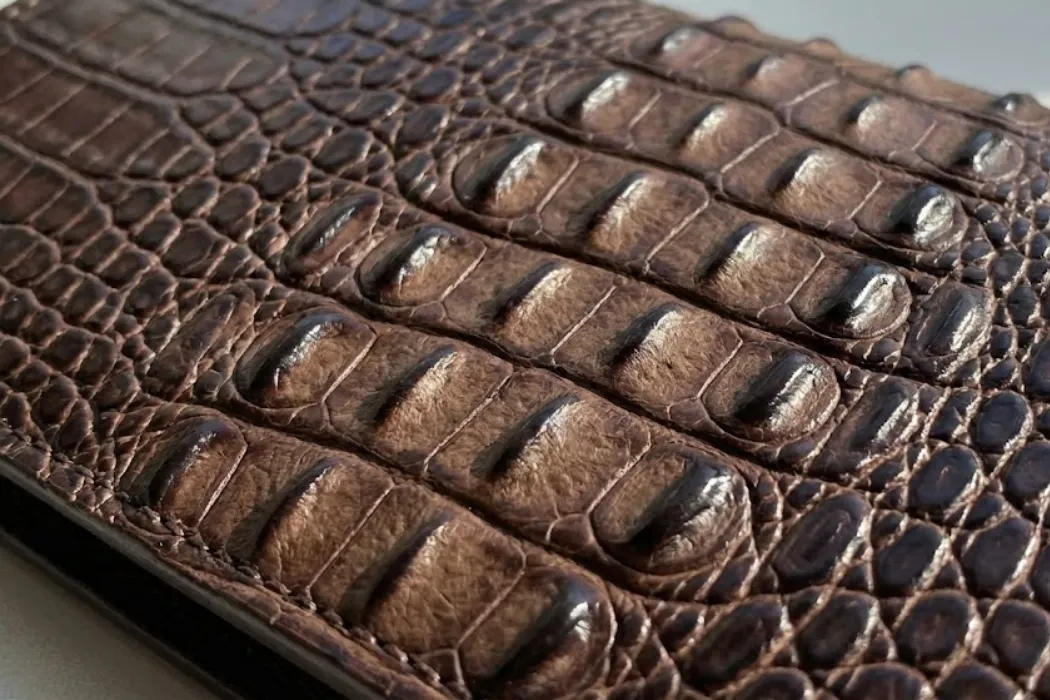
Trend 07: Hyper-Realistic Embossing
Standard embossing looks like a stamp; 2026 embossing looks like biology. We are moving from shallow “hair-cell” prints to Deep-Plate 3D Embossing that replicates the scale hierarchy of crocodile, python, or ostrich skin with frightening accuracy.
- Hydraulic Parameters: To achieve permanent depth without cutting the grain, we utilize 300-ton hydraulic presses with plates heated to 110°C. This “thermo-sets” the fiber structure, ensuring the texture doesn’t flatten out over time.
- Moisture Control: The hide must be conditioned to exactly 18-20% humidity before embossing. If it’s too dry, the fiber cracks; too wet, and the print “rebounds” (fades) after cooling.
- Plate Registration: We use “Endless Pattern” plates for belts to ensure there are no visible “repeat lines” every 50cm, which is a tell-tale sign of cheap manufacturing.
The goal is to trick the eye and the hand. A well-executed emboss should have distinct “valleys” and “peaks” that feel indistinguishable from the real reptile skin, but with the durability of bovine leather.
Trend 08: The “Vintage” Oil-Tanned Pull-Up
The “Heritage” trend demands leather that looks 20 years old on day one. This is achieved not by distress-printing, but by infusing the hide with heavy oils and waxes that move within the fiber structure, creating the famous “Pull-Up” or “Burst” effect.
- Oil Migration Mechanism: When the belt is bent or stretched (like putting it through a buckle), the oils are displaced, causing the leather to lighten in color at the stress point. When rubbed, the oils return, and the color darkens again.
- Crazy Horse Finish: At our Pro Pelli facility, we saturate buffed-grain leather with a special blend of high-melting-point waxes. This creates a velvety, matte surface that scratches easily but “heals” with friction, creating a personalized patina map for each user.
- Color Fastness Challenge: Heavy oil leathers often bleed. We utilize a cationic fixing agent in the final drum cycle to lock the dye molecules without killing the oily touch, ensuring the color doesn’t transfer to white denim.
This is a “living finish.” It is interactive. It requires the consumer to maintain it, which paradoxically increases their emotional attachment to the product.
Achieving Depth: The Two-Tone Tipping Process
Texture alone is invisible without contrast. To accentuate the 3D nature of these trends, we employ a “Tipping” process that highlights the peaks of the grain.
- The Sandwich Effect: First, the base leather is dyed a lighter shade (e.g., Cognac). After embossing, a darker dye (e.g., Espresso) is applied only to the tips of the grain using a hard roller or hand-wiping technique.
- Visual Volume: This leaves the “valleys” of the embossing light and the “peaks” dark, artificially enhancing the shadow depth and making the texture pop visually from a distance.
- Matte/Shine Contrast: We often apply a high-gloss lacquer to the tips of a crocodile emboss while keeping the valleys matte, mimicking the natural wet sheen of reptile scales.
This bi-color finishing is the difference between a belt that looks like plastic and one that looks like a luxury artifact. It adds perceived value far beyond the cost of the chemical application.
Validation Standard: Flex Resistance (ISO 5402)
Heavy embossing and heavy oiling both stress the leather fibers. To ensure these engineered surfaces don’t crack or peel, rigorous testing is mandatory.
All textured leathers must undergo the Bally Flex Test (ISO 5402) for a minimum of 50,000 cycles. This simulates years of bending the belt. If the embossed “valleys” show micro-cracks, or if the tipping finish delaminates, the batch is rejected. We prioritize structural integrity over aesthetic aggression.
Functional Construction: Utility & Modularity
The belt has evolved from a simple fastener into a modular tool. In 2026, the influence of “Gorpcore” and tactical gear has infiltrated luxury markets, demanding belts that feature quick-release mechanisms and load-bearing capabilities. Conversely, the “Slow Fashion” movement is driving a demand for intricate, hand-woven structures that machines cannot replicate. We are effectively running two parallel production lines: one for high-tech assembly and one for artisanal weaving.
Trend 09: Modular & Tech-Wear Integration
This trend replaces traditional prong buckles with engineered fastening systems derived from the automotive and climbing industries. The focus is on “haptic feedback”—the satisfying click of a magnetic fastener—and the ability to attach modular accessories (pouches, keys) to the strap.
- Hardware Integration: We are integrating Fidlock V-Buckles and AustriAlpin Cobra styles. These require precise milling of the leather strap end to accommodate the fixed bar width (usually 25mm or 38mm) without bunching.
- Hybrid Construction: To support the weight of modular accessories, we often employ a Hybrid Strap design: a core of high-tensile nylon webbing (seatbelt grade) faced with 1.2mm top-grain leather. This prevents the leather from stretching out under load.
- Reinforced Stitching: Standard stitching fails here. We utilize Box-X stitching patterns using bonded Nylon 6.6 thread (Tex 70 or Tex 90) at all stress points to ensure the hardware doesn’t rip out.
Manufacturing tech-wear belts requires a shift in mindset from “drape” to “tensile strength.” The product is engineered to hold weight, not just up pants.
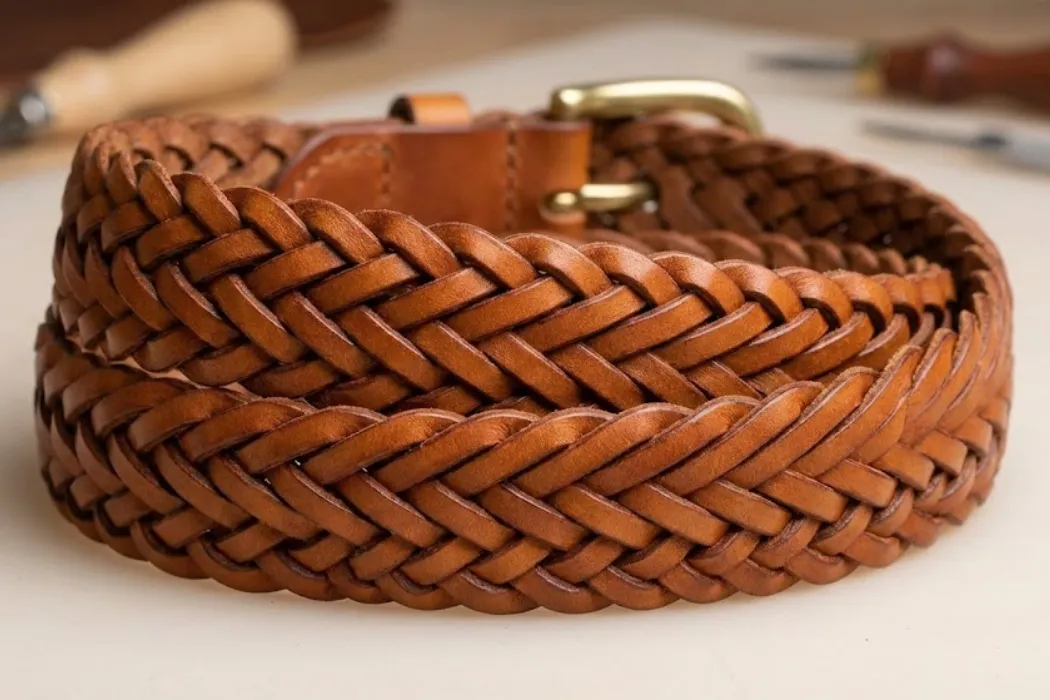
Trend 10: Intricate Braided Structures
On the opposite end of the spectrum, we are seeing a resurgence of Macro-Weaves. These are not the cheap, machine-braided bonded leather strips of the past. These are complex, hand-manipulated structures using wide strips of full-grain leather.
- Complexity Level: The market is moving from standard 3-strand plaits to complex 8, 10, and 12-strand flat braids. These cannot be produced by automatic braiding machines; they require skilled hand-labor.
- Edge Finishing: Before braiding, every single strip (often 5mm – 8mm wide) must be edge-painted and burnished. If you braid raw-edge strips, the result looks unfinished and cheap. This triples the labor time per unit.
- Tubular Construction: High-end specifications now call for “Tubular Braids,” where the leather strips are woven around a soft rope core, creating a 3D, cylindrical profile that is incredibly soft yet strong.
This is the definition of luxury manufacturing. It is inefficient by design. The value lies in the visible human effort required to manage the tension of 12 separate strands simultaneously.
Production Standard: Load Bearing & Seam Strength
Whether it is a tactical belt or a braided one, the failure point is almost always the connection between the buckle and the strap. We validate these constructions with rigorous destructive testing.
- Pull Force Testing: All utility belts undergo a straight pull test. The buckle and strap assembly must withstand a minimum force of 500N (approx. 50kg) without slippage or breakage.
- Stitch Density (SPI): For structural integrity, we increase the stitch density from the standard 5 SPI to 7-8 SPI (Stitches Per Inch) on all load-bearing seams.
- Seam Strength (ISO 13935-1): We verify that the thread does not snap before the leather tears. If the thread breaks first, the thread grade is too low; if the leather tears, the stitch density is too high (perforating the material).
In the utility category, a broken belt is a safety hazard. We treat these specifications with the same rigor as safety equipment, ensuring that the “tactical” look is backed by actual durability.
Frequently Asked Questions (Technical)
What is the standard belt width for 2026 fashion trends?
The commercial standard is shifting from 35mm to 40mm for denim and casual wear. For statement or utility pieces, widths are expanding to 45mm – 60mm. Designers must account for the increased raw material consumption and stricter hide selection (Double Butt only) required for these wider profiles.
How do you measure a belt size accurately for production?
We measure from the internal fold of the buckle (where the pin touches the bar) to the middle hole of the strap. This is the “True Waist” measurement. Do not measure from end-to-end. For 2026 high-waist styles, specs must be adjusted 2 inches smaller than standard low-rise denim belts.
What is LWG certified leather and why is it mandatory?
Leather Working Group (LWG) certification audits the environmental impact of the tannery, specifically water usage and chemical management. Major retailers (Target, Zara, Nordstrom) now require LWG Silver or Gold rated sourcing. It is the global standard for verifiable, sustainable leather production.
Is vegetable-tanned leather better than chrome-tanned?
For belts, yes. Vegetable-tanned leather uses natural tannins (tree bark) to create a firmer temper that holds its shape under tension better than softer chrome-tanned leathers. It also develops a unique patina over time, which is a key aesthetic driver for the 2026 “Heritage” trend.
What is the difference between Full-Grain and Genuine Leather?
Full-Grain includes the outer epidermis, offering maximum tensile strength (>350N) and natural texture. Genuine Leather is a technical term for split layers that have been heavily processed or coated. For 2026 premium belts, we specify Full-Grain or Top-Grain to prevent cracking.
How can I verify if a belt buckle is PVD plated?
PVD (Physical Vapor Deposition) coatings are significantly harder than standard electroplating. You can verify this using a Pencil Hardness Test. A PVD finish should resist scratches from a 3H or 4H pencil, whereas standard nickel plating will often scratch at 1H or 2H.
Engineering the 2026 Silhouette
The shift towards 2026 is defined by substance. The era of the invisible accessory is over. Whether it is the sheer mass of a 150g Brutalist buckle, the structural integrity of a 40mm vegetable-tanned strap, or the tactile depth of a hyper-realistic emboss, the market is demanding products that are engineered, not just assembled. Success in this cycle depends on a brand’s ability to navigate tight manufacturing tolerances and secure a supply chain that guarantees both durability and provenance.
At Hoplok Leather Goods, we do not just follow these specs; we define them. With our self-owned Pro Pelli finishing facility in Cambodia, we engineer custom leather finishes—from LWG-certified oil tans to high-pressure exotic embosses—that meet the rigorous demands of global fashion houses. Our vertical integration allows us to control the entire technical stack, from the zinc alloy die-casting of custom hardware to the precise splitting of complex corset patterns. If your 2026 collection requires heavy-duty engineering alongside aesthetic refinement, our team is ready to build it.