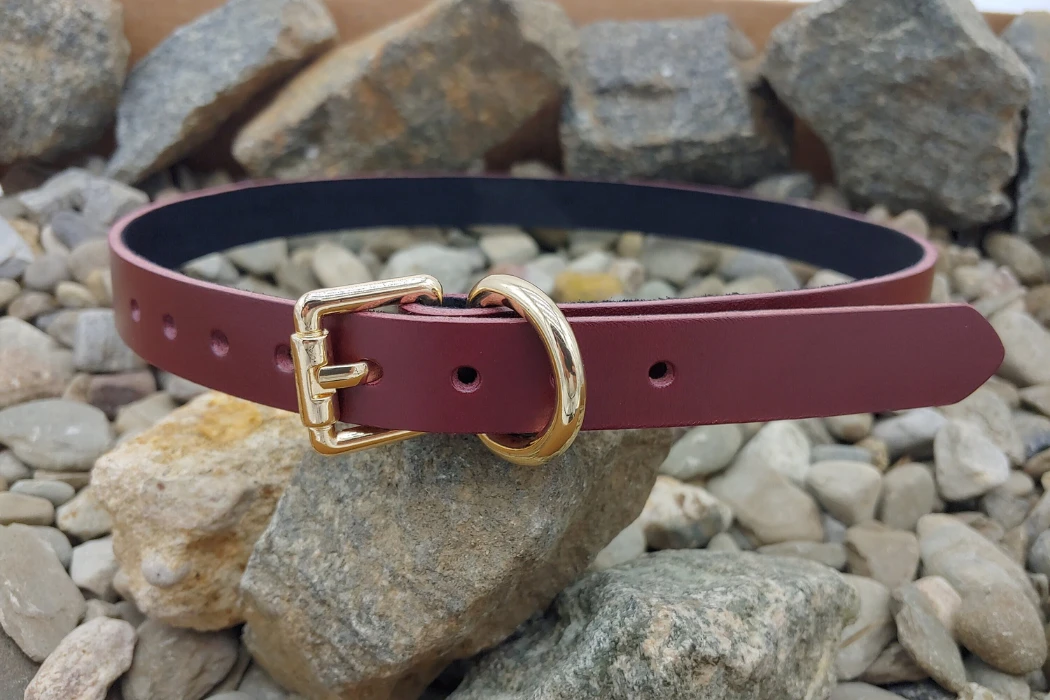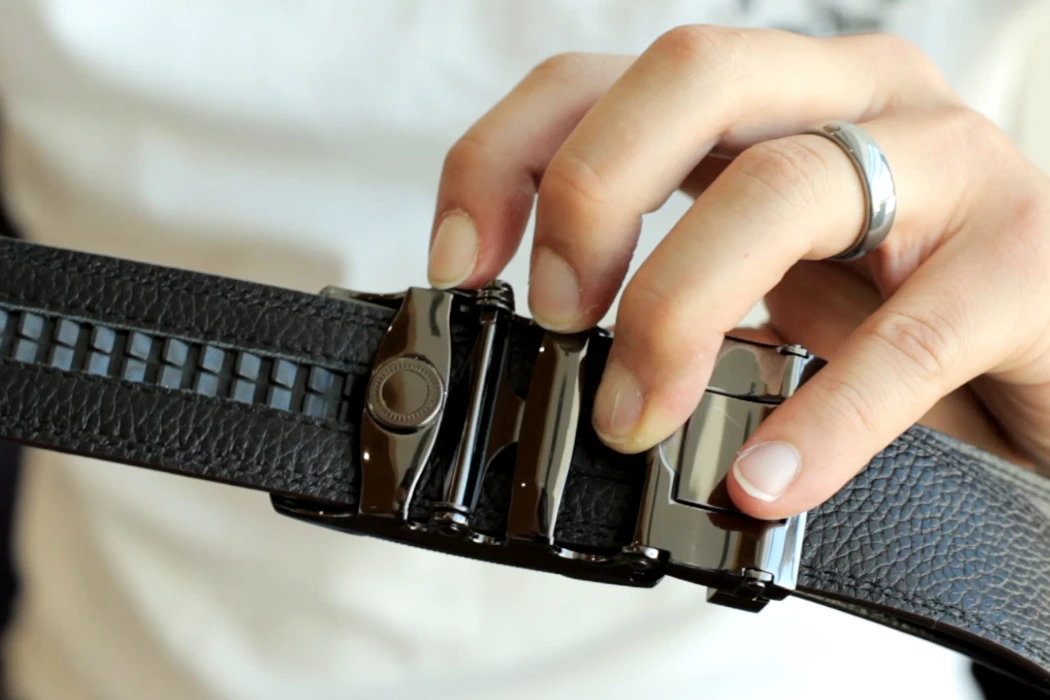
Patent leather is recognised by its glossy finish, but the shine alone cannot establish the base material. Animal leather and synthetic materials can both be offered with a patent-like appearance. For a belt, bag or wallet order, ask for the substrate and coating description before deciding whether the article matches the product label.
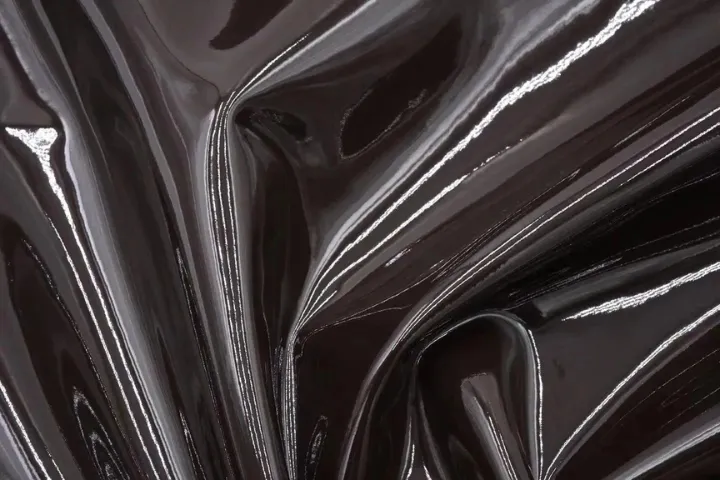
Is patent leather real leather or plastic?
A patent leather article can have an animal-leather base with a high-gloss surface finish. A glossy PU or vinyl alternative has a different base construction. Describing both only as “patent” leaves the buyer without enough information to compare them.
Specify the face material, hide layer where applicable, coating and backing. The LWG glossary distinguishes patent and coated leather terminology. The material supplier should state which description applies to the actual article supplied.
What to know about the coating process
The glossy finish and the substrate need to work as a system. Surface preparation and coating influence the appearance and behaviour at folds. There is no single recipe or coating thickness that describes all patent materials. Ask for the article specification rather than copying generic manufacturing settings into a purchase order.
Review the desired gloss under agreed lighting. Waviness, visible texture, small marks and colour differences can be more noticeable on a reflective surface. The acceptable appearance should be established with a reference sample, including any areas that will bend or be stitched.
Real patent versus a synthetic glossy alternative
| Purchasing question | What to inspect |
|---|---|
| What is the base material? | Supplier declaration and an authorised cross-section or unlined swatch |
| Will it hold the intended shape? | A completed sample with the selected lining and reinforcement |
| How does it behave when bent? | The buckle fold, wallet fold or bag corner using an agreed assessment |
| Will colour transfer? | Contact with proposed packaging, adjacent panels and linings |
| How should it be cleaned? | Supplier-approved care method validated on the final finish |
Price, smell and a thumb-press test cannot reliably answer the composition question. If the declaration is unclear, follow the leather identification workflow. Keep composition approval separate from performance approval.
Cracking, peeling, tackiness and colour transfer
Inspect changes at the product’s most frequent bend points. A glossy finish can show a crease or surface damage differently from a matte one. The appropriate assessment depends on the coating, substrate and construction; a material name cannot establish a fixed lifespan.
Peeling or tackiness needs diagnosis rather than a universal explanation. Ageing, contamination, storage and coating compatibility can be relevant. Keep an affected specimen and consult the material supplier or laboratory before changing the cleaning instructions or attributing the problem to one mechanism.
Light-coloured glossy surfaces also deserve contact checks with dark materials and printed packaging. Review how the product will be packed, shipped and stored. Separate incompatible surfaces where the validated packaging design requires it, and retain that packaging specification with the approved sample.
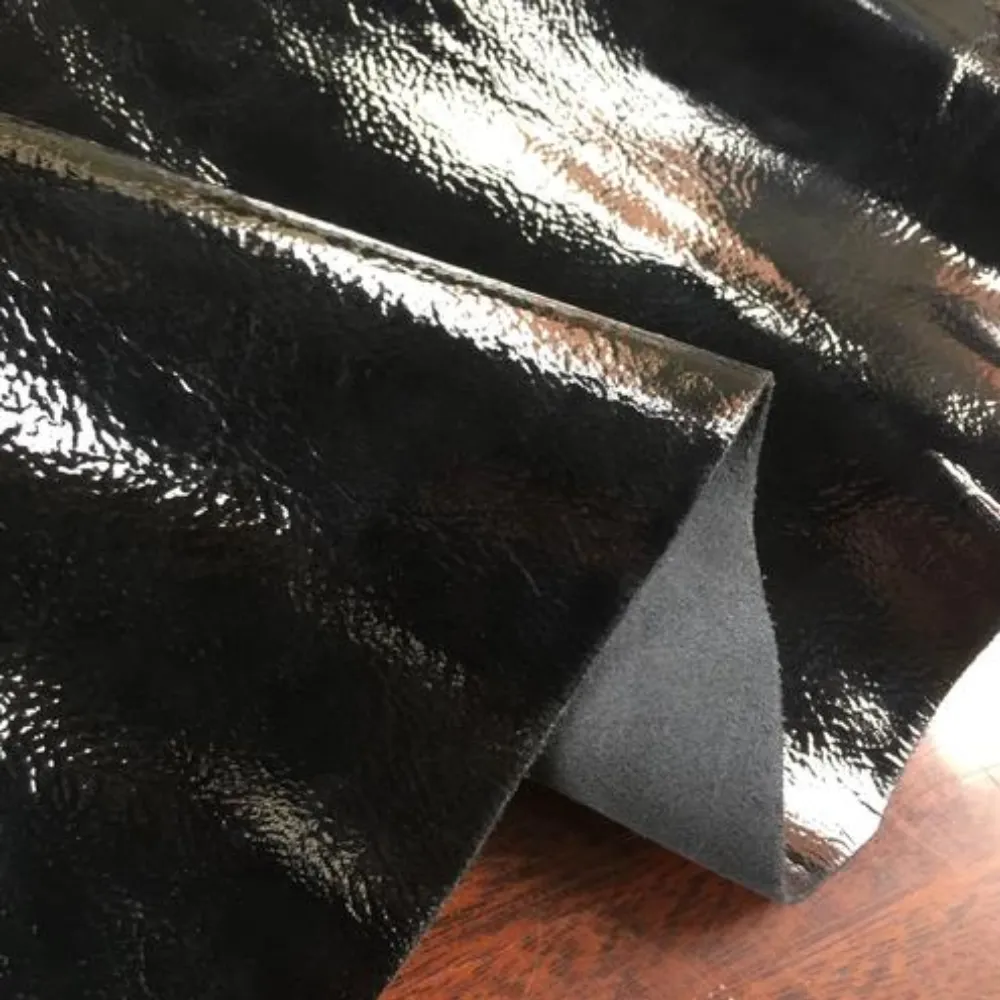
Is patent leather waterproof?
A glossy face may resist some surface wetting, but that does not establish a waterproof belt or bag. Edges, stitching, closures and uncoated components can behave differently. Any water-resistance claim should be based on suitable evaluation of the finished design, including its construction details.
Breathability likewise depends on the complete system. Avoid a blanket “zero breathability” claim or using a coating description to predict comfort. For bags and wallets, focus on the handling and storage conditions relevant to the product.
Construction and branding trials for a glossy material
For a belt, review the buckle fold, keeper contact, holes and the transition from face to edge. For a wallet, check repeated opening and the fold radius. For a bag, examine gusset folds, handle attachments and any points where glossy panels touch one another.
Logo artwork should be tested using the proposed process. Approve adhesion and appearance on the actual colour and gloss level. A technique that works on a matte leather should not automatically be carried over to a reflective coating.
Request a sample showing the final stitch details and edge treatment. Small process changes can affect a highly reflective surface, so keep the approved construction and finish settings under supplier control.
Cleaning and care instructions
Use the finish supplier’s approved cleaner and method. Test on a spare production specimen first. Household solvents, heat, petroleum jelly and abrasive remedies should not be assumed compatible with an unfamiliar coating. A temporary change in gloss is not proof that underlying coating damage has been repaired.
Care instructions should say how to remove ordinary dirt, what contact or storage conditions to avoid and when the customer should seek advice. Base those instructions on the selected material rather than on all products sold as patent leather.
Prepare the sampling brief
Send the target product, colour, gloss reference, preferred base material, logo artwork, quantity and packaging requirements. Discuss a development sample that includes the critical folds and contact surfaces. Hoplok’s confirmed sampling lead times are 2–3 weeks for belts and 3–4 weeks for bags; availability of the selected patent article and the order schedule should be confirmed in the quotation.