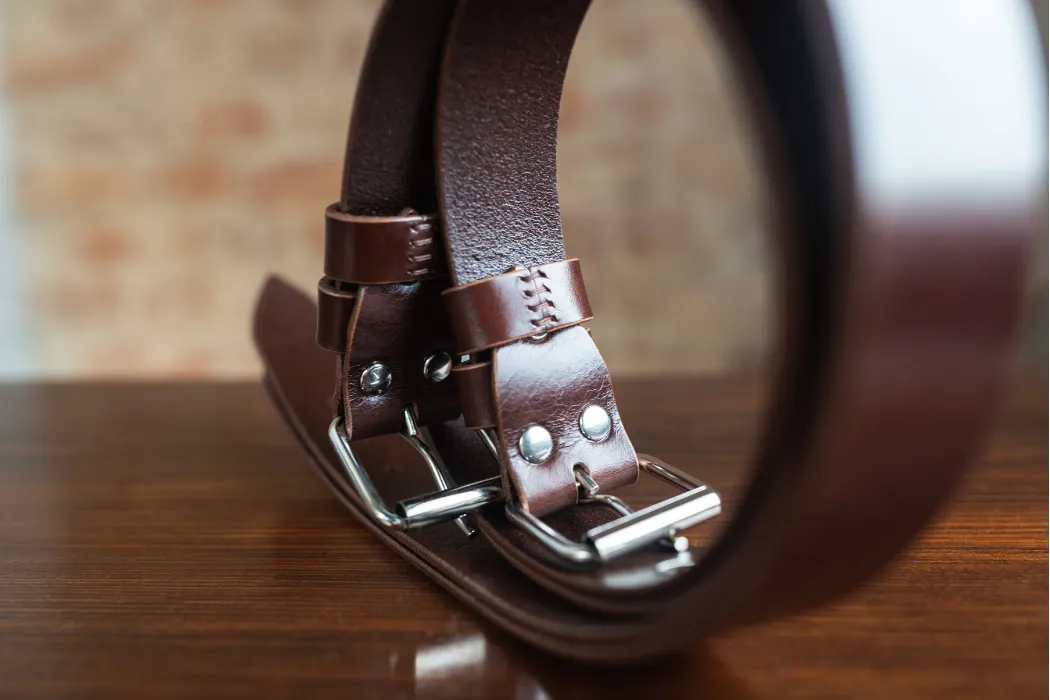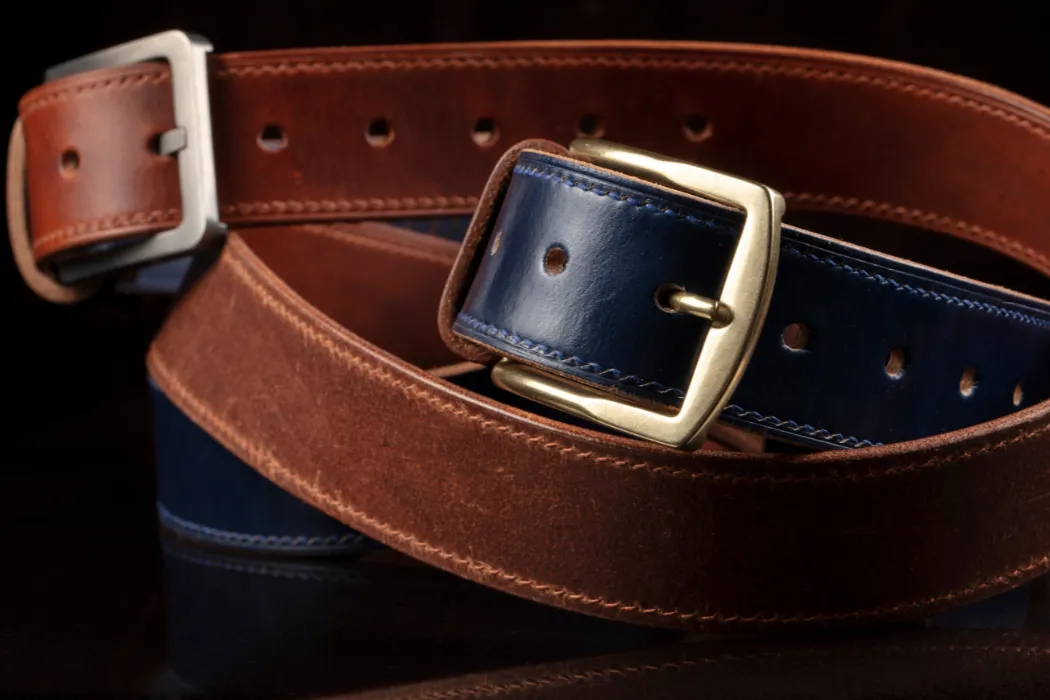
Logistics Strategy for Leather is a strategic triangulation between Transit Time, Cost Efficiency, and Preservation. Air Freight is billed by chargeable weight (kg) and is optimized for high-value, urgent replenishment; Ocean Freight is billed by CBM (Cubic Meter) for bulk volume but introduces extreme Humidity Risk. For genuine leather products, controlling the container’s Micro-climate to prevent mold growth is the primary directive in logistics planning.
Key Takeaways for Logistics Managers
- Cost Multiplier: Air freight typically costs 5–8 times more than ocean freight. However, for high-density goods like leather belts, Air can sometimes be more cost-effective than Ocean LCL (Less than Container Load) when factoring in destination charges.
- The Mold Red Line: Temperature fluctuations inside ocean containers cause “Container Rain.” It is mandatory to specify Super Dry Desiccant Poles and Anti-Mold Chips in your packing manual to prevent catastrophic moisture damage.
- The Billing Trap: Handbags are Volumetric Cargo (paying for air), while belts are Dense Cargo (paying for weight). Misunderstanding the chargeable weight divisor (1:167 Ocean vs 1:6000 Air) leads to massive budget overruns.
- SE Asia Transshipment: Shipping from our Cambodia facility typically involves a feeder vessel to Singapore or Hong Kong. Sourcing managers must build an additional 7–10 day buffer into their time-to-market calendar for this transshipment leg.
What is the Real Cost Differential Between Air and Ocean Freight?
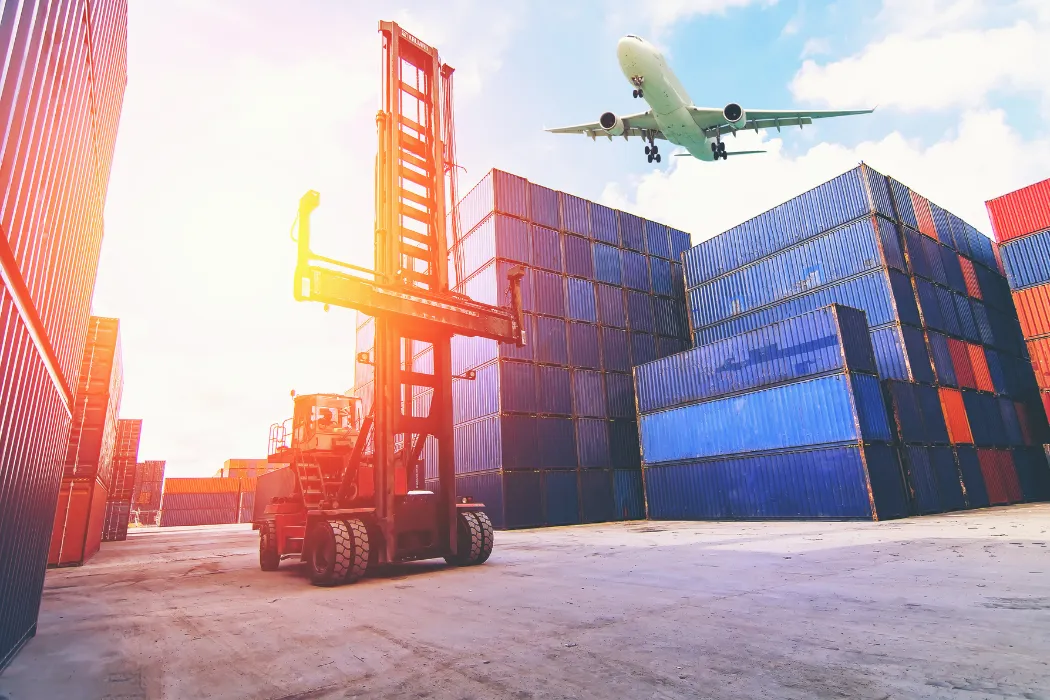
It is a trade-off between Speed and Volume. Air Freight is charged by Chargeable Weight (the greater of Actual vs. Volumetric), typically costing $4.00–$8.00/kg depending on fuel surcharges. Ocean Freight is charged by Container (FCL) or CBM (LCL), drastically lowering the unit cost to pennies per belt. However, Ocean imposes substantial hidden fees: Port Handling Charges, Customs Bonds, and Trucking, which often make small ocean shipments (< 2 CBM) economically irrational compared to Air.
The Total Landed Cost Equation
Amateur buyers look only at the freight rate per kilogram. Professional logistics managers calculate the Total Landed Cost relative to the Cash Conversion Cycle (CCC).
- Opportunity Cost: Ocean freight ties up your inventory (capital) on the water for 30–45 days. Air freight delivers in 5–7 days. If you are shipping a high-margin “Chase Order” (restocking a sold-out style), the profit lost by being out of stock for a month often exceeds the premium paid for air freight. For leather goods with high unit value ($50+ retail), air freight is often a justifiable expense to maintain sell-through velocity.
Critical Thinking: The LCL Trap
Less than Container Load (LCL) is frequently the most misunderstood shipping method. It appears cheap on the quote sheet—often just $50 per CBM (Cubic Meter) from Shanghai to Los Angeles.
- The Destination Sting: The trap lies at the destination port. De-consolidating a container incurs massive CFS (Container Freight Station) fees, document fees, and forklift charges that are billed upon arrival. We have seen clients pay $100 for the ocean leg and then get hit with a $800 bill to release the cargo at the warehouse.
- Damage Risk: LCL means your leather belts are palletized next to random cargo—potentially leaking chemicals or heavy machinery—increasing the risk of crushing or contamination.
The Strategic Threshold: 150kg / 1 CBM
When should you switch modes? At Hoplok, we use the 150kg Break-Even Rule.
- Under 150kg: Air Freight is usually cheaper (or comparable) to LCL once you factor in the fixed port fees and trucking minimums of ocean shipping. Plus, it arrives in a week.
- Over 2 CBM / 500kg: Ocean Freight becomes the undisputed winner. The fixed port costs are amortized over a larger volume, dropping the per-unit shipping cost significantly.
| Mode | Billing Unit | Avg. Transit (CN to US) | Fixed Port Fees | Best For |
|---|---|---|---|---|
| Air Freight | Per kg (Chargeable) | 5 – 8 Days | Low (Included in rate) | Samples, Rush Orders, < 150kg |
| Ocean LCL | Per CBM (Cubic Meter) | 30 – 45 Days | High (CFS + Doc Fees) | Small bulk (2 – 10 CBM) |
| Ocean FCL | Per Container (20’/40′) | 25 – 35 Days | Medium (Per Container) | Volume Orders (> 15 CBM) |
How Do You Calculate Chargeable Weight for Belts vs. Handbags?
You pay for the space you occupy, not just the weight. Logistics carriers utilize a Volumetric Divisor (typically 6000 for Air, 1000 for Ocean) to determine costs. Leather Belts are classified as dense cargo; their Actual Weight usually exceeds Volumetric Weight. Conversely, Handbags are voluminous; their Volumetric Weight is often 3x their Actual Weight. Sourcing managers must implement rigorous compression strategies (stuffing removal) to optimize freight efficiency.
Hoplok Packing Engineering: Eliminating “Dead Air”
The goal of logistics packaging is to achieve a Freight Efficiency Ratio of 1:1, where the Volumetric Weight equals the Actual Weight. Any gap is wasted money.
- Belts (Snake Coiling): We avoid individual gift boxes for bulk air shipments. Instead, we utilize a “Snake Coiling” method or “Flat Lay” technique within the master carton. This creates a dense brick of leather with almost zero air gaps, ensuring you are billed only for the physical weight of the product.
- Handbags (Flat Packing): A structured tote bag is 90% air. Shipping it stuffed with paper is financial suicide via air freight. We engineer “collapsible” designs where possible or vacuum-seal soft goods to reduce the CBM by up to 60%.
The Math: The $14,000 Difference
Let’s run a live calculation for an Air Freight shipment at a rate of $5.00/kg with a standard Volumetric Divisor of 6000.
- Scenario A: 1,000 Leather Belts
Actual Weight: 0.2kg/pc × 1000 = 200kg.
Volumetric Weight: Dense packing results in ~150kg volume.
Chargeable Weight: 200kg (Actual).
Total Freight Cost: $1,000 ($1.00/unit). - Scenario B: 1,000 Medium Handbags (Stuffed)
Actual Weight: 0.8kg/pc × 1000 = 800kg.
Carton Dimension: 50x40x15cm. Volumetric Weight per pc = (50*40*15)/6000 = 5.0kg!
Chargeable Weight: 5,000kg (Volumetric).
Total Freight Cost: $25,000 ($25.00/unit).
The Insight: Even though the handbag only weighs 4x more than the belt, it costs 25x more to ship by air. Sourcing managers must look at “Freight Cost Per Unit” to determine retail pricing viability.
| Product Type | Packing Method | Actual Weight | Volumetric Wgt (Air) | Freight Efficiency |
|---|---|---|---|---|
| Leather Belt | Bulk / Snake Coil | 0.20 kg | 0.15 kg | High (Pay for Weight) |
| Leather Belt | Rigid Gift Box | 0.35 kg | 0.60 kg | Medium (Pay for Box Air) |
| Tote Handbag | Stuffed (Shape kept) | 0.80 kg | 5.00 kg | Very Low (Burning Cash) |
| Tote Handbag | Flat Packed | 0.80 kg | 1.50 kg | improved (Essential for Air) |
Why is Humidity the Silent Killer in Ocean Shipments?
“Container Rain” destroys leather. During a 30-day ocean voyage, extreme temperature fluctuations cause trapped moisture to condense on the cold metal ceiling of the container and “rain” down on the cargo. Leather is hydroscopic (it absorbs water). Without proper Desiccants (Calcium Chloride) and Anti-Mold Chips, genuine leather goods will arrive covered in green mold, leading to total inventory write-offs.
The Physics of “Container Rain”
Shipping from Southeast Asia to North America or Europe often involves crossing the equator. The temperature inside a steel container can spike to 60°C (140°F) during the day and plummet at night. Warm air holds more moisture than cold air. When the temperature drops, the relative humidity (RH) hits 100%, and the water vapor must go somewhere. It condenses on the roof and drips.
- The 65% RH Threshold: Mold spores are everywhere, but they remain dormant until Relative Humidity exceeds 65%. Leather provides the “food” (collagen/fatliquors). If you fail to control the “drink” (moisture), you create a perfect incubator for fungus.
Hoplok’s Moisture Control Protocol
We do not rely on hope; we rely on chemistry. Our packing SOP involves a two-layer defense system.
- Micro-Level Defense (Inside the Box): Every single belt or handbag includes a 2g Silica Gel packet and an Anti-Mold Chip (often mustard or wasabi-based). The chip releases a gas that inhibits spore growth, while the silica absorbs residual moisture within the polybag.
- Macro-Level Defense (Inside the Container): For FCL shipments, we hang 1kg Super Dry Poles (Calcium Chloride) every 3 meters along the container walls. These absorb liters of water from the air, turning it into a gel so it cannot re-evaporate. Standard silica gel is useless here; only Calcium Chloride has the absorption capacity required for a 30-day voyage.
The Hidden Risk of LCL Shipments
Less than Container Load (LCL) is financially efficient but environmentally hazardous for leather. In an LCL box, you share air with other shippers.
- Cross-Contamination: If your pallet of dry leather belts is loaded next to a pallet of “wet” agricultural products or high-moisture timber crates, the moisture will migrate. Your dry leather acts as the sponge for your neighbor’s humidity. For high-value leather goods, we strongly recommend Air Freight or consolidating enough volume for a 20′ FCL to control the environment.
| Risk Level | Shipping Mode | Packing Requirement | Container Add-ons | Est. Cost per Ctn |
|---|---|---|---|---|
| Low | Air Freight | Standard Silica Gel | None | $0.05 |
| Medium | Ocean FCL | Silica + Anti-Mold Chip | 6x Super Dry Poles | $0.50 |
| High | Ocean LCL | Double Polybag + VCI | Unknown (High Risk) | $1.50 |
Which Incoterm Maximizes Control and Minimizes Risk?
FOB (Free on Board) is the B2B standard for a reason. It balances risk and control perfectly. EXW (Ex-Works) places all logistics burdens on the buyer (including China export clearance). DDP (Delivered Duty Paid) gives the supplier total control but often hides inflated shipping and tax margins. FOB allows the buyer to choose their own Freight Forwarder for the main leg, ensuring transparency and control over the arrival timeline.
The Ownership Transfer Point
Incoterms define when the risk transfers from seller to buyer. This “Transfer Point” dictates who pays for insurance and who is liable if the container falls off the ship.
- EXW (Buyer Beware): Risk transfers at the factory door. If the truck crashes on the way to the port, it is your loss. You also have to navigate complex Chinese or Cambodian export customs procedures yourself. We only recommend this if you have a dedicated logistics office in Asia.
- FOB (The Sweet Spot): Risk transfers once the goods cross the ship’s rail at the origin port. Hoplok handles the local trucking and export customs clearance. You control the ocean freight provider, allowing you to negotiate bulk rates across all your suppliers.
Strategic Advice: DDP vs. FOB
For startups, DDP is attractive because it is “hassle-free”—the price includes delivery to your door and all duties. However, DDP is a “Black Box.” Factories often add a 15–20% buffer on freight and taxes to protect themselves. For mature brands shipping containers, switching to FOB typically saves 10–15% on logistics costs because you eliminate the supplier’s markup.
Hoplok Policy: The GSP Advantage
While we support all Incoterms, we strongly recommend FOB Sihanoukville (Cambodia) for our US and EU clients. Why? To claim GSP (Generalized System of Preferences) or Duty-Free status, the importer of record (you) must often present specific Bill of Lading documentation. Controlling the freight via FOB ensures your forwarder files the ISF (Importer Security Filing) and customs entry correctly to trigger these tax exemptions.
| Incoterm | Buyer Responsibility | Seller Responsibility | Transparency | Recommended For |
|---|---|---|---|---|
| EXW | Maximum (Pick up at factory) | Minimum (Make goods only) | High | Buyers with local offices |
| FOB | Main Freight + Import Duty | Export Clearance + Local Trucking | High (Best Value) | Standard B2B Imports |
| CIF | Import Duty + Local Delivery | Main Freight + Insurance | Medium | If you lack freight contracts |
| DDP | None (Wait at door) | Maximum (Door to Door) | Low (Hidden costs) | Samples / Small Batches |
Does the “China Plus One” Strategy Complicate Logistics?
Yes, it adds a mandatory “Feeder Leg”. Unlike direct sailings from Shenzhen or Shanghai, shipping from Cambodia (Sihanoukville) typically requires a smaller feeder vessel to transport goods to a major transshipment hub like Singapore or Hong Kong before loading onto the Mother Vessel bound for the US or EU. This transshipment adds a 7–10 day buffer to the total transit time. Sourcing managers must factor this latency into their Time-to-Market calendar to prevent retail stock-outs.
The Golden Ticket: Certificate of Origin (Form A)
The entire financial justification for manufacturing in Cambodia hinges on one piece of paper: the Certificate of Origin (C/O). Without this document proving the goods were “substantially transformed” in Cambodia, US Customs will reject your GSP claim and apply full tariffs.
- Processing Time: In China, export documents are processed in hours. In Cambodia, applying for Form A is a bureaucratic process involving the Ministry of Commerce, which must be completed before the vessel departs. This adds 2–3 days to the pre-shipment timeline. Hoplok manages this paperwork entirely, but clients must finalize shipping instructions earlier than they would in China.
Cut-off Times and Vessel Frequency
Infrastructure in Southeast Asia is improving but not yet equal to China’s “Super Ports.”
- Weekly vs. Daily: Shanghai has daily sailings to Los Angeles. Sihanoukville might have only one or two feeder departures per week to connect with the mother vessel. Missing the “Closing Time” (Cut-off) in Cambodia doesn’t mean waiting 24 hours; it often means waiting 7 days for the next feeder. Strict adherence to production and booking schedules is non-negotiable.
The Cost/Benefit Analysis: Is the Delay Worth It?
Is a 10-day delay worth the trouble? Let’s do the math.
- The Cost of Delay: 10 extra days of inventory financing (interest) on a $50,000 container is approximately $100.
- The Benefit of Duty Savings: Saving the 25% Section 301 Tariff on $50,000 equals $12,500 in pure profit.
- The Verdict: The financial gain outweighs the logistical inconvenience by a factor of 100:1. The key is simply planning your assortment planning calendar 2 weeks earlier.
Frequently Asked Questions
Can I ship leather belts and metal buckles separately to save tax?
Yes, this is known as SKD (Semi-Knocked Down) shipping. By importing leather straps (HTS 4203.30) and metal buckles (HTS 8308.90) under separate bills of lading, you may qualify for significantly lower duty rates on the hardware component. However, this strategy requires you to have local assembly labor at your warehouse to attach the buckles (using snaps or Chicago screws), which adds operational complexity and cost.
What happens if my leather goods arrive moldy?
Under FOB terms, moisture damage during transit is generally the buyer’s risk. Unless you can prove the factory packed wet goods (via a failed Pre-Shipment Inspection moisture reading), carriers will often cite “Force Majeure” for condensation damage. This is why purchasing Marine Cargo Insurance is mandatory and specifying a rigorous Anti-Mold Packing Protocol (Desiccants + Anti-Mold Chips) in your Purchase Order is your only real defense.
Is air freight insurance necessary?
Absolutely. Airlines operate under the Montreal Convention, which limits their liability to approximately $22 per kilogram (SDR 22) for lost or damaged cargo. Since high-quality leather goods often have a value exceeding $100 per kg, standard carrier liability covers less than 20% of your potential loss. Always purchase third-party “All-Risk” cargo insurance to cover the full commercial invoice value.
The Verdict: Logistics is Part of Product Quality
Logistics is not merely about moving boxes from A to B; it is about environment control and financial engineering. A belt that arrives moldy, crushed, or with a surprise $5,000 duty bill is a failed product, regardless of how beautiful the stitching is. Successful sourcing managers treat the shipping container as a critical storage facility, not just a transport vessel.
We Deliver Peace of Mind
At Hoplok, we don’t just push cargo off the dock. We engineer the packing environment. From calculating the exact volumetric divisor to hanging Calcium Chloride poles in every container, we ensure your goods arrive in the same condition they left the factory floor.
Optimize Your Landed Cost Today
Are you worried about “Container Rain” ruining your next shipment? Do you want to calculate exactly how much you could save by shipping FOB Sihanoukville? Contact the Hoplok Logistics Team today to request our free Logistics Planning Worksheet. Let us engineer a shipping route that protects both your margin and your merchandise.
— The Hoplok Logistics & Compliance Department