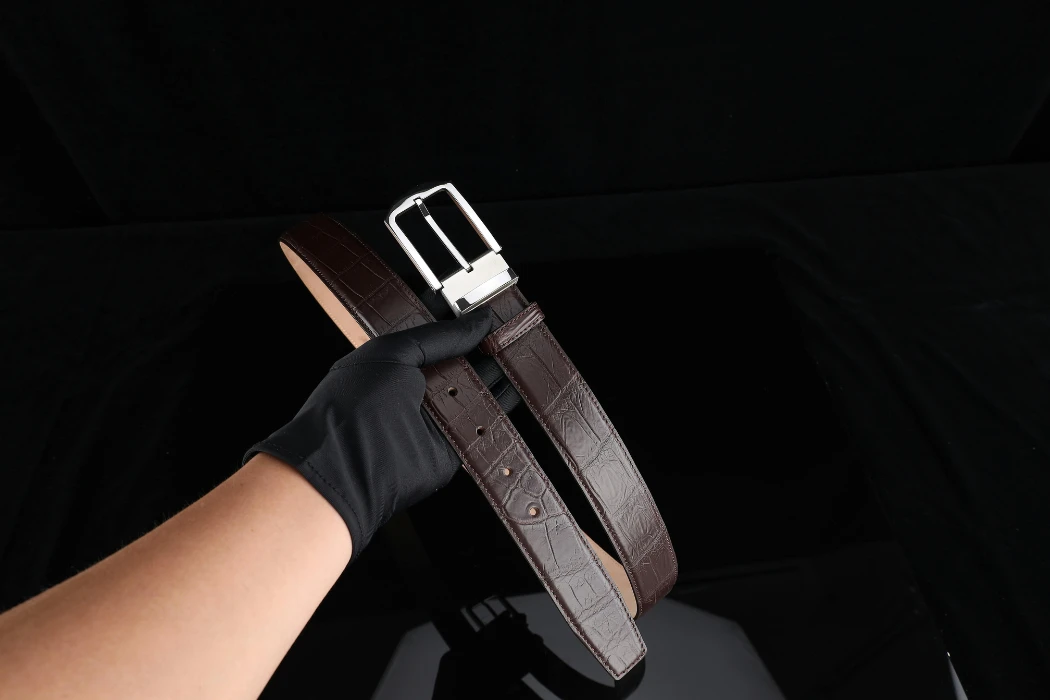
The global B2B buying landscape has shifted heavily toward digital wholesale platforms like Faire and Joor. Retailers now source their seasonal inventory online instead of attending physical trade shows. Because of this shift, your digital product catalog must work harder than ever to close a bulk sale.
What exactly do wholesale buyers look for before placing a large order? They need clear standardized sizing, exact technical material specifications, and highly reliable production lead times. Buyers cannot feel the leather quality through a computer screen. So, you must provide complete technical transparency to build immediate trust and reduce their purchasing risk.
Moving a leather belt collection from a local sample room to a global wholesale platform requires very careful planning. You must structure your product data like an engineer rather than just a fashion designer. The following sections break down the exact technical steps you need to prepare a compliant, buyer-ready belt collection for digital wholesale.
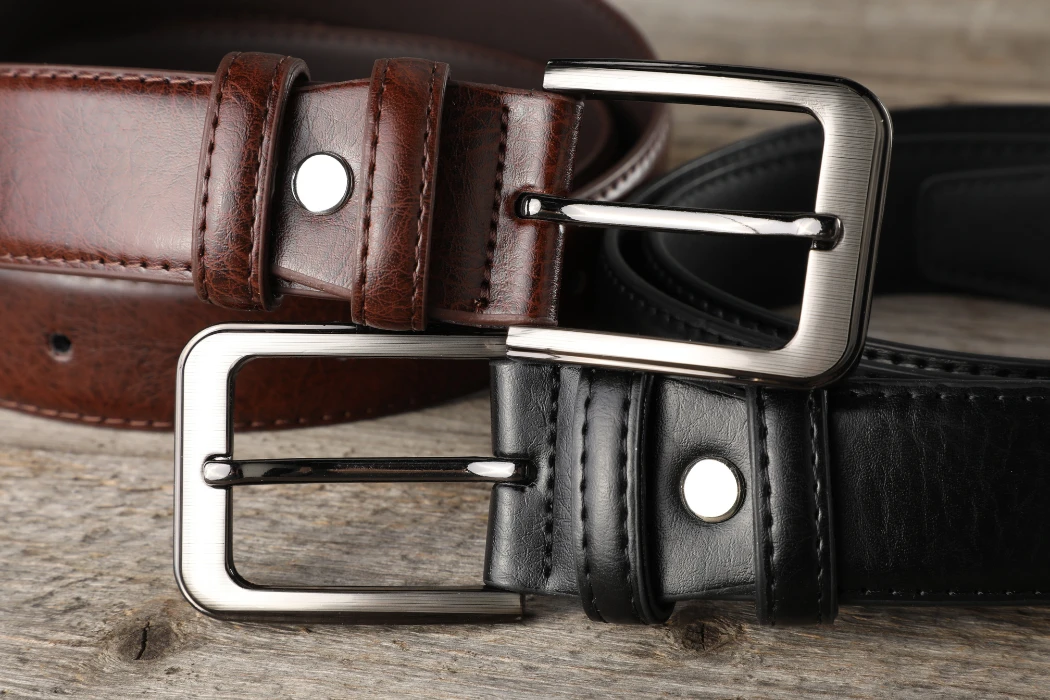
What Belt Sizes and Demographics Should You Include?
You must offer standardized sizing across men’s, women’s, and kids’ categories to satisfy wholesale buyers. Buyers want predictable size runs because it minimizes their return rates. A complete collection covers waist sizes from 26″ to 50″. You should split these sizes into clear demographic segments so retailers can plan their inventory easily.
Men’s Size Standardization
Men’s belts require a wide and structured size range because retailers usually buy in ratio packs.
- Standard sizes start at 28″ (72cm) and go up to 50″ (127cm).
- Small sizes generally cover 34″ (87cm) to 36″ (92cm).
- Large sizes generally cover 40″ (102cm) to 46″ (117cm).
You must provide exact measurements in both inches and centimeters. This dual sizing helps global buyers stock your belts without confusion.
Women’s Size Ranges
Women’s sizing behaves slightly differently because they wear belts on the waist, high waist, or hips.
- Standard sizes range from 26″ (67cm) to 46″ (117cm).
- An extra-small (XS) usually measures 26″ to 28″.
- A large (L) usually measures 38″ to 40″.
Retailers look for brands that offer these flexible ranges. It allows them to sell belts for both jeans and dresses.
Kids and Youth Options
Adding a youth segment helps you capture family-oriented retail buyers.
- Small kids (ages 4-6) need lengths around 22″ (56cm).
- Older kids (ages 7-10) need lengths around 26″ (66cm).
- Youth sizes range from 21″ (54cm) up to 31″ (80cm).
Youth sizes require smaller hardware and closer hole spacing. You must adjust these physical details to ensure a proper fit.
| Demographic | Size Category | Inch Measurement | Centimeter Measurement |
|---|---|---|---|
| Women | Extra Small (XS) | 26″ | 67cm |
| Women | Medium (M) | 34″ | 87cm |
| Men | Small (S) | 34″ | 87cm |
| Men | Large (L) | 40″ | 102cm |
| Kids | Ages 4-6 | 22″ | 56cm |
How Do You Choose the Right Belt Materials for Wholesale Buyers?
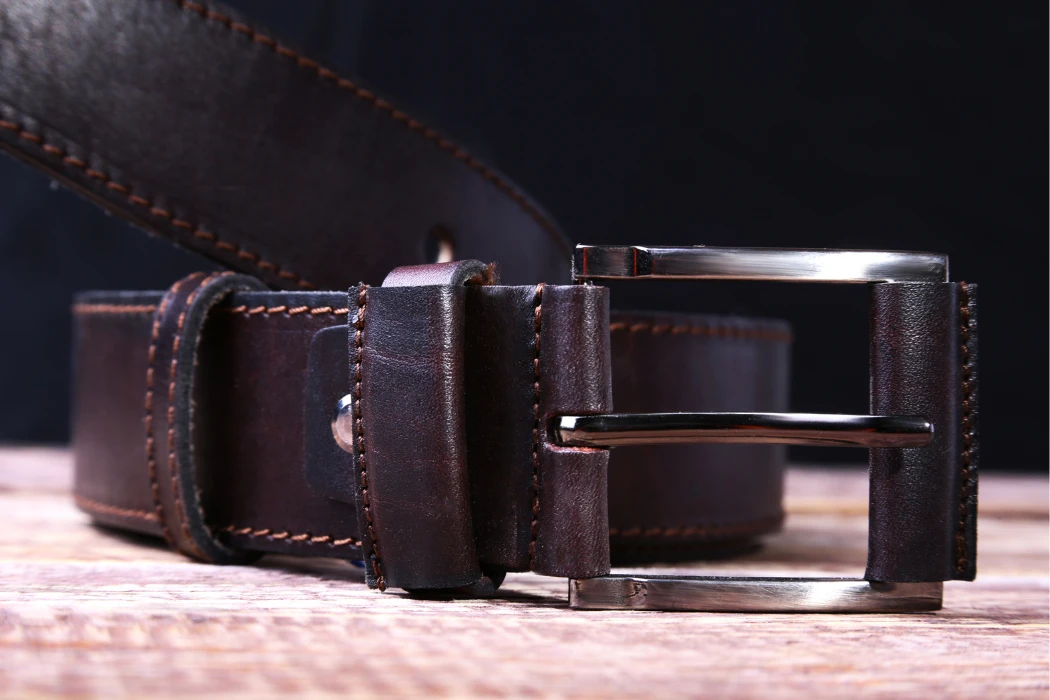
You choose belt materials by matching the physical durability and price point to your target retail market. High-end boutiques require natural animal hides because they age well. Fast-fashion retailers need synthetic options because they keep costs low. You must clearly state the exact material composition on your line sheet so buyers know exactly what they are purchasing.
Premium Full-Grain and Top-Grain Leather
Natural leather offers the best durability and aging characteristics for premium belts. Buyers looking for long-term quality always check the specific leather grade.
- Full-grain leather keeps the entire natural grain layer. This physical structure gives it a robust thickness of 3.0mm to 4.0mm. It naturally develops a rich patina over time.
- Top-grain leather undergoes a sanding process to remove natural surface scars. Factories then apply a protective finish to create a very smooth and uniform look across the entire belt.
- Genuine leather refers to the layers remaining after factories split the top grain off. It requires artificial textures stamped onto the surface to look visually appealing.
- Suede leather uses the soft underside of the animal hide. It provides a luxurious matte texture, but it requires specific chemical treatments to resist water spots.
- Vegetable-tanned leather uses natural plant extracts instead of harsh chemicals during the tanning process. This method takes longer, but it makes the material highly requested by eco-conscious European buyers.
You should select full-grain leather for heavy-duty casual belts because it resists tearing. You should use top-grain leather for formal dress belts because it provides a clean, professional finish.
Cost-Effective PU and Vegan Alternatives
Synthetic materials provide a highly consistent look and much lower production costs for high-volume retail buyers. These materials help brands hit lower retail price points easily.
- Polyurethane (PU) leather consists of a synthetic polymer coating layered over a fabric base. This construction makes the belt highly water-resistant and very easy to clean.
- Bonded leather mixes leftover leather scraps with strong polyurethane binders. It usually contains only 10% to 20% actual leather fiber, so it costs much less than solid hides.
- Vegan leather exclusively uses non-animal materials. Modern versions often utilize recycled plastics or plant-based compounds to directly appeal to fast-growing sustainable fashion trends.
- Corrected grain leather acts as a middle ground. It uses lower-grade animal hides but covers them with a thick synthetic layer to hide deep surface imperfections.
You must accurately label these synthetic options on your line sheets. Mislabeling a PU belt as genuine leather causes immediate trust issues and high return rates from wholesale buyers.
Hardware Selection for Physical Durability
The metal buckle and internal rivets handle almost all the physical stress when a person wears the belt daily. Weak hardware ruins a belt long before the strap material fails.
- Solid brass buckles naturally resist corrosion over time. They provide a heavy, premium feel that buyers instantly recognize when they handle the samples.
- Zinc alloy buckles offer a much lighter alternative. Factories can easily plate zinc alloys in various colors like matte black, shiny silver, or antique gold to match different fashion styles.
- Stainless steel hardware provides the highest resistance to rust. You should use stainless steel for any functional parts that touch moisture frequently.
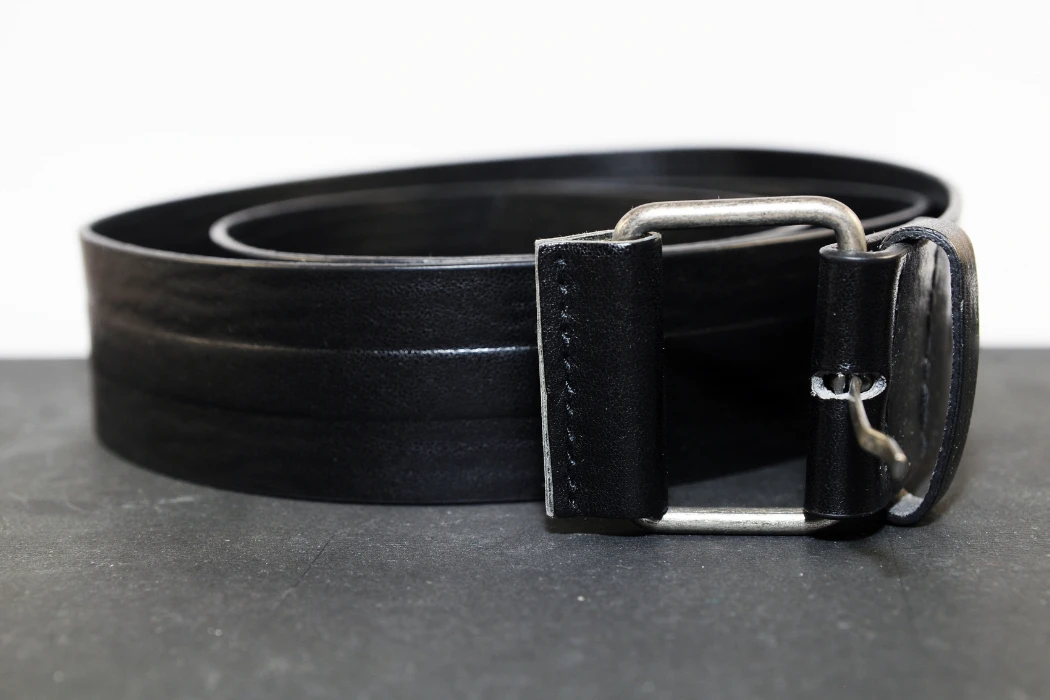
- Roller buckles include a small spinning metal tube. This tube protects the leather strap from heavy friction when the user pulls the belt tight.
- You should always reinforce the physical belt holes with metal eyelets or thick stitching if you use softer materials like PU or thin suede.
Retail buyers often test the buckle mechanism first when evaluating a sample. You should never cut costs on the hardware components because they define the overall perceived quality of your product.
Which Surface Finishes Attract Retail Buyers?
Retail buyers select surface finishes based on their target audience’s daily lifestyle. Formal wear demands perfectly smooth, heat-polished surfaces. Casual denim wearers prefer rugged, oil-tanned finishes that show natural wear. You must diversify your finish options because a single texture limits your wholesale appeal. Providing a mix of classic, vintage, and specialty textures ensures your collection fits multiple retail categories.
Classic Smooth and Pebbled Textures
Classic textures dominate the corporate and formal fashion sectors because they offer a clean, uniform appearance.
- Smooth finishes require machines to heat polish the leather under high pressure. This thermal process presses the surface completely flat and creates a subtle, professional shine that suits dress belts.
- Pebbled textures hide minor surface scratches easily during daily wear. Factories press heavy heated metal plates onto the leather to permanently stamp this raised grain pattern into the hide.
- Aniline finishes use transparent dyes instead of opaque top-coat paints. This technique highlights the natural grain pattern beautifully, but it requires completely flawless raw hides to look correct.
- Saffiano textures press a cross-hatch pattern into a hard wax coating applied to the leather. This specific finish makes the belt highly resistant to water and everyday stains.
You should stock smooth, saffiano, and pebbled belts as your foundational items. These safe, highly consistent textures guarantee steady reorders from conservative department stores and corporate uniform buyers.
Vintage Oil Tanned and Crazy Horse Effects
Casual clothing retailers heavily favor vintage finishes because they complement denim and rugged workwear perfectly.
- Crazy horse leather utilizes special heated waxes applied directly to full-grain hides. When a customer bends the belt, the internal wax shifts and creates a lighter pull-up color effect.
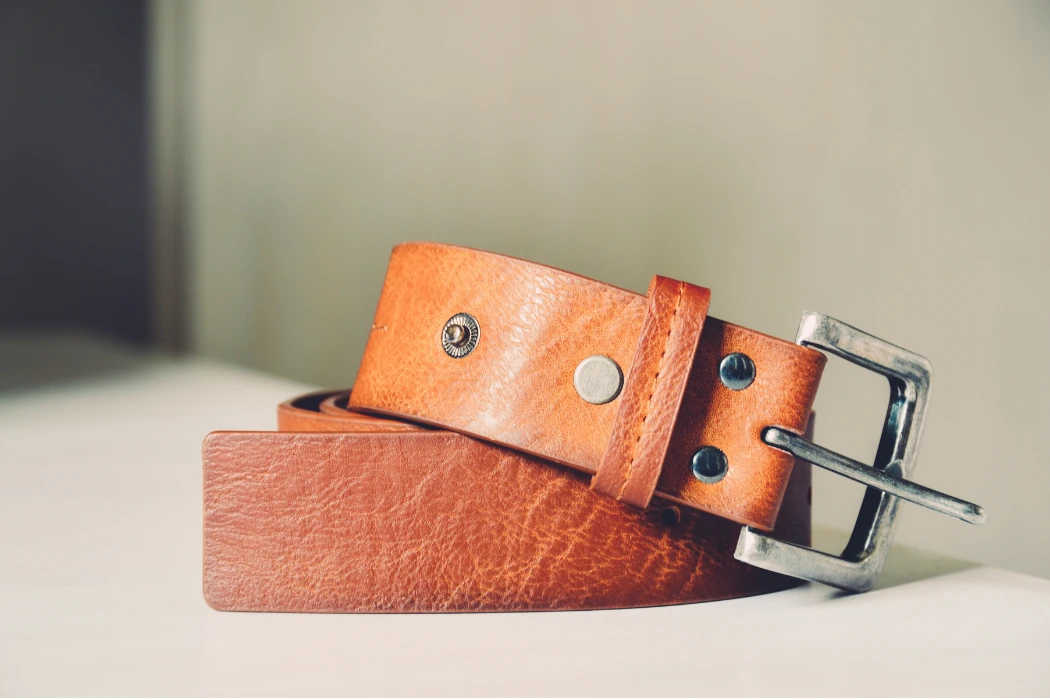
- Oil-tanned finishes involve technicians hand-applying heavy natural oils deeply into the crust. This treatment makes the final belt highly water-resistant and extremely supple to the touch.
- Tumbled leather goes into large spinning wooden drums for several hours. The continuous physical tumbling action softens the tight leather fibers and produces a naturally broken-in, vintage look.
- Scratched or hand-boarded finishes add intentional distress marks to the strap. Workers manually board the leather in 2 specific directions to create a unique, worn-out aesthetic.
Vintage finishes tell a strong story of traditional craftsmanship. Boutique buyers specifically look for these unique pull-up effects to justify higher retail price points in their stores.
Specialty Finishes like Braided or Metallic
Fashion-forward retailers use specialty finishes to capture seasonal trends and attract younger demographics.
- Braided leather belts weave thin, flexible strips of leather tightly together. A standard heavy braided belt might use 30mm wide braiding with slight edge burnishing and a light glaze.
- Metallic finishes bond a thin layer of reflective metal foil directly onto vegetable-tanned leather. A narrow 15mm metallic belt provides a striking visual contrast for women’s high-waist fashion segments.
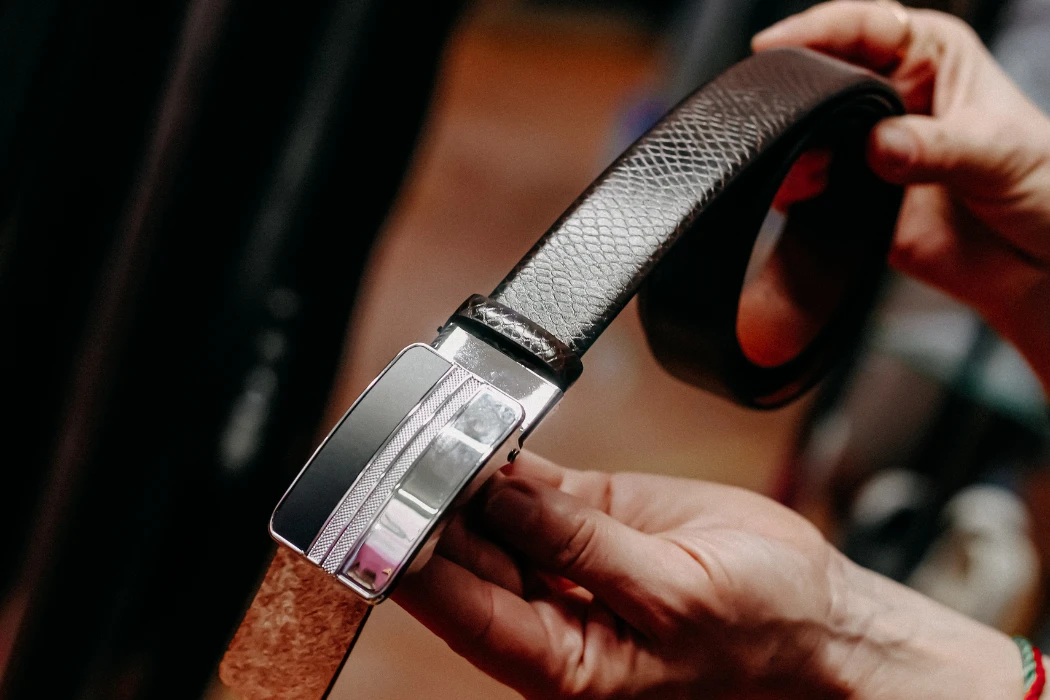
- Crocodile or snake embossed finishes press deep exotic animal patterns into standard cowhide. This process provides a luxury aesthetic without the strict international shipping restrictions of real exotic skins.
- Raw natural edges deliberately skip the final chemical edge-painting step. This simple technique exposes the internal leather layers and creates a highly organic, handmade visual appeal.
You should include a few specialty finishes in your catalog to act as eye-catching statement pieces. These highly unique designs draw buyers into your digital showroom so they can explore your broader, classic collection.
How Do Quality Control Standards Impact Your Wholesale Success?
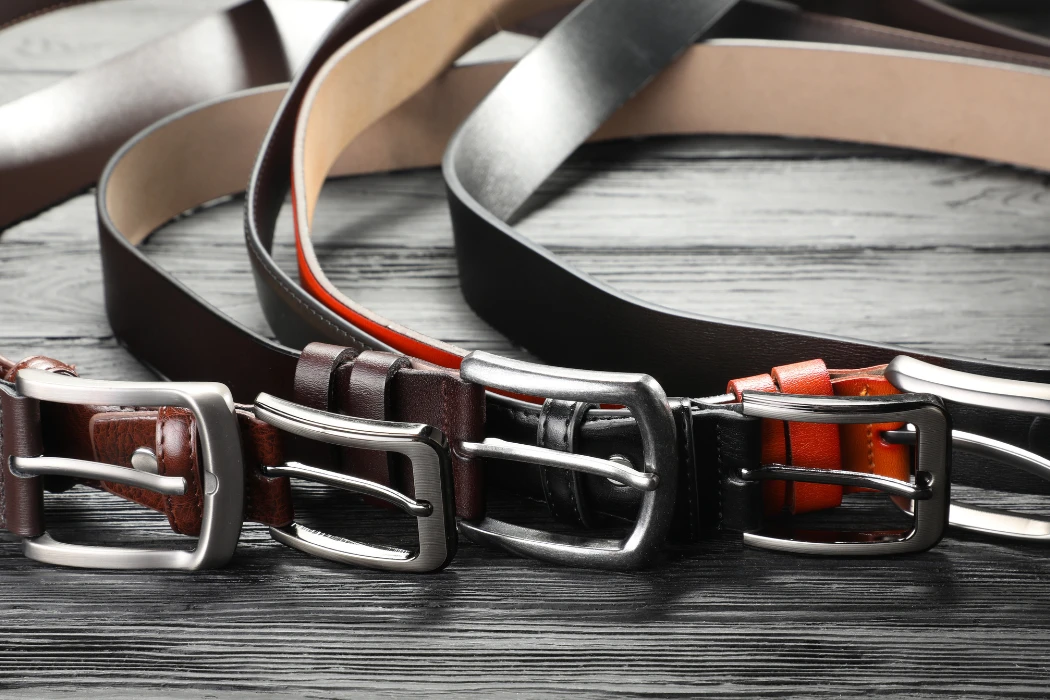
Strict quality control prevents expensive mass returns from your retail partners. Buyers review your inspection protocols to ensure every belt in a bulk order matches the approved pre-production sample. You must implement standardized testing across raw materials, physical dimensions, and long-term durability. So, a documented testing framework proves your manufacturing reliability before a buyer ever signs a purchase order.
Raw Material and Hardware Inspection
You must inspect every batch of incoming leather and metal components the moment they arrive at the facility. Catching bad materials early prevents factory line shutdowns later.
- Technicians examine the leather crust for natural grain imperfections. They also test the material thickness using digital calipers to ensure every hide hits the required 3.0mm to 4.0mm spec before moving to the cutting floor.
- Inspectors check solid brass and zinc alloy buckles for surface plating consistency. They manually test the buckle roller and fastening mechanism to verify smooth mechanical operation.
- Workers verify the color fastness of any internal fabric linings or painted edges so the dye does not bleed onto the end customer’s clothing.
Catching material defects early stops factories from wasting expensive labor on bad hides. Buyers trust brands that strictly police their own raw material supply chains through documented visual inspections.
Dimension Accuracy and Seam Strength
Consistent physical dimensions guarantee that a size medium belt fits exactly like every other medium belt on the retail rack. This consistency builds immense brand loyalty among end consumers.
- Quality controllers measure the total strap length, width, and hole spacing using rigid metal templates. They must maintain a strict 1.0mm tolerance limit across a production batch of 1,000 belts.
- Technicians monitor the automatic sewing machines constantly. They verify consistent stitch tension and perfect thread alignment along the entire heavy strap border.
- Inspectors pull the buckle attachment point with a strict 5.0kg force. This physical test ensures the heavy-duty rivets and folded leather joints do not separate under pressure.
Accurate cutting and strong stitching keep the belt structurally sound over many years. Retailers will reject entire bulk shipments instantly if the paper size tags do not perfectly match the physical strap length.
Testing for Rub Fastness and Durability
Belts endure intense friction and daily bending around the human waist. Because of this repetitive stress, you must subject the materials to aggressive physical laboratory testing.
- Lab technicians perform dry rub fastness tests by rubbing dry white cotton cloths against the dyed leather exactly 100 times under a standardized weight. This checks for dangerous color transfer onto light fabrics.
- The wet rub fastness test uses a damp cloth rubbed 50 times. This specific test simulates heavy sweat contact against the belt surface during hot summer weather.
- Testing machines bend the finished leather strap repeatedly up to 50,000 cycles. Technicians then examine the surface finish closely for microscopic cracks or top-coat peeling.
- Tensile strength testing stretches the belt material until it completely snaps. This records the maximum physical load the leather fiber and internal structure can safely handle.
These mechanical stress tests simulate years of actual human wear in just a few automated days. Passing these strict laboratory testing standards guarantees that your custom belts will survive the modern retail floor.
| Quality Control Test | Component Tested | Industry Standard Metric | Primary Technical Purpose |
|---|---|---|---|
| Raw Material Inspection | Leather Hides | 3.0mm – 4.0mm Thickness | Verify base material consistency |
| Seam & Rivet Pull Test | Hardware Joints | 5.0kg Force Minimum | Prevent buckle separation under stress |
| Dry Rub Fastness | Finished Leather Surface | 100 Automated Rub Cycles | Prevent color bleeding onto clothing |
| Flexing Endurance | Completed Belt Strap | 50,000 Bend Cycles | Check for surface cracking and peeling |
What Production and Supply Chain Details Do Buyers Need?
Buyers evaluate your supply chain stability just as rigorously as your physical product. A beautiful belt sample means nothing if the factory cannot deliver bulk orders on time. You must provide absolute transparency regarding your production capacity, lead times, and ethical compliance. Clear supply chain data minimizes logistical risks for global retail partners.
Setting Realistic Minimum Order Quantities (MOQs)
Minimum order quantities determine if a retail buyer can actually test your product in their stores without taking huge inventory risks.
- Factories generally set PU and synthetic belt MOQs higher because raw material suppliers require large batch purchases.
- Genuine leather belts offer more flexible MOQs. A standard starting point for custom leather belts often sits around 300 to 500 pieces per color.
- Offering lower MOQs for initial test orders helps build long-term trust. Buyers will scale up to thousands of units once the product sells successfully at retail.
You should clearly state your MOQs upfront on your digital catalog. Hiding this metric frustrates buyers who need to calculate their exact inventory budgets.
Defining Lead Times for Samples and Bulk
Retailers plan their seasonal collections months in advance. They need highly accurate production timelines to coordinate their global shipping schedules.
- Sample production should take 2 to 7 days. Fast sampling allows buyers to check physical quality quickly before committing to a large contract.
- Bulk production average lead times should run 15 to 20 days for standard orders. This timeline depends heavily on raw material availability and hardware sourcing.
- Peak manufacturing seasons will stretch these timelines. You must buffer your delivery dates by at least 10 days during major international holidays.
Missed delivery dates destroy B2B relationships instantly. You must track your historical production speed and only advertise lead times that your facility can actually meet.
Showcasing Compliance and Certifications
Major international retailers face strict government regulations regarding product safety and ethical manufacturing.
- The Leather Working Group (LWG) certification proves that the leather tannery follows strict environmental and water management protocols.
- European buyers demand strict REACH compliance. This chemical standard guarantees the belt materials do not contain dangerous heavy metals or toxic dyes.
- Social compliance audits like BSCI or SMETA verify that the factory pays fair wages and provides safe working conditions for its employees.
- Quality management systems like ISO 9001 prove the factory uses standardized operating procedures to catch defects.
You must upload these official certification documents directly to your Faire or Joor profile. Buyers from large department stores cannot legally purchase your belts without this documented compliance.
| Production Phase | Average Timeline | Key Manufacturing Milestones | Buyer Action Required |
|---|---|---|---|
| Initial Sampling | 2 – 7 Days | Pattern making, hardware matching, edge finishing | Approve physical sample |
| Pre-Production | 3 – 5 Days | Material ordering, cutting dies preparation | Submit bulk order deposit |
| Bulk Manufacturing | 15 – 20 Days | Cutting, sewing, edge painting, inline QC | Arrange final third-party inspection |
| Packaging & Export | 3 – 5 Days | Barcoding, retail boxing, customs clearance | Pay final invoice balance |
Frequently Asked Questions About Wholesale Belts
What is a line sheet for belt collections?
A line sheet is a technical sales document. It lists exact material specifications, MOQs, wholesale prices, and available size runs for every belt. Buyers use it to plan their seasonal inventory budgets.
How do you price leather belts for wholesale?
You price belts by calculating your exact raw material costs, hardware costs, and manufacturing labor. Then, you multiply this base production cost by 2 or 2.5 to set your profitable wholesale price.
Do B2B platforms require product barcodes?
Yes, most large B2B platforms and department stores require universal product codes (UPCs) or EAN barcodes. These specific codes allow automated warehouse scanning and precise retail inventory tracking.
What certifications do international belt buyers look for?
Buyers look for ISO 9001 for quality management, BSCI for social compliance, and REACH for chemical safety. They also highly prefer LWG certification to verify sustainable leather sourcing.
How many belt styles should you launch with?
You should launch with 8 to 12 core styles. This specific range gives buyers enough variety across dress and casual categories without overwhelming your initial manufacturing budget.
Can you sell custom embossed belts on Faire?
Yes, you can sell custom embossed belts. You simply need to supply the manufacturing factory with a high-resolution logo file so they can machine a custom heated brass stamping mold.
Are vegan leather belts popular on wholesale platforms?
Yes, vegan belts sell very well because consumer demand for sustainable fashion continues to grow. You must clearly label the exact synthetic materials used to avoid misrepresentation to retail buyers.
Preparing a belt collection for wholesale requires exact sizing, clear material specs, and strict quality control. Retail buyers demand this technical transparency because it heavily lowers their inventory risk. You must standardize your production process to succeed on global B2B platforms. If your brand needs to manufacture belts that meet these exact compliance and quality standards, Hoplok Leather provides the complete turnkey solution. They manage everything from custom hardware sourcing and LWG-certified leather finishing to bulk production, ensuring your collection is fully ready for global wholesale distribution.